How To Be More Persuasive
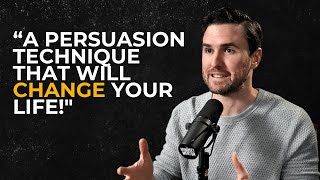
Rob Dial explains the anchoring effect: how the first number you hear shapes what you think is fair. He shows how retailers use it with fake discounts, how to use it in salary negotiations, and how to protect yourself from being manipulated by it.
Chapters
Hey, welcome to today's video. Today I'm going to teach you a psychological technique to help you be more persuasive in everything that you do. Let's dive in. I'm going to talk about a powerful persuasion technique that you can use in your life that will make you more, more of a powerful communicator. We can say. But you must promise me that with what I'm going to teach you that you will use it for good and don't use it for bad. Because before we talk about how to be more persuasive, let's talk about the word persuasion because it can have a really bad connot, but it doesn't really have to. You know, we are always trying to persuade people that is actually something that's very natural for a human. You know, if you look at a four year old, a four year old is constantly trying to persuade you into something, into giving them candy before dinner or letting them go outside when they, and play when they just took a bath or whatever it might be. It is very natural for us to try to persuade, try to get somebody else to do what we want them to do or what we want to do or to see our side of whatever our perspective is. Persuasion, what it really is more than anything else, it is just the art of helping other people understand and hopefully embrace a new perspective in some sort of way. And so today we're gonna talk about this thing is called, it's a psychological phenomenon that is called the anchoring effect. And the anchoring effect, really what it refers to is the tendency for people to rely heavily on the first piece of information they receive. And that information they receive, the first piece usually changes their decisions on anything else that comes after it based off of the first thing that they learn about something, which is the anchor. That's why they call it the anchoring effect. And the effect significantly influences a person's judgment and their behavior based off of the first thing that they learn. So today we're going to talk about basically the psychological mechanisms behind the anchoring effect, the impact that it typically has on your decision making, also how it's been used against you. You're gonna hear me give examples, you're gonna go, oh my God, that salesperson did that or oh my God, this person did that to me. And I even realize it. And so you're gonna understand the impact in the decision making that usually comes from it. And then also how it can be, how you could use it if you want to, but also how it can be mitigated and you can go, oh, I see what you're doing, right? So the anchoring effect was first identified by two psychologists in the 1970s. Basically what they found was that people tend to anchor to the first piece of information they receive around something, and then they adjust all subsequent judgments based on that anchor, rather than considering all of the information in isolation. Which is really interesting if you think about it, is you can learn something about someone, and then you could. They could, oh, this person is so bad, such a bad person. You can learn all these bad things about that person, right? And then that's what's in your head. That's the anchor. And then all of the subsequent information that you could get almost means nothing, even if it's like, oh, they've done this, and this is an amazing thing, and they've started a business that's been changing the world, and they've been, you know, doing all this philanthropy that still is going to be judged based off of the very first thing that you learned about them. And it's really hard to. To change that. This is the reason why first impressions are really, really important. It's not just a cliche of like, oh, yeah, first impressions matter. No, like, first impressions really do matter when you first meet somebody, but also they really matter with anything that you learn. So this phenomenon is believed to be a result of the way humans, the human brain tends to process information by grouping things together. And so the first question before we dive into it and how it's used and how you can use it is that always pops into my head is like, why? Why does our brain anchor to the first bit of information and sometimes ignore all of the rest of the information, and we just stick on the first thing? The anchoring effect is thought to occur because brains are wired. All of our brains are wired to see some sort of patterns. And so this is how we tend to make sense of the world. And when we get new information, we instinctively compare that new information to information that we already have in order to determine, hey, is this important? Does this. And what's really interesting is when we get a first anchor in some sort of way because of the fact that humans, we like to stay consistent. So if that first bit of information, like this person is bad is what we have made our mind up about, then when we get all the information about this person being good, we're like, well, no, they're still bad. And the reason why we tend to do that is because of just the confirmation bias. We want to confirm what we originally thought at all points in time. And so don't worry, I'm going to give you a lot of examples of this and how it works. But in the case of anchoring, the first piece of information that we receive acts basically as a reference point or a anchor for all upcoming judgments and decisions that we have. So therefore, the anchor could be the most important piece of information that someone receives when communicating effectively. Which, if you're trying to be a great speaker, if you're trying to be a great communicator, this is something that's really important for you to understand is the anchor that. That somebody is getting to make all of their judgments and all of their decisions after the anchor. And so one of the key impacts of the anchoring effect is that can lead to what they call systematic biases in decision making. And so this is why, you know, in case you didn't know this, I'm about to ruin a couple things. About to ruin a couple things for you. A lot of clothing companies raise their prices on their tags, and then they put a discounted price on the tag because it makes the closing seem worth more. And so, you know, an example would be $1,000 jacket, and it's crossed off, and it says 600. In your mind, you're going, oh, my God, what a deal, right? I'm getting $400 off the price. The original price of this jacket, that's 40% off. Amazing deal, you know, $1,000 jacket for 600. This is awesome. But the company was already planning on selling it for 600 anyways. And so they're selling it for what they thought they were going to. But they are changing your perception of the jacket based off of the anchor. $1,000 original price, $400 off. Oh, my God, what a great deal. They're already planning on selling it for 600. I see this all the time whenever I go to Europe. We go to Italy usually about once a year. And we go in a lot of the same cities. We go to Florence and Rome a lot. We kind of go in the same areas. We have restaurants that we really like. We always hit back up. And I always see the exact same stores with the same discounted signs. 50% off, limited sale, and everything is 50% off in the damn store. And it always has been for years, seven, eight years. Every year that I go back, I'm like, it's the same. It's the same thing. But people who are walking by are like, oh, my God, I'm on vacation. I can get 50% off of some Italian leather jacket or whatever it might be that they get all excited about it. And that is how companies can use the anchoring effect. Another example is when looking at the price of a product and say everything is 25% off. You go into a store. You know, it's the whole store. Like, I just gave you an example of. Let's say you're walking around in Italy and you see, oh, my gosh, this store. Everything's 25% off. And you're like, oh, let me go into it. And you walk into that store and you find something that you like for 50% off. Once again, you're now comparing that 50% off to the 25%. You're going, oh, my God, amazing deal, because I'm getting more off than what was originally advertised. But if you looked at all the tags of all of the products, you'd see that, like, all of them are 50% off. And so you're expecting 25% off the anchor, and you found 50% off. Oh, my God, amazing deal. Like, if you walked into a store expecting 25% off, and then you saw a tie that said 5% off, you'd be like, that's not a good deal. Everything else is 25% off. So you think, I'm getting an even better deal than I expected. That is how the anchoring effect is used. I'm about to ruin Black Friday for you as well. Okay, Black Friday. Just FYI, they found that most companies usually raise prices about 23% the month before Black Friday. So the entire month before Black Friday, most places, on average, raise their prices 23%. So you're not really buying a discounted price. A lot of times, you're buying the price they originally wanted to sell it for, but they raised the prices last month and then discounted it. So you're paying the same usually as you would if you had bought it, like, six months ago. I know, right? It's pretty crazy. They're using advertising. Companies use your brain against you in a lot of different ways. And this is why it's really important for you to constantly learn about psychology, neurology, neurobiology. How am I to use my brain the best that I possibly can? And then how am I to make sure that my brain is not used against me? Because a lot of companies, truthfully, they exploit you. They exploit your psychology and the way that your brain works because they understand how it works a lot better than we do. You know, and retailers can get away with raising their prices as long as it looks like the product that is up for sale was at a full price for a what? You know, this article I was reading, a reasonably substantial period of time. So they raised the prices 30 days before, and then they discount the prices, and you're like, oh, my God, I'm getting such a great deal on this tv. When in reality, if you had bought it three months ago, you'd probably be paying around the same price, right? So in 2012, there was a presentation that was done by the CEO of JC Penney's. He gave a presentation about how the company's sales were going at the time, and he showed that customers were receiving around a discount of about 60%. So it's like, oh, my God, the average customer gets about a 60% discount. And that was up 38% from a decade earlier. So 10 years before, it was 38% lower. But here's the crazy part. The twist is that the average customer wasn't saving more money. In fact, the average customer, the average price paid by customers stayed about the same over that period of time with inflation, which means that now they were getting a 60% discount, which is 38% higher than 10 years ago. But the average sale based off of inflation was around exactly the same. So the customers thought they were getting this amazing deal, but in reality, they really weren't. They were paid basically about the same. So the reason why this is important, though, is for you to understand when you actually go out to buy stuff. You know, when you go car shopping, they will always show you the most expensive car first. So if you walk onto a dealership, you're like, hey, I'm thinking about buying a car. They're like, cool. What are you looking at? They're going to show you the most expensive car first. Because then the other cars that you look at after that most expensive one seem like even better deals. They are anchoring your mind to the big price. Oh, this huge price. And then when you see something that's $20,000 less, it seems like a great deal. And I knew this was happening last year. We ended up buying a BMW. And we went on, and I was like, let's test this. I just want to see what these guys do. I want to see how they've trained them, right? And so told them what we were interested in in the first. He's like, all right, cool. I got a few that I want to show you. I'm going to go ahead and bring this one out. He brings it out, and it is the most expensive out of all of them. It was $108,000, right? And then he showed me three other cars, three other different vehicles, and every one of them, the next three were in descending order. So he didn't show me the cheapest car first and then go to the most expensive. He started the most expensive car first and then went to the least expensive out of it. I knew exactly what he was doing, and so I was like, all right, cool. I see he's going to bring the most expensive car first with all the bells and whistles, so that if I anchor my mind to that $108,000 BMW, well, then if he's showing me one for 60, I'm like, oh, my God, this is a great freaking deal, right? So that's. That's $48,000 less. And I'm still getting almost all of the exact same bells and whistles as the one that's $48,000 more, right? So let's say that you want a new car. And then, you know what you're going to do is you're going to go through and you're going to say, honey, you know what? Let's get a new car. I think we've been needing to get something. I'm just. Once again, use this for good. Everybody, use this for good. But let's just say that you're wanting to show your husband the cars that you're interested in. You want a new suv. You're having so many kids. You just want to make sure you can fit all those damn kids, right? You got an army, you want to make sure. Big SUV. So what do you do? You pull up five cars, five SUVs that you like. And what are you going to do? You're going to show them the most expensive one first. And then what you want to do is then at the end, show him the one that you really, truly want. Why? Because it's going to seem like an amazing deal. Now, you're not. You're not doing anything evil in any sort of way, right? What you're doing, though, is you're just using the anchoring effect so you can see. Oh, okay, let me go ahead and show you the most expensive one. Oh, my gosh, this SUV is $90,000. And then you have one that you like that's 50. He's gonna be like, well, I like the one at 50. And you're like, oh, my God, I like the one at 50, too. Right? So this is something that you could just kind of make sure that you're aware of. The anchoring effect also really has A big impact on negotiations as well. And so what they found is that the initial offer can significantly influence the outcome of a negotiation. And so researchers have actually found that when negotiators who make the very first offer have an advantage as the first offer can serve as an anchor, that influences the other party's subsequent behavior in their decisions and their judgments that they make. And so this is why, if you're in a negotiation, whatever that negotiation might be, make sure that you are the first one to. To put your offer out there. You want to try to be the first one to make an offer. And so it's important for you to understand that as a consumer, it's important for you to understand all of this stuff. You know, like, I remember there was one time I was basically kind of being pushed out of a company. There's a whole bunch of things people were moving, and somebody was moving into my territory and pushing me out, and I was like, kind of getting screwed. And they said, hey, listen, we're going to pay for all of your expenses for you to move and what it's going to be for you to break the lease. And based off of everything that you have and all this stuff, we're going to pay for it in order for you to move to a different territory. And so I said, okay, cool. And so I talked with one of my friends who worked in the company. He's actually the number one person in the company. And I was like, hey, man, here's what I'm thinking. It's going to be. Should I just ask for this? And he goes, no. He goes, figure out every single penny you could possibly ask for and ask for the most amount of money for you to move territories that you possibly can, because they will not give you what you ask for. They will give you less than you asked for. So I was originally honest. I think I was. I don't remember the exact numbers, but I want to say it was going to cost me like, $4,000 in order to move. And he's like, no, have you considered this? Have you considered the loss of revenue that's going to be coming in the two weeks that you're moving? Have you considered the fact that you're going to have to hire new receptionists and that's going to take you time? And he started talking about. He's like, you got to ask for, like, at least 15,000, because look at all of these ways that you're losing money. So it's not just like breaking leases. There's a bunch of other stuff. And so I was like, oh, okay. I didn't even consider that. So I ended up going back in my proposal, like, hey, it's going to cost me at least $15,000. Here's all the reasons why. And I gave all of the exact reasons. And they end up giving me like 10,000. I was originally going to ask for four. And so I ended up moving and being able to be in a better place. But it was just like. And it wasn't like I was trying to hustle the company or trying to screw anyone over. There were just things that I wasn't considering. And my friend was like, listen, always ask for more than you think that you need, because they're never going to give you the first number. This is before I knew anything about the anchoring effect. And so it's really important for us to all understand this. It's really important for you to understand this when you are a consumer somewhere. Like, really, when you go in there, you might be like, oh, my God, this is a great deal. Well, just check, see if there's maybe everything in the store is 25 or 50% off. Go online, see if there's a better deal online. It's just an important thing to think about in business. It's really important for you to think about. If I'm going to go into negotiate something. If I'm getting hired in a place, well, I want to try to negotiate a salary much higher than the salary I actually want to land on. If I'm in some sort of negotiation for a car, if I'm in negotiation for selling my company, if I'm in a negotiation, I'm always going to want to ask for more. If you're selling your house, ask for more than you think it's worth, because then if offers come in less, you're probably going to get exactly what you want. And then in relationships, it's also really important to remember to keep in mind that, hey, you know what? This is the only time that this person's gonna meet me for the first time. And that is really going to have an anchor of what their judgments of me are in the future. So even though I am pretty fucking tired, I'm gonna try to show up as the best that I possibly can. I'm not gonna show up fake, but I'm gonna show up as the best version of me versus yeah. Well, hey, nice to meet you. I'm Rob. Right. So it's really important for you to understand the anchoring effect, which is basically the first thing that people learn all of their judgments, all of their decisions, all of that stuff, everything they compare to is going to be compared to the very first thing that they learn about something or someone. So that is the anchoring effect and how to use the anchoring effect in relationships, in conversations, in negotiations, in business, in everything that you do. So that's what I got for you for today's episode. If you love this episode, please share it on your Instagram stories and tag me in obdialjr. R O B D I A L J R. It really, really, really does help more than you know. Every single time that you guys share this on your Instagram stories. It is the way that this podcast grows and how people who don't listen to us become aware of it and go, hey, maybe I should give it a shot and allows us to really help change the world even more. So if you would share it on your Instagram stories, share it wherever you can, I would greatly, greatly appreciate it. And I'm gonna leave you the same way I leave you every single episode. Make it your mission to make someone else's day better. I appreciate you and I hope that you have an amazing day.
More from Rob


Why NOT to stay single 👉 @robdialjr #adviceoftheday #motivation #mindset #growth

You Reap What You Plant 👉 @robdialjr #adviceoftheday #motivation #mindset #growth

3 signs that you're addicted to chaos 👉 @robdialjr #adviceoftheday #motivation #mindset #growth

Stop making excuses for people 👉 @robdialjr #growth #mindset #positivity #adviceoftheday

Tip for an amazing life 👉 @robdialjr #inspiration #mindset #adviceoftheday #positivity

It's time to move on 👉 @robdialjr #adviceoftheday #motivation #mindset #happiness

The right person for you is... 👉 @robdialjr #love #truelove #inspiration #mindset #soulmate

Get ready to take risks 👉 @robdialjr #motivation #adviceoftheday #mindset #positivity

The real competition You Vs You 👉 @robdialjr #mindset #inspiration #positivity #adviceoftheday

Their Mood Isn’t Your Responsibility. 👉 @robdialjr #mindset #adviceoftheday #motivation