How to Be So Productive it Feels ILLEGAL
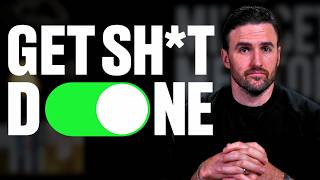
Rob Dial argues low productivity stems from a brain wired for survival, not laziness. His framework: gain clarity on high-impact actions, reshape your identity through self-talk, earn dopamine through small wins instead of scrolling, design your environment to block distractions, align peak energy with important work, and run weekly audits to iterate on habits.
Chapters
You're not lazy or unmotivated or broken. Your brain has just been wired for survival and it doesn't give a damn about your success. But once you learn how to use your brain correctly and learn how to flip that switch in your brain, your productivity is actually going to start to feel easy. So let's make it easy for you to take productive action. No more dragging yourself through the day, white knuckling to force yourself to do something, or endless to do list that you never finish. Just focused, unstoppable energy that actually sticks. So if you've ever felt like you were meant for more, but you self sabotage and you just can't figure out how to be more productive, this is the episode that you've been waiting for. So the first thing, which is kind of counterintuitive based off of what I just said a second ago, is this the first thing you need to do. Stop trying to be productive and start trying to become clear. Most people think productivity means doing more, adding more to your plate, more on your to do list, working more hours. But real productivity, like the most productive people that I know, do less, but they do it with like ruthless clarity. And so it's deciding in your life what matters the most and then just forgetting about everything else. That's the difference. Instead of just adding more to your plate, you're going to be doing less, but you're going to be doing less better than you ever have. And so it's clarity first, output second. You have to realize that your brain, it's not really a productivity machine. Like it is a pattern creating survival tool. That's what it is. And so if you don't give it real and especially clear direction, a lot of times your brain will just default to distracting itself, which is why you'll find yourself on your phone or sitting around watching Netflix or scrolling and shopping. So you have to get really, really clear on what the most important things are. You know, if you're trying to plan for this quarter, say like, what are my top three priorities this quarter? Or if you're just trying to plan for today, what's the three most important things that need to be done today? What actions will move the needle in my life? Or what actions will move the needle in my business? And figuring out the pareto principle, the 8020 rule. Because 20% of what you do will bring in 80% of the results. So why don't I spend the majority of my time focusing on that 20% that brings in the most results, you know, and then you start asking Yourself, like, you know, what am I doing out of routine? Or autopilot, you know, when I just find myself, oh, yeah, you know what, I go to the kitchen and I end up getting something to eat. And I scroll on my phone for 20 minutes. I just lost 20 minutes right there. You have to understand, you can't be insanely productive if you're not crystal clear on what your highest priorities are. And I know many, many people that are busy, and you probably know many people that are busy. You might be a a person that is busy, but it seems like even the busy people rarely get anything done. And it's not because they're not checking stuff off their to do list. It's because they don't get the really, really important things done. They just check off the small, easy tasks versus the needle moving tasks in their life. And so each morning it's important for you to wake up and to think about your day and say, what is the one thing that would make today a win? And write that thing down and become laser focused on getting that thing done. And we will be right back. Hey, I want to interrupt today's episode to tell you about my sponsor. It is me, myself, if you didn't know. I obviously have some coaching programs outside of the podcast to help you learn and grow and become a better version of yourself. Step by step programs and processes to help you become better in your life and create the life that you want. If you want to learn more about it, you can go to coachwithrob.com once again, coach with rob.com check it out and let's get back to the episode. If you can get it done first. If you do that every day for the next 365 days for one year, you will have crossed off the 365 most important things that need to be done for the year that will make you insanely productive. So it's not about doing more, it's about doing less, but with much more clarity. Okay, that's the first thing. The next thing is you actually need to start talking differently to yourself. You need to rewire your identity from the Internet inside out. If you still see yourself as someone who procrastinates or someone who is lazy or somebody who burns out or somebody who can't focus, no to do list or productivity tool is really going to save you. Productivity begins with your identity. So many people are lazy because they just keep saying that they're lazy. They procrastinate because they always say that they procrastinate. They're poor because they always talk about how hard it is to make money. You get what you focus on and you will always take actions that align with who you think you are. And so if you keep saying I'm lazy, I'm not productive, I'm somebody who gets screwed over all the time, I don't have any good luck, that's what your life is going to be. Your words and your thoughts are going to create everything in your life. So you need to change the way that you see yourself, the way that you talk to yourself, and in the way that you talk to other people about yourself. You need to start saying things like, I'm becoming the type of person who. So instead of saying I'm lazy or I procrastinate, I'm becoming the type of person who finishes everything that I start. I'm becoming the type of person who plans ahead. I'm becoming the type of person who protects my time like it's the most important thing in the world. I'm the type of person who is building a million dollar business. This isn't about faking it. It's about training your nervous system and your subconscious to actually expect success and to take the right actions. So that's step number two. Step number three is that you need to use the dopamine in your brain like it is in an internal drug dealer, right? So let's get neurological for a second. Dopamine is your brain's chemical of motivation. It is your brain's, oh my God, I want to do that again. Chemicals, right? That's what you want to think. The most addictive drugs in the world are the high dopaminergic drugs. The most addictive drugs are the ones where your brain gets the most dopamine from it. And so your dopamine in your brain is your brain's, oh my God, I want to do that thing again. So it's not just for pleasure, it's for motivation. I want to do that again. That was great. I want to do that again. But here's the thing you have to understand. Most people chase cheap dopamine and that cheap dopamine comes from scrolling on your phone sugar, checking your inbox over and over again, checking your slack messages. Which means that when you get dopamine from doing those things, your brain wants more dopamine the same way that you got it before, which in turn oddly kind of makes you addicted to the thing that you don't want to do. Productive people create earned dopamine. Like earned dopamine on real wins in their life, on deep work, on growth, on checking off the highest priority on their to do list, like checking off that highest priority task. That is the thing that needs to give you dopamine. And your brain's going to go, you know what, that was pretty amazing. I want to do that again. So let's say, for instance, you need to plan out and present a presentation next couple of days. And that could mean that in the next couple of days, you're going to get no dopamine off of this task until it's finished. What I would rather do is take this entire thing and split it up into smaller tasks so that my brain keeps getting all of these little micro wins in these micro awards of dopamine. And so let's say that part of it is, you know what I need to do? I need to do research on the competition. Okay, that's going to be one of my micro tasks. I need to pull stats from previous quarters. That's going to be one of my micro tasks. I need to put it into visible graphs. That's going to be one of mine. I need to create part one of the presentation. That's going to be one. So instead of getting dopamine three days from now, when it's actually finished, I get dopamine five times a day going, this is great, I want to keep going. This is great. I want to keep going. Each micro win gets you excited, gains momentum, and releases dopamine for you. And that makes you want to keep going. And so that's one thing that you could do. Another thing that would really help with this as well is to use something like the pomodoro technique where you work for 25 minutes. And in that 25 minute sprint, whenever you get it done, you're like, oh, my God. I was actually pretty focused. I'm pretty proud of myself for how much I got done those 25 minutes, boom, you get dopamine, do another pomodoro. And so basically what you're doing is you're setting up these checkpoints throughout your day, which is getting you kind of addicted to taking the action you need to. You can also pair it with things like music that you like because the music releases dopamine. You get excited and you listen to music that you like as you're doing it, and you can sit there and when you get done with the actual task, you celebrate yourself. You celebrate yourself. You're like, boom, done. Nailed it. That was awesome. I'm so proud of myself, which all. I get that that sounds ridiculous. Celebrating yourself sounds corny. It's not corny, it's neuroscience. Every time that you acknowledge a win, something that you just did, no matter how small it is, your brain releases dopamine, which then reinforces the behavior that you just took and wires in motivation to want to do it again. And it turns into a progress reward loop, helping you build momentum and keep going towards what is you need to do. And so rewire that reward loop. Like, get lots of micro wins, as many as you possibly can. Make the wins feel amazing. So that's number three. Step number four is to get really clear and design your environment to be as productive as possible. If you want to guarantee that your future self won't flake out, set up as much friction as you possibly can in your environment for you to not, like, go to your phone. So much friction to get to your phone, not go to your notifications or your email, whatever it might be. The most consistent people, they don't have the best willpower in the world, but they have created an environment that will not test their willpower. So it's not about being hard on yourself. It's about making success and taking action easier than failure. And so one thing that you can do is you can. You can do what I call temptation bundling. Right? You pair something that you love with something that you need to do that you're resisting. So, like, something that you love could be like your favorite podcast or like iced coffee or something like that with something that you resist, like admin tasks or working out. So, like, an example would be, I only listen to true crime podcasts when I'm cleaning the kitchen. Now you're doing the thing that you need to get done with something that you love. I only watch TV when I'm running on the treadmill. I only have. I can only have another coffee If I do 100 pushups and 100 squats. So you're pairing something that you resist with something that you love to make sure that you actually get it done. Another thing that you can do in your environment to make sure you take more action is to set up these traps or blockers. So, like, put your phone in a different room. I don't know how many times I've said that on this podcast. Like, the other day, two days ago, I needed to be really productive. I had a lot that I had to get done. I kept my phone downstairs for 10 hours because I was like, I'm just not going to have time to look at it. And if it's not next to Me, I'm not going to be reaching for it. If you need to be really productive and you spend too much time on social media and you need to get your business running, delete social media Monday through Friday. You can redownload it on Saturday and Sunday if you want to. If you spend too much time watching Netflix, remove your TV from the wall during the week so you can't watch it. You know, if you browse on your and do too much shopping, you know, use browser blockers like Freedom or Cold Turkey. You can schedule coworking sessions with people that work in your area so that you build accountability. You know, if your environment doesn't support productivity, no amount of ambition will. And so here's the thing you have to learn in this situation to protect your focus like it's a million dollar asset, because it really is. Like, imagine if you were paid $10,000 every time that you protected your deep focus and you had to pay out $1,000 every time you broke your focus when you were doing something important. You'd stop letting everything and everyone hijack your attention, right? You would build a system to never be distracted again. If it was that high of stakes, do it. Figure out a way to create like productivity boundaries in your life. Put your phone in another room, you know, not just face down, but like in a completely different room. Use noise canceling headphones, you know, tell people like, hey, I'm heads down from 9 to 12. I will respond after that. Don't message me. It's not rude. It's really self respect in making sure that you are productive in the time that you have set up. So that's number four. Number five is to master your energy, not just your time. Most people are obsessed with time management, but they don't think about their energy throughout the day. Without energy, your time management is absolutely useless. And so you've got to ask yourself, like, what drains me that I don't want to do anymore? Who drains me that I don't want to be around anymore? What fills me? What gives me energy? What time of day is my brain the sharpest? When do I crash throughout the day? Like productivity isn't just about what you do. It's how well your brain is able to show up in the time that you can. And so that's why rest and hydration and movement enjoy our fuel to getting things done. And so what you really got to think about is like, when is my energy the best throughout the day. And that's when you should schedule your most important things. And then the last thing that I want to talk about is to start getting really good at auditing yourself every single week, right? Like, audit yourself every single week, every Sunday. You need to treat yourself as if your Life. You're the CEO of your life, and you're having a CEO meeting with yourself every Sunday, 30 minutes, you sit down and you look back on last week, and you said, hey, what did I do well? What did I not do well? And what do I need to stop doing? What do I need to start doing? And what do I need to continue doing? Stop, start, continue? And then you, after looking back on last week, you look back on this next week and start making those adjustments and putting it into your schedule. And you audit your life as if it's something that is extremely important to you because it should be extremely important to you. So many people put more time into their job working for somebody else than they do their own damn life. And so when you sit down and you actually start making moves on how to be more productive with every action that you take every single day, and then you audit yourself every single week, you start becoming more productive, and you become way more productive than you ever have in your entire life. Hey, thanks so much for watching this video. Based off of what you have been watching recently, YouTube and the algorithm has made sure that you should watch this video next. It pops up as a different video for every single person. Seriously. So this one is for you. And if you want to make sure to never miss another video, hit that button right there, subscribe, and I'll see you on the next one.
More from Rob


Why NOT to stay single 👉 @robdialjr #adviceoftheday #motivation #mindset #growth

You Reap What You Plant 👉 @robdialjr #adviceoftheday #motivation #mindset #growth

3 signs that you're addicted to chaos 👉 @robdialjr #adviceoftheday #motivation #mindset #growth

Stop making excuses for people 👉 @robdialjr #growth #mindset #positivity #adviceoftheday

Tip for an amazing life 👉 @robdialjr #inspiration #mindset #adviceoftheday #positivity

It's time to move on 👉 @robdialjr #adviceoftheday #motivation #mindset #happiness

The right person for you is... 👉 @robdialjr #love #truelove #inspiration #mindset #soulmate

Get ready to take risks 👉 @robdialjr #motivation #adviceoftheday #mindset #positivity

The real competition You Vs You 👉 @robdialjr #mindset #inspiration #positivity #adviceoftheday

Their Mood Isn’t Your Responsibility. 👉 @robdialjr #mindset #adviceoftheday #motivation