How To HEAL YOUR TRAUMA & Transform Your Life | Rob Dial
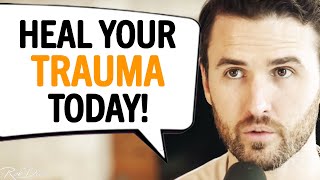
In this motivational monologue, the speaker asserts that every person is inherently perfect and not broken, regardless of past experiences. He expands the definition of trauma to include both overt, severe events (abuse, murder, assault) and subtler, everyday wounds such as emotional neglect, parental absence, or fear‑based parenting, citing Dr. Gabor Mate’s view that any unmet developmental need constitutes trauma. By sharing a breadth of harrowing stories, he illustrates how exposure to others’ pain cultivates compassion and underscores that trauma is universal. He challenges listeners to recognize that the sense of “missing” or “broken” parts is a self‑crafted narrative, not an objective reality. Using the metaphor of a three‑legged dog that continues to run joyfully, he illustrates resilience and the possibility of living fully despite loss. The speaker then offers five concrete practices for transformation: (1) talk to someone you trust, (2) consciously rewrite your internal story with affirmations, (3) accept what happened without wishing it were different, (4) practice forgiveness toward others and yourself, and (5) journal or otherwise come to terms with the experience. He emphasizes that repeated positive storytelling reshapes identity, that trauma can be a catalyst for growth, and that embracing an empowering narrative leads to a more fulfilled life.
Chapters
You are perfect the way that you are, no matter what has happened to you. And there is nothing wrong with you. It's true. But do you believe it? Today we're gonna be talking about the fact that there is nothing wrong with you and that you are literally perfect as you are and you are not broke in any sort of way. There is nothing that has ever been wrong with you and everything that's ever happened to you is absolutely perfect. And you might hear that and be like, oh, well, there's a lot of things that have happened to me that are bad, or there are a lot of things that have happened to me that I didn't want to happen. And I have this. An episode that has this flavor every single year, I guess you could say, because I get this a lot in my line of work of self improvement. What tends to happen is when somebody decides that they want to improve themselves, it's kind of like a veil being lifted to all of the things that need some improvement. And so when we start to see the things that we've been blind to, I'll be honest with you, ignorance is bliss. If I was ignorant to the fact that I don't need to improve myself and there's things that I need to work on, this would be pretty damn blissful. But I don't think that I would have the life that I want to. And I think that's for most people. If you're listening to this podcast, it's because you do want to learn, you do want to grow, you do want to get better. But in turn, when you say getting better, that means there's things that you might want to, quote, quote, unquote, fix. And so we're going to talk about everything that's happened to you. Once again, like I said, in my line of work with self development, I've seen it all. Like, I've heard the worst stories that you could hear from all of the different things that people go through. You know, I've seen all kinds of abuse. I've seen mental abuse. I've seen physical abuse. I've seen sexual abuse. I've seen people who have had their parents murdered. I've had seen people who have had family members murdered. I have people who have had attempted murder on them. All kinds of things that have happened, all kinds of different traumas, all kinds of different abuses. I've seen, you know, suicides that people have had around them. I've seen people who have attempted suicide multiple times. I've seen people who have, you know, have been around Murderers. I've seen people who have, you know, been sexually assaulted. I've seen all of the worst things in the world. And it really opens you up to, number one, the compassion I have for people, because you start to see that some people that even look like they have it all together have other things that they're dealing with at all points in time. And it really makes you have compassion for people in realizing that you never really know what someone's going through. Like, you never know what's actually happening in someone's mind, in someone's life, unless they're fully open, authentic with you. And a lot of times people are not. And so I've seen a lot of the worst things. And so when you look at those things, like, you know, abuses and suicides and murders and. And parents that have drug problems or alcohol problems or parents that, you know, commit suicide and all of these things, those are all traumas. And if you're listening to me and you're like, well, I haven't had all of those things happen to me. I've had a pretty good childhood. I had things, you know, happen throughout my life, but it was nothing that was that bad of trauma. I'm gonna bring this frame in just so you can understand before we go deeper into it, the trauma that happens to you in your life doesn't have to be, quote, unquote, massive trauma to leave a really deep scar. Some people feel bad because their lives have been pretty good. And I talk with a lot of people who have had, like, great lives, they have great parents, but they still have things that they're trying to overcome that happen. Because you can't go through this life without some scars. Like, it's impossible to go through this life and not have some scars. There's still bullies. There's still, you know, advertisements that are telling us that we're not good enough unless we buy their products. There's comparing ourselves to other people on Instagram and other people's businesses. There's always comparisons. And they feel like they don't. They feel like they don't deserve to feel like they have trauma because they didn't have any, what we would call, quote, unquote, massive trauma in their life. You know, some people listening, you might not have had those massive traumas. Maybe you weren't beaten, maybe you weren't sexually assaulted, any of those things, but maybe, you know, your. Your dad worked all of the time, and he never gave the love that you actually wanted or the love that you actually deserved. And maybe he wasn't there for you, you know, but he was doing his best in trying to provide for the family. And in turn, he was very absent. That's also a form of trauma. Or, you know, some people, your. Your mother could have gotten mad at you, and the way that she, quote, unquote, disciplined you was by pulling her love away. That right there is a form of trauma. It's not physical abuse. It's not any of those things that I mentioned earlier, but it is a form of trauma because a child is not getting what they need in that moment, which the most important thing is just love from their parents, acceptance from their parents, emotional safety from their parents. And some people, you know, your mom or your dad or someone might have pulled love away from you in order as a way to reprimand you. That is a trauma. And a lot of people go through that as well. Some people, your mom might have been afraid. She was a very fearful person because she was taught to be afraid of the world. And so she might have instilled a lot of fear into you. And I see this a lot with people where it's like, my mom was great. She loved me so much. My dad was great. He loved me so much. But the thing that they did was they instilled so much fear into me about the real world because they didn't want me to go out and be naive and get myself into a bad situation. That is a form of trauma. In some people's case, trauma can just be absolute neglect. You know, a lot. I mean, a lot. A lot of people just have emotional neglect from their parents. Not on purpose, because everybody's doing the best with what they have, but they have a form of trauma because they didn't get the love that they wanted as a kid, or they didn't. They didn't. Their parents might not have been good with emotion. And so they don't understand how to overcome their emotions. So they were kind of left in this void of, I'm feeling all these feelings, I don't know what's going on, and nobody's here to support me. That's also neglect. That's also trauma. Neglect can be emotional trauma. It can be emotional neglect. It can be physical neglect. It doesn't have to be a big, quote, unquote, big trauma, because all trauma in the brain is trauma. Dr. Gabor Mate talks about this. Dr. Gabor Mate is a psychologist who helped people on the streets in Canada who were addicted to heroin. And he did this for 12 years. And what he started to notice was that every single person that had some form of an addiction had some form of trauma that was not overcome. The drug use a lot of times was a way to numb the feeling or to run away from the feeling of that trauma that they had, Whether it was a big trauma. And I'm going to keep saying, quote, unquote, big trauma or big or small trauma. Big trauma. And small trauma is a human measurement. It's not a nervous system measurement. The nervous system in the brain and the body all measure trauma as trauma, no matter how big it is, no matter how small it is. And trauma at its simplest form is just not getting what you need in your development as a child. That's at its simplest form. The trauma that you receive that you can have as a child is not getting what you need in your development. It can be from your parents. Most of the time it is from their parents, but it's also from people that you're close to. It can be teachers that you can trauma from. It could be bullies that you get trauma from. There's so many different forms of it. And it's important to know that trauma is trauma. Don't judge your trauma against somebody else's trauma. Don't do. Don't do trauma comparison. It could be a big event that closes you off to your development later on in life. You know, it could be somebody, you know, you. A form of trauma happens with a lot of people is you get into your first real relationship. You fall in love with somebody when you're 15, 16 years old, and you fully open yourself up to this feeling of love, and they're fully in that feeling of love with you. And then maybe they go and cheat on you. Or maybe you fully open yourself up and tell your best friend about this brain boy that you have a crush on. And you fully open about, oh my gosh, this boy, he's just so cute. And then your friends go tell that boy. And it's like, it's a little bit of a closing off from the world to protect yourself. We learn to close off to protect yourself. But there's one thing that's very common and among all of these things, and this is why I say there's nothing wrong with you and you're perfect. Is that one thing that's very common in this sense is people feel a sense of brokenness. I remember I was talking to somebody after I gave a speech. There was a young lady that came up to me and she's like, asking me questions. She's like, if I, you know, I'll just kind of tell you a little bit of her story without going too much into it. You know, she was. She was sexually assaulted when she was younger. And she said, since this sexual assault, I felt like there's a piece of me that's missing is what her words were. There's a piece of me that's missing that is just. So you guys have an idea that is a story that's being told now. What happened to her was absolutely terrible. Of course, you don't want to wish that on anybody. But the story that she's been telling her since. Since that event, that is a story that she needs to change. Is there something missing? And so to kind of wake her up to this idea, I looked at her and I had a good enough rapport with her. I go, I was looking at her, I looked at her arms and I looked at her legs, and I looked at her hands and I looked at her feet, and I said, what part of you is missing? And she goes, what do you mean? I said, well, you said, well, there's a part of you that's missing. Where is the missing part? And she's like, well, no, there's not a missing part. Like, it just feels like there's something missing. And I said, okay, what is missing? And she couldn't answer the question of what was missing. Which kind of woke her up to the fact that she's telling herself a story and she's now identified herself with that story and she's living her entire life with something in me is missing. And it came from, you know, that developed a lack of self worth and a lack of confidence and a lot of other things that we ended up working through. A lot of people feel broken when they have something happens and they feel like something's. They feel like they're not whole. They feel like they're not whole. And because they're not whole, they're not worthy. They're not worthy of love, they're not worthy of respect, they're not worthy of success, they're not worthy of a lot of different things. And because they, deep down, subconsciously feel like they're not worthy, they don't actually go for what it is that they want in life because they don't feel like they're worthy, they don't think that they're worthy, and they feel like something's wrong with them. And they feel like they don't deserve to be happy, they don't deserve to be healthy, don't deserve to be wealthy, they don't deserve to be successful. They don't deserve it because their identity is, I'm not worthy. Their identity is something is wrong, I'm not whole and I don't deserve to get whatever it is that I want. And the example that I love, and I love it because I get tagged in it all the time. I get tagged in posts all the time on Instagram for people who have videos of three legged dogs. I want to take you out of the human experience real quick and I want to put you into just an experience. Three legged dogs. I love three legged dogs. Do you want to know why? Because a three legged dog, when they lose their leg, nothing changes. They don't think differently of themselves. They are still the happiest dog that exists, right? And they'll hobble around and they'll still run as full speed as they possibly can. But what's happening, they still have their tail wagging all the time. I love it because they have the same amount of joy, they have the same amount of love, they have the same amount of happiness that they had before that leg was taken away. And, and for us, when we experience trauma, sometimes one of the things that happens is we feel like there's now something wrong with us. And this happens even with people sometimes. If people lose an arm, sometimes people feel like they're not worthy. If someone loses a leg, they feel like sometimes they're not worthy because they feel like they're now less than. And the reason why I'm bringing these up is because it literally, the event happening to you is now created a story. And that story needs to, you need to figure out if that story is an empowering story and, or if it's a disempowering story. And if it's disempowering, what is the story that you now want to start telling yourself? You know, we have, you guys have heard me talk about Toby before. Toby's our 13 year old dog and he's starting to lose his eyesight. He still walks around the house wagging his tail and he doesn't see as well as he used to. You know, he'll go around and he'll look for us and if he can't, sometimes he'll be like 20ft away and he doesn't see us 20ft away. He doesn't see us because we're not moving, whatever it is. But in watching him lose his eyesight, he still sees a little bit. In watching him lose his eyesight, his demeanor has not changed in any sort of way at all. But if that were a human. Sometimes we feel like there's something missing, something lacking. We can compare ourself to other people. And so how can we essentially start to live our lives like a three legged dog is what I want to think about. They have a something that could be considered wrong with them, but they don't see as anything wrong with them. And so many humans say like, I feel broken, I don't feel whole. I feel like part of me is missing, a part of me was stolen. Whenever they have stuff like that, whether it's emotional trauma, whether it's physical trauma, whether it's losing an arm or losing a leg, or losing eyesight or losing hearing, all of it that I want to get back to is just the story that you're telling yourself. Which is why I start off saying you're already perfect. There's nothing wrong with you is because you are perfect the way that you are, no matter what has happened to you. And there is nothing wrong with you. And that's the story that I want you to start learning to tell yourself. It's true. But do you believe it? Because ultimately in the grand scheme of life, it is true. But do you believe that? And the more you repeat a story, the more you believe it. And so there's a real famous quote that says if you tell a lie big enough and keep repeating it, people eventually come to believe it. If you tell a lie big enough and keep repeating it, people will eventually come to believe it. You know who said that? Hitler. Some of us are Hitler in our own mind and we just have a story that we latch onto. This event happened to me. There's something wrong with me. There's something wrong with me. There's something wrong with me. If you keep telling yourself there's something wrong with you, you will find all of the things that are wrong with you. Because nobody is perfect. But if you start telling yourself I am perfect, there is nothing wrong with me. I am perfect, there is nothing wrong with me. You'll start to see all of the places where you are perfect. You'll start to see all of the places where yours nothing wrong with you. Those things that happen to you are just a piece of what happened to you in your past. You're not broken, you're not unhole, you're not unlovable, you're not unworthy. It's not that something's missing, it's just that you won't stop repeating the story that something is missing or that you are unlovable, or that you are on whole or there is something wrong with you, you have to start listening to the story that's playing inside of your head when no one else is around and ask yourself, is that the story I want to tell myself? Because it cannot be your identity if it's not empowering. Do not allow anything to be your identity if it's not empowering. If you tell a child that there's monsters under the bed every single day, they're going to be terrified to go to bed. If you tell them every single day, they're going to grow up with always looking for something to attack them, always worried about it they might be afraid of, that they might be a 35 year old adult that's afraid of the dark in some sort of way because there's a story that's been told to them. Question I have for you is what monsters have you been creating by telling yourself the same story over again and over again and over again and over again? Because ultimately you're telling yourself a lie. There's a couple things that you could do to try to start to solve this. If this has been hitting home with you in some sort, I want to give you four, five pieces, five pieces to actually overcoming and solving this. It's not an overnight thing, you know, if you've been telling yourself the same story for 35 years, you're not going to tell yourself this just today and wake up tomorrow and be like, oh my God, I'm just, I'm saved, I'm. My trauma has disappeared. All of the negative things I've been telling myself are gone. My identity is completely changed. It's an everyday thing that we have to work at. And so how do we solve this first, number one, talk to somebody, Talk to anybody. Tell somebody actually what's going on in your head. You have to realize if you keep it in the dark, shame breeds in the dark. So now not only do you have this thing that you're thinking about now you're breeding shame by not talking about or feeling bad about it. And so you've got to talk with somebody and actually just be around somebody who ultimately, you know, will look at you with love and acceptance. And no matter what is that you can say to them, it's not going to change their idea of you. And so the first thing I think that's super important is just start to talk to people. That was one of the things that. Not one of the things, this is the, probably the biggest thing I've ever gotten from starting this podcast is I used to not talk about My father and him being an alcoholic and him dying. And then when I started the podcast, I was like, I'm going to just be as authentic as I possibly can. Having this podcast and sharing my truth and all of my. And how. I'm not a perfect person. I never intend to be a perfect person. I'm just working through things has been so cathartic for me. So is there a somebody that's in your life, even if it's just one person that you can talk to? That's number one, Talk somebody. Number two, start to tell yourself a new story. Become aware of the story that you're telling yourself and start to change it. Stop the story when you start to notice it, go on in your head and switch it to a new one and repeat it all day. What is the affirmation that you need to start repeating yourself over and over and over and over? Same way that if you listen to a song and you hear it over and over and over again, the song turns off and you just continue to keep hearing that song. You continue to keep just having a song stuck in your head. Well, the song that's stuck in your head about who you are in your identity isn't the one that you actually want. So that's number two. Number three, accept it. Accept that what happened to you happened to you. Accept that this is who you are. Accept that you've gone through the things that you've gone through. Don't wish that it would have been different. Accept it. As Peter Cron always says, one of my favorite quotes, what happened, happened, and could not have happened any other way because it didn't. What happened, happened, and could not have happened any other way because it didn't. So you have to accept it. Number four is to then forgive. Forgive that person. Oof. I know it's hard, but I did an episode last week you can go back and listen to about forgiveness and the importance of forgiveness. This is super, super important. I go really in depth as far as, if you want peace in your life, you've gotta learn to forgive and you've got to fully let go of it. So forgive that person. Not just for them, but for yourself as well. Forgive yourself for what you've done in your life. Forgive yourself. Forgive them. Forgive everyone that you can. Because if you try to hold on to this resentment, it's like the phrase says, holding onto resentment is like drinking poison and hoping that the other person dies. It's only affecting you. So you've got to learn to forgive. And then the fifth thing ultimately come to terms. Journal this out, whatever it is you have to do. Realize that you're not broken. Understand that you're not broken. Your trauma builds you. Your trauma comes into your life. There's a great documentary called the Wisdom of Trauma by the guy who was Talking about earlier, Dr. Gabor Mate. It's called the Wisdom of Trauma. He talks about how your trauma builds you. Your trauma is almost like sent to you from God or the universe to help build you into the person you need to be. It's like instead of asking for God to make you stronger, ask him to give you challenges that make you stronger. These are the challenges that were brought to you. This is the life that you have been given. Can you build a new identity for yourself in that trauma and realize that you can find it a way to make it part of your empowering story versus something that holds you back from life that you want? Hey, thanks so much for watching this video. If you want to learn even more about mastering your mind, click right here and watch this video as well. You would have stolen from yourself too. You would have cheated on yourself too. So let's dive deep into this one.
More from Rob


Why NOT to stay single 👉 @robdialjr #adviceoftheday #motivation #mindset #growth

You Reap What You Plant 👉 @robdialjr #adviceoftheday #motivation #mindset #growth

3 signs that you're addicted to chaos 👉 @robdialjr #adviceoftheday #motivation #mindset #growth

Stop making excuses for people 👉 @robdialjr #growth #mindset #positivity #adviceoftheday

Tip for an amazing life 👉 @robdialjr #inspiration #mindset #adviceoftheday #positivity

It's time to move on 👉 @robdialjr #adviceoftheday #motivation #mindset #happiness

The right person for you is... 👉 @robdialjr #love #truelove #inspiration #mindset #soulmate

Get ready to take risks 👉 @robdialjr #motivation #adviceoftheday #mindset #positivity

The real competition You Vs You 👉 @robdialjr #mindset #inspiration #positivity #adviceoftheday

Their Mood Isn’t Your Responsibility. 👉 @robdialjr #mindset #adviceoftheday #motivation