How To Make The Right Decisions
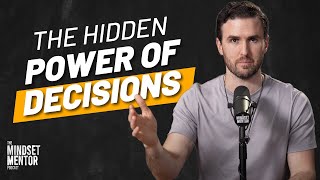
Rob Dial explains how unconscious self-preservation motives like fear of rejection drive everyday choices away from growth. He traces decisions back to their hidden emotional triggers, then offers a method to uncover them: identify the choice, ask why, dig into past experiences, recognize the self-preservation goal. Choosing the harder path now beats the pain of regret later.
Chapters
Which we, we would think on the surface, oh, I'm not taking that action cause I'm lazy. Oh, I'm not taking that action cause I don't have ambition. Right? We might think that, but instead it might be a subconscious attempt to get away from potential rejection or criticism. So you might be afraid of being rejected. And so in that millisecond when you have the choice, your brain automatically just decides to scroll. And instead of putting yourself out there and you might be completely unaware of this decision that was just made. But we must become aware of our decisions. And maybe if you were to go back and back and back and back and back and you say, okay, damn, I am noticing. I'm afraid of rejection. That's why I decided to scroll on my phone. I am afraid of rejection. Why am I afraid of rejection? Maybe you're afraid of rejection because have consequences. Every decision has some sort of consequence. It could be good or bad. And at every moment of your life, you're taking action. You're always taking action. No matter what it is that you're doing. Even if you're asleep, you're still sleeping. That's still an action. Even if you're just watching TV on the couch, you're still laying on the couch and watching tv. Both of those are actions. And so you're still always taking an action. The question is, is that action that you're taking in that moment going to get you closer to or further from the goals that you have in your life? And so there's choices, there's decisions and there's actions. And that's really what it boils down to. Very simply, when you make decisions in your life, you are deciding who you want to be. That's what it comes down to. You know, there's a great quote that James Clear says. He says every action that you take is a vote for the person that you wish to become. Every action that you take is a vote for the person she wish to become. So your alarm goes off and you decide to get up. When your alarm goes off in that moment, a choice has to be made. Am I going to wake up and I'm gonna. Or am I gonna hit the snooze button? So there's a choice that has to be made. There's a decision that is right there. So there's choices in front of you. There's a decision that has to be made and then there is some action. So if you decide to get up, you have made this. There's a fork in the road. You've decided I'm going to get up, and you take that action. On the other side of that, there's a choice where you don't have to get up. You can hit the snooze button. So let's say the decision is you hit the snooze button. There's a choice that's in front of you, there's a decision that you've made, and there's an action that you're going to do. It's simple. It's not really hard. But our entire life, it comes from what decisions we end up making. If you decide that you want to scroll on Instagram, there's a choice where you can scroll or not scroll. There's a decision of what you're going to do, and there's an action that you decide to make. If you decide to read a book instead of scrolling on Instagram, there's a choice that's in front of you, there's a decision that you're going to do, and there's an action that you're going to take. Your entire life is made up of choices, decisions, and actions. You are made up of all of your decisions and all of your actions that you've decided to make over the course of your life. And every action that you take is a vote for the person she wish to become. If you decide to go to the gym, you're just deciding to be the type of person who goes to the gym and cares about their fitness. If you decide to, you know, eat fast food, you've decided that you're a person who decides to eat fast food instead of making a choice that's healthier for you. That's what it comes down to. And there's no good or bad or judgment or guilt or shame in this entire thing. I'm just speaking very objectively. That's just the way that life is. The problem is, a lot of times what we do is we make bad decisions. We usually make the bad decisions unconsciously. Like, we're not even really paying attention. We've been doing it for so long, we just continue to do them. So if you go back to the example of, like, fast food, right, it could be almost an unconscious thing where it's just like you've been just eating fast food since you were a kid, whenever you were hungry. So it's like, I get this craving, I get this. I'm hungry. Instead of waiting an extra 20 minutes and going to a place that might be healthier, I decide to go off and get something that's unhealthy for me. And a lot of times it's kind of unconscious. So we need to bring the unconscious choice, decision, action to the forefront of our mind and actually start to work through and see if it's what we want. And so today, that's what we're gonna really dive into. We're gonna talk about how all of those decisions shape our lives and how we can make sure that we start making good decisions and change the bad decisions. And so, you know, when you look at an action, this is what's really crazy about people. And I love people. I love thinking about people and seeing how they became that person and all of that and how they decided to make that choice. An action. When you look at an action of like, oh, I decided to wake up. Oh, I decided not to wake up, they seem really straightforward, but that's just surface level, beneath the surface, there is a whole computer system that's running in the background. There are a ton of. Of really complex cognitive processes that you have to go through. You know, with each choice that you make. You have. You have filters of your life in your paradigm, in your worldview of who you think you are, who you think everyone else is in the world. It filters through all of your traumas. It filters through your successes, your failures, your relationship with your parents. And so it's not just like a decision. It's not just an action. This decision comes through and filters, you know, when you have a choice, the decision that comes. It has to filter through all of these things that have happened to you. And that's what's crazy about it. And so, like, I'm gonna dive really deep into it, so you can kind of see what I'm seeing. But, you know, the decision comes through, goes through a filter, and you decide to make that decision. But, you know, when you look at your conscious and your unconscious mind, your conscious mind is only about 5%. So you can consciously want to make the right choice. And we all want to make the right choice, but 95% of us in our. Our thoughts and our program programmings and conditionings and all that stuff that. That exists from the moment we were born and became conscious and started having memories to the moment that we're at right now, 95% of our cognitive processing is unconscious. It is below the conscious, the subconscious mind. And so, for instance, like, it's really interesting, like, if you. If you want to really dive deep into it. Right. I love diving deep into people. If you decide to scroll on Instagram instead of focusing on Your business growth, like, you know, doing cold calls or knocking on your doors for your brand new business that you have. And you're like, I know I need to make some calls, I know I need to knock on some doors and then just start scrolling on Instagram instead. Doing, instead of actually doing the thing that you need to do to grow your business. Your decision might not really necessarily be driven by a lack of ambition or being lazy as you start to go back and back and back. When was the first time I felt rejected? You know, did one of my parents make me feel rejected? Oh my God. My dad used to do XYZ and it made me feel rejected all the time. And so avoiding putting yourself out there and growing your business is avoiding the rejection. And that's a way to protect yourself. And so our minds develop these defense mechanisms and it'll try to steer you away from situations that you perceive as threats and try to steer you towards like safer territories. And a lot of times the craziest part about it is we don't even fucking recognize it. That's the crazy part is it just happens and we're like, why don't I have the life that we, that I want? Because we're, we're, most of our life is being lived unconsciously and we're not really going behind the surface. So that means when you really look into it, that each action, whether it's conscious or not, contains some sort of goal. Right? More often than not, that goal is aimed at self preservation. So scrolling instead of putting yourself out there is actually a way of you protecting yourself. Do you see that? Because you don't want to be rejected. But in you're thinking, oh, well, I'm just lazy. Well, you might not necessarily be lazy. You might not have. It's not that you don't have ambition, it's that you're actually trying to. It's a way of self preservation. You're trying to protect yourself because you were felt so rejected as a child by your father. And then, you know, maybe something happened where you were, you had your love of your life in high school when you're so in love and she ended up cheating on you and you felt rejected again. That's like the example I always give to people. Kind of distance yourself and take yourself out of it and take humans out of it is if you look and you see an aggressive dog that every time a human walks by, they bark at it, they get really aggressive. That dog was not born aggressive. That aggressiveness is a defense mechanism that it had to create early in its life, to survive and to protect itself against something that looked like us, some other human that ended up doing something bad to that dog. It's the same thing as the last example, being afraid of rejection. Right. So it's really interesting. We start to dive into it and you go, oh, my gosh. With every action that I take, whether it's conscious or unconscious, there's some sort of goal. And so my goal could be, I really want to grow my business and that's what I need to focus on. But unconsciously, it's self preservation. I don't want to be rejected. And so we'll talk about how to work through these things. And so let's dive into those goals and really talk about them. I don't mean like the goals in your life or the big, huge goals. I mean like the hidden goals in your choices and your decisions. And every choice and decision that you have carries some sort of little hidden goal most of the time. So let's say that you're. You're presented with a choice. You can either work out or you can skip the workout, and you choose to exercise. Well, that goal is to lose weight, to improve your health, to live longer. Great. That makes sense to us, right? Let's say you have another choice. You can either read or you can scroll on Instagram and you choose to read. Great. Okay. Well, that goal is to become more intelligent or to hold better conversations, because the more you know, the further that you're gonna go in life. Okay, cool. That makes sense. Okay, let's say we have another choice. Let's say you can either watch Netflix or we can sit down and create a presentation for work, and we choose Netflix. The goal usually in that situation is self preservation. Why are we not doing the thing that we know we should be doing? Like, what's really behind that? We're afraid of public speaking. Okay. Why are we afraid of public speaking? I don't want to screw up at it. Why don't you want to screw up at it? Because I don't want to look like a fool in front of my boss. I. Okay. Why don't you want to look like a fool in front of your boss? Because I'm afraid that I'm going to get fired. Okay. Why are you afraid that you're going to get fired? Because I remember when I was younger, my mom got fired from our job and we almost lost our house. Holy shit. I'm on Netflix because I'm afraid I'm going to lose my job. Right? Like this is a really tedious process to start to understand yourself. But when you start to backtrack, you really start to see how your unconscious worldview creates these little, tiny decisions. And you realize, oh, my God, I'm not just watching Netflix. I'm trying to avoid this big, huge future that I'm creating in my mind that doesn't really exist because of the time my mom was fired and we almost lost our house when I was a kid. Oh, my God. There's so much behind it, isn't there? And then you realize your choices, your decisions, are way more complex than you actually think they are. So what do you do? You procrastinate. You watch trashy reality tv, distract yourself from the uncomfortable feelings of creating the presentation, and you realize it's not that you're just afraid of public speaking. It's afraid that you could make a fool of yourself and lose your job. Wow. It's a lot deeper than you thought it was, right? Let's say there's another choice, right? You can either learn to get better with money, or you can act like it's something that you don't want to learn. And you're like, I don't want to learn that. And so you decide you choose not to learn how to get better with your money. Okay, what's really behind that? Okay, I don't want to put in the hard work, and I don't want to learn. And it's uncomfortable once you know, like, how much there is to learn. And so you just decide not to skip it. You decide to decide to skip it. You decide not to. To learn how to be good at money, and you don't have any financial freedom, or it could be even behind that, even more. And so I love working through people's psychology around money. Maybe it's that you have an unconscious negative connotation around money. Like, for me, I consciously wanted to make money for a long time, and I did it, and it was hard, and I was. I couldn't push myself to do it. And then I started making money and I started spending all of it. And I was like, man, why am I like this? And I started going back, and I started going back and started going back, and I was like, what are my first memories around money? What do I remember? And I remember, like, one of the things that popped up in my head is my mom was a realtor when I was a kid. And I remember every time tax season would come around, she would get so stressed out. I remember I can still see her in my Head sitting at the dining room table, papers all in front of her, doing her taxes, being so stressed out about money. And so if something makes anything in this world, as a child, makes my mom stressed, would a child say that's a good thing or a bad thing? A bad thing. And then there's many other memories that I have of me thinking that money was bad. And so naturally, when I wanted to make it, I would stop myself from making it. Naturally, when I started making it, I would get rid of it. I had another example of this. I had a client one time, and she said she had a hard time saving money. She would make all of his money, and then she had a really hard time saving it. She had these very specific rules that she set for herself, and she would break all of those rules. And then we started working on each other. I started working on her. We were working with each other. And I was like, hey, what's behind this? What do you think of money? What are your first memories around money? We started talking about talking about it, and she eventually just blurts out. She goes, I think. I think money's evil. And I was like, okay, you think that it's evil. Tell me more about that. She's like, well, I think it's evil. I remember my mom saying this when I was a kid. I remember my dad saying this as a kid. I remember both of them fighting when I was a kid. And. And I remember them getting in these heated debates about money. And I just. I think I just unconsciously placed a label of money being evil. Well, of course she's going to have trouble saving money and making money because you're always going to avoid something that you actually think is evil. And so there's all these hidden goals that are like these invisible threads that connect choices that we have to the decisions, to the actions that we make. And all of those things, depending on what it is that we have, are going to change our behavior. They're going to change our lives, they're going to shape our lives. And normally we think of goals as a good thing, and they are good things. You know, we have a goal if we want to set a goal for the month or a goal for the year. But goals can also be these little tiny hidden goals of self preservation. You know, like people say, like, rob, I need to get over procrastination. I procrastinate too much. Like, procrastination is my problem. And I say, no, no, no. Procrastination is not your problem. Procrastination is the symptom there's something behind all that. You know, it's like the downstream effect. There's something upstream that is making it making you want to procrastinate. There's something upstream that is a thought pattern. There's a self preservation, there is a future that looks terrible in your future that you want to avoid. Procrastination is never the problem. Procrastination is a symptom. The main problem is what we're trying to get back to. Maybe you're procrastinating because you want to avoid rejection. You don't want to look stupid, you don't want to make yourself uncomfortable, you're afraid of being seen. You don't want to be judged by other people, whatever it might be. And so we tend to avoid as much discomfort as we possibly can. And when we avoid discomfort, what we do is we usually go towards immediate gratification. Oh, I want to eat right now. Oh, I want to scroll right now. Oh, I want to watch TV right now. Those are immediate gratifications and they give you a little bit of dopamine, little bit of a dopamine hit every single time. But when you go for immediate gratification, it almost always turns into bad results long term. And you've heard me say, if you listen to this podcast before, your life is either easy now and hard later or hard now and easy later. You know, we have many choices throughout the day and we need to become aware of when these choices present themselves. And we need to consciously and intentionally make the right choices for ourself and take the path of more resistance, which is usually harder now going to make us uncomfortable now to make our life better in the long run. You know, it is natural for a human to take the path of least resistance. It is once again least resistance, not hard now. That means self preservation. I'm trying to protect my energy. I'm trying to not do the hard thing because it's an I don't want to get out of my comfort zone because I don't know what's outside of my comfort zone. And if you decide to do what's easy now, it will 100% make your life harder down the road. If you decide to do what's hard now, it will make your life easier down the road. It's just the way it goes. Like Jim Rohn has a great quote around this. He says we all must suffer one of two things. The pain of discipline or the pain of regret. The pain of regret is way worse than the pain of discipline. I promise you that one of them gives you immediate comfort. That's the hey, I'm choosing the easy way. That's immediate comfort. The other, although it's a challenging for you initially, it usually creates a way better life, longer lasting rewards, whatever it might be, right? Like deciding to go to the gym right now, it's uncomfortable, it hurts, you're going to be sweating, it's going to be harder than sitting on the couch. But long term, if you do it over and over and over again, your life will be better. We all know that. So it's about seeing when we get to this moment in our life where we have a choice in making sure that we start making the right decisions. If we choose the easier route, it's almost, it's pretty much always temporary relief and instant gratification. But the path often leads us to way more significant challenges in the future. Whether that's with our relationships deciding not to talk about the hard things, it's your relationship's going to be harder. Your health and your fitness. When you decide not to take the hard route, it makes your life harder later on down the road. In your business, in your money, in every single aspect of it. If you decide to take the easy route now, it will be much harder later on down the road. You know, if you decide to like simple example, right? You decide to binge watch a series instead of studying for an exam. That's immediate pleasure makes you feel better now, but it could result in a lot more stress. It could result in poor grades, it could be, you know, academic problems later on. You don't get as good of a job, maybe you don't graduate, you drop out. But if you decide, okay, I've got this choice in front of me, I'm going to decide not to watch tv, I'm going to decide to study, that can be hard right now. It's a lot of discomfort right now. I hated studying when I was in college. That's why I dropped out of college, right? But, but it will make the exam way easier and it'll eventually lead to better academic performance, less stress, potentially better career opportunities later on down the road. So when you're met with the choice of instant gratification versus delayed gratification, you have to learn to become conscious in that moment. Not to be unconscious, but to become conscious and choose the hard now choose the delayed gratification. Instant gratification is always easy. Delayed gratification is always hard. EAS Instant will make your life harder down the road. Delayed will make your life easier down the road. Your future is just a series of choices that are placed in front of you, decisions that you make either consciously or unconsciously in the present moment, and actions that you have to take which will lead to some sort of future. But you have to decide the harder route that will create the life that you want, that, that lines up with the future trying to create. And if you do that, I promise you this, your life will be way better in the future. So that's what I got for you for today's episode. If you love this episode, please share it on your Instagram stories. Tag me Obdal Jr R O B D I A L J R. Also, if you love this podcast, you will 100% love this thing that I have called mindset mentor plus that's coming out very soon. It is a way to fully integrate these podcast episodes into your life so you're not just listening to them passively, but you're actively engaging in every single episode. And there's going to be worksheets that come with every single episode. There's going to be exclusive Q and A sessions, there's gonna be journaling prompts, there's gonna be all kinds of stuff. There's gonna be a whole bunch of other bonuses. If you're interested in learning about it, go to mindsetwaitlist.com right now, the first people who sign up, the actual founding members, are going to get a discount. So if you wanna be the first to learn about it, go to mindsetwaitlist.com, i'll send out an email to just the wait list before I announce it on social media, before I announce it on the podcast. And you'll be able to see what the discount is. So if you you're interested, we'd love to see you in there, love to connect with you with that. I'm going to leave the same way, leave you every single episode. Make it your mission to make somebody else's day better. I appreciate you and I hope that you have an amazing day.
More from Rob


Why NOT to stay single 👉 @robdialjr #adviceoftheday #motivation #mindset #growth

You Reap What You Plant 👉 @robdialjr #adviceoftheday #motivation #mindset #growth

3 signs that you're addicted to chaos 👉 @robdialjr #adviceoftheday #motivation #mindset #growth

Stop making excuses for people 👉 @robdialjr #growth #mindset #positivity #adviceoftheday

Tip for an amazing life 👉 @robdialjr #inspiration #mindset #adviceoftheday #positivity

It's time to move on 👉 @robdialjr #adviceoftheday #motivation #mindset #happiness

The right person for you is... 👉 @robdialjr #love #truelove #inspiration #mindset #soulmate

Get ready to take risks 👉 @robdialjr #motivation #adviceoftheday #mindset #positivity

The real competition You Vs You 👉 @robdialjr #mindset #inspiration #positivity #adviceoftheday

Their Mood Isn’t Your Responsibility. 👉 @robdialjr #mindset #adviceoftheday #motivation