How To Read Faster and Retain More Information | The Mindset Mentor Podcast
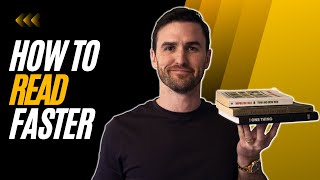
In this solo episode of the Mindset Mentor Podcast, host Rob Dial highlights the stark contrast between the reading habits of the general population and high‑achieving CEOs, then shares a step‑by‑step system for reading faster while retaining more information. He begins with eye‑opening statistics about how many people never read another book after high school, and points out that CEOs average 60 books per year. He then outlines his personal workflow: using a Kindle paired with Audible narration to consume books at up to 2× speed while the text is highlighted for dual‑sensory input; leveraging multiple devices (phone, tablet, computer) to listen or read during idle moments; actively highlighting and annotating passages; exporting those highlights to Google Docs where he copies the original text (black) and adds his own reflections (blue), effectively creating a searchable, index‑card‑style knowledge bank. He cites Ryan Holiday’s paper‑card method as inspiration and explains how this active‑learning loop builds new neural pathways, dramatically improving recall. Finally, Rob stresses the importance of scheduling reading, replacing passive media (TV, scrolling) with book time, and establishing morning/evening routines to make reading a habit. The episode ends with a call to action to share the podcast and a reminder to make others’ days better.
Chapters
Welcome to today's episode of the Mindset Mentor Podcast. I am your host, Rob Dial. Today we're going to be talking about how to read faster and how to retain more information when you do read. And so I read a statistic about a year ago that really kind of blew me away, and it was that 33% of people who graduate high school will never read another book. So a one out of three people that graduate high school will never read another book. 42% of college graduates will never read another book. And then 80% of US families did not buy a book last year. So that means four out of five families in the United States did not buy a book last year. But when you look at the statistics of CEOs, the average CEO reads 60 books per year, which is more than one per week. So if you're looking at yourself and you're looking at the vast majority of the world and you're saying, okay, the average person doesn't read a book, but the average CEO, which are the highest earners and usually, quote, unquote, most successful people end up reading 60 books per year. Which one do I want to be? Think about that for yourself. Which one would you prefer to be? The person who becomes an average person, or someone who stands out, who earns more, who has more success? There's a really amazing secret I want to give you as far as how I read books. And this is molded and changed. I've done this episode or something similar to it a few times, but every single year, I end up changing the way that I read books to make sure that I do it faster, I do it more efficiently, but also so that I retain more knowledge as well. And so if you want a little bit of secrets on how to retain more information, how to get better, how to do all of this stuff, that's what we're gonna talk about today. Another thing about reading that's so important, besides you getting all of that knowledge into your mind to become more wise, to become more intelligent, is reading also improves your focus, it improves your memory, it improves your empathy and your communication skills. It's also been found to reduce stress and improve your mental health. So if you're not reading, let me just give you a little tiny tip. Start reading more books. The wisest, the smartest people in the world have written books. The smartest people who have ever lived. The wisest people who have ever lived have written books. And they might not be alive now, but you can still learn from them. That is the amazing part about a book. Is that even after the person is gone, you can read the book that they made and download the knowledge from their brain into your brain. It's like the ultimate life hack. And so here's how I read and how I read faster, but also store more knowledge. And I'm gonna give you a little tip towards the end, which is something I've been implementing this year, which actually takes longer to do. But I have found my recall remembering from these books is like 10 times more what it was before. And I'll tell you what that is in just a little bit. So for me, I actually love physical books. Like I love holding onto physical books, but I rarely buy them anymore. And here's the reason why. Like I would prefer to use a physical book over a Kindle, over an iPad. But there's a couple secrets that I'm going to give you that are going to help you read faster, that are they require you to have. So about, let me see. Back in 2017 was the first time I started using Kindle. And the reason why is because I was going on a six month trip with my girlfriend at the time, my now wife, and we were going on a trip and I wanted to bring a few books with me. But the problem is when you're packing for six months, you can't really bring four books with you. And so it was the first time I started using Kindle. And one of the secrets that I found with Kindle is that you can download the Kindle, but you can also have the option for like 90, 95% of the books. When you buy something on Kindle on Amazon, under where it says buy now, it says buy audible narration. And so when it has audible narration, it's like an extra $7, $7.49, something like that. The extra $7.49 will then give you the entire audiobook. So I buy the Kindle version and I buy the audiobook. And so I looked it up a little while ago just to kind of get an idea. If I were to want to go and buy the Alchemist, which is one of the most famous books ever, if I were to want to buy the Alchemist on audiobook, it's $21. But if I were to want to buy it on Kindle, it's $11 and add audible narration, it's $12. So the Alchemist audiobook is $21. But if I were to get the Kindle and the audible narration, it's 23. And a lot of times it's actually even cheaper to buy it on Kindle and add audible narration. And so you might say, why do you want audible narration? Couple reasons why. Audible narration is actually just the audiobook. It's like this huge hack that people don't seem to know exists. Right. If you want the book and you also want the audiobook for pretty much the same price as buying the book itself or the audiobook itself, buy it on Kindle and then buy it on audible narration. And so when you're reading the book, though, this is what's cool. When you're looking at Kindle and you're actually reading the book and you push play on audible narration, it will read the book out loud to you and it will also highlight the words that it's on. So if you happen to like, be listening and you, you look away from your book for a few minutes and you're still listening and you're into the book and then you look back at your book, you'll automatically be highlighted. It'll highlight and actually show you the words that it's reading out loud so you don't have to be literally staring at it the entire time. Why is this important? Well, it highlights it so that you're actually seeing it, but you're also hearing at the same time. So you're using two of your senses versus one, you're using your sight and you're using your actual sound. You're hearing things as well. The other thing that's great about as well, I don't know if you're like me, I read kind of slow and sometimes I'll read, and then sometimes I'll be reading, and then I'll realize about halfway through the book that I was thinking about something else, yet somehow my brain was still reading it, but none of the information actually went into my head. And so what's cool about it is when someone's reading it out loud to you, which is what they use through audible narration. And I'm not sponsored by Audible in any sort of way. They should freaking sponsor me for how many times I've talked about how amazing this is. I would love to get a commission from all the people that sign up, but I don't. But you can also turn the speed up to 2x, so you're reading it twice as fast. So if the book is normally 12 hours to listen to and to read, it only takes about six hours. Now you're reading it and you're also hearing it as well. And I love. The thing I love about it as well is when I have a book, usually What I'll do is I'll underline. Like if I have a physical copy book, I'll underline and I'll highlight and I'll make notes all over my books. Like my books literally look like I'm studying for a test, but. And so I'll make notes, all of that stuff. What's cool about when you use Kindle is you can highlight whatever it is that you want to highlight. So you can highlight an entire paragraph and then you can actually add a note. And you add a note and you just type out what it is that you're thinking inside of your head about, what it is that you just highlighted. And so you can highlight, you can make notes in the Kindle, you can do all that. But then here's the amazing thing is a lot of times what I do is I'll read in the morning. So let's say I'm reading at home and I'm reading at home and then I need to go drive to the office, the studio here where I currently am. It's about 12 minute, 15 minute drive, depending on traffic, right? If I'm really into a book and I'm like, man, this is great, but I don't want it to end, but I've got to go to the office. What I'll do is I will literally just. If I'm on my Kindle and I'm reading it on my iPad, right? I'm reading my iPad, then what I do is I go, all right, I'm going to hop in the car. When I hop in the car, I just push play, I go for the drive and you can listen to the audiobook while you're driving. And so it's not like a physical copy book where I can only read it when I'm reading it. I can just literally have it on my iPad. Then I can get in my car, I can drive to wherever it is I'm driving, I can listen to it. And so it allows me to be able to constantly be learning because that's just something I love to do. I can do it when I'm listening in the shower. I can listen in the shower. If I'm making eggs in the morning, I can listen to a book while I'm making eggs. And the good thing is, is you could put it on three devices. So I have it on my phone and I have it on my iPad and I also have it on my computer, which is something that I'm going to tell you about in just a second. So I also have it on My computer. And so here's what's really cool about the whole thing is you can have it on three different devices and say you're at the doctor's office and you're waiting for the doctor. What do we normally do when we're sitting around waiting for the doctor? We don't really sit around and read any of those old Sports Illustrated magazines that are sitting in the doctor's office anymore, right? No. What do we all do? We take our phones out and we scroll on our phones, we go to Instagram and we just go down the pit of being in social media. The cool thing about it is that if you're reading something at the doctor's office instead of reading a magazine or scrolling on Instagram, is you have a couple different options. Number one is you can read the book that you have been reading on your iPad, you can read on your phone. Or what I really love to do is when I know I have 10 minutes waiting somewhere, like I'm going to pick somebody up at the airport and they're not there yet. Maybe they're delayed and I have 15 minutes. What I love to do is I love to take out my phone and pull up books that I've read before. And instead of reading the books, what you can do is you can actually go to up in the top right, there's a little button that allows you to see where your actual highlights are. And you can go back and read just the highlights of any book that you've ever read on your Kindle. It's amazing. And so the best part about this whole thing is that if you have 15 minutes to spare, instead of scrolling on Instagram, why don't you reread the most important parts, the parts that really stood out the most to you of a book that was really impactful for you. And so for me, this is like the secret to get the best information and read books three, four, five times. Because let's be real, if you've read enough books, you realize that a lot of books are just a whole lot of fluff. Like, there's a point that they want to give you and then they tell you three or four or five fricking stories about the same point, and you're like, I get it. Cool. Thank you for telling me the same damn story over and over and over again, just a little bit different. And it's like, if you have the key points that you want to get from the book, why don't you spend those 15 minutes re downloading that book into your Brain because you never. It's like the phrase, you never step into the same river twice because you're not the same person and it's not the same river. It's like when you reread a book from six months ago that was really impactful for you or three years ago that you read, or for me, like back all the way to 2017 that I read, I'm reading it with a fresh set of eyes. And there's so many times that I've been reading highlights from a book that I read years ago on my Kindle and it just hits differently. I'm like, oh, I feel like I understand this one at a different level. I feel like this is hitting differently than it was before. And so that's the cool part about it. You're sitting in the doctor's office, you can go ahead and you can just read the highlights or, you know, you can go back and listen to certain parts of a book that was, oh, this chapter right here was really good. In this book, I've got a 15 minute drive. I'm going to spend these 15 minutes listening to this. Essentially, you're rereading books over and over and over and over and over and over again in a much shorter period of time. And so this is really important because this is how you can read a whole lot more. And the tip that I will give you, and this is the new thing that I just started doing recently is this. So I'll read it on my Kindle. And when you read it on Kindle, I also have Kindle on my computer. And so what I will do, and this is not efficient, this is not the most efficient way of doing this. But I have been watching people who are talking about, you know, on YouTube of how to retain more information, how to learn better, how to get things locked into your head. And I was watching a few different people that were talking about this in different ways. One of the people was Ryan Holiday, who Ryan Holiday wrote, you know, ego is the enemy, Obstacle is the way, like all of these different books that are just incredible books. And he was a research assistant for Robert Greene, who's this huge, huge author, right? He was a research assistant for him. And what he would do is he would read and then when he found something that he really liked, he would take a pen and paper, which I think is the best way of doing this. It's just very slow and you have to have a lot of time to do this. This is kind of like a little bit faster way of doing it. He would take an index card, and he would write down what it was in the book and what he got from it. And then he. For every single book he's ever read, he has index cards, and he files them away in alphabetical order. So it's like this one talks about anxiety. Here's a tip about anxiety. He talks, writes it down, and what he got from it. So what I started doing was I started actually highlighting all of the parts I like, making any notes that I really like from it. And then when I get done with the book, what I do, and this takes time like this. I'm just going to be honest with you. This is not the faster way of reading. This is a slower rate of reading, but this is definitely a way to retain more information. If you really want to deepen this into your head as you go onto your computer and have Kindle on your computer, then what you do is you pull up Google Docs. This is what I did. This is just my weird way of doing it. You pull up Google Docs and you say, okay, here's my highlighted parts. Okay, I'm gonna highlight the. I'm gonna go through, I'm gonna read this entire part, I'm gonna highlight this, and I'm gonna copy and paste it into the Google Docs, Highlight this, and copy and paste it into Google Docs. And for each highlight, now that I'm done reading the book and I'm now seeing the book through a little bit different eyes, is I will look at the book and I will copy and paste it into my Google Docs. This is exactly what I do when I have it in my Google Docs, the actual text from the book is in black. And then what I do for every single thing that I highlight, I make my notes on it, and I take notes. So if it's something about anxiety and I'm like, you know what? I could do a podcast episode on this thing that I just learned about anxiety. I'll then make my notes in blue. In a podcast episode, I should talk about this, this, this, this, this. And it might be like a sentence. It might be two or three paragraphs. And then what I do is I go to the next highlight, and it's a highlight that might be three pages later inside of that book. And I copy it and I paste it into my Google Docs in black font. And then I do my notes in what I'm learning from it or what I'm getting from it or how I could use it in the future in blue. And so these end up being like, no joke, 20, 30 page Google Docs for every book that I've read. But the amazing part about this and the reason why I'm starting to do this is because, you know, I'm in the process obviously of getting my first book done and it's about to be out in a few months. I'll announce that in just a little while when we have everything, the date, the title, all of that stuff, we'll announce it so you don't need to worry about it. But as I'm looking at this, I'm going, I could use this in a book. Oh, I really like this. I can make this a chapter. I could talk about this. And so what I'm trying to do is I'm trying to have an actual full on bank. The same way that Ryan Holiday has, you know, all of his, his index cards filed away and stored. I'm trying to have pretty much the exact same thing, but in Google Docs because in Google Docs you can go in and you can search stuff. So if you're like, you know what, I've been really stressed out lately, you can go into your Google Docs and search the word stress and see what books you read. Two years ago after you start doing this and you start realizing, oh my gosh, I can, I have all of these notes on stress and how to get past it. And so that will take more time from you, 100%. But it's another way of taking your knowledge. And the reason why this is important is because when you're reading, it's just considered passive. Like you're just passively learning. But when you're taking that information and you're teaching or you're taking, what did I get from this and how am I going to use it? That's considered active learning. So there's passive learning and there's active learning. Passive learning is just sitting there and reading or someone just speaking directly to you. But when you actively learn, you're 10 times more likely to remember that content later on down the road. And so the beautiful thing about that is I'm actually creating new neural pathways inside of my brain by saying, okay, this is a highlighted thing. Here's what I got from the highlighted thing. This is why it's important. This is how I'm going to use it later on in life, locking it into my brain. Next highlighted thing, okay, copy and paste, put it here. Here's what I'm learning about this. Here's what I like about this. Here's how I Could use this later on in life. Lock it into my brain. Next highlighted piece. And it takes time to do this, but it's just so much more information. It's just really making sure that for every amazing piece of knowledge that you get from a book, you're locking it in and you're getting it into your brain. And another big tip that I'll give you this is if reading and learning and growing and becoming more intellectual is really important to you, you have to start scheduling it out. Look at your schedule and see where you can get more reading in. For me, I prefer reading in the morning. That's just my thing. I feel like it's better for me, and my brain's just in that mode. And in the evening, I like to use it as a replacement for Netflix. Like, I still watch Netflix, but I just don't go on binges or anything like that. You know, if you have a show that you like, give yourself one episode per day, 45 minutes to an hour, and then read the rest of the time. And then, you know, don't strip yourself of something that you love. If you love watching a certain show, but just watch one of them instead of six of them in a row. And, you know, a lot of people reach out to me and they want to wake up earlier and they want to create a morning routine, but they have trouble falling asleep. They say they're night owls. This is a really good routine for falling asleep and being able to get up earlier is to not allow yourself to watch tv, to turn off your tv, and don't allow yourself to get on your phone unless you're using Kindle on it. And then just use that time to read. Create a routine where you read before bed. You allow yourself to get tired by reading, and then you'll end up going to bed a whole lot earlier. That way your brain can store all of the information that you just read and take everything that you just learned and start to file it away in that brain of yours. And, you know, there's a quote out there. It says, there's no difference between someone who cannot read and someone who does not read. Both of them lead to ignorance. This is your way. If you look at the average person doesn't read. If you go, you know what? I want to set myself apart in five years. Well, then if the average person doesn't read and you start reading, reading, reading, reading, and you fast forward five years. If you read 20 books a year, let's say you could get 20 books, let's say you read one book per month, 12 books per year. Right? Five years from now, that's 60 books. You can't tell me that after reading 60 books you won't have more knowledge, have more wisdom, and be more intellectual than the average person who doesn't read at all. Reading books are like the cheat code of life. All of the knowledge that's ever existed is inside of books. There's literally no good excuse for not reading. So this is how you read faster and and also retain more information. So that's what I got for you for today's episode. If you love this episode, please do me a favor right now, share this on your Instagram stories and tag me in it. Robdial Jr R O B D I A L J R I love seeing how all of you guys always tag me on Instagram. So it's Robdial Jr. Once again. And that's just a way for us to also be found by more people when you guys do that. So if you would do that, I greatly, greatly appreciate it. And I'm going to leave you the same way leave you every single episode. Make it your mission to make somebody else's day better. I appreciate you and I hope that you have an amazing day.
More from Rob


Why NOT to stay single 👉 @robdialjr #adviceoftheday #motivation #mindset #growth

You Reap What You Plant 👉 @robdialjr #adviceoftheday #motivation #mindset #growth

3 signs that you're addicted to chaos 👉 @robdialjr #adviceoftheday #motivation #mindset #growth

Stop making excuses for people 👉 @robdialjr #growth #mindset #positivity #adviceoftheday

Tip for an amazing life 👉 @robdialjr #inspiration #mindset #adviceoftheday #positivity

It's time to move on 👉 @robdialjr #adviceoftheday #motivation #mindset #happiness

The right person for you is... 👉 @robdialjr #love #truelove #inspiration #mindset #soulmate

Get ready to take risks 👉 @robdialjr #motivation #adviceoftheday #mindset #positivity

The real competition You Vs You 👉 @robdialjr #mindset #inspiration #positivity #adviceoftheday

Their Mood Isn’t Your Responsibility. 👉 @robdialjr #mindset #adviceoftheday #motivation