How To REPROGRAM Your Mind For Abundance & Success TODAY | Rob Dial
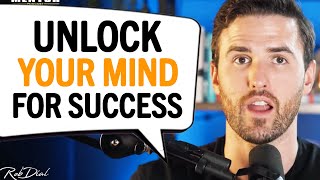
Rob Dial breaks down how confirmation bias, false memories, and other people's expectations trap you in a fixed identity. Up to half your memories may be false, and your sense of self is often built on others' beliefs. He argues you can reprogram by choosing internal values as your mental GPS and deliberately seeking out opposing viewpoints.
Chapters
Some of your foundations of what you build your life upon, I promise you might get rocked to 50% of the memories that you have in your head are not accurate. So many people have built their entire lives, their entire identity, everything that they know about themselves, that they love about themselves, that they hate about themselves, off of a perception of what they think that they actually are. I don't mean to offend anybody, but some of your foundations of what you build your life upon, I promise you might get rocked. I'm going to challenge your beliefs. I'm going to challenge the foundation of what you built your life upon and show you how we use cognitive biases to, I guess you could say, take over our own brains. And you know, how the brain is actually playing tricks on us before we even realize it. So let's dive into it. I'm going to go over a couple different bias with you guys. So the first one is something called confirmation bias. One of the things that's really funny about being a human is we have this incredibly complex piece of machinery between our ears that is working without us ever trying to use it, without us ever thinking about it, without ever trying to take control of it. It's working at all points in time and it's doing what it's doing. And if you don't know how it works, it could mess you up a little bit. And that's why you have to understand the way that we work. We think that our opinions are a result of years of rational and objective analysis. Like if I say, tell me your beliefs, tell me your opinions and tell me why. Those are your beliefs and your opinions, you think the reason why is because they are a result of years of rational thinking and objective analysis as to how the world works and how you operate in it. Right? Nothing could be further from the truth. The truth is that your opinions, or the result of years of paying attention to information that confirmed how you believe while ignoring the information that changed your would have changed your perceptions. So this is just all psychology. These are all facts. It's called confirmation bias. You're literally seeing the world, seeing everything. You're only seeing what makes you feel like you're right and you're missing what can prove you wrong. Another problem with this is that you hang out with people who only think exactly the same as you. Because it's really hard to hang out with somebody who has a completely different opinion on the world. Like, if you think of your top five friends, they think exactly the same way that you do. They have the same beliefs, they're probably around the same weight, they probably eat the same as you. They work out around the same amount of time that you work out. They probably have the same political affiliations as you. We hang out with people who, who only think exactly the way that we think, which then confirms even more of our bias of, yes, the way that we work in this world is right. So the friends that we hang out with, that's the first thing. The people we surround ourself with. Here's another thing that's really hard about it. The news that you watch. If you watch the news, you're only one promise you that if you're of a political affiliation or certain beliefs, you're only watching the news that is going to talk to you the way that you believe. And to watch news on the other side really rocks the foundation for a lot of people. And the third thing is online, you're probably only following people who think the same as you, which then confirms that the way that you think is right. Because you can see how many people think this way. This isn't necessarily a negative thing. It's not a positive thing either. It just is the way that it is. But when you understand this, you start to think to yourself, are my beliefs I actually my beliefs, or is it a little bit of nature and nurture? Is it the way that I was raised? You know, my parents told me this, this, this, this, and then I just started hanging out with people who literally have the same beliefs as my parents in some sort of way. Or you could have maybe not enjoyed your parents in the way that they were. So you started hanging out with people that were the exact opposite of them that confirmed the way that you believe. Very rarely do I hear people going, yeah, I love to hang out with people that don't think the same as me. I love to hang out with people of a different political party, of different opinions, of different thoughts and feelings and all of that stuff. And there was actually. To give you an idea of how people read, In 2009, Ohio State did a study that found that people read, excuse me spent 36% more time reading essays that aligned with their opinions. People want to read. What is going to tell them that they are correct. Now, why is this really bad? Because there's another side of the street and you never really see the other side of the street. Now, this was bad before social media. The reason why social media ends up being worse than worse, makes this worse is because there's algorithms. You know, if you look at Instagram and you look at Facebook, and you look at YouTube and Twitter and LinkedIn, all of those things are. They're just computers. There's not people running those. There's people that build these things called algorithms. An algorithm is a computer that just, you know, a line of code that says, if this person clicks, like on this person's post, show them more of their posts. And so what happens is we create with algorithms, with the people that we hang out, the news that we watch, the algorithms that exist, we create an echo chamber of only hearing our beliefs. Because here's the way that Facebook works. Let me just give you a real quick example, right? I understand the algorithms at a very deep level only because I think of everything on a computer. All of these social medias and algorithms. That's the way that I was able to build a following of over 3 million people between Instagram and Facebook is I was always thinking algorithmically and I was always thinking psychologically. If I can understand the way that people think and I can understand the way that computers think, I can then put out information that people want to see, and then also it can start to go viral. Facebook only makes money when you stay on Facebook because then you see the ads. The only way that they're making money is through the ads. That's it. There is no other way that I'm aware of. I mean, there might be other things that are outside of it, but Facebook as a company makes their money by selling. Selling advertisements and putting those advertisements in front of you. They make money when you stay on Facebook, so they will give you what you want. So if I am of a specific political party and I start to like certain things, which I'm not. I'm not a part of any political party, but if I was and I start to like a certain person's stuff, Facebook is then going to show me more people who I might not even follow who have the same political affiliation as me. Why? Because I want to read things that confirm that I'm right. So. So you're seeing even more of what makes you think that you're right. All of those things firm up the belief that anything different than what you believe is absolutely incorrect. And you can feel it physically, can't you? When someone challenges your beliefs, you can feel it physically inside of your body, as if you're getting attacked. That's why you see so many adults acting like children in the comment section of YouTube and Facebook and Instagram is because they are literally feeling physically attacked by other people. Because they don't. They don't like seeing things outside of what they think is right to them. So you only like to be told what you already know. How ridiculous is that, though? To think that we already know everything and everything that we know is right. Like how. How ridiculous is it for me to be like, I already know everything and everything that I believe is actually correct? That's ridiculous, isn't it? And consciously, I think everybody who's listening right now knows how insane that sounds. For me to go, I'm right on. Everything that I think and everything that I believe and everything that I know is correct. And I already also already know everything. And we can consciously think that, like, wow, that sounds ridiculous. That sounds. I would never think that way. I'm not like that. No way. But if I were to bring up a big issue that you believe in, whatever that big issue is, and tell you that you're wrong, then we can really see how you react. Then there's usually a trigger, and that trigger shows you where you're not free. Any trigger that anything that triggers you shows you where you're stuck in life. If someone comes up to me and brings up some big issue and I get pissed, it's showing me where I'm still stuck in life. That's in the moment. You know, how you spend your time with people who you spend your time with, what you spend your time learning. We will only search for things that teach us. Not always, and I'm going to say always, but most of the time, unless you're aware of it. We will search for things that are going to show us that what we believe in is correct. What about when something you believe ends up being bad or you voted for somebody and they did something bad? Now we roll into what's called another cognitive bias, and it's called choice supportive bias. First off, we have confirmation bias, which means that I'm only going to read the news that supports my beliefs, or I'm only going to hang out with these people that support my beliefs. And it's not just political beliefs, but it's all types of beliefs. Could be religious beliefs, it could just be spiritual beliefs. It could be whatever it is. There's so many different beliefs that we have. I want to be around people who support my beliefs. So now we roll into another cognitive bias, which is called choice supportive bias. When you make a decision, whatever that decision is, we will only see the positives. This is so crazy. When you actually start to think about it, we will only see the positives in that decision most of the time and not see the negative. Let me give you a real good example, right? I have an iPhone. I had an iPhone for. I had a Samsung for the longest time. And I switched about five years ago, four years ago to an iPhone. And then you notice that people on the Samsung side hates iPhones and they'll tell you why. IPhones are the worst. And people on the iPhone side will hate Samsung and they'll tell you why those are wrong. So, like, let's say I have an iPhone, right? We'll make it something just silly and simple. It does happen, right? I have an iPhone and overnight it decides it wants to update, and then there's a bunch of bugs and it starts to fail. And my friend Alan, who has a Samsung, I do have a friend name Alan, he has a Samsung. We always talk about this and we always make fun of him because we're like, hey, I'm gonna airdrop you some photos, Alan. Oh, I can't. Right? And so we always make these jokes with him, but he's hardcore. He will not switch because he's just so hardcore in it. And so let's say my phone updates and something fails, and my friend Alan comes over and he's like, well, yeah, of course it did, because that would never happen with a Samsung, right? What's going to happen with me? I need to then back up my choice to have bought an iPhone. This is the perfect example of choice supportive bias. I made a choice. I need to now support that choice and show why that choice was right. So I need to back up my choice for the iPhone. Oh, yeah. Well, you know, maybe it messed up today, but, Alan, we know that the pictures are so much better on the iPhone. We know that the ecosystem makes it so much. You know what? I don't care if it fails, because eventually when the bug gets fixed, I'm at least gonna have the ecosystem. The ecosystem is the best part of it. We see this happening all of the time with political parties, don't we? Democrats versus Republicans. One party does something wrong and, you know, let's say I'm a part of a political party X and my political party does something absolutely wrong, I'll just look over it and explain why my party's still better. And then political party Y does something wrong. And my friend who's part of political party Y is, oh, yeah, but you know, that's okay because we're still better in this way. And what happens is if I'm part of political party X and political party Y does something bad, I'll only see they're bad. But I won't see any of the good stuff that they do because I have to prove to myself why my decision to vote for political party X was the correct decision. Then person of political party Y will only see all of the bad in political party X and they won't see any of the good. Because we have to confirm and we have to show that our choice was the right choice, even if it's blatantly obvious that something's wrong. We see people do this all the time with presidents that they vote for. And no matter what country that you're in, I'm sure you see this right? You vote for a president or the president does something and the person who voted for him will completely miss it and explain why he's still better, even though it's blatantly obvious to the thing that he did. You know how. Even though it's blatantly obvious that maybe their party did something or maybe that person sucks. Why do we do this? Why do we have to feel? I mean, if you really think about it, it's a frail ego is really what it is. We as humans want to feel like we're really concrete in who we are, what we believe in, and what we do. A lot of times we don't even like knowing that we're wrong, and we don't like being told that we're wrong, and we don't like someone proving that we're wrong. And we'll do anything to see ways that we're not wrong. So we tend to rationalize our choices, especially when they're bad. Why? Because we have to tell her, oh, my gosh, that was a bad person to vote for. Oh, my gosh, that was a bad political party to vote for. Oh, that was a bad purchase of my iPhone. We have to show ourselves why that thing that we decided to do in our past was correct. So we have to know who we are. Nothing makes, and I've worked with thousands of people, nothing will shake a person up more than when their beliefs of who they think they are are foundationally shook up. It's so hard for them to do it. It causes something called cognitive dissonance. Cognitive dissonance means I believe that the world is this way. I believe that this is right and this is right and this is right, and. And we can get facts on facts on facts as to why that's wrong. And you can literally see somebody attack before listening to going, oh, I might have actually really been wrong. It causes cognitive dissonance the way that I think that the world is. Is actually not the way that the world is. So what's the solution? I know that nobody listening to this consciously, you know, wants to consciously be stuck in their way, unopened, to hear other people's sides and other people's stories. Because if we don't open ourselves up to hearing other people's opinions, eventually we're going to get old and senile and stuck. Like, you've seen people who have been stuck in their ways for a long time, and it gets more and more hard and concrete the longer that they live that way. So what can we do? Challenge ourselves. When you have a belief, ask yourself, first off, is this my belief? Or is this a belief that was put into me as a child? Is this what my parents believed? Is this what society told me to believe? Is this what my friends believe? So I just kind of followed the group. Challenge your beliefs. Start asking yourself, is this what I truly believe in? Is this belief right? Challenge your thoughts, challenge your past decisions, and be open to the fact that maybe we're not right a lot of times, maybe we're wrong a lot of times. It's okay. And be open to other sides of the road, other sides of the street, other people's opinions, thoughts, and just think, maybe I'm not always right in everything that I believe. Do different things. Push yourself outside of your comfort zone. Go talk to someone who doesn't think the same as you. Allow yourself to be challenged in ways that you've never been challenged. Nothing is worse than someone who thinks that they're right, stays in that decision for the rest of their life and gets old and hard and senile and, oh, I'm concrete in who I am. That's called a fixed mindset. I don't know about you. I want to have a growth mindset of, I can change, I can be different. I want people to come in and be like, you're wrong, and this is why you're wrong. And I want them to piss me off so I can find my triggers, right? This is why a lot of people get older and they get ridiculously firm in their beliefs. We see it all of the time. And so you have to realize we have to be open to not being right all the time. We have to be open to learning to the fact that what we believe in isn't correct. We have to be open to the fact that, you know what, the way that I see the world is actually not correct. And we have to be okay and not have a small, small ego that. That just Gets shook so easily to go, you know what I'm learning, I'm growing. I made a decision in my past. It wasn't good. I'm trying to improve. I'm trying to get better. This belief that I have let me challenge, let me figure out where it came from. Let me see if it's actually what I believe in. Because I don't know about you. I constantly want to try to learn and grow. And when I understand that these biases exist, I understand why I think the way that I think. I understand why I act the way that I act. And so if you can understand these two cognitive biases, number one is confirmation bias. Be around people and do things that. That make you think different that are outside of the way that you think. Number two is choice supportive bias. Maybe my decisions in the past weren't right. Maybe that purchase wasn't right. Maybe that vote wasn't right, whatever it is. And realize that to get into something called cognitive dissonance, where my worldview is FL flipped over on top of its head and now I have to start to, you know, pick up the pieces and put it together is a good thing. The more that I can get my brain blown into shreds and then try to pick up all the pieces and put it back together, the stronger that I feel my mind gets. It's the same way with growing a muscle. The only way to grow a muscle is to go in and, you know, lift really heavy and destroy that muscle for it to grow, and destroy that muscle for it to grow, and destroy that muscle for it to grow. It's the exact same way with your brain and with your mind. Constantly be challenging yourself, constantly to be challenging your beliefs, constantly challenging your thoughts, and constantly be challenging your past decisions so that you don't allow yourself to get stuck, so that your brain isn't always playing tricks on you. There are studies that have been done that find out that up to 50% of the memories that you have in your head are not accurate. They're not true, up to 50% of them. And a lot of times you're actually not even remembering the actual event. You're remembering the memory of the actual event. So it's kind of like playing telephone, right? Where, you know, somebody says something in someone's ear and it goes around, and by the time it gets to the other, to the last person, it's a completely different phrase. Or it's also kind of like if you've ever used a copy machine. Like if you take a copy machine and you you place it on, on the copy, you know, take a picture, you put on the copy machine, you copy it, and then you take that copy. Not the original picture, but you take that copy and put it on the copy machine and you copy it. You take the next copy and you put it. You copy it, and you copy it, and you copy it, and you copy it, and you copy it, and you look at the original photo and then you look at 15 copies in. You're looking at it and you're like, dad, this doesn't even look the same. That's how a lot of our memories are. Now, this is not done in a malicious way, in any sort of way. It's just the way the human brain works. And so you might have a memory, but it might be completely different than the actual truth because of how many times you've gone through it. Also, though, people that you talk to, people that you work with, people that are your employees, people that you're close to, have this exact same thing. And so there's three different types of things that people do when they remember something and they tell you about it. So if I'm remembering a memory, an event, whatever it is, and then I'm going to tell you about it. The reason why this is interesting is because I can do one of three things. I can generalize, I can delete, or I can distort. And I coach. I teach coaches how to grow coaching businesses. And part of that, you know, I teach them how to coach other people, I teach them how to grow the business, but I also teach them how to coach other people. And I tell everybody, when you're coaching somebody, be very aware that they're going to delete, they're going to distort, and they're going to generalize the stuff that they tell you. And once again, it's not the their fault, it's not malicious. They're not doing it on purpose. They don't even know that they're doing it. Most people are not even, I would say 99.9% of people are not even aware this is going on. But it's important for you to understand because, number one, you need to understand this about yourself. And you're going to find out why that's important just a little while. But it's also really important for you to understand other people as well. Now, before we dive into these three different things, there is something really important to bring up. Before I talk about generalizing, deleting, and distorting, there's one really important thing to Bring up. Everybody is viewing the world differently. So you and I can be in a room and we could, you know, be looking at the exact same room, but we're all seeing something differently. It's like we're all wearing different colored glasses. Like, if I'm wearing red glasses and I'm looking at the world and you're right next to me and you're wearing green glasses and you're looking at the world, we're going to be seeing all of the exact same stuff. The same bushes, the same cars, the same sun, sky, leaves. We're going to see all of the same stuff, but it's all going to look different simply because we're wearing different colored glasses. And that's the equivalent of people who are filtering their reality through all of their programs, through their life, through their past, through their judgments, through their traumas, through everything that's ever happened to them. So I'll give you an example. Let's say me and you are walking down the street, right? We're walking down the street and we walk by a dog that's on the other side of a fence. And maybe the dog runs up to the fence, doesn't even bark, just runs up to the fence. And let's say that when you were younger, you were attacked by a dog and I wasn't. And then later on in the day, you might say something, oh yeah, like, what about that dog? When we're on the walk, I might be like, I don't, I don't remember any dog. What are you talking about? But you might remember it, and you might remember it simply because the sight of the dog that you saw running clicked into your head, reminded you of an event, a trauma. It put your body into a heightened state of emotion. It brought all of your attention to that dog to make sure, is this a threat? Do I need to run? Do I need to fight? Do I need to flee? What is it that I need to do? And so even if I didn't notice a reaction from you, your body did a ton of different things, biologically, neurobiologically, all of those things did a ton of different processing. And it was a super heightened state. You needed to make sure you didn't get attacked because simply, you were attacked when you were a child. But let's say at that exact same moment that the dog was there. I was looking at some palm trees. And the reason why I was looking at palm trees was because I've been thinking about putting palm trees on my property. So I've been in the market for buying palm trees. I've been talking to landscapers where they've designed where the palm trees are going to go. I've been figuring out how much, you know, they're going to cost me, and I'm like, oh, my God, they're going to cost so much money. Just get a freaking palm tree on my property. So we're in the exact same moment at the exact same place, but you're seeing a dog because of the way that the world is filtering through your brain. I'm seeing palm trees because of the way that the world is filtering through my brain. We're seeing the exact same thing, but we're both seeing something different. That's why memories, a lot of times, oddly enough, it's hard to say, can't always be trusted because I was completely unaware of something that was happening, and you are completely aware of something that was happening as well. We're both walking on the same street, but we're both seeing and remembering two completely different things. So that's the first thing to know before we dive into the three different ways that world changes. Right? Let's dive into it generalizing so people will generalize what's going on. So when I used to work in a sales company, I had, you know, I had trained a couple thousand sales reps under me, and my sales reps used to come in and they used to do these things called phone jams, where they'd sit down and they'd want to make a bunch of phone calls to set up appointments so they could, you know, set up their demonstration, go sell their products. Every single phone jam this would happen, someone would come in to work, and then they'd work for about an hour and a half, two hours. And I'd walk up to them, I'd be like, hey, John, how's it going? Something along these lines would happen every single time. Oh, I've made so many phone calls, but nobody's home. And I would say, nobody's home? Yeah, nobody's home. And I would say, we used to be in Fort Lauderdale is where I have my office. So that's Broward County. I would say, John, there's 1.7 million people in Broward county in the surrounding areas within 30 minutes of our location. 1.7 million people. And you're telling me that nobody is home? Nobody. There's not one person of 1.7 million people. And they go, oh, well, it's not that. It's not a nobody's home. It's just, you know, the People that I've been around, that I've been calling haven't been home. I'm like, okay, how many phone calls have you made? Oh, I've been making a ton. I've been here for two hours. Okay, how many have you made? I don't know. I haven't been tracking it. Okay, John, give me your phone real quick. And I'd have them give me their phone. I look at it and I go, john, you've literally been here for two hours. You've made seven phone calls. How many of those people are not home? Well, three of them didn't pick up, and four people said no. Okay, so, John, do you realize what happened here? You called three people who weren't home, and then you generalized that 1.7 million people would not be home. Do you see how when you speak in absolutes of nobody is home, how that is going to change the actions that you're going to take? Because think about this. Let me take myself out of this situation. Just talk directly to you guys. Don't you see how if you speak in an absolute, nobody's home, nobody likes me, there's never any opportunities for me. Whatever your absolutes are, when you have an absolute, it's really hard to pull yourself out of that absolute. It's like digging a ditch that you can't get out of. So when someone says nobody is home, does that motivate them to make more phone calls? No, of course not. It actually demotivates them from making any more phone calls, because why would they keep making calls if nobody's home? And so what happens is, in this case, this is just a simple example, but I want you to think of how many times in your life you generalize and place an absolute over something that is not absolute. Nobody's home is an example. Or, you know, you've been on a couple bad dates and there's no good guys left, Right? Or you've had a couple girls cheat on you and you say, all women are cheaters, Right? And you're putting an absolute and you're generalizing an entire population of 3.75 billion people by placing an absolute on top of it. Right? So people tend to generalize whenever they retell a story. This is important for you to know so that you can work on your own personal development and start thinking about how you generalize. But it's also important for when you talk to other people and people are telling you the story. You can go, oh, yeah, that's a generalization. No big deal. I don't need to call the person out, but I can hear them speaking absolutes. I can hear them generalizing what they're talking about. So that's the first thing people do, is they will generalize. The second thing that people do is they will delete. They will take an actual story and they will remove pieces of the story to fit their narrative or to fit how they currently feel, right? So they'll remove pieces of the story or they'll remove pieces of the reality so that it fits their story and it fits their narrative. So how often do you delete. Think about that for a second. How often do you go through and you delete information from a story? When the story was there, it was right in front of you, but. But you deleted it, right? How often do you hear other people take bits and pieces of stories and delete certain aspects of it, Right? Where someone's like, oh, yeah, you know, like somebody. Could people have done this before, right? Oh, yeah. I just can't find a good guy. All guys are cheaters, but they forgot to tell you that they cheated on him first. Right? Something like that could happen where they delete a piece of the story so that the story fits the narrative that they have. So how often do you delete the information and not necessarily tell the truth, but you just remove a couple pieces that are kind of important for people to know, right? So that's the second thing people do is they will delete. Good for you to know for yourself, but also for other people. And the last piece of what they'll do is they will distort. Right? And this happened with one of my team members, one of my people that are on my team, and we were talking about appointments. This is actually this morning. And he didn't have his week fully booked up, right? Today's Thursday, so it was this morning. So we're talking Monday, Tuesday, Wednesday. Today was Thursday. And which means he only has today and tomorrow to get the rest of his appointments booked up. And so he said he was going to come up short for his weekly goals. And he said, I did everything I could do, which is, you know, once again taking all of the blame off of himself and putting his blame X externally. And I was like, okay, you did everything you could do, which is a form of deletion, or, I'm sorry, distortion. I said, you did everything you could do. And he's like, yeah. And I said, everything? And he's like, yeah. And I said, okay, is there a possibility that you could have stayed up until midnight? And I Don't want them to stay up to midnight. But I just, you know, gave this example that you could have stayed up until midnight trying to book up the rest of your week. He's like, yeah. And I go, so did you do everything you could do? He's like, well, no. And I was like, listen, I don't want you to work until midnight, but I want you to become aware of the fact that you just spoke and said everything I could do. Which means that you're taking all of the blame off yourself and you're blaming it externally. When you blame on something externally, it takes all of of your power away because you don't have power or control over anything externally. The only thing you have power control over is yourself. Another example I gave him, I said, okay, let's say that on Monday, let's say that he wanted to do 20 appointments. I'm just going to use an example, right? He wanted to do 20 appointments. That was his goal. And today he's short of those 20 appointments. He's not going to hit that number. What if on Monday I would have said, listen, I don't even want you to work till midnight. I want you to work just working hours, just nine to five. And if you get these 20 appointments booked up, I will pay you $1 million cash. But you have to get those 20 appointments booked up. You have to complete the 20 appointments. Do you think that if I would have brought that to your attention and told you that, that you would have gotten your appointments booked up? And he's like, yeah, I would have. And I said, so is it true that you did everything that you could? And he's like, no, I guess it's not. And I was like, do you see how that's a form of distortion? You distorted the story and there's no judgment. I'm just trying to make him aware of it so that he can now have power over his own life and his own narrative. Because I want him to hit his goals. I want him to make the money he wants to make. But what I have to make him understand is how this narrative of doing everything that I could do is complete bull. And once he is aware of that, the next time it pops up, he's able to change and his narrative to fit so that he can hit his goals. So, you know, if I would have given him a million dollars cash and I said, complete 20 appointments, he would have probably completed 40 appointments just in case he heard me wrong, right? Don't you think he would have been like, I gotta make that million dollars. I'm gonna do 40 appointments just in case. Maybe I heard him wrong. Maybe I said something maybe I didn't completely understand. If I do 40, though, I know I'm definitely gonna hit that number. So you can distort reality because did he do everything he could do? No, that was a distortion. So when you look at these things, you have to realize that all of the memories of your past, you've got to look back at them and realize that we give a lot of power to our past. We get a lot of power to our story, and we are the way that we are because of our past. How often do we think that? How often do we say that I am the way that I am because of my pastor, I am the way that I am because of my mom or because of my dad or because of my sister, because of whatever happened to me. But how true is that? If up to 50% of what we remember could be false? Maybe we are the way that we are because of our perception or could be false perception of what happened to us in our past. So maybe we're giving all of our power away to something that isn't even actually true and might be completely false. Maybe what we're doing is we're basing our life off of a past that isn't even actually true. Maybe what we should do is we should start thinking deeper about everything that we do and go, you know what? If that's the case, if maybe a lot of stuff that I see and hear and heard in my past and all of these things might not be true, maybe I can take my own power back and go, it doesn't matter what happened in the past, because half of that isn't even true in the first place. What matters is what I do right now. What matters is that I'm gonna take all of the blame, all of the responsibility, I'm gonna put it on myself and. And say, you know what? No matter what goes on, no matter what happens, I'm going to do what needs to be done to create the life that I want to create? Because at that moment, you take your power back and you say, it doesn't matter if I delete, it doesn't matter if I distort, it doesn't matter if I generalize. It doesn't matter what happened to me in my past. It doesn't matter what colored glasses I wear. I'm going to let go of all of that bs and what I'm going to do is I'm going to step into A powerful version of myself. Because if my past isn't 100% true, then the only thing I know is true is where I'm sitting right now. And the actions that I take right now and the actions that I take right now will then create the future that I want. Because your memories aren't necessarily true. So don't base your life on the past. Base your life on the future of what it is that you're going to create. This is going to be kind of groundbreaking and mind blowing for a lot of people, 99% of people listening to me right now or watching me. However you're consuming this content, your perception of yourself is completely false. And let me explain to you why that is. There's a quote that's really good that I'm gonna give you from a guy named Charles Cooley. And the quote summarizes all of this perfectly. And he says, I'm not who I think I am. I'm not who you think I am. I am who I think that you think I am. Now, what the hell does that mean? Let me say it one more time. I'm not who I think I am. I'm not who you think I am. I am who I think that you think that I am. So what exactly does this even mean? Well, let's dive into it. Most people think that they are who they are through their own perception of what they think other people think they are. So I think that I am the person that I see that you think that I am. Now, this is a really big problem because we're dealing with. With a perception of a perception, right? So not only is all of this completely false, it's so far from who you truly are, but so many people. I'm going to tell you why this is. But so many people have built their entire lives, their entire identity, everything that they know about themselves, that they love about themselves, that they hate about themselves, off of a perception of what they think that they actually are. And it all starts off because in reality, the way that we learn the world and how to navigate through the world is through our parents. But we also learn who we are through our parents. We start off, and we become who we think our parents think we are. That's the reason why parents need to be so careful with what they say around their kids and what they do around their kids. Because the children are literally going to build themselves up based off of what they see, what they think, what they hear. Children become who they think their parents think they are. Right? And you know, it's it's terrible. But some children are verbally abused when they're younger. It's a terrible thing. And a lot of people never get over it. Why? Because even though a lot of people consciously know as adults, once they grow up, they consciously know that the things that may have been said to them when they were not, when they were, you know, little tiny children and they were just a sponge, they might consciously know those things are false, but in their subconscious, their subconscious is still holding it as true because they're not consciously thinking a lot as a child. If an adult comes up to a child and says, you are stupid, the child a lot of times is, you know, 2, 3, 4 years old, is not sitting there and actually saying, well, is this true? Is this false? Is this true? Is this false? It's like a big human just came up to me and told me I'm stupid. They're smarter than I am. I don't know how to navigate this world perfectly still. So they must be right, I must be stupid. And some people will be told something by an adult as a child, and they take that as their truth and they act like it's their truth for the rest of their life. But the problem with that is that we're living our lives through what we see in other people. And we also have a really big problem. And the big problem is that people who are talking to you as a child, as you're growing up, as a teenager, and even right now, every single person, person has a skewed perception based off of their childhood. So looking to somebody else for information on who you are is like looking into a broken mirror to see what you look like. Let me say that again. Looking to someone else for information about who you are is like looking into a broken mirror to see what you look like. You'll never see the true picture because everybody who you talk to has different paradigms and different perceptions of the world around them. And so you're going to be seeing yourself through this broken perception, which isn't true. And so if you, if you base off, if you base your entire life based off of someone else's perception, you're going to be living something that's completely false. Imagine this real quick, and I'll bring this together so it makes more sense and it's not as abstract. Let's imagine that you remind someone of their dad, right? Maybe you look like him, maybe you talk like him, maybe you know, you, you have the same type of personality. Whatever it is, let's just say that they Loved their dad. He was an amazing man. He did everything that he could. He's still around. He loves the hell out of this person. And you remind that person of their dad, then they are going to have amazing feelings around you. And that's going to show when they are around you. And when someone has amazing feelings towards you and they let that show, well, what's gonna happen? It will make you feel good about yourself and you'll think, man, I must be a good person. I must. I must. You know, you feel good when someone feels good around you, right? So if they love, if you remind someone of their dad, whatever it is that reminds them, then you're going to have this perception of yourself through that person who loved their dad and be like, damn, I must be really awesome because that person really liked me. Okay, now let's flip it. Let's say that you just happen to look like their dad or you look like their mother. If you're a female, let's say their dad or their mom was a terrible person and you just happen to look just like him. Then what are they going to think of you? It has nothing to do with you and who you are. It has everything to do based off of their perception of another person in their childhood that they're bringing to them now. They're not going to like you. You, not because it's your fault, but simply because of their own perception of what you remind them of. And it might make you feel worse about yourself because you don't even know that you remind them of their dad. Neither one of those situations, whether they like you or whether they don't like you, based off of whether they like their dad or whether they don't like their dad, neither one of those has anything to do with you. And that's why this is so dangerous. That's why it's so important to find out who you are and decide who you're going to be. You know, if I ask you right now, let's play a game, let's do this together. If I ask you, who are you? I want you to answer right now. Answer in your head. Who are you? Answer it. Think about that for a second. Take a few seconds. Who are you? Say it out loud. Bring as many things into your conscious awareness that are you that see, say who you are, right? And so you know, some of you might say your name. Oh, I'm Rob Dial. Some of you might say, I am a mother of two. I'm a father of three. I am 35 years old. I am From Florida. I am a brother, I am a sister, I am a cousin. I am a CEO of a beverage company. I am a janitor at the beverage company, whatever it is. You're going to say these things. I'm a college graduate. I'm. I went to the University of Florida. When I asked you who you are, you're going to start naming off external things. But none of those are actually who you truly are. None of those things. Your name, fact that you're a mother, a father, your age, where you're from, if you're a brother, sister, if you went to college, if you dropped out of college, if you got a degree, if you got multiple degrees, none of those things are actually who you truly are. I'll give you an example that makes. Let's just really try to dumb this down as much as possible so I can just like, make it so it's as simple as I possibly can. I drive a 2018 Ford Raptor. I am not a 2018 Ford Raptor. Right now you might be like, oh, yeah, no, that makes complete sense. Of course you're not. Why would I ever think that you're a car? Well, I bought the car, which means that I have, quote, unquote, achieved the buying of a car. So then why would you. If I'm not a Ford Raptor, then why are you a college graduate? Why are you a mother? Why are. These are all things that you have done and some of you think that you're a mother or father, which you are. But at the deeper level, right? At the deepest sense, you were someone else before you birthed children, weren't you? Who were you? Because you're always looking to the external to figure out who you are. You're always looking to other people or your accomplishments or your pay or your job or what is it you do or your name tag to figure out who you actually are. But at your core level, at. That's not who you are, right? If I say I'm Rob Dial, that's just a bunch of, you know, sounds that were put together and given to me at birth. I wasn't Rob Dial when I was born, though. So who am I? Oh, let's get really deep, right? At a core level, who are you? This is why so many people have so much trouble when their children leave and they become empty nesters is because they are. They're like for years, for 18, 20, 25, 30, 40 years, sometimes they have identified themselves as a parent. Well, then when their children leave and they don't have somebody to parent, they're always like, well, who the hell am I? It becomes this big, wake up. I don't know who I am. Because powerful it is. Because if you are none of those things that you actually think that you are, then what are you? You know, are you just a spiritual being or a soul or whatever you want to call it that's just inhabiting this meat suit called your body? Right? Think about that. It's. And this is why it's so messed up. And this is why we could go so deep into it, Right? I'll give you a really good example through a story and how this can change, how this little tiny mini perception can completely change your life, right? There's a story about this kid, and he's in the 11th grade, and he's been failing all of his class. Ninth grade, 10th grade, barely getting into the next grade. And his parents are called in because he has this. You know, he's about to have to probably redo the 11th grade. He's getting terrible grades. He's not showing up at school, he's not hanging out the right kids, all of that stuff. And his mom forces him to go take the sat because she's like, I really want you to get education. I really want you to turn your life around. And he's like, it doesn't make any sense. I'm stupid. I failed all of my tests. I've never gotten good grades. I'm barely getting by. And I'm not showing up to school because I know how stupid I am. She's like, just go and take the sat. So he goes and takes the sat, and for those of you guys that aren't in America, SAT is just a test that you have to take in order to get to college. And he takes the sat. This stupid kid, quote, unquote, stupid kid failing in school, not showing up, not hanging around with the right people, gets a 1480 out of 1600, which is. That's like the top 5%. He gets a 1480 out of 1600. He gets such a good grade. To show him how smart he is, his mom actually thought he cheated, but he didn't cheat. And he realized he didn't cheat. He knew he didn't cheat, and he went, oh, my God, I'm actually smarter than I thought I was. What the hell have I been doing? And so he looks at this and says, I'm smarter than I thought I was. Maybe I. If I did so well in the SATs, imagine what would happen if I started studying. So he starts waking up earlier so that he can study. He starts changing who he's hanging out with. He starts showing up to school more because he's like, oh, my gosh, if I'm smart, maybe I can actually do better. And he changed his entire life around. Starts getting amazing grades, gets into an Ivy League school, becomes a super successful entrepreneur, right? And here's the crazy thing about it. Every 12 years, the SATs, what they do is they review all of their tests and they go through them. And when they went back through this guy's test, he got something in the mail that said that he actually didn't get a 1480. What he got was a 740. What happened was the machine accidentally doubled his score. So he got a 740 out of 1600, which is not good, but he thought he got a 1480. But because of the fact that his literally. Literally a couple numbers on a piece of paper changed his entire perception of who he thought he was, he started showing up differently. He started realizing that he was smart. He started taking, you know, time to wake up earlier. He changed the people that he was around. He started studying for his exams. He started going to school and paying attention more and taking all of the notes that he needed to. His perception of himself changed based off of seeing a few numbers on a piece of paper. And what happened? Because his perception of his self changed. He changed. Now think about how powerful that is for that person to change their life completely based off of literally four numbers on a piece of paper. Think about all of the things in your life that you've been basing your life off of. What people have said about you, what people have done, the things that you've done, the accomplishments that you have, are. Haven't had. You can be literally whoever you want to be. If this kid is failing out of school and can get into an Ivy League school and become a successful entrepreneur based off of four numbers on a piece of paper. You can be literally whoever the you want to be. So who do you want to be? Because this entire episode, all I've been talking about how all of the things that you think you are are complete bs. So if that's the truth, then who do you want to be? You can wake up every single day and decide who you want to be. And I don't mean I want to be somebody who's a millionaire. I want to be somebody who is, you know, accomplished this. I want to be somebody who's driving a Ferrari. I want to be someone who's got an amazing family. I Want to be an amazing parent. I'm not talking about any of those things. Those are all still external. And this is why it can be hard, because we base our. Literally our entire perception of everything based off external. I want to turn it to internal. Who do you want to be before you walk out of your door, get out of your bed? Who do you want to be internally, before any of those things come up to you? Do you want to be kind? Do you want to be loving? Do you want to be humble? Do you want to be sweet? Do you want to be generous? Who do you want to be at every single moment of your life? And how do you want to show up for other people before the accomplishments, before people see, before people decide who you are? You decide who you want to be. No one else. What you do is the same way that when you get in your car and go to a place that you've never been before, you get your phone out and you set your gps. You want to figure out how to go from where you are to where you want to be. You set your gps. So if you wake up every single morning and you say, who do I want to be today? I want to be kind. I want to be loving, I want to be sweet. I want to be generous, I want to be giving, I want to stop judging people. I want to think the best of people that I possibly can. And you set your gps, your mental gps, your internal GPS for who you want to be in. It changes how you show up in the world. And you realize that other people's perceptions of you have literally nothing to do with you. But you've been basing your entire life based off of your accomplishments and other people's perception. And when you're so firm into who you truly are, other people's perceptions mean nothing to you. Outside circumstances mean nothing to you. They don't change you in any sort of way. So what you need to do is you need to get a pen and paper out and say, who do I want to be? You decide who you want to be. And then every single morning, you mentally set your GPS to become that person and see what happens in your life and how your life starts to change. The exact same way that when that little boy got a piece of paper that said four numbers on it, it completely changed the trajectory of his entire life. Imagine if you didn't get that. Imagine if you got the real results where he could be. The exact same thing is true for you. What you see on that piece of paper of who you want to be how you set your GPS is going to change where your life goes from this moment forward. Hey, thanks so much for watching this video. If you want to learn even more about mastering your mind, click right here and watch this video as well. Is that not mind blowing to anybody else? And nobody talks about how the is literally the.
More from Rob


Why NOT to stay single 👉 @robdialjr #adviceoftheday #motivation #mindset #growth

You Reap What You Plant 👉 @robdialjr #adviceoftheday #motivation #mindset #growth

3 signs that you're addicted to chaos 👉 @robdialjr #adviceoftheday #motivation #mindset #growth

Stop making excuses for people 👉 @robdialjr #growth #mindset #positivity #adviceoftheday

Tip for an amazing life 👉 @robdialjr #inspiration #mindset #adviceoftheday #positivity

It's time to move on 👉 @robdialjr #adviceoftheday #motivation #mindset #happiness

The right person for you is... 👉 @robdialjr #love #truelove #inspiration #mindset #soulmate

Get ready to take risks 👉 @robdialjr #motivation #adviceoftheday #mindset #positivity

The real competition You Vs You 👉 @robdialjr #mindset #inspiration #positivity #adviceoftheday

Their Mood Isn’t Your Responsibility. 👉 @robdialjr #mindset #adviceoftheday #motivation