How to Speak to Your Kids
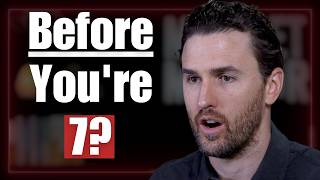
Rob Dial explains how kids form their core identity before age seven, when their brains absorb everything you say. Labels like "lazy" or "dramatic" become self-beliefs that stick into adulthood. Instead, speak to who they are, not what they did, and model the self-talk you want them to internalize.
Chapters
This is really important for two reasons. Number one, you're going to learn how you formed your identity in childhood based off what your parents said and what your parents did. And number two, if you have children, this is going to help you form your children's identity to help them become a great adult as they grow up. And this is important for me to cover because in the coaching that I do, you know, with Mindset University and working with people in group coaching throughout the entire year, I'm the person who talks to people and helps them identify their identity. And the reason why this is important is because you can always trace somebody's identity back to their parents, how their parents treated them, and how their parents spoke to them as well. And so here's the wild part about all of it. Most of that identity that we're talking about, you learned before you were 7 years old. It's kind of crazy. Not very much of it was learned after seven years old. There might be a few pieces, maybe your first heartbreak, all of that. But when you look at it, you can start to see, oh, my gosh, if it's seven, I have three kids under the age of seven right now. Well, I need to really pay attention to the way I speak to them, the way I speak around them. And also, if you don't have any kids, but you want kids, this is really important for you to understand. And if you never want kids, you probably still have family members with kids. So this is all just a really big deal. In the age of seven, when you look at, you're like, why is the age of seven such a big deal? Why is most of our identity formed by them? Well, from birth until seven years old, a child's brain isn't running the show the same way that an adult's brain is. They're not sitting there and thinking much. They're more than anything else, just absorbing. And so when you look at it, what's going on under the hood? The brain, for the majority of a child's waking hours and sleeping hours from zero to seven is in a brainwave that's called theta state. Most of the time, that's the brainwave that adults can get to in really deep meditation. It's the brain waves that people get to in hypnosis, which is why they become much easier to program in hypnosis. In theta state, the brain's basically just like a sponge. Like, everything just gets kind of soaked in without question. And it's not deciding what's true and what's false. It's Just kind of recording. And that's the way that Most kids from 0 to 7, that's the majority of their waking hours. And so during this time, kids aren't yet able to deeply reflect on themselves. And they're not thinking like, who am I? What, what do I value? Instead they're mirroring what they're doing, they're absorbing what they see. They're forming core beliefs about themselves, about the world, based on their environment. And these become their blueprints for identity, for safety, for love, for worthiness. And so when you look at it, the question I've always asked is like, okay, so if there's not a real sense of self up until after seven years old, is there like no sense of self that a child has? It's not quite. There's a sense of self that children have, but it's just information more than anything else. And it's heavily shaped, heavily, heavily shaped by outside input, not by inside input. And so a three year old knows like, I am me and you are you, but they don't have a stable, independent identity. And so they're not consciously choosing beliefs, they're kind of just inheriting them. And around the age of six or seven, the prefrontal cortex begins to mature and brainwaves start to shift, meaning that, that kids begin developing more analytical thinking and more self awareness. And so they start asking questions like, why am I different? What am I good at? Do people like me? Does my dad like me? Does my mom like me? Do my friends at school like me? This is where the beginning of self concept really starts to come into play. And it's, it's still though at this point, incredibly fragile and impressionable. And so, you know, there's research from Harvard center of the Developing Child that emphasizes that core emotional patterns and beliefs are formed by interactions in the earliest years, especially in the relationships with caregivers. Because children, like, you know, if a child has a mother and father there, like, let's just say it how it is. If you're three years old, if you're two years old, like your mom and dad are like the gods of your world. And so whatever they say must be true. And so they just kind of take it all in. They don't sit there and go, well, did my mom just say that because she's mad at me or she just say that because that's who I am? It's like, no, she said that I'm a bad boy. They just didn't. They just put it in record. It is true. And so These early experiences directly shape the architecture of a child's developing brain. And these beliefs are rarely really conscious, but they become the lens, like these beliefs of himself and of the world become the lens that we see ourselves through and we see others through as well. And this is what your children are going to see, the lens that they're going to see the world through. And it shapes how we respond to love and challenges and failures and money and everything. And so for people who are parents or want to be parents, if you're raising tiny humans or you just want to even just better understand tiny humans, or you can better understand you when you were a tiny human, here's what you want to understand is that a child that's misbehaving is not usually misbehaving. They're becoming themselves in some sort of way. They're usually acting out because they need something. And so your words when they're doing this type of stuff are not just words. They are the scripts that will run in their head as a child and will become their quote, unquote truths about themselves as adults. The amount of times that I have spoken with somebody and coached somebody and they have said, well, my mom said this, so I've always been that way, or my dad said this, my mom used to always say this. And like, I can find somebody that's very shy and timid and they want to play small. And after talking to them for a little while and their relationship with their mom, their dad, and their childhood, at some point in time, it comes up that the parent says, children are supposed to be seen, not heard, or your emotions are not welcome in some sort of way. And so people, children in that case, learn to, like, kind of turn themselves down. And so your words are not just words. Like, they're the literal scripts that run in their head as a, as a child and become their truths as adults. And those scripts are very, very sticky. And so what helps in this situation is to speak identity over your child, not just behavior, right? So instead of saying something like, hey, good job, you can say stuff like, hey, you're really creative. Instead of saying, you're so messy, you could say stuff like, I know you care about your space. Let's tidy it up together. But be really, really careful how you use your words and how you label a child, especially, but anybody, how you label somebody and the words that you use that could make them create their own label because they become what they think they are. And so if you say something like, you're so dramatic, the label that A child can create is, I'm too emotional, I'm too much. It's not safe for me to express. If you say something like, why are you so lazy? The label that they can create for themselves is like, unmotivated, not capable, not enough. If you say something like, you know, you never listen. Then the label can be something like, I'm a bad boy, bad girl. I'm disobedient, I'm disrespectful. If you say something like, you're always getting into trouble. The label that they can create in their head is like, I'm the bad kid, I'm the troublemaker, I'm shameful. If you say something like, like a lot of parents say stuff like, you're too sensitive. Then they create this label of like, I'm weak, I'm wrong for feeling my feelings deeply. If you say something like, you're driving me crazy. Then they start to think like, oh, I'm a burden, I'm a problem, I'm a source of stress for my mom. If you say something like, I've heard a lot of people say that. Their parents said something like, why can't you just be more like your sibling? Like, a lot of people I've heard say that, oh, your brother's so good in school. Why can't you just be more like your brother? They create this label of like, not enough and not lovable as is, I need to be someone different so that my mom loves me or my father loves me. If you say something like, what's wrong with you? Then their label they create of themselves is like, flawed or broken and shameful. And so you want to start noticing how you're speaking to them. The labels that they can create of themselves based off of how you speak, but also labels that, you know, you say directly to them. And so really, these, these are about mirroring back identity. The way we want to speak to a child is to mirror back identity in a way that affirms and empowers and nurtures a solid sense of self. And so you want to say stuff like, oh my gosh, you're such a great problem solver. You're so thoughtful. You're. You know, I love how creative you are. You have such a big heart. You're so sweet. You're amazing. You know what? I trust your instincts. You're such a hard worker. You know, I love how you always do the right. You always try to do the right thing. You bring so much joy to this family. You're a really great listener. You're learning every day and that's what mattered the most. Like all of these things, they're going to start to develop their own labels and self identity from. And so be very careful what you say even when you're joking, because I've had many times where somebody's told me an identity they created from their parents joking around them. But also be very careful what you say in like a heated moment. Learn to take pause before you jump in and say something because there's what you say and even just besides the words that you say, there's also what you do and what you say to yourself. A lot of times the internal dialogue that somebody has with themself, their internal narration is the direct voice of their primary caregiver. And that could be what their primary caregiver said to them, but also what their primary caregiver said to themself. And so you've got to watch what you model. Your kids aren't just listening, they're also watching how you treat yourself. You know, do you like hustle constantly or do you rest? You know, do you speak kindly to yourself? Do you speak kindly about your body? Do you speak kindly to your partner? What do you say when you make mistakes? I was on a call earlier this week and one of the questions that was asked to me when I was on Mindset, University lady's talking and she just unconsciously said, I'm such an idiot, blah blah, blah, blah, blah, blah blah. I was like, first off, let me tell you something that I hate that you just said. You just said, I'm such an idiot. And she's like, I said that? And I go, yeah. Your exact words were I'm such an idiot. Da da da, da da da. And she's like, oh my God, I even know I said that. So it's like that happens so often where it's like you can unconsciously be saying stuff and realize that your children are just picking up and being like, oh my gosh. I mean, if, if, if the. Think about this for a second, like in this perspective, if, like I said a few minutes ago, if a four year old's looking at their mom and dad and they are the gods of their universe at that moment in time in their life at 4 years old and their mom says I'm such an idiot, do you think the child's gonna think? The child doesn't go, oh well, I'm smarter than mom. The child's unconsciously going, oh my gosh. Well, if my mom thinks she's an idiot, I'M definitely an idiot because she's way smarter than I am. So we have to just really be aware of what we're saying around children and what we're speaking into them, what we're doing around them. You know, a child who feels safe being themselves will naturally explore and express and eventually grow into their strengths. And so, you know, when you look at psychology around the psychologist Carl Rogers emphasized that unconditional positive regardless of is one of the most essential parts of healthy concept for development in a child. And so what do I mean by this exactly? Let me explain. Unconditional positive regard is children who feel accepted all of the time, which is super important, even when they screw stuff up, even when they accidentally knock over a glass of milk. Right? Children who feel accepted, especially when they mess up, are more resilient, they're more confident and they're more internally motivated. Right. So this is the three phrases that came up in this research. Resilient, confident, internally motivated. Not the ones who are pushed, not the ones who, you know, pushed like you need to be harder, you need to be better. Not the children whose parents are hard on them. The ones who feel accepted by their parents no matter what, are the ones who have the highest confidence and the most healthy version of self concept in themselves. So the question isn't just how do I get my kid to listen, it's more of like, what are they learning about who they are when they listen to me? And so that's what we talk about with children now. Let's talk about for you guys that are adults because there's still a little child that's inside of you that probably, probably didn't have a parent that was really, you know, the head of psychology at the university that was local. Right? So let's be real. There's a, there's a seven year old version of you, six and five and four and three and two and one that learns something about yourself and it might still be steering the ship in some sort of way. And that's why you might panic at the idea of like being disliked, even when it's completely harmless to be disliked, or you struggle to rest without feeling guilty or you over give in relationships and then resent it, or you're a people pleaser, or you hear a voice in your head that says, you know, who do you think you are? Or you should shut up or nobody wants to listen to you. None of this makes you broken, it makes you normal. And it means that your early programming is still running in the background in some sort of way. But here's the truth that's going to set you free. You are not your childhood blueprint. Now that you're an adult, you can go back and be the author from this moment forward. And when you look at, like, neuroscience, like, even neuroscience backs this up. Neuroplasticity is the brain's capacity to be changing at any age. And so when you look at, there's a book that's called the Brain that changes itself, that's Dr. Norman Deutsche, and he says new thoughts that are repeated over and over again create new experiences. And if new thoughts and new experiences are repeated, they can rewire even the deepest held beliefs. And so it's really important for us to know how to speak to children, how to raise children. But as an adult, listening to this, it's also really important for you to understand yourself during this exact time frame that we were talking about, the timeframe when beliefs got installed to you before you even had any sort of choice. So when you find those beliefs, you could question them. Is this really what I believe, or is this something that I learned? You can reframe them, you can replace them if you don't like that. If you're like, this is not helping me by thinking this about myself or thinking this about people or thinking this about the world, I'm going to change them. What do I consciously want to decide? That's my favorite part about being a human. I think humans are so freaking interesting, right? Especially an adult human as a full brain with neuroplasticity, you can change yourself at any time. Like, that's literally the reason why I got, you know, my very first date with my wife all the way back in 2014. She was like, you know, we're talking at our first date. And she's like, so do you have any tattoos? And I was like, no. She's like, would you ever get one? I was like, yeah, I actually want to get one on my wrist, which I do have now. She's like, what would you get? And I was like, I would get a Roman numeral X with a line above it, which is the roman numeral for 10,000. And she's like, why that? And I was like, well, there's this idea of the 10,000 hour rule, which means that it takes about 10,000 hours of dedicated practice to master something. And she's like, that's pretty cool. What do you want to master? And I was like, myself, and I want to get. I want to get it on my wrist so that I see it every single day. Reminding myself that I'm constantly on this path of improving myself and trying to master myself. And I think that's the coolest part about being human, is that you can just wake up one day and be like, I'm going to be somebody different. I'm going to do something different. You. And I'm going to dedicate hours of my life to mastering this thing, whatever it is. Yourself, the banjo, pickleball, whatever it is. It's just so cool that we can change ourself at any moment. You know, think of it this way. You were born with this hardware, the brain. It's like going and buying a computer. You're born with the brain. You go and get this computer. And then you had software installed from parents and from life. And some of that software was good and some of it was viruses. Well, you can keep in the good software and you can start to uninstall the viruses. That's your job to do as an adult. And so you know what you really want to do at this point in time is ask yourself, like, what were the unspoken rules in my childhood home? What did I have to do in order to be good or to get love? What labels did I hear growing up and did I create growing up? And then you look at all of those and you ask yourself, are those beliefs true? Are they true? Not necessarily. Okay, if they're not 100% true, then obviously there might be something else that might be true. So what would I prefer to believe instead of these things that are not fully true, but I've just been acting like they are? Are these things helpful? Do I want to change them? Do I want to be different? The next thing to do is to try to re parent yourself in some sort of way and to talk to yourself the way that you wish your parents would have talked to you. Say stuff you know. If you're afraid of failure because your parents wanted you to succeed and they were so hard on you, okay, I am safe to try and fail. How do you wish that your parents would have spoken to you? I'm worthy of rest. Not because I have to earn it, but because I exist. Little me did the best they could, but I choose differently now. So speak to yourself in the way that you wish your parents would have spoken to you. And if you are parenting, if you do have children, whether they're under the age of seven or whether they're 19, like, reflect daily on what your child is learning about themselves. From your words, from your tone, from your energy, from your actions. You know, normalize emotions, celebrate their effort. Affirm identities are going to make them an amazing child and even better adult. Give them labels that make up a great adult and help them in life versus hold them back in life. Not the ones that you say when you're frustrated at them. And so your identity and your children's identity isn't consciously chosen and as we get older we can reshape it. And if we are parents, you're not just raising a child, you're helping them form their lifelong sense of self. It's a pretty big duty. It's really really powerful. And guess what, the more you grow yourself the better you'll become at parenting yourself and also parenting your children. Hey thanks so much for watching this video. YouTube thinks based off of the stuff you've been watching recently that this video right here is the next best video that would be great for you to watch. And if you want to subscribe hit this button right here.
More from Rob


Why NOT to stay single 👉 @robdialjr #adviceoftheday #motivation #mindset #growth

You Reap What You Plant 👉 @robdialjr #adviceoftheday #motivation #mindset #growth

3 signs that you're addicted to chaos 👉 @robdialjr #adviceoftheday #motivation #mindset #growth

Stop making excuses for people 👉 @robdialjr #growth #mindset #positivity #adviceoftheday

Tip for an amazing life 👉 @robdialjr #inspiration #mindset #adviceoftheday #positivity

It's time to move on 👉 @robdialjr #adviceoftheday #motivation #mindset #happiness

The right person for you is... 👉 @robdialjr #love #truelove #inspiration #mindset #soulmate

Get ready to take risks 👉 @robdialjr #motivation #adviceoftheday #mindset #positivity

The real competition You Vs You 👉 @robdialjr #mindset #inspiration #positivity #adviceoftheday

Their Mood Isn’t Your Responsibility. 👉 @robdialjr #mindset #adviceoftheday #motivation