How To Stop Being Lazy and Be More Motivated
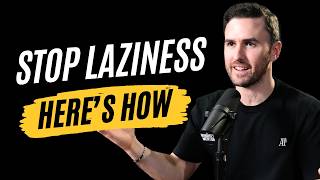
Rob Dial breaks down five steps to beat laziness: write specific goals, build a daily schedule to cut decision fatigue, set a daily intention through meditation, take action even when unmotivated, and lock in consistent routines. He cites research from Locke & Latham on goal-setting and Baumeister on decision fatigue, plus his own experience with inaction.
Chapters
Welcome to today's video. Today I'm going to teach you how to stop being so lazy and unmotivated and how to become more motivated to create the life you want. Let's dive in. I used to be an extremely lazy person before I found something that I cared about. And that's a very important piece that I think is really a pillar that people should look for in their life. Is like, yeah, of course you're going to be lazy and not want to do something if it's not something that you're passionate about, if it's not something that intrigues you, if it's not something that's going to improve your life, your family's life, exponentially. And so up until I found, like, the first job that I really became Inspired the first 20 years of my life, I was pretty damn lazy and I was not heading in the right direction. And so one of the biggest. And they just wake up and they have very little vision. And if you don't have any vision of where you're going, it's going to be really hard to get there. There's not really a plan if there's no vision. And if you don't have a plan, it's gonna be even harder to get there. And so they just wake up and they are like, well, what should I do today? And they try to figure it out. And it's kind of like. It's kind of like just getting in a car every morning, not knowing where you're going, and just driving around and taking random turns and getting pissed off that you're not where you want to be. Well, yeah, no shit. Because you had no vision, you had no plan, you had no intention, nothing. Of course you're not gonna be where you wanna be because you don't even know where you want to be. And so that's what's really important for you to understand. And I always say it's like. And I've been this way before in my life, and that's why I can speak to. It is most people in this world, it seems, are basically jumping into a sailboat and just saying, hey, I'm just gonna see where the tide and winds take me today. And they live their entire life that way, and they end up in a place they don't wanna be, in a country they've never heard of, sitting on a beach that doesn't look very nice and it might be full, all of the trash washed ashore. Because you're going to be probably traveling on the same route as everything else. Is that's on the ocean. And then you're like, this isn't where I wanted to be versus going, oh, I didn't realize that I could take control. I could man the wheel and move the sails to start actually going, this is where I want to be. This is where I'm going to try to work towards. And so there's five things that you have to have to really get to where you want to in life. And to be more motivated and be more driven is. And stop being so lazy. The first thing is your vision. Where the hell do you want to go? What do you want? I often talk with people and they're like, rob, I've got a question about xyz. And I'm like, okay, what do you want? And they can't even put into words exactly what it is that they want. I'm like, well, you're not going to get to where you want to be if you can't figure out what it is that you want. And so, like, where do you want to be in 12 months? Have you ever sat down and asked yourself that question? Written it down, journaled through it, been very, very detailed of what it is that you want in months? Where do you want to be in five years? Where do you want to be in 10 years? You've got to sit down, you've got to start to write your goals down clearly. And there's a study that was done in 2002 by Locke and Latham, and they found that the goal setting theory shows that having a clear and specific goal leads to higher performance and motivation for people. So if you want to perform at a higher level and you want to be more motivated towards that goal, you need clear and specific goals. Without a vision, it's nearly impossible to direct your energy effectively. And so if you don't do this, then you'll never have the life that you want. If you don't sit down and say, what is it that I want? You're never going to get it because you're never going to know what it actually is. And so the first piece is, you've got to know where it is that you want to go. What do you want your life to look like? How do you want it to feel? How do you want it to be? And I think that one of the things that holds a lot of people back is they don't believe that they can do it. Or they just look around and they're like, but I've never met somebody that has the life that I want. Like, I've seen them on tv. But I don't know somebody personally in my life that has that life. And I want you to understand if somebody else has ever gotten that life, you can figure out how to do it. I don't care what part of town you came from, I don't care what you look like. I don't care what your gender is. If somebody else has done it, you can do it as well. You don't have to know them personally, but if they show you by seeing that person, they've done it. I can do it as well. You just have to figure out how to do it. So the first thing is you've got to get very, very clear on what it is you're going to do. Second thing is you have to develop a schedule. I hear like, it's incredible how many people that I talk to that say, I'm not good with time management. I don't know what to do with time management. You know, if you want to get better at time management, I made an episode on time management like a year or so ago. You can go back and scroll back and listen to it, but you can't say you don't have enough time. Saying I don't have enough time is the biggest cop out that you can go for. It's not that you don't have enough time, it's that 95% of people are just terrible at scheduling their time. So show me your schedule. I bet you if you go through most people's schedule, it's not real good. You have 24 hours in a day, no more. If you have a full time job, if you have kids, you've got to figure it out. If you're going to create the life that you want, you've got to make time for it, you've got to schedule it and you've got to do whatever it is that you need to do. And there was research that was done by Dr. Roy Bauermeister and he found on he was doing a study on willpower in this thing that's called decision fatigue. And decision fatigue demonstrates that managing your time wisely helps you conserve mental energy for important tasks. And so if you actually sit down and believe me, I'm not a very organized person, but I was ingrained from a very young age in my very first sales company I was in. You've got to be hardcore in your schedule. You've got to schedule every single. Go through your entire schedule on Sunday and go through it every single morning. What they actually found was a structured schedule reduces your Mental load. And so of having to constantly decide, like, what's next? What do I do next? If you look at people like Jeff Bezos, I read an article one time that says Jeff Bezos only makes three decisions a day. When he goes into the office, that's it. Because he's trying to actually reduce the mental load. And so when you wake up in the morning and you say, this is what I'm going to do, and you schedule it all out, it reduces the mental load because you don't have to constantly go, well, what should I do now? Well, what should I do now? Well, what should I do now? And it actually allows you to put your mental energy towards accomplishing the tasks you need to accomplish to create the life that you want. So that's number two. Schedule it. Hey, real quick. I want to introduce you to something called Mindset Mentor Plus. If you love this podcast, you will absolutely love what I'm about to talk about. I designed Mindset Mentor plus to help you actively integrate every one of these episodes into your life. And here's how it works. With every episode of this podcast that comes out, Mindset Mentor plus subscribers get more. You're going to get multiple page, detailed, printable worksheets, effectively a mini masterclass that's way more in depth than just this podcast. They also come with journaling, questions, challenges, assignments, and so much more. So that you're not just listening to these podcasts and passively, but you're actively integrating them into your life. That way you improve much faster. I also do monthly Q and A sessions in there and much, much more. If you want to learn more about it, go to mindsetmentor.com or click the link that's down in the description number three. What's your intention? How do you want to wake up every single day? And one of the things I've been doing a lot recently, like I've been very hardcore on myself, is doing this thing that I call setting my internal gps. I wake up every single morning. And I know, like, if you go back and listen to my podcast from last week, the week before on Negativity Bias, I know that it is hardwired into my brain and everybody else's brain to be negative. That's just the way our brain is wired. I don't want to just be negative. And so I wake up every single morning and I do breath work and I do meditation. And during that time, I tell myself how I want to feel today, how I want to show up today. I start to actually go this is how I'm going to feel. Today's gonna be amazing. Today's gonna be amazing. Today's gonna be one of the best days of my life. I'm gonna show up with purpose. I'm gonna show up with passion. I'm gonna show up with love. Whatever it is that I feel like I need for that day. Cause I know what my schedule is. So now I go, well, how do I need to show up? Like, what's my intention? Now that I know what my schedule looks like, I know my vision, I know where I'm going, how do I wanna show up? How do I want to feel internally inside of my body? Because for years I worked just white knuckling my day through the day. I was just struggling my way to success. Then one day I woke up and I was like, success doesn't have to be a struggle. Why can't I just be effortless? Why can't I have the best fucking time while I'm also getting my way to success and creating the life that I want? And so you have to wake up every single morning and have intention with who you want to be, how you want to be and how you want to interact the world. So you set your internal gps, you create a plan for the day, how you're going to do it, how you're going to feel, what you want to accomplish, you know. And I always ask myself the question, what would make today amazing? What would make today an absolute success? And so it's like, are you just getting in the boat and just seeing where the wind takes you today? Are you going? No, this is, I'm taking the. I'm taking the steering wheel. I'm going to man the wheel. I'm going to get on the sales and I'm going to go, this is where I'm going. And while I'm going there, I'm going to feel this great while I'm doing it. So that's number three. Setting your intention. Number four is action. The most consistent people in this world, you have to understand, are not born consistent. What they do is they build an environment where they don't have to have their willpower tested. I wrote an entire book on action. It's called Level Up. You can read it if you'd like to. And it's so, you know, level up. It's everywhere. You can buy a book and the whole book is on taking action. So I was like, why don't people take action to life that they want? How do they build a life where they can take Action. And one of the things that I found is that the most dedicated people, the most consistent people are not people that were born that way. It's not people that have stronger willpower. It's that they have built a life in an environment around them where their willpower is not tested. So their phone is away if they want to lose weight. They don't have sugar and snacks and stuff around them, potato chips, any of those things. They build an environment where they're free from distraction, free from temptation. And so one of the things that you should do is you should. If you're going to take action, you should remove distractions, Take your phone, put it in another room. Other people, if you're going to sit down and take real action, put your headphones on, close the door to your office, put a note outside saying, going to be doing deep work for the next two hours. If you need an emergency, then you could come in. And so you have to just get yourself to the point where you're like, I'm going to take action regardless of how I feel. And if you feel, I don't feel really good today. I don't feel really great. I'm kind of tired. And you're scrolling on Instagram. You got to get your body moving. Emotion follows the body when you don't feel good, when you don't feel like you're. You know, if you feel like you're doing much, then you're not really, like, moving in a direction that you want. It's not usually when you have a vision. It's not usually when you have an intention. It's not usually when you have a schedule. It's usually when you're just like, I'm caught in my emotions. I feel bad about myself. I've been sitting on Instagram for 30 minutes and I've gotten nothing done for the day. And then I switched over to TikTok and Boop Boop. Be do I feel so bad for myself. Like, just, you gotta put on your big boy and big girl pants and you just gotta take action to create the life that you want. Sometimes emotion follows the body. If you feel unmotivated, get the body moving. Motivation follows action. There's a concept that's in psychology. It's called behavior activation, and it's often used when treating depression. And this was a study that was done in 2001, and it shows that taking action first, even if it's just little, teeny, tiny small steps, can change your mood and increase your motivation. So it's all about getting Started. And so if it's like, I don't feel really good today, you just have to move. Like, I have my trainer come to here in my house, and we work out three times a week. I never feel like working out before he gets here, ever. But every time he leaves, I'm like, I'm so glad I did that. I have more energy. I have more motivation. And it's because I got my physical body. Body moving. I have more energy in the day after I get my ass kicked for an hour. That doesn't make any sense logically, but it actually is the truth. And so that is number four is you just gotta take action no matter what, regardless of how you feel. And then number five is you have to start setting routines. Do you have a morning routine? Do you have an evening routine? Consistent daily action creates routines. And routines are the things that drive you in routines, believe it or not, create freedom. One of the things that I have become very. It's kind of like a paradox, right? Where it's like, I want to be free. I do. I want to be free. I want to have freedom. I don't want to be told what to do. I don't want to stick to any things that I have to do. But the more routine that I am, the more freedom it creates in my life. It's really like this weird paradox. It's like, I want to be free. And I've had conversations with one of my salespeople about this as well. He's like, I hate restriction. I hate routines. And we started talking about. I was like, the routines will create freedom in your life. Trust me, the structure will create freedom in your life. And that was about six months ago. And now he's like, dude, you are so right. It seems like this. It's like a paradox, doesn't make any sense, but once you start doing it, you realize that routines create freedom. I like my freedom. And so routines now create freedom later. And so there's a study that was done in 2007 by Wood and Neal that found that habits in routines reduce the need for conscious effort. And so making it. It makes it much easier to stay consistent, because you don't. If you have a habit, if you have a routine, it doesn't take a whole. It's very low on your cognitive load. And so it doesn't need a whole lot of conscious effort, so it makes it easier to stay consistent. And so your routines and actually automate your success. And so if you're lazy, if you're unmotivated, if you don't feel like you know where you want to go in life. If you had a vision as to where you were going, a schedule that you stuck to, that you created every single morning, an intention of exactly how you want to feel, an exact plan of action of what it is you're going to do, and set routines to help you get there, would you be more motivated and more driven and less lazy? Of course. And so I want you to grab a journal real quick, and I want you to ask yourself these questions. Okay? Number one question I asked you earlier, where do you want to be in 12 months? Where do you want to be in 5 years? Where do you want to be IN 10 years? And then ask yourself the question, what is my daily schedule to start moving in that direction? The next question, what intentions do I need to set daily? The next question, what actions do I need to accomplish today? And the next question, what routines do I need to create? It's not rocket science. It's, in fact, some of the most successful people I know are not that intelligent, and they'll tell you that they're not. It's not rocket science. It's just creating a plan to get from where you are now to where you want to be. We're all going to be somewhere in 10 years. Hopefully, we're all somewhere in 10 years. We're all alive. The actions that you take today will decide where that somewhere is. And so hopefully, you take the right actions to create the life that you want. That's what I got for you for today's episode. If you love this episode, please share it on your Instagram stories tag me obdialjr. R O B D I A L J R. If you love this podcast, you definitely will absolutely love something I have. It's called Mindset Mentor plus, which is like the podcast on steroids, basically. For every single episode that comes out of this podcast, people who are Mindset Mentor plus subscribers get a whole lot more. They get detailed worksheets that go deeper into every single episode and the subjects and topics that we cover. They can print them out, they can underline them, you can highlight them, all of that. There's journaling questions that come with every single episode. There's assignments that come with every single episode so that you can take these episodes and integrate them into your life and change your life faster. If you want to learn more about it, go to mindsetmentor.com once again, mindsetmentor.com and the best part is, it is way less than 99% of you guys are spending on coffee every single month. So if you want to learn about it, mindsetmentor.com and with that, I'm going to leave you the same way I leave you every single episode. Make it your mission to make somebody else's day better. I appreciate you, and I hope that you have an amazing day.
More from Rob


Why NOT to stay single 👉 @robdialjr #adviceoftheday #motivation #mindset #growth

You Reap What You Plant 👉 @robdialjr #adviceoftheday #motivation #mindset #growth

3 signs that you're addicted to chaos 👉 @robdialjr #adviceoftheday #motivation #mindset #growth

Stop making excuses for people 👉 @robdialjr #growth #mindset #positivity #adviceoftheday

Tip for an amazing life 👉 @robdialjr #inspiration #mindset #adviceoftheday #positivity

It's time to move on 👉 @robdialjr #adviceoftheday #motivation #mindset #happiness

The right person for you is... 👉 @robdialjr #love #truelove #inspiration #mindset #soulmate

Get ready to take risks 👉 @robdialjr #motivation #adviceoftheday #mindset #positivity

The real competition You Vs You 👉 @robdialjr #mindset #inspiration #positivity #adviceoftheday

Their Mood Isn’t Your Responsibility. 👉 @robdialjr #mindset #adviceoftheday #motivation