How to Win People’s Respect (Even If You Don’t Say a Word)
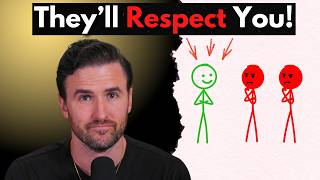
Rob Dial breaks down six ways to earn respect without saying much: be genuinely curious about others, give people a reputation to live up to, avoid criticism, let ideas feel like theirs, use their name, and admit when you're wrong. These principles come from Dale Carnegie's classic and work whether you're a parent, friend, or manager.
Chapters
If you want to be successful or run a successful business, or raise amazing children and have a great life, you need this episode. Because understanding how people work, how they communicate, and how to make other people feel amazing so they rise to their greatest self are some of the most important skills that we can actually master. So whether you're a parent, whether you're a friend, whether you're a child, whether you're a manager or you're a high level CEO, you need this episode because you will get way further in life and if you understand how people work and how to influence them at a deep level. And so today, what I'm gonna go over is what I think are the six most important principles from the book how to Win Friends and Influence People by Dale Carnegie. First one is this. Be more interested than interesting. I've said this a few times in the podcast before, but one of the things that he says is that you can make more friends in two months by being interested in other people than in two years by trying to get people interested in you. I want to start here because this is where most people really mess it up. We have been trained through society, through our parents, through everything, especially through, like, business and through social media and through personal branding and everything that we need to be interesting, that we need to perform, that we need to achieve in order for people to like us. So we think for people to like us, we need to try to impress them, we need to posture, we need to talk about how cool we are, we need to show how cool we are to other people just so we can try to get them to like us and to earn their love. And we think that if we're impressive, people will then like us. But what Dale Carnegie figured out, like a hundred years before Instagram came out, was that you don't win people over by dazzling them. You win them by seeing them, like, really seeing them for who they are. So many people in this world are just dying to be seen and understood by other people. And so let's be honest. Like, if we're being truly honest here, most people care more about themselves than they do about you. And so you can drop your need to feel like you have to be so impressive and so amazing for other people and you can get radically curious about another person. And if you do that, you will instantly stand out from a crowd. You will become more magnetic because you're rare. And so you might be the only person, if you think about it, that this week, ask them about themselves, ask them about what they're doing, ask Them and really, really gets interested in them. And if that's the case, that will make them remember you, that will make you stand out. And so you've got to ask them questions that nobody else is asking. Hey, like, what's, what's lighting you up right now? What are you most excited about this week? Like, what's a challenge that you've been secretly crushing? One of my favorites that a mentor used to say all the time, he would say, tell me your story. Like, how did you become who you are? And then he would just sit and listen. And people loved him more than almost anybody else in the company because he was just so interested in you. And so the magic trick of all this is to ask the question and then shut the hell up. Let them talk, give them space. Don't interrupt, don't try to one up them. Just listen. And then ask them to go deeper. You know, tell me more about that. What else does that mean to you? That sounds amazing. Is there anything else that you or that you're excited about? And allow them to go deeper. That's how you build a real connection with another person. Just remember, people love to talk about themselves. And so try to be interested. Not interesting. And we will be right back. Hey, I want to interrupt today's episode to tell you about my sponsor. It is me, myself, if you didn't know. I obviously have some coaching programs outside of the podcast to help you learn and grow and become a better version of yourself. Step by step programs and processes to help you become better in your life and create the life that you want. If you want to learn more about it, you can go to coachwithrob.com once again, coachwithrob.com check it out. And let's get back to the episode. The second principle that I think is important is to give people a reputation to live up to. This one is so good. In the book, he says, give the other person a fine reputation to live up to. What this means is that you want to speak to them and speak to other people about them with them around in the highest praises that you possibly can about somebody. Especially if you leave it, like, if you lead a team or you coach people or you have children, you know, you want to speak amazing things about them. If you have children, you want to speak amazing things about them to other people. A lot of times parents will be like, oh, yeah, well, Johnny was just being a little bit crazy today, and he's being such a bad boy. And. And then they'll vent to their spouse in front of their child, which is then creating that identity for that child. If you have kids, speak amazing things about them to other people. Speak amazing things about them to your spouse. Like, my wife and I, we speak very highly of our son to each other. And so we want that to become his identity because we know that if he hears us speaking about him to each other, that becomes his identity, that becomes what he thinks of himself. So there's definitely never going to be anything that's going to leave our mouths about something he did wrong or a temper tantrum or any of that type of stuff to each other, you know, at least not around him. You know, we can talk about it and we can be honest when he's asleep or when he's in another room, whatever it might be, but not when he's around. And the reason why this is really important is because the psychology behind it shows that people act in alignment with their identity. So if you want someone to rise, you have to speak to who they already are. Because. But at their absolute best, even if they're not fully living into it yet, you can help them start to put this identity in, which allows them to fully live into it. And it goes back to, like, Calvin Coolidge has a quote, I'm not who I think I am. I'm not who you think I am. I am who I think that you think that I am. And so when you speak really great about them to them or you speak really great about them to somebody else, part of them is going to go, oh, she thinks that about me. Like, I must be better than I actually thought. And they will take that on as an identity, and they will act in accordance with their highest self now, because you are helping them become that. So you want to speak life into people Instead of saying something like, oh, you always forget deadlines. Like, you could always say something like, hey, you're always someone that I've been able to count on to finish strong. That's why I know this project's in good hands. That makes them go, you know what? I do want to finish strong. I do want to finish on time. You feel the difference between that, like, oh, you always miss deadlines versus, like, you're someone who I've always known that I could count on, and that always finishes strong. That's why I know you've got this project, like, there's a big difference in that. And so don't focus on correcting behavior. Focus on reinforcing an identity. People act in alignment with who they think they are. Right? And that's really, really deep. And so you want to talk to them as their highest self that they could possibly be, and you want to talk about them to other people in their highest self. This public praise locks it in. And this is how you can get the absolute best out of people. So that's number two. Number three is to avoid criticism like it's radioactive inside of the book. He says, any fool can criticize, condemn, and complain. And most fools do. And so let's be real. People don't respond to negative feedback very well. Like, they're not like, oh, thank you so much for your brutal honesty. Now that I feel like I'm so inspired. No, that's not what happens. When people feel judged, they actually shut down. Their nervous system goes into defend, deflect, disappear mode. And neuroscience studies actually show that criticism triggers the same patterns in the brain as physical pain. So if you're wondering why your feedback isn't working, it's probably because you're using the hammer when you should be using a hug with most people. And I know this isn't the way most of us were raised, especially by parents or by managers or by leaders, but this is really important. The better way is to start with appreciation. Like, ease in a little bit more, say less, but say it with care, right? So it's like, hey, I really value the energy that you bring to our team, but there's just one thing that I think could help even more. You can do that. Or another thing you could do is if somebody has something they keep doing that you want them to stop doing, don't. Don't make it their identity. Talk about the behavior, not the person. Right? So, like, the wrong way of criticizing the person. Be like, you're so unreliable. See, that's an identity. You're so unreliable, I cannot count on you to finish anything on time. The right way of doing it, which would be criticizing the behavior, is, hey, I noticed the project didn't get turned in the way that we expected. What do you think got us this? You know, this project turned in late. Like, you're someone I've always seen as dependable. So let's figure out what happened so we can make sure it doesn't happen again. Does that sound good? You're criticizing the behavior, not the person, the wrong way. Criticizing the person would be like, you're so rude. See, that's directly at the person. You're so rude. You always interrupt and take over the conversation the right way, which is criticizing the behavior would be like, hey, listen, I've Noticed that we're in meetings. Like, you tend to get really excited and jump in really quickly before others have shared. I know you're super excited to contribute, but would you be open to maybe pausing a little bit more so everyone else can get a chance to weigh in? And so you got to remember, the correction only works if this relationship feels safe. And if you're just criticizing and immediately going at people, it's not going to feel safe. And so you want to build safety first and then the influence be able to follow there. Okay, so that's number three. Number four is to let it be their idea. This is one thing that I learned really early on in managing people. And what he says inside of the book is let the other person feel like the idea is theirs. Listen, if you're managing people, do you want it to get the credit or do you want the change? Whether that's business, whether that's family, whatever it might be, you don't want the credit. What you want is the change. You don't have to have such a big ego. They're like, hey, I want to make sure it's my idea. And everybody knows it was my idea. The reason why you want it to feel like it was their idea and for them to take ownership of it is because people are 10 times more committed to ideas that they feel like they have ownership of and they feel like was their idea. So instead of saying like, hey, here's what we should do and trying to tell people what to do, try asking them like, what do you think we should try next? You know, if you had full control over this, what would you change? It works in sales, it works in leadership, it works in parenting, it works in all aspects. People, when they feel like they have co created the solution, they will stick to following through much more. Like, like 10 to 15 times more in most studies, right? So the reason why is because they believe it's their idea and their idea they want to follow through on. And so the key takeaway is influence isn't about being the smartest person in the room or having to get the credit or having to be the person whose ego gets stroked. It's about the activation of other people's agency. Let them feel like it's theirs, let them own it. That's how you win long term. So that's number four. Number five is to say people's name and mean it. This one's super important. And inside the book he says, a person's name is to that person, the sweetest sound in any language. Now, it sounds really basic to say somebody's name, right? But how many times have you met someone and then forgotten their name ten seconds later? Yeah, it happens a lot. And people are like, oh, it's my memory. No, you're not paying attention because you don't care. You're not present. You're thinking about. You're thinking about something else. You're thinking about what you need to do. You're thinking about how they look at you. Is there a booger in your nose? How does your hair look? How's your makeup? How you're being viewed. Right. You have to be able. Like, have to. This is something that was taught to me when I was in my early 20s in management, you have to memorize people's names. You will stand out so much more if you memorize people's names. If at the end of a conversation right after meeting somebody, you say, hey, Sam, it was really nice to meet you, they'll be like, oh, wow, he remembered my name. But it's not just about the name. The name is important. What it shows is it shows that you are present. It shows that you respect this other person. It shows that they are being seen by you. And so in a world that's full of distraction, where people are scrolling all the time and half listening and half showing up, when you stop and lock in with somebody and you say something like, hey, Jasmine, thank you for that, or you say something like, tom, you crushed the meeting today. It lands. And your brain actually lights up more and your attention shifts when you hear your own name. So their presence is going to be drawn to you like a spotlight when you use their name. And so this isn't just about politeness. It is obviously polite, but it's rooted in how humans actually personally process meaningful information. And so when you use their name, you get their focus, and they actually show that you care. You're present and you're paying attention. Yes, using names is important, but I would say it's even more important than show to be able to show how present you were during the conversation. And remembering their name is a big piece of it. They'll remember how you made them feel much longer than you know what you said in a conversation. Okay, that's principle number five. And then principle number six is admit when you're doing it wrong quickly. He says in the book, if you are wrong, admit it quickly and emphatically. There is nothing that builds trust with people faster than humility. Let's be honest. Most of us were taught to protect our image in some sort of way, if we did something wrong and then our parents came in and yelled at us, we felt like we had to protect. And so it's a pattern that we learned. And so we learned we need to protect our image. We learned that we never want to look weak, we never want to lose ground. We want to be able to show that we're strong. But the truth is, ego pushes people away. Vulnerability draws people in. So when a leader, whether that's in a family or whether that's in a business, says, hey, I messed up, that's on me. I'm so sorry. Like, it is one of the most disarming, trust building moves that you can make by taking full ownership for something that you screwed up. Because it tells the other person like, hey, you don't need to defend yourself. I'm not here to fight, I'm just here to fix it. It allows other people to put their guard down and to feel safe around you. Because if people feel like they constantly are going to be blamed or that they need to defend, their guard is going to always be up around you. And so it shows, hey, when I'm around him or I'm around her, I don't need to protect because this person takes full ownership. And I know that that's how they operate. It will build so much trust and so much respect in if when you screw something up, you take full ownership and you apologize quickly. You know, strong people own their mistakes, weak people defend them. Check the news, check what's going on in the world right now. Tell me who you respect the most and tell me if they're owning their mistakes or if they're defending them. Right. In a world where everyone is trying to save face and act like it's not their problem, the person who leads with realness and is the person who's going to get the most respect and get most trust from other people. And those are the six things I think are the six biggest principles that you can take away so that you can earn people's respect and influence them. Number one, be more interested than interesting. Number two, give people a reputation to live up to. Number three, avoid criticism like it's radioactive. Number four, let it be their idea. Number five, say their name and mean it. And number six, when you're wrong, admit it quickly. Hey, thanks so much for watching this video. Based off of what you have been watching on YouTube recently, YouTube is bringing up this video right here and it thinks that you should watch this one next based off of your algorithm. And if you want to make sure to never miss another podcast episode. Go ahead and click that button right there. Subscribe and I'll see you on the next video.
More from Rob


Why NOT to stay single 👉 @robdialjr #adviceoftheday #motivation #mindset #growth

You Reap What You Plant 👉 @robdialjr #adviceoftheday #motivation #mindset #growth

3 signs that you're addicted to chaos 👉 @robdialjr #adviceoftheday #motivation #mindset #growth

Stop making excuses for people 👉 @robdialjr #growth #mindset #positivity #adviceoftheday

Tip for an amazing life 👉 @robdialjr #inspiration #mindset #adviceoftheday #positivity

It's time to move on 👉 @robdialjr #adviceoftheday #motivation #mindset #happiness

The right person for you is... 👉 @robdialjr #love #truelove #inspiration #mindset #soulmate

Get ready to take risks 👉 @robdialjr #motivation #adviceoftheday #mindset #positivity

The real competition You Vs You 👉 @robdialjr #mindset #inspiration #positivity #adviceoftheday

Their Mood Isn’t Your Responsibility. 👉 @robdialjr #mindset #adviceoftheday #motivation