If They Do This… They’re a Narcissist
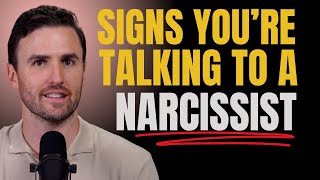
Rob Dial breaks down what Narcissistic Personality Disorder actually is, separating clinical narcissism from everyday selfishness. True narcissists lack empathy, love-bomb and gaslight, show no genuine remorse, and leave you exhausted and questioning your memory. He outlines concrete warning signs and a step-by-step exit strategy for people trapped with them.
Chapters
If you get on the Internet at all, you might notice people on social media that are calling people narcissists these days. People are just kind of saying, oh, well, my ex boyfriend act this was this way, so he's a narcissist. Or my. My mom is this way, so she's a narcissist. And it's. It's people that are just calling too many people narcissists without really truly understanding what it means. And so what I want to do is actually have you understand what is a narcissist. I want to slow it down and I want to talk about it. Because when we just throw out the word narcissist and we put it out there too loosely, we're kind of thinking, number one, that way too many people are that haven't actually been diagnosed with it. But then also we miss the real signs of a narcissist, which means that we also miss the real danger as well. And so what I want to do is I want to get into the facts of what a narcissist is, how to identify one, how to deal with one, and then how to protect yourself and your own mental health and against somebody who is actually a narcissist. Okay, first off, as I was saying, narcissism is not what Instagram says that it is. The thing that I want to get straight is that narcissism is not just someone who loves themselves too much or seems too cocky or someone who is selfish in some sort of way. It's not like a personality quirk. It's not a character flaw. And it's definitely not like somebody who ghosted you after having three great dates with them, and you're like, oh, well, she's just a narcissist. That's why she did it. Because too many people are calling a selfish person a narcissist. And those are two completely different things. Like, actual narcissistic personality disorder is a clinical diagnosis, and NPD usually includes stuff like this. So you can kind of start to get an idea of, like, is my dad selfish just as a person, or is it. Is he actually a real narcissist? Okay, so npd, this is really what it comes down to, right? They have an inflated but very, very fragile sense of self. And so you want to think, like, they have an ego that's basically made of glass. They have a really deep need for admiration of other people and attention from other people. They have a major, major, major lack of empathy for other people. And I'm going to Talk about why that is. They're also very manipulative and they exploit people in relationships. They usually fantasize about power over other people or massive amounts of success. And they are hyper reactive to criticism, mostly because of fact that they have a very, very fragile sense of self, which is that ego made of glass that we were talking about. And so scientific studies show that people with NPD have significantly reduced gray matter in their brains and the parts of their brains that are tied to emotional empathy. And so when you look at somebody, you're like, yeah, that person kind of like really, really lacks empathy. They actually have reduced gray matter in their brains that are tied to, with emotional empathy. So these especially the parts that are called the anterior insula and the medial frontal prefrontal cortex, meaning basically, this is what you understand. They can, they can understand feelings intellectually, but they can't really feel like deep down emotional feelings in those situations, which is why they tend to lack so much empathy for other people. And so bottom line that you understand is that their empathy is not just like low in the feels, it's actually neurologically compromised in these people. And so underneath all of that, you have to understand that there's a really, really deep well of shame and insecurity in these people. And so this isn't somebody who truly thinks they're better than other people. It's somebody who is terrified that you'll find out that, that they're not better than other people. And so that's what you really have to start to understand about narcissists. Now you might look at that and say, well, don't we all kind of have narcissistic traits? And to be honest with you, we do have some narcissistic traits. Because humans, we just have. We want to be. Let me put it this way. Humans are wired for self preservation, right? We all want to preserve the sense of self that we have. We want to protect ourself that is just innate within an organism is self preservation and protection as a human. Also. We all want to be seen, we all want to be validated, we all want to be taken seriously. And so sometimes we are in a conversation with people and we interrupt too much or we talk too much about ourselves. Let's be real. Sometimes we all prioritize our own needs, other people's as well. And that's not really narcissism, that's just being a human being. The difference is that when there's a narcissistic person, they'll usually just stay on course of being that way, a person who happens to have some tendencies where they notice they're being selfish can become very self aware of that and then they can course correct. Narcissists don't usually course correct. Like they kind of just stay that way. You know, a self aware person might say something like, hey, I'm sorry that I acted that way. I'm sorry that I made all of that about me. I want to hear you. And you can feel their apology. Right? A narcissist will usually flip it, which is, you know, I wouldn't have said that to you if you hadn't made me feel like a failure. And so narcissists are the best gaslighters in the business. They are the Michael Jordan of gaslighters. And gaslighting, it's not just rude in psychology, it's actually recognized as a form of emotional abuse. And studies show that it can lead to. If you're being gaslit a lot, especially if you're in a very close relationship with somebody who is a full on narcissist and they're gaslighting you all the time, it shows that it can lead to you having more anxiety or depression. It leads to trauma, and it can really undermine your sense of self and your sense of reality because of the fact that you, you're constantly questioning if you're the person that was wrong or if you happen to remember something wrong. And it can undermine your sense of reality more than even physical abuse can. And so it's really important for you to understand that if you do have a true narcissist that's in your life in some sort of way, you do need to figure out a way to protect your mental health. And we'll talk about that in just a minute. Okay, so how do you actually tell if someone is a narcissist? And how do you tell the difference between a normal person that is selfish in some ways and has ascendancies as someone who is a full blown narcissist, you might be with a narcissist, whether that be in a romantic relationship or family or friendship. If you constantly question your memory or version of events, which is classic gaslighting, which is like, no, you did this wrong. You didn't say that wrong. You're going, well, I thought it happened this way, but they're so firm on the way that it went, maybe I'm the idiot, maybe I was wrong. That's one way to know if you feel emotionally drained all the time after being around them and you're constantly questioning Yourself, if you walk on eggshells trying not to upset them because you know how much they can blow up. Narcissists also tend to do this thing that is called love bombing, which they do these grand gestures and compliments and make you feel like, oh, my God, they're such a loving person. They're so amazing. And then they'll suddenly withdraw and punish you with silence in some sort of way. And so it's like this big ebb and flow of the relationship of, oh, they're amazing. Oh, my God, there must be something wrong with me. Where do they go? Another way to find this is a classic thing of narcissists is every time you decide to set a boundary, it turns into a battle. And then the biggest way usually to find out if someone's a narcissist is that they have never actually, truly, ever genuinely apologize to you. Like, it's always, oh, I'm sorry I made you feel that way, versus, like, a true apology, where you can tell that they see they're wrong, they feel that, and they feel within themselves the sadness or the emotion of how they made you feel. A narcissist will never give you a real apology and never take full acceptance for something. And this is one of the biggest giveaways. Okay, General rule of thumb that I'll give you if you feel less like yourself around them, if you shrink, if you doubt, if you silence yourself to keep the peace, that's your nervous system whispering to you that something's not right. Okay, so what do you do if you're in a relationship with a narcissist? Okay, this is the part that's kind of tender for people, because I understand that some of you guys have been. You might be married to a narcissist, or you might have. Your mom might be a narcissist, or your. Your brother might be a narcissist. And these are people that are very, very close to you. Because if you're in it, you're not just dealing with their behavior. You're dealing with your own hope of how you want this relationship to go and how you want to feel in the relationship. You know, it's really hard if you're married to a narcissist and you've got children with them, and you gotta figure out what to do in this situation. And so, you know, if you're holding on to the version of them that you had in the beginning, the version of them that seemed perfect, who saw you and made you feel amazing and gave you love bombs, the one that made you feel like you're the center of the universe, the version of them that they were before they showed you their true self. Then you're going to have to understand they're never going back to that version of themselves that was just a performance more than anything else. And you can't keep thinking about what you saw then. You need to start thinking about what you're seeing now. And so what you want to do, there's a few steps to this. The first thing is you want to stop justifying the behavior, especially when it hurts. So you have to stop saying stuff like, oh, my God, they just had a really hard childhood, or, hey, he just didn't mean it the way that he said it. Or he's got a lot going on at work right now. He's just under a lot of stress. I know that he can be better, because here's the truth. Understanding why someone behaves a certain way does not excuse the impact of that behavior. Like, I know many people who have had hard childhoods, but they're not assholes. So that's not really a reason to excuse someone's behavior. And so you've got to ask yourself, like, do they truly care about me or do they just kind of want me around? Like, would they really, really care if I was gone? Or would they just try to replace me with somebody else? So you can think about it that way. The second thing that is important is to try to start noticing patterns. Not to win an argument or any of that type of stuff, but just to kind of wake yourself up to who you might be in a relationship with. Right. Narcissists are like masters at rewriting history. They will tell you something that never actually truly happened, but they'll do it with so much confidence that you will start to question yourself. And so you'll hear stuff like, that never happened. You're wrong. You know, you're too sensitive. You're imagining things, and your memory becomes like this battleground where you're like, well, I thought it happened this way, but maybe. Maybe he's right. Maybe it did happen this way. And so what I would recommend that you do is when you have certain moments where they act out or you get into an argument, like, keep a private journal. And you could do it on your phone in, like, the notes tab or somewhere where it's hidden so that they can't find it, and just track incidents that, you know might turn into something later on down the road. Like, sure, it could be fights. Definitely track that immediately after. Write down everything that happened. Track that, but also track how you felt in those situations. And here's a really great thing, especially with everyone. Seems like everyone has a ring camera in their house nowadays. If there's an argument or a fight in some sort of way, you can watch the recording of it, you can download it, and you can save the arguments on your phone so that therefore, if it does turn into something later on down the road, you can actually watch the video recording of the argument and. And see if that matches what they said later on down the road about the argument. So that's a big thing that I would recommend for a lot of people out there. So that's the second thing. Keep some sort of, you know, checklist or patterns where you're writing down what's going on. The third thing is to really get firm at setting boundaries that protect you, not boundaries that, like, please them. Narcissists hate boundaries. They do not respect boundaries. And they will test them every single time. Why? Because to them, your boundary feels like a threat to their control. And so you don't set boundaries just to teach them. You set boundaries to teach yourself what is okay and what isn't okay. And you got to get very, very clear on what your boundaries are, and you have to hold those boundaries. And so, you know, boundaries would be something like, I am not available for conversations where I'm being insulted. I'll walk away. Like, that's a boundary. If somebody insults me in some sort of way, I'm getting up and I'm leaving. And then I will say to them, I'm not going to be available for conversations where I'm insulted. We can have this conversation if you want to speak to me a different way. Another boundary could be like, hey, I will give myself six hours before I respond to text messages that feel aggressive or manipulative. That could be a boundary as well. So you want to figure out what your boundaries are, and you want to figure out your boundaries in advance. Like, not in the heat of the moment, in emotion, because that's when you're the most clear, when you're the most grounded and you're. You have to understand that when emotion is high, logic is low. And so when you're in the moment, you're not making good decisions. You want to be able to. When you're clear, when you're sitting down, when you're listening. Done listening to this podcast. Here's what my boundaries are. I'm going to give you a warning. Expect backlash. It's just the way that it Is especially if they're a true narcissist. The stronger your boundary is, the louder that their pushback is going to be. And it's not a sign that you are wrong. It's a sign that it's actually working. Okay? So that's the third thing. The fourth thing that you want to do, and I really, really recommend this is a huge one, is to get professional support, especially for trauma bonds. So let me kind of say this clearly. This is not something. If you're dealing within a relationship with a really close relationship with a true narcissist, this is not something that you should try to heal and work through alone. Narcissists are way better at manipulation than you are at avoiding it. And so what you're experiencing isn't just like a toxic relationship. A lot of times it's a psychological trap that's called a trauma bond. A lot of times we have trauma bonds with people like this. And so this is where you become addicted to the cycle of abuse and the reward. And so you could be stuck in patterns with them that you just cannot see. And sometimes you need someone else outside of the relationship who is skilled at this and understands what to look for to actually help you see it and say it to you. Because a lot of times you've been in a relationship for 12 years with somebody and you just. It's just normal to you at this point. And they will notice things that you probably had no idea of. And so it's good to seek a therapist who understands narcissistic abuse and trauma bonding. And not all do. So I would just, you know, if you call the therapist, ask them if they understand narcissistic abuse and trauma bonding. And that's usually the best type of person to go to. So with that, why all of this matters, you know, if you're in a relationship with someone who's selfish, now, hopefully you understand, like, hey, they might just be a little bit selfish. And we can work on that. If you're in a relationship with a true narcissist, this is really important for you to understand as well so you can start to understand how to protect yourself. Because, you know, I wanted to make this episode so that people stop over pathologizing everyone when they're just a selfish person, because everybody has selfishness in some sort of way, right? And like, experts emphasize that true narcissism is about an empathy deficit, not just someone that's having a bad day. Okay. And the other reason why this is important is because it teaches you how to protect your energy and how to choose relationships that are actually good for you and better understanding of emotional dynamics and humans empowers you to walk away when you need to without guilt or second guessing yourself in any sort of way. So I hope I helped you understand these people that you're in relationships with, if they're a real narcissist or if it's someone that you're just labeling as a narcissist, or if they're actually clinically a narcissist. And you know, if you are dealing with a true narcissist after listening this and you're like, yeah, hell yeah, it is that person. I want you to understand, like, you're not crazy. You're not too sensitive. You're just waking up. And waking up is the first step to walking away, which is a beautiful thing. Hey, thanks so much for watching this video. Based on what you've been watching recently, YouTube thinks that you should watch this video next. And if you want to subscribe to make sure you don't miss any more videos, hit that button right there.
More from Rob


Why NOT to stay single 👉 @robdialjr #adviceoftheday #motivation #mindset #growth

You Reap What You Plant 👉 @robdialjr #adviceoftheday #motivation #mindset #growth

3 signs that you're addicted to chaos 👉 @robdialjr #adviceoftheday #motivation #mindset #growth

Stop making excuses for people 👉 @robdialjr #growth #mindset #positivity #adviceoftheday

Tip for an amazing life 👉 @robdialjr #inspiration #mindset #adviceoftheday #positivity

It's time to move on 👉 @robdialjr #adviceoftheday #motivation #mindset #happiness

The right person for you is... 👉 @robdialjr #love #truelove #inspiration #mindset #soulmate

Get ready to take risks 👉 @robdialjr #motivation #adviceoftheday #mindset #positivity

The real competition You Vs You 👉 @robdialjr #mindset #inspiration #positivity #adviceoftheday

Their Mood Isn’t Your Responsibility. 👉 @robdialjr #mindset #adviceoftheday #motivation