Overcome the Fear of Being Judged
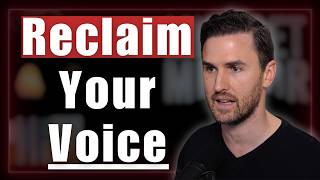
In this motivational monologue, the speaker explains that hurtful words only affect us when we have already internalized the negative belief they echo. He urges listeners to stop associating with people who constantly criticize or undermine them, as repeated exposure rewires subconscious self‑image. The talk reframes emotional triggers as opportunities for self‑awareness, encouraging reflection on why a reaction occurs and what underlying insecurities it reveals. Confidence, he argues, is not derived from external success but from consistently showing up for oneself—doing hard tasks regardless of outcome—to generate micro‑wins that reinforce self‑trust. He cites social‑network research (Framingham Heart Study, Rosenquist Depression Study) to illustrate how habits and emotions spread through our circles, reinforcing the need to curate supportive relationships. Ultimately, personal growth is presented as a perpetual journey toward presence and inner alignment rather than a quest for perfection, culminating in an unshakable self‑relationship that renders external judgments irrelevant.
Chapters
How do I deal with someone who says things that hurt me all the time? The first thing I want you to do is, before we dive into it, is look at the question that person is saying. This person hurts me with what their words are. And I just want you to realize before we dive into the actual episode itself, nobody can hurt you with their words. The reality and everything that's happening outside of you, in reality, in your external world, does not hurt you. It's your reaction in your mind, your story, in your head that hurts you. And so that's what I'm actually going to dive into and talk about as well. And I'm going to talk about how to build more confidence in yourself. So the first thing that I want to say is, first off, stop hanging out with people who talk down to you. Like, that's just a really big thing. Stop hanging out with people who don't want the best for you, who cut you down, who find holes in your success, who have little negative comments. It's like death by a thousand cuts. These people are not honest. They're projecting their own limitations onto you. And so when you have repeated exposure from these people, it might not be a huge deal in the moment, but it's kind of like this. This subtle negativity that just, like, reprograms your subconscious and your identity of yourself over and over again. And you actually start changing yourself because of what other people say to you. And so the first thing I want you to understand is, like, you need to stop hanging out with negative people. Like, you need to stop hanging out with people who are negative to you, who talk down to you, who don't want the absolute best for you in this world. Okay, so that's the first thing. The second thing that I want to dive into with this is that nobody can hurt you with words unless you already believe what they're saying. Take a step back and just let you process that for a second. Nobody can hurt you with words unless you already believe what they're saying. There's many things that I could come up to you and say, and they wouldn't offend you at all. You'd be like, okay, like, the example I've given probably a hundred times in this podcast is one of my friends, Ryan, was talking about how he's walking down the street with his mentor, and he was talking about how he. His. His business was doing millions of dollars a year, but he was just so done with it. And every time he got an email saying that his company sucked or his product sucked, or somebody wanted a refund. He just thought to himself he wanted to shut it all down. And his mentor's like, yeah, it's cause you're insecure. And Ryan's like, what are you talking about? I'm insecure? Like, I'm just talking about my business. He goes, well, if somebody, you know, they're walking down the street, he said, if some lady walked up to you right now and said, oh my God, you have pink hair, would you be offended by that? He's like, no. He's like, why is that? And he goes, because I don't have pink hair. And he goes, but if someone comes up to you and says something and it hurts, it's because you already believe it. So the reason why those emails and those refunds hurt is because you already think that you're not good enough. And those are just triggering something inside of you that shows you once again that you're not good enough. It's like the phrase Eleanor Roosevelt. One of my favorite quotes is, no one can make you feel inferior without your consent. You have to consent to them. Not, you know, whatever their feelings are, whatever their judgments are, you're consenting to feeling inferior after that. And you have to understand, like, you could maybe. I come up to you and I'm like, I don't like your hair. Doesn't matter. I don't like the color of your car. Doesn't really matter. I don't like your voice. Doesn't really matter. None of those really land for you maybe. Unless something hits inside of you. The pain doesn't come from the words. It comes from the internal dialogue that you're already having with yourself. But maybe I say something like, you're stupid or you're ugly, or you're not good enough, or you'll never be worthy of love. And boom. Now that thing triggers you when I say that, that's when it hurts. Why? Because that insecurity, that thought, that internal dialogue, that story about yourself already lives inside of you. And so no one can say something that hurts you unless you already believe it to be true. And this is why healing isn't just about avoiding every negative person who triggers you. It's about transforming your inner dialogue so that there's no longer a match for the external attacks. Do I want you to hang out less with negative people? Absolutely. But I also, really, more than anything else, want you to transform your inner dialogue so that no matter what any negative person says to you, they don't do anything because you don't really have that inner dialogue anymore, you're not triggered by it because you don't believe it. As pissed or hurt as you might be, when someone comes up and triggers you or your spouse does something and you're mad at them, what we really have to remind ourself of is that this person is giving you a gift in some sort of way. They're showing you. And I understand you could be really pissed and really triggered. And once you get past the pissed and triggered, take a second and be like, why did I get so mad? And have moments of self reflection. Why did I get mad? And you understand when you start doing this that there's places within yourself where you're hung up. And that person is basically showing you where you still need work. You know, they're showing you where you're not free. They're showing you exactly where you need to improve yourself. And so you have to understand when you see this, you're like, oh my gosh, it's almost like this person, like the universe is coming through this person to say something to me, to trigger me so that I can learn more about myself. So as much as I want to punch them in the face, maybe I should give them a high five, right? And your triggers are not really like a sign of weakness. They're more than anything else, they're invitations to deepen your self awareness, to ask yourself more questions. You know, every emotional reaction is a map back to the parts of you that need your healing, that need your attention, that need your love places within you that you have not healed yet. And so yes, there is the moment of being pissed off. But then when your emotions calm down, ask yourself what happened. This is a great moment for you to learn about yourself, but it's also a really good moment for you to start to heal. Parts of yourself that maybe you didn't realize needed healing in life is just a constant up leveling every single day. If you're working on yourself and the growth never really stops, you never really arrive in your perfect. Like I think the first 12 years of me working on myself, I was like, I've just got to get to the point where I, I don't have any more triggers and I'm perfect and I don't get mad anymore. And I was like getting to this destination where I was like a perfect person. I'm going to be honest with you, the destination, there is no destination. Once you work on yourself and you start learning and improving and you work through those things, guess what? You find more things to learn, improve and work on yourself. So I want you to understand, like, this self development, this thing that we're doing together in this world is a constant journey of learning more about ourself, working through these things, letting go of them, and then finding more about ourself, working through those things and letting go of them. You'll, I promise you we'll probably, no matter how hard we work on ourself, we'll probably never get to a place where we have no flaws, where we have no baggage, where we have no triggers, where we're just completely never offended, where we have no temper, where we feel no emotion, like we're just perfectly calm all the time. The point of working yourself isn't perfection, it's presence. Like, can I be here and actually see what's going on? Versus getting caught up in an old story? Because that person who's triggering you is triggering you from something that happened in the past. You're seeing some form of a connection between what happened to you in the past and what you have learned to believe about yourself and what's happening in this moment. And so the more that you work on yourself and you dissolve this internal resistance, the more that you'll actually learn to become anchored in yourself, no matter what life throws at you. And so, you know, it's not like these, these things ever really go away. But if your anger or resentment or sadness or self judgment or self talk is at like a volume, like nine out of ten, the more that you work on yourself, you just learn to turn it down a little bit more. And it doesn't just blast all day. It's like maybe it's just a quiet thing that's in the background that pops up every once in a while. And so this is the reason why self belief is so important. Like a lot of people ask, like, how do I become more confident? And when you really believe in yourself, when you within yourself are your own pillar of just fortitude, it doesn't really matter what anybody else says to you because you don't believe them. Self belief, more than anything else, when you fully believe in yourself and you start really, really developing this trust and confidence within yourself, it creates this internal filter so that when someone says something to you that maybe triggered you at one point in time, it just doesn't really stick like it used to. It's like, I don't really care what you think. And it's not like you go out into the world and you're trying to trigger people and trying to be an asshole to people. It's like I know who I truly am. And if you don't like it, I don't care. And that's how you really start to heal from the, from other people's opinions and to not be offended. You're not. If you really, truly know who you are deep at its core, and you believe that's who you are and you love yourself and you accept yourself, it doesn't matter if other people don't like you for being your true self, because you're not going to be everyone's cup of tea. And so people always ask like, okay, well, if that's the case, how do I believe in myself more? Tell me, what's the secret to having more confidence? And what I really believe the secret to confidence is, is to show up for yourself to do what you say you're going to do, do what you don't want to do, or maybe you do want to do, but it's hard and you don't want to do it. So it's like, I do want to do a cold plunge, but I really don't want to do a cold plunge. You do it anyways. Confidence doesn't come. Like, for a long time I thought confidence came from success and results, but it also comes from just showing up for yourself for doing what you said you were going to do to whether you succeed or fail. The fact that you showed up for yourself, that builds confidence. Showing up for yourself in having self discipline, in my opinion, is the highest form of self love. Because you don't need discipline to do the easy things. You don't need discipline to sit on the couch and scroll on Instagram. You don't need discipline to, you know, eat a whole bunch of a bag of candy and a bag of chips. Those are all easy. Those are. Yeah, I'll just pound some chips and scroll on Instagram. You need self discipline to do the things that you know you want to do that are good for you, like eating healthy, like reading a book, like building your business, like going to the gym. And so when you have self discipline, you build self discipline. Because it's not something that you're just born with. But when you build self discipline, you start to believe in yourself more. You go for a run, you believe in yourself more. You wake up early, you believe in yourself more. You do the things that are good for you, you believe in yourself more. And these little micro wins are signals to your subconscious of like, I can trust myself. And over time, it rewires your brain to operate from courage and self belief instead of fear. Like, think about this, for instance, imagine if you had a friend that, that calls you up and you're, you're hanging out with your friend and you're like, you know what, we should go for a run every morning. And your friend's like, that's a great idea. I want to go for a run. Let's go for it. At 6 o' clock in the morning. And they're like, okay. You get a call at 6 o' clock. When you're expecting them to be there, they're like, hey man, sorry, I didn't sleep really well. Let's do it tomorrow. Okay, cool. Six o', clock, you're ready to go for a run, your friend's not there. You call them at 6:05. Oh my gosh, I'm sorry, I slept in. I didn't hear my alarm. Let's do it tomorrow. Let's go tomorrow. Okay, six o', clock, you wake up, you got your shoes on, friend's not there again, you don't even bother to call them. You're just like, I don't trust this person. They're not going to show up. So I'm not going to put any time, I'm just going to do this on my own. You would lose trust in that person, right? The exact same thing happens for yourself. How many times you said you're going to do something and you don't do it over and over and over and over and over again. That's why you don't have the confidence that you want. That's why you don't have the trust that you want. You need to show up for yourself. And now if that person showed up at 6am every day, Monday, Tuesday, Wednesday, Thursday, Friday, for the next two months, three months, four months, how much trust would you have in that person? A lot. Well, you've got to ask yourself, how are you showing up for yourself? Because that's how much you're going to trust yourself. And really, once again, it's not about absolutely succeeding in something that you say you're going to do. What it is about more than anything else is doing something, especially when it's hard, so that you can start to build confidence through it. The results will take care of the results. Succeeding or failing actually doesn't matter. The overcoming the obstacles of not wanting to do it and doing it anyways, that's what actually matters. Achieving the goals, that'd be nice, right? That'd be really good. But what really builds confidence is doing the thing regardless of the results. Your nervous system says you know, if you do something really hard and you show up for it, your nervous system says, hey, I can trust myself. This is good. And that alone makes you stronger regardless of the outcome. And so what's really important is that you start to build yourself up from the inside out. And if you do that, it doesn't. You won't really be offended as much because it's like, well, who really cares what you think of me? Because I think I'm awesome, right? I'm not going out there trying to offend people, but as long as you go, hey, I think I'm awesome, doesn't really matter what you think of me. And then you start surrounding yourself with people that are good for you as well, because you're the average of the five people that you spend the most time with. So if people around you don't want the best for you, or they find faults in your success, or they try to make you play small, or they have those subtle negative remarks, find a new circle. Your circle is either an accelerator to your growth or sabotage your success. Who you spend time with starts to turn into who you think you are as well by what they say to you, but also because you start to become like them. You know, there was a study that. That's called the Framingham Heart Study. As a study, it's been going on since 1948, and in 2007, they took all of the results. From 1948 to 2007, researchers analyzed the data, and they found various behaviors and traits, including happiness, obesity, and smoking habits, spread through social networks. Happiness, obesity, and smoking habits spread through social networks. You literally become who you surround yourself with. They found that if a close friend becomes obese, your chance of becoming obese increased by 57%. So it suggests that our social circles are not just like who we hang out with. They influence our own personal behaviors and habits. There was a study that was called the Rosenquist Study on Depression, and the study examined how happiness and depression can spread throughout social networks. And researchers found that having a friend who becomes depressed increases your chance of becoming depressed as well. On the other side of that, having friends that are happy can decrease your chances of depression and potentially increase your overall happiness as well. And so you've got to be very careful who you hang out with. It's really, really important. And so I want you to understand, if you're trying to not be offended, it starts from within. It starts from learning who you are more than anything else. Ultimately, what you're really wanting from the outside world is what you're wanting from yourself the love that you want from other people, you're wanting love from yourself, acceptance from other people, you want acceptance from yourself. All of the actions that you take build trust within yourself or break it. Your relationship with yourself is your most important relationship and true freedom comes from doing the inner work to really start to develop your relationship with yourself so that you believe in yourself so deeply that no one else's opinions of you can shake you. Because when you really build an unshakable self trust within yourself and you surround yourself with aligned people, the external noise becomes irrelevant and then your confidence becomes the thing that makes you unstoppable. Hey thanks so much for watching this video. Based off of what you've been watching recently, YouTube has an algorithm that says that this is the best video for you right now in your life and if you want to subscribe so you don't miss any more of these videos, click this button right here.
More from Rob


Why NOT to stay single 👉 @robdialjr #adviceoftheday #motivation #mindset #growth

You Reap What You Plant 👉 @robdialjr #adviceoftheday #motivation #mindset #growth

3 signs that you're addicted to chaos 👉 @robdialjr #adviceoftheday #motivation #mindset #growth

Stop making excuses for people 👉 @robdialjr #growth #mindset #positivity #adviceoftheday

Tip for an amazing life 👉 @robdialjr #inspiration #mindset #adviceoftheday #positivity

It's time to move on 👉 @robdialjr #adviceoftheday #motivation #mindset #happiness

The right person for you is... 👉 @robdialjr #love #truelove #inspiration #mindset #soulmate

Get ready to take risks 👉 @robdialjr #motivation #adviceoftheday #mindset #positivity

The real competition You Vs You 👉 @robdialjr #mindset #inspiration #positivity #adviceoftheday

Their Mood Isn’t Your Responsibility. 👉 @robdialjr #mindset #adviceoftheday #motivation