Stop Being a Victim
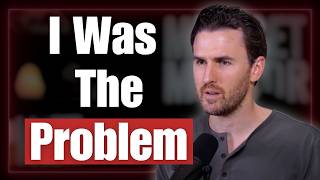
Rob Dial breaks down the victim mindset, how it starts in childhood through parenting and modeling, and why it keeps you stuck blaming others instead of taking action. He shows how to spot it in your career, health, finances, and relationships, then walks through concrete fixes: journaling and meditation to build awareness, reframing failure as feedback, and taking responsibility for what comes next.
Chapters
I definitely had a victim mindset when I was younger. And so I can speak to this. It's something that I really had to work through because I used to be really, really good at making myself the victim. I would say stuff like, oh, I always have bad luck, or just things don't really work out for me. Things work out for better people, you know, for other people. Other people get lucky, but I have bad luck. I would make excuses for everything in my life, and I would take no responsibility for basically anything. And the problem is that most people are not really even aware that they're using and playing the victim. It's just something they've been doing for so long. It's something they picked up in childhood. And so it requires self awareness within ourself to notice it. But the biggest problem with playing the victim is that if you play the victim, it completely takes all of the control out of your life. If you're constantly blaming other people, people or the economy or other circumstances, everybody else, then you have no control in your life. If you make yourself a victim, you're basically resigning to the fact of, like, I can't control my life and I'm just at the whim of whatever the universe wants to beat me over the head with. If you're listening to this podcast, you want your life to be different, you want your life to be better, you want to grow and you want to improve, but you cannot change your life for the better if you have a victim mindset, because you are never going to be in control of your life. And so if you're somebody who is out there that makes too many excuses, or you feel like you blame too much, or you have trouble stepping up and making change in your life, this episode is really going to help you to stop being a victim. And if you know someone who plays the victim, send this to them. And, you know, it might be triggering for some people. This episode might be triggering for some people. The reason why is because it will start to disrupt your false thinking patterns. Let's dive into it. What, what exactly is a victim mindset? A victim mindset is an attitude where people perceive themselves as powerless and blame external circumstances or other people for their problems. It's a mindset that is basically chronic complaining, excuses, avoiding responsibility, and, you know, maybe this belief that, like, hey, no matter what I do, I can't change myself and I can't change the situation. I. I have found, and I don't know if it's just, you know, just anecdotal, but I've seen it seems like more and more and more people are at least presenting a victim mindset than they ever have. Seems to be very common nowadays. When you look at it to the world. It's kind of like, I always talk about this, but it's kind of like this cartoon I saw, like, 15 years ago, and it's cartoon of this guy on stage. And he's on stage, and he's in front of a podium, and he says, who wants change? And all of the people in the cartoon that are in the crowd raise their hand, and then right under it, there's another picture of him. And he says, who wants to change? And everybody's hand is down. It's kind of like the world that we live in, you know, if you are constantly making yourself a victim, as I said, you're gonna have no control over your life. But then you look at it and you go, okay. I always go, why does this exist? Where does this come from? And so the victim mindset often takes root in, you guessed it, childhood. Yep, that's what we seem to talk about a lot here, isn't it? Usually it's a condition that comes from childhood. It is a protection mechanism in some sort of way that you developed. Or it can also be a way that you got attention or love from your parents. Maybe you had, you know, a big family, and the way you only really got attention or felt like you got attention was when you played the victim or something was wrong. And so also, parenting style really plays a critical role in this as well, because there are some overprotective parents. Like, if you had overprotective parents, their attempt to protect their children are basically saying to the child, hey, the world is too dangerous for you, and you're incapable of navigating it alone. And so, in turn, they grow up and they feel like, well, I'm helpless, I'm dependent, and so I can't really do anything on my own. And then they start blaming outside circumstances. On the other hand, the parental style of being an overly controlling parent can do this as well, because it instills fear in the child in this belief that your actions are always dictated by external forces. And so it kind of like takes the autonomy out of the child and their personal responsibility. If someone's had an overly controlling parent, this happens as well. You know, like, one of the things I've been looking at a lot recently is, is the benefit of letting your children fail and mess up. You know, obviously be there to support, but letting them mess up without stepping in because when you step in, that unconsciously says to the child, hey, you're not able to do this. Let me do it for you. And over time, that thought process going into adulthood can make people feel like they're a victim. Another thing that it comes from in childhood can be modeling the behavior of their parents as well. And so children learn by observing the behaviors and. And the attitudes of the adults around them. And so if parents or caregivers are victims themselves, like some of you guys listening are like, oh, yes, my mom or my dad plays the victim all the time. Well, you know, children tend to model the behavior of their parents. Maybe your parents blamed other people or played the victim or talked about how powerless they were, or maybe they just wanted people who just took no responsibility for their actions. I know there's a lot of people like that out there. Children tend to see that and adopt similar attitudes as well. Then what happens is children pick it up in childhood somehow in some way, and then it starts to morph into adulthood. And so victim mindset then carries into being an adult. And one of the most common signs of a victim mindset in adulthood is the tendency to blame other people for one's problems or mistakes or failures. You know, blaming the boss for lack of career advancement. Oh, yeah, well, you know, he doesn't like me, and so that's why I've never been promoted. Or, you know, blaming a partner for your relationship issues. It's their fault that our, you know, relationship is where it is, or blaming society because of, you know, where. What you look like or where you grew up or your socioeconomic status. And it's this. This pattern of thinking that we need to become aware of because it removes our individual sense of responsibility. And if we don't have our individual sense of responsibility, how in the hell are we going to change our own lives? And so the problem is, once again, it takes all. It completely takes all the control away from you. And you have to have control of your life in order to change your life. And so, more than anything, it makes somebody feel powerless in their own life. And so you can have basically a perspective of one of two things in this world. You can either think that life is happening to you or life is happening for you. And so if life is happening to you or to somebody, if it's happening to you, then you have basically no control over your destiny. If you believe that it's happening to you, then there's basically nothing you can do about it. And so it's like this. Oh, well, I guess I'LL just have to see what the world gives me. There's nothing that I can do about it. It's this fixed mindset. If you've ever read the book Mindset by Carol Dweck, that's a fixed mindset where it's just like, there's nothing I can do about it. It's how it is. A growth mindset is the exact opposite of that. And so a fixed mindset in victimhood is chronic complaining more than anything else. Complaining doesn't fix a problem. But you know, for me, I knew that complaining didn't fix my problems, but I didn't want to step up and actually fix my own problems. So I just complained all the time and I made excuses and it made me feel like, okay, well, then, you know, the reason why I don't have the money that I want, the reason why I don't have the success that I want and have the happiness that I. Why my life is in shambles is because this person or because of that person, because of the economy, because of where I grew up, because my dad was an alcoholic and I can just blame everybody else, but if I do that, I'm not in control. So there's the victim mindset on one side. And then what we want to actually have is the empowered mindset, right? The empowered mindset is really what we're trying to work towards. And so if you look at these different examples, like let's say career advancement, right? And getting promotions and moving up the corporate ladder, Victim mindset might believe that their boss doesn't recognize their hard work and they'll never get promoted. Oh, Stacy got promoted and she's. She hasn't even been here as long as I have. It's because he doesn't like me and he thinks that she's better looking. Or the boss, he's so creepy, he's got a little crush on her and that's why he promoted her and not me. It's like the victim mindset, right? Empowered mindset would. Would sit there and proactively ask for feedback. Try to go, okay, how can I improve my skills and look for opportunities so they can showcase their work? These are the things that they can control. I can, I can ask for feedback, I can improve my skills. I can find opportunities and show how good I actually am. These are things that they control. So that's what an empowered mindset would do in career advancement. If you look at, like health and fitness, for instance, a victim mindset would say, oh, you know, I can't lose weight because it's just my genetics. You know, diets never work for me. That's like the victim. Oh, it's my genetics. Like, if it's your genetics, you're a victim of your genetics. There's nothing you can do. You might as well just resign to that. An empowered mindset would say, okay, you know, maybe it is genetics. Maybe it is going to be harder for me to lose weight than the average person, but it's not impossible for me to get healthier and to lose weight. So maybe I'll consult with a nutritionist. Maybe I'll create a fitness plan. Maybe I'll decide to be consistent and make sure every single week that I'm going to the gym, four times a week, it makes small little adjustments so that I can achieve my goals. And more than anything else, I will work hard to get there. See the difference between victim mindset and empowered mindset? You know, if you look at, like, finances, for instance, a victim mindset might feel like they never get out of debt because of the bad economy or low income or because of their parents or because of the president or because of who they are, what they are, all of that stuff. My boss doesn't pay me enough. He doesn't give me a raise. It's the economy. I got a bad degree, right? Like, that's the victim mindset. An empowered mindset might say, yeah, okay, maybe I did not get the degree I wanted. Maybe I didn't, you know, do this right the past 10 years. But I'm going to create a budget. I'm going to cut unnecessary expenses. I'm going to find additional income sources if I want to. Or they just, you know, make themselves more valuable in the marketplace so that they get paid more. And so it's like, that's the difference between victim and empowered mindset. You know, if you look at, like, how the empowered mindset and the victim mindset pop up in relationships, a victim mindset might say, well, you know, my partner never listens to me, and the relationship is doomed because my partner does X, Y, and Z. An empowered mindset would say, hey, I need to get better in this relationship, because it's a relationship. It's two people relating to each other. And so maybe I should do the one thing that I can do, which is work on myself, work on my emotions, work on my communication skills, work on my feelings, and get better at communicating those. And so I need to get better at communicating my needs clearly, and I need to work on improving the relationship and make decisions that are Best for my well being and their well being. And the reason why is because if I change on the relationship, because a relationship is two people relating to each other, well then the other person has to change the way that they relate to me if I change, which means the relationship has to change. And so that's just saying, okay, that's victim mindset versus empowered mindset. You know, an empowered mindset, which is what you want to step into, gives you a sense of personal agency, it gives you responsibility. It says, I'm going to be proactive here. And it involves taking control of your life, being proactive and maintaining a positive and resilient outlook. And say, I'm going to do this no matter what and I'm going to find the strategies to get better at this thing. The thing I love about being a human is that we're not a tree. We can move, we can change, we can grow, we can do something different. And so it's just about going, hey, what do I need to, I need to identify what do I need to improve in? And then I need to improve that thing. And so the first thing that's really important is self awareness in reflection are really critical steps. And so you have to recognize that, yeah, I might have a little bit of a victim mindset, or I might have a lot of bit of a victim mindset and you start reflecting on your thoughts and your patterns and your behaviors and your attitudes. Another thing that really helps with it, try journaling, try meditating, try going to therapy, ask your friends and family what they think. You know, that's one thing, that's that 1% of people listen to this podcast are going to do, but the 1% are going to have the biggest amount of change in their life is ask the people you love what they think about you. The good, but then also ask for the bad. Because really that's where you're going to. Those are people who know you the most. They're going to tell you the things that you might not know about yourself. So that's the first thing is you got to become very self aware. The second thing is you've got to just go, if it's going to change, it's up to me. You play a role in everything in your life and the way you show up changes the way that everyone else shows up and the way that everything else happens. And so it's this idea of when you notice yourself getting into the oh, why is this happening to me? Woe is me. Why does this always happen to me? Instead of Getting into that mindset, when you become aware of it, you gotta shift it and you gotta say, okay, what can I do about this? This is really key because things that have happened to you in your life are not necessarily all your fault. Things that happen in your life, in your childhood, not your fault. But if they happen to you, it is your responsibility. Like, if you've been listening to podcasts for a while, you know that my father passed away when he was. When I was 15 years old. He was an alcoholic throughout my childhood. I could just play victim and just blame all of my bullshit on him if I wanted to. It's not my fault that he was a alcoholic, but it is my responsibility to do what I need to do in order to create the life I want. With that being part of the cards that I was dealt. Same thing for you is it's not all your fault, but it is your responsibility. So that's the second thing is to get this. It's really understand you gotta embrace personal responsibility. And the third thing is to try this thing called cognitive reframing. It's a really powerful tool for changing your negative thoughts. Setbacks, challenges, all of those things are gonna pop up. So you've gotta look at those things and cognitively reframe them. Reframe them as a set of setbacks, as, hey, this is an opportunity for me to learn and grow. The only way that you grow is from setbacks, from failures, from things getting harder in your life. So it's this idea of consciously replacing negative thoughts with more positive and empowering ones and, you know, see life as a video game. I love to look at life as a video game as if, like, hey, this challenge was brought to me. It's a new challenge in my life for me to learn and grow and get better. And then the last thing is having this mindset of failure as feedback. Failure is feedback. It doesn't mean like, oh, this is happening to me. Oh, I'm not going to be able to overcome this. Why does this always happen to me? It's going, hey, okay, I just failed. But I don't want that to just be a failure. What I want is I want to pull and extract the lesson from that thing. And so really there's this idea of, if I'm going to change my life, if my life is going to change, I'm going to have to be the person to do it. And so if you don't have that, I'm sorry, no one's coming to save you. There's no knight in white shining armor that's coming around the corner to help you change your life. If you want to change your life, you have to develop this empowered mindset all aspects of your life. I promise you this. Just please trust me in it. All aspects of your life will become better when you switch from a victim mindset to an empowered mindset. And so if you're really here and listening to this episode and you've gotten this far, you're. You've realized, yeah, I do need to take full responsibility. You take full responsibility. Stop blaming, stop playing the victim. Your life will change dramatically quickly. Hey, thanks so much for watching this video. YouTube thinks for some reason that you want to watch this video right here. The algorithm's picking this one for you specifically. So click it and watch it. And if you want to make sure that you never miss any more videos, hit that button right there to subscribe.
More from Rob


Why NOT to stay single 👉 @robdialjr #adviceoftheday #motivation #mindset #growth

You Reap What You Plant 👉 @robdialjr #adviceoftheday #motivation #mindset #growth

3 signs that you're addicted to chaos 👉 @robdialjr #adviceoftheday #motivation #mindset #growth

Stop making excuses for people 👉 @robdialjr #growth #mindset #positivity #adviceoftheday

Tip for an amazing life 👉 @robdialjr #inspiration #mindset #adviceoftheday #positivity

It's time to move on 👉 @robdialjr #adviceoftheday #motivation #mindset #happiness

The right person for you is... 👉 @robdialjr #love #truelove #inspiration #mindset #soulmate

Get ready to take risks 👉 @robdialjr #motivation #adviceoftheday #mindset #positivity

The real competition You Vs You 👉 @robdialjr #mindset #inspiration #positivity #adviceoftheday

Their Mood Isn’t Your Responsibility. 👉 @robdialjr #mindset #adviceoftheday #motivation