Stop Trying To Fix Yourself
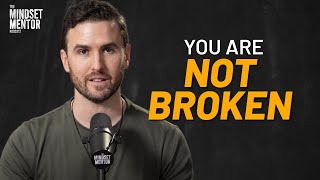
Rob Dial spent 17 years trying to fix traits like laziness and selfishness, only to find they got stronger. He argues the real shift is integration: treating every trait as a tool you can turn on or off depending on what you need. Self-love comes from acceptance, not elimination.
Chapters
Welcome to today's video. Today I'm going to be teaching you why you should stop trying to fix yourself as if you're something that is broken. And why you should try to start integrating all of the whole of what you are. The good, the bad, everything. Let's go ahead and dive in. I love self development. It is more than half of my life I've been into it and I've been teaching it to other people. But I realized at about 36 years old, there was a really big problem with self development in the way that I looked at it, but also the way that most people ended up looking at it. I looked at myself for years as an unfinished project. And I looked at myself kind of like a mechanic that looks at a car and wants to fix the car so that that car can run again. Like, this thing is broken and that thing is broken, and so therefore the car itself is broken. And I need to fix that so that I can get myself running again. And that's the way that I looked at myself. I got into self improvement because I wanted to fix parts of me that I hated, that I wanted to change, that I wanted to get rid of that I did not enjoy. And so I created unconsciously a battle within myself. It was, hey, my conscious self, Rob does not like this part of myself, does not like the way that I am here. And I will not be happy or I will not be normal, or I will not feel good about myself or things will not be the way that I want them to be until I fix X, Y and Z. And so I created a battle within myself. It was all of these little conflicts within myself. There was always, for years, 17 years, my first 17 years of personal development. There was always something wrong with me. I hate that I'm lazy. I hate that I'm judgmental. I hate that I'm selfish. I hate this, I hate that, I hate this, I hate that. And I have to change all of them. And so I had somebody asked me a question in Mindset Mentor plus, which is, you know, you've heard me talk about on the podcast many times. It's just a community that I run to help you go deeper than just the podcast. If you want to learn more about it, you can go to mindsetmentor.com and learn about it. But. But a question was asked to me about how do I fix myself? And I told them this. I was like, you don't fix yourself. The problem with personal development is that we see what we want to change and then we think that there's something wrong with us or that we're not good enough until we change them. So it's like if there's baseline, you know, this is why they say ignorance is bliss. If there's baseline. Well, then before I found personal development, I was at baseline of normal. And then when I found personal development, I started reading about myself, I started learning things, and I went, ooh, this is wrong. Oh, this is wrong. Oh, I didn't realize this is wrong. I didn't realize this is wrong. And it made me feel less than normal. It made me feel below the standard line that everyone else was on. And I was like, well, I've got to fix these things so I can at least get back to baseline. And once I fix these things, then I will be normal. But the problem with that is that it makes a lot of people out there feel less than. And so if you're out there and you're new into personal development, if this is your first year, if this is your first five years, your first 10 years, I'm going to really try to help you out by understanding the parts of you that exist inside of you, why they're there, and how to basically use them and integrate them. Because what's really interesting is I found over years and years and years, the more that I battled different parts of myself that I wanted to change, the. The stronger that they got. It was almost like some weird way that they were fighting me. And, you know, I just had to accept one day, you know what? Rob is just a flawed individual. So is every other person. And you're getting better, and you're working on yourself, and things are changing. And sometimes, you know what? Sometimes I'm a little bit shitty, and it's okay. I'm working on myself, and maybe I'll be less shitty in a year or five years or 10 years. Sometimes I'm just a little bit judgmental. Sometimes I get a little bit too worked up. Sometimes I'm a little bit selfish, you know, and the way that this kind of clicked on for me, and it fully started to make sense to me. And I'll never forget this moment. And I've talked about this before in the podcast, but I was writing my book Level up a few years ago, and I was writing the book, and I was sitting at this desk that I'm currently at right now, and I was spending hours and hours and hours editing every single sentence to try to make them, quote, unquote, perfect. And it was like, it was painstakingly so much time I was putting into this, right? I was writing the book, and I was editing and editing and editing and editing. I took a step back and I started talking to myself. I was the only one here, so I was able to talk to myself. And sometimes I talk to myself out loud just so I can say it. My mouth moves. I can hear it. I'm kind of more present than just thinking it. And I was editing, and I was going so hard core into editing, and I was starting to stress myself out a little bit, and I said, hey, why are you doing this? Why are you writing this book? Why are you putting so much time into editing this book? And I was like, I'm putting so much time into editing this book because I'm trying to make the best book that I possibly can. And so that's why I keep editing over and over again. I was like, okay, why is that? Why do you want to make the best book that you possibly can? Well, I want people who have never heard of me. They don't follow me on Instagram. They don't follow me on TikTok. They don't listen to the Mindset mentor podcast. I want someone to be able to walk through a bookstore into Barnes and Noble and to see a book right there on the shelf level up. And they pick it up. They're like, this is interesting. Let me read it. And they pick it up, and they're like, this sounds interesting. I'm going to buy it. And they go and they buy it, and they read the entire thing from start to finish, and the book changes their life. That's the reason why I'm putting so much time into that. And I was like, is that true? Yes. And then I really like to challenge myself in my head. That's kind of why I think I can do what I do and speak to so many different types of people. Then I tried to play devil's advocate, and I was like, all right, sure, Rob. Yeah, you do want to make the best book that you possibly can, but you also want to be your New York Times best seller. You want to be like, hey, look at me. I'm a New York Times best seller. And you also want to make such a great book that they have you on some morning shows, and they're like, this morning show, Good Morning America. They're like, this book, Level up is the best book I've ever read in my entire life. And I'm like, yay, me. I did it for all the egoic sense. I wrote the best book ever. And if it's A really great book. I'll make money off of it forever if it's a huge book. So it's like set it and forget it. Hey, real quick. I want to introduce you to something called Mindset Mentor Plus. If you love this podcast, you will absolutely love what I'm about to talk about. I designed Mindset Mentor plus to help you actively integrate every one of these episodes into your life. And here's how it works. With every episode of this podcast that comes out, Mindset Mentor plus subscribers get more. You're going to get multiple page, detailed, printable worksheets. Effectively a mini masterclass that's way more in depth than just this podcast. They also come with journaling, questions, challenges, assignments, and so much more so that you're not just listening to these podcasts passively, but you're actively integrating them into your life. That way you improve much faster. I also do monthly Q and A sessions in there and much, much more. If you want to learn more about it, go to mindsetmentor.com or click the link that's down in the description. Okay. Are both of these realities true? Do I want to make the best book from a selfless place? Of course, yes, I do. Do I want to make the best book from a selfish place? Yes, I do. Okay, can I use that side of my ego that wants to create the best book for selfish reasons? Can I use that to also create a better book that will help more people? And it was like, yes. And then so I thought to myself, okay, so hold on. That part of me that wants to be selfish, that wants to be egoic, that wants to say, look at me, I'm so awesome, that makes money off of it. That's a New York Times bestseller, all that stuff. It's not necessarily bad because I can use it to make a better book. So it shouldn't be a part of me that I want to kill. It should be a part of me that I'm aware of that I can use when I need to. It doesn't run the entire show. If it's starting to run the entire show, then it's a problem. It's a part of me that I can use. It is a tool for my tool belt. So it's not a part of me to hate. You know, if I have a need to screw something in, screwdriver is going to be the best tool for that. If I need to hammer something into a nail into the wall, a hammer is going to be the best for that. And I want you to understand this and this is what I said on the Mindset Mentor plus and I said it and I was like, whoa, I've never said this before. And that could be one of the best things that I've ever said. And I wrote it down word for word. I watched the zoom and I went back and on the mindset mentor plus Q&A session, I said, your life and your relationship to yourself will completely change when you stop trying to change the parts of yourself that you think that you hate and you start integrating them into the whole that is you. And this has really been my journey for the past few years. I for years wanted to change myself and fix myself because I thought that parts of me were broken. But in reality, my relationship with myself, my relationship with my life, with everything around me has changed drastically since I switched this to instead of changing these parts of me, I want to integrate these parts into the whole that is Rob. And so once again, your life and your relationship to yourself will completely change when you stop trying to change the parts of you that you think that you hate and you start integrating them into, into the whole that is you. The thing that's holding you back from self love, from loving yourself fully, from loving yourself, maybe even unconditionally, is that there's parts of yourself that you don't accept and you think that there's something wrong with you and you think that you're broken and you think that you need to fix them. When in reality, the path of self development is not about fixing anything, it's about accepting everything. Now I understand you will never stop being, and I want you to understand this, like really wholly. You will never stop being judgmental, you'll never stop being emotional, you'll never stop being selfish, you'll never stop being fill in the blank. But you will learn if you have a focus, you will learn how and when to use them versus try to get rid of them. Like, if you think about it, if I say being judgmental to people and judging people outwardly, is that a bad thing? Can it be viewed bad? Yes. Having judgment, is that always bad? No. Judgment can be very important. If you're in business, if you have your own business, if you work in a business, having judgment in business and being able to judge what's going on, judge different people in the way that they're showing up, if you trust them, if you don't trust them, judgment is really important. So it's not something that you're trying to get rid of. It's something that you just want to be Able, like a tool in your tool belt to use when it's necessary. You don't want to run the whole show. You want to be able to be the one that's in charge of it. Judgment's also very important if you're in relationships. If you have been in a relationship in the past and you've been cheated on or heartbroken or whatever it might be, and there's red flags, well, don't you want to have at least some judgment to start to see, is this person right for me? Are they not right for me? Are they showing up the way that they, Are they doing what they say they're going to do, or are they just talking? So judgment's really important in many aspects of your life. It's really important in business. It's really important in relationships. Selfishness is important at times. At times you can use them. You can use selfishness. Like for people out there that are listening to me, that are people pleasers, people pleasers need to be more selfish because they've given so much of themselves. So it's like, I need to actually be more selfish and, and set stronger boundaries. So if you're a people pleaser, selfishness is actually something that you need to get better at. If you're building a business, you need to, maybe if you just started your business this month, you might need to be selfish with your time for the next year to get it up and running. So you might need to disappear for a little bit. You got to be selfish with your time there. It's a benefit. You know, if you're trying to improve your relationship with your kids, you're trying to work and be the best possible parent that you can be. Sometimes you, you need to be selfish with your time so you could spend more times with your kids so that you can help them grow into the best person and the best adult and the best human that they could possibly be for themselves and the rest of the world. And so you can look at this and you can start to realize, and this was like, I hope that it's as eye opening for you as it was for me. You can start to realize, oh, my God, I've been fighting myself. It's almost like there's a, an angel on one shoulder, there's a devil on another shoulder, and they're just battling all the time. Instead of battling, it's looking at them and saying, you know what? Like, FYI, everything like judgment and emotions and being emotional and being selfish and being angry, whatever it might be, all of those are learned defense mechanisms, they all had value and protected you at some point in time, in your past, in your childhood, in your adolescence years. You don't really need to even know how to. How they protected you, how they became defense mechanisms. That's not really relevant. What's relevant is you can look at them and say, yeah, I developed them for a reason. I don't know what that reason is, but there was some benefit to it. And it's not about being selfish all of the time. It's not about being judgmental all of the time. It's not about my ego running the show. It's about understanding that I'm going to bring these parts of me up and let them speak at different times, and I'm going to pull them off the stage at different points in time. And then I'm going to put this one on stage and I'm going to take this one off stage. I'm going to put this one on stage and take this one off stage. It's not about getting rid of parts of you. It's about integrating them and using them when they're needed, turning them up when they're needed, turning them down whenever they're not needed. In relationship to the world and in relationship to yourself, I really want you to understand this is super, super important. There is nothing that you can do to make you more or less than what you already are. I've shared this in the podcast before, but I used to listen to a meditation from a guy named Mooji M O O J I and he used to say in the meditation, you know, he was talking about having things and getting success and working on your way to life. And he said he would say this phrase that says, you have no pockets, you have no storehouse. And what he means by that is your physical body, your emotional body, everything. You came in this world naked, you'll leave this world naked. There is nothing that you can do, achieve nothing that you could buy that will make you more or less than what you already are. And so the game of life is not about getting more and achieving more. The game of life is actually about accepting more. And the more that you can accept yourself, the more that you can start to actually love yourself. Because the key to self love is self acceptance. And so it's not about getting rid of parts of you, it's about accepting parts of you. It's about integrating them into the whole that is you. I'm gonna leave you with the same thing that I said that I really want you to ingrain into yourself. Your life and your relationship to yourself will completely change when you stop trying to change the parts of yourself that you think that you hate and you start integrating them and accepting them into the whole that is you. So that's what I got for you for today's episode. If you love this episode, please share it on your Instagram stories. Tag me obdialjr R O B D I A L J R Also, as I said, this came from a question that was asked to me in Mindset Mentor plus. If you love this podc probably love Mindset Mentor plus as well. It is a program and also a community that I've created to actively integrate every single one of these episodes into your life. And how it works is every single one of these podcast episodes that comes out on Mindset Mentor. The subscribers on Mindset Mentor plus get a whole lot more. You'll get multiple page detailed worksheets, effectively mini masterclasses for every single episode that go more in depth than just this podcast. In each episode they come with journaling questions. You can, you can write your journaling questions on the worksheets, you can underline stuff, you can highlight it. You can use this for your self development so that you're not just listening to them, but you're actively integrating every single one of them. So hopefully you can grow, love yourself, accept yourself, improve your life even faster. This is also where I did, you know, the monthly Q and A session today and where I got this question from, where you can ask me questions directly. So if you want to learn more about it, you just go to mindsetmentor.com it explains everything on that page. There's a video that explains it for you. Once again it's Mindset Mentor. And once again with that, I'm going to leave you the same way I leave you every single episode. Make it your mission to make someone else's day better. I appreciate you and I hope that you have an amazing day.
More from Rob


Why NOT to stay single 👉 @robdialjr #adviceoftheday #motivation #mindset #growth

You Reap What You Plant 👉 @robdialjr #adviceoftheday #motivation #mindset #growth

3 signs that you're addicted to chaos 👉 @robdialjr #adviceoftheday #motivation #mindset #growth

Stop making excuses for people 👉 @robdialjr #growth #mindset #positivity #adviceoftheday

Tip for an amazing life 👉 @robdialjr #inspiration #mindset #adviceoftheday #positivity

It's time to move on 👉 @robdialjr #adviceoftheday #motivation #mindset #happiness

The right person for you is... 👉 @robdialjr #love #truelove #inspiration #mindset #soulmate

Get ready to take risks 👉 @robdialjr #motivation #adviceoftheday #mindset #positivity

The real competition You Vs You 👉 @robdialjr #mindset #inspiration #positivity #adviceoftheday

Their Mood Isn’t Your Responsibility. 👉 @robdialjr #mindset #adviceoftheday #motivation