Surviving the Holidays: How to Handle Toxic Family Dynamics
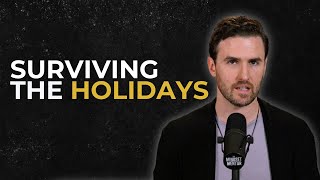
Rob Dial Jr. breaks down how to handle toxic family during the holidays by identifying your triggers, pre-planning responses, and practicing emotional detachment. He suggests concrete exit strategies like driving yourself to events, using code words with a trusted friend, and limiting time with difficult relatives. Self-preservation isn't rude, it's necessary.
Chapters
Your family members know how to push your buttons. For a lot of people out there, the holidays can also be really, really stressful if you have toxic family dynamics. Today we're going to be talking about how to get through the holidays and how to work with toxic family dynamics. You could say, because the holidays, they could be fun, they could be full of love, they could be joyful. But for a lot of people out there, the holidays can also be really, really stressful if you have toxic family dynamics. If you have toxic people that are in your family, for most people, the ones that you love the most also tend to trigger you the most. And so this time of year, it's really important to pay attention to your mental health, and it's really important to prioritize yourself. It's important to know this, it's okay to. To set boundaries with certain people in your life, to prioritize yourself and to prioritize your mental health. And so if there are toxic family dynamics or toxic people in your family that you know you're going to be around, this episode's really going to help you out, to figure out how to prioritize your mental health and to make sure that you get through the holidays. And instead of thinking to yourself, man, I wish I wouldn't have blown up on my uncle and like, hey, I'm so glad the holidays went as well as they did. So let's dive in real quick. When you talk about toxic behavior, toxic behavior can be many different things. You know, it can show up in many different ways with some of the people that you love. It could be criticism. It could be them trying to manipulate you to do what they want you to do. It could be gaslighting. It could be guilt tripping you, trying to control you. It could be shot shaming you so that you do what they want you to do. It could be them overstepping their boundaries of what they should and shouldn't say or should and shouldn't do. It could be just outright hostility. It could be many different things. But what I want you to realize is to start to look at the root of a toxic behavior. You know, if somebody in your family has toxic traits, they are basically, you have to understand, acting from unresolved trauma. They're acting from some form of insecurity or need to control because of something that happened to them in their past. Now, this doesn't in any sort of way excuse the behavior, but it's important to know where it comes from. Like when I see somebody who is, because I've Been coaching now for 19 years. I've been in self development. When I see somebody who is in public acting toxically and I'm looking at them, I'm like, you know what? That's just an adult child who never healed something is what I'm noticing. I'm seeing a child that never healed something that just happens to be an adult body. And so it's important to know where these things come from so that you can kind of distance yourself and say, okay. Instead of saying, oh, that's my dad, it's like, oh, that's my dad's trauma from something that he didn't heal when he was younger. I can distance myself and not get so caught up in it. You know, if you have like a. A really critical parent that's critical of every single thing that you do, it might be that they're just projecting their own fears of inadequacy onto you, and you just happen to be the thing that's in front of them. So this shift in perspective that you need to understand when you're starting to think about toxic people in your life, whether this is for the holidays or just for the rest of your life, is it isn't about you at all. It's about them. And so normally when we're triggered, it's because we feel like it's happening to us. We feel like it's them attacking us in some sort of way. But when you start to realize that this isn't about you at all, lots of times you won't be triggered because you're like, that's them dealing with their own thing. I just happen to be the person that's being projected on top of. And so I want you to realize that before we go any further, the next thing I want you to know as well is I want you to start to know your own emotional triggers. One of the beautiful things about being triggered, and I do say that on purpose, is that when you're triggered, if it is a moment that you can use for self reflection, you know, your family members know how to push your buttons. Whether that's consciously or unconsciously, they know how to push your buttons. I remember I listened to Ram Dass a lot, and he was, you know, he was young. He was one of the heads of psychology at Harvard. Dropped off of Harvard, went over to India, studied with a guru for years, and came back and thought he was enlightened. Then he's like, I'm so enlightened and I'm so. He had his, as he likes to call his spiritual dress on and he had his long beard and his beads. And he was in the car for 15 minutes with his dad and his dad said, when are you going to get a job? And he was immediately triggered. And he's like, oh, I guess I'm not enlightened. And so it's like that example of the family members around, you know how to push your buttons. And you should start trying to know yourself a little bit better through these triggers. You need to identify your specific emotional triggers. You know, if you're feeling, maybe it's that you don't like being talked down to or that you don't like being dismissed or controlled, or you don't want your mother to guilt trip you or to be judged so much. Whatever it is, you need to figure out which one it is or which ones that it might be. And you can journal through these and start to say, like, what is it that triggers me? So the first thing you want to do is identify your feelings and your triggers. And so think about past triggers that you've had in the past. And this is all going to prep you for how to go to your, your, your holiday events in a minute as we work through it. But you want to plan ahead before. And so you think last time you were triggered by your mother or your father or your sister, what happened, what was said, in what story did you give that that made you feel triggered in some sort of way? So it's like, oh, my mom said this. I was triggered because I felt like she was talking down to me. I felt like she was trying to control me. I felt like she was guilt tripping me for not having children yet, whatever it is that it might be. So you need to identify what your actual triggers are. And the second thing that you need to do before this is before you go to your family event this year, is to plan out how to respond to them. So I want to know what triggers me and when I'm triggered, how I'm going to respond exactly. You know, for example, if, if criticism about the fact that your career, like that you decided to be an artist instead of an accountant like your parents, if you're, if you're triggered by that and you know that they're probably going to say, like, why don't you get a real job or something's going to come up, well, then you need to know right now what you're going to say to yourself. So it could be your affirmation or your statement or whatever it might be. And it could be something like you know, your mom says that thing she always says to you about getting a real job, and you just say to yourself, I'm happy with my choices, and that's all that matters. And you just repeat it to yourself, I'm happy with my choices. That's all that matters. I love what I do, versus getting caught up in the new narrative that's being brought up by what's being said to you. And this planning ahead is really, really important, because in the moment of being triggered, you're not going to make the best decisions. You know, there's the phrase you've heard me say hundreds of times this podcast, but it's when emotion is high, logic is low. When your emotions are high, it actually starts to set. Stop sending as much blood flow to the prefrontal cortex of your brain, which is where you make your executive decision. So that's why if you ever gotten triggered and you say something, you blow up on somebody, and then an hour later, you're like, oh, my God, I shouldn't have said that. Well, it's because you weren't thinking very well neurologically. You're not supposed to be thinking very well. That's the way that it works. So it's. It's important to plan ahead now, how you will react and what you will do when you become triggered. The other thing you want to start to do is you want to start to distance yourself emotionally from these things. And I don't mean, like, act like your emotions are not there. That's not what I'm saying. I want you to learn to practice emotional detachment. So you just detach yourself from the situation. Someone said something to you. It's not the end of the world. But people act like it's the end of the world, right? Something was said. It's not the end of the world. You don't need to take on someone else's opinion. And so what you can do is you can use your phrase that you come up with whatever it is, and you use mindfulness to become present. And the reason why I say this is because when someone says something to you become triggered, you're now not really present. You're not really in your body. You're in your head, and you're talking to yourself. Oh, my gosh, she said this. She did it again. And you're in the past and the future, you're all over the place. When you're in your head, you're not here physically in this moment. And so what you want to do is you want to just focus on your breath and focus on your body and you learn how to self soothe. And I have an episode coming out on self soothing, which I think is actually gonna be the next episode. And what you wanna do is you wanna focus on your breath and try to just realize that, that once again, as we said earlier, is their thing. That's not your thing. And when you, when you breathe and you start to self soothe, it creates a little bit of a buffer between their actions and your emotional state. So you don't get wrapped up in their emotions and you start to gain control and sovereignty over how you feel versus getting wrapped up in somebody. What somebody said to you and then being taken away. And what I like to say is like, use it as a challenge to get better. Like if the only way to get stronger at a gym is to lift heavier every time that you go in. Well, it's kind of like this is the mental gym. You were triggered this, or you notice that someone's trying to trigger you. This is the space for you to work on your peace and your happiness. And you, sure, you can meditate at home when you have nobody in the house and it's quiet, but that's not where you work on your peace and happiness. No, you work on your peace and happiness in the shit when you're being triggered. And so this is your moment to get stronger, mentally, emotionally, spiritually, whatever it is. Is it possible for you to not be triggered? Absolutely. Try it out. What, what would it look like for that person, for your sister to say that thing to you and for you to not react in any sort of way? And that's an important thing to think about is how can I break this cycle of reactivity? You know, when people say something toxic or someone's a toxic individual, they often thrive on drama, in reactive energy. So if you're not reacting, you're not feeding that, you're not putting gas on the fire. So you can just let them say what they're gonna say and take a pause, take a couple deep breaths before saying anything. Not responding is also a great way of responding. It's a response. And if they're used to you being triggered and feeding off of that energy. No, I'm not gonna do that anymore. I'm not gonna play this game. I'm not part of that. I refuse to be that way. I refuse to engage in being triggered by somebody trying to push my buttons. And so being triggered can piss you off. If you look at it incorrectly, or as I said, where you're triggered, you're not free. And so this is, in a way, if I'm not free, I probably want to gain freedom, right? So if I'm triggered by somebody, I'm not free. I'm caught up in some sort of way. So this is kind of like the universe coming to you through them to give you a lesson on where you're caught up. And in that moment, class is in session. How are you going to respond? And so it's really important to start to look at it that way, where it's like, hey, you know what? Yeah, I'm going to work on not being triggered at all when I go to this event. And when something is said to me, I'm just going to let it go past me. I'm not going to get caught up in it. So before you go to the event or see these people or go to your mom's house, whatever it is, I would recommend that you prepare mentally for this type of stuff. Practice grounding techniques to stay calm. So do some deep breathing. Do visualization to visualize yourself not reacting when something is said. You know, use your affirmations that I spoke about. Like, you know, hey, this behavior, it's not about me. It's all about them. You know, my mom saying this thing and judging me, that's not about me at all. That's her and her own story of things that she's wrapped in. So I'm just going to prepare myself mentally before I go into something like that. The next thing you want to do is focus on what you can control. One of the things that I see a lot of people getting wrapped up in and what really triggers them the most is they feel like they have this need to change or to fix the toxic person or to change their mindset around things. Oh, you know, they're this type of. They're into this type of politics. I'm into this type of politics. I need to change them. I need to fix them. That's not gonna work, right? Let go of what you cannot control. Shift your. Instead of trying to change the other people and try to control the other people, shift your attention to the small things that you can enjoy during the holidays. Shift your attention to the things like, oh, you enjoy cooking that favorite dish. That's the thing that you're excited to do. Spending quality time with the other people in your family who are not toxic, watching your favorite holiday movies. And so it's like, those are the types of things that you can control. What you decide to cook, what you decide to watch, who you decide to talk to who you decide to spend quality time with. Don't try to fix everybody else. You're not Mr. Fix It. Just, you know, do what you need to do. Do what you can do to just stay in control of what you can control. And a part of that is limiting your exposure. You know, be realistic about how much time you can spend with your toxic family members before you feel overwhelmed. Be realistic about it. I'll be honest with you. Sometimes when I go to family events, I. There's a person that I avoid almost at all costs. And so when I see them walk into a room, I'm like, oh, I'm getting up and I should go into another room because I'm like, you know what? I know how this is going to go and I know it's going to be hard for me to get away for the next 45 minutes. So I'm just going to avoid. That's what I'm going to do. And so it's really important to just be realistic about how much time you can spend with the. With these people, whoever those people might be. And then last but not least, I think it's really important to have some form of an exit strategy. And that exit strategy allows you to be able to leave or distance yourself from these people if you need to, you know, create some sort of plan for leaving the environment if it comes too toxic. So for instance, like, I would recommend something simple. When you're going to a family event, drive yourself if you can, so that if you need to leave, you can leave at any time. You could also decide, like, if it's a big family event with everybody, maybe show up. If you're realizing that you can't spend the entire time there, like you're realizing that you just, it's too much. Maybe you show up a little bit late, maybe leave a little bit early, maybe don't drink so that you can drive. Maybe if you come with another family member or a friend, like have the, have the prearranged signal. Some of you guys have done this before. It's like the prearranged signal of like, I need you to come save me or hey, it's time to go. Or maybe it's the word you go into the. Go into their. Whisper in their ear. Pineapple. And that means we need to get the hell out of here because I've had too much. Right? And so really what it comes down to is I want you to start to normalize your self preservation. This is an opportunity for. Yes. For you to work on yourself and for you to become better. But you don't also need to just unnecessarily beat yourself up and put yourself into the lion's den. It's like if they're going to come up to you and they're going to be around and they're going to say the things, I'm going to work on myself and make sure that I don't respond. I try to keep my peace and happiness as much as possible, but also at the same time realize that self preservation is necessary. Know how much time you can spend there. If you need to spend less time than normal, that's fine. Make the plans to do so. It's important for you to understand that taking care of yourself and taking care of your mental health isn't rude. It's necessary. And so really what it comes down to is I think it's important to not just go into the holidays. If you have these types of people in your life, you've had these type of interactions, sometimes taking the right steps and planning ahead to protect yourself and create space for you to have a healthier, more joyful holiday season versus getting wrapped up in all of the bs. So it's like, how can I make sure and plan that this holiday season? Because I do love these people and I do want to spend time around them and I do want to see them, but I want to have the I want it to be the best possible experience as I possibly can. What can I do to plan ahead? And that's what I think is important as you go into the holiday season. So that's what I got for you for today's episode. If you love this episode, please share it on your Instagram Stories. Tag me in at robdial Junior R O B D I A L J R Also, once again, if you want to go ahead and download my free ebook to dominate your 2025 goals, go to goals2025.com to download it for free. Once again, goals with an s2025.com and with that I'm going to leave the same way I leave you every single episode. Make it your mission to make somebody else's day better. I appreciate you and I hope that you have an amazing day.
More from Rob


Why NOT to stay single 👉 @robdialjr #adviceoftheday #motivation #mindset #growth

You Reap What You Plant 👉 @robdialjr #adviceoftheday #motivation #mindset #growth

3 signs that you're addicted to chaos 👉 @robdialjr #adviceoftheday #motivation #mindset #growth

Stop making excuses for people 👉 @robdialjr #growth #mindset #positivity #adviceoftheday

Tip for an amazing life 👉 @robdialjr #inspiration #mindset #adviceoftheday #positivity

It's time to move on 👉 @robdialjr #adviceoftheday #motivation #mindset #happiness

The right person for you is... 👉 @robdialjr #love #truelove #inspiration #mindset #soulmate

Get ready to take risks 👉 @robdialjr #motivation #adviceoftheday #mindset #positivity

The real competition You Vs You 👉 @robdialjr #mindset #inspiration #positivity #adviceoftheday

Their Mood Isn’t Your Responsibility. 👉 @robdialjr #mindset #adviceoftheday #motivation