Tony Robbins Interview | The Mindset Mentor Podcast
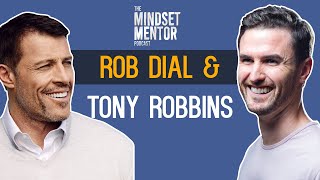
Rob Dial interviews Tony Robbins about how childhood trauma led them both to personal development work. They discuss learned helplessness, creating a compelling future, and practical methods like cold-water exposure, meditation, and proximity to role models for shifting your state and identity.
Chapters
Welcome, everybody, to the Mindset Mentor Podcast. I'm your host, Rob Dial, and I'm extremely excited for today's podcast episode. To give you guys an idea, this episode, we are 1400 episodes into this podcast, almost all of them solo podcast, seven and a half years. And I've had thousands upon thousands of emails and Facebook messages and Instagram messages of like, hey, can you just somehow get Tony Robbins on your podcast? And we, after 1400 podcast episodes, getting into the top 50 podcasts in the entire world, we have Tony Robbins, everybody. So, Tony, welcome to the Mindset Mentor Podcast.
Thank you, Rob. Congratulations on what you've done. It's fantastic.
Thank you. I appreciate that. I want to dive in and I want to talk about you because we have very similar past. We've had different traumas in childhoods, but kind of brought us to the same place of wanting to help people. And so when I was 13 years old, I remember being in my mom's car and she was listening to tapes, and I was like, I remember in my head being like, who are you listening to? And she's like, I'm listening to this guy named Anthony Robbins. And I remember being like, this is the corniest thing I've ever heard. Like, I remember thinking this in my head as a 13 year old, then 19. You know, I go through things in my childhood. My father passed away when I was 15 for being an alcoholic. And I discovered you, or rediscovered you. I discovered you, I guess, in my own way. And I sold Cutco knives. And they started pushing personal development and personal development. So I started getting all of your books, I started getting all of your tapes and starting, like, using it and realized, oh, my gosh, this. This trauma that I have from my childhood that's kind of staying these things I've got from my father and him being alcoholic and passing away, I can actually start to try to fix myself. And it was really empowering, you know, not having money, not being able to go to a therapist, but thinking I can actually work on myself and help myself. And through that trauma, then I started falling in love with teaching people. What helped help me? Like, I felt obligated to start this podcast because there were things that I felt helped me with my trauma. And I know you have a similar story where your trauma, I think, was kind of the catalyst to be able to do what you do. And so I'm curious if you could share with everybody, like, if we go back, how does Tony Robbins, who's been doing this for 40 years, become Tony Robbins? What did it look like in the beginning for you?
Well, I just. I always love people. I don't know what, what it is. I have an affection for human beings. And, you know, my mom would send me to the grocery store. My mom was a very interesting creature. I had four different fathers, but got to my fourth father, said, mom, I'm confused, you know. And my mom never left the house. She was. We had to live in a little 1,200 square foot house with three kids, and my father lived in the living room. She had her own little separate bedroom. She was a very unique human being. But it really made me become independent because I had to go to the grocery store since the time I was 6, 7 years old, on my bicycle and buy the goodies and come back and make the meal, and made me a very responsible person. But also my mom unfortunately used drugs and alcohol, prescription drugs and alcohol, and the mix was not very good. And she got very violent. And so I had to protect my younger brother and sister, five and seven years younger. And so I became basically a really good practical psychologist. I had to learn how to manage her emotions and her states and everything else, because if I didn't, it got pretty extreme. And when I was 17, it hit its peak. She chased me out with a carving knife. I knew she wouldn't kill me, but I wasn't going back in that building, you know, she said I lied and I didn't lie. And she poured liquid soap down my throat till I threw up and, you know, smash my head against the wall. I was already 6 foot 1, you know, I was 51 in high school and I grew 10 inches really skinny. But she made me bend down and smash my head against the wall. And I would let her because it was just, that's. That's where it came from. So it made me just really hungry to understand what makes people do what they do. How do you help people to shift? And at a very early age, I started laying out what I was going to do with my life. When I was 15, I was like, okay, you know, in my 20s, I'm going to learn how to help anyone change anything in their life, starting with me. And no matter if they're committed and I'm committed, I want to be in there. I could help anyone, no matter what the challenge may be. I want to learn every skill I possibly can. And then in my 30s, I'll learn to do that with a couple people at a time. And in my 40s, maybe I can do with large groups in my 50s, like really large groups. And then my 60s, you know, I'll either do something in the political environment to serve, or I'll do something in the philanthropic environment. But I. I'll have lived enough of a life that I can really influence people from a different place. And so fortunately, I've been kind of ahead of that schedule most of my life. Now I'm in my 60s, I'm 62, going to be 63 soon. But you know, I've been doing this for 45 years and 45 years of obsession with how do you improve the quality of life? Because I just, I live to see people get out of suffering and really enjoy their life. It's what makes me go. I don't have to work another day of my life, obviously financially, but I work harder today than I did when I was in my 20s and 30s. And so it's really, really fulfilling to say the least. But I think we all go through stages and I think it's important that if someone's going to be successful in anything, there's three patterns you've got to really recognize. Pattern recognition is power. And so the ability to recognize patterns where things that look like chaos to everybody else, like, looks like I'm destroying myself or I'm not following through. And people make these generalizations because they don't understand how human behavior and how the human mind works. Once you understand there's only so many patterns, you can start to identify a pattern and then the second step is to start to use it. Instead of letting it use you stress as a pattern, you either use stress or it uses you as an example. And then you get really good. You're good at creating patterns and that's when you become really masterful. So if you see someone who's masterful at anything, they're great at picking stocks, they're great at pattern recognition. They know how to use it and they know even how to create patterns. You see somebody who's a great musician or great entertainer or singer, they know the way to use their face, their voice, their body. Certain patterns produce certain results and they've done it so powerfully for so long with so many different types of environments that they're masterful at it. So I look at my own life and I said, that's what I want to continually do. And it's a never ending process of saying, how do I keep pushing myself? How do I do what I call deep practice? Deep practice is practicing without a net. You know, most of my skill happened because, you know, I get the phone call and the child is suicidal, and I got to do something right now, or the adult, or I've got, you know, you know, an athlete, and they're burning down on national television. I remember the first time Serena Williams, years ago, and her sister was killed, and she couldn't get on the court. And I got to help turn her around. You know, I got to do it right now, and the whole world's watching. So if I don't do it, well, we're in deep trouble, right? You've got challenges or, you know, I get a phone call from the president, United States, true story. And he says, tony, they're going to impeach me in the morning. What should I do? And, you know, President Clinton, I was like, well, I'm 31 years old and it's tomorrow morning. Could you call me sooner? You know, it's like, this is ridiculous. So. But because I had to produce results right then and there, I got good at it. I wasn't perfect, but I got really good at it. And I developed enough patterns now that I can help just about anybody with anything. We just did a. A wonderful study at Stanford. They approached me this last year during COVID and they had a couple of people that went to my Date with Destiny seminar that had been clinically depressed. They came out with no depression symptoms. They said, this is miraculous. You know, what kind of data do you have? And I said, well, I've got thousands, tens of thousands, hundreds of thousands of testimonials. But, you know, no one's ever studied it. So they decided to study it, and they shared with me that. To give you an idea, let's just take depression. People go through different stages of life, right? And you're, you know, birth to 20 is one stage of life, right? And everyone has a different stage, but you're primarily receiving information, learning, growing 21 to. Let's say 41 is you're the soldier of society. Now you go test what you were taught. You think you're invincible. You're going to be a billionaire 10 times over. You can have 10,000 businesses. And then you learn things are more complex in one relationship than you could ever imagine, and you're not invincible. And so you learn in that time period, and that's a time period of a lot of stress for a lot of people trying to figure out how to make it work. If you work hard in the spring and the summer, so to speak, and now you come to fall 43 to 63, that's a power period because you've accumulated enough Relationships, insights, strengths, skills, tools. If you've grown that you now can really begin to have a reaping time in your Life. And then 63 to 83 or 103, the oldest living people go to 120 is kind of the final stage. And that winter time is your chance to really be a mentor. Because at that stage, quite frankly, you don't give a shit about most stuff you gave a shit about. You don't worry about yourself. You're not judging yourself so much. You know who the hell you are. And you really would just want to pass on what you've learned from your life because you lived enough life experience. So everybody's life isn't identical, but we all go through these stages. And it's easy to get depressed when your world doesn't match the way you thought it's supposed to be. And when the world changes like a Covid, and all of a sudden you can't leave your house. This makes people lose what's called a compelling future. Anyone can deal with a difficult today if they've got a compelling tomorrow. But most people have lost that compelling future when they're being told the whole world's gonna end in 12 years, cause environmental disaster, which of course is not true, or you're never gonna be able to leave your house, or you gotta wear a mask the rest of your life and you can't talk to humans and a bug's gonna get you and kill you. Well, when there's that much fear, there's no compelling future. People go through a rough time. So during COVID they said this would be a great time. Because what the research and meta studies show around depression is it went through the roof. Suicides went through the roof. They still are, unfortunately. And the reason is because there's that no compelling future. So they said, look, the best research we found, meta studies across all the studies, shows 40% of people that seek treatment actually get better. 60% don't get better at all. And of the 40% doing SSRIs, drugs and therapy, they on average get 50% better. So they're half as depressed. Now, some people get totally well, some not at all, but that's the average. I said, well, that's not much better than a placebo. They said, you're right. And they said, the greatest study on this happened two years ago on depression. It was done at Johns Hopkins, where they took people and they gave them psilocybin, magic mushrooms, and they gave them cognitive therapy for a month, and the results were four times greater. Than they ever saw. 53% of the people 30 days later had no symptoms of depression. There's been nothing like it, but it's an illegal drug, and it takes a month of drugging and counseling to do that. So they used them as the standard. They used the exact same format, comparative groups that were doing journaling, you know, gratitude journaling and so forth, to a group of mine that went through Date with Destiny, and the results were so insane that Stanford didn't publish it right away. They took the raw data and sent it to two other private organizations who had no idea whose content it was. And it came out the same. 100% of the people 30 days later had no symptoms of depression. They'd never seen anything like it. No drugs, no alcohol, six days. And then second part was nice, was 19% of those people had suicidal ideation. And at the end, there was zero with suicidal ideation. So they just started a new study for 750 people to be the largest study of its type ever. And it just works. When you change the way you perceive life, you change the emotions, you change your experience of life. I always tell people, you don't experience life, you experience the life you focus on. So if you're pissed off, you're only focused on things that could piss you off. You're deleting all the things you could be grateful for or loving. If you're really happy, you're deleting all things that could piss you off. And so what's wrong is always available. So it's what's right. So it's developing habits of what you value, what you believe, and the rules that drive you that really helps people to create lasting change. And a year later, 11 months later, they followed up and people still had changed. 51% increase in positive emotions, 72% decrease in negative emotions. All just published in the Journal of Psychiatry.
Nice. That was actually one of the big questions that I had for you. I was really curious on was suicide. And being the fact that past couple years, the mental health epidemic was not good before COVID and it seems like the crisis hotline is getting three times more calls than it ever has the past two years. And I've been to your, your, you know, upw, I've been to your seminars before, and I've heard you say it many times, is that you've dealt with many people who have suicidal ideation and never lost anybody at this point, do you feel like the main thing is that, like you're saying that they don't have a compelling Future of something that excites them. There's no, I guess, light at the end of the tunnel. You know, it's like the phrase, when you're going through hell, keep on going. You know, it's like, is it kind of that people stop and they just look around and they say, this is how it is. It's going to be forever. And that one of the keys is to actually. So there's people listening that are struggling, and they've probably thought about it recently, right? For them, would it be there needs to be something to look forward to? Is that the. There's many parts, but is that the main thing where you're just like, I want to give them a compelling future that gets them excited to live tomorrow.
That's certainly one of the things, because anybody can deal with, as I said, a tough today if they have a compelling, telling tomorrow. But getting people to that point requires a biochemical change, not a biochemical change like SSRIs. I'm sure you saw the COVID of Newsweek just showed that they've done meta studies that show SSRIs don't work. That's not the source of depression. People talk better living through chemistry, and it doesn't work. And so. But they're still selling them, right? Still promoting. Because people don't know the alternative to that. The answer is a little bit deeper than that. It's, you know, people get into what's called learned helplessness. Learned helplessness is, you know, you can take a dog or a monkey, and I don't support this, but researchers do it, and they'll put them in a room, and it's got four squares, and it has a little net in the middle, like a little tennis. Tennis net, so to speak. And there's a red square, there's a green square, yellow square, you know, and what happens is the animal goes in and lands on one of the squares. Let's say it's the green square. Well, they immediately electrify it. So Mannables getting these shocks isn't what the hell to do. It bounces around, and all of a sudden it gets to the square next to it and it stops. And this square next to it is yellow. It's like, oh, all right, thank God. So they bring the animal back, and now they electrify the yellow square and the green square. Well, animal goes crazy. And the last ditch effort, it jumps over the net and lands on a colored square, different color. And it's no pain. It's okay. So next time you let them run, they Just jump over the net. Then they electrify the third square, and you know where this is going. Eventually electrify all four squares. What happens when you get pain, no matter what you do? Well, you go into learned helplessness. The animal will start to sit in the corner, bite itself, and defecate on itself, whether it's a monkey or a dog. Now, the good news is you're not a dog and you're not a monkey. We can supersede that. But most people get caught up in that learned helplessness. And today, the news is no longer designed to inform us. The news is designed to startle you because the only way they get paid is to get your attention. We're not in an information society that died a long time ago. There's too much information. We're drowning in information. We're starving for wisdom. So today, if I get the right cook, I get you to click, I get paid. Even if the article doesn't match the headline. If I can say, you know, your child may die of drinking water film at 11, you're going to probably tune in. You know, if it bleeds, it leads. That's journalism, unfortunately, today. And the journalists are not bad people. I don't know how much journalists they are anymore because it's more business, right? They're all trying to get our eyeballs, and they're all competing, and they're all competing for a shrinking market because there's so many different competing things for us to focus on. And so now you're in a place where most of what's coming at you is designed to appeal to the negative bias of the human brain, the survival mechanism. And so that's why most people get overwhelmed, so they hear all these stories. And now these last couple years, the stories have been really scary for people. Like, we're all going to die if you breathe on somebody. And so now, what could possibly be compelling? So it's not enough to paint a compelling picture. You have to shift their body. You have to shift the way they're using their body. If I said to you there was a depressed person behind curtain number one, and I'll give you $100,000 donation to your favorite charity. If you can describe their posture, I bet you could do it. What's their posture like?
If they're depressed, they're slumped over, they're probably breathing really heavy or really, really light and short. You know, their voice is probably low and, you know, they're speaking really slow.
Slow shoulders down, slumped, shallow breath. Now, how do you know that? Because We've all practiced this shit at some point in ourselves, right? And felt that way. But if you take that same person and you change their physiology, bring their shoulders back, you change the tempo which they're speaking, you change how their voice is, you change their movements with punctuated movements, that person's biochemistry changes. You don't need a drug to do it and has no side effects. And then when you develop a habit of using your body that way, then all of a sudden you have the habit of perceiving life differently. So what I do with people in my immersion seminars, they're designed to immerse people. They're not sitting at someone talking at you. And you've been to one, you know what I'm talking about. It is a like going to a rock and roll concert. Because there's constant change, movement and emotion. Because information without emotion is not retained. If I said, where were you on a 9 11, even if you lived in another country, most people can tell you where they were, where they were standing, who was around them. If I say, where were you on 8 11, nobody knows unless something emotional happened. Because information without emotion is barely retained. So I produce tremendous environments of positive emotion while people are making these changes. So they change the conditioning of their nervous system. That's why a year later, you know, Stanford study shows 70% decrease in negative emotions, 50% increase in positive. A year later, after one weekend, one week, six day program to give you an idea. So it's really changing the conditioning. If we can find the part of you, there's a. There's a part of your identity that's more than the things that you can limit yourself. There's a part of you that's more than anything has ever happened to you or could happen to you. There's a part of you that is, let's call it soul or spirit, right? It's something that nothing can destroy. We get you to tap into that aspect of identity, we can create a compelling future. But otherwise we're just making pictures. And you're not going to believe it. You're just going to go, oh yeah, yeah. That's all bullshit, right? So that's why we put people through an experience that goes 10, 12, 14 hours a day for three or four days. Because it's kind of like if I want to learn Italian, I can go to class in high school and college and you know, five years later, most people don't speak it. But if I dropped you in Italy for 90 days with no teacher, 90 days later you're going to be speaking because we put you in immersion. So everything I do is immersion because that's how the brain really learns in a way that's lasting.
Yeah, the biggest thing that I, like, there's many things I took away from being at upw, but one of the biggest things, if not the biggest, was how on command we can create energy in our body. Like, it's, it's wild. I remember like the third day, it was like 13 hours in, it's like 2 o' clock in the morning and I'm like, how the fuck am I still dance? Like, how. How is there so much energy in this room? And it was really, really inspiring because there's so many people that just, they don't think they have enough energy throughout. Oh, I'm so tired. And then they have this story that's in their head.
Tired. Just think of it this way. If you got the greatest computer in the world and you plug it in, there's not electricity, it's not going to work. Right. Well, tired is the first step to being depressed for most people. And most people are tired not because they're working so hard. Like, oh man, I worked so hard today. What'd you do? Oh, I had meeting after meeting, you know, I sat in these meetings, you know, and I talk to people or I make calls or I send emails and they're like, I'm exhausted. I mean, what's happened is we haven't pushed ourselves physiologically for so long that we've gotten weaker and weaker and so we feel tired from doing nothing. And so what you learn when you go through a weekend like that is, holy shit. There is a level of energy on command that's available to me that no one, you never believe. But by being in the environment over and over again, you learn it's real and you learn to use it. And when there's enough energy, everything else works better. Your relationship is not going to be great no matter what tools you have, if you're tired, because you're going to go, love you, love you. You know, there's no passion, there's no aliveness. Right. You're not going to grow your business when you're tired. So a huge part of what I teach, even in Unleash the Power within upw, by the way, for people, not vendors, called Unleash the Power Within. It's a weekend and on the fourth day, it's all energy. It's all about the things you do with your health and vitality. So you sustain that because without that, nothing else really matters.
Yeah. And that was. That was a crazy part that I always go back to is it's like, there's no such thing as not having energy. It's just I haven't created the energy within me, and I can do it at any point in time. I'm curious with you. With that being said, one of the things that you always, you know, when you're at the seminars is about making a move and having personal practice. And so if we're talking about, okay, I'm out there, I'm listening to this podcast, and maybe I haven't seen a light at the end of the tunnel. And I'm starting to think, okay, maybe I should have a little bit of light at the end of the tunnel. What's the personal practice that. That you have that, like, has stuck with you for years that gets you into a state? And I'm also curious if there's any new ones that maybe you've picked up in the past one or two years that you've discovered through research or just through yourself of, like, what's an old one that, like, works for you, and it's been working for 30 years, and then what's like, a new one that. That kind of helps you get into a powerful state that you want to be in?
Let me give you five little things that I did in my worst times. You know, when I was walking in, you know, Christmas Eve, chased out of my house by my mom with a knife, and, you know, I spent the night on the hill, and then it started to rain. It was brutal. And so it's like I put a little plan together, turned me around. And I remember in 2008, when all hell was breaking loose, you know, 100 companies at that time almost. And I, you know, I was trying to figure out how to keep everything together. And I returned to it. But at a really fundamental level, the first key, if you're not where you want to be, is you got to feed and strengthen your mind. In other words, you're basically. It's garbage in, garbage out. We all know that, right? But Jim Rohn was my original teacher, and he used to have this simple practice. He used to say, tony, every day, you got to stand guard at the door of your mind. He asked me a question. I remember early On, I was 17 years old, and he said, because I was talking about some of the challenges having, and I wasn't getting any support and all this bullshit, all my wimpy little stories, and he was really kind. He just said, well, let me Ask you a question. He said, if I had a cup of coffee. If you have a cup of coffee here. And he goes, your worst enemy puts sugar in your coffee, what's going to happen? I said, you're going to have sweet coffee. He goes, what if your best friend or your parent or your lover by accident drops one drop of strychnine in your coffee? What's going to happen is you'd be dead. He goes, that's right. Life is both sugar and strychnine. So you better watch your coffee, stand guard at the door of your mind. And the way he used to say that is every day, take 30 minutes of your day and read. Not the shit that comes to you today. Not the clickbait where you pick up a book and you read something that has philosophy or psychology or skill, where you are immersing yourself for 30 minutes in improving who you are. He said, because if you do that every single day, it'll accumulate over the decades until you'll be at a point where you won't even believe all that you've experienced and lived. And I really took it to heart and I did it reading initially, and then I was spending all my time in cars. So then I started doing audio tapes in those days. It was before the days of YouTube and so forth. So, you know, six cassettes with a workbook cost 300 bucks one of those days. And I'm making 50 bucks a week as a janitor, and I'd save up my money and go buy these things. And because I spent so much, I listened to it over and over and over, and I got the power of repetition in my nervous system. And so when you do that enough, you find yourself in a place where your nervous system gets rewired. That's basically what happened for me. I rewired it until I was living what it is that I was wanting for my life, what I was wanting to create for my life. So the practice of feeding my mind was the first one and then the second one. And by the way, I call that net time. No extra time because I'm driving to my car, I'm working out, you're cleaning the house and you're still learning, right? You're feeding your mind. Second one is every day you got to feed and strengthen and demand your body. So I start every day. My current practice for the last 10 years, plus maybe 15 now, almost, I guess, has been I start my day by jumping in freezing cold water. And I don't do it because I'm a masochist And I don't do it because I enjoy it. There's never a day I look forward to, never. But I don't negotiate with myself. I've trained it as a habit. Has a huge impact on your body, health wise. It takes the blood and pushes it everywhere, your limp, everywhere. You feel like a million bucks. Getting out, getting in, not so nice. But I don't go, oh, let me see when I'm ready. Let me, you know, maybe in five minutes or let me count to three. It's just like when I say go, we go. And so it trained my body and my mind that when I say we're going to do something, this is what we're going to do. There's no internal negotiation with me. And that is a practice that's both physical and mental for me. And then, you know, I have a daily practice called priming. It's kind of a form of meditation that I do to feed my mind each day. Those things have stuck. But the overall theme of feed and strengthen the mind, feed and strengthen the body. The third one is finding great role models. No one is perfect. You're not looking for somebody to be a perfect role model. Be looking what they're good at. And so I grew up very poor and I didn't want my future family to be that. And so I was like. Who grew up poor like me, with absolutely nothing and became wealthy and did good works with their wealth. And I saw Sir John Templeton, who was not a sir. He was originally from a farm. He wasn't even a British citizen. And I saw him save 50% of his money. And then in the worst times, when Hitler was invading Europe in 1939 in Poland, and it looked like the world was ending, the stock market went through the floor and he took all the money he had and invested in all these stocks that were worth a buck or less. And years later, of course, war doesn't last forever. Winter doesn't last forever. Springtime came the greatest growth in history. He became a billionaire first. Billionaire investor, international investor. But he did it by understanding in the worst times, that's when the greatest investment opportunities happen. That it's times of the greatest pessimism, where you'll get your greatest opportunity. And so he trained me to think that way, which helped me because I started my business in 1977, 78, when interest rates were 18% and stagflation, which we're probably moving towards, that's where asset values go down and prices go up. And that's, you know, I had to build my business in the worst possible season. So it built muscle for me in that area. So again, I had some good role models. And then the fourth one is, you got to get in proximity. It's a habit of getting in proximity of people that are doing better than you are. I went to work for people. I worked as a janitor for a guy just so I could be around him. I'd read his stuff in the middle of the night, quite honestly on his desk. I was just feeding anything off, being around people that were 100 times, a million times more successful. And instead of feeling like I'm a nobody, I was like, I'm just, I'm here to learn. So I got in proximity with people. I got in proximity with people in the stock business and ended up taking company public and making $400 million because I was in proximity. When you're in proximity, you have power. If you don't have proximity, you don't. Bill Gates was in proximity. He went to Harvard. He wasn't doing well. He did not write Ms. Dos. He bought it for $50,000. His parents were associated the board of directors of IBM, that that proximity and proximity to computers. He still had to do his work, but without it, it wouldn't happen. And then the last step is get out of yourself by doing more for others than yourself. It's like, if I can focus on giving more than receiving, that'll shift. So I started working. Back then, I'd go and literally, I had no money myself, but I'd go feed people at the local Salvation army place during the lunchtime and so forth and volunteer my time. And it made me remember, hey, I got it better than I think I do. And it also made me remind myself that life's not just about me. It's about giving. So those five habits are still a part of my life on a daily basis. I have various tools that I use, like priming, like, you know, my cold water, like my workouts and so forth that I do. But, you know, the fundamentals don't change. What you need to do to have a quality life is pretty fundamental. You take care of your body, your mind, your emotions. You got a great plan. You got some, you know, role models that make it more real to you that it's really possible. And you're in proximity with smart people and you're constantly giving. You're going to win.
You. You bring up Jim Rohn. My. My very first coach I picked paid him $500 a month when I was 19 to do one on one coach with me, and he sent me my first book I ever read outside of school. I don't even know if I ever even read a book in school. I dropped out and it was the five major pieces to the life puzzle. And I remember where I was reading and I remember highlighting it in my car as I was reading it as well. And my favorite quote that he says is success is something that you attract by the person that you become. And so my mind has always been set on becoming the person I want to. And I can see in my mind, and it goes back to also what. What Alan Watts says, which is you're under no obligation to be who you were five minutes ago. Like you can just decide to be somebody different right at this moment. And I'm curious with you, when someone has, I think, a behavior change and action change, most of the time for real, true behavior change comes from identity change. And so over these years of working with people, do you notice that. That the problem with a lot of people is that they're stuck in an identity that's a story that's not true. And that if you can break that or shift it and they can dec to let go of that story and maybe start to shift into another idea of someone else and a different identity, that their actions start to shift from that as well?
Yes, without a doubt, I teach everyone that the only lasting change comes from identity change. So let's define identity for your listeners or viewers. Identity is. We all have a way of defining who we are. And the definition of who you are is also who you're not. I'm not one of those. Right. So if I said to you, would you like a cigarette and you used to smoke cigarettes 10 years ago, you're not going to say, what brand is it? You're going to say, no, no, I'm not a smoker. I'm not one of those. As long as you're a smoker, you're fighting. It's like people say to me, sometimes I'm on day 12 of stop drinking or day 14 of not smoking a cigarette. And I'd say, why are you counting? So you can tell people how long you lasted. This time they've not made an identity change. They're going back. It's only a matter of time. So identity is how you define yourself. And what's interesting is, you know, you can think of it as a thermostat on the wall. If we set the thermostat to be what our identity is, which our identity is not what we Want. It's what we believe we are, right? Currently not our desires, but what we're comfortable with, right? So if 68 degrees represents your emotional comfort, or 68 degrees is how financially comfortable. You may want more, but that's what you're used to at 68 degrees or 68 degrees is intimacy. How close you get with someone before you tighten up or push away or start to sabotage it. Well, that's my comfort zone. Well, if the temperature drops to 62, 61, 60, there's a point where the pupil says, hey, what are you doing down here at 60 or 68 degree, and you get this push, this drive, the heaters kick on to heat you up and give you drive to change. And we've all experienced that. We've got so bad. It's like, not another day now. I'm changing this now, finally, right? Because you kick that. But what most people don't know, it happens on the other side. If 70, 68 degrees is your center, and then all of a sudden you go to 78, 88, 98, 100 degrees, all of a sudden, somewhere in your brain's gonna go, whoa, whoa, whoa, whoa. What the hell are you doing up here? You're 68 degree here. You're not 103 degree here. What the hell? And the first thing that happens is you lose the drive, the heater stop. And the second thing is, that's not enough. The air conditioners kick on and you start to sabotage to get back down to where you think you need to be. So shifting identity is the most important piece. But what I found that's different than most people is we're not one identity. You've defined yourself. When did you come up with your. If I say, who are you? People look at you kind of funny. But if you dig, they'll usually tell you a definition they came up with 10 or 15 or 20 years ago. They've not updated it. And so what I do with people and the reason I can create change so rapidly, people watch on video and they're like, how the hell do you do that with them that fast? Is because you have multiple identities. You're just not paying attention. You've reassociated to one part of yourself. So there's a part of you that will always whine and complain if you let it. So we can sit here and try to do therapy on that part of you and all that shit, or we can put in charge the part of you that kicks ass and takes names. And there is a part there. There's a part of you that won't settle. There's a part of you that finally says, enough of this shit and will step up. I just get people to that part now instead of after months or weeks or years or whatever the case may be. And then we reinforce it till it becomes your core identity. It's kind of like, you know, how do you know your dog? How do you make your dog your dog? You. What do you do? You name them. Yeah. And you train them to come when you call. Yeah. So what I get people do is to name those identities and train themselves to bring it when they want it, just like you did with your energy. And when that happens, your life changes completely. Because identity doesn't take effort. Like, it doesn't take effort to not smoke when you're not a smoker. But if you're. Or if you're a health nut. Right. But if you're a smoker trying not to be a smoker, now you got this inner conflict, and now it's all about willpower. And eventually you're going to get stressed and probably smoke. So that's why shifting identity is so critical. And that takes immersion to do that. It doesn't happen with a conversation. It happens over days and hours of compression and focus. Just like learning the language. Right. It's got to be immersed. Otherwise it's too little at a time to really have a lasting impact.
Yeah.
And that's why everything I do is immersion. Four days, six days, you know, total immersion for people.
Yeah. I'm curious, with. With identity, you've got some. Some children, you've got some older children, and you also just had a new baby last year, so congratulations. And I'm curious, between Tony 30, 40 years ago as a father and now stepping into fatherhood, what is. What do you feel like might have been. What did you do really well when you're like, I definitely want to bring this in. And what are some things where you're like, all right, I probably need to switch that because there's a lot of people listening that have children, and they're helping them create that identity all of the time. And so are there shifts that you've made from, you know, the new baby that you have? You're like, I definitely got to not do this again, or I got to make sure that I do this to make sure that you help the identity come out the, you know, the most positive that you possibly can?
Yes, yes, for sure. Well, first of all, I have five kids and five grandkids. Give you an idea and I was 24 and had a 17 year old son instantly, an 11 year old son instantly, daughter instantly, a five year old son, and then in my own blood, child on the way. So I had quite a learning. I married a woman that was 12 years my senior and so she'd been married twice and had kids from different fathers and I had brought them all into my life. So it was a huge part of my growth alone. And so, you know, when you're 25 and you're trying to change the world and now you've got all these kids all of a sudden and they're all in different stages of life, I really had to learn and grow. And I'm proud of what I've done. I'm super proud of my kids. They're all adults today. And you know, as I said, I have five grandkids, so my grandkids are all older than my youngest daughter now who's 20 months old. Biggest thing that I learned, I've learned because of dealing with so many human beings is so many human beings. In the last decade or two, we've shifted how we raise our children. Every generation tends to react to how they were raised. So baby boomers were raised in an environment where their parents went to war and so forth, and they came back and had all these babies and they wanted them to have a better life. So they told them they were great, sent them to college, gave them everything and made them very much narcissistic. Not every person, but as a culture, it was more about me, me, me, and maybe my mission out there when I wasn't busy making love, having sex. Some mission out here larger than myself because they didn't have to fight the war. There's an old phrase that says art for art's sake. Is the philosophy of the well fed, well you didn't have. They never had to face anything, the baby boomers. So they work, focused on their spiritual development because they had that privilege, right? And they judged their parents for not being open enough or wide enough or whatever the case may be. Right? But then those parents did not pay attention to their kids. They were totally protected initially. They didn't protect their kids. They're busy out doing other things. So the kids that grew up in the 80s and 90s were latchkey kids. Not everyone, but it was a different generation. They were raised to be pragmatic. If you ask people, and they've been asking this question since the 60s in college, what's more important for life? A philosophy of life that makes you happy or Pragmatic skills will give you financial freedom. And in the 60s and 70s, 82% plus always said philosophy of life. In the 80s and 90s and 2000s, it was exactly reversed to pragmatic skills. So now those Latsky kids became the ones that overprotected their children because they weren't. And so their children have been raised. Baby on board. See, in the 70s, every movie about children was Rosemary's Baby Exorcist. You know, then all of a sudden, it's the 80s and 90s, it's three guys raising a baby. Babies are beautiful. Baby on board. The entire philosophy changed, and the entire focus is on the child. And that hurt intimate relationships immensely because they put the kids first. And then it also made these kids think they're the most important thing on earth. And so there's so many problems for young people today. When I say young people, millennials are now turning 40. You know, they think they're old now or they think they're going to become old soon. And the Z generation is fighting them about where they part their hair and all this stupid shit. But the point of the matter is this group of people has really not faced a real challenge. You know, Covid was their challenge. They were at home and the government sent you money. It doesn't happen that way. Most challenges, that wasn't 2008, for example. So their idea of what's a challenge, they think if people believe something different than them, if they went to college, oh, my God, that's dangerous. There's a culture that has been developed that does not have muscle. But it's kind of like if you're born in 1910 and you come of age at 20 years old, you watched winning World War I, you watched radio, television, cars, and you're ready to have a car. You turn 20 and it's 1929, and the world looks like it's ending. And then you make it through years of depression to make it to, let's say, 29 years old. Now it's 1939, and World War II breaks out. So that generation that was called flappers, and they were disrespected and they were irresponsible and they were weak as shit. That was the way they were described. They became what's called the greatest American generation by most historians because they face the biggest challenges, and they grew during that really important time of 20 to 42 years old type of thing. And so that generation brought home and created a different season. They brought a springtime, the late 40s, early 50s. Up until the time of Kennedy's death was a springtime. Then there's a summer where these kids grow up and they fight. Then there's winter. We have a big financial crisis and usually a big war. This happens about every 80 years like clockwork. And so when you understand these patterns, you start to realize that, listen, everybody's going to have their time to face challenges. Everyone's going to have their chance to grow. And I think Millennials and Z Generation are going to be two of the strongest generations in history because they're going to face some real challenges. They haven't yet. They think they have, but they haven't yet. And we're going to all be grateful for them because they're going to be part of the soldier of society that helps us to grow. And their networking and their capacity to understand technology will be useful tools in dealing with the kinds of issues we're going to deal with. But then winter's over and you got another springtime, another 20 years of different mindset. Winter does not mean every day is a horrible day. It just means the overall theme is more fear, more stress. Overall, you can be a beautiful days in winter, but some winters are short, some are long, some are hard, some easy. But you don't go from reaping in the fall straight to the next springtime. You go through winter, which is what strengthens us. And I think this generation is about to face that. They're facing it right now a little bit, but they don't know. They think jobs are, you know, you can quietly quit because they haven't been fired yet. But now you're seeing thousands of jobs start to disappear just in the tech business alone. And this generation doesn't know what that means. They think they can just dictate and they can have food on command and wine at lunch and things like that. If they're in the tech business, all that shit's going to go away when the economy really tightens and it's going to happen. So to me, the focus is, how do you get stronger? It's like, oh, I'm worried about inflation. Okay, well, inflation's, let's call it 7 or 8% overall. All you got to do is be 10% more effective, more productive. You can certainly be 50%, 100%. Can someone make, I mean, Jim Rohn used to say to me, could someone make twice as much money in the same time? Yeah, 10 times. Yeah, 50 times, yeah. How? You have to become more valuable. You have to not say what I want. You got to Say, what does the world need? And I got to retool myself to help meet those needs. And if you focus on adding value, doing more for others than anybody else in anything, you'll become one of the masters in that area. And when you're really great in that area, you build a brand. When you build a brand, people come looking for you. You don't have to go looking for them. And you're going to grow during whatever season we're in. They were asking Warren Buffett the other day, now what do we do? What's your advice about inflation? And he said, don't worry about inflation. Invest in you. Work on you. When I first interviewed him, I asked him with the greatest investment he ever made. I thought he was going to say Geico or Coca Cola. And he goes, it was what you do, he said. I said, well, I do a lot of things. He goes, dale Carnegie. I went to Dale Carnegie. I learned how to communicate effectively. All my ideas would have died on my lips. I wouldn't be who I was if I hadn't learned how to do that. And he said, so he said, invest in yourself, because if you can be the best lawyer or the best doctor or the best writer or the best whatever, it doesn't matter what happens to the valuation of the dollar. You're going to get plenty of whatever that thing is, and you're going to dominate in the marketplace. So I think it's time for people to retool. Instead of being fearful. It's like, move forward. So we all know people that have been through hell and back, or all hell's breaking loose, and they're unshakable. It doesn't mean they don't feel anything. It's like they stay in the center of it and they figure out how to take advantage of the problem. You know, you look back and during the Depression, there were more people became millionaires during the Depression than any time in history, percentage wise. You know, John F. Kennedy, everybody remembers the President, United States, Joe Kennedy, his dad had $3 million in 1929. He had $62 million three years later. Because when things get rough, the opportunities are unlimited because everybody else is scared. So I'm looking to help people become more unshakable by learning, having a plan for their body, for their relationship, for their finance, for their career. And so now, the last three years during COVID when people trapped at home, it's like I wanted to help as many people as possible. And the stadium events I was doing were shut down. I couldn't do 15,000 people. They wouldn't let me put 100 people in the stadium. So I was like, okay, I built this studio and I'm going to go reach people. And so I've done all these events, but I did one event each year, and I'm doing one this year, too. Coming up in January here for free, five days for free, Total immersion. Two hours a day, two and a half hours a day. You know, I say two, sometimes I do three because I just want to add value to people. But we cover each area of your life for five days. And you can tune in from home. You don't have to travel to do it. You don't have to spend a dime. It's not harshly free. It's completely free.
I love that. I love. I love how no matter what happens, the idea is how can I make sure that I'm like the redwood that's centered in the middle of the storm and nothing's going to. Gonna take me out. And I think that what causes a lot of fear with people, especially with hearing about the economy, inflation, all these things, is money in general. And I know that for me, when I was younger, I had a really. I can actually tell you a story about your book and how it changed my viewpoint on money. When I was driving my car, I remember I was driving Bradenton, Florida. I was passing it. I was about to get off on an exit, and I heard you talk about the difference in the way that we view pleasure versus pain. And I realized in my mind that money, because, you know, growing up poor and, you know, my mom applied for food stamps, and we couldn't get food stamps because she had a car. And I guess for some reason you can't get food stamps when you have a car, so we couldn't get it. And growing up that way and seeing her have to, you know, during tax season and asking her for money sometimes and not being able to have it made me associate a little bit of. In the back of my. I think it was deep in my subconscious that money's bad. Money stressed my mom out. Money, something that stressed my mom out is bad. And I remember thinking in my head, oh, my God, I'm not making this stuff, most likely because I'm actually probably afraid of it. Like, I'm pushing it away because I see it as painful. And so I think a lot of people have a negative psychology around money. And with all of the stuff that's about to happen, inflation, you know, recession, all of this stuff, you've made quite a bit of Money in your life, what has shifted in you and what do you think can shift in people to help their viewpoint of money? Because, as you said, if they play their cards right over the next 18 months, it could be the biggest, probably the biggest financial gain that they've ever had in their. In their life up until this point. So when you think about money and the psychology of money, how do you think of it? Do you think of it like energy, like some people do? Or like, what is the thought that goes through your mind of how to help people understand money better but also change their psychology around money with what's coming up?
Well, I grew up dirt poor. We had no money for food. Probably the most significant event in my life, one of them at least, was when I was 11 years old. And we had no money and no food, and it was Thanksgiving, so it magnified it. We went to Star. We had crackers and butter, peanut butter, but there was no, you know, you're not going to have a dinner, and everybody else is having that, Right. So my parents were fighting and, you know, my forefather screaming at my mother, My mother saying things to him that she'll never be able to take back. And, you know, I could feel him feeling like he's failed his family, which he did fail to provide. Thea lost his job and didn't handle his finances well. So we literally were completely broke. And there was a knock at the door. And I opened the door, you know, because they're fighting. I got my brother and sister in the back room so they won't hear anything. And there's a guy standing there, like, giant guy with two giant grocery bags full in his hand. And he had a pot he'd set on the ground that was an uncooked frozen turkey in a pot. And he said, is your father here? I'm like, just one moment. So, long story short, I go to get my dad, and he said, you answer. I said, no, it's for you, dad. And I'm, like, so excited. Like, this is going to change our Thanksgiving. And my father gets the door, opens the door, sees the man with the groceries, and gets angry. And he said, we don't accept charity. And he went to slam the door, and the man's shoulder was there. So it kind of bounced off of it and kept open and made my dad even louder. He goes, sir, sir. He said, I'm just the delivery guy. Somebody wants you have a great Thanksgiving. Everybody has tough times, and they want you to have a great Thanksgiving. My father said, we don't take charity and went to push harder. And this time the guy's foot, because he leaned forward, his foot was there and it bounced off his foot. So now twice he tried to close the door. And my dad's getting more pissed. And then the guy sees me and I don't know, I must have been ash falling because I was so excited now I was like shocked and so sad. What's going on here? And he looked at me and I'll never forget this, he pointed me, said, sir, don't let your ego make your family suffer. My father's veins on the side of his neck were bulging. He turned flush red. I thought he was going to punch the guy in the face. And my father finally got himself under control. He took the groceries, he slammed him down, slammed the door without saying thank you. And I remember, like, I couldn't understand it. I couldn't understand how we could be so angry when this was a gift. And years later, I figured it out and it changed my life is that everything we do is controlled by three decisions, including money. And the first one is, what are you going to focus on? That day my dad had focused on the fact he'd not taken care of his family. Whatever you focus on, that's what you experience. I focused on there's food. What a concept. This is exciting, right? The second decision is the most important one though. Whatever you focus on, your brain then has to decide what that means. And so my dad, I know what it means because he kept muttering it under his breath angrily for quite some time that night and the next day. And that was that he had not taken care of his family and that he wasn't a man anymore, right? So his life was meaningless. And as a result of that, the third decision we make is what I'm going to do. And my dad left us the next day was at the time the worst experience of my life because I loved him so much. He wasn't my natural father, but he's the one I associated to the most. But my life turned out different because I focused on there was food. What really changed my life was the meaning. Like, this means strangers care. My father said, no one gives a shit about anybody. We lived in this, I thought was a wealthy town, it was a lower middle class town, but we lived on the other side of the track. So, you know, they look wealthy compared to us. And you know, my father would say, no one cares about anybody. But here I had evidence some stranger wanted no credit, was providing food. And I decided, someday I'm going To do that for other people. So it changed. Our lives were different because we made those three decisions differently. And I. You know, about. When I turned 17, I decided I was going to go feed two families. It was a profound experience. I found a family without, you know, God must have guided me to it that was almost identical to my own. The man had left family with three children, with four children, but with a mother and no money. And here I am. I wore a T shirt and jeans because I didn't want to go to be thanked. And I wrote a little note, said, this is a gift from a friend. I wrote it in Spanish on the back and delivered it. And it was one of the most emotional days of my life. And I realized, holy shit, I'm sitting here crying at the moment afterwards and going, why am I crying? It's like, well, because the worst day of my life just became the best day. Would I really been here feeding people if I'd had a perfect childhood and plenty of food? And so then I grew from two families next year to four and then eight. Then I had a little small company and got my employees involved. And eventually I got to a million, then 2 million and 4 million people a year. And then I was writing Money Master the game. Interviewing 50 billionaires and they cut food stamps. The SNAP program, they call it now, they cut it by $6 billion, which means every family would have to give up a week's worth of food if people like you and I and the private sector don't step up. So I called my foundation and said, how many people have fed over my lifetime? I'd never really totaled it up. And it was 42 million people. And I was blown away and really proud, but I was like, what if I fed that many people in a year? My whole life in a year? What if I fed 50 million people? What if I fed 100 million people? Then it's like, what if I had 100 million people for 10 years and fed a billion people? And I'm proud to tell you, I'm at 950 million right now, seven years into it. We're going to probably complete in February. And now the problem is bigger because of the Ukraine war, because of COVID where they shut down all the travel. So in African countries, they've had no tourism, they have no money, and there are 45 countries on the verge of famine, and half of our food comes from fertilizer. And the WF doesn't want people using fertilizer. And it's not available because it's in Russia. So I'm already starting 100 billion meal challenge. I raised 6 billion meals in the first week, more than my whole life. And I'm, I'm right now have a group that we've negotiated with us delivering and fertilizer. It'll produce 50 billion meals. And it looks like my 10 year goal might get done within the next year of 100 billion meals to fill the gap in what we're doing. So it's a long way of saying you can go from where you are to where you want to be, but you have to change your association. So I initially thought I'm going to make a lot of money so my future family doesn't have that challenge. But I'm going to do it in a way that adds value to people. I'm going to do it in a way that is worth tenfold when anybody pays me, you know, So I focused on that. And then when I was 18, I made like $10,000 a month for like five months in a row, which would have been like a billion dollars to me back then. And I called my friends and said, let's go to Egypt and let's race camels between the pyramids. I had all these crazy dreams and instead of getting love, I got rejection. Easy for you. Oh yeah, now you're rich. I said, I'm not rich, but I'm making some good money. I'm not asking you to pay for it. I'll pay for it. And I got pain and I'm a love bug. So what did I do? My brain sabotaged. I lost everything financially. I went totally broke. I moved into 400 square foot bathroom apartments in Venice. I started feeling sorry for myself and I hit rock bottom. Thank God at one point, and there was a point in which I was 38 pounds heavier, I was so frustrated with my life and totally broke that I shifted myself because I hit rock bottom. Because I started realizing who I am as a man, Spiritually, emotionally, physically, financially, every way is so far more than what I was living. And so it challenged me. So I went on this run I'll never forget. I said, I'm going to run till I spit up blood. I played this music from I'm Old Enough to have had a Walkman and this. You got to love your music then because you had one cassette tape to listen to. There's a group called Heart. And I ran to this music and I came back and I wrote everything in my life was going to change. And I was like, if I could be smarter, should I yes. If I could be more generous, should I? Yes. If I could grow emotionally, should I? Yes. So if I grow financially, should I? Of course the answer is yes. Why would it be different than anything else? Because I was like, you're not spiritual if you're financial. And then I made a million dollars the next year, from 38,000 to a million, because I just focused on adding value, changed everything. My body, my mind, everything. And then I made the same amount of money for like, six straight years, even though I was building new companies, helping more people, because somewhere in my mind, more than a million dollars a year. You're a selfish f. You know, what the hell's wrong with you? But truthfully, I was living at the Ramada Inn. My maid was living in the Del Mar castle I own. She was having a good time in my Jacuzzi, in my sauna. I'm on the road the whole time doing things. And then one day I was like, okay, if I could go from 38,000 to a million, I should be able to go from 1 to 4 million. How am I going to do it? And what really pushed me was I was about to have a son. I was like, okay, I need something that's going to push me. So I was living in San Diego, and I said, if I could feed all the people in this community, There's a man named Brother Benno there who used to bake all these goods for the homeless. I said, what would it take to feed everybody in San Diego County? And so he went, put a plan together, and it was about three and a half million dollars, which to me would have sounded like a billion then. And sure enough, I made $4 million the next year and funded it. And that was when I was 29, I think 30 years old. So 30 something years ago, and there's now five centers. Brother Venos passed away. It's still the number one feeding organization in San Diego. And I funded the initial piece out of it. So the game starts to grow, and then now, you know, I get to a stage in my life that hopefully some of your viewers will get to at some stage where money is not a question and even the goals. It's like, I love serving people and everything else like that I love, but, like, what's going to really get me going? And that's when I started setting these philanthropy goals. I want to feed a billion people. I. I'm lucky enough to have my own plane. So it burns 3,000 trees a year. I'm plant 100 million trees. I've done 71 million already. You know, I saw what's happening with a subject no one wants to talk about, which is sexual slavery of our children and trafficking. I have huge goals now, and I do well financially primarily to fund the things that I do that really, I feel really matter in those areas that affect the body, the mind, the emotions of people I don't even know. And it's the most fulfilling thing of all outside my own family. So it's about changing what you link pain and pleasure to. And I began with pain to not having money to pain, having money to f. All that. I need to do what's right. I'm not gonna let somebody else condition me. I'm gonna do what's right. And what's right is to grow spiritually, mentally, emotionally, physically, and financially. And so at this stage, obviously, that's a, you know, an area of my life that we've done well in. And I continue to teach people how to do well in that area as well. That's one of. One of the subjects. You look at your life, you go, what are the areas that affect you most? It's your emotional well being, right? If everything else is great and you feel like shit, you know, life is terrible. You got a billion dollars and you're angry, life's angry. You know, you got a great family and you're worried, life's worried. So emotional mastery, physical mastery, because that energy is everything. Relationship mastery, really, where you have the relationships that matter, because that's where the most fulfillment in life comes from. There's the mastery of your career or your business. There's the mastery of the spiritual side of your life, and there's the mastery of the financial side of your life. And so, you know, there's about a half dozen areas that matter, but most of us don't focus on them. We focus on all the crap in front of us. I try to get people oriented towards those types of things.
I love that last question I have for you. This is selfish to ask it because I just got married last week and I know that you're married. Oh, thank you. She's over here with our dog watching on the floor because she wanted to be here, so. Oh, that's wonderful.
What's. What's your name?
Lauren.
Lauren. She's what you had in here, Lauren. Let's say hello.
Come on, Lauren. Come say hello to Tony Robbins. So as she's coming over, I want to ask you. Here she is.
Oh, wow. What a beautiful soul. You can see if what's inside shines on the outside with her.
Oh, thank you.
Beautiful. I mean, sincerely, you have a great radiance about you.
Oh, thank you so much. That means a lot coming from you.
No, sincerely. Oh, what was the question?
So you. You're married to Sage. You guys seem to have an incredible relationship. And one of the questions I get more anything else is on relationships. And so what do you think are one or two tips for people out there? Everyone's going to be in relationships with people throughout their entire lives. With romantic relationships specifically, what do you feel are the one to two biggest tips? Allow. You and Sage have such incredible marriage.
I think a huge part of it is putting your partner first. Most people don't do that. They do it in the beginning when the chemistry is going to. When the chemistry is going. Most people like, oh, I want to light my partner up. We live to light our partner up, whatever it takes. But then, you know, after seven years, seven months, you know, 70 years, wherever it is, someone says, would you take out the trash? You go, what do I look like, your janitor? You know, before it's like, take out the trash happily, whatever makes you happy, right? So it's like, if you focus on yourself, you'll always be miserable. That's the nature of the human mind. It's like, what makes us happy is finding something we want to serve more than ourselves. Well, that for me, starts with my wife and starts with my family. And if that's sincere and you get lit up by lighting up, if you can get addicted to meeting her desires and needs and not just meetings, surpassing her desires and needs, understanding. What does she need? What does she want? What does she fear? The more you can learn about that, you think you know about it, but it's going to change. As you go through stages of life, as your life conditions change, there'll be new things. One of your parents may get ill. You may have a child. There'll be something going on. So there'll be things that shift. And when those shifts happen, most people don't keep that same focus on making their partner the most important thing. Or they start to measure, what am I getting and what am I not getting? The minute you start to measure, it's a transaction. The relationship's already over. Right now you're just hanging out together, so there's no measuring. And you got to just notice the questions. You ask some people's questions after years, like, oh, my God, why does he always do that? Why does she always say that? Why does this always happen? You know my primary question, Ask all the time is how to get so lucky to get you. I mean, my core belief is I've helped millions of people improve their lives, and my wife is the gift I got for that. That's my good karma. So I think it's holding the appreciation and respect for your partner, your desire to serve them. But it's also, you know, being in a place where you keep the polarity alive. And polarity is that opposite energy. Like, you know, every man has feminine energy. Every man has masculine energy. Every woman has masculine and feminine also. But we have a core. And in your intimate life, if you. When two people get stressed today, most women become more masculine, are more controlling, and most men become more feminine, more pleasing. And women get tired of any man that's a pleaser. No woman wants a pleaser. Men get confused by this because women want to be pleased, but they don't want to please her. Am I correct, my dear? Yes, correct. Okay. It annoys them. It pisses them off, right? It's like you got to have enough strength to do what's right for us in a relationship, not just be mamby pamby anywhere you go. If both of you become masculine or both of you become feminine, there's no polarity. It's like opposite energies on the earth. And so when there's attraction, which you both clearly have for each other right now, when there's attraction, your partner does something and you think it's cute when it's not. It's, like, annoying. Same thing that used to be so cute. Like, why does he always say that shit? Why do you always do that stuff? And so you got to catch it when it's little. Like, kill the monster when it's little. Don't wait till it's Godzilla eating your city. And so there's a stage people go through. They go through a stage of chemistry and everything's perfect. Then they go through a stage where they depolarize it's not about each other. It may be you're both stressed about something and you both get masculine to deal with it, or both get feminine, you lose that polarity. So you still love each other, but there's not the same attraction. And so now, little shit, you start to feel a resistance to. And that resistance your partner feels, even if you don't speak it, but you don't want to say anything. And it has nothing to do with your partner. It's your stuff. It's what you walked in with from past relationships or from growing up, right? But if you don't deal with it, the resistance will grow to resentment. And then now you like, make a little off comment every now and then. And your partner's like, where the hell that come from? Right. It's because you didn't handle what is resistance by saying, hey, honey, I don't know if you can feel this in me, but I'm feeling this little stress inside. When you said that or did. That has nothing to do with you. It's my old bullshit, so please don't take it personal. I'm going to handle it. You take responsibility, but you do communicate it.
Yeah.
If you don't, it'll get to resentment where it's like, why do you always say that joke? Why do you always tell that story? Why does it always take so effing long for you to get ready? Right. And then so that resentment now starts to create not only there's no polarity, but now you're starting to push away from your partner.
Yeah.
And then if you don't deal with it at resentment level, keep it inside, it gets to rejection where someone will say, what the hell are you doing over nothing? And then you're like, pissed off. Like, how could they treat me that way? It's because it was all this little shit that was built up. And then eventually, some couples don't end with rejection. They go to repression. That's the couple you see at Starbucks sitting across from each other. They're both on their phones. They don't talk the whole time. And people say, oh, they had a great relationship. And one day, after 20 years, their relationship ends. So you want to keep the polarity because if you don't, you'll end up with this resistance system I'm talking about, which will lead to less passion, less. Which will feel like less commitment to one another, which eventually leads to a story. We're not compatible. He's this way, she's that way. And that's the stress cycle that most relationships destroyed. The opposite is constantly nurturing a partner, making your partner number one. That's hard because most people make their kids number one. My wife, she had five kids in her family, mixed family. And they also had foster kids. So there were often 11 kids. And her mom and dad had a really simple rule. You're at bed at this hour and don't knock on the door unless you're bleeding. And then, you know, they'd say, mom's going to go wash dad's hair. Which we kind of figured what that was later on. Right. But they were the priority. They had their Date night. And you think the kids would be less secure. They're not. They're more secure because they see that the parents are totally in love and they have a model for what can happen in the future, which is not. I'm first, right? That's the problem in relationships. Kids have been raised like if they're not first, their parents have made the kid the most important thing and, well, why isn't my partner making me the most important thing? And so two people want to be the most important thing and gradually they drift apart. So you're at the early stage of chemistry and love. The other part is having some mission in common because my wife and I are both driven to serve. So it's like we not only love each other and our family, but we have this common mission of going and helping people any way we possibly can continue to grow ourselves. So we are congruently can help people because we've experienced it. It's not something we're verbally telling people. It's things we're living. So my view is make each other, number one, above your business, above your kids, above anything else. Your kids will be more secure, your business will be stronger. If your relationship is stronger, everything's affected by your relationship. And then number two is don't transact, don't measure what you're getting. Just focus on giving. And then thirdly is keep the polarity alive. And if you start to feel those little resistances, deal them real quickly and own them as your responsibility to whatever stuff you have. Like, my wife would talk like, like, like in the beginning of a relationship she'd have this like baby talk thing. And I was fine with that. We had all this attraction, but then she did that in a meeting. I was like, I wanted people to know how smart she is. And like, I got all pissed off and it was all my own shit, right? It was like, I don't give a shit how she talks. I love every bit of her, right? But you can let that stuff get in the way. And then you start putting, we call them stickies on each other with labels on each other. And then you don't see your partner anymore, you see the labels and then the relationship starts to die. So like anything else, a relationship's either growing or it's dying, same as your business. There is no plateaus, there's no in between. And as you guys go through stages of life together, the life conditions are going to change. There'll be kids, perhaps at some point, there'll be illness, perhaps at some point There'll be financial stresses. There'll be business challenges. There'll be all kinds of things you'll deal with. And when the life conditions change, you're going to have to update your blueprint of expectation. Have less expectation and more focus on what you're grateful for in each other, and then you become the safe harbor for each other. So no matter what's happening in the outside world, this is the place you come back to together for love. And I'm so lucky to have an unbelievable wife, a woman I could never say enough about. Sage is most extraordinary human being I know, and she's my wife and my partner in everything. So I'm glad to see you guys are beginning this journey together. And I think you're off to a good start, it looks like.
Well, thank you. I appreciate that. We've been together nine years, and we finally made it official, so it's. It's. It's good.
Well, you got some. You got some time under it first. That's nice.
We do, yeah. And we had the polarity conversation two weeks ago, so this is perfect. I love your. I love your tips. We're going to be able to work this even more. Well, Tony, I appreciate you for. For everything you do and for your time as well. You've had a huge impact on my life, which is in turn turned into a podcast that has million downloads which has impacted other people's lives. And I think that you've paid a big piece of that. So I want to thank you for your time, but also for being who you are.
It's really been great to be with you. Thank you so much.
Hey, thank you so much, Tony. I appreciate you.
Blessings.
All right, have a good one. Nice meeting you, too.
More from Rob


Why NOT to stay single 👉 @robdialjr #adviceoftheday #motivation #mindset #growth

You Reap What You Plant 👉 @robdialjr #adviceoftheday #motivation #mindset #growth

3 signs that you're addicted to chaos 👉 @robdialjr #adviceoftheday #motivation #mindset #growth

Stop making excuses for people 👉 @robdialjr #growth #mindset #positivity #adviceoftheday

Tip for an amazing life 👉 @robdialjr #inspiration #mindset #adviceoftheday #positivity

It's time to move on 👉 @robdialjr #adviceoftheday #motivation #mindset #happiness

The right person for you is... 👉 @robdialjr #love #truelove #inspiration #mindset #soulmate

Get ready to take risks 👉 @robdialjr #motivation #adviceoftheday #mindset #positivity

The real competition You Vs You 👉 @robdialjr #mindset #inspiration #positivity #adviceoftheday

Their Mood Isn’t Your Responsibility. 👉 @robdialjr #mindset #adviceoftheday #motivation