Using Your Ego for Good
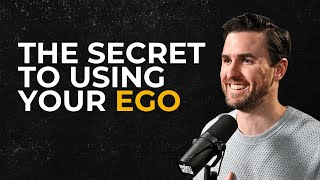
Rob Dial argues ego isn't the enemy but a tool you can direct. After 15 years of self-development, he shows how to identify your ego, accept it, then use it intentionally for better performance and boundaries. Turn it on for competition and sales, off when it becomes destructive.
Chapters
Welcome to today's video. Today I'm going to teach you how to use your ego for good to help you create the life that you want. Let's dive in. Now. We live in a world where ego has a really bad connotation. If you think about it like we hear things like, oh man, his ego is way too big, or her ego is taking over. That's, you know, that's just his ego talking. That's, that's her egoic side. Right. And we think of ego as being this really bad thing. But is it possible that we could identify our ego first off, identify the ego and then use it for good? Once we identify what we could use it for, good for, is it possible that we could do it? I think that it is. I do think that it's possible that our ego will never go away. I think one of the main problems that people have is that they try to fight their ego. They identify aspects of themselves in their ego that they don't like. And then instead of accepting that their ego is like that and that that's kind of built into their programming and their system, that they fight it. But there's a pretty good chance that it will never go away. I think it's a full on possibility, like for. And this took me years to understand, like probably 15 years of working on myself, of realizing there's parts of myself that I didn't like and I would fight them and I would fight them and I would fight them and I didn't like them. And then 15 years later I'm like, I'm still dealing with the same shit. And then I thought to myself, and I started doing, you know, learning about different from different spiritual people across the world. And I realized that they're all basically saying like, your ego's there. The problem is not your ego. The problem is that you're fighting it and you're not accepting it. And I think it's now part of our psychological makeup. Right? And if we can't get rid of the ego, if we accept it, if we see how there's bad sides of it, if we see how there's good sides of it, can we take the good side of it and try to use it as much as we possibly can? And I think that there is. And the way that this really came alive for me, I've shared this story before in the podcast is, is when I was writing my book Level Up, I was editing and editing and changing it around and trying to make it the best that I possibly can and went through like 15, 16 rounds of edits on this, this book, adding to it, subtracting to it, adding to it, subtracting to it, and changing words around to make them a little bit better and like looking and fine tuning almost every single sentence. And I remember sitting here in this exact same chair that I'm in right now and thinking to myself, I'm just trying to make the best book that I can. And you know, I want to create a better book that impacts more people's lives. And if someone reads it, it could change their life and they're more likely to recommend it and then somebody else will buy it and it will change their life. And all of is true. That is exactly what I did want with writing my book. And then I took a step back and I played devil's advocate because I like to play devil's advocate with myself a lot. And I think a lot of people like to say something and say something about themselves or to themselves, and then they take it as truth. I like to actually play devil's advocate as much as I possibly can and go, okay, yeah, you do want to write the best book. You do want to write the best book, but you also do want to sell a lot of copies. You do want to be a New York Times best selling author. And you know, you know, if a lot of people buy it, you're going to make a lot of money off of it. And so are you trying to write the best book to impact the most lives, or are you trying to make the best book so that you could get a little badge on your shirt that says you're a New York Times best selling author? Look at me. And I thought about it and I was like, both, I guess. So there's not bad in that, right? Is there anything wrong with those? No, there's nothing wrong with either one of those. But is there a case where both of those are true and I can use my egoic side for good? And what I realized is that my ego that wanted to sell more books was coming in and helping me create a better book. And I was like, damn, this is interesting. And this is what. I do this to myself all the time. So if you want to know what I do in my free time, I fucking psychoanalyze myself is what I do. Cause I'm just like every other person that's out there. Like, we all got things going on, right? So I thought to myself, okay, wow, this is interesting. Is my ego helping me create a better book? And if I create a better book, then it will change more people's lives. And if it changed more people's lives, more people are likely to recommend it, and more people recommend it, then more people are gonna buy it, and then I will actually make more money off of it. So my ego, this thing that's supposed to be so bad, is actually in some interesting way helping me help more people. Just like, huge revelation for me. And I realized that if I could take my ego, I can identify different aspects of my ego, things that are quote, unquote, bad. And we've been told that are bad. And we can realize there's good sides of them, there's bad sides of them, all that. But if I can find the good side of them and I can wrangle it and, and I can use it when it needs to be used, not have it run rampant all over the place, but just use it when it needs to be used. I can use it to create a better life. But it's gotta be directed correctly, right? It can't just run wild. You know, it's like a bull. A bull is a very dangerous animal. A bull that has been raised around humans to do certain jobs, can pull a plow, and it can help create more food for a village. Same animal. The difference is the way that it's trained and the way that it's used. Completely the same animal, completely different scenarios. One is used intentionally when it is need to be used. The other is dangerously running around. So, you know, there's that aspect of my ego where I realized, like, yeah, okay, there was. I guess you could call it selfishness. I guess you could call it, you know, wanting to be, quote, unquote important, wanting to make money, whatever it is that, that side of me, I was like, can I use this side of my ego and use it for good? Right. What else is, I'm very competitive. I'm a super competitive person. Like, has been to a fault for many, many aspects of my life. Right? So if you're out there and you're extremely competitive, it's not a bad thing. But it can be if it's not harnessed and used correctly. So if you're miserable until you win or until you beat somebody, well, yeah, of course, then that means it could be a really bad thing. Like, I've been that way before where I hated losing more than I loved winning. And so if you're miserable, then it's not really a good thing. So if I'm, if, if, if I'm out there or you're out there and we're Comparing ourselves constantly to other people on Instagram. Is that a bad thing? Yeah, probably. But can you take that competitive side of your ego and can you turn it into something good when it's needed to be used? Sure. Like, if I'm in sales and I'm in an office with 20 other salespeople, when you sit down and I need to make sales calls and I can see the running list of, you know, sales calls that everyone's made, I could sit there and go, okay, I need. It's time to turn my competitive side on, because I want to make more sales calls than anybody else. Because if I make more sales calls, I'll get on phone more clients and then prospects, and then I will get more clients, and then I will make more money. So when you sit down and make sales calls, yeah, it could be used really well. It can be, you know, used if you're really competitive against others, you could use it in that way. I want to be number one in calls for the. For the month. I want to be number one in sales and commissions for the month. You could use it at that point, but if you leave the office and then you're miserable all day because John ended up making more money than you, you know, the guy who sits next to you, then you're like, well, that's not a good thing. But if I can use it and turn it on when I need to and turn it off when I don't need it, then it becomes a really good thing. And, you know, the other thing, too, is, like, you don't also just. You can use your competitive side, not always just to be competitive against other people, but you can use it to be competitive against yourself, because that's actually the one that really matters more. Anything else, when you want to, you know, say you're. You're creating content for Instagram and you're trying to create content for your business, well, you can get competitive with your old self and say, I'm going to create the best possible content that I've ever created better than any content that I've ever created before, and I'm gonna be competitive against myself. You could also use this in the sales example. I just gave, the most amount of calls I've ever made is 125 calls in a day. Can I beat myself and can I use that for good? If, you know, the most my business has ever brought in in a month is $12,000. Can I be competitive against myself and try to bring in more this month? Right. So that's how competitive could be a bad thing if it's not used correctly, but it could also be used in a really good way. Let's say that you've identified that you're a little bit of a selfish person. Selfishness can seem bad, but you could also use selfishness for your time. You know, if you're a business owner, one of the things that I found is that a lot of people are people pleasers. And so one of the things that people pleasers tend to struggle with when they start a business is not saying yes to everybody. And so you could be selfish, which could be bad. If you just hoard all of your money and don't share it. That can be bad. But you could also be selfish with your time. If you're a business owner, that's something that you should start to pay attention to. Oh yeah, selfish with my time when I'm a business owner, that's actually a good thing. You know, when you're growing your business, this is super important. Selfishness when used correctly can help you set boundaries. And there's a lot of people that really need help with boundaries. So it's really about identifying this and realizing, are there bad aspects of everything? Sure. Can we find some good to use it the correct way? Yeah, I'm going to use my selfishness to be able to set some boundaries with other people on my time so that I can spend more time in my business or more time with my children, whatever it might be. Essentially what it is is it is a tool for your tool belt, right? When you need to get a nail into a wall, a hammer is absolutely the best, the best thing to use. But when you have a screw that needs to get into a wall, a screwdriver would be better for you. And so it's not about using the hammer for every single thing that you need to do around the house. But it's like, hey, how can I have a tool for my tool belt? So let's talk about how you can use your ego for good. Right? You can use it when it's needed, but don't allow it to use you. You know, you want to own the ego, not be owned by the ego. So when I say your ego or your egoic side, what's the first thing that you think about? What are the aspects of yourself that you think about? When I say your ego, is it your selfishness, is it your jealousy, your judgmental side? You and how arrogant you can be sometimes your insecurity, you being self centered, defensive, the attachments that you have resistance to Change your perfectionism. What is it that pops up for you? The first thing that you need to do is you need to first off identify what it is. And then what you need to do when you identify is you need to accept that it is part of you. It's like your arm. Like, I'm looking at my arm. I've got some freckles. I got a big old freckle right here that's on my arm. For the. You guys that are watching on video on YouTube, right? There's a big old freckle that's right here. You might have a hairy arm, you might have a freckly arm. But I don't cut this arm off because it's not quote, unquote perfect. No, it's there, you know, and it hopefully is going to be here forever. And your ego will probably be there forever as well. So what I need to do first off is accept. Yeah, I've got, you know, and I got some. I got some little freckles on this arm. I'm very Irish. And with that, I've got. I've got a ton of freckles all the way up my arm. Right? So it's just the way that it goes. So. So we need to accept that that's just a part of who you are. That selfish side of myself is just a part of Rob, and I need to accept it. And I have accepted it. And as I accept it, then I realize it's probably gonna be there forever. Then I can go, okay, well, is there parts of this that I can kind of turn down and parts of this that I can kind of turn up and use whenever I need to? Right. Cause you cannot teach the ego to be anything other than egotistical. And so it's like, oh, yeah, like, Rob's selfish sometimes. That's kind of how I am sometimes. Right. How can I use that for good? I can be selfish with my time. I want to spend more time with my wife. I want to be selfish with that. I want to spend more time my business. I want to be selfish with that. So the first thing that we need to do is we need to accept it. It's there because all too often what we're doing is we're actually fighting it. And if it's a part of us fighting it won't do anything except for stress you out. And that's what usually people end up doing, is they end up, like, fighting themselves all day long. Okay? So that's the first thing. Identify it and accept it. Second thing, you need to do is to change your relationship with it. Get out a pen and paper and write down, is there some good in this? Is it possible that there's some good in this? And if it's going to be there, how can you change your relationship with it? So instead of being in constant battle with it, can I change my relationship with it and see it as, although it has some bad that's come from it, a lot of good has probably come from it as well. Like if you can trace back and think about that, can you find some good that's come from that ego inside of you? That thing that you just mentioned, can you, for a second, press pause, close your eyes? Not if you're driving and find the good that's come from it, or, you know, if you have a pen and paper, can you journal, what good has my ego created in me or in the world or in my life? It might be hard to find, but really what it comes down to is starting to see the good and the bad and starting to see the good that it has created. Because you've probably only seen it through the lens of it being bad. It's hard to find sometimes because I'm asking you to look through a different lens than you've probably ever looked at it in your entire life. And so that's the second thing you want to make sure that you do. And then the third thing is to use it for good. So now that I've identified the places where it could be used for good, now I'm gonna actually start to use it like a tool in a toolbox. Like I said, how can you end up using it for good and then also start to become very aware of when the bad will pop up? Because you probably have some patterns where the bad ego inside of you is going to pop up. And you can notice that, oh, my gosh, I'm being selfish. You know, I don't really need to be selfish in this moment, right. I probably should be more giving in this moment and start to become aware of the parts of it that you want to kind of tune down and turn down just a little bit, but also become aware of, like, hey, I really need to use this right now. I really need to bring this in. You know, I'm competitive and I need to make some money this month. So I'm gonna try to beat everyone's ass that's in this sales company, right? Okay, turn it on. Let's go. Try to use it to make you some money, to get you to be number one, whatever it is that you need to. But then, you know, when five o' clock hits you and leave the office, don't bring it with you. Just turn it off. Okay? When you need to put a nail into the wall, you use the hammer, right? But you don't use a hammer when you need to screw that nail into the wall. That's the same thing as your ego. It's the same thing if you can use it for good. The same way that you can take that bowl, you can attach a plow to it, and you can use that thing for good to feed an entire village. That's the same bull that, if it's not trained, is going to be running all over people. Right? We've all seen bulls that are in the rings when people jump on top of them and the guys in clown outfits get launched into the air, right? That's not the ego that we want. We want the ego that is tame, that is used correctly, it's a tool in your tool belt. And when you are ready to use it intentionally, you could become aware and go, oh, yep, I need to turn this side on me again. Oh, you know what? I'm being a people pleaser. I need to be selfish with my time. I need to make sure that I take care of myself first. And so what you do is you accept it first, you become aware of it. You become aware of it, you accept it, you change your relationship with it. And then what you start doing is you start using it for good. And that is really how you can start to identify different parts of your ego, befriend your ego, and start to use it to help you move along in your life. So that's what I got for you for today's episode. If you love this episode, please do me a huge favor. Please share it right now on your Instagram stories. Tag me in it. Robdial Jr R O B D I A L J R the only way this podcast grows is from you guys sharing it. So we're really trying to continue to help more people and grow as much as we possibly can. So if you would share it, make other people aware of it, I would greatly, greatly appreciate it. And with that, I'm going to leave you the same way I leave you every single episode. Make it your mission to make someone else's day better. I appreciate you and I hope that you have an amazing day.
More from Rob


Why NOT to stay single 👉 @robdialjr #adviceoftheday #motivation #mindset #growth

You Reap What You Plant 👉 @robdialjr #adviceoftheday #motivation #mindset #growth

3 signs that you're addicted to chaos 👉 @robdialjr #adviceoftheday #motivation #mindset #growth

Stop making excuses for people 👉 @robdialjr #growth #mindset #positivity #adviceoftheday

Tip for an amazing life 👉 @robdialjr #inspiration #mindset #adviceoftheday #positivity

It's time to move on 👉 @robdialjr #adviceoftheday #motivation #mindset #happiness

The right person for you is... 👉 @robdialjr #love #truelove #inspiration #mindset #soulmate

Get ready to take risks 👉 @robdialjr #motivation #adviceoftheday #mindset #positivity

The real competition You Vs You 👉 @robdialjr #mindset #inspiration #positivity #adviceoftheday

Their Mood Isn’t Your Responsibility. 👉 @robdialjr #mindset #adviceoftheday #motivation