Visualizing The Worst That Can Happen
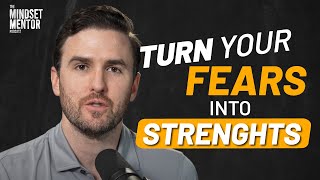
Rob Dial explains negative visualization, a stoic practice of imagining worst-case outcomes to reduce anxiety and motivate action. The technique, backed by psychology research, works best paired with positive visualization. A pre-mortem exercise helps you list ways a project could fail and plan safeguards.
Chapters
Welcome to today's video. Today I'm going to teach you a process to help you have less anxiety, to plan out your future, to create the life that you want. Let's dive in. This is something that you may have never really thought of before. I've talked about this before in the past, but really diving into and thinking about the worst that could happen. And this isn't like visualization. This is actually what I would like to call reverse visualization. You know, I've done. I've done many episodes about the importance of visualization. Inside of my book Level up, there's an entire half of a chapter that is about how to visualize and how to get better at it. And study after study after study shows how visualization can help you create the life that you want. There's studies that show that if you visualize actually working out and you visualize your muscles contracting, that it can actually increase strength not by doing anything, but by visualizing it so your muscles can get stronger by visualizing your muscles contracting, getting stronger. There's other studies that have showed how visualization can impact your emotional regulation, help you get better at coping. And, you know, that's not what we're going to be talking about today. We're going to be talking about the exact opposite. So instead of visualizing what you want, we're going to talk about visualizing what you don't want. Like the absolute worst that could happen. I'm going to take you through something that's called negative visualization, which is also called defense pessimism. And it originally comes from the stoic philosophy. The idea is to basically visualize the thing that you are most afraid of happening. That sounds terrible, doesn't it? But there's a whole lot of science, there's a whole lot of reasons why. And if you come along on this journey with me, you'll see what I mean. When you visualize the worst that could happen, it seems like a terrible idea and it seems counterintuitive. But you're gonna have to trust me. It will make sense to you. And I'm gonna show you how to use negative visualization. Defense pessimism. Help you plan out and create the life that you want. So let's say, for instance, in business, right? If you have a business, I definitely want you to visualize what your business could be and how amazing it could be in being successful and changing the world and having all of the money and the time freedom that you want. I want you to visualize that. But I also want you to visualize the other side. I want you to visualize you not taking action. Not taking the action that you need to do to grow your business, maybe. I want you to visualize yourself making the excuses instead of going to, you know, making the cold calls or going and knocking on doors. I want you to visualize laying on the couch and scrolling on Instagram and getting in your feelings and procrastinating. And I want you to visualize the business completely failing the worst that it can and just going up in flames. I want you to visualize the absolute worst that can happen in your business as well as the best that could happen. And I want you to visualize. And I don't want you to visualize like, hey, I'm gonna fail, because when I walk outside, I'm gonna get hit by a meteorite and it's gonna kill my entire family. That's not realistic. What I want you to do is visualize what it would look like to fail and what it would feel like to fail. And this is actually a strategy I've done in my business that is really actually common in business. It's called pre mortem. And pre mortem means planning out how the business will fail. And so when I brought on my coo, she was really interested in, like, hey, I want to plan out the failure of this business. So how could this business fail? If I come on and I do this job and you do that job, and everybody else does this job, and this is what the org chart looks like. How could this business fail? And we planned out all of the different ways that it could fail. And the reason why that's important is because it allows you to avoid and plan out all the failures. If we could fail this way, this way, and this way, these are three ways the business could fail. Well, now we can actually brainstorm how to not fail now that we are aware of what those are. So we visualize the worst that could happen so that we can avoid the worst that could happen. We can plan against it. Let's say your relationship is another way, right? If you're in a relationship, I want you to visualize how great that relationship could be. But I also want you to visualize the end of that relationship. I want you to visualize you not making the relationship a priority in what would happen if you didn't. I want you to visualize you not showing up fully for your partner and your partner starting to emotionally disconnect from you, maybe them cheating on you because of the fact that you were so emotionally disconnected. Cause you were so unpresent because you were at work all the time, or what it would feel like to find out. I want you to visualize the worst that could happen. And I know it sounds like it sucks, and it does suck, but I want you to visualize the worst that could happen in the relationship ending so that therefore, you can realize what you should not do and how to avoid that. And you can make a plan of exactly what it is that you need to do. I want you to visualize your health, right? I want you to visualize your health, you know, being in the best shape you could possibly be. But then what I want you is I want you to visualize you not making your health a priority. I want you to visualize saying, oh, I'm too busy to go to the gym, and not going to the gym and not eating the right foods, and ignoring the red flags and gaining the weight. And I want you to visualize walking into the doctor's office and then telling you that you only have six months to live because of the decisions that you've made in the past, whatever it might be. I want you to visualize what that would feel like, what that would be like, so that you can start to see what it would be like if you went down that road. If you have a job and you work for a company, maybe you stress out about your job a lot. I've been at the point where I've been like, this isn't gonna last long. I've been in those situations before. Maybe you stress out about, like, I don't know how much longer I'm gonna be here. I don't know if they're gonna wanna keep me for much longer. Well, I want you to visualize what it would look like to, you know, maybe not take the right action to show your worth. I want you to visualize what it would look like to lose your job, what you would do after it, right? So visualize that. If you're afraid of public speaking, visualize you not preparing for a presentation, not doing enough research, not showing up prepared, fumbling your words, embarrassing yourself in front of the entire company. I want you to visualize and feel what that would feel like so you know what you want to avoid. I want you to visualize just everything. I want you to visualize your entire life. I want you to visualize you being at a crossroad in your life right now. And if you go left, that's you taking the action that you want to, creating the life that you want to, having the body that you want to, the business that you want to, the relationships that you want to everything. But I want you to see on the left instead of the right. You visualize not doing what you need to do to create the life that you want, not doing what you need to do to create the best version of yourself, not living up to your potential in getting to your deathbed. Let's say you're 90 years old, you're at your deathbed, and you regret not living up to your potential. You regret living a life that was just half lived. Now, some of you are already feeling anxious just thinking about it, aren't you? Good. That's the point. It's good because we're gonna talk about why this is important. We're gonna talk about why we want to do this. Because it seems so counterintuitive to be like, I'm gonna visualize all of the shit that can happen. Like, I'm already stressed out. I'm already stressed out throughout the day. Rob, you're trying to make me sit down to stress myself out. Yes. Because sometimes you need to feel the pain in the moment. Because if you don't feel it in the moment, you're gonna feel it in the future pain, all pain is. Is just a stimulus in your body saying something needs to change. That's it. So, like, if I. If you're, you know, let's say you're. You're at the beach and you have your barefoot and you're walking off of the beach onto the. You're walking to your car, you're on the asphalt, and you start to feel an immense pain in your feet because it's so hot outside. That pain is your body telling you do something different. Whether that is run back to the sand, whether that's run to your car, whether that is put your sandals on, your body is telling your brain, hey, do something different. You gotta do something different. Cause we're in so much pain sometimes what we don't do enough is we don't think about the future pain. We don't think about the future pain that will be coming based off our current decisions. We like to act like the future isn't going to be coming and not take the right action. But what we want to do is we want to feel pain in the moment for what the future could be if we don't take the right actions. And why do we want to do that? Because you want to avoid that pain. And so you're actually going to start to make changes in the moment to avoid that. You're going to start to make plans in the moment to avoid that future pain, you know, and there's a lot of uncertainty in life, right? The cool thing about this, though, is that a lot of us are so. So many people that I talk to are so stressed out and so worried and so fearful about the future because this future is so uncertain. Well, this takes the uncertainty and makes you feel more certain. You know, it's never as bad as you think it's going to be, but you start to feel, man, if I don't make a change with my health, if I don't make a change in my relationships, if I don't make a change in my business, it's not going to be good. And so it takes the uncertainty out. It makes you feel more certain. It makes you go, you know what? I need to actually make a change. Another thing that's really important about the negative visualization is it actually desensitizes you. You will actually, after doing this tomorrow, the next day, whatever it is, as you continue to do this, you will have less anxiety because you've already seen the path of destruction and now you want to avoid it, right? You've already seen. So there's not really. You're not uncertain anymore. You know what it's going to be, you know what your life is going to look like, and you're like, oh, I get it now. And so even though it's not what you want, it desensitizes you because you're actually looking at it and you're not uncertain anymore. You're like, oh, this is what it's going to look like. You know, there's a study was done in 1996 and it was called Defensive Pessimism, Optimism and Stimulating Alternatives. And the research looked at defense pessimism, negative visualization alongside optimism, and actually found that visualizing negative alternatives or imagining how past events could have been worse provided psychological benefits. So defense pessimists use these strategies to alleviate anxiety and feel more prepared. And so there's been studies on why this actually works. I'm not just some random podcaster. It's just like spewing stuff and you should trust. There's been studies on showing how this actually helps people feel more prepared and how to actually alleviate anxiety. And so it desensitizes you in many different ways. The next thing that it does, and one of the most important things is it allows for strategic planning. Like I gave you the example with my business, right? The pre mortem process, what we did is we looked at the Business failing. And we said it could fail this way, this way, or this way. And we put all of them on a piece of paper. And then we said, how can we make sure that we don't fail this way? How can we make sure we don't fail this way? And how can we make sure we don't fail this way? So you can plan out the failure on the piece of paper. You can plan out how to not fail on the piece of paper, what actions I need to take, what actions you need to take, how we need to set up the business and actually have strategic planning around it. There was a study that was done in 1997, and it was called Counterfactual, the Intersection of Effect and Function. And the paper dove into the role of counterfactual thinking. So by mentally rehearsing how things could go wrong, people can develop strategies to avoid undesirable outcomes leading to more proactive and less anxious approaches. And so this is really important. So if you say, oh, like, I'm going to plan out how my relationship could fail and how I could screw it up, and then what I'm going to do is I'm going to plan how to make sure that I don't do that or I don't take those actions or I don't act that way. And then when you start to find yourself acting that way, you're like, oh, hold on, we spoke about this. I need to make sure that I don't do this. I need to make sure I change this around a little bit. And so there's a lot of benefit of actually seeing this. And then the last thing that's really important with it as well is it actually makes you feel more of a sense of control. One of the things that I found with so many people over coaching years and years and years is everybody has a. I'm not going to say everybody, almost everybody has a control problem, right? We want to feel control, and in our lives, we have very, very little control. You can barely control your own self, and you want to control other people in the world, in the weather, in politics, and every single thing. It's ridiculous. And so when you actually plan out the worst that could happen, it gives you more of a sense of control because you've seen what could happen, you've planned out how to avoid it, and you've planned out the best that could happen. You see both potential outcomes, both potential futures of the best that could happen, the worst that could happen. And now you just have to take the right actions towards the One that you want. And when you've experienced the pain of what it would feel like to lose your job, to lose your business, to lose your relationship, to lose your health, and you felt it in this moment versus acting like it's not gonna happen, you actually want to avoid that pain. In humans, we only do things for one of two reasons. Number one is to avoid pain, and number two is to feel pleasure. And we will try to avoid pain way more than we'll try to get towards pleasure. So we're either running away from pain or we're running towards pleasure. If you've already felt the pain, the feeling of what it would feel like to lose your job, to lose your business, to lose your relationship, to lose your health, you felt that pain in the present moment, you're to want to avoid that pain in the future. Same way that when you put your hand on, you only need to put your hand on a hot stove once, and then you're going to start avoiding that hot stove. You know, there's a study, another study is done in 1986, and it was called Defensive Harnessing Anxiety as Motivation. And the study found, and this is where the actual term defensive pessimism came from, research actually found that people who deliberately thought through the worst case scenarios as a way to manage their anxiety, those people actually felt more in control and more motivated when they used the strategy of defensive pessimism as negative visualization and realizing that they could actually visualize the worst that could happen. So it's crazy that people felt that when they thought through the worst things that could happen, they were able to actually feel more in control, manage their anxiety, and more motivated when they used the strategy. And so I think it's very important to. Yes, for sure, 100%, you need to visualize the best that could happen because that's running towards pleasure. Right? I said there's only two reasons why you do something. To avoid pain and to run towards pleasure. Right? So visualize the absolute best that could happen so you could see what your life could be like, so you can get yourself excited. But visualize the worst that could happen. Imagine it all going up in flames and how you made it all go up in flames so that therefore you can be desensitized to it. You can see what could happen. You could have strategic planning. You can feel more of a sense of control as well. So that's what I got for you for today's episode. If you love this episode, please share it on Instagram Stories. Tag me Obdyle Jr. R O, B, D, I, A, L, J, R. And if you love this podcast, you'll also probably love this thing I have called Mindset Mentor plus, which is gonna be coming out very soon. It's just a way to take every single podcast episode and integrate it into your life. There's gonna be worksheets that come with it. There's gonna be journaling prompts that come with it. There's gonna be assignments that come with it. There's gonna be exclusive Q and A sessions live with, uh, there's going to be bonuses that come with it. And it's just a subscription service to allow you to be able to integrate this podcast into your life even more. Um, it is not out yet, but it will be being announced. If you want to be the first to learn about it. The first few people are actually going to get a discount for joining. Go to mindsetwaightlist.com and I'll actually email you before I announce it on social media, before I announce it on the podcast. So if you're interested in learning more, go to mindsetwaightlist.com and sign up for more information there. And with that, I'm going to leave you the same way I leave you every single episode. Make it your mission to make somebody else's day better. I appreciate you and I hope that you have an amazing day.
More from Rob


Why NOT to stay single 👉 @robdialjr #adviceoftheday #motivation #mindset #growth

You Reap What You Plant 👉 @robdialjr #adviceoftheday #motivation #mindset #growth

3 signs that you're addicted to chaos 👉 @robdialjr #adviceoftheday #motivation #mindset #growth

Stop making excuses for people 👉 @robdialjr #growth #mindset #positivity #adviceoftheday

Tip for an amazing life 👉 @robdialjr #inspiration #mindset #adviceoftheday #positivity

It's time to move on 👉 @robdialjr #adviceoftheday #motivation #mindset #happiness

The right person for you is... 👉 @robdialjr #love #truelove #inspiration #mindset #soulmate

Get ready to take risks 👉 @robdialjr #motivation #adviceoftheday #mindset #positivity

The real competition You Vs You 👉 @robdialjr #mindset #inspiration #positivity #adviceoftheday

Their Mood Isn’t Your Responsibility. 👉 @robdialjr #mindset #adviceoftheday #motivation