Why Remembering Death Will Improve Your Life
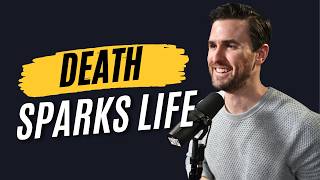
Rob Dial explores how confronting death and grief can deepen your life. He defines grief as "love with nowhere to go" and recommends journaling to honor the deceased. Remembering death, a Stoic practice, reduces fear and creates urgency to live fully.
Chapters
Welcome to today's video. Today, we're going to talk about death. We're going to talk about dying. We're going to talk about how to work through the grieving process and how to cope with other people's death around you, as well as the idea that you're going to die as well. Let's dive in. I've gotten this question multiple times this week in different programs that I run. And it was basically a couple different people asked the same question with, how do you deal with death and grieving of someone that's a loved one, and how do you work through it? How do you know when you're done grieving? How do you not try to escape the grieving process by being too busy? And so I got this question. I was like, you know, what if it's coming up a lot? That's kind of like the universe saying, you should make an episode on this. And so, you know, I also get a lot of Instagram messages, and, you know, I get messages of people saying that a loved one that they have and they know died, that someone that they love committed suicide, that their parents have died, that their grandparents have died. For some people, it was just old age. For some it was an accident. And for some people, it was of their own hand. And when I start to see these enough, I'm like, this is a message. I need to make this. And so that's why also, if you have any ideas of podcast episodes you'd like for me to cover, send me a message on Instagram. It's robdial jr r o b D I A L J R helps me know what I should make messages on. And that's also the way I communicate with people who follow me. And so the other reason why this came up as well is because I've been thinking about this a lot recently. One of my friends who is one of the kindest people ever, literally ever passed away two weeks ago as well. And it really kind of hit me because I was like, I went into the feeling of, this shouldn't have happened to him. There's so many less nice people. Like, this guy built. His name's John Rulin. He built an entire company called Giftology. He has a book called Giftology, based off of how to give better gifts to people and how to just be more loving with people. He used to call me up. He would FaceTime me all the time, and he would say, hey, man, how's everything going? And we would catch up, and he would say, hey, is there anybody that I can send some love bombs to. And a love bomb means, is there anybody that you're connected with that you want to develop a deeper relationship with? And you. And I can send them a gift and just develop a deeper relationship with them. Like, that was his whole thing. And I. And then when you hear that he passes away and he was on a hike, I think, with his wife and his four young daughters, it's like, that's not fair, you know? And you start to think that, like, that's not fair. Why did that have to happen to him? Why couldn't have happened to one of the people who's shitty in this world, right? And so, you know, you look at that, it's like someone who's doing great things in the world, had their life together, has a family, has young children. And I'm not here to tell you that knowing somebody and the death of someone that you love is ever fun. That's not what I'm doing at all. I'm not saying just don't act like it didn't happen. It's not something to be stoked about while it's happening. I would say that's pretty close to the definition of hell, right, that you have to go through. But it is life, and that's an important part of it. There's no outrunning this thing called death. There's no outrunning. And so if there's not running it, we should probably talk about it and how to deal with it and how to work through those feelings. There's no outrunning it for yourself, and there's no outrunning it for other people. And so the more that you turn a blind eye to it, the more that it's gonna affect you, and the more that it's going to cause stress in your life and resistance. And it goes back to, like, the idea that stoics have of memento mori, which is the idea of, remember that you're going to die. Momento mori. Remember that you're going to die. Death is going to happen. And why would you want to remember that you're going to die? We're going to talk about that a little bit more as we go through it. But it's gonna happen to you. It's gonna happen to everyone. And that's not morbid. It's just a fact. And what we're gonna talk about, first off, before we talk about you, is the death of people that you love and how to deal with it, or at least how to help you deal with it, you know, for me, I had never had anybody in my life die until my dad died when I was 15 years old. So first 14 years of my life, I didn't have that that I had to deal with. And then the first one was my dad. And I remember specifically, you know, like, it was the first dead body that I had seen. And I remember sitting in the room before the whole thing happened and before the funeral happening and sitting there and look at it and be like, oh, my God, this is real. Like, this is going to happen to some. Every single person that I know, to me as well, you know? So I was there for that. I was in the room when my grandfather passed away. I was in the room when my mom and her three sisters told my grandmother that her husband of 70 years had passed away. And seeing that reaction to her face and what she had to go through, and then she literally was just like. After that, she was like, I've had enough. She didn't want to be around anymore. And then she died, like, 19 days later. So it's like, I've seen these things. I'm like, man, this is a lot. There's a lot around this thing. You know, I've had friends die from accidents and overdoses and suicides. And so I feel like I've seen quite a different. Quite a bunch of different sides around it. The first thing I wanna talk to you about is the grieving process. Grief is. And the best definition I've ever heard of grief is just love with nowhere to go, right? You love this person, but now you can't give them that love anymore. So it's kind of love with nowhere to go. And the thing about the grieving process that I think is very important and I definitely have messed this up, is don't try to speed it up. Don't try to feel like you need to speed it up. You know, and this is coming from something I've had to work through on my own. Like, my father passed away, and then I was back at school and told nobody five days later. And so, you know, don't try to speed it up. Don't try to keep yourself. Like, how often have you thought to yourself or heard someone else that, you know, be like, I've just got to keep myself busy, so I don't think about it. That's the worst thing that you could do because then it's going to stay even longer. It is. Your body is saying, I'm tired or I need to express. Just let me express. And so don't try to not Feel it. Allow yourself to feel it. And one of the things that I recommend that helps people feel it, but also helps you kind of commemorate the person. And I did this for the very first time the day my grandfather passed away. I journaled while I was in his hospice room the night that before, right before he passed away, like, hours before he passed away. Then I journaled about him and all of that stuff. And the next morning after it happened, I went back to his house and I was in the guest room. And I remember journaling. And I thought to myself, what's the best way for me to honor my grandfather? My grandfather's like, the sweetest, nicest, most kindest person I've ever met and probably will ever meet in my entire life. Like, perfect mentor as a human of what I want to be, right? And so I sat there and I journaled and wrote down what is everything that I love about my grandfather. And I wrote all of these things down. And I thought the best way to commemorate my grandfather and to keep his memory alive is to try to embody everything that I loved about him. Everything that I loved about him, I should learn from him and try to become that. That's the best way to honor another person. And so, right. Hey, real quick. I want to introduce you to something called Mindset Mentor Plus. If you love this podcast, you will absolutely love what I'm about to talk about. I designed Mindset Mentor plus to help you actively integrate every one of these episodes into your life. And here's how it works with every episode of this podcast that comes out. Mindset Mentor plus subscribers get more. You're going to get multiple page, detailed, printable workshee, effectively a mini masterclass that's way more in depth than just this podcast. They also come with journaling questions, challenges, assignments, and so much more. So that you're not just listening to these podcasts passively, but you're actively integrating them into your life. That way you improve much faster. I also do monthly Q and A sessions in there and much, much more. If you want to learn more about it, go to mindsetmentor.com or click the link that's down in the description. And so write down everything that you loved about them. You know, if you had somebody die two years ago, a year ago, six months ago, and you. You still haven't done this, I would recommend you do this. What's, you know, maybe even 10 years ago, and you're like, you know what? You know, my father did pass away 10 years ago, and I want to honor him, what were the things that I loved about him? And then you wake up every single morning, look at that piece of paper and you say, how can I be more like this person? How can I be more like my father, my grandfather, whoever it is that you loved. And every morning you look at that and you meditate on how can I be more like them, how can I be more like him, how can I work through it? And there's a difference of cause people always ask like, how long should the grieving process take? I don't know. It's different for every single person. Right. But I do know this is don't try to rush it, that's the first thing. And don't wish that it went faster and don't try to try to act like it's not happening. And there's a really good story that I heard or almost like a poem I heard years ago and it was talking about grief being equivalent to like waves on a beach. And when something first happens and there's, you know, somebody dies or maybe you lose a pet, whatever it is it might be, the grief is basically like standing on the beach and it's just a hundred foot waves just smashing you over and over and over again. And you, you can barely breathe and you don't know when they're going to stop coming and they just keep going. And it's just like you're just getting pummeled by this grief. You're getting pummeled by these hundred foot waves. And then as time goes on, the waves are the same size, but the space in between them is a little bit more. It's not just every single second, maybe it's every couple days. And they come kind of unknown. You don't know when they're gonna be coming, but it might be like, you know, the smell of something, it might be a song, it might be driving down a street where you see a place that you had breakfast with them all the time and it hits you again out of nowhere and it's a hundred foot wave that you weren't expecting. And then as time keeps going on, it goes from 100 foot wave to now it's 50 foot waves. It doesn't knock you off your feet, but it still comes and it still kind of comes unexpectedly. And then they start getting smaller and smaller and it never fully goes away. But really you start to be able to see them coming and instead of running from them, you just kind of deal with it. You just kind of understand, like, hey, this is just me thinking, thinking about the person that I love, right? And that is what I think the best way of explaining what grief is. Now, when people say, how long should the grieving process take? There's also another side that I think people don't talk about, and that is resistance. So there's griefing, grieving, which is what we were talking about. There's also resistance, which I think people sometimes get mixed up with grieving, which is trying to fight reality. They don't want it to be this way. They don't think that. And we've all said this. Like, I even said this with my friend John that I was just talking about. He was too young. He was only in his early 40s. He'd done so much for the world. It's not fucking fair, you know, like, all of this, he was doing so many good things. And it's like, you look at this, and it's like we're fighting what is. Like we're fighting reality. There is no way to bring this person back. The only thing we could do is change the way that we feel about it. So a lot of times we're like, oh, they were too young. They didn't deserve it. We can beat ourselves up. Why wasn't I there for them? Why didn't I call them? Why didn't I say I love you to them? That's all resistance to what is. And so another side of it is that we need to get better at accepting what reality is. And one of my affirmations and things that I've said to myself for the past couple years is this phrase, be with what is. Okay, Grieving. I'm gonna be with it. Not gonna fight. I'm just gonna be with it. I'm resisting the way the world is. Okay? I'm just gonna be with the way that the world is and just accept and try to accept just a little bit more. I don't have to fully accept that he's gone, but I can start to just kind of crack the door open to accepting. And so that's the difference between pain, the pain and the grief and all that stuff versus the actual resistance to the way that the world is. You know, that's us putting ourselves through our own suffering. That's the resistance to it. They were too young. It shouldn't have happened. It shouldn't have happened this way. And most of the time, that suffering comes from not accepting. There's nothing you can do about it. There's only one thing that you can do that's accept. You cannot change it. You just have to accept that that's just the way that the world is. There's a phrase that I follow Ram Dass for years now, and he says, a soul does not leave this plane a second too early or a second too late. And so that is the way I see other people's death in grieving. Now let's talk about your own death. You're going to die. We're all gonna die. That's just the way that it goes. It's gonna happen. And most people are terrified of it. And another thing that Ram Dass always says is death is like taking off a tight shoe. It's like, you know, that feeling of, like, that's kind of what supposedly. Supposedly your soul is like when you end up dying. You're like, I don't have to act that way anymore. I don't have to pretend that I'm Rob Dial anymore. I don't have to pretend that I'm this. This way for this person and be this way for this person. Just kind of like, oh, my soul gets to finally be like, okay, we can chill because we're past that human thing. So that's the way that I view it. Whether you want to view it that way or not, completely fine. No matter how terrified you are of it, it's going to happen. And so death is a beautiful, maybe the most beautiful part of life. And the reason why is because it gives your life urgency. And this goes back to the idea of momento mori, which is what all of the Stoics said thousands of years ago. If you meditate on the fact that you're going to die, number one, it makes you less afraid of it. Number two, it makes you appreciate every day even more and how grateful you should be that you Woke up. Cause 150,000 people did not wake up today that woke up yesterday. And all of them would trade places for you in a moment if they could trade places with you. And as well, it gives your life urgency, because tomorrow is not getting guaranteed. It's not. And so I remember I said this a few episodes ago, but I remember I was having a conversation with my mom a few years ago, and I was like, hey, I don't know where. Because this is the type of conversation I have with my mom sometimes. I was like, how often do you think of death? She's like, I don't know. And she's in her 70s. I was like, how often do you think of death? She's like, I don't know. Maybe like once a week. She's like, how Many times do you think of death? I was like, I don't know, maybe like five or ten times a day. And she's like, what? She's like, are you okay? And I was like, I'm great. Everything's great. And she's like, why do you think it does so much? And I was like, well, I just try to remember that it's going to happen because then it gives me urgency. Not an urgency of, like, white knuckling my way through life, but, hey, I need to do more. Not need. I want to do more. I want to bring more out into the world. I want to be more for the world. I want to create more in the world. I want to. I want to not be wasted potential. I want to know that when I get to the end of my life, it's not sitting on my deathbed going, man, I could have done more. I could have seen more, I could have traveled more, I could have loved more, I could have had more joy, more happiness, any of those things. But it's me sitting there going, you know what? That was fucking awesome. And there's nothing else that I want to do. You know, when I look at people like, you know, people who have been at the end of their life and been with before, I've seen some of them that are afraid and some of them that are regretful, but I've also seen some that are like, man, I'm ready. I did great. That was fun. I'm so glad that I did this life thing. I'm good to go. That's how I want to feel. I don't want to feel like I regret. You know, the only thing worse than the pain of hard work is the pain of regret. I want to feel like, all right, sayonara. I did good. I had some fun. I'm ready to go. And so I wanted to talk with this basically because death's been popping up a lot recently. Hopefully there's no more of it in my life. That would be nice for a while, but I wanted to talk about it, just to kind of put it out there because it kept popping up. How do you deal with. Deal with death and deal with grief? You deal with it. You take time, you feel it, you process it. You breathe through it, you cry, you scream, you yell. Whatever is you need to do to process the way that you feel like you're supposed to process. And then when you start thinking about death, especially the death of a loved one, allow that to push you more, to do more, to be more, to have to bring that potential you have out into the world, because ultimately it's going to happen. All of us, we might as well just focus on this life thing and do the best we possibly can. So that's what I got for you for today's episode. If you love this episode, please share it on your Instagram stories. Tag me in at robdial Junior R O B D I A L J R. The only way this podcast grows is from you guys sharing it. So if you would share it, I would greatly, greatly appreciate it. So we could impact more people's lives. Also, if you're out there and you love this podcast, you will absolutely love Mindset Mentor plus. Mindset Mentor plus is for everyone who's part of it. It's like the podcast on steroids. So if you love these episodes, you'll definitely love Mindset Mentor plus. For every episode that comes out of the podcast, people who are in Mindset Mentor plus get detailed worksheets, multiple pages. They can print it out, they can underline it. That goes even deeper than just what we talk about in the podcast. There's also journaling questions, there's assignments. There's an entire community of people, over 1500 people you can connect with as well, that are part of it. And it's also where we do my monthly Q and A sessions. I did a Q and A session this morning with everybody and and would love to see you on there as well. And so if you want to learn more about it, just go to mindsetmentor.com, once again, mindsetmentor.com and with that, I'm going to leave you the same way. Leave you every single episode. Make it your mission to make somebody else's day better. I appreciate you and I hope that you have an amazing day.
More from Rob


Why NOT to stay single 👉 @robdialjr #adviceoftheday #motivation #mindset #growth

You Reap What You Plant 👉 @robdialjr #adviceoftheday #motivation #mindset #growth

3 signs that you're addicted to chaos 👉 @robdialjr #adviceoftheday #motivation #mindset #growth

Stop making excuses for people 👉 @robdialjr #growth #mindset #positivity #adviceoftheday

Tip for an amazing life 👉 @robdialjr #inspiration #mindset #adviceoftheday #positivity

It's time to move on 👉 @robdialjr #adviceoftheday #motivation #mindset #happiness

The right person for you is... 👉 @robdialjr #love #truelove #inspiration #mindset #soulmate

Get ready to take risks 👉 @robdialjr #motivation #adviceoftheday #mindset #positivity

The real competition You Vs You 👉 @robdialjr #mindset #inspiration #positivity #adviceoftheday

Their Mood Isn’t Your Responsibility. 👉 @robdialjr #mindset #adviceoftheday #motivation