Why You Fall in Love with the Wrong People
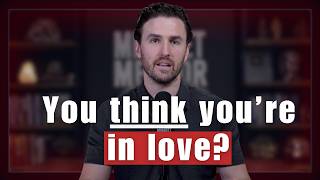
This content was created by Rob Dial. This content was uploaded by Rob Dial. This is a YouTube self-help/advice video titled "Why You Fall in Love with the Wrong People" (created 2025-04-25). It is a single-speaker presentation (transcript labeled SPEAKER A) explaining psychological reasons people repeatedly choose unhealthy partners—covering concepts like repetition compulsion, attachment blueprints, trauma bonding, and polyvagal theory—illustrated with personal examples. The speaker outlines a four-step healing process (notice familiar patterns, reparent yourself, redefine what love feels like, and choose partners who co-heal), gives a journaling assignment, and closes with a call-to-action to watch more videos and subscribe.
Chapters
What's really odd about the whole thing is that our significant others, the longer that you're with somebody, the more romantic this relationship becomes. You with them for 2 years, 3 years, 5 years, 10 years. They often become proxies for our parents and the things that we need to heal in our relationship with our parents. So for instance, if you've ever noticed that you date someone and you're like, you know, they're not really good for you, or, you know, it's not really a good fit, but for some reason, like, you can't really break it off, maybe you've been there before, maybe you've noticed friends be there. And you might ask yourself, like, why do I keep falling for this type of person? Why do I keep falling for this type of personality when I know eventually how it's going to end in reality? The real question that you should be asking yourself is, why do I keep choosing people who trigger the same wounds that I got from my childhood? And so we're going to dive into it. It's really interesting. And I think that you're going to learn a lot about yourself and a lot about other people who you're like, why can she not just divorce him? Why can she not break up with him? Why can he not divorce her? The interesting part about this whole thing is the psychological truth that we don't just fall in love with people. We fall in love with patterns, especially the ones that mirror the emotional landscape of our childhood. And so it's not usually a conscious choice, it's usually a subconscious, urgent. And in psychology this is called repetition compulsion. It's the unconscious drive to recreate unresolved emotional wounds in new relationships in hopes of, and this once again is not conscious, in hopes of actually healing them. So your partner isn't just your partner. They're a stand in for the parent who didn't or maybe couldn't or didn't know how to love you the way that you actually needed in this time. You're kind of trying for a different ending. And so according to Dr. Harville Hendricks, he's the creator of Imageo Relationship Therapy, we are subconsciously drawn to partners who reflect both positive and negative traits of our primary caregivers when we were children. And he calls this our image. And it's an unconscious image that we hold of love that based off of early childhood experiences. So I want you to think about this and really understand. Not only do our parents teach us how to walk and talk and speak and how to act in the world, our Parents also consciously and unconsciously teach us what love is and what intimacy is. So wouldn't it be normal and natural for us to then be attracted to the people who reflect what love and intimacy was shown to us as a child? You know, I'll give you an example. I, I remember in this once I learned all of this, all of this started clicking in place. It made so much sense, right? I once dated this girl years ago and we dated for quite a few years. And her ex boyfriend before me, he was like this very loving, very affectionate, like very high highs, very low lows, you know, very loving, very affectionate, but then also like super screaming and throwing in crazy fights. And so it was like really high highs, really low lows. And what was interesting is that when I found out, you know, as we had been together for years, how her father was and met her father and got to know him is he was the exact same way. Like she, he was much calmer as an adult and as he was older. But she said when he was a child he would just blow up and freak out sometimes. Then when we started dating because you know, her father was very unpredictable. Her ex boyfriend is very unpredictable. Her relationship blue that she thought was that love from a male had to be crazy chaos and turmoil and kind of like walking on eggshells. And I'm just not really like that. I'm compared to them, I'm just really boring. Like I never really have been crazy ups, crazy downs, I've been very chill. I've never really understood since childhood. I remember like thinking about fighting and being like, I don't understand the point of fighting. Like why can't two people just talk to each other and come to some sort of resolve. And I remember I said, she said something to me at one point in time, like I didn't love her because I didn't want to fight. And I remember I was like, that doesn't make any sense to me. And in my head it made no sense. But in her head it was like love is supposed to be crazy highs and crazy lows. And over time she started noticing that what she was wanting from me was to be like her father and also her ex boyfriend and to blow up. Because that's what she learned love was when, you know, her love blueprint was when she was a child. And that's what most people do. We just don't fall in love with a person. We fall in love with the patterns that remind us of the ones who taught us what love is make sense. And so the thing about is, you have to also understand is that your nervous system loves what is familiar. Like, even if it's chaos, your nervous system loves what is familiar. And the truth is your brain isn't really necessarily wired to seek what's healthy. It's wired to seek what is familiar. So if you grew up with emotional inconsistency, or having to earn your parents love, or conditional love, or criticism and neglect, or, you know, hyper responsibility for other people's feelings, then love might feel like chasing and pleasing and fixing and proving yourself and earning your worth. So that quote unquote chemistry that you feel is oftentimes your nervous system recognizing a pattern in somebody else that it recognizes from your childhood, not necessarily your soul recognizing a soulmate. So it's pretty wild. And when you look at neuroscience, you know, Dr. Stephen Porges, and he actually created this thing called the polyvagal theory. And the nervous system, what he says, is constantly scanning for cues in your area of safety and of threat. But when early attachment was unsafe or chaotic or unpredictable, we develop basically faulty templates for safety. So we literally confuse, like, intensity with intimacy. And parents teach us what intimacy is, and they teach us what love is once again, whether they realize it or not. Because we want as children more than anything else to just be attached. We care about the parental attachment more than anything else. And so we learn about intimacy and love, not necessarily just about what they say, but also what we see and how they act. If you've ever heard your friend say something like. Like, I just can't leave them, even though I know they're not good for me. It's not weakness within that person. What it is, is. It's a trauma bond. It's. It's their trauma from their childhood and them bonding with that thing. And a trauma bond is basically just a powerful emotional attachment. And it's formed through cycles of abuse. And now when I say abuse, it doesn't mean like physical or verbal or emotional abuse. That is, you know, something that somebody tries to do to another person. It can be those for sure, but it could also just be neglect. It could be, you know, emotional volatility. It could be any of those things that are just rooted in childhood. And so these highs and these lows flood your system with cortisol and. And dopamine. And it creates like this, for some people, an addictive roller coaster. And so it's not really love at that point. It's more of survival. And Dr. Patrick Carnes, who's a trauma and addiction expert, defines trauma Bonding as this. It's the misuse of fear and excitement and sexual feelings to entangle another person. And so the translation between this is tv. What that means is we bond with the very dynamics that once harmed us because our system never learned what stable, consistent love actually feels like. And so I hope this is making sense to you because it's really, really profound and really deep and we'll talk about how to heal through this. But I just want you to really start to notice yourself and other people in your own personal patterns as we start to dive into this. Picture this. You're on a date, right? And things feel electric, they feel great. You're like, this person's amazing. You're hanging on to every word. And you start to realize like an hour, two hours in the date, you're like, man, I, I really like this person. And maybe you go out and you get drinks after and you start to notice yourself liking them so much that you're almost kind of changing yourself. Maybe you're tiptoeing around what you think you should or shouldn't say. You're questioning yourself too much. Maybe you're shrinking in some sort of way. Maybe you feel like you're trying to prove yourself or like earn your, earn love from this person. And these are all things that are just like you had at home. And the person across on the other side of the table, they're unknowingly in your mind, cast as the parent that you can never quite reach, like the one who's, whose loved you wanted but you had to earn in some sort of way. And so one way of identifying this, the question I love is whose love did you crave the most as a child? And some people will be like, oh my God, well, my mother was so loving and she was so amazing, so maybe hers. And I was like, well, you know, let's talk about your father. What did you, did you ever crave your father's love? Well, actually I did crave my father's love. Well, who did you have to be in order to get his love? Well, I had to be the good kid or I had to, you know, get good grades or had to do this or this. That's usually like the one I'm talking about at that point, like the one that the parent that you had to change yourself for. Now, I want you to understand, like, this isn't your fault. It's your inner child basically trying to resolve unfinished business with people who are just in grown up bodies, you know. Dr. Susan Anderson calls this the abandonment Blueprint. And it is a subconscious script that we develop in childhood and it gets reactivated in adult love. And until healed, it drives us to seek out similar pain just to prove that we can survive it in some sort of way and to go towards what feels familiar in my mind in the way that I like to think about it is I personally believe, yes, everything that I just said in all of the research and the science, but I also believe it's kind of the way the universe comes to us over and over and over again and says, hey, hey, hey, listen, that thing isn't in you, isn't healed. So I'm going to keep you stuck in this pattern until you heal it and until you break it. And that's why you can feel like I keep it. I'm stuck in this pattern. I can't get out of it. I can't get out of it. It's like the universe is like, hey dude, I'm trying to bring you this situation so that you can heal through this versus like, oh, I need to break up with this person. And you get into another relationship and it's the exact same person. How do you break the pattern? Well, here is really where the heal starts. It's not by shaming yourself and shaming your choices and oh my God, I can't believe that I did that. It's about bringing awareness to the pattern and to consciously start to choose differently. And when I say consciously start to choose differently, I mean with loving compassion for yourself, not by being an to yourself because you're unconsciously going into these patterns that you just became aware of 12 minutes ago. So this right here is the four step process to actually start to break the patterns. The first thing that I want you to do is to notice what feels familiar. And so start asking your questions to yourself. Like if you're in a relationship with somebody or you have like if I'm talking about something, they've started to stir up things and memories of past relationships. Just ask yourself and journal through it. Who does this person remind me of emotionally? You know what, what role do I fall into around them? Am I the fixer, the pleaser, the chaser, the avoider? Do I feel like I have to prove my worth or do I feel like I'm being seen as who I truly am in my true self? And awareness is always pretty much the first step and the first act of power every time that I bring some step by step process up. The second thing is to learn to re parent yourself so you're not just healing from your existence. You're healing from unmet childhood needs. And so reparenting yourself is about giving yourself the validation that you craved as a child or adolescent or teenager. It's about the boundaries that you never learned. It's about safety for your nervous system and the safety that it's still searching for at, you know, 27, 42 years old. And it's something that happened to you when you were three years old. So that's number two. Number three is to redefine what love feels like. And the key word there is feels. This is a really interesting phrase that I. That I wrote down. And I think that it's going to hit home with a lot of people and it might make. It might pique some interest, right? Healthy love for a lot of people is often boring at first. Think about that for a second. Healthy love and attachment to another person is often boring at first. And that's because the drama and the inconsistency that you've trained your body to crave, that adrenaline, the cortisol, it's not there. And so you're like, this is kind of boring. Like, I thought relationships were supposed to be nuts and crazy and fun. And you know what I'm talking about, right? You've either done this yourself or you've had a friend that's done. This is. Somebody says, like, oh, my God, he's just such an amazing guy. There's literally nothing wrong with him. He's sweet, he treats me right, but he's just kind of boring. It's like, oh, there it is. That's what we're talking about. Or like, a guy dates a girl and he's like, oh, my God, she's great. She does everything for me. She treats me so well. But honestly, she's just too much. She's too caring. She does, you know, XYZ for me. And it's just too much. Right? That's what I mean by that. Sometimes it's because they don't match your love blueprint from childhood that you had to learn or that you did learn from your parents, that love should be fighting, love should be chaotic. Love is something that you need to earn whatever it might be, right? And so you want to try these reframes. Like, peace isn't boring. You know, really what it is is it's your nervous system that's healing. Kindness isn't weakness. It's a secure attachment to another person. Slowness isn't a red flag. It's some form of regulation. And so that's number three. Is to make sure that you do that. And number four is to choose partners who co heal with you. And so I want you to understand this. No one in this world will ever be perfect. So when you get into a relationship with somebody, you're also getting into a relationship with somebody who is exactly the same that I'm talking about. They are seeking out their parents in some sort of way in this relationship. And so you don't have to be fully healed to love or to be loved. But what I would recommend, especially for people that are single out there, is you need someone who is self aware enough to own their own stuff, to hold space for you, your stuff for you to be able to hold space for theirs and, and for you two to be able to heal together and build emotional safety together. Which is in my personal opinion what the deepest form of love is, is creating a place that has so much emotional safety that the two of you can heal your unhealed trauma together. And so you have to understand you're not broken in any sort of way, you're just patterned. And so if you've ever wondered why you date the same person in different bodies, it's because you're actually seeking out what is familiar. So if you've felt like you might be addicted to the pain or passion or whatever it is, you're not crazy, you're not weak, you're not any of those things. You're just falling for some sort of pattern. And now that you are aware of this, you can start to choose something new. And so you know, love isn't about recreating your childhood. It's about repairing your childhood through a amazing, beautiful adult relationship. And you now as an adult, fully aware, conscious, courageous whole can be the person who just decides, you know what, I'm gonna break this cycle and I'm gonna figure out what type of person I wanna date and what type of person is gonna be best for me and not just fall into old patterns. And so an assignment that I'm gonna give you that I think will really help you out is to journal this question and just see what comes up for you, right? What did love feel like growing up and just love with my mom, love with my dad. Journal a dodge, put all of the truth down and then ask yourself the question, what do I want it to feel like now? And then from there you can start to notice your patterns and what aspects of it you need to change. Hey, thanks so much for watching this video. YouTube thinks for some reason that you want to watch this video, right here. The algorithm's picking this one for you specifically, so click it and watch it. And if you want to make sure that you never miss any more videos, hit that button right there to subscribe.
More from Rob


Why NOT to stay single 👉 @robdialjr #adviceoftheday #motivation #mindset #growth

You Reap What You Plant 👉 @robdialjr #adviceoftheday #motivation #mindset #growth

3 signs that you're addicted to chaos 👉 @robdialjr #adviceoftheday #motivation #mindset #growth

Stop making excuses for people 👉 @robdialjr #growth #mindset #positivity #adviceoftheday

Tip for an amazing life 👉 @robdialjr #inspiration #mindset #adviceoftheday #positivity

It's time to move on 👉 @robdialjr #adviceoftheday #motivation #mindset #happiness

The right person for you is... 👉 @robdialjr #love #truelove #inspiration #mindset #soulmate

Get ready to take risks 👉 @robdialjr #motivation #adviceoftheday #mindset #positivity

The real competition You Vs You 👉 @robdialjr #mindset #inspiration #positivity #adviceoftheday

Their Mood Isn’t Your Responsibility. 👉 @robdialjr #mindset #adviceoftheday #motivation