Why You Get TRIGGERED and How to STOP
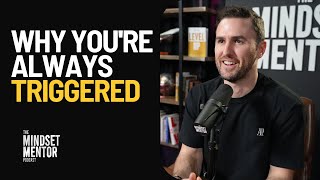
Rob Dial argues that being triggered is a choice, not something done to you. He walks through a five-level awareness model: label the issue, notice your body shift, sense it coming, identify the self-talk fueling it, and trace that talk back to childhood. Breath work, journaling, and affirmations can break the cycle.
Chapters
Welcome to today's video. Today we're going to talk about why you get triggered, how to stop being triggered, and how to work through the feelings when you are being triggered. Let's dive in. What we usually say is something along the lines of, this person is triggering me, right? Have you ever said that before? I'm being triggered. That person's triggering me. This. When someone does this, it triggers me. If somebody is triggering me, just if you look at the sentence of the way that we say the sentence, if they are triggering me, it is making me the victim of that situation. I am a victim of my circumstances is basically what we're saying. But if we switch, even though it's a tiny little shift in our words from I am being triggered to I am triggering myself or I am allowing myself to be triggered, it takes it from being a victim to putting it into my control. I am being triggered. I am being triggered by this person makes it kind of like, oh, there's nothing I can do about it. They're triggering me. But if I say something like, I'm allowing myself to be triggered, then that actually means that it's in my control. And it seems, like almost unnecessary. But it's very necessary for you to start shifting the way that you see what's going on in your life. If you're triggered, quote, unquote, if you're triggered by somebody, it is your fault. And most people are gonna resist that. But as I go through today's episode, it's gonna start to make sense. You are allowing yourself to be triggered. You have to admit that you are the reason why, and that puts you in a place of control. And it goes back to one of my favorite quotes, which I've said so many times in this podcast, which is Eleanor Roosevelt. And she says, no one can make you feel inferior without your consent. So if nobody can make you feel inferior without your consent, that means you're consenting to feeling inferior. Then nobody can trigger you without your consent, which means that you are consenting. You are basically the person that's in charge here. I am allowing somebody else's actions to change the way that I feel internally inside of my body, which means I'm just a victim of that circumstance. Oh, that person's triggering me. Right. And so I want you to understand that something is the way that we kind of think about being triggered, is something is in my environment that is not what I want. So now I'm feeling this way. So this is happening to me. And so now I'm feeling this way something's in my environment now, I'm feeling this way. But just so you know, as long as everything in this world is exactly what I want it to be, I will not be triggered. That's really what it comes down to, right? Oh, if everything's perfect and everybody acts exactly that I want them to, I won't be triggered. But if people don't act the way that I want them to, then I'm gonna be triggered. It's kind of ridiculous, isn't it? And so instead of trying to change your circumstances, what we should all try to do is master our own emotions. And so there was a. I'm giving you an example of something that was brought up in a course that I have. It's called Mindset University. And it's, you know, we meet every single week, and it's an entire year program that we go through, and we meet every single week. And this question was asked, if you want to learn more about Mindset University, you can literally just go to mindsetuniversity. Co there's. There's more information. Co there's more information there. But anyways, somebody had brought in this week and said, I have a negative coworker that's triggering me, and we'll go to meetings, and she'll act a certain way, and she'll trigger me. So much so that sometimes I react to her in the meeting, and now she looks bad, and I look bad, so how do I stop being triggered? And I said, okay, well, let's talk about it. Is everybody who is in the meeting triggered by her? And she's like, well, not everybody. Not everybody's triggered by her. And I said, okay, well, if not everybody is triggered by her, then that means that it's not her. It means that it's who. It means that it's you. Now, I understand somebody can be negative and somebody can be condescending, or someone could be bringing everybody down or whatever it is that it might be in the meeting. I get that. But if I blow up on this person, that's now my fault. That is not their fault that they, quote, unquote, triggered me. And so if not everybody else is acting the exact same way you're acting or reacting, then clearly it's not just her, it's also you. And so an example that I'll give it to myself and I'll go deeper into that negative person in just a minute is something that happened within me that used to always trigger me is this is when people say stuff that's not factual. Right. And I hated when I was a kid. And I remember when I was young, like 8, 9 years old, my cousin, who's 16 years older than me, used to be like, rob, you always have to be right. Why do you always have to be right? And I was. I remember being a little kid being like, well, I'm not trying to be right, I'm just trying to state the facts. I'm like, you know, it's. And then I realized, like, okay, if the mall is 15 minutes away and not 10 minutes away, I don't need to interject and tell people that it's 15 minutes instead of 10 minutes. Right? And so I learned that over years. But I remember being a little kid and correcting people just. Cause I thought like, oh, I want just to be correct. I want to just put the facts out there. And there's probably like my own trauma of like not feeling smart enough and everything like that that's in there. And I just show how smart I was. But I remembered being triggered, triggering myself, allowing myself to be triggered by something being said that wasn't factual. And then what I would do is I would speak up and then other people would be triggered by me speaking up in my triggering. And so now I would change the environment around me and someone would be triggered. Because I make somebody feel like they're not smart enough or not good enough by telling them that people don't like to be corrected. Nobody likes to be corrected. Right. And so what I've learned, I learned this about like 8 or 9 years ago. I learned that this was still a pattern that I had. And it was an unnecessary pattern. It doesn't matter. Everything doesn't have to be exactly factual. And so what happened is I would notice and go on this journey with me and let me know if you've ever noticed this before, but something will happen. In my case it was somebody would say something that I knew wasn't correct. And I could feel my body start to shift. And I could feel almost like a tightness within me. I could feel like a stress within me of like, I gotta get this out of me. And for you, it might have been the same situation where you feel like you have to correct people. It could be that you have been told your entire life you're angry and you have an anger issue and you start to. To feel it bubble up and you wanna blow it up and yell at people. It could be that you feel your emotions. Cause your pattern might not be getting angry or correcting people. It might be that you get sad, and then you cry. And so you can feel the emotions. You can feel the body start to shift, right? And then what I've come to realize is when I would feel my body start to shift and feel like I had to interject and quote, unquote, correct people, I would just tell myself my let it go. And it wasn't like I would hold onto it. I would breathe through it. I'd take some deep breaths. It's not that important. Dude, just shut up. That's basically what I would say to myself. I would notice the feeling in my body. I would notice my body get tense. I would notice myself getting stressed. You know that feeling, right? And instead of reacting, I would just try to breathe through it. Was I perfect at it? No. But then sometimes when I wasn't perfect at it and I'd say what I wanted to say, the same thing would happen. I would make somebody pissed off or whatever it is that it might be, and then I would trigger that person. Then it just turned on into a cascade of effects that I didn't want. So I just learned, okay, just breathe. Just let it go. Hey, real quick, I want to introduce you to something called Mindset Mentor Plus. If you love this podcast, you will absolutely love what I'm about to talk about. I designed Mindset Mentor plus to help you actively integrate every one of these episodes into your life. And here's how it works. With every episode of this podcast that comes out, Mindset Mentor plus subscribers get more. You're going to get multiple page, detailed, printable worksheets, effectively a mini masterclass that's way more in depth than just this podcast. They also come with journaling, questions, challenges, assignments, and so much more. So that you're not just listening to these podcasts passively, but you're actively integrating them into your life. That way you improve much faster. I also do monthly Q and A sessions in there and much, much more. If you want to learn more about it, go to mindsetmentor.com or click the link that's down in the description. And it's really important for us to know and start to. First off, before we go any deeper, because we're going to go much deeper today when we notice the feeling of starting to be triggered, to breathe through it and to give ourselves some time, whatever that triggering might be, wanting to yell at people, wanting to cry and scream and kick and throw a hissy fit and adult temper tantrum, whatever it is that it might be, is to breathe through it and allow ourselves to get our Breath back. Because the two things that change first when your. Your body starts to shift is your heart rate and your breath rate. So I want to. I want to shift my breath rate, which will then also shift my. And calm my breath rate down so that it also calms my heart rate down. The reason why is because when your emotions are high for whatever they are that they might be, your logic is low. When your emotions start to get high, your body starts to stop sending as much blood flow to your prefrontal cortex, which is the decision making and executive functioning part of your brain, which is why sometimes, like, you might be in an argument with your significant other, and then you say something that you didn't mean. And then 20 minutes later, when your emotions are not as high, you're like, oof, that wasn't a good decision. I probably shouldn't have said that thing. But in the moment when you are all triggered, you're like, this is a good idea. I'm gonna call her that. Right. Probably not a great idea. And so there's a couple different levels of what happens in the triggering. Okay. There's five different levels that basically happen when you're triggered, and that's what I want you to go through. Okay, this is where we're gonna start to go deep. Let's say that you feel like you have an anger issue. That's level one. I have an anger issue. Okay, cool. Now that is just what people want to deal with a lot of times. Let me fix my anger issue. Not realizing that there's multiple other layers that you need to go down to start to figure out where this is coming from. Right. It's not that somebody did something and you have an anger issue. It's that there's definitely more below the surface. So step one is I have an anger issue. That's. That's a level of awareness, number one. The second level of awareness is I am aware I'm about to be triggered. I can feel my body. Like I'm. I'm noticing. Okay, I notice my body shifting. I can start to feel. I can feel that tenseness. I can feel that I want to yell. I can feel it in my body. And then you know what? I'm going to start to breathe through it. Okay. I'm feeling my body. It's already shifted. I'm going to breathe through it. I'm going to let the emotions go. I'm not going to hold on to them. I'm not going to throw them at other people as well. I'm just going to Breathe through it and just let it process through my body. So that's level of awareness number two. The third level of awareness, even below that, is that I can start to notice before my body shifts that it's about to shift. And I can start to see. Cause I can notice the pattern that things around me are starting to. I can see a situation that might make me angry. So I don't even get into it, My body doesn't get into it. Or I can start to notice my body is about to shift. Level two is my body has already shifted. Let me breathe through it. Level three is I can start to notice that something is happening and my body is about to shift. It's like hearing a train horn off in the distance that's coming towards you. You're hearing the horn before the train actually passes you, and so you're noticing that your body is about to shift. So that's level of awareness number three. Level of awareness number four is what is the conversation that's happening in my head that's making me feel this way? I want you to understand this, and we're talking more about it. When you notice your feelings changing, there's always a conversation in your head that's happening before the conversation change, before the. Before the body starts to shift, right? So if you notice, okay, I'm starting to feel these feelings right before, that was a thought, it was a conversation in your head. It was something. And this will make more sense as we dive deeper into it. So basically, level number four of awareness is what is the conversation that's happening in my head to make this feeling pop up? And then level number five is where did it actually come from? So before the feeling of, you know what you're feeling, there's a conversation. What's the conversation happen in your head? And what you have to realize is this. We have so much going on in our heads. Some of you guys have a million things happening at one point in time. You consciously are aware of 5% of your thoughts and your. Your workings of what you're doing. 95% of what your thoughts are, are below the surface. They are subconscious. And what happens is in cognitive behavioral therapy, they have something called automatic thoughts. And automatic thoughts just pop up. And a lot of times we don't even notice them. Automatic thoughts. What we notice is how we feel. We notice how we feel, but we don't notice the thought that's behind it. And so, for instance, I'll give you an example. Let's say somebody is being triggered because of the Fact that somebody's talking down to another person. Let's take, for instance, the example of the negative coworker. Right. Let's say that that negative coworker, the reason why the lady that's in the room is being triggered by the negative coworker is because the negative coworker is belittling everyone else around them. They talk down to everybody else around them. She's really condescending to everybody else around them. And I get that. I understand why you would be triggered by people who are condescending. I'm triggered by people who are condescending. And so it's like you start to notice it. You start to notice situations where you might be triggered, and you start to notice a little bit before versus, like, I just have an anger issue. It's like there's things that have happened before the anger issue. So I understand all of that. But then you go back to the question, where did it come from? And so I notice this negative person, they're in the meeting. I notice that I'm triggered. I notice that my body's starting to shift. Why does this trigger me? Why does her actions of talking down to another person trigger me? Well, she's rude. Yeah, that's absolutely. Sure. Okay. That's a little surface level, though. That's not really going deep. She should know better. She's an adult. Ah, that's still pretty service level as well. Okay, but what else? What else is behind all of that? Why is it that other people are not triggered by her being rude and condescending, but I'm triggered by her being rude and condescending and talking down to people? What else is it? Where did it come from? And you start to work through it, and what you realize is that there's a whole set of unhealed you as a child that's now popping up right here, and you start to journal through it, and you journal through it. Why does her talking down to somebody else trigger me? Why am I triggered by rude people? Why am I triggered by condescending people? Where did this come from? Is there somewhere in my childhood? Did it come from my dad? Did it come from my mom? Did it come from my teachers, aunts, uncles, grandparents? Oh, you know what? Her being rude and talking down to my co workers reminds me of how my dad used to bully my younger brother because he was the nice one, and he used to bully my mother. And so I used to always want to protect them. So I would speak up for them and I would yell at my dad. And then My dad would yell at me, and then it would turn into a fight. So the negative lady in the meeting is actually reminding me of my unhealed trauma with my dad. Holy crap. That's crazy. And then you realize, so it's not even her. It's me and what I have to deal with and what I haven't healed from. Now we look at it and it's like, believe me, it's a lot easier to blame somebody else than it is to look back at yourself and be like, oh, I'm the problem. Now, I'm not saying her actions are okay, but that's for her to deal with. That's for her. You know, if she ends up being negative for a while, she might get fired. That's her life. That's her things that she's going for and going through. But you have to realize why it's affecting you. And this is what's great about it, is that she, in the way that she's acting, is triggering you, which is showing you where you are still stuck in the past of your dad, in the way that he spoke to your little brother and the way that he spoke to your mom. And you haven't healed from that, and you haven't worked through it. So as much as it might hurt, that triggering from her is actually a gift. And this is why I always say whenever somebody triggers you, you want to slap them. But really what you should do is give them a high five, because they are actually showing you where you're not free. Because wherever you're triggered, you're not free. You're allowing other people to change the way that you feel. That's not free. Freedom is not allowing other people to change the way that you feel. And so that triggering is a gift. That is the universe coming to you through her to show you where you're not free. Oh, my God. That's crazy. Why? Because the world is a mirror reflecting back to you what's going on inside of you. And it always is. Everything that you feel is the universe coming to you to show you where you're not free. And so we can look at that lady and be like, ah, she sucks. She's so negative. I hate when she's in the room. But we can also go, what is she trying to teach me? Because it's not her coming to me and triggering me. It is the universe going. Rob still needs to learn this lesson, and it's going to keep happening over and over and over and over again until he learns this lesson. Right? The world is just a mirror reflecting back to you what's going on inside of you. It always is. And this is how you pull out the root of what's going on. So at the root is, like, the unhealed thing about you and your dad and your brother and your mom, what we normally see on day to Day. And this is why we're just. I'm saying there's levels deep to. It is. It's like this person's triggering me. I hate when people are this way. I have an anger issue. I need to work at that. That's like pulling out the weed whacker and just whacking the weed. But, you know, with enough water and rain, that weed's going to grow again. When we start to talk about what happened in your past, where did it come from? Well, now what are we doing? We're talking about actually pulling this weed up from the roots and getting rid of it so that it doesn't have so much control over you. And so you've got to start to figure out, like, what's the internal story? What's the internal story on this? I'll give you another example, right? We literally just moved into a new house. And like, you might be, if you're on YouTube, you might notice my background's a little bit different. It's very similar, but it's a little bit different because the studio's now in the new house. And so, you know, when I first found this house, I was like, it's amazing. I love this house. This is great. And we put an offer on and it got accepted. And I was like, that's amazing. I'm so excited for this house. And then the next day I woke up and it was like, scarcity, fear, fear, fear, fear, fear. And I had all of these things bubble up, and I was like, I could be like, oh, my gosh. Like, on the surface, it looks like I'm stressed because we're about to move and we have a baby, and there's a lot that has to happen in a move, and there's all of these things that then I have to have somebody rent out my houses and all that. All of those things. All of those things can pop up, and that's all surface level. But I knew that it's not surface level. There's more behind that. It's not. I'm stressed because I'm busy. I'm stressed because we have to move. There's something behind that. And so I started thinking about it. I was like, what's going on Here. Why do I feel this fear coming up? And I started listening to the internal story, and it's like, well, you don't need this house, which I don't. Right? I don't need a house that's in this location. That is this house. I can live in a smaller house. I've already got a great house. I don't need to move. That started popping up. So that was an internal story. You've got a great house. You don't need to move. The other thing was, this house is more expensive than your other house, which is okay right now, but who knows what the future holds? Who knows the economy's gonna do? You're a business owner. Business is going great right now, but not all businesses succeed, right? And so it's like all of these stories are going through my head, and it's like, well, you know. You know what's gonna happen with the economy? What's gonna happen with. With. What if Russia bombs us? And it's like my brain went, so even though guys realize I'm the mindset mentor, I get it. But I am the exact same as everybody else. We all deal with all of this stuff. And I was like, what's going on here? And I started going deeper and deeper and deeper, and I was like, you know what? It's me being scarce. And I was like, me being scarce around what? It's me being scarce around money and worrying about, like, what if I were to run out of it? What if all of my investments. What if all the businesses I've invested in go to crap? What if all my investments go to crap? And it was just like, fear, fear, fear, fear, fear. And I was saying, okay, fear around what? The scarcity of money. Okay, what is. And you would look at that and say, like, okay, that's what the answer is. No, no, no. What does money represent to me is what I started asking myself. And the answer was safety. And I was like, oh. And it just felt right. It resonated. I don't feel safe. Even though my life is amazing, it's never been better. My life has never been better, ever. And I can say that by far, 100%. There's still a part of me that just doesn't feel safe. And I think that's just part of being a human, and that's built into our circuitry. And it's also, like looking at my childhood. We didn't have money, you know, Now I'm moving into a bigger house and with more rooms. I didn't even have a room when I was a child until like 12 years old. So it's like I used to sleep on the couch. So it's like, that's scarcity. Scarcity. You know, we used to be poor and all of this stuff. So I'm always thinking, like, I could always go back there. What if I go back there and it's fear, it's scarcity. And so I was like, what's the scarcity around? It's money. What does money represent to me? Safety. Oh, I just don't feel safe. There's still rob at 9 years old that doesn't feel safe. And so what do I need to do? I need to go into. And this is what I've been doing for the past, you know, 45 days. In my meditations, every single morning, I do my breath work and on the breath holds and I'm talking to myself and I'm meditating and I'm saying, I am safe. I am safe. I am safe. And so I can look at that and think that I was stressed because of the move. No, no, no, no, no. I was stressed because there was a conversation behind that. There's always a conversation that's going on in your head. And whenever you notice a feeling in some sort of way, there's always a conversation behind the feeling. And so you've got to ask yourself, what is the conversation that's behind the feeling? Where did it come from? And then how can I start to affirm myself? Like the safety thing was the thing for me. How can I start to affirm myself, dude, you're safe, everything's okay. You're safe, everything's okay. If I'm triggered by a negative person, hey, you don't need to react. Just let things be. You don't need to react. Just let things be and figure out what you need to say to yourself to start to brainwash yourself, you being charge of your own brainwashing, to start to feel and act and live the way that you want. And so that is the reason the deep roots of why you're triggered and then how to overcome it. So if you love this episode, please do me a massive favor. Please share it on your Instagram stories. Tag me in at robdial Junior. R O B D I A L J R. The only way this podcast grows is from you guys sharing it. And so if you do that, I would greatly, greatly appreciate it. Also, you probably heard I talked about Mindset University, which is my year long program. We meet every single week if you want to learn more about it. Just go to mindsetuniversity Co and there's more information up there. And with that, I'm going to leave the same way I leave you every single episode. Make it your mission to make somebody else's day better. I appreciate you, and I hope that you have an amazing day.
More from Rob


Why NOT to stay single 👉 @robdialjr #adviceoftheday #motivation #mindset #growth

You Reap What You Plant 👉 @robdialjr #adviceoftheday #motivation #mindset #growth

3 signs that you're addicted to chaos 👉 @robdialjr #adviceoftheday #motivation #mindset #growth

Stop making excuses for people 👉 @robdialjr #growth #mindset #positivity #adviceoftheday

Tip for an amazing life 👉 @robdialjr #inspiration #mindset #adviceoftheday #positivity

It's time to move on 👉 @robdialjr #adviceoftheday #motivation #mindset #happiness

The right person for you is... 👉 @robdialjr #love #truelove #inspiration #mindset #soulmate

Get ready to take risks 👉 @robdialjr #motivation #adviceoftheday #mindset #positivity

The real competition You Vs You 👉 @robdialjr #mindset #inspiration #positivity #adviceoftheday

Their Mood Isn’t Your Responsibility. 👉 @robdialjr #mindset #adviceoftheday #motivation