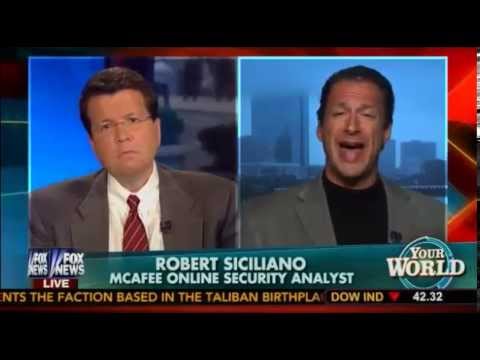
This content was created by Robert Siciliano. This content was uploaded by Robert Siciliano. This is a YouTube video titled "Apples iPhone hacked with ransomware @McAfeeConsumer" (uploaded June 1, 2014) containing a short interview/segment in which an interviewer (Speaker A) discusses an Australian iPhone/iPad ransomware incident with identity-theft expert Robert Siciliano. They describe how attackers likely gained access (compromised iCloud/email credentials or phishing), note the implications for Apple devices, and offer mitigation advice such as using unique passwords and enabling two-step verification.
Chapters
Or you might want to keep an eye on your iPhone because someone just hacked into a whole bunch of them in Australia, demanding users pay a ransom if they ever wanted to use the device again. But think about this, this is an Apple we're talking about. An Apple, you know, all the ads about we're not, we're not hacked, we don't get any any viruses. So they can get into an Apple. Is anything safe? To identity theft expert Robert Siciliano. Robert, this is a big deal, isn't it?
Well, it is, uh, due to the fact that it's, uh, Apple. Uh, iDevices generally do not get hacked. Uh, there are millions and millions of viruses that are targeting PCs, only thousands targeting Macs, but Macs still do need antivirus.
All right, so How do you protect yourself from this? Because this went a step further than just hacking. This is essentially holding— where are we going here?
So this particular breach occurred as a result of emails and password— email addresses and passwords being compromised. And that could have happened in one of two ways. Either there's a database somewhere in Australia that was taken over that had people's iCloud, Mac, or .me address, and/or they were phished. So they gave up their credentials, again their iCloud email and their password, and that allowed the criminal to basically take over their mobile devices, their iPhone and their iPad. So what that means is, is when you receive an email that looks like it's coming from Apple, you have to be very careful that you're not going to respond with your credentials.
All right, so a lot of people are getting sort of gadget paranoia. They're just thinking, well, maybe the better part of valor is Maybe not to have these things, maybe not to use these things as much. That seems to me to be unrealistic.
Yeah, that is unrealistic. But what you can do, along with changing up your passwords, you know, you should have a different password for every critical account. Like, you shouldn't have the same password for your Gmail as you do for your banking, as you do for your Facebook, as you do for your iCloud. You know, different passwords to every account. And then, in this case—
But that wouldn't have stopped these guys in Australia.
It— well, what would have stopped them would be two-step verification. So Apple offers two-step verification, so does Twitter, so does Facebook, so does Gmail. With two-step authentication, they have to have an additional tool like a mobile device in their hands— yours— in order for them to breach your account.
Gotcha. Sort of like it's another locked door you have to go through. Um, Robert, exactly. Always good seeing you. Thank you very much. Robert Siciliano.