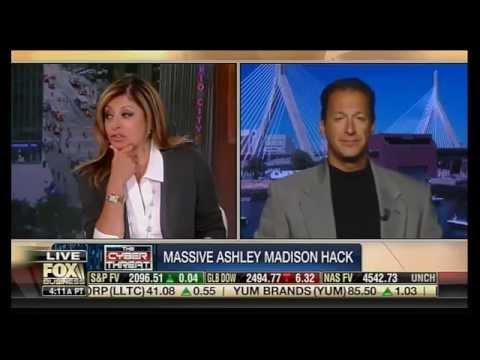
The Impact Team hacked Ashley Madison and leaked 10 GB of data on 32 million accounts, including names, addresses, and sexual preferences. Cybersecurity analyst Robert Siciliano explains why victims struggle to sue: most signed liability waivers, and proving damages beyond reputation is hard. Some leaked emails came from .mil and .gov addresses.
Chapters
New reports this morning, meanwhile, the hackers responsible for last month's cyberattack against the website Ashley Madison have posted the stolen data on the internet. According to Wired, the cyber thieves called the Impact Team posted nearly 10 gigabytes of stolen user data on the dark web. This includes customer names, login details, street addresses, minor financial information dating back to 2007. In all, around 32 million accounts are affected. Arthur, can anybody who has their name exposed take legal action here?
I mean, probably not, Maria. I will tell you, when this, when this first came out, you know, Ashley Madison, that's the first thing that came to my mind. Look, the Supreme Court has been— United States Supreme Court has basically said you have no privacy anymore. And that was echoed from like the United States Supreme Court to this past week, Joe Girardi, the manager of the New York Yankees, when CeCe Sabathia, his main pitcher, had a little altercation in the street, I believe in Cleveland. He said you have no privacy anymore. Anymore with, with everyone. Everyone walks around with a telephone, with a camera. Everyone has social media almost. So when I heard this, I was like, what kind of insane person would be cheating on their spouse online? I mean, so they probably— to answer your question, they probably don't have a legal action because there's probably some kind of crazy disclaimer when you sign up. I've never signed up for Ashley Madison. Dagan, I know you may not believe that. I may, but I really never have.
This is single.
This is a website that helps you cheat Yeah, yeah.
I would— number one, I, and I am a big believer that a lot of people on the site are single and not married to someone, as some people clearly are. But if you are married and your data is out there, you're not going to draw more attention to yourself, are you, by suing the company?
Right.
That's true.
Unless, unless the damage has already been done. So unless your spouse finds out because of this, divorces you, it costs you X amount of dollars, and you're like, you know what, I'm going after them for the money that I just lost in my divorce, which would be unique. But the thing is, Maria, probably when you sign up, you know when they like, do you read the small print like Apple makes you do and nobody reads it?
Yeah.
It probably, there's probably some sort of disclaimer in there that a lot of times those don't hold water, but it still would need to be litigated. But it's very interesting. And I knew this was gonna happen. It was just a matter of time.
Yeah. And whatever happened to just driving out to the like airport holiday day in and hanging out in the bar.
Maria, do you know— Maria, do you know what she's talking about? Because I have no idea. We're pure people from Brooklyn, New York who are very honorable and—
humans. By the way, next hour we have a hotshot, Hotspot Shield cybersecurity analyst Robert Siciliano joining the conversation. He's got clients that have had their names exposed in this hack. We will discuss the concerns when we come right back. Stay with us. New reports this morning that the The hackers responsible for last month's cyberattack against the website Ashley Madison have posted the stolen data on the internet. According to Wired, the cyber thieves called the Impact Team posted nearly 10 gigabytes of stolen user data on the dark web. This includes customer names, login details, street addresses, minor financial information dating back to 2007. In all, around 32 million accounts are affected. Pretty unbelievable story.
I just came back from the flower shop. Just want to tell everybody.
The flower shop?
Well, I had a dozen roses because, you know.
He's incinerating roses. He's talking about—
oh my gosh.
You know, listen, I was doing research.
Uh-huh. Research. How'd that go for you?
Investigative research, this is what you're talking about. I was doing, you know, this is the internet.
So this is a website that helps people cheat. Wanna bring in cybersecurity expert Robert Siciliano. Robert, you have clients clients who have come to you since this initial reporting of this hack. Tell us about it.
Yeah, so, uh, shortly after it was reported, I had, uh, phone calls, emails, texts, uh, in, in-person appearances. You know, after a, an event that I presented at, uh, people come up to me and say, hey, you know, I was part of that hack, or I think I might be part of that hack, uh, revealing information such as fetishes and so forth. Some married, some unmarried, uh, people that were obviously concerned that their data was going to be leaked, the probability of it occurring. And the repercussions and so forth. There's a lot of people out there today that are running scared and more than likely buying flowers.
Give me how many flowers based on the fetish.
Oh my gosh, stop. Seriously.
Oh, come on.
Honestly, I don't even know why this story's so funny. I mean, this is a really serious thing that's happened. Robert, this is a big deal.
The cheating or the hack?
No, the actual hack and compromising of people's personal information. That's right.
It's not yours, you put it out there on the internet and you're a dope if you did.
It's not my business what these people are doing, if they're married or not married. I mean, we're talking about businesses who are seriously at risk of what's happening every day.
These are people who sat in front of a computer and typed what their fetish was and thought that was gonna be something fun.
I'm trying to give you news that you can use. Robert, what type of fetish? Give me the fetish for the flower ratio.
What are these fetishes? I mean, give us some info here, Robert.
Oh, that's just too much even for Fox. You know, here's the deal. You know, the data that was compromised, right? So it's one thing to have credit card information stolen. You know, you can reset the clock, you can cancel the card and so forth. But it's the personal information, you know, it's the type of data that's not meant to be shared with the general public, even friends and family in this case. You know, the Sony breach taught us an awful lot. Those are personal emails that were exchanged that actually got some people fired. Fired. In this particular case, this is, you know, some real serious personal information. Again, it's not meant for public consumption. And when this type of data— but if your information was being hacked— go ahead.
If your information had been compromised, would you really sue? Because again, it draws more attention to yourself, does it not?
Well, it all depends. After the fact, if the damage has been done and the divorce is in place, Very potentially, yes.
By the way, I would, I would bet that Wired magazine's reporting that one analysis of the email addresses shows that some 15,000 were .mil military email addresses or .gov addresses.
Nice.
They should at least—
which is a very small ratio, by the way.
I think this is great.
That's an interesting scene.
Suppose you use the name Carlos Danger. Could you get away with it?
Robert, thank you.
We'll be watching.
Thank you.
You don't have to answer that, Robert.
People will be speechless. I mean, the lack of credibility that people will have on a lot of these headlines is going to be nauseating.
Mm-hmm.
Charlie probably knows way more about all those fetishes than anybody on the set.
So how do you know that?
Investigative reporting.
Up next, Hillary Clinton on the defensive in a town hall meeting that turned contentious fast. That's next. Back in a minute.