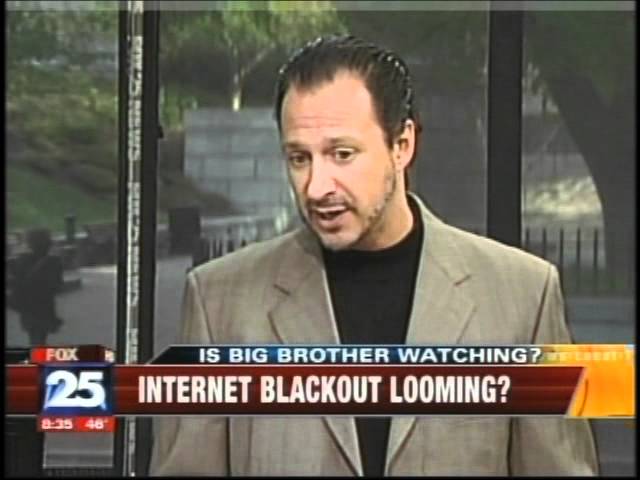
Robert Siciliano, a security expert, discusses CISPA, a bill that would let the government and companies share internet data. He addresses privacy concerns and whether an internet blackout could happen in response.
Chapters
Well, is there, uh, the internet in danger of a blackout?
Let's go to Lily at Beacon Hill to find out.
Hey, Elizabeth. Good morning, guys. It was a similar bill that made Google go black, and countless other websites have protested cybersecurity proposals. But a new law has the backing of several popular sites. The Cyber Intelligence Sharing and Protection Act encourages information sharing between governments and— between the government and companies to protect against cyberattacks in the name of homeland security. This morning, McAfee consultant and identity theft expert Robert Siciliano Robert Siciliano says many believe this bill still goes too far and they think it means that Big Brother will be watching where you surf. Thanks for joining us this morning.
Thank you.
There were two other bills, SOPA and PIPA, that had a number of different websites very concerned. They kind of put a black label over their logos to show that they were protesting them. How does this bill differ from the ones that people— that websites were concerned about?
Well, ultimately the goal of this bill is to break down certain barriers privacy bills essentially that prohibit the security community and government from sharing information. The idea behind it is to increase the cybersecurity of both government, private companies, and their clients. It's not about violating, or at least that's its intent and purpose, it's not about violating the public's privacy, but more so to share threat information in order to protect the public.
There are some people who say this still goes too far, that it's Big Brother watching, that the more you get government involved in what private companies' users are doing, it's a dangerous thing. What's your take on that?
Well, uh, some say that there is an opportunity to abuse the fundamentals of this bill, but then, you know, the IRS has access to our information. They could abuse that too. But they don't. It's not in their best interest. The idea ultimately is to protect us, and the fact of the matter is that the cyber threats have changed dramatically over the past decade, and we have to do something. And the—
We've seen a lot of times, we've seen, you know, hackers in China getting into people's Gmail accounts. We've seen private information being tapped in ways that we haven't seen before.
Right. And The idea behind this bill is essentially to break down those blocks that allow the private sector to talk to the government so that right now we can't really speak to one another.
Is there really a concern about an internet blackout? It seems a little bit alarmist to me.
The internet going down is probably not going to happen, but there is definitely the threat of that occurring, that there are foreign governments that want to take us down, there are cyber terrorists that want to take us down, and then there are simply bad guys that want to steal your identity.
What's the next step for this bill? Where do we go from here?
Well, I believe that, you know, the public certainly has a right to make a decision as to whether or not they want to see this pass. They need to become informed themselves. Like any law that might come into place, you need to do your own homework to find out what, you know, both sides are saying, whether it's the privacy industry, the security industry, and government, and make an informed decision.
McAfee Security Expert Robert Siciliano, thanks for joining us this morning. We'll be back on the Fox 25 Morning News in just a moment.