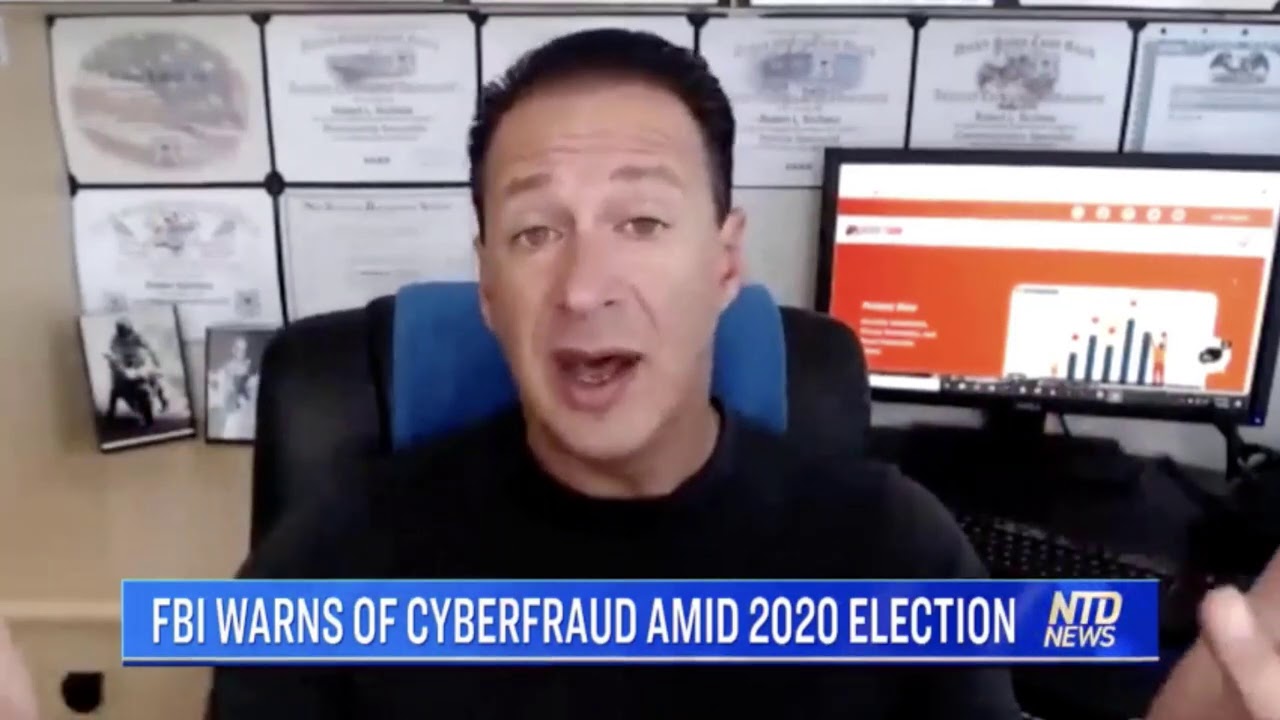
This content was created by Robert Siciliano. This content was uploaded by Robert Siciliano. This is a YouTube news segment titled "Disinformation Campaigns Are Determined to Corrupt Election Results" (NTD News, published 2020-09-25). The report, led by reporter Kevin Hogan, covers an FBI warning about cyber fraud and disinformation targeting the 2020 U.S. election. It quotes cybersecurity expert Robert Siciliano and describes tactics such as cloned government websites, fake social-media profiles, phishing campaigns, and coordinated disinformation efforts possibly backed by foreign actors (China, Russia, Iran). The piece cites Pew Research polling, explains how emotional content can signal disinformation, and relays advice to verify information with trusted election officials and report suspicious posts to social platforms and the FBI. Participants include Kevin Hogan (reporter), unnamed speakers labeled B and C (reporters/analysts), and quoted expert Robert Siciliano.
Chapters
The FBI is warning about potential cyber fraud during the election. The bureau says cyber criminals could create false websites and social media content to spread disinformation. Their goal is to discredit the electoral process and undermine U.S. democracy. Our reporter Kevin Hogan spoke with a fraud expert on how widespread this is and how you can protect yourself.
Turning to the cyber arena.
According to the FBI, foreign actors and cyber criminals may be attempting to interfere with the 2020 election. Election results. Mail-in voting may cause the results to be delayed. The FBI says cybercriminals may exploit this delay by sending out false reports of voter suppression and by launching cyberattacks on election infrastructure. Cybersecurity expert Robert Siciliano says hackers can easily clone government websites and send out links to these false sites through various means.
Once these clone websites are created, then the disinformation campaign begins to seed links to that particular site through social media and through phishing email campaigns. So the majority of the traffic is generated via word of mouth, via social media. And once the disinformation articles are created with links to those particular sites and they go viral, then they become very popular and the bad guys in this case win.
Siciliano says people on disinformation campaigns will do this to fool people into voting on false sites, distract voters, or even mislead them with false information to corrupt their vote. He says it only takes basic software to create these campaigns and multiply the false websites, blogs, and social media profiles with anywhere from 5 to 1,000 people working on a campaign worldwide.
Those that are responsible for creating these mis- and disinformation, um, campaigns, uh, they have armies of coders, uh, people that are setting up fake profiles on various social media platforms. They are setting up fake blogs, fake websites.— that are designed to express a campaign's end goal in mind, generally utilizing mis— and disinformation.
According to the Pew Research Center, 75% of Americans think other countries will try to interfere with the 2020 election. And U.S. intel officials said China, Russia, and Iran are trying to do just that. Siciliano says if an article immediately causes an emotional reaction, it may be designed as disinformation to influence the voter. He says it's important for voters to do their own research to do your own research and seek out the facts.
Make your own informed decisions, opposed to simply reacting emotionally and then sharing that information with everybody in your life because you're so upset about it, and then just being a victim of disinformation.
The FBI recommends seeking out information from trustworthy sources, such as state and local election officials. The bureau says to report suspicious posts to the social media companies and to let the FBI know of any disinformation about the manner, time, or location of voting. Kevin Hogan, NTD News, New York.