Facebook data scandal a wake up call for consumers
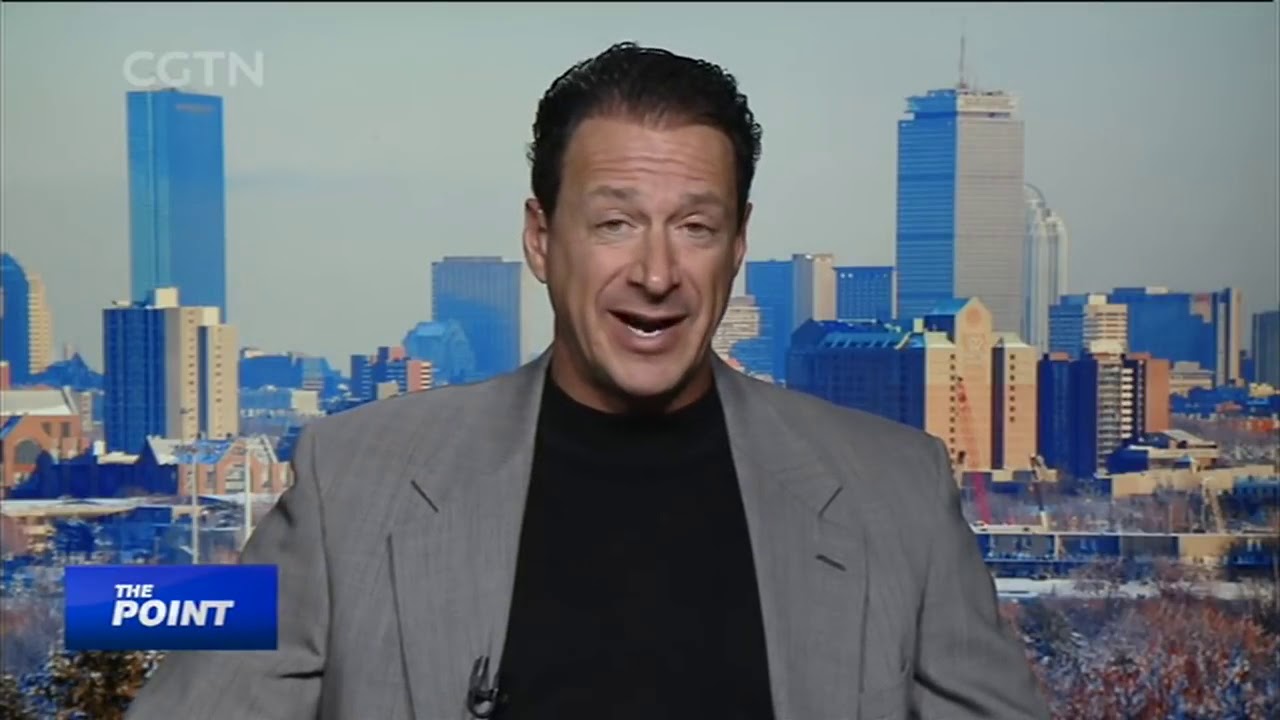
Robert Siciliano and Aina Tangen debate Facebook's Cambridge Analytica scandal, where 226,000 quiz takers exposed 50 million users' data. Pavel Felgenhauer then discusses Putin's fourth term and the risk of accidental military clashes between Russia and the West over Syria and Ukraine.
Chapters
Facebook is under fire after data analysis firm Cambridge Analytica collected users' information without permission. Can Facebook win back its friends' trust? And where is the boundary between connectivity and privacy? And as Russian President Vladimir Putin Vladimir Putin steps into his fourth term, what's ahead for Russia's foreign policy and economy? The Point team has an exclusive interview from Moscow. Welcome to The Point, live from Beijing, I'm Li Xin. On Wednesday, on Wednesday, Facebook CEO Mark Zuckerberg admitted that the social media company made mistakes that led to tens of millions of users' data being compromised. Data analytics firm Cambridge Analytics has been accused of improperly obtaining and using the data via a personality quiz application, which is said to have influenced the 2016 US presidential election result. Zuckerberg has promised to take further steps on top of the measures the company has already taken, adding that he was happy to testify before Congress if it is the right thing to do. As Facebook's stock plummets and the investigation heats up, how many friends can Facebook keep? How can personal data be kept safe, and how can you protect yourself? Joining me today from Boston is Robert Siciliano, security analyst at Hotspot Shield, a virtual private network utility protecting users on Wi-Fi, and in Beijing, Aina Tangen, current affairs commentator. Welcome to the show, gentlemen. Now, in an interview on Wednesday, Zuckerberg apologized for the mistake, and here is what he has said. Let's listen in.
This was a major breach of trust. And I'm really sorry that this happened. We have a basic responsibility to protect people's data.
And if we can't do that, then we don't deserve to have the opportunity to serve people.
So he apologized there. But when the news first broke, Facebook only issued a written statement where the company did not actually say anything about being sorry or apologize, but rather just laid out what happened and what measures they are going to take. So Ina, tell us, So what is your take on why there is this change of attitude, if there is any?
Well, it's not a change of attitude. They're following the public relations book on this, which is you lay low, see what's going to happen, see if it kind of goes away or starts bubbling up, and then you plan your response. The difficulty here is that, you know, he's had a number of run-ins which point to moral blindness. In 2004, he made oral agreements with the Winklevoss brothers and his roommates who funded and gave him the ideas that later became Facebook. He settled in court for them. 2011, he was brought in and he was subject to— the company was subject to a 20-year basically probation under a consent decree because of the issues of protecting privacy. Now, this latest one, situation, is also probably a violation of that said consent decree and could put them into billions of dollars in terms of fines.
Mr. Siciliano, now Zuckerberg said that he regrets believing Cambridge Analytica when the company promised to delete the data passed along by the researcher Alexander Cogan but actually did not. Zuckerberg called it a breach of trust. Who is responsible here? Facebook? Kogan, the company?
Well, certainly Facebook allowing that level or amount of information to get in the hands of a third party is— the buck stops right there. Of course, that third party, Cambridge Analytica, misusing and abusing that trust obviously is an issue. But in the end, consumers need to recognize that they are the product when they are providing their personal information to social media sites, and that something like this and how that data is being misused should not be a surprise to anyone.
Well, I just want to cut in there. There's one issue about what he said. He said that, you know, there was a breach of trust. Except Facebook knew about this for the last 3 years and for some reason did not do anything about it. I mean, it's a little bit of a stretch, and there are real questions about what exactly Facebook has been doing during that time.
Right. Mr. Siciliano, were you saying that we were overreacting to the kind of breach of personal data, given that everybody gives us a huge amount of data to many different social media applications or platforms. Exactly what can we expect then?
So we've known that, you know, advertisers are collecting our information forever. I mean, ever since the first radio program and television program, and you're paying with your time and your attention and now your name and address and email address and preferences and religious preferences and everything about you is all being collected. We know this, or at least you should know this. And if that data is being used in ways that you may not appreciate, uh, to sell you stuff that you may not necessarily be interested in or, uh, in this case, uh, potentially propaganda, um, you are being influenced, uh, by your own choices. You've signed up for this. And if all of this data was being used to— by Cambridge Analytica to feed all the hungry children in the world, I don't think we'd be having this conversation right now. But a lot of people don't like the outcome of the election, therefore they're upset that the data was used in this way. But this is what you signed up for as a consumer.
Okay, I got you. I understand what you mean here. Right. Mr. Tungen, what is your take? Do you agree with Mr. Siciliano here?
No, I don't. I mean, the consumer protections— I mean, people do not know what they're signing up to, and they do not expect that once they sign on to what seems an innocuous survey that their information is going to be used in ways— not only their information but the information of their friends. Remember, we're talking about 226,000 people who took this, but 50 million people whose information was reached. So I think it's a bit of a stretch to say that, you know, you signed up for this, you know, just take it on the chin and all those things. The fact is things have changed dramatically since the time of radio and television, when you would have groups going out there and analyzing, coming to your door and asking you questions, the consent at the door was very clear. It is not as clear when you have younger people or older people or people who do not know making decisions to do something which they think is fun, which is actually giving them a window into the things. Now, the issue about use, it's not just the U.S. elections. I'm sorry, we're also talking about Brexit. We're talking about a lot of other countries. You'll notice that Brazil has begun an investigation that this was used in African countries to sway elections. It involves bribery, all sorts of underhand tactics. So not quite certain where you say this is all just kind of a white mishmash and we all signed up for it.
Well, I think, I think when we as users, when we sign up to something, we need to be aware what we are signing up to. Read all the agreement that, you know, before you click the that little box. This is true, but on the other hand, Mr. Siciliano, don't you think companies such as Facebook has a certain responsibility to protect the data that people have provided with the platform, thinking that these data could be in insecure hands?
Well, certainly they need to do a better job of vetting who's accessing their data and what they're using it before. And when Facebook says that, uh, there was a breach of trust here, there certainly was a breach of trust. And, and when you are in a, uh, relationship, uh, like Facebook is with all of its advertisers, those advertisers can take that information and use it in any way in which they so desire, even though they may be, um, using it against what Facebook originally intended to be used for. That said, um, like you had mentioned, when you sign up for, for any of these sites, you look at the terms of service, terms of agreement. I've looked at all that, and it all says at any given point in time, you know, third parties, this, that, can use this data in other ways not intended. That's just the reality of the world that we live in, and You know, you know right now that you should wear a seatbelt when you drive because of all the information that we've been provided. You know right now that if you eat McDonald's every single day, you're not going to be healthy. We have enough information at our fingertips to make good decisions. And right now, this should be a wake-up call to consumers and to advertisers that Facebook's providing enough information that it could be used against you in a number of different ways. If you don't You see that now, then it's just a matter of time until you're unduly influenced in another way.
I see. Another question here which I think is quite critical is Facebook only got this news through the media, which was also the case in 2015 when The Guardian broke that the company Cambridge Analytica was abusing these user data. But they only got a certificate from that company, I mean Facebook, and after that they believed that the company corrected the mistake, which turned out not to be the case. So, Mr. Siciliano, don't you think Facebook, having known what has been abused, should have jumped in to fix that problem before the media broke again that Cambridge Analytica was not doing what they pledged to do?
Yeah, I'm not sure if, uh, at that point, um, Facebook could have done anything at all. I honestly obviously don't understand or know the inner workings of what Facebook is doing on a daily basis or just what the in-house discussions were. None of us do. That said, the cat essentially was out of the bag, horse out of the barn. What could they have done other than warning its users? But they're continually updating their terms of service, letting the users know just what is happening maybe a little more, uh, maybe not as blatant as maybe the media had portrayed it, which obviously they did a really good job. But in the end, um, you know, I'm a big proponent of personal responsibility, obviously, and, uh, I see that Facebook is in some, at some level, taking personal responsibility for this. And yes, they are, you know, the playbook response, crisis response, and PR and so forth. But, uh, and maybe this may not happen again, but I think it will because the cat's out of the barn— or horse is out of the barn, cat's out of the bag.
No, I know you're responsible.
So, uh, 13-year-old, 12-year-old children, uh, they're perfectly capable of getting consent. You know that's not true under the law. Second, you know, Facebook is under a 20-year dissent consent decree for violations of privacy They have a rule in terms of doing something about it. It's called an audit. They have the power.
They—
it is a contractual relationship.
Basically, I wanted to say, basically the journalists had no more tools than Facebook when investigating what really happened within Cambridge Analytica. They went undercover and just, you know, filmed undercover. So I don't know if Facebook wanted to do anything, wanted to find out, they could have. Much earlier, and if they wanted to take some of the measures that they are taking now, they could have, I guess, Mr. Siciliano. I mean, I understand the thing with personal responsibility, but, uh, um, shouldn't these social media companies do a little bit better?
You know, I would love to see them do a little bit better. The problem is, is that people lie, companies lie, governments lie. They speak out of both sides of their mouth. And when you're being told one thing but they're doing another and you call them on it and they say, "Oh, we're sorry about that. We won't do it again," but they do it again, then as an organization, Facebook, you have to put your foot down. It seems to me that they're doing that now. Whether or not they had that level of insight during this entire process, I'm not sure if we all know that. Going forward, the public needs to know, like, this is the definition of wake-up call. And as long as you continually provide your data to these companies, you know, without any reservation, uh, it is just a matter of time until you as a consumer are going to make decisions that are influenced in ways that you did not initially think that could be done so.
Mr. Siciliano, it just begs the question of whether or not whether private entities, corporations, should be in charge of this type of information, or whether the government and laws should be stepping in. There are public policy issues. Zuckerberg was asked directly whether he thought that regulations and laws should be— some sort of oversight be given, and he said, "Oh, I don't think so." I mean, that is—
Now he's changed his mind for it, however. He says he's not sure whether regulation is not a good thing. So now he's softening up.
Oh, double negative, yes.
Well, let's see what happens now. Of course, personal responsibility is very, very important, but something has to be done on the other side of the fence as well. Many thanks to my two guests, Robert Siciliano, security analyst at Hotspot Shield, and Aina Tangen, current affairs commentator. And here is my point. What struck me is how Facebook only relied on the media to find out what happened to their users' data. I mean, in the written statement, Zuckerberg said, As I said, in 2015 we learned from journalists at The Guardian that Cogan, a researcher from Cambridge University, has shared data from his application with Cambridge Analytica. And last week we learned from The Guardian, The New York Times, and Channel 4 that Cambridge Analytica may not have depleted— deleted the data as they had certified. Trust but verify, the famous saying goes. Why has Facebook blindly trusted a piece of paper a fraudulent company produced without taking the necessary measures to verify. What would have happened if the media did not break the story? Would Facebook have initiated their own audit? Would they have made the problem public? Once people's trust is damaged, there are a series of questions that can arise. It is, I believe, the responsibility of the social media companies to do all that's necessary to preempt all possible breaches. Facebook did not do barely enough even after what happened in 2015. By the way, don't ask why these social media platforms are not allowed to operate anywhere in the world again. Here is one more reason why. And you're watching The Point with me, Liu Xin. We'll take a short break and we'll be back right after this. Stay with us. Monday witnessed incumbent Russian President Vladimir Putin win his fourth and supposedly last term. Voter turnout hit 77%, breaking the highest record in Russia's history since presidential elections began. The election day also marked the 4th anniversary of Russia's actions toward the Crimea Peninsula, which cast Putin as a strong leader who revived Russia as a great power but prompted sanctions from the West. As the tensions show no signs of abating, how will Putin shape Russia and its relations with the rest of the world? Earlier, I talked to Russian political and defense analyst to Pavel Felgenhauer in Moscow, and I started by asking him if Russia is already in a kind of cold war with the West.
There's actually in Syria something that can be called a proxy war, and the Russian Foreign Minister Sergei Lavrov a couple of days ago said, well, it's really not proxy, it's almost close to Russian and Western American American and French, British special forces there on the ground in Syria. And they are kind of in opposing positions, maybe even ready to shoot at each other in some kind of not distant future. So it's maybe even— so it's a serious thing because right now, at least in the Middle East, we have both sides, the West and Russia, are on the ground with weapons in hand. They were both kind of fighting ISIS, but ISIS has more or less disappeared, has been defeated, and now they are facing each other. So yes, the confrontation with the West is serious, and there doesn't seem to be much prospects of any soon wet-up in that.
What brought us— what brought you and the West to this stage?
Well, it began, of course, somewhere about 15 years ago. I mean, I very much recall in December '02, then Chief of Russian General Staff, General Yuriy Boyevsky, here in Moscow told me that, "Pavel, there's a decision that's been made that we'll be allies of the United States." that we know in the General Staff who spends how much money in the world on military R&D and military procurement. We want to be allies with the strongest power in the world. That's going to be done. I said, well, good news. When is it going to happen? He said, well, several months will pass and it will be official. Well, it didn't, but there was an intent that came from when President Putin was talking about that we will be close to to NATO, will be allies with the West. Didn't work out, didn't work out. Russia believed that the West was treacherous, that it took Russian steps in their direction, and in return began to undermine Russian positions in what Russia believed as its sphere of influence. These so-called colored revolutions in Ukraine and Georgia, and then there was a kind of watershed change in strategy announced by President Vladimir Putin in February '07 in the Munich Security Conference. And since then, the West didn't really believe that Russia is serious about that. There was always talk, all these aggressive words are just for internal consumption, but it's not so. And since then, things were going from bad to to worse, from worse to bad. And Putin now says it happened also in '02 when America abandoned the Missile Defense Treaty, yes, of '72. But that's more or less the timetable. And since then it has been slowly but steadily deteriorating. And then it came Crimea, '14. And now we have these almost proxy wars happening around, and now everyone understands it's really bad, and you can't exclude that there could be a war, actually a military confrontation between Russia and the West.
Do you think this is going to happen anytime soon, such a military—
well, the probabilities are maybe not that high, but they're not zero. They're absolutely not zero. So you can't just simply believe that by default this can't happen because it can't happen never. It can happen. We can have an incident, say a collision of two planes like the Hainan incident, if you remember, over the South China Sea, a collision between an American recon plane and a Chinese fighter. The same thing can happen over the Baltics. The same thing can happen over the Black Sea. And we could get into a very serious standoff, a military standoff anytime.
So what do you think would be the biggest priority or the most important thing in terms of foreign policy for President Putin in the next 6 years?
Well, actually, Putin in his address on March 1st was saying that his main line is that we should sit down with the West and talk, that we're not talking, we're not listening to each other, the West doesn't want to understand and listen to us. We should sit down and we should find a way to defuse the situation and find some kind of quid pro quo. Basically, yes, that's true, you have to talk to at least to have a well-controlled crisis management to begin with.
At this moment, is that possible?
Well, it's most likely possible, but it's It's not happening. We are yelling at each other instead of actually talking to each other. There is some talk, you know. It's not that there is no talking at all. Russian top general, military general staff are talking to the top American military. They are talking about deconflicting, especially in Syria, of drawing lines. And Russia was very much about drawing lines. That's the big idea. So yes, there is some talk. There is some positive talking, but there is also a lot of yelling instead of that, and there is always this possibility that a crisis may happen suddenly and it will not be well managed and it can go into escalation.
What does that have to do with the rest of the world in the next 6 years as Russia is such an important country in the world and the United States? And European countries in such a feud against each other?
Well, it's not only about, of course, Russia, America, and the West. There's, of course, the European hotspot, I mean, the Donbas and Ukraine. There is the Middle Eastern hotspot with all that fighting in Syria and Yemen and standoff in the Gulf. But there's also the Far East, and there's the possibility of Korean crisis exploding into fighting. And that was going to involve, of course, the Far Eastern countries, China absolutely, and Japan and Korea. So right now in the world, we have a number of hotspots that have the potential for further escalation. And there you have to manage each of them because they can expand. They can actually, in maybe low probability, they they can actually escalate altogether and then merge into a global confrontation. That again, that's maybe not very probable, but it's not zero, the probability. You can't by default wait that things are going to go normal by default. You have to work on it.
What kind of effort is President Putin going to put into playing a more constructive role, let's say, in helping in helping resolving these hotspots?
Uh, well, Russia believes that it is very constructive, that it is ready to talk to other parties. Uh, the other parties also believe that they're constructive, but the bottom line is that they're not altogether constructive because they're in confrontation. This confrontation is escalating. Russia is not understood by the West. In the West and by foreigners that Russia has a very split government between their so-called Party of War, Party of Peace, the so-called liberals, economic liberals who believe that defense should be cut and that we should find a quid pro quo with the West immediately for Russia's economy to develop or it's going to be very— everything is going to be very bad. It's going to continue to stagnate. And there is the party of the military that believe that it should continue to spend more on defense and that the Western threat is too important. And so Putin is in the middle arbitrating between the two, and this makes Russian politics to a large extent also not totally predictable, not totally always stable, because it's always a kind of compromise between between different opinions.
And finally, you as someone who grew up in different cultures, Russian culture and American culture, in terms of communication, what kind of problem do you think the world is experiencing in terms of understanding Russia and Russia understanding the West?
Well, there are big problems of real communication because Russians don't understand how the West works, how decisions are made in the West, or at least don't understand fully, appreciate. And the same thing is true in the opposite direction. So Russians don't understand the West, the West doesn't understand Russia, believing that Russians are emotional, aggressive, unpredictable. They are predictable, you just have to understand Russian logic. And the other side, and so this is Misunderstandings go both ways, and that's also very destabilizing and very bad. There should be more effort and more people who better understand both sides closer to the decision makers.
Do you— are you seeing those kind of people at this moment?
Well, there are of course some, and I know some of them, but they are not always what their opinion is not always carries the day, but there are, of course, yes.
Pavel Felgenhauer, a Russian defense and military analyst. And that is it for this edition of The Point with me, Liu Xin. As always, follow me on Facebook and Twitter using the handle @ThePointWithAlex. Download the application called CGTN to watch the show on your mobile devices, or go to YouTube and look for CGTN The Point. Thanks for watching. You've got the point.
More from Robert

America's #1 Top Cyber Security Speaker Architect of The Strategic Human Firewall™

Robert Siciliano Cyber Security Speaker, Cybersecurity Awareness & Security Appreciation expert.






Nancy Guthrie Deleted doesn’t mean destroyed- FBI recovers 'inaccessible' surveillance video servers


