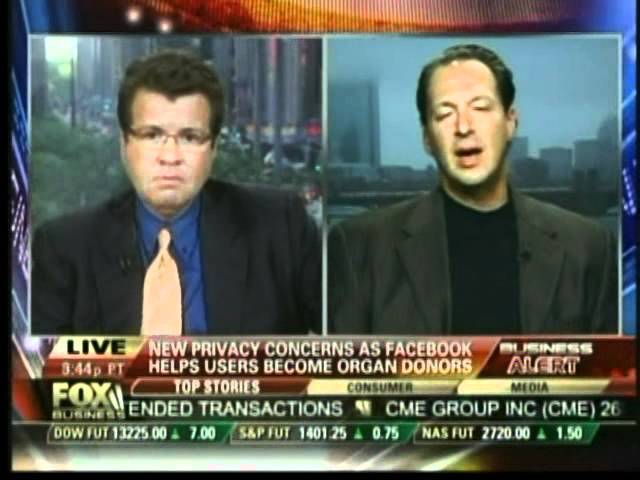
This content was created by Robert Siciliano. This content was uploaded by Robert Siciliano. This is a YouTube interview/discussion (published 2012-05-02) titled "Facebook Links To Organ Donor Sites A Privacy Issue?" between a host (Neil) and identity-theft analyst Robert Siciliano. They discuss Facebook's new organ-donor linking feature, whether Facebook will store medical data, potential privacy and targeting/advertising risks from making donor status public, and general advice on being careful about sharing personal information online. Robert emphasizes awareness of data leakage while saying the feature will likely do more good than harm.
Chapters
Facebook is not only in your face now, it is in your heart and liver and kidneys. What do you hear about this? A new Facebook feature could open you up, literally. The social networking site will help people donate organs by linking users to organ donor sites. While the move could save lives, identity theft analyst Robert Siciliano says It could also open you up to all types of privacy issues. How so, Robert?
So, Neil, we both agree that this is a good thing, right? You know, bringing awareness to organ donation is certainly a good thing. I think what the public might be concerned about, if you see some of the comments in a lot of the publications that came out today, people are wondering, you know, what's Facebook going to do with my data once they have it? And I think it's important people know that—
will they have that data, Robert? I mean, they're just leading you to the organ donor site, aren't they? Or is there more to it than that?
Well, actually, they won't have your data, which I think it's important the public understands that. You know, certainly Facebook has been under fire for privacy issues, but they're not gonna actually have any information about you in regards to medical data as far as organ donation is concerned. So some of the comments are in regards to that. So they're not gonna have your data, and also they want to know people are are commenting, they're asking, uh, so now that, you know, people know that I'm an organ donor, uh, and that's on my profile, am I gonna get targeted ads on my profile because I'm an organ donor? Like, for example, someone asked, um, does that mean I'm gonna see a lot more ads for skydiving, right?
Well, there is that, but of course if you— if you're an organ donor and you're into skydiving, your organ's gonna be smashed to bits if something goes wrong, right? But that's another issue we'll deal with. But I mean, do you think though that this is just another reminder of how these huge ubiquitous sites can, by just adding that feature onto their site, get one more little parcel of information on you, about you, that in and of itself might be harmless but adds to the data trove such institutions can get on you?
Yeah, we're certainly, uh, you know, letting the cat out of the bag, so to speak, uh, just right now. You know, my organ donor information is only on my driver's license, and you'd only know it if you saw my driver's license. Whereas now we're making this very public information. And the question is, you know, how could this be used against us down the road? And I'm sure that the 114,000 people that are looking for an organ right now don't care about that whatsoever. But the reality of it is we are leaking quite a bit of data. Let's just hope that, you know, Facebook puts their best foot forward and they handle this with kid gloves, so to speak, and that, um, and the public embraces it.
But we, we live in an age where we share information all the time. And I mean, it's commonplace for stores to ask for your phone number, now increasingly your email address. And I don't know how vital or useful this information or even is necessarily to them, but we give it away. Your advice is what?
You know, we don't know how it affects us until it actually affects us. We don't know how putting that information out there compromises our personal security until it actually does. We didn't think a few years back that when you put your mother's maiden name, your pets' names, your kids' names, and all your birth dates, that that would affect, you know, bad guys scamming that data or skimming that data to crack your passwords. But now we know. And so, you know, with an awareness of what you're putting out there, You also have to recognize that bad guys can sometimes use this against you. So, you know, in any situation, just, you know, recognize what you're doing, what you're putting out there, and just be conscious of it. You know, in the digital age, we're putting out, you know, more information than we ever have. Bad guys are finding a way to use it against us. I think in this particular scenario, I think that it's going to do more good than it will do harm.
No, no, no, you're interesting. I'm telling you, Robert, they start taking advantage of this, We take their organs. I guess that's a little extreme. All right, Robert, thank you. Very good seeing you again.