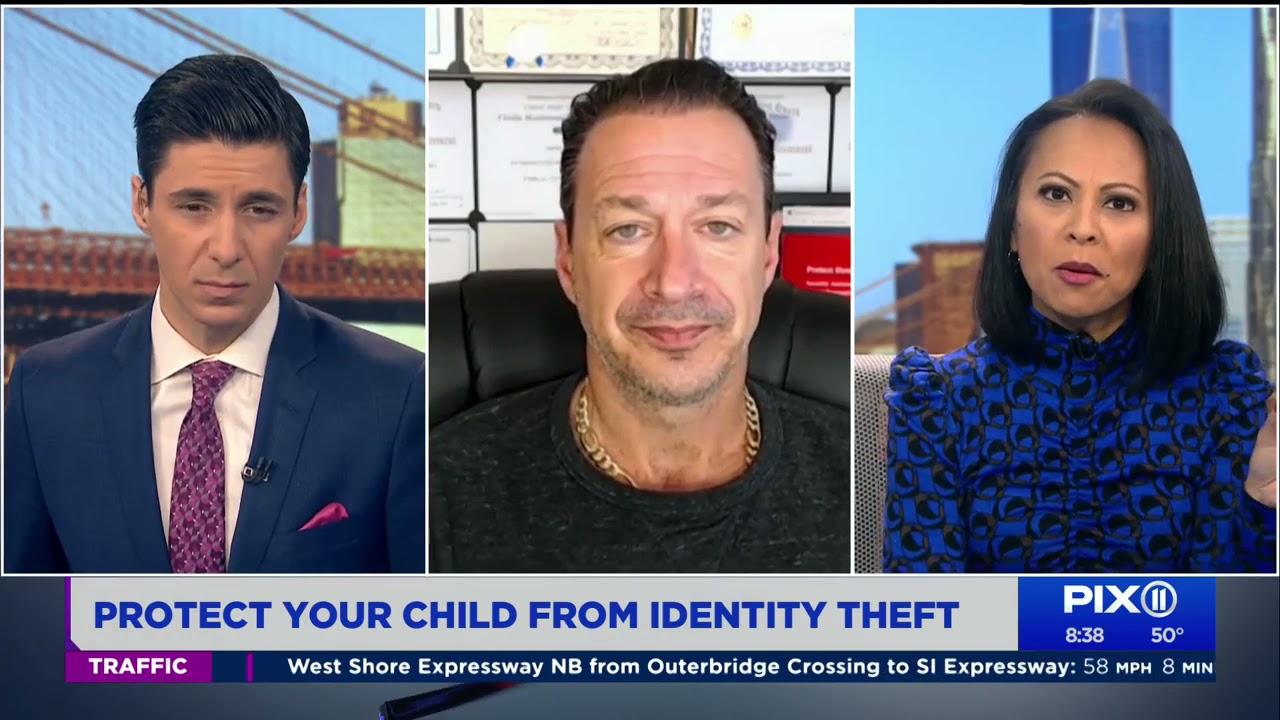
Robert Siciliano, a 30-year identity-security veteran, explains how thieves steal children's Social Security numbers and what parents can do. Key steps: don't share your child's SSN unless necessary, place credit freezes with all three bureaus, and consider identity-protection services.
Chapters
You've heard plenty about identity theft. Of course, hackers, other scammers, they're out there trying to steal your identity.
But what about your children? Scammers and maybe even people you know are out there and they are after their information. If they get it, your kids could have big credit problems before they even know what credit is. So how can you protect them?
Well, that's what our next guest is here to tell us. Robert Siciliano of Protect Now LLC is a 30-year veteran of the identity security business. So thanks for being here.
Thank you.
So let's get into this. How bad it just is, this problem. How many kids a year have their actual IDs stolen in America?
Yeah, some studies show as many as 1 million kids a year are affected by this crime. And once it happens, uh, neither the child— could be, you know, 2 to 17 years old, right? They don't know it's occurring, and their parents may not know, and they may not discover it until they turn 18 and begin to apply for accounts requiring credit.
Yeah, so who's doing this primarily? Are these overseas hackers or people around our area?
So it's a combination of organized crime rings, both overseas that have access to sensitive information that's been hacked in one way or the other. Locally, regionally, it's organized crime rings that have access to the data inside of networks, say in schools, hospitals, doctor's office, wherever you might provide your child's Social Security number. And then it's even parents. So you might have a situation where an estranged parent is financially underwater. They need to get a credit card and they utilize their child's Social Security number to open up a new line of credit. All right.
But, you know, with an adult, you know that they're going after your credit cards or be it as it may. What can thieves actually steal from a child's identity? And why would they want it?
Well, once they get the Social Security number, they can function, uh, as that child who in theory is 18 or older. So what the bad guy does in this case is they take the child's Social Security number, they apply for, say, a new credit card under that child's social, but they change the age of the child to reflect an adult. So a 2-year-old now is an 18-year-old on paper, and once credit is established, then a new credit card is issued under that baby's name.
Okay.
And the bad guy's off to the races.
All right, so a couple of quick questions. So is the Social Security number really the only element that someone can steal from a child? Or is there something else?
The Social Security number really is the key to the kingdom when it comes to new account fraud for both children 17 and under and adults. And once the bad guy gets that social, they can use it to open up new lines of credit new loans, they can get utilities, credit cards, they can even refinance the, the home that you live in. And once that occurs, then it damages that individual's credit.
So how do we protect our kids? That's the bottom line. You have some tips for us.
Sure. The best case scenario for parents, number one, is not to give out the child's Social Security number unless they absolutely positively have to. So for example, does the school really need the child's Social Security number? Does the sports team really need it? Does the church need it? Probably not. So don't give out the social unless you absolutely have to, say for various insurances or government agencies. Beyond that, it is suggested that the parent gets identity theft protection for themselves and for the child, because it's available for the child as well, and also a credit freeze. A credit freeze, which is available through the 3 major credit bureaus, Experian, TransUnion, and Equifax. A credit freeze locks down the child's credit, which they shouldn't even have, 17 and under, but it locks down their credit so that they, a bad guy can't open up new lines of credit under that person's or that child's name.
Good advice, Robert. We are simply out of time, but thank you for coming on to talk about this important topic for so many. Robert Siciliano, CEO of Protect Now LLC. Appreciate your time.