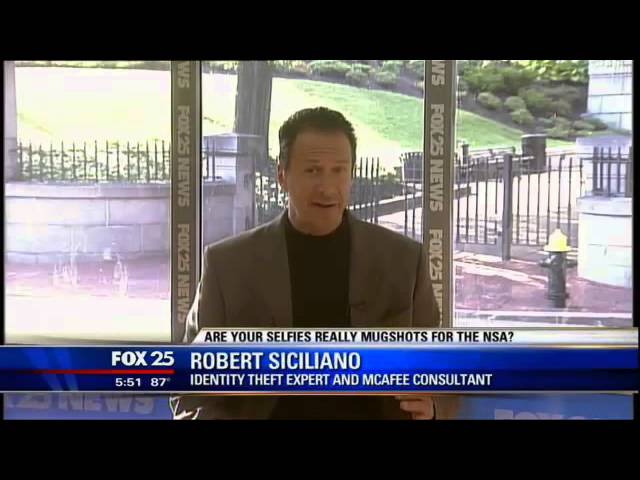
Robert Siciliano, an identity-theft expert at McAfee, discusses NSA facial-recognition programs that process selfies and social-media images. The Snowden documents revealed the surveillance capability, which the government justified after the Boston Marathon bombings. The NSA also uses iris recognition and works with vendors on wider surveillance infrastructure.
Chapters
Alright, is your selfie a mugshot for the NSA? The self-portrait craze is apparently giving the National Security Administration a ton of data to feed its facial recognition program. So joining us now from our Beacon Hill studio is Robert Siciliano, identity theft expert and McAfee consultant. Thanks for being with us.
Thank you.
Okay, so the New York Times reports that the NSA has turned to new software to start processing the flood of images that we're getting from selfies. Is this as Big Brother as it gets here?
This is as Big Brother as it gets, but you're gonna see even more. They're gonna go after our iris. You know, you know, facial recognition and fingerprint recognition, eventually they're gonna go for the eyes. They want to identify everybody so that nobody can escape any type of terrorist act.
Well, on the one hand, we worry about privacy and violating, uh, that, but on the other hand, the report is based on those 2011 documents from Edward Snowden, and it shows that agency officials think that these advances that you're talking about in facial recognition could really change the way that they are able to target threats. For example, the suspects in the Boston Marathon bombings, how could something like this have helped them?
You know, if they had cameras everywhere, which, you know, there are cameras all over the place as we speak. The UK has a lot. We have a lot in downtown Boston. And if government agencies had access to those cameras and they were continually surveilling people, you know, pedestrians, citizens, also at the airport and so on, and they recognized somebody that wasn't supposed to be there or was an imminent threat or danger, then they could get law enforcement involved quickly apprehend that person. That's the idea behind it.
But Robert, you're talking about surveillance cameras in public areas. The NSA is saying that they're intercepting millions of images from social media, but then when they were— they were directly asked by the New York Times, are you taking stuff? Where are they getting all this from?
Well, they may not necessarily be doing it themselves, vendors that are doing it for them. So indirectly, they may be getting that type of data. And in the end, you know, the goal is to protect, you know, our critical infrastructure, to protect our citizens. And whether or not, you know, you're concerned about that in regards to your privacy or you're more, uh, uh, you know, comfortable with it to protect your security, you know, the, the debate is still there. I, for one, you know, think it's a good thing that we have, you know, our government is watching our backs by watching the bad guys.
All right, well, we're going to leave it there because we want to head right back to Kevin Lemanowitz. He's been tracking some severe weather for us. Robert Siciliano, thank you. Kevin, what do you have?