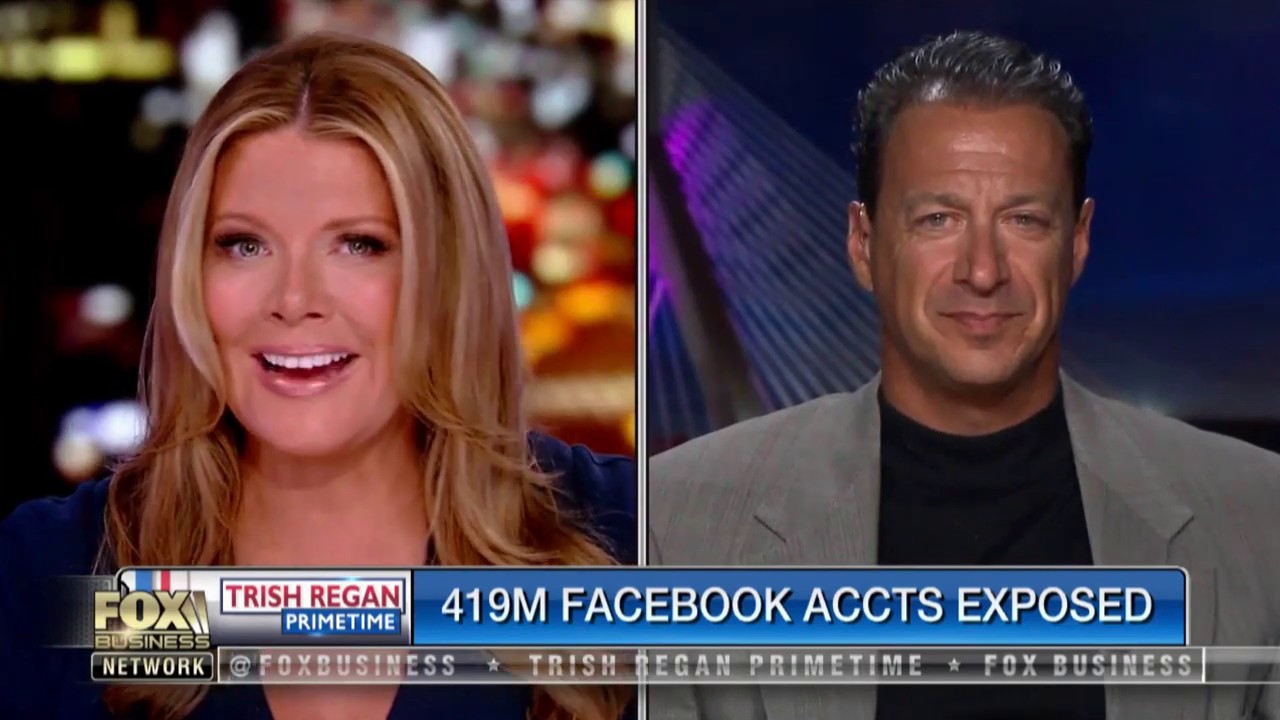
This content was created by Robert Siciliano. This content was uploaded by Robert Siciliano. This is a YouTube interview/broadcast segment titled "Robert Siciliano Discusses Facebook Leaks 400 Million Mobile Phone Numbers and DeepFakes for @ETFMG" (posted 2019-09-06). It features a host (Speaker A) interviewing cybersecurity expert Robert Siciliano about a reported exposure of ~419 million Facebook users' mobile phone numbers, resulting robocall/phishing risks, Facebook/Messenger privacy and transcription concerns, device listening, and the threats posed by deepfake technology and manipulation—also touching on antitrust scrutiny of big tech.
Chapters
More privacy concerns at Facebook. Now an exposed server with more than 419 million users' records has been discovered across several online databases. How do you like that? Just the latest in a long rap sheet of violations for a company that has already paid, what, $5 billion in fines for separate incidents this summer? They just keep piling up. I mean, I've deactivated my personal account because this company is really freaking me out. Joining me right now is cybersecurity expert for ETF Managers Group, Robert Siciliano. Good to have you here, Robert. Uh, okay, 419 million users have had their information just spread across various servers all over the world. That's a lot of people, right? I mean, a lot of people. How do you know if you're one of them?
Well, that's your mobile phone number, and if you are getting, uh, robocall scams on a daily basis There's a good chance that your phone number was part of that breach, which is why we're getting all these spammy and phishing phone calls that could compromise our identity and our personal security.
And what does Facebook say about it? They don't seem to really care, do they?
They seem to have downplayed it, and their response was, "Well, we don't think that the various Facebook accounts were compromised." But okay, maybe the Facebook accounts weren't compromised, but your mobile phone number was. And mobile phone numbers today are a unique identifier, similar to how our Social Security number is a unique identifier. And that's not okay.
No, it's not okay. Um, Facebook basically didn't have the right, uh, kinds of security in place to prevent your mobile phone number from being detected and then spread against or populated among all those servers. So that's one. You also think about, Robert, the fact that They're listening to your WhatsApp conversations. Forgive me, not WhatsApp, your, the equivalent, Facebook Messenger. See, I'm not kidding, I really did delete the thing. Your Facebook Messenger conversations and they're actually transcribing them. So they're in trouble for that one as well.
Yeah, you know, the fact that they are listening into various conversations, you know, Amazon does it with Alexa, and other companies are doing it so they can, you know, gather various data and intelligence to perfect their artificial intelligence so these various Internet of Things type devices can perform a little bit better. But the problem with that is that there are human beings that are listening to that information that can then use that and potentially compromise privacy or our own security.
You know, I had a peculiar thing happen to me. I'll tell you, I was just on vacation, as the viewer may know, in Corsica. Interesting place. And my kids, who the viewer has met from time to time, they were picking up shells on the beach and they said, gosh, could we create like do-it-yourself necklace kits with these shells? And I said, that's a great idea. Yeah, why don't we look into that? And I go back to the hotel room and I look at my Instagram feed and what do I see? But it— and by the way, I've never looked up do-it-yourself anything. I'm not a do-it-yourself kind of gal, but all of a sudden, do-it-yourself things start popping up on my feed. And I thought to myself, my goodness, did they hear that? Could they have?
That is a scary— that's a scary coincidence, right? So if you had a Fitbit on or, you know, one of those devices that is recording your information, like an Apple Watch, it records audio. You know, there is a possibility. And, uh, you know, Big Brother—
I think it's more than a possibility. I think it's happening.
Yeah, yeah, yeah.
Um, let me ask you about another stuff. Yeah, go ahead.
Go ahead. No, you go ahead.
We have a little bit of a delay in our technology. Anyway, I want to ask you about this other story. There's some Chinese app out there that's using what's called deepfake technology, revealing all kinds of major privacy concerns. We just saw this, right, with FaceApp and the Russians basically having access to all your photos. Well, this thing is actually taking your photo and your video and your voice, and they're basically able to manipulate it. And the concern is What does that mean, you know, for the political season and the future, right? Because they can take my voice or your voice and our likeness and manipulate it and have us saying things that we've never said. How does that change the reality in which we, we all live?
Deepfakes scare the heck out of me. And the reason is because now you have technology that you can basically create video where any human being could be saying anything that you want them to say in their own voice with their own face. So, for example, if the president, his information was compromised in a way where the deepfakes are making him say things like, you know, we're being bombed or bombing somebody else, and it's broadcast on national news and the general public consumes that thinking it's real, it could cause mass chaos and panic. Deepfakes are real. And what they do is they breach our trust. And when that happens, everything you see, everything you hear, everything is not real. And where do you go from there?
Where do you— I'll tell you one, one thing is for certain. I'm all for that antitrust investigation into Facebook, Google, and the rest of them. Robert Siciliano, thank you so much. Good to see you.