Rosalind Dreyfuss clicked a phishing email posing as a friend's photo invite and unknowingly gave Tagged.com her email password. The site harvested her entire address book and sent the same deceptive invitations to all her contacts, with no actual photos ever posted. It's a warning about how social networks can exploit your credentials and data without permission.
Almost everyone uses social networking these days, but tonight we find out how it can turn into a nightmare. So here's a scenario: you get an email that appears harmless and even says it's from a pal, and that person wants to show you some photos.
Well, there are hidden dangers if you accept, because you could end up exposing your personal information. Hank Phillippe Ryan has the real deal. You get an email with a friend's name on it that says, "Want to see the photos?" You'd say yes, right? Right? Rosalind Dreyfuss of Chestnut Hill did. It came from someone I knew very well. Immediately, a website called Tagged asked for her email address and her password and signed her as a member. She says she did it for her friend's sake. I just felt she would be disappointed. Maybe she would be upset with me. Here's the real deal. Rosalind had just entered Tagged.com, a social networking site that experts say has created cyber havoc across the country. So no one posted any pictures?
Nobody posted any pictures.
Look here. The word "tagged" may sound familiar, but it's not like getting tagged in Facebook. And here, once you give your email and password, the problem begins.
They have all of the addresses in your web-based email account, all the addresses in your address book.
How can they do that?
They can do it because you allowed them to.
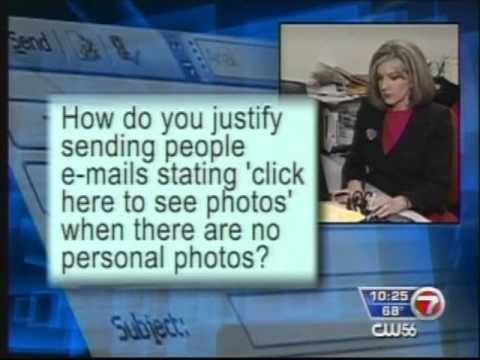
Yup, you did. In the terms of service, which experts agree most people don't read, it says users acknowledge and agree that their email addresses and other personal information may be used used by Tagged for the purpose of initiating commercial email messages. And once Tagged had your info, everyone in your address book got emails saying you're trying to share photos. And that's completely false. But your friends don't know that, so they could be lured into giving their emails too. The point, of course, is for Tagged to snag as many new members as it can. I was shocked. The CEO of Tagged, Greg Tseng, talked to us by email. He calls Tagged a social networking site for meeting people. So we asked we asked, "How do you justify sending people emails stating 'click here to see photos' when there are no personal photos?" Singh admitted the photos were actually generic pictures posted by Tagged. He said, "There were in fact photos sent with the invitations, but we recognize that the way they were presented, generic photos, not personal photos, caused confusion." So we asked, "How will you fix this?" He says, "We are creating a new registration process with extreme focus placed on clarity of wording and minimizing causing confusion. But for users like Rosalyn, that new process comes too late. Tag.com CEO says he's issued an apology to anyone who was misled, and he admits they've gotten more than 2,000 complaints. He also told me they do not sell or share personal info with any third parties. That's the Real Deal. I'm Hank Phillippe Ryan.