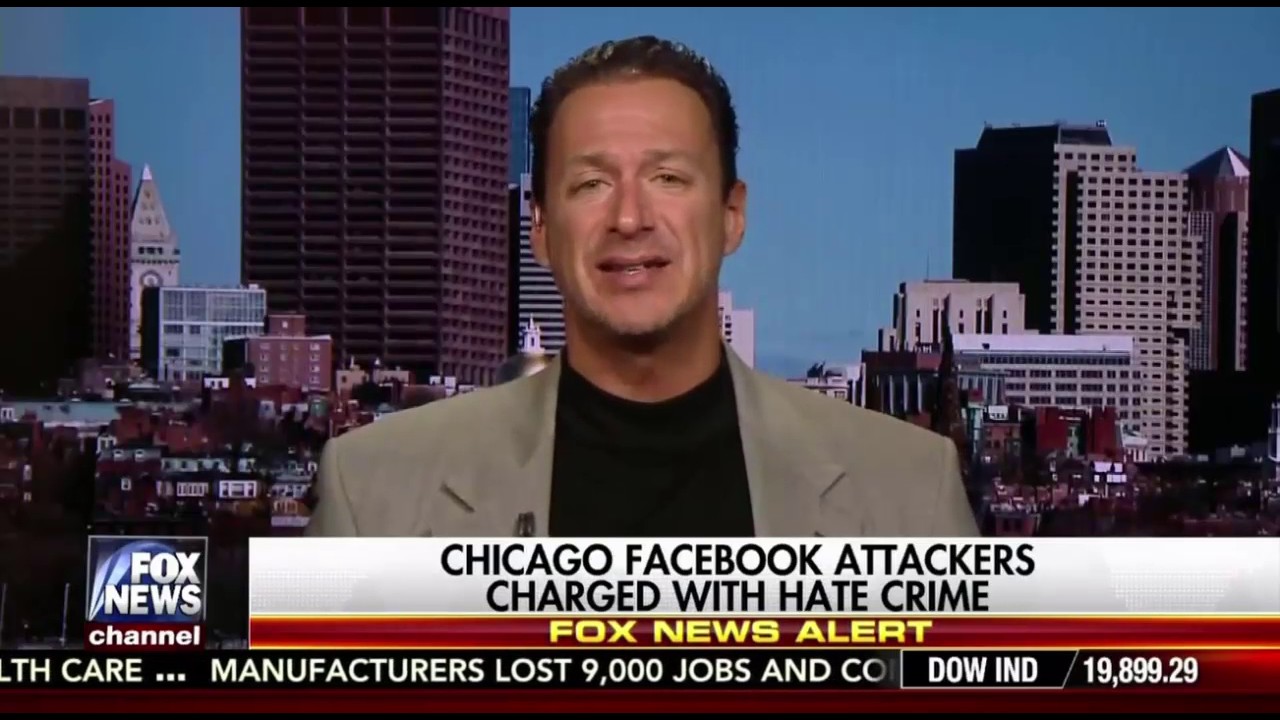
In a Fox Business segment, host Neil Cavuto interviews cybersecurity analyst Robert Siciliano about a disturbing Facebook Live video in which teens kidnapped and tortured a homeless man, an incident classified as a hate crime by Chicago authorities. Cavuto notes this is one of several recent live‑streamed violent events on Facebook, including a shooting and a suicide. Siciliano explains Facebook’s existing reporting link, its limitations, and the prevalence of false positives that can flag legitimate content. They discuss the difficulty of policing a platform with billions of users, the need for more robust emergency‑reporting tools, and the potential for legal pressure to force social networks to develop effective algorithms to stop such broadcasts. Both express concern that perpetrators, including terrorists, can exploit live‑streaming for extended periods, highlighting broader security implications.
Chapters
All right, I know you have seen this video, and it is very disturbing, a few times today. But I think the bigger issue here, besides the fact that now it has effectively been called a hate crime by Chicago authorities, is that people were witnessing this live for the better part of 30 minutes. 30 minutes live watching this. Cybersecurity analyst Robert Siciliano on that. Robert, you know, when I was looking at some of the prior Facebook related incidents that have popped up. There have been, what, 4 of them in the last 6 or 7 months. One involving a woman whose boyfriend was, was shot and killed, again livestreamed. Still another committed suicide livestreamed, and I could go on and on here, but this keeps happening. What do you make of that?
So Facebook has a report link that is designed to thwart or interrupt these kinds of broadcasts. And in this particular situation, you had friends and family of the perpetrators that were not hitting that, that essentially were watching a train wreck happen, and in some cases enjoying it, and in others commenting that the perpetrator should stop. So an algorithm to stop this has been invented, but there have been false positives, which in some cases have actually flagged legitimate photos and videos.
You know, you know this stuff far better than I, but I was told that this— it's far easier said than done to talk about policing or stopping or shutting down this kind of stuff because Facebook has, what, a billion users worldwide, etc., etc. Do you buy that?
Well, Yeah, I, I do actually. It's similar to how Twitter is fighting off trolls and essentially losing that battle. The sheer numbers of comments and videos and photos that are being posted on a second-by-second basis makes it very difficult for these social networks to be able to effectively police and take down or shut down violent content, inappropriate content.
Well, by the way, we should emphasize, Robert Siciliano, Facebook more or less Mark Zuckerberg said almost exactly that in a statement to us. We do not allow people to celebrate or glorify crimes on Facebook and have removed the original video for this reason. In many instances, though, when people share this type of content, they are doing so to condemn violence or raise awareness about it. In that case, the video would be allowed. Of course, now, that was not at all the case here, and in the cases that have caused the most controversy, that was not the case. But, uh, I guess it would be a slippery slope. So I'm wondering, the people who are getting this, let's say they are friends of the people who are posting this, and it could be lots of people, shouldn't those people witnessing this be able to call in or alert authorities or alert Facebook, my gosh, you got to take this down?
Yeah, as fellow human beings, I would think that they would have a responsibility to alert Facebook, and there should be a better mechanism in order to make that happen. Happen beyond just a simple reporting link. Like, there should be like an emergency button of sorts. That being said, my guess is that over time lawyers will get involved in a litigious society, putting pressure on social networks to stop this type of behavior or broadcast is what will eventually make these social networks solve those problems.
Are you worried though that given the fact that if you're a bad guy or terrorist and you know that you can get something up and running on a Facebook or a variety of other sites live for a long, long time. Man, oh man, scary.
Yeah, and they have, and they will continue until something is effectively done. And creating a software, essentially an algorithm, that would stop this is, you know, the zillion-dollar solution to the trolling problem, and I'd love to see it come into play.
All right. Robert, thank you very much.
Uh, thank you, Neil.
Siciliano, cybersecurity analyst extraordinaire. All right, uh, now