Alternative Media Is Winning Because Mainstream News Failed
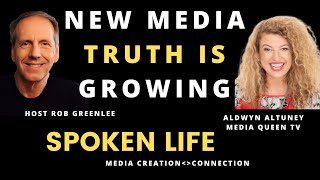
Aldwyn Altuney, an Australian media veteran, argues that independent creators are winning because mainstream news lost credibility. He built his following through live, unscripted content and launched the Global Good News Challenge during COVID to combat rising suicide rates with gratitude and mental health awareness.
Chapters
All right. I'm excited to have Aldwyn here join me on the Spoken Life Show, and I appreciate you taking your time to hop on a call here with me. I know you're calling me from Australia and it's exciting to have you here with me. And the purpose of this show really is to dig deep into media personalities and how they connect with audiences. So that's what I wanted to talk with you about today was you've been in media and you've been in television and audio and radio and making content for a long time to audiences. And you must have a certain kind of approach that you take to different audiences in how you actually produce the content. And I'm just curious, what have you learned about speaking to and creating engagement with audiences, really no matter what the medium is, but is there a particular approach that you take with audiences that you think with your personality connects with audiences in the best way. Granted, this is a journey and you've been doing this for a long time, but how do you think about that topic of being able to speak to an audience really effectively? Aldwyn Altoni.
Thank you, Rob. So great to be on your show and what a great question. Wow. For me, really, I think the most important thing as a speaker and as a media personality is to be true to myself. And being true to myself, this isn't always going to appeal to different audiences, right? However, the way I look at it is the more that I am true to myself and the more that I speak my truth, I am going to find people that will love me. And there's going to be people that will hate me as well. You're going to get more divide the more you speak your truth. So I actually don't I don't alter what I say generally depending on the audience. If it's a physical speaking gig that I'm at and it's a group of women, I may tailor some of the content more for females in that case, right? I guess in that way. However, really the voice that's coming through, how I present myself and what I share is coming from my heart. It's coming from my soul. It's, and tapping into that place of trusting and allowing whatever needs to be said. And that's That's something I like to do. I know there's a lot of presenters out there that are very structured in how they present and they have their whole talk outlined and they've got all the questions listed and all of that kind of thing. Whereas I tend to very much go with the flow of the energy that I'm feeling at the time and the energy in the room, whether it's an online room like this that we're on now, whether it's a podcast or an online TV show, or whether it's a physical speaking gig in the space. I tend to feel into who's in the room and what they need depending on what the topic is. Now, my main speaking topic has been about how to gain free positive publicity. Now with that, I do have slides. I have a lot of slides that I go through and lots of examples, and I have an outline of what I share, and I have my 7 awesome steps to gaining publicity, which I go through. However, how I present those 7 steps will be different every single time. You know, there's some things I may say that, that are the same. However, there's other things that I, I tend to very much go with the flow. And I think that could be from being a radio announcer for many years and also seeing, emceeing on some really big stages at the Woodford Folk Festival, which I did for about 15 years. So when you emcee on big stages and when you're doing a live radio show, as you, you started out with live radio as well, right? Before podcasting was around. And with live radio, you've got to think on the fly all the time. You've really got to be able to speak at any moment as to what is coming through and be able to bounce off co-hosts and things like that. So I've learned over the years this kind of improv style of speaking. And depending on the audience, yes, I might tailor some of the content for them. However, the voice coming through is it's always important for me to be true to myself and to speak my truth, not worry about whether people are going to like what I say or not. Because the more we get into worrying about what other people are going to think, the more nervous we're going to get, the more that we might stumble over our words, et cetera. It's really being true to self. And that comes with— there's a big process to being true to yourself, and that comes with actually loving yourself and doing the inner work, right? Because if you don't love yourself, if you don't have a certain amount of self-confidence— and I'm not talking about arrogance here, I'm talking about confidence, being confident in yourself and your message— if you don't have that, you're not going to be able to speak with authority on whatever topic you're going to speak about, or even to be fully true to yourself in that way, you're gonna come across maybe, maybe a bit nervous or a bit wishy-washy, and people will see straight through that. So I think you, you need to, as a speaker and as a, as a media presenter, whichever form you're putting yourself out there, you need to have a certain confidence about what it is that you're sharing.
Yeah, certainly. And I think where the opportunity is here, and based on what, what you're talking about here, is this distinction between like scripted, pre-produced type of content, as opposed to more live, live type content, which is more speaking more organically, more off of the cuff, more off of how you're feeling at the moment. Not so much contrived by an outline or a script or something like that. I am using a little bit of an outline for what we're talking about here too, but I do realize from many years of doing this my, myself, is that just cuz you have an outline doesn't mean you have to stick to it. So you just work your way through what is relevant, but you also have to listen too. And I think that's a big part of this, at least on the podcasting side. I think having a conversation about something versus presenting something, and I think that there is a difference there. And I'm just curious what your thought is of that distinction between presenting something and then having more of an interactive conversation with either your audience or a guest or some combination. Do you which do you enjoy more? Is it the interactive experience or do you like presenting too?
Oh, that's a great question. Yeah, absolutely. It's two completely different ball games. However, in saying that, I love interaction with a live audience and I love interaction like this with yourself, which this is a very much an organic conversation here that we have. And when I'm presenting live, I'm always asking questions of the audience. I'm always saying, now who feels this?
Like, okay, and gets them to raise their hand or something.
Yeah, exactly. So my style is very interactive. I really like that feedback, and I do get a lot of feedback from people saying that they find me very engaging when they've seen me present live or in online masterclasses. I've done 4-hour online masterclasses. I've done 1-day online masterclasses, and people, the feedback I've had from those people have actually loved it. They've said they didn't think they'd be able to sit there the whole day and listen to what it is that I was sharing. But I guess with the interactive style and with the passion I think that I present, I think that can be it can be very appealing to people to have when you've got that passion. Because a lot of people out there don't have passion, and they— which kind of blows me away, really, in many ways. I look around, I see a lot of people like the walking dead out there. Very sad when I see that. And I— and part of why I do what I do is that I really want people living lives that they love. I want to encourage people to, to love their life and make the most of their life. And of course, I have a story why that is the case, and it's because for many years I did not to be here on the planet. I grew up very angry with the world. I used to watch a lot of negative media with my dad. He used to, and he still does to this day, God bless him. He's 84 years of age. He put not just one channel of mainstream news on, he'd watch multiple channels of news, 2 hours of negative news every night. And then I was bullied as a child and I saw a lot of animal cruelty and all these things. And I was so depressed and angry with the world growing up. I did not want to be here in my teenage years. And I was very rebellious and I went totally off the rails. Thankfully, I had table tennis, and I used to beat the hell out of the balls. One way I released my anger was through table tennis. Became a very good table tennis player while I was also still very rebellious. Very strict European father. I've got Greek, Turkish, Ukrainian background, born in Sydney in Australia. So it's really quite a unique mix in my bloodline. And having gone for many years of actually having depression myself and not wanting to be on the planet, I found the media a great way to actually create change in areas that upset me or angered me. Because my dad always said to me, he said, anger is danger. And so for many years I internalized my anger, which then led to depression. And I would watch documentaries back well before social media was around, right back in the 1990s. I was watching a lot of documentaries and news, and whenever I saw something that upset me, I would write a story about it. Initially it was the university newspaper. I edited that in Canberra University. University when I was doing a media degree back in '92 to '94, and I used to write stories about things like female circumcision, battery farming of chickens. People were duck shooting, shooting ducks for fun in Australia. They still do it to this day. It blows me away that's still happening in Victoria to this day. They're still shooting ducks for fun, which is incredibly cruel. And, and things like recycling and helping the environment, those— so things like that. I would see these stories and I would reshare, I would rewrite about these stories to help raise awareness. And I thought, if I can just encourage someone, just one person to think differently or to act differently when they go shopping or to be a little bit more conscious in this area, then it's worth putting this story out. So for me, the media, there was a great release of my anger and my sadness and different—
expression is what it is, really.
Yeah, yeah, expression and a fantastic way to create change. And I think the way the mass media world has gone in the last 20 years or so since we've had social media, now thank goodness we have a lot more alternative media content out there. We, we're not just hearing and seeing the mainstream news and thinking that the world is doomed because we know the world is not doomed. Of course there's gonna be crap going on in the world. There's been crap going on in the world since the beginning of time. But at the same time, there's also a whole lot of amazing stuff happening out there as well. So let's focus on some more of the good things that are happening and let's create more good in our own lives so that ripple effect will then affect the world at large.
Yeah, there's definitely a, an explosion of independent media now. That is really coming from a place of wanting to express either the truth or— I think to some degree mainstream media has lost sight of journalism per se, and I think that mantle is being shifted over to independent media more and more. And it's really interesting to see that develop and blossom. I know personally I don't watch mainstream media much anymore at all, and really rely and trust independent presenters more than I really ever have. And I've been a podcaster for 19 years and have been a media creator for a long time myself. I would hope my audiences trusted what I said because I was trying to cover things accurately and do the right things. And I think that's what a lot of independent media content creators now are trying to do, is they're trying to really do what you said. Create positive change in the world and help inform people about things that maybe they're not being informed about for whatever corrupt or political reason that may be driving things the wrong direction, or at least from the viewpoint of that particular content creator. And that's okay. And I think that's very powerful type of, of a situation that we've never as a human society had the opportunity to have millions of independent content creators that are trying to be a form of journalism and trying to explore like topics like this. I think in the past, just like the topic that we're talking about right now has not really been covered that deep about why and how content creators create independent content and what their motivation is and what keeps them going. And I think that was a fascination of mine because it, it, it was really this rollercoaster ride that I went on for many years. As a content creator too, of keeping my, my confidence, keeping my focus, keeping my thoughts clear about what I was doing. And when I have a question for you next too, is how has your media life that you've had for all these years impacted your life up and down? And I'm sure there was careers here and then not careers for a while and then careers, and then there was a lot of change over the years. So what? Kind of nutshell, what has been that journey for you?
Oh gosh, it's been a massive journey, I must say. I've worked in TV, radio, and print in traditional media. I freelance for magazines all over the world. The strategies for getting publicity are actually exactly the same no matter where you go in the world. So it's actually the same strategies whether you're pitching stories to TV, radio, print, wherever you go. You've got to think of what's relevant for the journalist, what's relevant for the media outlet, right? And how can you be of service? How can you help the wider community with whatever it is you're portraying? Frame. So that's for the, for those who want to get publicity. For me, as someone who worked inside the media as a journalist, it was a very stressful place to work. And in fact, the last job that I had was working as a sub-editor and a journalist at the Sun Community Newspapers. Now, when I started at Sun Community Newspapers, this is our local paper here in the Gold Coast area in Queensland, and we were, we put out, at the time when I started, we had the Gold Coast Sun and the Hinterland Sun. So we had two newspapers every week that, that out. And then what happened is in 2000, so I started there in 2000. By 2002, they then introduced 5 papers. So basically they got rid of the Hinterland Sun and the Gold Coast Sun. They brought in an Upper North, a North, a Central, a South, and a Tweed edition of the Sun newspapers and no extra journalists. So I went from doing 5 stories a week to now doing 30 stories a week. And if I had kept going, I definitely would have burnt out. At the time I had a mortgage. I was, I had a bit of fear around leaving the full-time work, leaving the stability of the full-time work. And I actually started a photography business part-time on the side while I was working as a journalist. And I was, I had a great life because I was the entertainment reporter. I interviewed people like Hugh Jackman, Russell Crowe, Cyndi Lauper. I went to all the VIP shows. It was fantastic to have that VIP treatment, but I was working crazy hours and it was a very stressful job to be in. And I stress now on journalists has increased even more so now because they're all battling for the advertising dollar, right? They're battling to stay alive as media outlets. And so even more so now, what I'm finding through the media is that it's actually getting harder and harder to get onto journalists nowadays. I'm finding they're actually often just not even answering their phone. They're really— they're under such pressures that it's really becoming more and more challenging to get their attention. Like, the online social media world is just so full of information everywhere now. We're just in overload and and overwhelm and there's so many bright shiny objects out there. So really to get that cut through, you've really gotta think differently now. You've really gotta build those relationships. You've gotta build your own authority online now as an influencer. A lot has changed in the world of how we're putting ourselves out there and now people are following people and trust is a huge thing.
Oh, I agree with you. Trust is probably the number one issue right now too. And if you, It's ironic that you were saying what you were saying about the journalists not really responding or listening to input, external input. If I think back to all the years that I was doing a nationally syndicated radio show and all this kind of stuff, I, that's all I did was listen to external. And it's ironic. Is the media today, you think, isolating themselves because they're limiting their sources of information? For whatever reason? Is it because it's easier, or— and why isn't there this acceptance that maybe you have to be open to other sources of information if you want to get— really be a journalist?
I think they're open to receiving the information. It's just to actually be able to talk to them on the phone, because they're so time poor, because they're on the go all the time, that it's really— it's more challenging now to get their attention to be able to speak to them. You can say— and, and they want things hand to them on a platter.
If you don't say that's part of— that's part of what I'm talking about here, is that maybe they're not as open to doing research themselves. Maybe they're used to having it being, if like you said, given to them, which is— I think from a journalist perspective, that's a little dangerous, that you're seeing a bunch of journalists operate from the perspective of they only take what they're given, not what they're deep researching and trying to uncover, right? Which is the typical role of a journalist, is to uncover breaking news, right? But is the news that they're covering increasingly being given to them on a silver platter, which is dangerous?
Absolutely. They're getting lazier, basically, because, you know, if you don't give them a press release the way they want it and photos and visuals the way they want it, it's less likely to get a run. And also, even with TV crews now, they're just understaffed. They don't have the crew nowadays. So often when, when we've got events we're promoting often the media will say, can we send them high def— high resolution photos? Can we send high definition video from the— because they'll use our footage more so nowadays and be able to send their own crew out. And the other thing that, that's happening is that they don't care about quality as much as they used to. There used to be a lot higher standards, I think, with the quality of news that we used to get. And I think more— as more of the senior reporters started leaving over the years, they brought in these young cadet journalists from people that had just graduated from uni, and they were just pumping out a whole lot of rubbish content. They didn't really care. Plus there's a lot of syndicated content that we see, and we know that some of the people run some of these media organizations, there's definitely some hidden agendas at play, right? And if you watch Thrive documentaries, it says in there, if you really want to know what's going on in the world, follow the money trail. And so I know having worked as a journalist, there were times I was actually told to go out and get stories that were not there. There were certain agendas that, that are being pushed at different times. And I know when anything is blasted through the news like COVID was, right? I thought Oh, here we go again. Okay, what's going on now? Now, I wasn't exactly sure what was happening behind it, but I knew that there was some fishy business going on. And I do encourage people to question everything. Absolutely question everything. And this is part of why I started the Global Good News Challenge, because through COVID we've actually had 4 times the suicide rates worldwide than before. Now, it's about a million people a year worldwide take their own lives normally. Now, I've had 4 of my own friends take their lives by the age of 45. I've had depression, as I've mentioned. About 1 in 3 people have depression, and it's a massive mental health issue out there right now through COVID. And this is what's so important. I believe that no matter how much drama and crap is going on in the world, that we can always come back to gratitude. Because if we don't come back to gratitude, then we're going to be living miserable lives. And if you think about it, a third of people die by the age of 65 anyway. So why not enjoy your experience of life no matter what the governments are doing and no matter what's happening out there? There's a lot that you can control. And I think the more people realize their own power— and the Thrive documentaries, actually. I've posted those, they're free. You can see them in the Conscious Community Global Facebook group. In there, there's a whole lot of amazing documentaries there that will blow your mind. And I do encourage you to question everything because what you're seeing is not necessarily the truth in mainstream media. And particularly through COVID, we've had fact-checkers, we've had fact-checkers on Facebook, and YouTube doesn't like certain content, right? So I've got the Total Truth Show. We don't stream all our shows to YouTube anymore because They don't like the truth on YouTube, it seems, because their fact-checkers seem to know more than, more than we do. I've done videos on my balcony that, that YouTube have said to me that is not correct. What happened on my balcony? I was there. They weren't. I don't know who these fact-checkers are. More of this is happening. So more people are standing for freedom of information now, right? We've had enough of the censorship. Like, just let people speak their mind and then the audience can decide for themselves what is true for them.
Yeah. And I think that is certainly be the path forward increasingly, but I think we're going to face some increasing pressure on that until we can wake more people up to what's really going on here. I still think that there's still a lot of people that still trust the media, and at least the mainstream media anyway, and what the government is telling us about what, what is going on. And I'm generally not a conspiracy theorist, but increasingly a lot of the what were called conspiracy theories 2 years ago have come to pass that they're not conspiracy theories anymore, which makes you wonder what's going on where more and more conspiracy theories become fact. Yeah, it's a worrying trend, right?
The biggest conspiracy is what we've been seeing in the mainstream media, and we've seen it again and again over the years. History has been repeating itself. And even the term conspiracy theory was created by the CIA in the 1950s to knock anyone who spoke against the government. You can look it up, do your own research on it. And this is the thing, and this is where critical thinking is a beautiful thing. And common sense, unfortunately, is not so common for a lot of people. And it's— and a lot of people do not like to think that they have been hoodwinked in any way, right? We like to think— we like to think we can trust the government, right? We like to think that they have our best interests at heart. But we know from, for example, the Out of Shadows documentary came out in June 2020. It had 10 million views in a month and then got taken down on a whole lot of platforms. And that was all about the very— it's all about how we've been controlled by the media and by our education system, et cetera, to believe believe certain things and to do as you're told, to trust authority, all those kind of things. And now more and more people are not trusting authority because we've seen that there's so many lies out there, there's so much deceit. And now it's absolutely crucial, I believe, that we actually use our critical thinking and we do our own research on alternative media channels such as BitChute and Rumble, and do your own research so that you can make informed choices for your own life. Otherwise, don't come back to us and say that, that we didn't tell you, that we didn't tell you. We, we are warning you right now. We're saying become informed. That will empower you.
Yeah. So you can also be open to independent sources of media and not be so dependent on, but still that critical thinking is the critical piece there. Cuz even independent media can get things wrong or they can interpret things maybe. So unfortunately it's putting us in a position where we all have to self-assess. It's the same thing with our health and other aspects of our life, we have to take control of our own lives and our own thoughts. And increasingly there's more and more people, I'm hearing more and more people talk about positive thinking, mental health. The focus of, on love is such a huge aspect of this. And before we run outta time, I wanted to also ask you about the synergy that you've experienced over the years of all the media that you've worked on. And how that's all kind of culminated in the, um, talent that you have and how you present. So if you think about the various media like radio and print and photography and television and stuff, you've worked in all these areas. So they've all, you're basically a content creator from lots of different mediums. And how has that benefited you, I think, in your success over the, the years of having all that? Because I, I, I think a variety of people come into media just from one thing, like they go in and they become a radio presenter and or they go and become a writer. How does that cross synergy of being a multimedia creator helped you over the years?
I'm very grateful actually for all of that experience because actually initially I did a media degree and I majored in photojournalism and TV production back at university. So I actually started in several media to start with. Okay. And I actually applied 3 times for the job as editor of the university newspaper before I got the job. So I had this resilience and tenacity about me. And then after that, I applied for about 200 jobs before I got my first job as a cadet journalist with the Daily Mercury Mackay. And then once I got that job, I then got the COFS cyber advocate job. I was working at the Queensland Times in Ipswich, satellite newspapers. And on the side, I did theater and I did radio, 2CHY, 4CRM. There's so many different radio stations and then ABC and Channel 7. And it was just snowballed from there. However, I had that persistence and resilience that I wanted to work in the media and nothing else, that I was very determined. And I think from that, having all that experience now, it helps in so many different ways because now what I do is I teach people how to get into the media. I teach them what makes a good photo. I teach them about video. It's really, you can't just think one form of media anymore. I don't believe, I think you've gotta, you've gotta actually think of all forms of media and particularly like video is incredibly powerful. If there's not many people doing video right now that are are listening to this. So I highly recommend that you put some more video content out. Audio, of course, is very powerful as well. A lot of people are loving podcasts like this, and these are great ways to build trust with your audience. So I think it's all been really beneficial in helping my clients to get their media out. And I think also with the media that I've put out, it's all been incredibly beneficial. And I'm always thinking about how am I coming across and how is is this looking on camera, even on Zoom calls. I've got a great Zoom background which has my Media Queen TV in one corner with my caricature, and the other corner I've got the Mass Media Mastery program, which is my media program. So I'm always thinking about how am I representing myself out to the world, whether it's on a Zoom call, on a podcast, online TV show, social media, however it is I'm putting myself across. Am I being true to my brand at all times? Which for me, it's all about inspiring truth and good news. So it's about lifting the on the planet. So I actually share a lot of, a lot in my socials of beautiful nature pictures and animals and reminding people the world really is a beautiful place. It's easy to get into whinge mode and complain about things in your life. However, if you just take a moment and just step outside and just appreciate a bird for a moment or appreciate a beautiful flower or just put your bare feet on the grass, just simple things like this. The simple things in life are often the best, I think. And do what gives you joy. And for me, the media has always given me joy in the expression of what I can do with the media. Now, I must say, there's certain people I've worked with in the media that have been an absolute pain in the backside. And I can't say the same for everyone that's worked in the media. I think there's a lot of shallow people that work in the media. And in that way, I think you've got to be very resilient to be able to put up with the competitive nature of the media too, because there's always going to be someone wanting to take the job and that kind of thing as well. When you're in mainstream media, at least, it's a very competitive field. And so you've got to build up your resilience, you've got to build up your self-esteem, your self-confidence. Do the inner work, do the courses. I've invested half a million dollars in my personal and business development with so many different courses and programs, and I keep working on myself to this day. I'm constantly doing courses and programs and, and working on becoming a better version of me continually. It's an ongoing process, and I think doing that inner work is absolutely crucial to help with however it is you want to come across in any media them.
Yeah. So as you think about your, your energy and your confidence over the progression of your career, do you think it's changed? Do you think that you're now much more energetic or, and confident now than you were like maybe 20, 30 years ago?
Absolutely. I've had a few near-death experiences over the years as well. I had a quinsy in my throat that a few years ago I ended up in hospital for 3 days and that was very close to killing me. And then just a month ago I got swept out to sea about a kilometer out to sea in Coffs Harbour, had a another near-death experience. Every one of these near-death experiences I've had, and every time someone close to me has died unexpectedly— and I've had quite a few through COVID. I've had friends die in their 50s that were very healthy, next minute dead, usually heart condition or something bizarre. Not saying it's from the jab necessarily. However, there has been a lot of, a lot of linkage, right? Unexpected deaths very quickly. And I think the more this has happened, the more for me it's been like, like having a rocket up my backside. There's a great visual for as I've been even more motivated and more energized to inspire more truth and good news, to help lift the energy out there and to live my best life. And in living my best life is impacting as many other lives as I can. So I've been even more motivated, inspired, energized, particularly since COVID I would say. So it's definitely changed over time. And the more work I've done on myself as well, the more confidence I've had in how I present. I've done a lot of different presenting courses as well, a lot of different media programs, and so I think fine-tuning your skills as a speaker, as a presenter is very important and getting the difference between when you're speaking publicly, there's something known as the power of the pause. Whereas if you're on air on radio, you don't want dead air, right? So it's actually quite a different art form to present to a live audience as opposed to presenting powerfully online like this.
Yeah, I think if you think about from radio's perspective, it's not a casual medium. And oftentimes it's not thought of like that. It's a fast-paced medium that's short-form content and then commercial break, short-form, commercial break. Podcasting is a little bit more laid back, more, you can pause more in a podcast, right? You can apply a lot more kind of emotion to your content in a podcast. I'm gonna say settled emotion, not so much high-energy emotion. I think podcasts that have very high energy, very fast speaking stuff can be okay. I'm not sure that's actually natural to a podcast.
Yeah. Yes.
On the radio.
That's true. That's, that's true. Podcasting, you do hear a lot more emotion with podcasters as opposed to say traditional radio. That's a lot more when, and they definitely don't want the dead air on radio because then people change channels. Whereas with a podcast, you can see usually you can see the podcast goes for 20 minutes or whatever. And so usually if there's a pause in there, you think, I've still got another 10 minutes to go. You can actually visually see it, whereas with radio you can't actually see that. Right.
Go ahead and finish your thought.
Yeah. So that makes a difference too, I think. Yeah, absolutely. It's a good distinction between traditional radio and podcasting.
Yeah. So we're out of time. So I appreciate you joining me, Aldwyn. It's great to to, to talk with you and learn more about you, kind of your, your experience of being a content creator for all these years. And I'm sure that it's going to be very helpful to our, to the audience of this to have heard your story. I think we could go for 2 hours more talking about your journey as a media creator, and I just appreciate you spending time with me here and calling me from Australia. So thank you so much.
Thank you, Rob. It's been an absolute pleasure being on the show. And for those who are listening, I would love you to join in the Global Good Good News Challenge if you want to share more gratitude and good news and have a better experience of life. And let's stay connected at Linktree/Aldwin, linktree.com/Aldwin. Thank you, Rob Greenlee.
All right, thank you.
More from Rob

Future-proofing with Delphi AI/Human clones: your podcast as a personal LLM | New Media Show






How sports reveal what AI spectacle gets wrong #Technology #Sports #Commentary



