Back to the Future: Dave Winer and RSS on BlueSky?
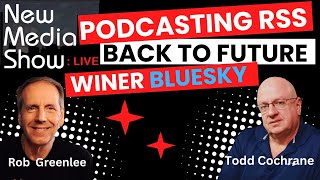
Todd Cochran and Rob Greenlee discuss podcasting's shift to audio-only distribution and respond to Dave Winer's claim that RSS is being overtaken by YouTube video. They explain how Blueberry is extending RSS with features like Boost, note that Spotify's video-first approach can hide audio feeds, and describe building a Podcasting 2.0 ecosystem where even 10% listener conversion to compatible apps enables sustainability.
Chapters
Todd and Rob in the afternoon.
Hey, afternoon delight with Todd and Rob. Oh yeah.
Oh yeah, and here we are. Uh, I hope you had a good Turkey Day last week, Rob.
I did, Todd. I hope you did as well.
Well, you know, uh, Thanksgiving in the Philippines is you go to a restaurant, you pay a flat fee, and you do not get a second plate.
That's the fun of Thanksgiving, is to get that second plate, right?
Yeah, or third, or dessert, and then multiple Slices of pie, right, right, right. So, you know, I, I had researched it and I thought I was going to a buffet. No, no, it was not a buffet. And I was, I was left wanting. About 3 hours later, my stomach said, man, I could use some more turkey and stuffing. And it was, it was really good, uh, no complaints from that standpoint, but, but I definitely could have used, uh a little more volume.
Yeah. So yeah, there's something magic about seconds. It just—
yeah, yeah. But otherwise, uh, it was, uh, it was, it was, it was nice. And, um, nice to have a little bit of a break. Uh, that was, that was all well and good as well. So, but yeah, here we are, and the controversy.
All sorts of them, actually.
Yeah, well, it's, you know, okay, so for the Podcasting 2.0 crowd, um, we are live and lit, but I do want to make one mention before we get too deep into this. Um, I stopped doing the video restream, and here's why. It was costing me $90 a month to do just the HLS portion because I'm using Restream.io. They don't have an HLS output. And I've got the audio stream running. That's easy. It costs virtually nothing. And so I just was doing the math and I'm just like, yeah, you know, this isn't probably the best you know, the best use of resources. So if you want to watch the video portion of the show, you come over to either YouTube or Facebook or X or Rumble, you know, because we're on all those platforms and you can watch the show live there.
Oh, we're over on Rumble now. That's awesome.
Yeah. Yeah. We've been over there for a while. So, Yeah, my Facebook or even Rob's YouTube channel. So, you know, there's plenty of places to watch the video live. But yeah, I just couldn't justify it, you know, ongoing. You know, you figured it's, you know, $1,000 a year.
So how were you doing the HLS stream on this show?
I was sending a stream to cloud.wowza. And they created a stream. So it's $50 and then per hour of live streaming. So, yeah, I decided to recover that cost. And so for the Podcasting 2.0 crowd, we are live and lit on audio only. And, but a few days ago, And this scene, it's kind of ironic that you picked it up, but a whole different genre of the topic. I'm going to read, I'm going to read a statement that was made by, by Dave, uh, Dave Weiner.
And just to give context to who Dave Weiner is, he's the inventor of, um, the RSS feed of sorts. Um, so he's the brainchild behind that.
Yeah, he says I wasn't clear enough yesterday. We're losing the word podcast very quickly. It's becoming to mean video interviews on YouTube. Our only hope is upgrading the open platform in a way that simulates the imagination of creators, and there's no time to waste. And I replied to Dave, I said, Dave, have you not been following what we're doing with Podcasting 2.0? I hope you review the expansion We've been ahead of this for a while now and understand the threat. And of course, Dave did not respond to that. And he will not. He will not acknowledge the work that's being done. And he is, you know, Dave, I'm sorry, but kiss my ass because there's, we've been working hard. The whole, a whole bunch of people have been working hard at expanding RSS and making things better. Where have you been? Where have you been? Yeah, so I, I, you know, and don't take it the wrong way, I appreciate your contributions for what you did in, in podcasting in the beginning, but cry me a river.
Um, at this point, well, Dave keeps talking about the same stuff that he built originally for podcasting 20 years ago.
So, and he didn't want to—
where's the innovation?
Where's it? And he didn't want to expand RSS. I mean, in fact, I think he even poo-pooed some of the stuff that's been going on.
Yeah.
And, um, and I, I don't say that lightly. Because we've worked hard at this and trying to expand RSS, make people understand the reason, you know, to add lots of great cool features. And there's plenty of opportunity by all the existing podcast apps out there to, to protect it, to protect the kingdom here. Now, I'm not— we don't need to get into argument of the word podcast. We know that ship has sailed. We know that people, they see an interview wherever it may be, YouTube, Rumble, probably is, it could be, right? They, you know, they, they call it a podcast, right? And, um, and I understand, we understand what's at stake here. Um, I do. I'm a hosting company. I'm trying, but I'm also trying to pivot., you know, and bring stuff to market that serves, uh, both.
So yeah, Todd, I agree with you. I think it's, it's a difficult topic from the standpoint that, um, do we want— this is really hard to say because— do we want to keep living somewhat in the past here, or do we want to live in the future and Do we want to see what's happening, uh, and, and not, not necessarily accept it but recognize it?
Um, I think everyone has recognized it. I don't think anyone— I don't know, Todd, recognized it.
I don't hear a consistent, um, discussion on, on this whole topic, and I think it's, it's, it's because everybody has a different, uh, perspective.
I think it's an agenda too.
Well, that's part of it, um, but this whole thing of, of embracing RSS and extending RSS, you know, in some ways that's, that's the more difficult hill to climb, is to innovate on top of RSS versus embracing what we have.
But the problem is we have— what we have works.
It does. That's my whole point, is, is that we keep talking about And this really stems from the early— a few years ago, the discussion that was coming out of Spotify. A lot of this stuff is coming out of Spotify, and recently the narrative that's coming out of YouTube. Um, but I think a lot of this, um, kind of reflection and projection and, and stuff is coming out of the, of the rhetoric that's coming out of Spotify, and it's got everybody rattled about what's going on here.
And I think Yeah, again, it's advertising driven.
Yeah, it's all motivated by a business interest of a proprietary platform, right?
If we just relax a little bit, and it's even, you know, even in the prep we've done for this show, the head of Spotify Podcasting is not embracing video. And he's leaving. Yeah, you know, so that was interesting. Yeah, so okay, there's, there's two sides to every story, and in the end it's very, very simple for creators at this point. Yeah, you can have both. No one has ever said you can't have both, but I think there's a correct strategy to having both. Being number one, have your, have your open podcast distribution where you want your content to be. None of that's going to change. Apple's not changing. Spotify is still ingesting via RSS. YouTube's doing whatever YouTube's doing. I would not, I would not submit to YouTube via RSS.
Yeah, I haven't done it with— I haven't done it with any of my shows.
I wouldn't. So here's, here's the kicker. You've got Open RSS and podcasting. Nothing is changing. We're improving it. Get on board, help us improve through these new podcasting apps at podcastapps.com. Support that movement, train our listeners, and then if you're going to add video if you're going to have a video component, sure, have a YouTube channel, no problem. Yeah.
And issue with that, really.
And if you want to be on Spotify with video, have a second show.
Yeah. And maybe think twice about doing it on Spotify because I'm not sure that they got it right.
Well, I would, I would, I would have an RSS listing submitted. Yeah. If I, if I was hardcore and wanting to do this, then I would have a Spotify podcast account and do videos, the video through that.
The problem is, is that I, I believe what they're doing when you do that is they're actually splitting the audio out.
But no, no, no, but you can have two listings.
One is video and one's audio. Is that what you're saying?
Right, right. Have a second show. But use—
what are they doing with the video when you upload? Are they creating a duplicate audio version?
The only time you have a video and audio version is when you host completely on Spotify. You have one listing, so you have your podcast, your audio podcast, right, with Libsyn, Blueberry, Podbean, whoever you submit that way, and then you create another account and have video only.
Yeah, but that is publishing directly to—
to Spotify. Yeah, they have to publish directly to Spotify.
My question is, are they splitting that video publish up into audio and video?
It's two different listings. You're just like on Apple Podcasts, you'll have a video podcast and you have an audio podcast, except the other one is coming in via manual submission, not via an RSS feed. And you're done. You've got everything.
Yeah, because I thought they were wanting creators to come in and upload the video to replace the audio.
No, no, no. But yeah, but they're not going to do it from my feed.
Well, you're not going to do it, but I'm just saying is that that's what creators do.
They can't do that. They can't do that. They have to move off me to have an audio and video on one.
I thought that you could overwrite your audio episodes.
Nope. Not unless you are a Spotify podcaster and you have to submit manually to both.
Okay. All right. I'm going to have to get in and kind of, kind of play with it because you can't—
I can't go into Spotify Podcaster and overwrite my RSS feed from Blueberry. This, the audio submission, I have to move to them to do that.
Well, that's what the discussion was a few months ago that That's their strategy. That's what they were enabling, were people to get in and replace their audio with video.
If you have a Spotify for Podcaster account.
Oh, oh, okay. Okay. Well, that's something different than a pass-through feed into Spotify then.
Yeah. But the thing is you can have two listings over there. It happens all the time anyway.
Right. Two. 2 listings, one audio and one video. Well, not 2 audio.
And sometimes people end up with 2, 2 audios. Well, that's because that's the crux of my question is, well, what ends up happening is let's say someone's on, uh, Libsyn and they move to Blueberry, right? For us to get those shows joined is very difficult. And sometimes if it's—
Spotify's made such a freaking mess.
Oh, it's just a mess. But anyway, you can have the best of both worlds, just don't screw up your audio. Yeah, and, and it's, it's all about a drive for dollars. Some people need to chill out.
Yeah, but why would the guy that's in charge of podcast monetization not, not support their efforts here? Does he know something, um, and that could be why he's leaving?
No, we had a conversation with someone at Podcast Movement about this. Yeah. And they don't want to do it for a reason. Build your audience wherever the hell you want. And then, you know, I, all I know is, is that I understand the value of— and another thing, you know, Tom, love you to death. Um, but, uh, I'm still going to continue to, uh, I don't have him in, in the, in the, the RODECaster here. I'm going to still continue to build my brand on my.com. I'm not gonna, you know, I'm gonna make sure that I have a point of presence for my website and for my, for my show that is, is is not on rented land. Because Tom is basically saying rented land looks awful good. And I'm thinking, okay, yeah, yeah, YouTube is a shiny object out there, the little dangly thing. Of course it looks good to people out there. Of course it's the new shiny object. And but again, about 90% of podcasters could give two shits about video. Yeah, we don't have— we don't, we don't see it, and we're looking, believe me, we're looking. And the shows that are on YouTube, very, very small percentage of them have success. So again, we're talking about some that have huge success making lots of money. Yeah.
And then you have everyone else And, and those shows are really playing the YouTube game.
Yeah, they're playing—
it is a, a game that caters to the algorithm. Sure, sure. And that's what they're— that's what they're doing over there. I mean, I've been really kind of trying to study it and understand it myself, and it's— it is a— there's a mixed signal that's coming out of YouTube about success on YouTube. There was a big rumor that was flying around in the YouTube space around the new interest that YouTube has in supporting small creators, new channels of sorts, and driving attention to those new channels and, and giving, you know, these smaller channels, new channels, some hope, right, that they can, they can grow fast because YouTube really loves those new channels, right? They're going to feature them and promote them and Which is what everybody wants, right?
Is everybody wants— I don't see that on anything I'm watching.
Well, I think that there is some evidence that they will audience map, um, some new shows. There's probably an emphasis on that because what they want to stimulate is the interest in new creators creating new channels and bringing in new people to the platform.
It's still, it's still 0.00 It's such a low percentage.
Yeah, but that's what I'm, you know, what I'm trying to say is that YouTube has an agenda, right? And their agenda is to drive new creators there. And that's exactly what they're doing with podcasting, right? They're driving creators from the audio podcasting space into video and encouraging them and putting out these signals that we will support you and we will feature you and we will promote you.
Signals equals success is two different things.
Well, and that's, that's the much bigger question around it. Is this just a game that YouTube is playing?
A game, right?
Yeah, to, to garner new content to their platform, which is an advertising-centric platform. And the other uber trend here that we need to back up and look at is that the, the platforms that are pushing all these things are platforms that that are very advertising-focused and centric platforms. One of the reasons that we're not seeing Apple have a big play here is because they are not an advertising platform. They failed in advertising years ago and they never jumped back into it again. And so unless they take on this advertising issue that Spotify and YouTube have chosen to take it on, Um, probably Apple's not going to invest heavily into, into growing what they're doing in Apple Podcasts. I guess what we'll see is what's next for them, um, around support for video. And but the problem is, is that the early signs of what we're seeing even at Spotify is that even, even the video monetization is actually doesn't look like it's been worked out right. And that people have faith in it, that it's going to work.
I, I just, you know, there is such a— I mean, it's like spooning. Yeah, people are drooling all over themselves in the, you know, and here's the thing, I don't see it with— I see creators that are, you know, let's just be frank, if you want to do video, do video. We've been doing video here for years. Yeah, I don't think—
and Yeah, I agree with that. I mean, if you want to be a creator that is creating audio and video or taking the audio from the video, there's pathways to do that. Now, Spotify has really kind of messed that up, in my opinion. It's pretty clear in YouTube how to do it. But Spotify is still kind of like we've talked about here, is still kind of a mess. You know, it's, it's, I don't feel confident in doing anything over there right now.
But I think, you know, that what has been ignored is the simple fact that we're not— we're still fine.
Yeah, you know, well, it's these, um, expectations about where, where the, the trends of the industry are going. Where's the industry going? Where is it shifting to? Where, you know, where do the, the younger people in the medium— yeah, want the medium to go towards? What their interests are, which may be different than maybe the earlier podcasters that were in this medium that really saw a focus on audio versus this younger generation that sees so much sizzle and scale and excitement from like MrBeast and all these big video podcasters or video creators. And they want to get a part of that. So everybody's kind of— plus, I was thinking about this the other day, Todd, is that I think one of the other big things that shifted here is, is the mentality of the podcaster or the creator themselves of putting monetization first, right? It's almost like people are not going to create a new show unless they have been trained on how to make money from that show from day one.
Yeah. Right. That's a big part of it too.
And then that second question is, well, how do I market it? The third question is what content I make. So it's— that puts people— it's kind of like putting the cart before the horse, right? Yeah. Let's, let's think about— and Dave Jackson is huge on this too. He's out there, you know, you got to really think about the content, you got to plan it, you got to do all that as the first thing. But people are not focused on that because of what we're seeing on social media and these other platforms where there's all these, you know, consultants and people build your business and this how to make a million dollars in a year or $10,000 a month and pay $9.99 to do that and all that BS, right? So it gets people in the mindset that, oh, I can start a podcast and quit my job, and which podcasters have wanted to do for 20 years since the beginning, right? It's nothing new. It's just that now we're putting the cart before the horse, where in the early days we were actually putting building content and building scale and building audiences the first thing you think about.
Yeah, it's— and I go back, and I've been poo-pooed over the years. Yeah, about this ability to make sure that you control your brand and, and build your own.com or whatever,.show or whatever domain you want to use. And for years, people are like, oh, Todd, you don't need to do that. Yet time and time again, I, I'm vindicated Yeah. Um, every week, every week I have shows that come crying to us that they've been deplatformed for just the most stupidest things. Um, no, sometimes no reason given, just a channel shut down. So I, I always tell people, you know, if you're going to be over there, have a backup plan. Again, people say, oh, this is never going to happen to me until it does. Yeah. And it's not a fear tactic. It's just fact. And what percentage? I don't know. I don't know what the percentage of channels are shut down or deplatformed or deprioritized. But the way podcasters get pretty spicy at times, We've been able to be as spicy as we want on audio and not have to worry, you know, about someone pulling the plug on us or setting a community standards strike against us. You know, it came up in a conversation that we had with a podcaster who asked, is Blueberry a free speech platform? And yes, that's an interesting question, right? Yeah. And yes, we are a free speech, um, platform.
Podcasting has been historically, uh, more of a free speech platform.
Yeah, yeah. Hey, hey, Brian, thanks for saying hello. He said, hey guys, glad to catch up. I'm glad to have you here.
Thank you so much. Yeah.
Um, I, you know, it— we're gonna get, you know, blasted, uh, by certain shows because we keep talking about this, but it's just part of the, the medium now. But, you know, going back to the Dave Weiner discussion, yeah, um, we, we have the ability to change things. We have the ability to improve the, the experience for listeners. In the end, this is what this is about. We have to improve the experience for the listeners, make it a more enjoyable, interactive experience. You know what, one thing that, uh, we, we essentially— and we have a little bit of work to be done in this we essentially invented Super Chat for podcasting, uh, with Boost. And, you know, going through a little bit of a transition right now because of some changes to wallet holdings. And, but, you know, it's still working. You know, people can still boost a show. And, and, and, you know, matter of fact, this show got, uh, um, some sats, uh, recently And, and so people are streaming the show, and, you know, so you and I are benefiting from the, uh, from that, uh, that support of listeners who are basically using these new modern podcast apps. So yeah, it's not as slick, but we need some time to make it more slick so that people can, um more easily participate. Um, Lucas says, true, always have a backup. And he says also download your XML and all audio files to backup. Um, you know, I think the key here is, is you don't really have to download your XML if you own your own.com and you have your podcast on your website. Your XML is controlled and owned by you. And as long as you pay your hosting bill, you're good.
Um, well, I would say it's— it, it might be helpful to save a copy of, of your RSS feed just so you capture all your metadata, um, that you use. So if you ever want to duplicate it in the future, it'd be easier to do it. You could do it, actually.
Yeah, but yeah, I just— it, to me, it's like This causes, um, this commentary, um, invalid as it is, and I'm not saying it's an invalid discussion, I'm just saying do what you got to do. And that's the best thing about podcasting is there's no rules. And if you choose to chase the YouTube agenda, great, go chase the YouTube agenda, um, but you're going to have to have a YouTube strategy.
Right. And that's, that's the only way that you're ever going to find success on YouTube is if you get serious about it and take those strategies to heart when you publish content up there. And it's, it's not easy to do. I mean, it's not an easy thing to do. If you look at a lot of the big successful YouTube channels, they have huge teams behind what they do and they test and they test. You know, like even in YouTube today, you can create 3 different versions of your thumbnail and it— YouTube will actually test each one of those thumbnails for you to figure out which one works best and actually use the best one for you.
There's— and there's no reason why we couldn't do that here. You know, we've got the ability to set episode art. It could be up to the app developers to test. Yeah, they could do the same thing, but we're up again, we're at the mercy of the app developers and their development time. And their support and how much money they have behind them, which again goes into this full ecosystem that we've been trying to build in Podcasting 2.0, where if you send this show a boost, guess what? The app that you sent the boost from gets a cut to support themselves. The initiative to build podcasting gets a cut. And then we've set those splits based upon what we feel we should support, and then Rob and I get the rest. So, you know, there is a, there's a mechanism here to have an ecosystem that will support. But again, it's edge at this point. We, we don't have a Podcasting 2.0 app that is at 2, 3, 4, 5%. Right. And that's what it's going to take. It's going to take a podcasting app to get us to 5%. But then again, if we think about it, in all honesty, we only need at maximum 10% of our audience to move to a new podcasting app that's supporting Podcasting 2.0. The top 10%, they're the ones contributing to the shows. Those are the ones sending donations. Those are the ones that are subscribed to Patreon or PayPal or however you're getting the money. The rest of the 90% are not. If you get 10% conversion of your audience to donate to your show, you're a superstar. Yeah. So we don't have to convert everybody. We need to convert the top listeners to the new apps to support the shows and the ecosystem works out. Yeah. And I think that's the thing that's also lost upon people. We don't need to move, uh, you know, 50% of people off Apple Podcasts. That's, that's never going to happen.
Never. Though the listeners may be doing that all on their own at this point.
Uh, I don't know. We still— Apple's still strong, and it's, you know, they have this major competitive advantage that will never change. They have a podcast app that is delivered on the iPhone by default. When you, when you turn it on for the very first time, right there it is. So they're never going to have a, a complete— it's their, their numbers are not going to drop dramatically. It's not going to happen. It's sure there's going to be a little bit of sharing going on between Spotify, Apple, and others. But, well, you know, they have—
I mean, Todd, I mean, the data I've seen has shown about a 20% drop in market share for Apple over the last year.
No, Rob, it's not 20%. It's not 20%. People— 6 or 7% is what people have seen. And some shows, some— Apple's regained market share. Recently on some platforms.
I've seen stats from Buzzsprout and, and yeah, Buzzsprout had it and Lipson that show a 20% reduction in Apple's—
not over the last year. Yeah, no, Buzzsprout just had an increase in Apple Podcast share. Their last report showed an uptick. Regardless, they're not every— do you really think, do you really think that Apple is going to be insignificant in consumption.
I'm just, I'm just thinking that the, the momentum that I see in the marketplace right now, it can be unfounded, it can be unreasonable, it can be wrong, it can be whatever. The momentum that I see in the marketplace is Apple is in a state of decline as the attention is being increasingly pointed towards video. And that's what the audiences— now this is all driven based on what audiences are doing. It's up to us as an industry to make sure that audio doesn't lose momentum here.
Yeah, I don't see that in our stats at all, and maybe it's because we're so— we're, you know—
Yeah, I think you have to look broadly across the whole industry. Where is the momentum right now? Where is the momentum in the perception of the audience around audio, or is the the momentum around video and audio, right? Where the research that I'm seeing come out from all sorts of sources is saying is increasingly audiences are looking for both, right? The option to consume video sometimes and the option to consume audio other times.
But again, don't fall for the narrative, Rob. Don't get sucked into the narrative because remember, Okay, for a segment of shows.
Okay, Todd, it's not following, getting sucked into the narrative. It's what the public discussion that is happening around this medium that's happening, and people are seeing it and people are reflecting it. I'm not saying that that should be the strategy on a strategy towards an opposition to that. I'm just saying—
I'm not saying— I'm just saying though, but what is the narrative is saying is video, video, video.
But the narrative is coming from research that's being done in the market for people that are doing fucking advertising. Well, those are, those are the only people that are paying for the research, people that care. Okay, but there isn't anybody that's paying for research that doesn't have a revenue model objective, right?
Again, I, I think, you know, what we have here is we have a monetization narrative that's been shoved down people's throats. Like you said, monetization first. Yeah, I just—
well, and it caters to 10% of the market. So all of this conjecture and all this discussion and all this controversy and all this kind of stuff is all coming out of really the interests of 10% of podcasting.
And if, if 10% Right.
And it's driving the strategies of the big platforms. It's driving the perception of the audience. And there is a factor here, Todd, that YouTube as a video platform is the second largest place for people to find content.
I have no doubt about that. Right.
So it's got an outsized power in the marketplace.
But again, for consumers of content, but, but for a very small percentage from an industry perspective, right?
Right. From an industry perspective, I'm talking about audience is doing what they're, you know, but again, they're going to a very small percentage of shows, right? But that's a different conversation. I'm talking about what, what the, what the consumption side of this is. And where it's trending towards. And I'm concerned that the attention of the consumption side is pushing increasingly towards video. Well, you know, all the research and all the buzz and all the discussion from the big platforms is all centered around video. Whether it's founded in real results is the big question.
I think what we'll see over the next year is we're gonna figure out if people's video strategy has worked out. Right after they invest a lot of money.
Yeah, but clearly, clearly that's what's happening in the market. I'm seeing it all over the place, Todd. I'm surprised you're not seeing it too.
No, we don't, we don't hear— podcasters are not talking to us about video.
Okay, I'm not necessarily talking specifically about podcasters, I'm talking about creators. There's, there's a, there's been a big burst in interest in being a Creator, then build a YouTube channel, then be done with it. No, but that's taking a polarized view here.
No, it's not.
That's what you're saying.
It is taking those people. There's a lot of top people on YouTube that say they're podcasters that don't have an audio podcast. So guess what? So guess what?
Fair enough. My narrative on this is that if If you're a creator, you're thinking about all the ways to reach as many people as you can.
I don't— I don't think most of those people that are trying to be successful on YouTube have a care in the world about audio.
Well, I mean, you're making a blanket statement across— I think lots of people that do have audio podcasts, right?
Yeah. Very highly high-staffed, successful podcasts. People have huge budgets.
Yeah, yeah.
So again, go look at the— just go and find— go look at 500 shows. Take, take the Apple Podcast list, the top 200 in each category.
I'm not talking about performance here, Todd. I'm talking about perceptions.
I understand that.
Yeah, but in the end That's the part that's going to take this, this whole thing down is once the data comes out and it doesn't reflect what the rhetoric or the proclamations or the projections turn out to be. It's the same thing around advertising too. I'm hearing, you know, people saying that the podcast advertising market's going to grow, you know, 12% this next year. But I also saw, saw some research that came out today saying that that's projected to only go up less than 2%. So yeah, you know, that's part of what we're talking about here is we're talking about inflated perceptions around what works and where the direction of the medium is going. And I do worry that if that gets too much adoption or acceptance, that that will drive a significant change in the medium, whether or not it's warranted or not. So I don't know how we beat it back, Todd.
Oh, you don't beat it back. You just, you have to continue to innovate.
Yeah, well, it's, it's hard to stand out with an innovative audio approach right now in the cloud of excitement around visual. And I think that's, that's the big challenge that podcasting has right, right now is it's, it's not the new shiny thing.
So what will happen is, is the number of— yeah, the Edison Report should reflect a drop in audio, drop in podcast listening by episode, because who has time? Who has time to— I can listen to 5 times as much audio as I can watch video. I— who— maybe people have different lifestyles than I do, you know.
Well, I, I think audio fits into a certain segment of one's lifestyle where, where video fits into other. Um, and I mean, that's my own consumption pattern right now, is that for certain, if I'm in my car, I'm listening. If I'm in my living room, I'm watching. Right. So that's my own personal consumption pattern.
And it's not— you said in your car you're watching?
No, no. Well, if I did, I misspoke.
Maybe I missed—
when I'm in my car, I'm listening. When I'm in my living room, I'm watching, right? Yeah. Or if I'm sitting in front of my computer, I'm typically watching. Yeah. So, so I, I think the takeaway that I'm I'm growing on here is that it's not necessarily either or, it's both is where what the future looks like. The question gets back to is if you're a creator, which, um, what kind of content plays to video, um, in a way that's worth doing, uh, versus just doing it in audio. And I think increasingly as a creator, we have all these choices now. We can make vertical videos, shorts, we can make long form, short form, widescreen. We can make content for televisions, we can make content for Rumble and YouTube and all these different platforms. Content creators have so much on their plate, right, that they have to decide on and choose what direction they want to go and what resources do they have to bring to that to be able to do it all. Or are they going to have to focus on just doing audio because that's all they're really capable of doing. Um, that's the real— I feel that's the tension that we're, we're increasingly seeing in the market is this expectation versus reality, right? And, and the reality takes all sorts of forms, like what kind of equipment you have, what's your ability, what's your willingness to have studio lights and have HD cameras and camcorders and spend thousands of dollars on, on equipment. And it's putting people in a situation where they feel like they're kind of binded up by so many choices. And it may cause people, and especially if they're going to get into it with a profit motivation or an income motivation to begin with, it creates this kind of potential of failure, right? Because people—
always. Right.
It's have expectations. There's always reality, right?
Yeah. Meanwhile, I don't know if you've been watching, I've been flashing the comments.
Uh, yeah, I saw that.
Yeah, Felix, Leland, uh, Lucas, you know, y'all been hot and heavy on the, on the comments here. Said, uh, yeah, uh, Lucas says people listen to podcasts in their car, walking their dog, running, and that's audio. You're not watching video podcasts while driving a car. Right. Um, Leland says, I've actually considered going back to pure audio. I'm closing the doors of video producing production for podcasting.
He says, so working for you and you're not getting the, the results out of it, then Lucas says, the right thing.
Also, big content creators, Spotify and Apple don't, so that might also be a reason to do video. Well, Spotify is paying big people, big, in other words Yeah, what is it, 5,000 hours a month or some great, or 10,000 hours or some number. People walk around with earbuds and Facebook goggles, but you might be surprised those people that walking around with earbuds might be listening to Shorts, as Rob said. Felix says, I agree with Todd. I, I executive produced an audio podcast with a pretty sizable budget and marketing dollars. It was viewed over 5 million times this summer. I also placed it with an RSS feed and it was downloaded 1 million times. Leland says it's not so much from the host end, but the producer end for others. Okay. So, you know, again, pick your poison. Yeah. You know, I don't care what people do.
That's, yeah. But if we get back to, you know, the industry, What's that message that we're as an industry that we're delivering to content creators, right?
Industry can be— it could be at risk. And, you know, and going back to the Dave Weiner discussion where he wants Blue Sky to, uh, you know, to have an RSS injection, they're more likely to follow the Twitter model and do some sort of live thing. They're not going to inject RSS. Blue Sky will not do that.
Yeah, I don't think they will either.
Yeah.
So, well, you know, all these platforms are heading towards a model of penalizing people for, um, linking to other platforms in their content posts on those platforms. Yeah. And so if you— even on X, if you post a link to YouTube your post, it isn't going to get the visibility then if you uploaded it directly to X. And I, you know, which I did, uh, last week for this show on my, my X account, and it got decent views, um, when I uploaded the full episode of this show, um, up to, up to that platform, uh, and it was hosted there.
Yeah, we, we stream to our our X account. Yeah. This show. So, you know, again, I'm against what he has done over there from that regard.
Oh, you're talking about X?
Are you talking about those guys? Yeah, X. You know, basically Elon said, you know, make your post and then put your link to your post in a reply. And I'm like, that's some bullshit. You know, but that's the same thing Facebook has done. So they're taking the same playbook and trying to— they don't want you to leave.
They don't want to have you direct their users to other platforms.
Right. And this is where podcasters need to wake the hell up. Yeah. And, you know, control that narrative. Come to newmediashow.com. And we don't have a newsletter, but if we did, I could say, add, you know, sign up for a newsletter. Or, you know, buy our merch. You know, all those things that can only be accomplished on your own website that is being prevented by other third parties. Yeah.
So I don't think that, um, necessarily going live on, on X is necessarily a, a favorite approach either. Um, I think I see more lists, more plays if I upload directly, upload a prerecorded video up to that platform than I do on replay off of a livestream into that platform, which I don't know why they're penalizing livestreams. I would think that's what they would want to incentivize, right, is to have more live content up there.
You know, and frankly, I don't need that many views on X. It's just, it is what it is. I'm not going to take the time. Yeah, because time is money and most people don't have enough time as it is.
Well, and that's the bigger issue that I see brewing here, is that all these platforms are wanting content creators to upload directly to them. And Spotify is heading that way. YouTube's already there mostly. And, and you see Instagram and Facebook and all those platforms incentivizing people to upload directly to their platforms. And Todd, can you imagine a world where there's maybe 10 platforms that are all standalone platforms that require content creators to upload directly to every single one of them every time they want to put a piece of content up? And that's, that's the real threat to RSS-based podcasting.
Rob, that was the model in 2004.
Well, yeah, I mean, that wasn't really in an environment that had a lot of built-out social media platforms like we have today. And so, so what, what's at stake here really is, is how much time do you as a content creator have to get your content out to all these platforms? And what they're driving is a future where you only pick one or two, right, to upload your content to. So like if we were doing this show and RSS wasn't available to us, we would have to choose between Apple and YouTube or whatever. And those are the only two platforms that we upload because that's all the time we have.
Oh, thank God we have RSS.
Yeah. And that's the power of RSS is to get it out to hundreds of listening consumption apps all at the same time. And it just saves a lot of time. And I, unfortunately, it feels like we're moving away from that, and I'm not really—
that's the narrative that YouTube and Spotify want.
Yeah, well, yeah, exactly. That's— they want people to upload directly to them, right? And so does X. Yeah, probably Bluesky is going to do the same thing. Um, Bluesky is not going to take on what Dave Weiner—
but are they your friends? Are they your friends? No. These platforms are for the average creator. For the top folks, oh, they kiss their butts. You know, they get right in there and sniff close because their whole livelihood depends on that relationship where the majority, high majority of creators, right, right, get nothing. You get nothing. What is that? There's a There was used to be, uh, was it Hogan's Heroes? There was a famous audio, you get nothing, right?
Um, so yeah, we're all being— our content's all being used for, for, for profit on the platforms, and what they— what their revenue comes from is your content, and, and you get nothing, and in your user profile, and so that stuff's being sold.
So at what point, what point do creators wake up and understand this? What, or will they, or do they?
Question thought is, what do you do about it?
Well, I think that's the question. I think, you know, the hope and dream is, oh, I'm going to be Joe Rogan, so I'm going to take the risk and allow my stuff to be up there.
Well, Joe, Joe was an example of someone that picked one platform, right, and uploaded all this content to that one platform.
Now granted, a year ago he grew his audience on— he grew on RSS, so let's not forget that.
That's right. And then, and then recently Spotify opened up the, the Joe Rogan podcast to being widely distributed again, and you know, Joe is probably bigger than he's ever been now after they did that.
Leland, you— I'm even going to laugh at this when he says, I say we all broadcast from our own domains. Well, you know, we do, right? But, you know, using an embed from YouTube.
Yeah. So I guess, I mean, really, I think it's, it's really similar to what we saw happen with the presidential election, right? It's time for the citizens to stand up, right? And take control.
But, you know, the average Joe, you and I are just two old dudes, Rob.
I know.
You know. So the average 18-year-old doesn't give two hoots until they do. And this is the thing that's funny to me is I get more people that end up coming to us and saying, Oh wow, we've been missing out. So those are the people I love to help.
So Todd, when's the, the revolution coming? I made a comment on, I think it was on LinkedIn or Facebook in a thread one time that was saying, well, eventually after podcasting becomes over-commercialized and has high ad loads, as that's the direction it seems to be heading. When do we invent the new podcasting that is the revolutionary that conquers the old podcasting?
Well, it's very simple. It's when listeners leave. Yeah, those shows. And where would they go? And they go to shows that have similar content that don't have the high ad load.
Yeah, so it's, it self-equalizes over time, potentially, if the algorithms of these platforms, um, only play up the, the shows that have their own monetization approach.
Well, they're in, and, and AI is going to destroy Discovery even worse. It already, it's already happening, so Yeah, because you can't—
well, I mean, I guess you can. I mean, it would be interesting to do a query into ChatGPT, and I think I've seen this too, where it is sharing source links now, right?
But it's, it's, it's picking winners and losers worse than Google picks winners and losers. You might be number 20 in the search engine, but at least you're number 20 in the search engine. In AI, you're nothing if you're not there.
Right. It's a single result, though I have seen in ChatGPT here recently. I don't know, Todd, if you played this game with it where you'll ask it a question, right, about maybe a controversy in the world or something like that, and it'll give you an answer, right? And then you look at the answer and you go, yeah, that kind of doesn't make any sense, right? Maybe that's— it seems like it's a talking point from—
But if you try to correct it, if you try to correct it and it corrects itself based upon your input, it doesn't translate to me. No. I do the same query.
No, no, I'm not saying that I'm training the AI or something like that. But if I challenge it, if I probe its questions and say, well, that's not what you said there isn't really true. Based on this and this and this piece of information, I have noticed that it will come back with a completely different set of data points. It's a large language model, so if you—
and it's not AI yet.
Yeah. And if you do that enough times where you question the results that it had and you challenge it, it will back down and say you're right. That is going on, and these are the reasons why that's going on. So you have to dig a little deeper is what I'm trying to say, to really get the truth out of, um, out of these AI platforms.
Meanwhile, December 12th. Yeah, December 12th, uh, Chartable goes away. Yep. And, uh, if you haven't removed the Chartable redirect by December 12th, your show will not be deliverable. Um, yeah, it will just cease. We've been putting warnings up, uh, to our podcasters, um, telling them to remove the chartable link. And push comes to shove, we will probably put a fix out a few days ahead of time and force the removal. It's not as easy to do with PowerPress as it is with the Blubrry platform, but there's about 40,000 shows out there that are running a chartable redirect that are going to be calling their podcast hosting provider and saying, why isn't my show being delivered?
Yeah, it's almost 32,000 shows that are—
oh, 32,000 is the number. Yeah, that are— some of those are probably dead shows that there's no one alive at the wheel anymore. Mm-hmm.
Mm-hmm. And I thought it was hysterical that, uh, a show called Hysterical from, uh, Wondery and Pineapple Street Studios was named the Apple Podcast, uh, of 2024. So, right, a little play on words there, but, uh, it's a podcast about mass hysteria throughout history.
Well, it's probably a good topic because we have lots of mass hysteria going on in the world today.
Well, it does say something about where we are, right? That— yeah, that top— it's a little—
a little bit of a twist there, wasn't it?
Right, right, exactly. Yeah, I thought it was interesting.
Yeah, well, you know, it's, uh— I'm surprised they only announced one show as the Podcast of the Year. But maybe that's what they've done before. I thought they came up with a list before, but, but maybe not.
They usually have different categories, right?
Yeah.
Um, but it also came out here today that, you know, speaking of monetization, um, that a, a new thought paper focused on audio investment gap. So this is this is where advertisers invest in audio and things like that, that there's a big difference between audio consumption in the US of all ad-supported media consumptions is about 24%. And then the share of marketing spend it gets is around 8.4%. So it's not proportional, right, to to what the prominence of audio is. And for some reason, it's, it's getting shortchanged on the investment side. Right. And I guess that probes a bigger question and may be a little bit of the explanation why we haven't seen the revenue numbers grow as fast as what's, what's been expected or wanted might be a better way of explaining it. And then also TuneIn came up in, in discussion, which is a little bit of a sore spot for my, my experience in the medium over all these years, is that TuneIn has always been a hesitant participant in the podcasting medium for many years now. And I guess they They announced, uh, I guess last February that the company was temporarily stopping the ability to submit new podcasts. So this was about a, about a year ago, or probably 10 months ago, that they, they announced that. And it— now it's December and the company, um, still says we cannot update any podcast on our platform. So a year later, um, they can't update anything due to us conducting some construction to our podcast updating form. So it's taken them a year to update their podcasting update form. Um, you can't tell me that there's a lot of will to support podcasting here. I don't know why they just don't kill it, right? If they're gonna do this, essentially is what they're doing.
Well, maybe, maybe it's time to, uh, start removing them from a distribution list.
Yeah, I think that that's, that's a reasonable statement.
Yeah, because we have them as a destination and if it's one that is broken, we'll just suppress it. We'll just remove it and take the traffic away.
Yeah. And I think one other topic on the whole TuneIn side is, is that, you know, there's been hosting platforms that have tried to integrate with them. To create what we have, like, say, with Spotify or Apple or whatever. And, and back when I was with Lipson, we had it all built on the Lipson side. But the problem is, is that the TuneIn folks never executed on it.
And so it sounds like what we did with Riverside that they never executed on their part.
Yep. So it, it created this kind of kind of like stagnant type of environment for that platform. And what's also ironic about this is that if you know TuneIn at all, they are a platform that helps you localize the source of your content, right? So it's been catering to streaming radio stations primarily over the years, and it started to embrace podcasting. And I know that there's been a renewed interest in creating local podcasts. Right. Um, and it, it was always one of those shining lights in my thought process that TuneIn could be that local podcast discovery platform, uh, and drive a lot of attention to local podcasts, ones that are done to support a local community because its whole process works that way.
Well, I think, um, it's just, it's just a simple solution. Again, um, the podcast host, if they haven't fixed it in a year, then you remove them, pull the plug on them.
Yeah, I'm not sure that it's really doing anything anyway to have any kind of reference to them in your hosting platform right now.
By the way, for those of you that are watching the show, you can go over and get subscribed to the New Media Show. There's a little QR code. We see one of you took action on that, so thanks for subscribing to the podcast. Yeah, if you haven't followed or subscribed already. Yeah, yeah. And, you know, I don't know, it's, um, it's, it's sad. You would think that they would, um, they would want to have more content, but maybe they don't.
Oh, and Todd, I don't know that we talked about it on a past show, but Samsung also pulled the plug on their podcast.
Yeah, they did. Yeah, yeah. That was kind of a— be honest with you, that whole integration. Oh my God. And I remember all the— we went through a lot of pain with them.
Total disaster zone is what that was. Yeah, I did that, that deal too. And yeah, it just never made sense to me. The whole naming of it, the, the whole—
or they hit it—
of it, and what information that they wanted from the podcaster just didn't make any sense. So, all right, but anyway, that's— so we're seeing kind of a— the dust is settling on the podcast medium, and we're kind of—
oh, dust is settling? Does that sound like— you sound like we're going extinct.
No, no, no, no, no. I, I think that the fluff, the— all of the stuff that's been going on over the last 5 years is, is kind of settling out, right? We're, we're kind of weeding out the the bad apples, right? And, and maybe you can look at it from that perspective. Hopefully that's what happens, is that we come back stronger and more focused in the platforms that are good at being podcasting. Um, and these, these kind of also-rans, ones that got involved in the medium that really weren't serious about it, are kind of going to go away, you know. And maybe that's a good thing. I don't— they weren't driving any listenership anyway, so Why have them around to clutter the, the space and to make it more complicated for podcasters to, to do something, right? So, and did you see this data chart that was off of, uh, Sounds Profitable, uh, that came out of Spreaker? I know it's on our outline. The, the revenue per thousand downloads that they're tracking in there, this is one that I I pulled out of Sounds Profitable just from a day or so ago.
What does that mean? Revenue per mile download?
Per milli, which is another million. No, no, for per thousand. So that's, that's, that's the reference. That's the same as CPM. Okay. Um, and so what they're saying here is that they're seeing revenue of $95 per thousand downloads for advertisers. Yeah, for advertising. Yeah. And I think the reason that we're seeing this is because of programmatic advertising. People are loading up on ads, right?
So, so back up. Is it, is it, is it listener— I mean, podcaster revenue per thousand, or is it advertiser revenue per thousand?
It's actually how much per 1,000 listeners, how much that download generates in revenue for the podcaster. Yes. So if you think about it from an ad load perspective, right? So let's say you have 8 ads and each one of those ads brings in $15 each. Right, or something like that. That's, that's where you get up there. So that 95.41 number, which sounds great to a podcaster, but is actually a, a reflection of very high ad load too.
So, you know, I know what, uh, programmatic has been delivering, and that's an incredible number. Yeah, that's it. Programmatic does not deliver the same CPMs as—
no, but if you add them all up, I mean, if you have like 10 ads that run in a piece of content, right?
Is anybody running it? Is anybody running a 10 ad load?
I think that's happening on, on the Spreaker platform.
Yeah, that's insane. Yeah.
So what we're starting to see is this shift towards radio monetization models moving into podcasting. Because I mean, if you think about broadcast radio, they've had as much as like 16 minutes of ads per hour. Right, right, right. So to think that maybe an hour-long podcast has 10 minutes, that's a reduction. If you look at it from a radio perspective, that's less ads.
So just insane, though. If you think about the, the ad load to get, and if it's all based on programmatic and not host read, even host read, that's, that's, that's like a 4. That's like 4 host reads.
Well, that's not even counting host reads. So if you have a podcast or— so they're saying that is including host reads? I don't know, it doesn't say.
Did they define it?
No, they didn't. Well, there's a link there that says learn more, but that's probably a sign-up thing. So this was actually an ad, I think, in a lot of ways. So, you know, but that could include an average of host read revenue in addition to the programmatic.
Rob, I can, I can manipulate numbers 7 ways to Sunday here. So, you know, what is the context? You know, that's, that's the key there. Is did they just take a sampling of 10 shows and that's, you know, the highest across their whole platform?
Probably. I don't know.
Yeah, I don't hear podcasters that are over there making $95 per thousand.
Well, that's what they're, they're promoting.
So what— and if, if— okay, let's say they are. That's a great number. It is a great thing. But what it costs— at what cost?
Yeah, let's say you have a podcast that's getting 4,000 downloads, right? You're basically getting $400, almost $400 per episode.
Yeah, at a $95 CPM. Damn, I might be able to retire after a year with my tech show.
But then you're gonna have to run like 8 or 10 ads in your show.
Right, right. And then the audience will want to do that, right? The audience will go into the basement. So it was— which is interesting, I had, um, my biggest GoDaddy month in probably 3 years last month. Wow. My November numbers were great, you know. And I've been looking because it didn't come entirely from the audience. And so I've been looking at the— but boy, it— I have— wherever, whoever was using the codes, I'm like, yahoo, Merry Christmas for me, you know. Thank you so very much, you know. I got— I could, I could use 4 or 5 of those months in a row. It might be more than $90 a month that, uh, you know, that Cloudwaza was charging me for restreaming the, you know, just doing the live video portion of the show.
Christmas is going to be good to you this year, right?
Yeah, well, yeah, well, the tax man will take 36% of it, so, you know.
Yeah, did you also see the, the chart that was put up into Sounds Profitable newsletter too? The chart was basically charting the significance of the audio primes, which Tom has said are the, are the, the heavy users of of audio, right? It says, how did you discover your favorite podcast? Select all. And this came up, uh, with, um, YouTube at 48%, Todd, and Facebook 14%, and Spotify 14%.
But I also think Tom contends that, uh, there is a very narrow window of shows at the top that are acquiring most of the consumption.
So exactly, he doesn't say across how many shows or, or anything like that.
Yeah, yeah. But again, the previous, the previous results I've shown is, is a very narrow number of shows that are, you know, getting the majority of the listens over there. So our watches or whatever the hell it is.
And I think this is, this is just a, a sign of what I was saying earlier around just the boatloads of charts and research that's coming out, and YouTube is at the top of the list every time.
And thanks, Leland, for listening.
People are going to watch this impression that videos— the cat's meow, right? And it's meowing loudly.
So yeah, I think challenge with the skip forward, Lucas, on those heavy ad loads is annoyance level. Yeah. You know, because, yeah, I think it's the annoyance level. That's what's drove me away from some shows is the annoyance level. The annoyance level of the ad load. Because I was trying to listen to some shows that I was just trying to get a feel for and I just couldn't handle it. It was like every, it was just like, it was like radio. Every 6 or 7 minutes, bam, there was another ad spot. I thought, is this ever going to end?
Yeah, and that's the, that's, that's the real tension in the medium right now, is that increasingly creators are wanting that kind of a revenue model right out of the gate. I mean, so let's say you're creating a new show that is able to garner, you know, 1,000 downloads, which is still pretty low on the on the scale size, right? Um, and they're making $100 every episode. You know, that's, that's what people want, right? People want that. Um, and so they're going to gravitate towards platforms that give them that, and that's what Spreaker is catering to.
Well, I just— it just makes me wonder, um, are people so conditioned now Yeah, I, I don't know. I just, I'd love to hear some listener studies from podcasts that have that kind of load. Obviously they've still got enough of those numbers, but I just wonder what type of a hit. I don't know.
I'm not sure how to quantify that either, really.
Well, you know, it's that I saw it in my own stats years ago. And knew that my limit on my show was 2. Of course, those are 2 host-endorsed ads, and I would hit 3 and then people were punching out.
I actually— these are, these are like 30, 30 seconds, you know, like, like a GEICO ad or something like that, or a pre-produced ad, like a radio ad.
Yeah, I don't know, 10? 10 in an hour, 10 in an hour show.
Boy, yeah, that, that may be where we're at, you know, when with the expectation of creators now that they have to make money right away, you know, here we are.
We do, we do find because of the ability to turn on programmatic from the beginning, I think we've been limited to 2 though, don't you? Well, they can, um, yeah, 2. They can opt in for mid-roll now, but still 2. And matter of fact, we basically made the agreement. We basically, it's not the podcaster's choice. We told SoundStack to limit it. Oh, we imposed the limit. We didn't, maybe at some point we'll let the podcaster send the signal. But we basically set the limit with SoundStack is how many ads we wanted in shows. So 2 pre-rolls, 1 mid, 1 pre and 1, you know, we can do 1 pre and 1 mid. So that was how we kind of structured it. And it wasn't, it's not a setting. The podcaster can't dial it up, which, you know, it just, it's, we're limiting our own revenue, but we also understood it. Maybe, maybe I should let them just rock and roll. Maybe I should let them run 10, you know. I'm not, but I'm not chasing. Yeah, I don't know.
That was like, like, like 4 or 5 or something like that.
That, but the problem is, is then you have to have a signal to let the podcaster be able to send the signal to SoundStack to say how many they want. We'd have to go back to them and say, you know, how do we tell you?
Yeah, so don't they have to get in there and actually set an ad placement in the, in the audio?
They do, they do if they want the mid-roll. Yeah, and we've got that tool so they can do that, no problem.
That's a gate limiter right there to some degree.
Um, to some, some shows won't do it. Yeah, so which, which is okay, but for our folks that are running, uh, DAI, um, they can easily switch between programmatic and DAI, and their, their markers are there and, um, already built into the system. David in on YouTube says it takes time to make money. I've started to tell people interested in podcasting to try to get a partnership before launching if they can. But the problem is that's very—
it's a little bit of a long shot.
Yeah. Yeah. As who wants— we're approached every week. I probably get 20 pitches by podcasters that say, hey, we want to, to, uh, uh, to fund our, uh, first 7 episodes or something to that effect. And why? I, I— we're not in the content, uh, gambling game. Um, so no, we, we never do a partnership, especially if it's— it's okay. So when we do partnerships, it's with someone that's a good cause, someone that is doing something for, you know, there's some reason. And it's usually, um, I don't know what the word I want to use, philanthropic. It's basically where we don't, you know, we basically say we give you a free account, give you some promotion. Because you're doing something for cancer awareness or something like that. So we don't advertise those, um, partnerships because we just do it because it's giving back, right? We don't expect and we don't make requirements that they have to announce that we're underwriting or anything like that. So I think that's the best way to do that because I don't need to profit off this. Again, if you're doing cancer awareness or cancer raising money for— I don't need to profit off someone's misery. So yeah, it's just not a good way of doing business. Uh, Lucas says, what about premium content? In other words, we have Podimo, paid content like Netflix for podcasts. Um, there's premium here. Uh, people are doing premium content subscription, but based on the Apple Podcast. And there, we— Blueberry has a premium offering as well. Some people do it, um, not as many because it's a huge commitment. Um, if you start a premium podcast and people paid for a year, you're committed to creating whatever content you have promised for a year.
Yeah, your flexibility is more limited, but it's the same thing if you get involved in, um, paid ads, paid host reads too. You commit to a schedule and you have to follow through on it, where the, the programmatic side comes in and it just runs ads when you produce content. There's no like strict schedule you have to stick to based on a contract, right? Right.
I've been sitting here pushing a button, Rob, to quit my, uh, have my fan from going up and down, and I've been, I've been stupid. I've been pushing the fan button, not the swing button. So I'm like, why isn't that stupid thing stopping moving?
I need it.
Yeah, yeah, I've been looking up and like, what's wrong with this thing? Ah, you know, I— and to me at this point, it's a— we've seen an uptick since the election in new customers coming in. Um, which is good. But then I was, shit, I started to freak out July, August, September. The numbers were pretty bad in the number of new shows. And now I'm basically looking at new shows that are coming into the platform and our core audience, our core customer audience is re-engaging. So it's interesting. Our core categories, people are now spending money. So that was reassuring. But boy, starting in July, basically running up to the election, the last 3 months, the numbers, I'm like, holy crap, what's going on? And I know you had something here in the commentary about the Total podcast, um, yeah, the active podcasts over the last, uh, 30 days or so. Yeah, if we look at the last 30 days right now on Podcast Index, about 347,000 shows have updated. Um, and we haven't been watching this number very close, but 3-day average is 114, 10-day average 236, 30-day 347, 60-day 422. The 60-day number is still probably down the most, along with the 90-day number.
Yeah, but yeah, and it does look like in the chart that's off of the podcastbusinessjournal.com website, if you want to go there and, and look at the data, I think they got these from Podcast Index is what it looks like. Right, right, right. Is that it shows that there was a dip in active podcasts, um, just— was it just prior to, uh, no, right around Thanksgiving. Yeah, I was around that. Yeah, I was around, which makes sense, right, that that would happen. But it's upticking again, back up, but it basically has been flatlined, what, since, uh, yeah, since November 5th. So, right, which is the day of the election.
5000 Sat Boots from Papa HD. Hi Todd, hi Rob, greetings from Montreal. The frontier between audio and video and podcasting is more and more blurred here too. Yeah, it's happening everywhere.
Yeah, yeah, yeah. So I don't know how it sorts out in the end, Todd. So if you wanted to— if you want to wrap up the episode just from the standpoint of, you know, what's the, what's the best go-to kind mental approach to this around what we're seeing happen and how do we as creators adjust to that. And do you make, make the right choice?
Do you do what you want to do?
I agree with that.
Yeah, do you, you know, you want to do, you want to do video only, knock yourself out, right?
And you just might do that, you know.
And if you, if you want to Yeah, I, I think a combo strategy is, is great, um, for those that want to do a combo strategy. But I, my opinion is you should have two listings on Spotify. You should not sacrifice your audio podcast for video.
Yeah, Todd, I'm, I, I'm torn. I, I feel like I need to get over there and actually use the Spotify platform, so I can be definitely deeper knowledge about it.
Uh, well, again, just keep in mind that, you know, yeah, go ahead and, and check it out. But again, I think the better idea is to create two shows over there, in my opinion. But you know, what am I to know?
Well, my, my audio side of the, of the podcast that I am producing are in Spotify right now. It's just I don't have any video in there. So what I've been conflicted about is how do I proceed on getting—
Well, they make you, they make you move to their platform to be able to do video on your show.
But move the audio or just move the video?
You, if you, well, if you want to have one listing, you have to host everything over there.
Okay. I can't just upload the video and have a separate listing from my audience?
No. Well, you could have a separate show.
Absolutely.
Okay. At least I think so.
That would be the approach. My concern was all the news came out about them taking the video and splitting out the video from the audio.
Well, they do. They do if you're—
A second version, a second audio version of the show.
If you are a Spotify for Podcaster podcaster and you're publishing audio and you have added video, to that show on a direct load relationship with Spotify, then they prior— they take the video first and audio basically disappears. The audio— it's a video-first strategy for them.
I thought that they were splitting the audio from the video out and creating a separate audio experience.
No, that they, they disregard your audio.
It doesn't make any sense in the context.
Okay, so you have to have an— you have to upload— if you, if you have a show over there and you're uploading audio and you want to add video to that show—
no, but I'm already in there via my RSS feed through my hosting platform.
Okay, but you can't put video on your RSS feed.
Yeah, that's not what I'm asking. What I'm asking, if I upload a video on a separate Spotify account.
Oh, a separate Spotify account, right?
Yeah. I upload video to them, will they generate an audio version of the show and host the video version of the show when I do that?
I don't know.
That I don't know, because I don't necessarily want to have two audio versions available in Spotify.
That I don't know. But they, they'll ignore the audio anyway if you put video up there. That's my understanding.
They will.
Okay, someone's on Spotify can tell us something. We're getting an email from somebody.
I just need to go over there and publish a couple of episodes and see how it works and see what the—
yeah, please name the shows that this is the stupidest shit ever or something like that.
There we go, that's the approach right there. Yes, create some episode trashing Spotify, right?
Yeah. And I mean, in meanwhile, you know, we've We've got some other things going on. We're trying to figure out what's going on with Spotify, and they're being very, very, very, very slow to respond to our support team. Very, very, very slow.
What does that tell you, Todd?
Exactly what I'm thinking.
Hmm. Okay. Yeah. That's the part that worries me about what's happening.
So yeah, yes indeed. And I'll leave it at that. So everyone, thanks for being here. Um, yes, we made it 90 minutes and I'm running about 3 hours of sleep. We went through our, uh, um, I— one of our IAB audit things last night.
Oh, you did?
That went well. Uh, we're right up against the line here. We've got one more audit for our redirect and some action items and, and then fraud prevention stuff. So the audit's a little more detailed than it has been in the past. So yeah, we're, we're gonna hopefully we get underneath the deadline. Well, we're in process. So when it, whenever it's announced, it's announced, or whenever we get through. So with, with some loss of team members. Um, we've been a little bit longer getting through this because I had to get a couple of devs educated on the platform. So anyway, it is what it is. Okay, so Rob, how they get hold of you?
Well, I'm on all the social platforms, um, good or bad depending on your, your, your viewpoint. Um, I'm at robgreenlee.com. I, I have an X account at Rob Greenlee. I'm, I'm not yet on Blue Sky, um, and I'm not yet on the other side's social media, social media platform either. So I'm, I'm kind of sticking with X for now because I think it's the most, uh, diverse platform, the biggest at scale. And so anyway, or you can get me on, on YouTube. I have my own channel over there at Rob Greenlee. And you can send me an email if you want to, rob.greenlee@gmail.com. We'd love to hear from you and get some feedback. And I'm feverishly working on the Podcast Hall of Fame, which will be at, uh, Podfest coming up here in January. On January 17th, we're going to have a ceremony there to induct 11 new people, Todd. So I actually upped it one, Todd, from—
yes, I saw that. I saw the, uh, I saw the slate.
Yep. And it came The voting came up where I, I needed to add one more in order to make it fair. So, so that's what I've done.
So yeah, because you, you had a tie, right?
I did a four-way tie.
Yep.
Oh, a four-way tie in one of the categories was a four-way tie.
Yeah, yeah.
Wow. So I couldn't just leave one of those out.
Yeah, yeah, yeah. So we're— that was smart to go to 11. Okay. Yeah. Oh, good.
Yeah. So we're getting more, more people in. I don't know what you thought about the slate. I'm hoping to announce all the names here probably by Monday is the goal.
And it was interesting. One of the names I said, who? Yeah. And then I did a search. I'm like, oh, oh yeah. I know who that is. I just didn't know the name. I knew the show, but I didn't know the name. I was like, who, who, who the hell is that?
Yeah, I actually spoke to that person, uh, earlier today, and they're going to be there. Actually, it looks like, um, probably 10 out of the 11 will actually be there in person. Wow. Yeah. So now I'm in the process of trying to get people to do the inductions. So, you know, you know, to get up and give that 2-minute—
yeah, yeah, yeah, yeah, yeah—
to, you know, before they come up on stage. But I was shocked to see how many people were like, yeah, I'll be there.
So yeah, yeah, if we can have, uh, 10 of the 11 there at least, that's incredible.
And it's possible that— well, I think one of them is definitely not going to be there, but the other, um, the other 10, uh, are pretty much on board.
So, right, well, good. I knew you were having trouble getting a hold of— we're being real cryptic here— I know you're having trouble getting a hold of one of them, but Yeah, and I got a hold of him today. Right. And so is that individual thrilled?
Yeah, he's happy about it. Yeah. Actually, everybody's happy about it. Everybody's happy about it.
It's always— Yeah. Well, it looks like a good slate. There's a couple people I wasn't familiar with, but that's the nature of the game, which is actually good.
I thought it was good too. I thought it was a really, really good slate of new inductees. And if I look at the— the 5 on each category down from the ones that got selected. Those are all terrific candidates too. So next year, we may have those folks get more votes because they won't be on the— those other ones won't be on the ballot.
Yeah, they won't be on the staff.
And those are a terrific slate of folks too. So hopefully, you know, that'll be a good event.
So next week, Tuesday, or when are you going to announce?
Hopefully Monday, but it It might push out to Tuesday. It just depends on how things go. But, but that's why I'm targeting this Monday.
All right. Okay. And the whole committee has seen the list, I'm assuming?
Yeah. Yeah. I mean, it's— I haven't put, put it out to everyone yet, but I would say that most have, have seen it at this point.
Yeah. All right. Awesome. Okay, everyone. Todd@blueberry.com, @geeknews on X, @geeknews, @geeknews.chat on Mastodon. And I'm sure you have comments about today's show. We'd love to hear from you. And of course, if you haven't followed or subscribed to the podcast yet, go over to newmediashow.com. And we're at NMS Podcast on X if you want to follow us on X. Rob takes care of the majority of the posts on that. But thanks for being here. And looks like my audio stayed connected the entire episode. So that's good. All right, everybody. See you next time.
More from Rob

Future-proofing with Delphi AI/Human clones: your podcast as a personal LLM | New Media Show






How sports reveal what AI spectacle gets wrong #Technology #Sports #Commentary



