Can Podcast Movement Stay True to Creators Amid Advertising Industry Pressure?
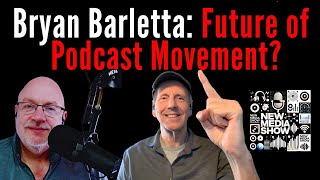
In the closing segment of the panel, Todd Cochran shares a humorous anecdote about losing an email thread for his Madrid podcast event, highlighting challenges of digital organization when assistants have access to shared inboxes. He then provides his contact information across platforms (Blueberry.com, Geek News on X, Mastodon) and acknowledges the technical hiccups they experienced while editing the live video, including a brief moment where Rob Greenlee’s video feed was cut off. Rob Greenlee repeats his own contact details (RobGreenlee.com, email, YouTube channel) and invites viewers to watch the replay on either host’s channel. The conversation wraps up with a reminder of the next live session (3 p.m. Eastern), a thank‑you to the audience, and a friendly sign‑off. The segment reinforces the panel’s informal, community‑focused tone while also exposing behind‑the‑scenes production issues and the importance of clear communication channels for creators and listeners.
Chapters
Brian, you, you guys have had a, a couple of big weeks here, uh, coming off of Podcast Movement and the announcement and everything. And you're— I'm sure you listened to last week's show where Rob and I were doing a lot of speculation.
Yeah.
And, uh, and, uh, I guess from the beginning— and congrats on your new role. Thank you. And of course, with the SoundProfil acquisition, you're moving to this new position, you know, where you're probably at a crossroads here on you know, probably trying to answer all the questions everyone has been asking, you know, what does podcast movement become? And, you know, just, you know, wherever you want to start, we can, we can start.
Well, I first, I want to actually say thank you for, for, uh, talking about it, right, previously digging into it and speculating on it. I mean, I think you guys have been a big part of podcasting for so much of its career, its life. I guess it wouldn't be its own career, uh, but, uh, you guys, it has been a career actually, but it's, uh, you guys have been a big part of it, right? And you've experienced all these different things. You've been to so many different conventions. I mean, Todd, you have gone to conventions all over the world too and speak at them or expo at them too. And I, I think we need that critical feedback. So, um, we're really excited. Uh, we want people to, you know, uh, be, um, skeptical, uh, because it's a lot to change. But I think that, you know, we're gonna do as much as we can to benefit the whole industry.
Yeah, I think the, um, you know, I, I, I'm sure you heard in the last show we had kind of made the decision going into it that we would probably not renew. And, uh, just, you know, based on, you know, a whole bunch of factors. And, uh, what it really boils down to is, you know, I've got a spreadsheet and I put number of attendees, cost, you know, and then we comes out with this, you know, this number down below And, uh, you know, when you get under 1,000, that number gets a little weird, uh, for us. But I don't know, I think there was probably close to 1,000 people there. I don't know what the official number was from the event this year, but that was my eyeball calculation. Do you have any idea what was the actual number?
So I, I don't. I wasn't actually very involved in this specific event. Um, you know, the conversations really kicked off in May this year, and so that doesn't mean like I'm not on the receiving end of taking all the feedback and digging into it, which is fine. I don't need people to make that distinction. But it's, um, there's some things I have been digging into, and there's some that I don't know how much it benefits. I think that, um, I think that I don't know the game of like talking about how many people attended and all that is valuable, if— because it's really a feel. And at the end of the day, if you don't feel that value, you're not going to come back, right? Like, I think some of the spaces have been too large. And, you know, I'm comfortable candidly talking about the fact that a lot of what drove this deal was the the fact that I was starting to think about what our involvement would be in the future is Sounds Profitable and the events and how we could accomplish something that made it an unmissable event. And I'm aiming, aiming absolutely to make that happen next year. But Sounds Profitable is something where I can make change in the same day, right? A partner has a big pitch, they wanna do something, we can help, we can pull data, Tom and I can be on site with someone tomorrow presenting latest research and there's cool stuff. We're talking about South by Southwest is March, right? That's the first opportunity I have. And then September in New York. And even then, I think one swing is still not going to make everybody buy back in. So we're talking years, right? And that's just the reality of it, that there's going to be people that we can pull back in. There's going to be people we lose permanently, and there's going to be people that we can convert, and it might not be it might not be that quick.
Yeah, I think, you know, from my perspective, the idea of going to New York alone is valuable in that, number one, you're gonna pull— you're gonna pull from that region. That's, you know, that's a huge, huge, huge metropolis, you know, huge numbers and people. So from that standpoint alone, you know, the show should be accessed just purely because of the geographic location— Boston, New York, Jersey, upstate— all of the folks that can train in. Even Rob, you know, you can train in from where you're at, um, you know. So I think from that aspect, uh, that was a lot more exciting for me than San Diego, um, for sure. Which then, you know, will people come down to LA to San Diego? And maybe they won't, but I think New York, you're going to be able to get a significant amount of foot traffic. And, um, but you know, really then I think the question we all have to ask is there— there's been a definite change since COVID um, and how shows are. You know, the London show is probably the, um, the oddball, and, uh, in how they've— you know, and you've been to London, you've seen what they did there. So every year So, you know, that event in itself has even got its own unique dynamic. And as a vendor, you know, you have to be very, very aggressive in figuring how to get people to stop because everyone's on a mission, but people got places to go, you know. So whereas Podcast Movement and Podfest, you've got a little different traffic. People are, you know, they're going to sessions and so forth, but they're— it's a little more casual. Than they are in London. So it's a totally two different— totally different crowds, both, both valuable in, in a big, big way.
Um, you've been to London a few times or just once?
Twice. Yeah, we exhibited twice.
What years?
The last two years. And then we've renewed to go this year again. We're not going to be as in as big a booth. I think we went down to a 3-meter, 3.5-meter, whereas before we were in a a much bigger booth and rolled the dice on the traffic from a specific location standpoint. That worked out well, but I think we would probably— we're probably not going to suffer from traffic based on where we picked our new booth space at.
So I think that it's such a great event, and it's one of the ones that we want to model after. I mean, part of New York as well is how do we get the international crowd there, because there's value in it. I do think that overall we're neglecting the West Coast as an industry. I think there's so much value out there, and I think it's just kind of hard to crack. I don't have a of experience in, uh, LA, uh, but now living in Portland, like, anything that makes it easier for me to get there is nice. But I think that for this, we, we do need to be in New York. Um, when I look at London, right, like, it's so hard to tell, like, when people are asking what event to go to, it's, it's an easy one to recommend because the tickets are so approachable. It's like £90 a day or something. It's 2 days, and when they mean 2 days, there's like some arrival stuff the night before, the two hard days, and that last day ends at 4:30. And because it's a European conference, it's a ghost town. It's the Americans who haven't gone home yet that are there that second night. And so it's really packed in. And so people like, I like to red-eye in on Monday morning. Uh, I like to say that Monday is usually my Australia day. I meet with all of our partners from Australia because they're still jet lagged from coming in over the weekend. So they're a little bit more tolerant with how incoherent I am, uh, from not sleeping well. Uh, and then Tuesday is that like grab a few more meetings and all that. But it's, um, their event's like really great and it just has so much value for foot traffic. But we've seen the, the development for them, right? Like we've seen it go from, they had a lot of live shows and I believe they had them this past year, but it just wasn't in front of you the same way.
Yeah, it wasn't the same.
They had a lot of industry people, they have a lot of, uh, just general fans. It's, it's so accessible that they're still trying to figure out that audience. But on like, every panel is well attended, is well built out, it's content appropriate. It's a really cool experience. And we want to emulate a lot of that on the expo side of it. Like, I think you're smart for doing that. Because I think that having that booth is great. But having people there and being able to be flexible, the event In London, it's so easy to just have such great conversations with anyone, every, anywhere. So maybe you bring the same number of people, but you only have one person or two people at the booth, and you have another person kind of floating and talking to other people. I think that's a lot of my mindset is how do I create the opportunity? So I might not win you over for a booth in New York, but I'm, I'm pretty confident I'm gonna win you over for why your people should be there and how to get in front of those creators.
Well, I think, you know, the, the booth has its value. Regardless of where you're at, because sometimes you got to wave the flag, say, hey, here, I'm still in business. But at the same point, and then for London, it's critical because people go, who, what, where, you know, you know, they don't even know because it's, it is a different market. But I think from my standpoint, what I really want to see, and I think they did a good job with the regional promotion that Podcast Movement did prior to the event and brought in a lot of locals. That saved the show for us. Uh, I think total we had, we had 82 badge scans, and I had in about another 18 to 20 just rough discussions that we had. And that was way better than year before. And most of those were in the, you know, the Dallas-Fort Worth Metroplex area. So they did a good job bringing local people in. So New York and South By, I think, are going to have their own unique challenges. Um, far as dragging people in from other locations. So I guess the question is, we already know what those is— it's affordability, hotels, all these things, right? For both events, for both South By and for New York. Is there a consideration of maybe something regional, uh, down the road? If you do a one-dayer or a very tight two-day or something to that consideration?
We definitely like— again, remember, Sounds Proper is a four-person team. Uh, Christy will be staying on from the Podcast Movement team, but the rest team's moving under event movement. Um, it's something we are like— it's not off the table, but we— I want to master what we have first and expand where it makes sense. You know, I, I view the dynamic between creators and fans and the business side as like the business side— the revenue from the business side props up and makes it better for the creators and the fans on there. Um, because I, I know I like when I come out of my space that we normally have at Podcast Movement, and I see so much life and activity that makes me excited, right? Especially people who are new and interested in the space or fans. Seeing them, it's like, oh cool, this is why we do this. So the regional things are interesting and we do have the infrastructure to do it, but I want to get a little bit more sure footing. What I will say is that Sounds Proper and of course Podcast Movement has never been shy about funding and supporting and sponsoring people who do these, right? I think that what both of our companies now combined do, we fill a hole that isn't being filled. And does that fill the, like, the complete hole for everybody? No, it doesn't. But it doesn't make what we're doing less valuable. If there are people who are out there who want to do those things, who want to take those swings on more of those events, our biggest thing is like, we want to see people take that swing first in that first year, prove that they can do it. And in the second year, I'm expecting to pay more than the first year pitch. If I didn't buy in in that first year. But I'm very happy to pay that additional price in that second year. And I think we proved that time and again for the people who bet on themselves. It's not easy, but, you know, I got fired from Megaphone and started Sounds Profitable, right? Like, and this is where I am now. So I bet on myself and did all that and funded it myself, um, with, uh, you know, an unemployment check.
Rob, I don't— I guess maybe I'll let you weigh in here. And I think one, one comment that stuck out that was either LinkedIn or somewhere, but someone had said, hey, a lot of this training is now available online. They can watch YouTube video or, or, you know, attend a webinar. There's all kinds of stuff that's out there now for new podcasters to get training, and maybe they don't need the event. But I think we all understand the value of the networking and being able to just have this immersive experience for, for a couple of days for people. Um, do you know, Rob, you know, what's your thought then You know, what would you like to see move forward or, or change, or from other things you've already said?
Well, yeah, I kind of wanted to kind of pull the conversation back again. We, we've jumped right into the weeds of this, and I was hoping to talk about kind of the, the, the convergence of these two entities, um, and, and major players in the podcasting space about, you know, what's I think the community has this perception that Sounds Profitable is a very business advertising brand-centric kind of community, which I know it probably isn't, but that's the perception because of the name is Sounds Profitable, which leads one to believe that it's all about business and revenue and making money from audio, right? So you combine that with Podcast Movement, which has been seen as a kind of like a more complete kind of conference for the whole industry, right? I mean, if you look at the history of that particular event, I've been to every one of them since 2014. And so I saw the very beginnings, Dan and Jared over the years, between Todd and I, we've had a lot of conversations with them about what Podcast Movement, you know, can do in the industry and how it can serve. So I think that's the big question that a lot of people in the community are concerned about, right? Is the separation between being an industry event and being a business-centric event. And I guess I'm just curious what your thoughts are on that perception of a change for podcast movement towards more the business side of podcasting. And maybe that leaves off of the table, the creator side?
Yeah, no, um, it's a great question. The name Sounds Proper definitely leads that, I think. Um, right, it's hard. I don't get to talk a lot about, um, all the things that I've done like before all this because a lot of my career has been in advertising technology as product manager and whatnot. That makes total sense. When, when that iOS, uh, the App Store opened up and Android App Store, I used to do 12 video reviews a day, audio and video recording it, write an inter— like write a review, and edit it all myself. And it was fun and insane. And, uh, I really, really enjoyed the experience, but like, I've been a creator, right? Um, I think that the hole that we fill is for the people who want to do this more than a hobby. The news and stuff we're covering is the stuff that relates to the impact of your business. And I really think that is creator-focused, right? Like the, um, the coverage of how Spotify Video works for both consumers and for, um, publishers who take advantage of it. If you ask some of the questions and the things that we pose in there to even the Spotify support, um, they're not going to have the same answers that we dug out. So these things are not as cool as, you know, the microphone equipment or the recording or all that, but it is an area that I don't see enough other people talking about, um, So we, you know, we kind of get that bad rap. I think, I think when I think about things like the business side is very happy with simply moving to New York and changing the dates and things like that. The creators are where we're going to put a lot of our attention, right? It is, if the brands are there, then the business side is happy. And then it's, uh, now allows us to do a lot more stuff, but we're evaluating like, how do we do single day tickets? Um, Oh, that's great.
I think great to hear, Ryan.
Yeah, I like that.
Yeah.
And I mean, like, we made all the content available. It is apparently 5, 6x the number of cameras and everything you get at editing. Takes a little bit longer when you weren't prepared to do it. So we'll have that content out for free and live, but we plan to put that content out there. We want to make more opportunities for people to submit content and more clear process towards that. We want for the people who are not selected for content be able to have community voted on like, um, meetups and work groups and workshop type things and provide the space for it. So I think that the truth of it is, is that, um, if there are creators, the space that we want to create for them is affordable and accessible, and the opportunity for them to say like, of my peers, who wants to learn about this, who wants to collaborate on this, and making that space available. Whereas I think there's far more competition on the business side, and there is I don't tend— I don't intend to charge for that space for the creators. But on the business side, there'll be a limit of how many of them are, are earned and how many of them are sponsored. And I think that that's just the truth of it. I think there are more people on the business side who are interested in running how to use Riverside than they're on the creator side of what is the best video solution for your needs, right? Creator one, phenomenal. If people vote for that, let's make that happen, right? On the Riverside one, well, there's other video softwares, right? And so if the business community wants to see that, we can create that. If Riverside wants to make it happen, whether or not the public wants to see it, then I think that that's a sponsored thing. And so again, it's one of those things that like, I want people to hold us accountable and, you know, wait for that to happen. But I think, I think the podcast movement as it existed fell into a track that it worked for the business people. Enough, and it probably needed more support on the creator side. Yeah. And Dan built a really incredibly successful event company that does far more than Podcast Movement. And what he is lacking is that individual who can be with that community. And what I think I bring to the table on that end is the acknowledgement that I'm not as close with those creators, and I need to be, and I need to meet more people who are.
Well, and that's the interesting tension here, is, is that the creator community is a very diverse community, right? It spans, you know, really big content creators and it spans all the way down to smaller content creators and the needs of those different groups in the podcast industry. And then also by genre or topic or whatever, sometimes those needs vary a lot. There's not a real consistent, you know, and I struggled with this for many years in the podcasting space, being reaching out to all these different groups, the comedians and the the commercial radio folks and the public radio folks, they all build their own little communities around themselves. And oftentimes they don't really hear about things that happen outside of their little community bubble. This is just kind of a social dynamic that I've seen. It's the same thing with the broadcast space as well, whether it be TV or radio, where they, you know, there's a bubble that's around them that they don't really see outside of. And I think that's the That's the real question. Then Todd and I have seen events that have come through the pipeline here for many years that are combining this kind of festival atmosphere where there's live onstage podcast recordings and things like that. And people have tried to do that. PodCon tried to do that many years ago in Seattle. And I don't know if you saw that happen, but I think they had like 2 or 3 events, right, where they would have an onstage performance of a very popular podcast and have like 600, 700 people in the audience in the same facility with the conference that was going on.
Yeah.
And that's something I want to get towards, but I think that that's another group of people that podcast movement hasn't captured. That's fans, right?
Yeah.
Like, yeah, exactly. We're joking around, like, I'd love to do live shows, but I was like, okay, so thinking about business and creators, like, I feel like the— if, if I offered two shows, if I did like The Ringer and Welcome to Night Vale, I think I could capture everybody who attends for 15 minutes at least by one of those two. But could I even hold their attention for a full recording? And even like, at South by, right, Vox has their own stage where they do live recordings. The line to get in to see Kara Swisher is so long. 15 minutes into it, after everybody's taken their selfie and everything, your people are like, well, I'm at an event where there's so many other things asking for my attention. I can listen to this literally on demand later, right? And they leave, right? So I think that that's like a thing I want to crack later. And you're right on all those small communities. I mean, then you even get into like the Black creators and the Hispanic creators. And the hardest part for me is that so much— like, I try and read and ingest everything, but then you learn about the fact that the, the loudest voices in some of those areas aren't actually the ones that people want to be the champion, but they just don't want to lose another voice in that space. And so navigating that further. And so I think that like our goal for next year is how do we support creators, period, and acknowledge the places where we probably need to improve still, and then figure out how to do it from there. But how do we listen? How do we provide that opportunity? And when people raise their hand, how do we take it seriously and empower them to, to engage more?
And yeah, and I think you're not gonna please everybody. No, it doesn't matter what you do, you're never going to please everybody.
Yeah, I remember years ago, uh, Uh, oh man, school podcasting. Uh, Dave Jackson, he was in charge of, uh, you know, the, the creator thread, or basically the— he was basic one that was curating all the speakers. And I told him, I said, everyone has agendas, my friend. You, you're not going to get away from it. To everybody that wants to speak has an agenda. But I— the thing that's drove me crazy is, um, in the beginning, Podcast Movement was pretty strict on it. If If you pitched, you know, you weren't coming back another year. You're off. You're off.
And I don't know, never coming back on stage.
Right. And if, you know, someone reported you pitching, it was taken very, very seriously. I heard just continuous pitching at a lot of, of the sessions this year. And yeah, of course, like even in my presentation, I gave a couple of blueberry examples, but I also had stuff up from, from Buzzsprout. I had stuff up from Libsyn. I, you know, I was throwing all my competitors' stuff up there too. So that there was equal balance, saying, hey, this isn't what we're doing now, the other hosts are doing too. These are things that you need to look for, go ask for, and make it fair and balanced and make it educational and try to be equally applied in what we're presenting. Um, I think that if you guys took a hard stance on you have to educate, you can't pitch, regardless of your status as a vendor Rather, rather your, rather your status of who you are, if you're going to present, you can't pitch a product or service.
And well, or you have a separate track that's just for pitches.
There you go. I think it's people. That's what it is. I think that if you want to pitch, it's going to be a purchase thing and we're going to figure out how to be more clear about that. Yeah. Um, but I think that it's tough, right? I mean, like we, one of the things that I'm excited to engage with James Cridland on, and I don't think we've done justice explaining the what we mean by editorial director there. But I haven't been to a podcast conference that hasn't had James involved in some sort of leadership position. And that doesn't— to be clear, that doesn't mean like he's picking the individual panels, but he's working with the people on the structure. What are the topics that are important? Who are the people that we can reach out to, right? These— he's part of that process. And as PodNews is half-owned by Podcast Movement, like, I want to learn from James on that. I want to pull him into that and figure out where, where we can do better. I love things like South by Southwest panel picker, right? It's 4 people on stage. It's no more than 2 male. It can't be all white. If you submit more than 1, you're less likely to get any of the subsequent ones. And anything more than 2, you can't get up there. And like, it's no more than 2 people per company. And even then, in a panel like that reduces your chances of being on stage. There's so many things that we want to work through on that. I think that probably, you know, next year will be our opportunity to get smaller. We'll never have that opportunity again if this grows the way we want to. So why not reflect on the type of panels and the type of structure and what we're asking for the call for content? Why not provide the opportunities for people who got enough votes to show there's interest but couldn't get on stage to still present something, still try it out, whether it's a webinar, whether it's a smaller space or a workshop, or we can figure out cool things out there. But I really want to make sure that when we ask for people's attention on the stage, It is, it's, it's what is coming next. It's no more of the 101 stuff unless it's meant to for the creators. But I honestly feel like we should do workshops, Todd, like what you just talked about there. How much more fun would it be if that was like you and 50 people in a room where there was like breakfast?
That would, that to me is, you know, I think the key here is we want to impart value. We want, we, we want the creators to go home and say something. This is something I'm going to put my toolbox. Yep. This is something when I go home I can make a noticeable change. I always tell people, there's probably— even if someone's pitching, there's probably one thing from a session you can walk away from. But if you can have a, a situation where you're impairing knowledge on whatever your expertise in, whatever it may be, A through Z, as the topics range is pretty wide, there's always going to be people that want to know how to do that and do that better. And if we're, if we can figure out how to make that happen and where, because this is where you get the value. This is where people say, oh man, I got so much value from this conference. I have to attend next year. Um, because I was maybe had that one-on-one interactive interaction. You know, these are the things that really, where's the value in conferences? The conversations in the hallway is the value. If you guys are going to give away the sessions, I can listen to them all online.
But if we're having you, uh, we're literally recording right now and you're on a TV. I have two other screens. My wife is texting me because it's the first day of school for my youngest and the second day of school for my oldest and my dad's birthday. And like, when I'm at these events, I'm right. But that's the thing, like, I, like, when I could burn Dreamcast games, when I bought the Dreamcast way back in the day, I burned every game and I played none of them. It's the problem, right?
So I think I would pick I would be picky on what I listen to. Yeah, but I would be— yeah, but I would definitely listen to the handful that I wanted to go to but I couldn't because I was in another session or it was just, you know, I didn't have the time, something was mixed up.
What happens if we can enable for those people who have those sessions that were more workshops and conversations and just say like, hey, would you like to join a live version of this? Yeah, if people are interested in that, like, why there's so many aspects of the event. Like, we go to so many events, and there's a difference between— we're an industry body that is now running two events, right? Just— I mean, those are just the two that we directly control. We're like at Advertising Week in a month from now. We're all over the place. The event companies look at these things on how much revenue did I earn last year and how much can I earn next year, right? I look at things things and I say, what can podcasting afford and what's the ROI? We, at the things we do at Advertising Week or whatnot there, we're looking at building out panel structures that are one-fourth the price, substantially more value in everywhere, but it's like 40 or 50 seats versus 200 seats. But let me tell you, if I walk into a session and there's 20 of 40 people there, I'll stick around. If I walk in and there's 20 of 200 people, Maybe I misunderstood what this is, right? I'm only here for a few days. Why am I going to waste my time there? And so I think that that's the big thing that we want to bring to the table is that conversation, that kind of the, the, the opportunity for questions. When you exceed 4 people on a panel that's a half an hour long, you don't go deep enough for anybody to have any questions.
Yeah, no, there's no value there.
There's no value. So, so Brian, since you weren't really involved this year's podcast movement. What's your assessment of how that, that format of having everything in the exhibition area, all of the sessions in the exhibition area, and everybody walking around wearing headphones?
What's your reaction to that? So it's funny, so I think that headphones— like, first off, I did not realize how expensive PAs can cost for each of the stages. And in London, previous years they had just the PA, and this past year the first half of the first day was headphones. And then they move back to the PAs because they've done really well with targeted PA systems to make it so that the people in the audience can hear fine, but it doesn't bother everybody else's conversations.
Correct.
It's a piece of an area that we're going to look into more and we're going to learn more about, but it is crazy expensive. I love the idea of the headphones.
To what? Have the headphones or to have—
No, the headphones are surprisingly more accessible. Interesting. I do understand the antisocial aspect of it to a degree, right? You're wearing headphones. But it gives you the opportunity to focus. I think that when there's less competing panels, that's going to be a big thing too, right? We're working on a structure that hopefully has less overlap in those ways, especially about the keynote or the key track of content. But I think that conversation is the most important thing to me. And being able to see a vibrant area where you have the stages and you have foot traffic, I really enjoy. And, you know, looking at some of the past events and where Todd's booth has been, there's been some events where I was like, oh, I hope somebody walks by here, right? Like, it's just like there's no draw to it. If I, I guess like if I could have started this process earlier, could I have moved my lounge in there? Could we have moved the premium lounge in there? Could we have done more in that space, drop a stage and build more in there? Because the problem is that that Gaylord Hotel was laid out. It was fun, but once you left that area, it was really tough. But even where we were was so far down the hallway.
Yeah, it's always been an issue.
And so I think that that's, as we're evaluating the, the location in New York, it's, you know, how do we build a space that shows the life of everything there with allowing people to do each of their independent things in an accessible area, right?
Keeps, keeps people together more. I mean, if you look at the the London event, I went to the first year of that event. And so I have some feeling for it. I haven't been to the last couple, but just that small venue, everybody's kind of forced together and it just feels like there's a higher energy. People aren't scattered all over the place like at the Gaylords. The Gaylords are just such a huge venue. And all of the podcast movements probably over the last 10 years have been held at venues that are that are so big that it, it's hard to hold people together.
And I, and I think that, yeah, the conversation, the headphone though deal, I was surprised. I think I had, I probably in my session I may have had 40, maybe 35, 40, but their attention was definitely dialed on because they had no choice. I was right there in their head because everyone was listening on the headphones. From attention standpoint It works great. Now, what was kind of cool for me too is I was able to hang out in the booth, and, and when it was slow, I was able to listen to some other sessions, you know. So that was kind of cool too. Um, but at the same point—
go ahead. Do you— how many people were in your— like, how many seats were at that panel?
Like 100? Uh, there was more than probably would have ever attended it, so there's probably— there was probably 100 seats.
How would it have made you feel presenting to 50 seats with 35 people filled?
See, that's always better. That's always better. It's always better to have people Always better to have 50 in a 45 seating room too.
Yeah, always. I think that, that like we talk about podcasting is like it's this mainstream thing but a niche appeal, right? Yeah. My favorite panels at Podshow London are when they're in the 50-person Ask the Expert stage in the small glass room, and I would like people like, oh, sorry, we're at capacity. And I'm just like, wow, there's people that like can't get in to see this. Like, I feel bad, but also like Awesome. Like, clearly I'm doing something right, you know?
They had a lot of space they had to fill this year, so I understand why they had excess seating.
Um, oh, I, I didn't feel like they did in a lot of the things. I'm more, more as a compliment. Like, I think they have a bunch of the small and they have a good number of the large. Yeah, but yeah, I mean, I think, I think there's a lot to learn from that, but it's like, I would rather 20 seats and standing room and people being like, wait, I missed that, how do I Right, Todd. Okay, I'll go buy his booth and ask him those questions. Like, that's the exciting part, like catching the tail end of it. Why are all these people here? Why are they so excited? And that to me is how do we find that line between this should be a presentation and it's entertaining, or this should be a workshop and, and all of that.
One thing that Podfest has done that helped— and again, I'm— I have an agenda, I'm a vendor. So one thing that Podfest did was they always they started having these afternoon, like, you know, have some drinks, you know. And one year we basically, 4 or 5, maybe 10 of us sponsored a keg at the booth and, um, and food too, and food and stuff like that, so that they had throughout the room, they had beer stands and people could go over and get a beer or whatever. And, and, you know, and it did that in Vegas too for Podcast Movement, and it drove a little conversation. But the main thing was, is The reason they had to have it was because all the exhibit rooms— I mean, all the, uh, all the session rooms were quite a ways away from the, from the hall. So they were trying to bring people back in. You don't necessarily have to do that if everything's really close. In other words, the rooms are attached to the hall, um, where they have to come out and get into the hall. It's always, always the best. I think that's the best situation, where they don't have to go 5 minutes to find, you know, where their next session room is.
But that's not like a bad— like, that's the first time I've heard like that, asked for that comment. And like, let's think about it, right? Like, in a lot of the venues that we have, there's either going to be some additional costs or a requirement to cover some of those food and beverage things. So pass it on to you. Now you've helped me reduce my minimum. There's going to be space that we need to do anyways. What about for the people who don't want to go 20 minutes away and wait in line for sushi, right? Like, what about the people who just want to stick around and a Kind bar isn't going to be enough for them. Having that as an option and just seeing who opts in as the vendors, like, I think that's great. Um, alcohol is always a really interesting one. I think that, you know, part of me is excited and part of me is sad about like the loss of the hotel bar, right?
It's 11:30. Oh, that was— those are the best.
Well, yeah, because you get back, you know, like, I really should go back, I should go to sleep, but you know, I'll do one lap, and then it's 2 AM. That's right.
It's those— that's— that often pays for the show.
I think the hard part there is I don't know how I accomplish that in New York.
Yeah, it's very hard. Same with Vegas, you know, same thing. Yeah, people, people, oh, let's go to the, you know, let's go to the casino or Fremont Street or whatever.
And that's, yeah, and that's, so that's like, you know, how do we contain everybody's intention for 2 full days and make room for the people who have spaces in New York or want to meet people in New York to say like, hey, as long as you don't step on our main 2 days, like, we understand you're going to do your own thing and we want to support in that. So how do we make space for you to do that? How do we say like, oh, could we get some tickets to that so that we can bring some of our sponsors to it and just make it valuable for everybody and collaborate there? But yeah, I mean, I— but alcohol, like, not opposed to the idea. Definitely on the snack side is really easy there.
But I think that, um, yeah, again, there's just— again, the main thing is keep the traffic, make people want to talk to each other, you know. I think that's the main thing too, is Is—
I used to live off the candy that Acast would bring out to the events, right? Like in London, there was a few times where I like basically only ate candy and coffee. Uh, not advising that.
Yeah, well, we always bring 2 bags of candy in. Yeah, I understand. 50 calories at a time. Um, that's—
then you have better self-control than I have because mine's fistfuls.
So as we think about the, the future in, in the especially in New York. I've been to a lot of events in New York. I live close to New York. And I know that— I'm sure that you've been to the Advertising Week.
Yeah, yeah, we'll be there in less— a little over a month from now.
They hold that event in an old multi-story mall in Manhattan. So it's an interesting question of whether or not you see this event being held in a hotel or in a separate venue, which gives people the option to stay wherever they want to in the area.
I think it's going to be a separate venue. I don't want to obligate people that because like I know we've talked about or you guys talked about costs and all that. And so like, granted, it is September and I'm looking at March right now for South By, but my flight to Austin from where I am in Portland of the same setup that I had for Dallas was about $200 or $300 cheaper for Austin if I booked it now. And being 20-minute walking distance, Uh, without a South by ticket to get to what we're going to have there, which by the way, the stuff that we're going to be running there will not require a ticket. Uh, it will be official partner content, but it will not require a ticket to South by. Um, I think that the price was a little bit less, a little bit more expensive than my discounted Gaylord, uh, hotel room. Um, but I believe, yeah, I mean, I think that that's what it is, but I think that that total price was still Uh, it was only a couple hundred more, so erasing the flight discount there, but that was also, it's more days at South by than it is at Podcast Movement because arrival day, 3 days of content and departure day. So 5 days instead of what you could do in 4 if you really wanted to. Um, and no ticket. So if you factor in the fact that you don't have to buy a South by ticket or a Podcast Movement ticket, granted, if we think about creators, it's only around $100 that they're saving there. But still, I mean, we're coming in very close for what this August event was for South by. New York, I think New York continues to be one of the cheapest places to travel to if you're willing to be flexible. There's lots of airports. I don't love flying into Newark.
Flying in is definitely not the cost. And then if you have enough time, you can find reasonable daily combinations within the—
within Manhattan? I tend— I mean, most of the times when I book, like, I haven't booked for Advertising Week, but I'm happy to share with you. I'll send you an email over what I end up booking. So we're about a month out. I, I really believe that I'll be able to get it for a couple hundred dollars per night for when I'm staying there.
That's— and that's— I would, I would expect that, about $250.
Yeah. But there's people who tell me that they expect $600 to $800. And like, look, I'm not telling you to go stay on Long Island, right, and come into Manhattan, right? But it's like, yeah. But I think that there is— I think there's a lot of opportunity, right? And we want to make it as accessible for creators as possible. And the business people, we want to, you know, we got to decide Manhattan or probably Brooklyn on that. We have to decide like proximity to transportation. We have to decide, are there two venues? Is it where the event is and then where the party happens afterwards? Because can I really transport that many people hot What am I going to find for a venue that has like a cool place that can support a couple thousand people for a party? Or does it need to just all be in one place? Because if I lose somebody, they're gone.
Right.
And, and just being really, you know, really aware of these things, but we're, you know, we're going to fight for all of it. But I think the truth is, is that like, I think when we talk about creators, we need to separate out the difference between hobbyist and creator. And there's nothing wrong with being a hobbyist. Like, there's so many things I do where I'm a hobbyist. I probably wouldn't necessarily go for a convention for it. I don't even know if somebody gave me a path to make— I love Dungeons and Dragons. I'm a hobbyist in that. I'm not a creator. If somebody was like, here's your path to go do that professionally, I don't think I'd take it, right? Yeah, it's a hobby. It's separate. But creators, I think that every creator has that question of, could this ever make me money, right? I think that that's part of why they do it. It's that line above hobbyist, that line before it's a business or even into the business. And I just, I want to, I want to acknowledge that like hobbyists probably need some more support in this industry overall. Creators definitely do. But a lot of where we've gotten into trouble as an industry is we are one of the easiest creator-based industries to get an actual job as a creator. I don't know how you do that in YouTube or influencer, like to get a job as a creator. We don't require them to understand necessarily necessarily the marketing and sales. So there are creators in our space who don't have to understand the full flow. They get a great job, get a promotion, get a huge budget, and then get let go without being explained all the details to it. Whereas if in YouTube and Twitch streaming and all those things, they really have to be responsible for those things because they're all micro businesses. They're their own thing. So I want to get better at that creator and saying to them like, hey, if you sign with a network, this is what they're looking for and why. Like, this is Spotify's video, here's the upside and here's the downside, right?
It's—
I'm not going to help anybody with what cool microphone, right, right, to get, uh, you know, that's all on YouTube already. Yeah, but, but there are things that creators ask and I want to be there to answer them, and they just don't feel like creator questions, but they are. You know, a lot of our, our readers of Sounds Proper, people who download the reports, are people with Gmail addresses and people just getting started, and they shoot me an email and Tom an email, and we respond to every single one of them.
One thing I think we do have to acknowledge is that someone's considering creating content— there's so many choices now, you know. Of course, the natural thing is let's go to YouTube or do TikTok or whatever it may be. I think we have a channel world. Yeah. And I think we have to make folks understand, and, and I think it's, it's a real threat if we don't make the world, not just podcast movement, but if we don't make the world understand that doing audio is still cool, we can lead to video, that's cool. You start with video, that's cool. We don't care, whatever you want to do. But I think the components of podcasting traditionally, and of course everything's called a podcast these days, so we don't need to have that discussion. But I think just the understanding that that, uh, you know, there's opportunities here. And if we don't, um, this industry could look a lot different in 5 years. It's already looking different by the number of the lack of new talent coming in to the space. I think we have to do something, and that's just not necessarily your issue, but that's a community issue to make people understand.
I don't know if we have a lack of new talent or if there's just this really healthy middle area where they don't get a lot of possibility, right? Like, I continue to bump into all these people that are able to build their passion products, projects, and all that. Like, there's a few podcasts I really enjoy that are narrative that are fully funded by Patreon and just get to sit out of so many of these things that we're talking about. That's true. I, I think that we're often too close to it. Like, I—
the—
anybody who attends Podcast Movement, I do not care about your ad-skipping behavior, right? Like, good on you that skip every ad. I don't believe you. I think you're overexaggerating it more than consumers do. And it, you know, that's like, again, I also listen to very specific podcasts that like, if I was like, hey, my favorite show is on stage, it's The Besties, where 4 40-year-old dudes talk about the video games they don't have time to play. Not a lot of people are going to want to be in there. But I think that there are a lot of killer creators out there that are making great money that we're just not talking to because we're not pulling them in. I think that, you know, Todd, I don't envy how much of your business is built around RSS, but I've also been impressed by how many things you've done bigger than the whole industry is built around RSS. But I think we're at this opportunity where to me the word podcasting is whether correctly or incorrectly being used to talk about on-demand, audio-forward, open distribution. And we are benefited by every time someone says, oh, that's a podcasts because we have the opportunity to pull them in. When someone says to me on the advertising side, oh, we can't buy audio, but I love podcasts and we buy social, sure, we got, we got social podcasts for you, right? Like, why say no? We can grow them into that. And oh, I don't, I don't listen to any of that, but I, you know, I do watch a lot of podcasts on YouTube, whatever you want. Like, it's how we get them engaged with this idea of content that the creators actually own. Because think about it, 10 years ago or something, Linus Tech Tips and a few other creators were just like, if you subscribe on my website directly, you'll get the content one week in advance. And that disappeared, right? It didn't take on, on the private proprietary sites for most creators. But now we're watching Patreon use the word podcast. And we're watching all these subscription things and all these services use the word, whether fully encompassing or not. It means a world where the creator makes a decision where their content lives. How it gets to the people and how they make money off of it, whether they're giving that right to somebody else or they maintain it themselves.
That's cool. But I think if we give ground to the two major locked-in platforms, your industry, podcast movement will not survive that. If we just rely on those two.
Oh, just relying, definitely not.
Right.
Like I think that that's a terrible idea, right? Like if. If Severance doesn't get renewed for season 3, and they did, like, they can't like go shoot it themselves as like a budget TV show and then release it on Betamax. But if we decide to not list this on Spotify, and we send a final message posted on the Spotify feed that says, hey, everybody who consumes on Spotify, we disagree with what Spotify is doing, contact us and we'll send you a cassette tape with it. You can write that choice. You opt in there. Look, we're watching musicians opt out of Spotify. That's true. Now we're watching people push back in different ways. We're watching all those different things. I agree that there is nothing cooler than the open distribution and ownership of RSS. But the problem is, is that the people with a substantial amount of money don't want things to be open, right?
They don't.
Oh yeah, they don't. From not having control of it. However, I think some have been better stewards than others, and most of them when they've tried to like really exert pressure on it, have found that even their audiences, not just our industry, has pushed back. And it's been pretty cool to watch.
Yeah, I think we have an opportunity though. This conversation tends to always focus on audio. And, and I think one of the things that we've left ourselves vulnerable to is Spotify and YouTube disrupting RSS. Because of an effort around video. Of course.
And, and so did you see the latest numbers that we— I think it was this week's article, like, showing that, like, it's almost half the people on YouTube just listen.
Yeah, to the video, right?
Sure. But, like, I mean, to them, they don't care about the delivery format and all that. And I understand that, like, the hosting and the freedom aspect of it. But, like, that means that to me, people want audio and that, like, that's the core that we don't have to let go of.
Well, but your research has also shown that people want to have a choice. So I agree it can't be 100% viewed everything that everybody wants is just audio only. I think that people will experience the content in an audio experience even though it's video, but then they know that they have the option to pull it out and watch it too.
So, and I think that option is powerful. I mean, like, look, we're where a Zoom call for me and Rob into what Todd's doing for the rest of it, right? Like, you don't have to be precious for it. Like, literally no one's going to turn this on and be like, hey, by the way, I'm done with the New Media Show because, wow, they phoned it in on video. They're just going to minimize it and keep listening to it if that really bothers them that much.
But what you're, what you're building though, and what the marketing messaging that has been produced largely over the last 2 years And what is affecting new creators is you have to do video. And as soon as some creators, women and others, I hear that you have to do video, they say, I'm not doing nothing. So I think, I agree, I think we have to be cognizant of that messaging. And I'm not saying video is going to go away, and I'm not giving, you know, I'm not giving up. But I think we just also have to make people understand that, yeah, you can start with audio. And audio only still cool.
We're leaving ourselves vulnerable for YouTube and Spotify to come in and disrupt us if we have that attitude, Todd. I think podcasting since the very early days, and you know this because you support video on your platform, that video has always been a part of podcasting. It's just that YouTube came on the scene and siphoned off all that content. Now, granted, what was the reaction of the podcast industry was to retract from, from video. Yeah, there's no reason why we can't be more aggressive with—
oh, I agree, you know, and that's dependent upon the messaging we've already shared with people that can help us in that regard.
And I think the hard part is that, like, you know, like, we are always going to explore what more we can do, but none of our messaging has ever been any more than, like, I mean, heck, in Tom's book and everything we do has been your show doesn't necessarily need to be on video, but you do, right? Uh, have you ever tried to play a podcast trailer in a group of people? Like, just like grabbing your phone and hitting play and then awkwardly staring into somebody's eyes?
Well, I've never, I've never, I've never played a trailer for somebody.
So I mean, so there you go, right? But like, the video component is the fact that like, there are, we have substantial number of partners who say like, hey, on TikTok, we get these people who watch like a bunch of Shorts or whatever on Instagram and they buy it. How do we get them to our RSS feed? I said, well, I probably won't go there, but, but you— but that person just said, I want 1 minute of content from you, not 3 hours. There's nothing wrong with that, right? We have to figure out how to reach all these people if we want those audiences. But again, this is the line. If someone says, I want to be an audio-only creator, we are going to provide the environment where they can— but where they can figure out where they can thrive.. And I think that a lot of the things that we intend to do, everybody here is not saying like, hey, just spend money and it just works on video. It's, will you make enough money back by going into video to make it worthwhile? Or can you do what you need to do on audio? And I think that's the bigger conversation that's been happening.
And I think too, it's very, very clear that about 65%, and this is, you know, runs pretty close to from the very, very beginning. Don't care about money at all. They don't care a bit about money. So you've got 35%.
Well, Todd, let's be clear on that. They don't care about money coming directly from the podcast, right? Right. So they may be making money from other business activities.
If this episode doesn't have ads, you're advertising that they listen to your next episode. You're advertising that they follow you guys, or they buy into—
oh, that's what some people are looking for is authority or whatever it may be.
So they have different goals, but everything that is beneficial for the business and advertising side is applicable to creators. It's the difference between selling someone else's brand and yours. And I think that that's what's really fun about it. And we just probably could do better at saying that sentence every time instead of just saying like, if you're selling, you know, a health product, right, this is how it works.
It's so, you know, if you sell products on your show and you might be the product.
Yeah. Yeah. So how does this conversation shift about RSS when we start to see a real groundswell of interest and deployment of HLS streaming into RSS?
I think there's a plan, you know, the standards project has a plan, you know, but getting the apps to participate in other—
yeah, I'm gonna pass the torch on that one. I think that, that I spent the first 2 to 3 years convinced that if with the right momentum and the right people, we could get the apps to adhere to things. And I did not succeed. And it's not— and like, Todd laughed at me when we started this, and rightfully so. But I don't— I think you supported us and you too, Rob. But it was just like, okay, like, let's see if it's different. We should always keep trying. This new idea with HLS and the standards project, I support it. And I'm going to figure out how we give them space and how we give them opportunity and how we amplify that message. But I struggle as someone who has so many other things that I can provide results on to believe that in today's world that like we are going to get the apps to buy in. And I've been really finding more success. How do we, how do we build around that? And how do we understand that? And how do we just be fully aware of everything? But I don't, I don't think it is a dead end effort. I think that I have potentially hit my dead end as an industry advocate to be able to do it. And whoever is next on this, I want to provide them all of our support and backing to help.
I think traditional apps, you know, that's an uphill battle. I think apps have to look different. All the other apps, I think it has to look different. I think there has to be— and maybe it turns into micro communities on a PWA, or who knows what it's going to end up looking like.
We all pool money together and then we fund the next 10 to 20 YouTube and Spotify and TikTok competitors. Editors as an industry, but under the agreement that they integrate a certain level of data and obligation to the podcast industry. There's so many different ways to go about it, and it's really exciting. But like, what does it say in a world where people are saying, oh, RSS is dead, or, or fighting that, or YouTube's taking over Spotify Video, when like there are so many companies like Blueberry that are still strong and have a growing business, right? Like, that's cool. Is it, you know, is it the 2020 gold rush aspect of it, or even 2018 when there was more companies?
No, but like, it's never been a gold rush. It's been slow and steady.
Sure, but that's, that's pretty neat to me. That means that, you know, the, the exaggeration of the RSS feeds death is exactly—
oh, it's exaggerated. Brian, I want to be respectful of your time. I know you had a call at the top of the hour. Um, any— before, before we let you go, any thoughts on when you guys are going to have some announcements? Uh, I know you're probably scrambling behind the scenes.
It's— I wouldn't say scrambling. It's a lot of opportunity. I think that our goal will be to start being more vocal as soon as October for as much as possible. I want people to have more, more ability to get things in under their budget for who want to sponsor, the people people who want to submit, not only do I want to have clarity on submission, but also the approval process. I want people to know months in advance whether they're approved or not. And even, and then we have to build out all of that there. But we are very close to finalizing, we're signed on the South By venue. And we are close to finalizing on the New York venue. We just want to make sure it's, it's exactly what we want. And we want to, we want to ask a little bit more feedback. But I think people will have more time than they've ever had before to participate in Podcast Movement, and we will work our hardest to hear all the feedback and expand this event to fit everybody's needs.
I know you got your hands full.
Yeah. Will the South by Southwest event be a Podcast Movement event or a SoundCloud?
It will be.
Yeah.
So both of those will be Podcast Movement and, you know, Podcast Movement will likely take the lead on the event. Event titles, whereas my day-to-day is still very much with the Sounds Profitable partnership and the, the, um, the, the trade association aspect of it.
Will we see Sounds Profitable events that are separate from Podcast Movement events?
Right now, like Advertising Week this year, the branding will still be Sounds Profitable just because of the momentum and stuff there, but we are figuring that out, right? I think Advertising Week and Sounds Profitable probably are one of the ones that's going to be an interesting one name-wise and the recognition. But I think a lot of our focus is how can Podcast Movement be very clearly the event arm there. But there's a difference between the trade association supporting Podshow London and another event supporting Podshow London, right, which we're already signed as a sponsor for, for next year too.
So one thing that did come in via chat from Beauty Bubble, she says, one way to be forthright is to discuss openly the complaints and how you have resolved them. This is just an idea from someone who has acted as a supporter to the activist, whatever that means, of the conference. So, um, that's some feedback from Beauty Bubble.
So as I want to promise that we're going to have, we're going to have more input and more opportunity for that. But as someone who's been involved in events before or large-scale groups and all that, talking through all of that, it can cause more work and negative feeling, even if it's settled by the people involved. So we intend to explore opportunities to be better at that. And that's, I think that's the strongest statement I can say. It is a priority, but right now I need to build that appropriate funnel because if people give me feedback or things to work on, I don't have the system set up for how to get them the right feedback today.
And you're, and someone says your setup has gotten more intense since the last time I saw it. So anyway, so feedback, your, your background, your, your wall of speakers back there.
And that's the thing I did was a cool camera and a cool microphone. I got to step it up every year.
I'd love to hear AC/DC at 120 decibels rattling on that from behind you. So pounding on those speakers, right? Brian, guys, this is great.
Thanks, thanks so much. Any questions you have or anything we can add in the future, it really means a lot to me that you guys are bought into this, and I want to hear your feedback.
Thanks for coming on.
We definitely appreciate it. Thanks, thanks, guys.
Yeah, okay. But all right, let me transition here.
There we go. That's the wide, wide angle view there, Todd.
Yeah, now we're back to normal.
Um, hmm. Yeah, well, I kind of expected the things that he was saying, um, you know, so it makes sense. I think that there's still a lot to be explored and unpacked and clarified.
And I think there's a huge amount. Yeah. So, and lots of questions unanswered here.
Can't do it overnight. No, it's gonna be based on his experience at his next event and then the next event, and he'll evolve it and make it into something that will be more attractive to others. And I think he may find that these, you know, there's a huge opportunity to do regional events, not unlike what, uh, Potfest is doing with Potours. Um, and I know that Dan has done that in the past, so it's not like it's alien to Podcast Movement to do local regional events.
Yeah, but I did get the impression that, oh, the advertising piece is still going to be a heavy piece of this.
Yeah. You know, I'm not sure that we have a clear understanding of what those Sounds Profitable partners mean to Podcast Movement. Right. And, and what that alliance is or what that connection is. Yeah. Just like what you've been saying about, you know, there's going to be some arms arm twisting. Yeah. Since that's the base of now Podcast Movement, right? All those companies, and also increasingly now that, you know, PodNews has come out publicly and said that they're half owned by this entity now, all those sponsors are now part of Podcast Movement as well. So I don't know what that means for how many people are exhibiting, how many people are going to be, you know, paying for stuff. I think, you know, I think it could really expand the participation at the company level of what Brian is working on here. But the key question is, you know, trying to attract people that are not part of his partnership pool, right?
And I think he underestimates the lack of growth in the space. Again, he says he doesn't 100% know the creator space, so— or the stagnant, stagnant aspect, right?
Yeah, right now of what's going on and how to kind of like turn the faucet on this. And I think to some degree the stagn— the stagnatism or the stagnation is coming from this shift in perception around video. And I think so too. The, that's the shiny thing that's out there that's getting people's attention now. Yeah. Um, more than ever. And that may have caused a little bit of a pullback in focus around the RSS audio side of podcasting.
For sure. Well, Rob, one thing is clear today. I have my few changes I made. Uh, you have not jiggled today. In other words, you've not froze. I haven't.
So no, because it could be my bandwidth.
Yeah, you're going out Starlink 2 and the stream's going out Starlink 1. So, uh, really? Wow. Yeah, so the fiber is blown in, but no word on when they're going to be able to get me hooked up. The guy said 2 months, so, you know, who knows. That's before they actually start it up to you. Yeah, because, you know, they're going to start lighting stuff up and then they're going to work this way. So it probably— the ground will be frozen by the time Right. And it might be spring. Hell will freeze over. Yeah, well, it— you know, I was laughing with the guys. I, by the way, where they put the main junction box close to my property, I said, by the way, in the spring there's a foot of water over the top of that box. So, uh, you know, hope that stuff's waterproof.
So what's the, the takeaway that you have from your perception of what Brian said today and what you've heard?
I'm a little bit confused, so we'll see. I don't think they made a decision.
Yeah, I, I guess we're not going to know until we know, right? Which is going to be when they start doing their next event. Yeah. I don't even know that we're going to necessarily know a lot even at South by in the spring. Yeah.
Um, just because— but, but I've never seen hotel rooms for $200 a night at South by.
Not unless you stay out of town.
Yeah. Yeah. And then you can't drive in, there's no parking.
So you have to Uber in.
You'd have to Uber or in, in Austin's case, and it sucks staying outside of town. There's nothing you're going to have to, you know, you're gonna have to have a backpack that day. And then, you know, you're going to be there from 8 o'clock in the morning until 9 o'clock at night.
Well, there's also a growing market for, robotaxis and autonomous, yeah, car transport in Austin.
But that's, you know, that's kind of the same way as Dragon Con is too, so it's not any different than Dragon Con.
I know I stayed out by the airport and took an Uber in every day.
Yeah, because you saved $250 a night on your hotel room, right?
Yeah, it wasn't that inconvenient, right?
Right, take a $10 Uber ride. Yeah, but when you left for the day, you left.
You were done. I was, but it was pretty late usually.
And that's gonna be the same— that's gonna be the same way in New York, you know, because—
yeah, that's why he's gonna have to really focus on after hours.
Yeah, because if I'm going to New York, the first, you know, the first afternoon or evening that I'm there, I'm going to the mecca. You know what mecca— the mecca in New York is, right?
I don't think I've ever been to the B&H. Oh, B&H, actually they've got a, a a Creator event coming up, I think, in a couple weeks.
Yeah, you know, making the— you may not afford to go there, but you sure like to go there and look at all this stuff if you're a gearhead.
Yeah, and I think that one of the limitations is if a lot of people come in via train. Yeah, um, there is a— there is a last train out of there. Yeah, that you have to account for.
Yep. So yeah, and I think the Yeah, it's just gonna be like Vegas. You're gonna get stuff done during the day. But if they— you know, we didn't ask him about the weekend aspect.
Uh, we missed that.
Yeah, we didn't. Yeah, but I think, you know, probably there's been enough feedback. Hopefully he's heard that already, but I don't know.
And again, well, he did, did give us the impression that single-day tickets was— yeah, on the table, which I thought was a good Yeah, good sign.
Yep. Or maybe they have two dedicated tracks, you know, dedicated tracks during both those days that would make one person come or another. Yeah, you know, maybe pure business side and then per growth side. Maybe it's a growth track and a monetization track or something to that effect. Yeah.
So let's say— go ahead. I'm just saying, uh, certainly the needs of the market are different than they were back in, you know, let's say 2015 or 2016.
Yeah. And the market has changed, you know. So again, the vitality of events are not as valuable as they were. But I think going back to podcasts, I think Chris has such a huge opportunity. I see they're out in California this week promoting. So, you know what, how many does that You know, how many of those folks will make it to Orlando? I don't know. I hope plenty. But I think Chris has a huge, huge, huge, huge opportunity to differentiate completely his conference from Podcast Movement. But yeah, I agree with that. But it is, you know, it is good that Brian understands the dynamics of London too, because they've been— they go to London, they do a lot of business in London.
It sounds profitable.
So, right, that's true. Anyway, no other feedback from the audience. Let me see if anyone else weighed in. Uh, no other comments here today. So we're already an hour in. So we've spent 2 weeks on podcast movement, so next week we will definitely be talking about them.
Anything pop up in the podcast space that we need to talk about before we go? I don't think so. I think that that's been the focus is kind of what's going to happen with this event. And we're coming into fall. So, you know, that's usually a time when maybe new podcasters are going to launch their shows and just prior to the holidays that are coming up. And so we may see a little bit of a burst in energy in the space.
I do, I do have a funny one for you. I was, um, this morning I was going to start my prep for, uh, podcast days in Madrid, and I went to my email and I typed in Madrid in my email and it was nothing in there. And I said it must come in another email, and I spent an hour trying to figure out what happened to this email thread. And all I can think of is my executive assistant must have deleted the thread because it was gone. So I had to reach out to Ruben. I said, hey, can you, can you report me the thread so I, you know, I know where I'm staying? I have the whole, you know, it was kind of funny as I'm sorry, but I cannot find it. So I don't know how you can protect something in uh, when you have someone else in your Gmail, to not delete it, you know. So I just told her, hey, uh, this thread, don't, don't touch that thread. Yeah, yeah. So I do check my trash every day to make sure she hasn't deleted anything, and she's been pretty good, but I must have missed it, or I deleted it.
Who knows, you know. Yeah, who knows is right. Or it's in the spam folder.
Did Well, look there too, you know. And, you know, I said, did I dump this in another folder and it's just not finding it? You know, because there is a Google search being a piece of crap, you know, who knows? So anyway, that was my tech fun for the day. Yeah. Okay, we're already over time here. So everyone, thank you for being here. I'm Todd at blueberry.com, at Geek News on X, at Geek News, at geeknews.chat on Mastodon.
Rob? I'm on all the social platforms, Rob Greenlee with two Es on the end, RobGreenlee.com. You can send me an email, Rob.Greenlee@gmail.com. And those are the best places that I've had. I've got a YouTube channel that this is airing on right now too. So if you wanted to see a replay of this, you can go to either Todd's channel or my channel to to watch the full conversation with Brian.
So, and you can watch me try to manipulate the video while we were going and cutting off Rob's head and stuff for a little bit. I was trying to fix it, got it a little better but not much.
So anyway, I think it got, got a little more even, right?
All right everyone, thanks for being here. We'll see you next week, same time, 3 o'clock Eastern, live if you want to watch and listen. All right everyone, take care.
We'll see you next time.
Okay, bye.
More from Rob

Future-proofing with Delphi AI/Human clones: your podcast as a personal LLM | New Media Show






How sports reveal what AI spectacle gets wrong #Technology #Sports #Commentary



