Canada Honors a Nazi | Writers Strike Ends | Tinder Adds $499 Plan | StreamLeaders Report Panel Show
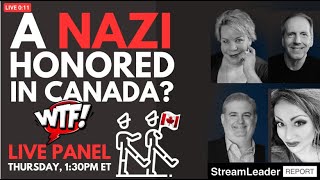
In this live Stream Leader Report panel, host Ross Brand and panelists Claudia Santiago, Rebecca Gunter, and Rob Greenlee discuss four headline topics. First, they dissect the Canadian Parliament’s decision to honor a 98‑year‑old Ukrainian veteran who, after initial praise as a freedom fighter, was revealed to have served in a Nazi SS division that committed atrocities in World War II, prompting the Speaker’s resignation and public outrage. The group reflects on the dangers of uncritical media narratives, political mis‑research, and the broader implications for Ukraine‑Canada relations. Second, they review the resolution of the 148‑day writers’ strike, highlighting key contract provisions: a ban on AI‑generated rewrites, a 76 % increase in residual payments for streamed episodes, minimum staffing levels, and a three‑year deal covering TV and film writers. Panelists debate enforceability of the AI ban and the practical impact on writers’ workloads and compensation. Third, Rob explains Google’s plan to retire Google Podcasts, moving podcast infrastructure to YouTube Music. He outlines technical questions about MP3 support, pass‑through RSS versus YouTube‑hosted video, and the potential disruption to dynamic ad insertion and creator metrics. Fourth, the panel jokes about Tinder’s new $499‑a‑month “Select” tier, describing its limited‑message, badge, and VIP features, and questioning its value versus traditional matchmaking services. Interwoven throughout are personal anecdotes (Claudia’s Chilean civil‑war background, experiences in Canadian Parliament, and a live AI‑driven robot musician at a DC concert) that illustrate how authoritarian histories, media literacy, and emerging AI technologies intersect with creator‑economy concerns. The conversation ends with light‑hearted speculation about AI‑matched dating and future robot performers. Overall, the episode blends critical analysis of political missteps, optimistic takeaways from the writers’ strike, cautious optimism about podcast platform shifts, and skeptical humor about premium dating apps, all delivered in a conversational, unscripted panel style.
Chapters
All right, a lot to talk about today. We've got a Canadian, uh, Nazi, or a Nazi in the Canadian Parliament. What's going on with that? We also have the end of the writers' strike. What does that mean for TV? Things going back to normal or not? Tinder has a $499 a month plan called Tinder Select. Is that a good option for anybody who's going to pay that. And also lots of podcasting news regarding Google and YouTube and what's coming in 2024. Let's do a show.
It's the Stream Leader Report live panel. Creators talking to creators. Raw, real, and unscripted. And sometimes they say the quiet part out loud. Here are your hosts, Claudia Santiago, Rebecca Gunter, Rob Greenlee, and Ross Brand.
Hey gang, Ross Brand here for the Stream Leader Report live panel every Thursday, 1:30 PM Eastern. We have Rebecca Gunter from Business in the Raw, Rob Greenlee from the Trust Factor, and welcome back to Claudia Santiago from Viva La stage. And we've got a lot to talk about this week. We've got 4 hot issues. And, uh, this isn't the most fun one, but I think it's one we need to cover. And that's about what's going on in Canada. Um, the Speaker of the House of Commons— uh, not House of Commons, what do they call it? The House of Parliament. Speaker of the Parliament.
Yeah.
Yeah, the Speaker of the Parliament invited someone that he introduced, a 98-year-old man that he introduced as a Ukrainian patriot who fought for Ukrainian independence against the Russians and still today is supporting Ukraine in its battle against the Russian invasion. And everybody gave him a standing ovation. What went unsaid, unresearched, or was papered over was the fact that I'm not so sure that he joined the fight in World War II for Ukrainian independence. He joined a Ukrainian Nazi SS division, uh, that, that basically was focused on murdering Polish and Jewish citizens or civilians and burn villages of, you know, thousands of people, massacring women, children so brutally that even the Nazis, who have their own disgusting record, uh, the German Nazis were surprised by the level of evil and brutality of this unit. So eventually it came out who he was, um, and the Speaker, uh, of the Parliament stepped down. Uh, Trudeau first gave an apology and said something to the effect of, well, Russian disinformation or whatever, as though that had anything to do with, uh, not researching a man who's lived in Canada for generations. And then the speaker stepped down and seems that everybody's now rejecting this or pretending that they had nothing to do with it. And I think the most interesting remark, particularly for our technical topics, is that someone of the ruling party suggested in Parliament that they strike it from the record and went on to say strike it from the digital record. So in other words, we would say that that's kind of like pretending it never happened is the solution, which I don't think is probably the best way to resolve this. Anyway, I'm not Canadian. I don't know all the intricacies of what goes on. In Canada. But this was shocking, to say the least. I don't think it caught a lot of attention right away. And then people picked up on it online and in the media, and eventually there was a lot of outrage. And for no specific reason, I'll go to Claudia first if you have a thought on this.
I'm the Chilean Canadian, and today I'm supporting my— I'm working on my, um, by the way, it's great to be back. I'm working on my new Gloria Estefan tribute, thus the hair. Um, but yeah, it's great to be back. I am Canadian, and boy was that ever a big Canadian fart. So I will say, um, now I will say that, that the The Prime Minister did apologize. He, he, he did get on there and, and apologize, but you know, like, he was pointing everything away from him though, that's for sure. So, you know, the, the thing is this, is that as you all know, even us on this show, like, when we're bringing a topic or we're bringing something, we do a little research, right? We kind of do a fact check and we We, we just kind of try to keep it pro, like, what the heck happened there? Um, so yeah, uh, I'm gonna apologize on behalf of Canadians. It's, uh, it's, uh, it's not a good thing.
So, um, you don't have to do that. It wasn't your mistake.
Not my mistake. But you know, Canada, uh, I love my country. I will say I came from a country where communism was huge and there was a civil war, and I have, you know, suffered the effects of that. So Canada has been a blessing. It has been a peaceful nation in the way of, you know, my family is not under machine gun rule. Um, but lately it's been like, what in the world is going on? So I'm glad we brought this topic up And, um, yeah, very, very surprising.
Yeah, the thing that comes to mind for me is that the devil is in the details on this one. That's the problem, is that the leaders in Canada didn't, uh, get into the details here, did they? And that's a big strategic mistake. The other unfortunate thing for the whole Ukrainian kind of thing is that, uh, there's been a strong connection between the government of Ukraine and Nazis in Ukraine too. So there's— that's actually who Russia has been mostly fighting in the Donbas region, is what Putin has called Nazis in Ukraine. So, you know, given that Zelensky was there and this happened there, I don't think is necessarily too much of an unexpected scenario. I just think that the Canadian leaders really, um, either they're all on board with this or they just aren't doing their jobs. Um, I don't know. I mean, it— the whole thing just baffles me. It doesn't make any sense at all.
Very bad. Yeah, in Chile when they were going through the Civil War, during that time all borders were closed, okay, and all media communication was propaganda from the regime. So you never got the straight goods on what was really going on, uh, and of course you couldn't talk about it because the minute you did, your family was at risk, or you yourself were at risk of being imprisoned and tortured and or killed. So I can understand in countries where, um, they are in immediate danger, like, that's not a joke, okay?
It's—
they, they have zero tolerance. And so I can understand where in those countries people would be keeping their mouth shut or closing a blind eye because it's a matter of life and death. But oh, Canada, You know, like, what the heck happened there?
Yeah. And it also doesn't— the optics of this don't look good for Ukraine either. So, you know, it was really a fail for both countries on this front. And it feels like it's kind of like has consequences that could be pretty much— could be pretty significant in people's perceptions. Of what is going on in Ukraine and what is going on in Canada. I mean, I think it's, it's really— and thus there's a domino effect in what's going on in the U.S. too. Um, is the U.S. supporting a regime in Ukraine that has Nazi ties? Are we okay with that? So yeah, so there's, there's a lot of bad optics here.
And, you know, I just want to say, well, I'm glad we brought this up. And, you know, time ago, I could have never talked about anything remotely like this because of, like, the effects of fear that, uh, when you go through something like this with communism and, you know, even the Nazism, all that, the effects on that, even as an adult, is huge. And so anyways, I'm glad we brought this up. So actually, this topic is very healing to me, even though it's a little embarrassing too because it's Canada. But, uh, anyway, so thank you for bringing it up.
Yeah, well, well, well, someone's been canceled for things they did way in the past that's affected our opinion of them. That sounds like last week's show.
Are you saying that accusations, he said, she said, is exactly the same as mass murder.
I mean, I don't— I mean, I, I would argue that I don't think that the— that those are accusations. I mean, I guess they're alleged until they're proven otherwise, but there's certainly a lot of evidence stacked up against the guy. That's all I'm saying.
Well, well, well, well, well, well. I mean, this is, this is documented. The, the SS Galicia unit, uh, the Nazi unit there, and, and what they did is not something that's, you know, he said, she said. I mean, we have the records, we have the evidence of, of mass, mass numbers of murders and unspeakable cruelty in the killing of, of innocent children and women and Poland actually talked about extraditing, asking Canada to extradite him and bring him up on war crimes. Now, I might not have said, you know, let's go actively hunting every last, you know, Ukrainian Nazi in Canada. But hey, if you're going to come out and take a bow and be proud of it, I mean, you know, he's truly not ashamed of what he did. Um, and there— Canada took a lot of those, those Ukrainian troops or Ukrainian paramilitary folks from that Galicia region. They took a lot in after, after World War II. We took a lot of Nazis in as well after World War II. Because we wanted to have their knowledge of making dangerous weapons and committing war crimes and things like that. We figured better for us to have it than it— I'm not, I'm not making any excuses for that, good, bad, or indifferent, but to blatantly honor it. And I think it also shows, it also shows what happens in what should be a high information era when we all have to repeat the same things publicly, uh, about an issue. And there's been so much uncritical support for this war from the US and Canada and other places around the world that it never occurred to anybody who was fighting in World War II would have been— if they were fighting the Russians they might well have been on the other side from the US and the Allies. They may have been aligned with Nazis, or in this case he was. So that's— I mean, I think that's where, um, the, the lack of research, the lack of questioning, um, it was a matter of time as we've taken all the news really uncritically and we've all had to dance to this, this tune of uncritical support for this war effort. And that isn't to in any way say that, you know, our sympathies should be with Russia or we should support an invasion of another country. But this is what happens. It happened during the pandemic. It happened during other things where everybody in the media and politics just uncritically repeat certain phrases and certain things because They think they'll never get called on it because everybody must agree, and those that don't agree got silenced. I mean, the people who— the truckers, the truckers, they just don't know who had that protest against vaccine mandates were called Nazis in the Parliament of Canada and by Trudeau because maybe one truck they found had a swastika on it somewhere or something. And so that was supposed to be representative of the entire movement, whereas this guy, uh, was essentially in Himmler's, uh, troops during World War II, and nobody, nobody, nobody thought, really, what is this guy doing here? Who is he? Why is he here? And, uh, you know, it didn't take long to find photos of him in his SS uniform.
Well, I mean, the reason he was there was because Vladimir Zelensky was there with Trudeau, right? So they were thinking that he was this Ukrainian hero, right? Um, is what it really came down to. So it was really lack of knowledge is what caused this to happen. Um, or, you know, I have a hard time thinking they did this on purpose. That would really be bad.
I was gonna go there. I was gonna go there. And reason being is like what I said before. And I don't know, maybe I'm a little skeptical still from the war, but sometimes they did stuff that, uh, looked like a mistake but it wasn't a mistake, right?
That's true.
Other stuff, it was like, yeah. So honestly, I don't really know because it seems like There's been a pattern of stuff up here in Canada that look like big farts, but you kind of start to wonder after a while.
There's a pattern, right?
There's a pattern, right? It's not a one-off. It's not a— you know, I don't know. What say you, Rebecca?
Yeah, it's happening here and other places around the world too. So this isn't— Canada is not the exclusive place.
Exactly, exactly. Rebecca, I can see your wheels spinning up there, girl.
Well, I'm just being glib, so forgive me for, for making light of a situation. My point really was character matters, right? That was really my point on it. Other than that, I'm out of my element, so, um, I'm sweet. You guys are swimming a little deeper.
Well, then I, I hear you. And, and I guess either way, if it was— whether it was intentional or trying to pull the wool over our eyes, or it was an innocent mistake. Neither side is our government evil or is our government stupid. Neither side. And this could have happened in the US too, probably, because really our politicians, and you can say this for a lot of professionals in high, they've become order takers. The notes, the talking points, The protocol comes down from above and they repeat it uncritically. A staffer is told, oh yeah, yeah, this guy's coming to speak, get a little information on him. He goes to the, you know, to a website that's friendly to that side or whatever and pulls a couple of pieces of information. And the guy gets up there and puts on an act as though he's greeting one of the all-time courageous heroes of, of of Western civilization. Um, it doesn't give you confidence when they're making policy on issues of war and peace, issues related to the environment, issues related to our health. If they can't even get this right using Google, somebody on the staff going, hey, let's double-check this guy, yeah, um, then that means they're doing the same thing with every other issue that comes down the pike. The leadership said we need to support this, Okay, find a couple of lines supporting it. I'll spout it and press the right button when I vote and we're good. And I think that's why this happened, because I think people who are supposed to be making executive decisions are— have basically become order takers, talking points readers, and, you know, just, hey, this is the narrative you follow if you're a good person in good standing. In our, in our, in our troop, or whatever it is that you would call, um, what's going on. Does that make sense?
Totally. And, you know, I, I'm, I'm kind of with Rebecca a little bit where I feel like we're swimming deep, and— but it's kind of cool because, like I said, this is actually very healing for me to be able to talk and have an opinion on, on, on something like this. But I will say this, I have been to Parliament. I was there as an entertainer and I was able to, like, it's Fort Knox there and it's a beautiful place, but it is Fort Knox. And, but what I mean by that, there's a lot of security, there's a lot of physical security getting in, there's a lot of security in terms of like I was given a little bit of a list of things you can say, can't say. Um, uh, you know, you can't drop the B word, if you know what I mean. Um, you know what I'm saying? Like, even at airports, that kind of thing. Um, B-O-M-B. Um, oh, thanks.
I was like— I have me and Rob.
I was like, you can't say biatch.
No, no, no, no, no, no, you can't. Like, you have to be— you have to be very, very selective because, you know, the cameras pick up and security moves in, right? You just got to be very selective. And, you know, I was in, in Parliament and I had, because I was there as an entertainer, I had clearance and, and I was brought in by somebody who, who held a seat there. And, you know, I got pictures on the seats and like very cool stuff. In fact, I might send you guys some of that if I find it. But what blows my mind is how something like this could even get past all the media security? Do you see what I'm saying? You see what I'm saying there? How could all of this get even past all the writers, all the, all, all the, all the security there is there? That—
because all they were looking at is what they wanted to see, which was that he was a Ukrainian hero, and that's probably as far as they made it. You know, because the quote from the president of the parliament, or the, the leader of the parliament, was basically say, I, I recognize an individual in the gallery. I have subsequently become aware of more information which caused me to regret my decision to, to praise this individual. So that tells me that he, he was not informed and he didn't do any research himself. And that's kind of what we're talking about here. We're talking about really people being ignorant of important information, especially on a national stage or an international stage like that. You know, a mistake like this can be catastrophic. I mean, there's even talk that Justin Trudeau is going to step down because of this, not just the head of the parliament. That's the consequences of such a poor choice.
There seems to be this need when it comes to Zelensky to always go over the top in, right, uh, in, in this sort of worshipful, worshipful treatment of him. Uh, and, you know, obviously this blew up, putting, uh, you know, this, this was not good because generally that side, that Nazi sort of connection is kept under wraps, and it's helped by the fact that Zelensky's Jewish or from a Jewish background. I don't know how much he identifies or doesn't. I think the only time he really knows he's Jewish is when he goes to heck to Israel about not giving him weapons or something like that. But, um, but, but, uh, you know, I mean, he's sort of the public face of something, but the worshipful, like, hey, let's, let's, how much more love and millions of dollars can we give to the Zelensky character? Here, here's a Nazi. You can, you can, no, I mean, but like, in order to feed the sort of fetting of him, they picked the wrong, the wrong horse to bet on. And it, like you say, blew up in their face and It's done a lot to call attention to who exactly is doing the fighting, uh, for Ukraine. Um, facts that were all known, by the way, in the New York Times and all the major media about Nazis in eastern, uh, Ukraine on the border and so forth for years. And then that all disappeared once, uh, once this conflict started. Uh, we have to pretend that they're not they're not there anymore.
You know, you guys knew about this before I did even, uh, because, well, one of the reasons is, is Canada, as Canadians, we don't even get news on Facebook. Uh, when I think about that, I go, what in the world? Because of some choices there and So, you know, it's very interesting the seasons we're in, and it's interesting what Canada is walking out. And Canada typically over the years has been kind of the quiet mouse, sort of speak. Like, they never really got involved in much. They never really had much to say. You know, they were like, like I said, like my, my family, when, when we were extended a welcome to Australia, England, and Canada, and my parents chose Canada because it was a quote-unquote peaceful nation. And, and here we are, Canada seems to be stirring the pot somewhat, eh?
Well, I think part of it is Trudeau's a tried and true globalist from, from the core, so, um, he sort of dances to the same tune as, um, a lot of U.S. leaders do and the World Economic Forum and all that, so Yeah, I think. And plus, Canada does have a strong Ukrainian community, some of whom certainly, and rightfully so, share sympathies with the folks who have been getting bombarded in the Ukraine. It's a complicated issue. This isn't in any way to say one side is, is pure and the other side is, is, is evil. The atrocities that have taken place over the just the last century by troops from all different sides in that region. Um, you know, we'd be here all day listing it, but this is a troubling aspect of this whole Ukrainian situation that I think is— has gone unreported largely. Um, and Because we're in an internet age, this is all really— this is all hidden in plain sight, a lot of what we're talking about. And the speaker of the Parliament in Canada would be so unaware of where the landmines are that he could step on in doing this. It's just shocking, really. I mean, to be that ignorant of a conflict that they're spending, what, $10 billion, Canada, to support?
Well, Russ, there's also kind of a media lockout from journalists even covering the Ukraine war. So there's no independent journalists that are allowed. Actually, most of the reporting that I've seen about the Ukrainian war are coming from journalists that are on the Russian side. There aren't any independent journalists that are on the Ukrainian side, uh, because honestly a lot of the journalists don't trust, uh, what's going on in Ukrainian, you know, Ukrainian side to actually be there. Um, and I think they're also worried for their lives because Russia is, you know, very efficient at killing Ukrainians. So, right, right, it's, uh, it, it's a difficult situation. And if you look at the background of Vladimir Zelensky, I don't know if most people know this or not, but he spent most of his life as an actor and a performer. So that's his, you know, he gives this persona of being like this military, you know, tough guy, but, you know, there's plenty of peace platform But right, and there's many that believe that he was put in power by the U.S. government, so, or the CIA or whatever. I don't know if that's verified or not, but that was, that's basically, um, you know, what the rumor is.
Well, there's certainly some thinking that his instinct would have been to make a deal with Russia, and the U.S. said, well, we didn't put you up for that.
Supposedly at the beginning of this, because this war with between Ukraine and Russia has been going on since 2014. So most people don't know that, um, and it's, it's been Russia fighting in against Ukraine because of a perceived that the fighters that are on that side are, um, Nazis. That's what the rhetoric is that's coming out in Russia. I don't know if that's 100% true. I just know that that's the rhetoric that comes out You know, my son actually lives in Russia, so I hear things from him from their side. So yeah, wow. But I don't know what's true or what's not. I mean, there's misinformation happening everywhere.
So, and all of this can be so daunting and overwhelming. It's like, what in the world can I do? You know, it just seemed— right, Rebecca? I know I see your head shaking there. Uh, and same, you know, when I came from what my family went through. When there's that level of oppression and fear and death and control like that, you almost— and I have to admit, when I was growing up, I didn't want to vote. I didn't want to because it was kind of like, well, what is little old me going to be able to do to change this? I am powerless because what I saw is when people tried to do anything, they got killed. So I had to overcome that. And even now as we're talking about this, some people out there might go, well, what the heck are we supposed to do about it? And I guess that's one of the reasons why I said I apologize, because what's our solution to all of this garbage, so to speak? We vote, we get out and vote, we get out and have a voice. And yes, I will apologize to those that went through all this treatment, all the people that went through the Holocaust, people like me who went through civil war, who are arriving in this country, you know, totally fragmented, family split apart, traumatized. I, I, I give them my heart and my compassion. You know, Rebecca, you as a coach, you probably come across people too that have suffered greatly and they need to build a business. So what do we have in our hands? How can we be part of the solution? You know, I'm a solutions girl, so I just throw that out there, um, to, to maybe some that might be watching this and going, oh my gosh, like, what to do and gloom and overwhelm. Well, I say let's be part of the solution, guys. Let's, let's, let's come around people and, um, help them.
Well, I mean, I think a positive example perhaps, or some answers, could come looking at, Claudia, your country of birth. Because not only did it go through U.S. intervention and civil war and a period of, of great repression, but it came out on the other end as a free, open, prosperous, healthy, you know, not saying there are no problems, but a relatively healthy first world society that's, um, really done a lot better. Now, it didn't have those issues as long as, you know, the Soviet Union and all that, but in many ways, I think it emerged as a much more successful and less corrupt place from its time under sort of authoritarian rule than did most of the former Soviet republics.
Exactly. And you know, there, there's a couple nuggets that I remember through those years. Uh, I remember in Canada we couldn't phone our relatives in Chile and start asking about, hey, how's things going? Has there— we couldn't, they'd get killed. Our letters We would seal them and then put a little signature on the little sealing line and a piece of tape. Well, every time they received that letter, there was indication that had been opened. They would read, communicate. So, what am I saying about that? During those years, the wisdom was you had to submit to the regime. You had to be creative, entrepreneurial, because there were food stamps to get food, okay? There was— if you disagreed with something, your lights got turned off, okay? Your water didn't run no more. So you couldn't be just like, hey, I'm going against everything, because you wouldn't live. That's just a reality. So what I learned from my uncles, from my grandpa, from everybody down there, is until the time was right, they had to come underneath that a totalitarian rule, but in that they had to be very entrepreneurial, very strong. The community got together, they tried to do what they could and what they had in their hands to do. I have an uncle who has like 3 shoe stores. He was never a shoe guy, okay? They built new businesses. Then, you know, as time went on, they got out and voted, and they voted different people into power, and they became a democratic nation. Now, Chile is rich, rich in natural resources. They have copper like crazy and amazing wine, by the way. Anyways, at the end of the day, I mean, it is thriving, but that took many years. So when I hear people up here in Canada even saying, oh, we're coming under communism, I go, no, honey, you have no idea what communism is. You know, there ain't nobody here with a machine gun at their head, you know what I'm saying? So, but as entrepreneurs, as people in business, as creatives, this is what I say is prepare. Prepare because there's telltale signs going on here. Uh, the world's not the same and it's not going to be the same as it was. So get building those businesses, get transitioning. I love what you're doing, Rob, and getting into all the automation stuff. And we'll talk about all the robots and all that another time. But anyways, I don't want to manipulate the, the conversation here because I know you all have lots to say, but That's just coming from someone who went through this kind of thing.
Yeah, I really appreciate that, that perspective and those, those insights. Let's take a look at some other issues. We have good news. The writers' strike appears to be over. My writers are back and they're being well fed and well paid, of course, so we could do this show. But in all seriousness, TV, what's going to happen? I know Rebecca, you have taken a look into this. Why don't you kind of set the stage for what's going on with the writers' strike?
Thank you. And I just also want to thank Claudia for telling her stories. I think that that's the most revolutionary thing. One of the most revolutionary things we can do is to share real stories. It's how we learn from each other. Um, so thank you for taking that space. I appreciate it. All right, Rob Greenlee, what if I told you that one of the resolutions of the writer's strike was to bar the use of AI for writing or rewriting? Oh, you can use it to inspire you, but you cannot use it to write or rewrite. And what if I told you, Ross Brand, that one of the resolutions of the writer's strike is increased compensation, which is pretty cool for streaming platforms? And Claudia, minimum staffing in the writer's room based on episodic load. So it seems like we're making some great progress in terms of being seen as still valuable means of production, us writers., and we're, we're coming to a resolution, which, um, I think is very interesting and interesting in the light of the autoworker strike. So I'm looking forward to your impressions of whether or not do you think we won, question mark, or do you think we just are taking crumbs? Livestream— there's Stream Leader Report. What say you?
Let me answer the AI question. I don't know how anyone's going to know for sure if they— if how much a person uses AI to write content. I think this is more of a kind of a statement of position than it is something that's going to be enforceable. So it's especially as these AI platforms get better and better, which they will, it's going to be harder and harder to tell. And AI does write unique things. Each time you do a query of AI, even with the same question or the same query, it'll give you a different output. So, you know, this, I think forcing that is probably not realistic. I think it's more of an intent orientation than it is any way that anyone could enforce it. So anyway. That's just my comment on that part.
I guess my assumption is you can't replace a writer with AI. It doesn't mean that, right? Because the writers don't want to be replaced by AI, but I'm sure when they're under deadline pressure and they got to generate an outline so that they can finish this thing up, they're gonna throw some prompts into AI and use it, but it's not threatening their job, which I think is, is the concern. Um, an increase in pay is always good for, for writers to, uh, to be recognized and, uh, be able to keep up with the cost of living. And, um, as the industry makes changes and everything, those who have jobs have a little more security right now, uh, with a little more money and a new contract. So, um, let's get the shows back on and enjoy, enjoy the entertainment. Um, I've got to say that, you know, I, I just love these, you know, kind of video podcasts that are on YouTube and their audio versions that are on the podcast apps that, um, I haven't really watched a lot of you know, sort of scripted TV over the last several years.
I haven't either.
Yeah, I want to share with you that over— or last week I went to a music concert, uh, in a small coffee house, and one of the major brand— brand, that's hilarious— Freudian slip. When you say one thing but mean your mother, uh, one of the major band players was an AI robot, and which interacted with the lead singer the entire time playing drums. Or no, he just faked that he was at a keyboard, but it was a robot and would talk back and forth with the lead singer. Oh my, the band is Canadian called Islands. Maybe you know them, Claudia.
Islands?
No.
And oh, Canada, there we go again.
Something super interesting was that the AI robot filled in the regional information of the venue itself. So I'm close to— this was in DC, so the AI robot would be like, and here's an interesting story about the DC music scene, in which the AI robot integrated himself into the story. Now, while that was fascinating, because I've never seen anybody do it, what was so fascinating was the audience's response. Yeah, to the AI robot. First of all, they embraced it, but everyone called it out as being AI. Nobody pretended like this was, you know, an illusion of the show. And there was this kind of cultural acknowledgment of what it was. Yeah, the robot wrote a song and it was— everyone laughed when it was like verse, the bridge, chorus, and would read that 'Peace out.' So that was interesting. Uh, he looked like an old— he looked like kind of Will— he looked like Daniel Day-Lewis in Gangs of New York. And my boyfriend kept calling him Old Chap GPT. Yeah, British accent. But this is the first time I've seen AI integrated into an entertainment space, a music space, and the audience's acknowledgment fully embracing the AI status and being amused used by it and interacting with the band. So I thought you guys—
I'm—
I gotta bring those robots back.
Did you shoot any video of it?
I'm gonna ask Tony if he has any video. I should have brought that as my—
that, that is a great show and tell for next—
I should have brought that as my article. Yeah, I'm gonna ask him.
Now I'm gonna be trying to figure out how to get an AI robot on my stage. You know, I've seen— I've seen like— I've seen the concerts. Have you guys seen this with the hologram? Yes, with the hologram. Like really wild, really wild. Yeah, so that's kind of cool. But yeah, this whole other thing, okay, I'm on it now.
You got my wheels spinning. Someday there will be an all-robot symphony, so this is my prediction. So Yeah, yeah, I wanted to share a couple more details about the writer strike because the, the writer strike went for 148 days. I guess it's not really officially over entirely quite yet. I guess the members will vote officially on Monday and, and the end will supposedly happen on October 9th. So, so I don't know if that Monday was this past Monday, or was it next Monday? Do you know?
Um, damn it, Russ, I'm not positive. Uh, voted to end the strike on Wednesday, so it'll be this coming Monday, right? Okay. Oh no, no, they'll vote from October 2nd to October 6th or 8th. 2nd to 6th, I think.
Oh, okay, okay. But the strike is set to end on October 9th. Okay, it says here.
So that's— is that the first day they can go back to work then?
I guess. And then it looks like the deal was a 3-year deal, and so, so it only covers the television and movie writers. So, um, which covers a lot of people. I think it was like, um, multi-thousands of people. I'm not sure what the total number of affected writers was, but the residual payments or royalty for overseas viewing of streaming content, uh, is going to go up 76% from $18,684 to $32,830. So for a 1-hour episode over 3 years.
Wow.
I'm not sure what— not sure what, what period of time is that, uh, an annual compensation or a monthly, or I'm not quite sure what that is. They didn't specify at that level.
Rebecca, can I ask you, how did this affect you, or how did it affect you or those that you—
co-workers or co- You know, that's so interesting. I just thought it was— it amused me, and probably because of the novelty of it. I do have some— I did get some pictures kind of on the fly here, and I'm not sure, Ross, how we can share just regular old pictures.
Um, okay, let's remove, uh, just replace— stop sharing what you had been sharing and open it up, and then you could just open the picture on your desktop and then just choose that window, uh, when you go into share screen.
Oh my God, it's some— that's a Stream Leader lesson. Anybody, anybody out there who is just like so curious about how it all works, Ross is here to tell us. Um, I think Claudia was the novelty of it that amused me. Maybe if I saw it all the time, I'd be like, that's I don't know whether or not I felt like that was lazy or not, um, but the audience response to it was, was what was so interesting. I, I do have some pictures, so while you guys continue talking, I'll see if I can follow Ross's instructions.
Did they share anything publicly about what the rates are for writers in the industry, if there are Like hourly or something like that. Yeah, yeah, what the time is worth and then what it will— it doesn't say— I didn't see anything about that.
Yeah. Hey, Beauty Bubbles here! I don't know if you guys see her in the chat.
Hey, Beauty Bubble!
Bruce is here too. Jacob Castro.
Hey, Bruce!
Jacob!
And, uh, yeah, they've got something to say there. Very cool. Hey guys! Thanks for showing up in the chats.
We see you. So on the topic of artificial intelligence, it says in the contract, it says, um, the contract also guarantees that artificial intelligent technology will not encroach on writers' credits and compensation. Studios cannot use AI tools to rewrite original material. So You know, because it is possible to put in like an original material and it will output something unique, right? So they could make a derivative story out of it.
So if you're at the end of the day, let's translate this into real world, right? I think if you're at the end of the day, this is the HR side of me coming. You're at the end of the day and you go, this isn't quite ready for tomorrow morning's shoot or whatever. We need a rewrite on this. You can't give it to AI. You're gonna have to pay one of the writers overtime to actually stay late and rewrite the script, or more than one of the writers, is how I would, you know, at first glance. I don't know the details well enough for the industry well enough, but that was a lot of how I would read it.
Yeah, because a lot of, uh, directors and producers will request the writers to rewrite segment of whatever script it is, right? And it says also, writers, however, can use technology for assistance if the company they are working for allows it. Studios cannot force them to use it.
So, yeah, that's good. That's good info. Rebecca, you got anything for us, or—
I'm coming, Ross, because apparently I need to put this in a PowerPoint presentation. Presentation. We'll only accept a video file.
All right, we can always hit it. We can always hit it next week. Um, let's, um, Rob, do you want to do the, um, the Google podcasting stuff, or should we save that for next week when we have more time and do the, uh, Tinder Select?
Oh boy.
Well, it is kind of top of mind right now. This week, the whole Google stuff, but it isn't going to actually happen until 2024. So we do have some time on that.
Give us, just give us the top-level version of it and then we'll discuss it more, more next week.
Well, Google Podcasts has been around for a few years. I was actually in work pretty closely with the Google team. This was been many years ago now to get that platform kind of set up to some degree. I had I had meetings with the Google team in Seattle when I was living in Seattle and on a repeated basis meeting with them as they plotted their strategy for rolling out Google Podcasts. And they just decided, and this has been a progression with YouTube for a while now, there's been a lot of talk about YouTube really being the place for podcasts going forward. This has been discussed for a couple of years now, actually. So what's happening here has been a slow progression. And so really what we, what we heard this week was, is that Google is going to retire Google Podcasts. So they built all this infrastructure within Google Podcasts. If you actually do a search for a podcast in Google today, do a search for a particular podcast, there was a time when it would generate results that would link directly to episodes, uh, that you could click right in the Google interface to play an episode and it would play right through a Google search result, right? Um, subsequently that has been already removed. So really the only thing that still exists today is the Google Podcasts, um, app, which is not easy to get. I mean, it's in the Apple and and Android App Store today, so you can get it, um, but it's, it's not promoted. It's not really, really visible. There is a whole area in the back end of Google that you can go to that you can get access to deeper metrics about your show on Google, and you can, you can claim your show and the platform. So they built this kind of infrastructure that they're going to be taking down, and everything is going to be moving over to this newer platform called YouTube Music, which basically has its own app as well. So yes, so if you want to keep up with that. But currently today, all podcasts that are in the Google Music app are actually videos.
But eventually you see audio podcasts going in there as well.
Well, that's the big question. Is Google actually going to support MP3 files or are they going to expect automatically to transfer those MP3 files into video files? Because currently today YouTube is only a video platform. It's not an audio platform. So, so that's the big question. And there has been talk about this concept of pass-through, which means that if you host your podcast like at Libsyn or one of the main podcast hosting platforms, that it'll pull from the hosting platform and not be delivered through YouTube, right, on their servers. Right. So it's this pass-through versus YouTube hosting all the content. And so that's a big debate in the industry too, because the industry has been moving aggressively toward dynamically inserted advertising. And, and having YouTube host those files would mean that that ecosystem would be broken. So any content would, um, would have old advertisements in it in YouTube. I don't think YouTube wants that. Um, so we're going to see how this plays out. There's really still a lot of questions about what they're doing here, but they have said that they're planning on supporting ingestion of content or adding of content via RSS feeds, uh, in the platform. Platform in 2024 at some point. So we shall see. That's kind of the top line.
I mean, let's—
I did a whole episode yesterday on this that took us almost an hour to talk about.
Let's discuss this more next week because there's a lot of interesting angles around this and what it means for podcasting and audio and video. Rebecca, tell us what we have here.
All right. So we got there. Can you tell Ross which one do you think is the robot.
Far right.
Yeah, good job, baby. Good job, baby, for real. So he sat there on the stage. Here's a kind of a closer up of him. It was definitely him because he had, he had sideburns and like, like he kind of had this Daniel Day-Lewis vibe going. I couldn't tell whether he actually had arms or not. He had this hat but he would turn and his eyes would move and he would respond. And then there was a whole bit between him and the lead singer throughout the entire show. And I thought, well, how interesting that the band— the onus of the research for the region that they were in was kind of off the table for them. They don't have to be like, DC, this is what we love about you. Like, the robot told a DC story and just kind of inserted the stuff in there. Tell them about DC. Uh, and the audience just got a real kick out of it. He told the story about being kind of in an underground club with Chuck Brown and collaborate, which is a big go-go artist, yeah, from DC, and collaborating on a piece. The audience was tickled and amused. However, I think if they saw it 3 more times, they would be like, lazy boy. It's— to me, the interesting thing is about how we as a consumer are responding to AI. In this case, it was very novel, um, and, and interesting. I've never seen a band before where we walk in and one of the principal players is an AI robot.
That is a very crazy—
it's a very unusual hairpiece that he has, sideburns across his nose, across the other side. I don't think I've ever seen a cut quite like that before.
Now there's no instrument in front of him, is there? Or is that a keyboard?
It's mocking that it's a keyboard, but there was very clearly this, uh, other bandmate was playing the keyboard.
Oh my—
so it's mocking that. And he would kind of set them up and be like, well, that was interesting, but I really like a song that's more guitar-driven. Then the band would go into a hit that was more guitar-driven. Um, what are— I've never— yeah, what are— I've never seen it before.
Yeah, thanks for sharing that. That is really funny.
That's great. It should have been my lead article now that I think about it. So now I'll be taking video.
The closest thing I've ever come to that is I had a DJ on stage with me for a show, and, um, along with the musicians and every once in a while, like, he would record me saying something I didn't know, and then he would like play it back in the middle of a song, like all robotic and stuff. It was pretty funny. But this whole— oh, that's cool. I mean, I gotta look into that for sure.
It was like a full-fledged character within the performance.
What a riot.
Right. Well, all right, now I gotta ask everybody's advice before we wrap up, as I think I'm the only fully single person here. Um, Tinder Select, $499 a month. Is this— is this where people should go to find the love of their life?
You gotta pay to play, RB. You gotta pay to play.
Should we start a GoFundMe for Are you, Herbie?
Oh dang, because you get the direct message up to 2 times a week. You can send somebody a message without, without having to match first.
Oh, 2 times a week?
2 times a week. A whole 2 times a week for $4.99.
That's a lot to just say sup.
You can skip the line. People will see your profile unblurred in their likes you grid even if they don't have a gold or Platinum Tinder subscription. Special status: show off your membership with an exclusive Select badge. So like, hey ladies, I can afford to pay $499 a month for this crap.
That's outrageous.
Select mode: see and be seen by Tinder's most sought-after profiles. I don't know how they define that. So you can enjoy more exceptional connections. Oh boy. So, so not just the mediocre connections that the average Tinder user gets, these would be exceptional. Uh, there's a VIP experience. Membership spots are limited to less than 1% of the users to ensure you receive the most exclusive experience possible. And they're offering early access. You can be among first to test special new features, and you can hide advertisements and see the likes you've sent in the last 7 days. So it just sounds like there's a cornucopia of great things that you can access to for $499, and you have to apply. So you have to be selected based on what criteria? I could only imagine.
Yeah, RB, I think you should be a brand ambassador for Tinder's $4.99 program. Let us know how it goes.
Brought to you by Tinder Select, for those willing to spend $500 a month to send 2 messages.
The show sponsor.
Here's the tagline: the best, the best sex, $1,000 you've ever spent this year.
Beauty Bubble says let's run a fundraiser and get this going for Heartbeat today.
Yes, that's right. Finally, sponsors, sponsors for the show.
I'm not surprised at this because I know that there's, there's always been, um, women out there that are like running matchmaking, um, services like personal consultation services and things like that.
I have friends that do that.
Yeah, so it's probably— this is probably in line with the cost of doing a, you know, a professional matchmaking service. So, and it's probably much more, I guess, far-reaching, I would imagine. It doesn't mention anything in here about AI technology, I don't believe, but that could be kind of like the future of matchmaking, right?
Using AI. Meet an AI musician.
I would just like to note for the— I would just like to note that this isn't really the app that's known for long-term—
there's a business we could start, is the AI dating service, right? Yeah, there we go.
The perfect match, right? It's the AI technology applied to your background, your history, can analyze it, and then humans too.
You can date an AI robot.
There you go.
You just do a query and it comes up with all your perfect matches.
That's right.
Build me a boyfriend.
This is some real— only $6,000 a year, right? Right. I think it would be better spent on the old-fashioned matchmaker.
Again, Ross, this is $6,000 a year.
There's a, there's a dating service in our city that, you know, somebody who was telling me about because they're, they're like giving up. And they said, well, found a dating service in our city where you pay $3,000 and you go on this like executive lunch or a fast matchmaking session with, you know, for 3, they just come in one after another.
Right now you're getting the point of Tinder, Rob.
But it's a real thing. And, and, and the The whole dating world is like— I feel sorry for people that are trying to date online. Like, it's hard.
Oh my God, you're not making Ross feel better.
No, I'm trying to be a solution.
Too much choice is the problem there, right?
Yeah, it's hard. And there's profiles set up by robots too, right? So you don't even know if you're getting the real deal or not.
Well, you might even find a robot as your future romantic engagement.
Who knows? There you go. Oh, Beauty Bubble's running with this. She's like, go on at it. I'm seeing in the comments, can't even keep up.
Well, it's been another great show. I mean, we went from as serious a topic almost as you could discuss to as silly and as frivolous. Um, it's always great discussing all this stuff with you guys. Um, we will be back next week. We're going to talk about robots a lot more. Uh, we'll get into, uh, what's going on in the podcasting world with YouTube and Google and some of the other top stories that we don't even know will come up and arise between now and next week. For Claudia Santiago, Viva La Stage, Rob Greenlee, Trust Factor, and Business in the Raw host Rebecca Gunter. I'm Ross Brand. This is the Stream Leader Report Live panel. We'll see you again next Thursday. Have a great rest of the week, everybody. Take care.
More from Rob

Future-proofing with Delphi AI/Human clones: your podcast as a personal LLM | New Media Show






How sports reveal what AI spectacle gets wrong #Technology #Sports #Commentary



