Discuss AI Tools for Podcasters on New Media Show Live - May 31st, 2023
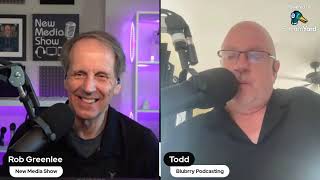
Rob Greenlee and Todd Cochrane walk through AI tools for podcast production: ChatGPT for transcripts (limited to 110 minutes on mobile), third-party services like Memento and CapShow, and the privacy risk that public ChatGPT may use your data for training. They warn that cheap podcast consultants can break RSS feeds and that most creators abandon tools after a few episodes anyway.
Chapters
Welcome to the New Media Show.
We're back doing the New Media Show again.
People are actually going to listen to this junk.
We do it live.
We're live right now. We're just doing live. We're doing live.
We're doing live. We just can't get enough. The New Media Show.
Let's go. Just do it live. We're doing live.
We're doing live. The New Media Show. If we do it live Just do it live.
We're doing live.
The New Media Show. I'm like Adam Curry and you're more like John C. De Vorak.
I think I am Adam Curry and you're the old curmudgeon.
We do it live on the New Media Show again.
The New Media Show. Technology. You make it sound so special. Well, Rob, here we are on the New Media Show and happy Wednesday to you. How are you?
I'm doing terrific, Todd. It's great to be back doing, doing the show again. Again on, on StreamYard because you're, you're out of town.
So one more week, one more week, and then, uh, a remote, and then following that we'll be, uh, I'll be back in the studio. So, nope.
Yeah, okay.
But, uh, yeah, we're, we're, you know, here's— whenever you're in a bandwidth-challenged area, it can be, uh For normal work and just doing everyday things, it's no sweat. But as soon as you start streaming something or going live or doing anything like that, then it just turns into, yeah, for a better word, a little bit of chaos.
So, uh, of course, right? Well, we're all so dependent on our internet connections for everything we do now that, um, it's, it's kind of, kind of a little crazy out there, no question about that. Um, so, so we're right on the cusp of June, so we're already into kind of really into the summer months here, and we've already had a holiday here in the US. But, uh, a lot of people listening to this outside of the US don't really care about our holidays. But, um, but it's great to be back doing the show. There's always interesting things going on, um, in the podcasting space. And, and I don't know, is there anything that's bubbling with you today, Todd?
You know, I think really what it boils down to is, uh, it's like the summer grind.
Yeah.
You know, so for me in this time of year, you know, you're juggling people's vacations and at the same time keeping project— for just for me, it's just been the grind, the grind of, uh, doing everything. And putting in the hours. It, it's kind of crazy because one would think at some point you'd have like a, a breather, but with business, there's, there's never, ever, ever a breather at all.
That's true. Hey, Todd, I just— to kind of tell you about something that I just started here, um, with this, with the show, and I I just activated it, but I've got the ChatGPT mobile app. I don't know if you can see it here, but I started— can't really see it because—
oh my, yeah, I can see it.
There we go.
Are you actually using it to listen to us?
Yeah, and actually it's going to create a transcript at the end of the of, of the show here, and then it can— we can do some, some analysis on it. And I can, uh, I've got a little script that I was going to put into it after it's— after the show's completed, and it will create our show notes.
Now the question will be, will it have enough memory to take the entire length of the show? Because I believe you are character limited.
Well, the app is limited to, I believe, 110 minutes, I think is what the app limit is on audio input.
So you're just using the regular app. Are you using any type of plugins with that?
No, just the ChatGPT-4 version. Version.
Yeah, and it can listen to the audio as we're doing it. You've got audio input into it.
Yeah, so I've got a TRS connection going out of my RODECaster. It's running right into the app, and once it's finished, it basically creates a transcript.
Isn't that interesting?
Right after it's over.
And then I didn't know the app was capable of doing that. Because I haven't played with the actual app.
Yeah, I was just on a call with, uh, Robert Scoble, who's famous for covering the AI scene and—
yep—
and, uh, the AR scene, because I guess Apple's going to announce their, their headset coming out here on the 5th is what the big, big talk is. So, you know, it's— he shared this because he's been doing this with his conversations with, uh AI startups.
So then he's— he records it, and then he asked to take that text and create a title and a summary show notes, correct?
Of the conversation that was had about the new app or the startup company or whatever. It'll create a summary. I mean, you can make all sorts of requests of queries to parse that information. So, right.
Yeah, I see. I wonder if that's possible. It's not— I don't think it's possible on a PC to have it do audio capture that way. I think that's unique to the mobile phone.
Yeah, could be, could be.
But that is— how did he— how did he know that was available? Or—
well, it's right in the app. I mean, it's like all the other social apps have have the ability to do like voice calls. So it has, I mean, not all the other—
oh, it has the capability.
Yes. So right next to the search query box at the bottom of the app, it's got like a little WAV file, right, waveform icon. Just tap on that icon, it pops up a screen that says start recording.
Oh, that is the shizniz right there.
Yep. So you could be doing your show live like we are, right? At the end of the show, it can auto-generate your show.
Not even, not even live, just recording your show.
Yeah, right. It doesn't have to be live, but, but it does help to have the ability to export or play the audio directly in your mobile device.
Yeah, because that way you're not, you're not having to do a You don't have to wait for the transcript to come back.
It's, it's there right at the end of the program.
So that, that, that is— I'm just going to say right now, that's, that's a remarkable find.
Well, it's only going to go— what was it, 110 minutes as well?
That's okay, that's fine. You know, most shows aren't more than 100, but you know, if we go 90 minutes and it's able to capture— yeah, if it's able to capture all our text and then do a summary of that. See, because right now that— see, I've been thinking of it because what I tried to do before, I took the transcript from this show, cut and paste it into ChatGPT, and people are getting tired of us talking about ChatGPT, but— and, and it, it couldn't take all the text. It was not enough input box. So that was a— that was like really irritated me because I wanted to do the same thing but wasn't able to because of the desktop limitation. But lo and behold, now that— what's also going to be cool is because you're logged in to your account, that will save that query. It'll save all that text in a session and you can manipulate the crap out of it.
Yeah, you can do all sorts of parsing of, of that information to output certain things. But I mean, my primary thing was just trying—
right, right, right, right, right—
some show notes. And I could also ask it to give it— give the episode a title too, right?
So this is what I do. Um, well, I already talked about my flow, but the key is to have it do a concise short summary, mm-hmm, and whatever that is, 2, 1, 2, 3 paragraphs, and then have it give a, um, create a title, an SEO-associated title to go to target the first paragraph. So basically, you know, and then ask it to create a show keyword or keywords. Now you have to limit it. You have to tell it, uh, what is this show's keywords in, uh, 3 words, right? And then you ask it, if you're using Yoast, you say create a Yoast summary related to all the content so far of a maximum of 143 characters. And then from that you get, for me, I was getting title description, keyword, and Yoast summary that all fit into my WordPress lineup. And it was really, really slick. Now I had to edit it, right? You know, and here's the thing, you have to add personalization. So if you ask it to do a summary, then you have to do a personalization in between the beginning and the end, make sure, you know, run it through Grammarly, you know, all that stuff. But, um, see, this is, this is where my con— my conundrum is. All right, let me say, let's say at Blueberry we go out and we spend 3 months and build all this stuff, right, integrated, and Then something changes, something new comes out. Or like you just found this little thing here. Why, why would a smart podcaster that wants to use these tools— and maybe some, some people out there saying that isn't so smart, Todd, don't get, you know, don't, uh, don't get wrapped up around the focus hocus pocus. Now we have to just remember this is, this is a language model. Stupidity in, stupidity out. Okay, right. It is nothing more than a language model. It knows how to word manipulate words. It doesn't do any magic tricks. But if you limit what it uses, if you give it— like, you give it the input of the show and say only The keyword is only create a summary from this text only.
Mm-hmm.
Then it will create a summary. You can't— I don't believe so far from everything I've seen that you can go out and some of the stuff you ask it. So there's some plugins now that are available in ChatGPT-4. There's some plugins that'll actually go out and reach stuff on the web. Mm-hmm. And, um, Again, stupidity in, stupidity out. So you have to be really, really careful. And people understand this is purely a language model too, and it's very good at it, manipulating words and creating summaries. And it does it remarkably well.
Yeah, it does. I mean, it's— I'm finding it to be fairly precise. I think what's interesting about this is that this this is based on our data, right? It's not based on the language model. It's only using the algorithms to process our information.
Well, it's using the language model to read our stuff that we give it.
Yeah, right. So we're just another source of data that's inputting into the algorithm that it's, it's working on versus trying to create something new. Right. So if we asked it to create some sort of derivative content, based on our conversation or some sort of segmented content or I don't know, I haven't played with the opportunity of maybe asking it to go through. And I know like CapShow does this too where they'll create like highlights from the show.
Yes, same thing.
I don't know if I can do that, if I can just make a request to select 3 important discussions in the show as part of the query.
But, but I think the thing too is important to to tell it, and I don't see— because it can't hear the audio, it's only seeing the text. It doesn't know there's two people. So I think you have to tell it, Rob, that there are two people in this discussion. And it's not going to get it completely right because it's not— it's, it's— we're giving it audio, but it's putting it down as text. It doesn't know that this is Todd and Rob. It just— it's dumb. It thinks it's just— so you almost have to tell it that there are two people in this discussion. Um, and this is one of the things that Momento does that I have been using for social promotion, is when it analyzes the audio and does the same thing that you're doing right here— and again, they, they have their own model or whatever they've done— you tell it there's two people. But what I've found is still it has a very, very hard time because especially on my tech show, I have specific segments, boom, boom, boom, boom, boom, all the way through. It cannot— it still does not know that this is a new segment of the show. This is where we've switched topics. And, um, to me, it's almost like Can I send it a beep and say I'm changing the segments? Is there some signal I can send it? And I don't, you know, that is not in its— so I was like thinking about key phrases. All right, let's move to the next subject. Let's talk about the next topic. Moving on. Certain things we would say that we could train it to say. This is where those saying those three, saying those words. Every time I say that. Triggers it to know that this is a new segment.
Right. So I would imagine when GPT-5 comes out, it's going to be much more native to video as well as audio.
Yeah, maybe.
Right. Now, just hearing anyway.
The Memento folks say it works better when we— when I play with it with my video feed, they prefer video, the video feed, than the audio feed, which I find to be interesting in itself. So they're doing something with the video, some analysis with the video. So I— it's, you know, I know some people are saying, oh, this has turned into a damn AI show.
Yeah, that's right. We faced a little bit of criticism on that. We talked too much about AI on this show.
But, but I think that, um, yeah, here— but here's the thing that I've also been thinking about a lot. Matter of fact, I was on a call today um, having a discussion about privacy and privacy and podcasting, privacy and transcripts, privacy and AI, privacy and brand safety, and a whole bunch of things in that nature. And, um, I guess a big topic at the podcast show was AI. Everyone was talking about AI over there. That was, I guess, the buzzword. So, um, My concern continues to be, all right, we are here, we're experimenting, we're playing with this, we're having fun. Um, but one of the things that I told my team is, and I think I talked about on this show before, I said do not put any proprietary information into this system. Don't put sales data, don't put, uh, a new customer data, don't put, uh, names, don't, you know, don't put anything that 6 months from now Libsyn can do an AI search and figure out what the hell Blueberry's doing. So the—
don't share your, your trade strategy or something like that, right?
Because it is— are we teaching— are we going to be teaching it about Blueberry? Are we going to be teaching—
so this is my concern from a business perspective, um, According to privacy concerns, what it is, at the end of the day, yeah, is there going to be a version of this that you can do private queries that won't be part of the collective?
Intellectual property is my biggest concern. So, right, here is the trick to this, and according to everything I've read and the terms of service, when you're using the tool like you're using it right now, yeah, free game. They can take everything they want. Right, but if you're interacting with it through API— so I've made a task for my team to have an administrative tool that is just used on the— for the team, nothing that would be used for podcasters— an administrative tool that would allow me to send a query according to their terms of service, and again, my legal's got to read through that again, but according to my understanding, to the terms of service, you do not train the model when you interact with it via API. So maybe I can ask it what's 9 times 9, right? You know, again, but remember, this is a language model, right? And what it's doing is it doesn't know it doesn't know enough to do 9 times 9 equals 81. What it does is it, it basically looks for some text out there that someone has put 9 times 9 equals 81 and gives me an answer, right? Now, if someone's put 9 times 9 equals 82 somewhere, maybe it'll give me the answer of 82, right? So it's not— it's, it's a—
it's— I think it's smarter than that, probably.
Well, but it's, it's looking at language, it's looking at data it's out there. And this is why it's dangerous, is why people think this thing— oh my God, I'm talking to artificial intelligence. Well, no, you're not.
Yes, we got a comment from Harold Gilchrist who said, uh, you know, he does this, this, the same thing that we're doing with the AI and transcripts, right? Um, he says he does it all the time. Don't, uh, listen to any shows on YouTube or podcasts anymore unless main points are outputted by GPT that look interesting. So he's—
what does that mean?
I think he's just looking for shows that have good show notes that look like they're being outputted by, you know, the AI platform here.
So he wants to see good show notes outputted by— oh, that's interesting.
And then he also posted, uh, So when you copy and paste a transcript from the platform, he says here, uh, YouTube— oh, you chunk it in it in April.
You chunk it in at 10 minutes at a time, right? So Harold, but what Rob is doing right now is he's using the, the app, the phone app. Hold it up again and show Harold. Yeah, and he's using the official app and he's, he's doing it right. And it'll record for 110 minutes straight.
Yeah, yeah, you don't have to chunk anything in. Circle going in and out, that's, that's the movement of the voice that's going into the app.
So you don't have to chunk it in 10 minutes at a time.
Nope.
Hmm, interesting. Yeah, but it did just make me realize— hmm, this gave me an idea. So, you know, it's, it's, uh, it's interesting.
Yes, and Harmony said, uh, the shizniz. This shizniz is what this is. Cool.
That is, that is the shizniz, what you have just figured out. And thanks to Robert for, for letting us know, because Mr. Scoble— yep, I have, I have a TRRS in my bag with me. Question is, do I have another— do I have another cable?
Right.
So yeah, that's, that's— we, we will, we will let you know next week how it went.
Well, Todd, I'll just plan on sending you, um, the output from this.
Yeah, but the challenge is, is I may have But here's the problem: you're going to get the output, and I'll be— I'll take the output, but you've got it in one shot, um, or one shot. Whereas, as Harold says, you have to take chunks, put them in in chunks, and then—
oh, oh, I see what you're saying.
Yeah, because you can't cut and paste enough text.
Oh, okay.
But if you got this in one long—
do you happen to know what the character limit is, or the word limit?
I don't, but we're, you know, this is a great experiment, but winner winner chicken dinner on this. I'm, I'm like feeling all frosty here.
Wow, it doesn't take much to get you frosty.
No, no, not at all. But, um, so I, I think this is the— it's like, that's a good discovery. And maybe, uh, you know, I'm— what I'm going to try to do next is play with accessibility tools and see if I can get ChatGPT in the desktop form to take an input with accessibility tools, because that might be a way around, uh, the way around the limitation of the desktop app of having to type. So, you know, his technical app has to be accessible.
So I, I posted on Twitter a couple of comments. I don't know if you've seen the threads that have been bouncing around between James Cridland, myself, um, even, even a few, um, others, you know, like Mark Askwith and some of those, about a couple of topics that are bouncing around. Um, one is, you know, what's with the announcement? I think maybe we talked about this a little bit last week around, around YouTube, right? Yeah. Are, you know, James's position is that we should as an industry not really— and I think you would probably agree with this— not really fully embrace what YouTube is doing as an industry, because what they're trying to do is—
I've already said Right, change the space.
Well, it has—
are you there?
That's what he's, he's worried about too, is that the, you know, YouTube has the potential. Now currently they have— it's been a relative failure, really. I mean, it hasn't really gotten traction so far. Yeah, and there's been years of this with YouTube playing this game of trying to align with podcasting, and it just hasn't worked, right? Now granted, they are making inroads, right? They're making changes to the platform. They're, they're trying to be more thought of, and they've, they've created a certain amount of hype, right, around what they're doing, and people are getting excited about it. And there's a few others in the industry that are feeling that, you know, there's a maybe a fair chance that YouTube could get it right at some point. You know, it took Spotify a couple years to get it right too, right? I would say that they still haven't got it right, but I would say that they've made some significant progress in embracing podcasting, um, even though they kind of have their own model, right? Um, but you know, there is a danger, I suppose, of YouTube getting too big in podcasting that it starts to cause a problem for the rest of us because it causes a problem based on a lot of the revenue models that are happening with podcasting right now around programmatic and dynamic ad insertion, just like we talked about last week. And, and as an industry, how do we want to react to YouTube? Do we want to embrace them or do we want to, you know, ignore them?
Like, you know, the podcaster said, well, why wouldn't I want myself to be on YouTube? That's what he said to me.
Right.
And I said, I said, it's your choice if you want to do the same thing with Spotify, right?
There's a lot of people that had that thought when Spotify—
you want to be over there, great, I said. But you know, if you want to build something unique on YouTube, have a YouTube channel, flag it as a podcast and build a YouTube channel. We have a YouTube channel here. It's, you know, so to me it's The difference is here, they are putting in— I'm kind of glad because I have never really wanted to have to do this. You know, we did it for a while, but YouTube kept changing the API every 3 months, and we have to go back and rework the platform where we were sending audio over to YouTube as an M4A, did the conversion, all, you know, all that work. We were doing that for customers, and the problem was, was the maintainability I was spending, you know, a dev time a week every 2 or 3 months making a change because APIs— YouTube kept updating the API. So I really didn't want to have to have that. So that's one of the reasons why we worked with Transistor and some other folks, is basically said, listen, you want your YouTube stuff to go in, use them. Um, so now if they're going to take an RSS feed and they're going to convert the audio into an M4A, and whatever you have in your show is in your show, and that's it. And you can't have no ads. That's it. Good for you. Um, go ahead and submit it. I'm not, and I'm not going to have documentation on my website. I'm not going to support it as a destination.
Well, it doesn't appear that they're going to be embracing, um, MP3 files.
Oh no, no, no, they're going to take the MP3 and create an M4A. Well, and well, it's actually a video.
It's just a video file. Yeah, yeah, yeah.
Um, or MP4, whatever they support.
Really, there's nothing innovative about what they're doing here. It's just maybe they're going more direct versus having it get pushed into their platform via an API connection with a podcast host. Um, and, and I don't see a big difference. I mean, other than, you know, is there ads in there or not?
And meanwhile, uh, Spotify is not going to pay podcasters, uh, unless you're part of a big network and have a big show. They say, thank you for your content, thank you very much, now go pack sand. At least they let your audio be passed through so you can monetize everything that goes in there on your own, so you don't have that challenge of, uh, of a of losing revenue, at least with Spotify.
Yeah. So what, what is going on here, you think, Todd, with the— you know, so the, the She Podcast Live show, the in-person event, got canceled and that got converted into— and I think we talked about it last week as well, but I, I subsequently, um, it's been announced that I guess the, the International Women's Podcast Festival also got canceled.
So that is— I think that event and they have an awards for women in the UK, I believe. Don't quote me on this, but I believe they may be run by the same lady.
Um, the awards as well as the festival, is that what you're saying?
I think so. And if I'm wrong, forgive me, but I think they're run by the same woman over there. And we have wrote a check every year for the awards for the National Women's Podcast Awards or something to that effect. Um, but I don't ever remember getting a prospectus for the festival. Now, the challenge with festivals, and I think you know this too, yeah, is these are where they bring in 3, 4, 5, 10, 20 podcasters and they do podcasts live. That's what most festivals in the United States has been compared to a conference. So I, I didn't know, I'll be honest with you, I really didn't know about the international because I was confused too because I thought she— it was all really kind of scrambled there for a little bit. But with both events being canceled, um, you—
yeah, it's a difficult situation out there. It's, you know, for It's difficult for events right now. I think that's the takeaway.
But we talked about it at the end of the show, last show.
Yeah, we did.
And it really is— I need to be able to have— in order for me— and just say it here again in case you didn't listen all the way then, the last show— if your event's going to have 500 people at it, you cannot price sponsorships as if it was going to have 3,000 people, right? Just can't do it. Mm-hmm. If we intended— I have a mandate by my company, we have a spreadsheet that we fill out of— it's basically, if we're going to sponsor event, it goes into the, it goes into the spreadsheet. If we're going to fly there Flying costs go in there. We're going to have a booth, the booth costs go in there. Everything we're going to— we're going to price everything out and we're going to find out what our bottom line is to attend that event. We get it, you know, probably within $200, $300 of total cost because we've been doing these enough. And then we input the number of people that are going to attend the event, right? And then we look at that as what is our cost to reach? What, what is it, you know, how much? And, you know, we, how we get some social benefit and some of that stuff, but what is the— I don't want to call it a cost per acquisition because that's not even the true word, but what is my cost to reach each of those attendees, right? And if I'm going to be just a keychain sponsor, or if I maybe have t-shirts out, or, you know, what is the trans— transiting value of that. And then what is the goodwill value? You know, how much goodwill do you gain by, you know, by sponsoring the event and waving the flag and saying, hey, we're in business and we're supporting the event? I have a number I have to meet. I, I can't go over a certain dollar amount per person because I'll never, never recoup Right, they—
okay, so you were mentioning, um, in awards, I, I believe probably maybe what you were thinking of was the Independent Podcast Awards. I don't know if you saw that.
No, this one's specifically for women in the UK.
Okay, okay, so this is another event then.
But anyway, so going back to the cost, it's just You know, if I'm a Spotify or I'm a— and just, you can write a check, big, big check, iHeart, where they really don't do this type of cost analysis. Yeah, we'll do it, you know, we'll support. But for a small company, you know, I, I, it really, you know, I can't sponsor a big— I can't be a, uh, even at the the price to do podcast movement now at a— at— if they're one of the lower tiers is outside of my range. Because in, in the end, okay, what do I do with that? Let's say that I sent— let's say I spend $5,000 or $6,000 on sponsorships, which usually that's probably about the min is $5,000 and— or $2,500. I could use that event money to go to another event, right? You know, I can go to another event with the same amount of cash and reach a whole new audience because most podcasting events for a podcast— okay, 80% of the people that go to Podcast Movement are already podcasters. I'm a podcast hosting company. So guess what? You know, they're not, they're not going to buy my service. They already have a service.
Yeah, so you have to go to events that don't have a bunch of podcasters, right?
And that's what we're doing. We're going to events that don't have a bunch of podcasters that will create a good ROI. And, um, you know, we go to Podcast Movement because we have to, because we got to be there. We wave the flag. Hey, we're still in business. How you doing? Um, you know, so, and we— and I get my budget scrutinized heavily, you know. NAB is probably on the chopping block for next year. We don't know if we're going to go back to NAB. So the attendance was great, but in the end, how many new customers did I get, right?
And, um, I did notice Yeah, I did notice that Odyssey is selling Radio.com as a domain name, right? Because they had moved from Radio.com to Odyssey. And take a wild guess what they're selling it for.
$3 million.
$2.5 million.
Never get it.
They actually had to withdraw the auction because I guess they didn't get any bidders.
Of course. Why? Who's gonna— what's the use of that?
Who's gonna buy her— buyradio.com? There's a, there's a reason why Odyssey dropped the name too, right?
Right.
So, so Todd, I also saw that you guys launched, um, I guess, uh, accomplishments.
It's a bad— it's a badge achievement system, right? So basically, right, so I think we have I have to look. I think we have a total of— of course, I'm probably gonna kill my internet here. Um, let's see, how many did we do? It's kind of fun. 6, 9, 13— we did 15 badges. So we did one Uh, like, you know, this— but like one of them is called Global Reach. And, uh, in your stats, if you reach 5 countries, you get a minimum one. If you reach 5, 10, 15, 25, 50, 100, 150+ countries, uh, you'll get a Global Reach badge. And basically it's— they anchor up based upon number of years, uh, number of episodes, number of listens, um, those types of things. And then there's some stuff tied to some of our services. So basically, if you create a quick links page, you get a quick links badge. So it's partly achievement, and some of it is also a little bit of education, saying, hey, you could be using this part of the service that you're not. Um, but again, it's a— and we're going to also come out with an incentive program as well. So we're just waiting, maybe have announcement on that in a couple weeks. But it's basically this I think we're just trying to make it fun for the podcasters to have something they can show off. Mm-hmm.
Yeah, so I guess Buzzsprout and Ausha both launched AI tools along with their publishing platform. It's probably very similar, just building titles, descriptions, chapter markers, and transcripts, kind of like what I can do for, you know, in the ChatGPT app right here.
So exactly, this is, this is, this is going back to my challenge, right? Do I bake something in that someone's gonna— and I'm gonna be able to charge for it because they can just use this in there, you know, they can just use it on ChatGPT. Well, some people have free accounts.
I don't know that the— this, this capability is part of the free plan. You know, I have a Pro plan is what I have.
Yeah, me too. That $20 plan, right?
Yeah. Yeah. So there's a— I came across a slide that looks like that lists all of the companies in podcasting that are supporting AI. So I can actually show this. Um, let's see, I don't know if I can— Extras, share screen. Quite sure if this is gonna— Okay, here it is. I was going to show this screen. It's a, it's a screenshot of— I don't know if you can see it.
Yeah, I can see it very well there.
Oops, what happened?
Yeah, I can see it, it's up there.
Okay. Yeah. So I don't know what— oh yeah.
And it doesn't talk about any podcast hosts yet. It just talks about third-party countries, third-party companies that have stuff.
Right.
So here's a challenge with Jasper. I played with Jasper quite a bit. It's very, very expensive. $100 a month is Jasper. Let's hear what else we have.
Uh, what's the other one here? There's all sorts of ones in here, ones that I hadn't even heard of before.
Me too. You have to send me the link to that slide.
Yeah, so there's music, images, content generation. That's one of the challenges with the development of this AI technology, and I is knowing what companies are doing what. And is this even a complete listing of all the companies? I don't think it is.
And some of it's half-baked, right?
And that's my challenge, is some of it is, it's just not that good yet.
It's not that good. They're early, you know, like DALL-E doing graphic stuff. One of my friends said, I've had great success with DALL-E. And, and it's in creating, uh, cutting, uh, creating, uh, images for each show. And I'm like, really? And he's talking about how he does it and this and that, and he showed me some of his art. I'm like, oh man, that was fantastic. It looks great, great show art. I try it and I end up with something goofy, you know, just it looks like something that got splattered on the wall. And it does not look like anything I would ever— so maybe I just don't have the artistic touch to tell it how to, you know, draw album art. So who knows, you know, if someone needs to— maybe I have my buddy write a user's guide to making a podcast album art with DALL-E. Oh, I think we lost Rob Greenlee. That's not good. Rut row. So I'm still here. Oh, that's wild. Well, we'll see. It was— see if Rob makes his, makes his way back into the show. It might be a short show. I'm, I'm the one that's bandwidth challenged, so I don't know. I will see where this goes. But again, half the stuff, uh, I believe is, uh is really kind of half-baked, and I just don't think that it'll get better with time. But again, it's a language model, and it uses language, not— and it's not some secret, you know, artificial intelligence is talking to you. And for the first time I've done in the entire time I've been podcasting, last two episodes I've done standing up. I'm standing up on a counter at the place that I'm staying at. Here comes Rob. Okay, you're back, Rob. I was worried we were gonna— I was gonna have to continue the rest of the show without you.
I, I closed the, um, the screen share in the app crashed for me here, but it looks like we saved it here.
We're still here. So that's good.
I was just—
maybe not use that feature very much.
Yeah, at this point, yeah, that might be the right decision.
Zach says, is there an AI tool you actually use your content creation? Right. Tool, Zach, that I'm using for social promotion, uh, is memento.fm. That's the one I'm trying. Uh, there's a— CapShow is out there that does some of this. There's some other folks. Um, I, I kind of like the Memento team and what they're doing just because of their templates. Um, but I'm using it for social promotion. Everything else I'm just doing in ChatGPT at this point.
Yeah, well, you should be able to do pretty much everything. It's just knowing how to do a—
how to get the output, or how to get the— and you're not going to get a short, a video short, using ChatGPT, right? Uh, anyway, no, not yet.
Yeah, I think that day is probably coming, but yeah, probably. Yeah, it's not here yet.
But again, you know, the video short is purely done— and this is another thing we have to remember— it doesn't care about the video. It's just listening to the voice, and it's determining via the language model, right, that, okay, here's what I think the segment is. And then you have to have the tool to, you know, be able to say, okay, the segment really started here and it really ended here.
Right.
And then the rest of it's just programming to make it, it cool to look on a template. Uh, none of it comes close to my standards. And really what it is, and again, um, I think that it's— I don't know if it's saving me time, but it definitely is giving me some richer show notes. I'm pretty good. You know, GNC had really rich show notes, but the New Media Show never had really rich show notes. No, because it's a matter of time. No, I've done a sentence or two, but you can tell the episodes that I've done with show notes on because the show notes are about, you know, like a whole, like, 2 paragraphs worth. So Very easy to see where I've been playing with something. By the way, we are lit live today. Uh, we are streaming, uh, the show all over the place. Uh, if you're not listening on a new podcasting app at podcastapps.com, go grab one. You can actually watch the show while we're live on one of those podcasting apps, and you can boost us as well. And I have— don't have the boost loaded. If anyone's been sending boosts, then I'm, I'm remiss in reading our booster talking here, but, um, I just don't have enough screens. That's part of it, right?
Yeah, so I mean, so we have Podcast Movement that's coming up, uh, here in August, and I haven't heard if we're going to be doing this show live at the event yet. I did pitch it, um, so we shall see on that if we get accepted into that. Um, and I don't think you're speaking at this year's event either.
I have not. I did not apply. No, not to speak at Podcast Movement. There's, there's the boost, the boost sound.
So, uh, oh, it came through.
Yeah, so Brian said content monitoring equals insatiable power of fear turned into money yet again, and he sent 1,700 sats. Um, anyway, so that was a week or more ago that we got that boost, and a few others have come in as well. So I will be able to watch the boost graph when comes in with a Podcasting 2.0 Satoshi boost.
Yeah, and the, the interest in that topic that we had talked about, I believe it was— what was it, last week's episode or the week before— about the content moderation. Um, coming into podcasting via the advertising market. So if you want to hear more about that topic where we talk about brand safety and suitability impacts on podcasting as it relates to content moderation, that, you know, go back and check on, you know, an older episode.
Yeah, 2 episodes ago, I believe.
Yeah. So, oh, I did post, Todd, the— or I sent you an email, the, the video version of our New Media Show panel at, um, Evolution's Podcast Movement.
Yeah, so, uh, part of my bandwidth limitations, uh, we will try to get that up, including last week's show. We don't have the video up from last week's show either, so— right, I'm going to work with Rob, and if you, if you know how to use FTP, Rob, you'll be able to upload the video.
Oh, I used to use FTP all the time, so easy peasy then. That, that's actually how I publish my episodes for many, many years.
So yeah, when you have a, when you have a big file, it's just easier to FTP it up and drop it in. But, uh, you can't have an 8-gig file going into a podcast feed. That will not work.
It won't work? Wow. Uh, no, people won't like to download that into their mobile.
They won't, they won't download it. Not without, you know, massive complaints.
So, right, yeah, exactly. So anything else you can think of, Todd?
Well, I was just, I was just wondering though, you said you were having some other social discussions. Was it primarily around the YouTube thing? That was where the most—
yeah, it was mainly around the, the YouTube thing. And then just, you know, the whole kind of misinformation, information on online. There was a discussion that was that was started between myself and a few other people and Adam Curry too.
Oh yeah, really? And what—
I don't know if you saw, but Adam Curry, um, did an appearance on The Glenn Beck Show. I don't know if you—
yeah, I heard that. Yep. So yeah, but so what, are people all now haters on Adam Curry because he went on The Glenn Beck Show or what?
No. Well, I don't know about that, but, but, but it was this whole controversy about, you know, what's happening with, with our, you know, our, our world and the changes that are happening. And, oh, and he, he came out, um, as a, as a Christian. I don't know if you saw this or not.
Yeah, I know. Yeah, he's, he's come out as a— he's talked about it. He does a show with his wife, uh, Kareem the Keeper, and, uh I believe she is the one that, uh, has, uh, brought him, brought him into his— I guess, I don't know, what do you want to say, salvation, whatever it may be, however you want to term that. Um, but, uh, so, you know, when you start talking religion and a lot of people get, get weirded out, but I've been hearing a lot of that.
Um, kind of talk here lately too. I think as the world kind of spins a little bit weird right now, I think a lot of people are reconsidering their position on that.
Well, I think the, uh, you know, I think it's well known and it's well publicized that, uh, you know, a lot of people don't go to church anymore. And, you know, that's just the way the society has changed. And, uh, you had folks that, uh, in the media space You know, usually people don't talk about their values that way, and they leave the, you know, politics. What do you know? What do you, you know, what do you don't bring to a social, or you don't bring politics, religion, and sexual talk to a conversation? You know, those are like the three taboo topics, right? So, um, so for a media person to, you know, declare. That's, that's, uh, that's, that's a big thing, um, and very brave of Adam to do so. So, uh, right, that is very true. Yeah, but the— and so what else is, you know, so was that the main thing people are talking about, is he was just because he'd become a Christian and that was what the discussion was?
Um, yeah, it was just about, you know, trust, trust issues. Um, Not that much about podcasting or anything like that. It was just mainly kind of broader issues around, you know, um, there was some news that came out about how, how the world is a little bit kind of out of, out of whack right now. And people, you know, this gets back to a little bit of the topics of the show that I'm doing now called Trust Factor, um, right? Is this these elements of the eroding trust in our institutions and our government and our leaders and all the stuff that you can't really trust. And this is also kind of goes into the area of discussion around artificial intelligence too. There's a lot of concern around AI weaponizing information against each other and ramping up large numbers of bots and starting false narratives and doing things like that. And, and I'm I'm equally concerned about that having an impact on podcasting at some point too. Um, you know, you think about the power of AI to generate content, right? Could we get into a situation where there's a bunch of new shows that an AI platform just launches and puts out there and it's just full of, you know, scandalous stuff, you know, and it spins people against each other and It's— there's just a lot of abuses that podcasting— or not podcasting, but AI could bring to the market. Because, you know, let's, let's be honest about it, there's good uses for technology and then there's bad uses for technology. And oftentimes, you know, it goes both ways.
Well, there's already been use cases where they've captured children's or even young adults' voices and stuff that they posted on social. And bad actors have taken that audio and created a voiceprint for that individual, and then they use that against a parent in a phone call, right? So, you know, and the schemes will abound where you think you're talking to your kid and you're actually talking to a bot. So I think that, um, you know, parents will be wise to have some sort of, um, I think we talked about this before, parents would be wise to have a, have some sort of safe word that they would use that only was shared amongst each other, right? Um, that if I say, hey, give me your safe word, and you can't tell me that it's, uh, alphabet soup, um, I know it's not you, right? So, you know, it's these kinds of things that are As adults, we're going to have to start— because I remember before, I got an email from a, um, a friend of mine said, hey Todd, and it came from his email address, and someone had spoofed his email and was asking me to get some money to help him. You know, he was, you know, stuck somewhere, and it wasn't out of the ordinary that this individual might have not asked me for money in the past. So I was like, really? Again? Right, you know, and, uh, and so, you know, almost got me, but I, you know, that little tingly sense came and said, yeah, let me, let me call you. Oh, my cell phone's not working. I'm like, well, how are you communicating with me?
You know, so yeah, because I mean, how can you— I mean, as you look, look forward, um, you know, a voice clone could be made very easily from all the content. I mean, both of us are Oh my God, thousands of hours. Yeah, right.
Yeah, thousands of hours.
They could easily— or some platform or some evil creator of some sort, or somebody that's managing an AI platform could voice clone each one of us or some sorts of problems.
I, I continue to say, the first time I hear an ad that addresses me by name Or, um, some, some, uh, bad actor on some big platform decides to use my voice or another podcaster's voice to do a host-read ad that I, I'm not going to get paid for, right?
Yeah, there's always a risk of that, right?
Um, there— I, I don't think that'll happen. I think that would be completely scandalous. But can you imagine all of a sudden you're listening to yourself on a different platform and you hear an ad being run that you didn't read yourself. That would, that would be, that would be interesting.
Todd, I also saw—
so I think consent is the key, right?
I also saw this comment too, is that, um, there's, I guess there's some podcasting companies and coaches who don't actually have a podcast that are out there Do you think that they should all have a podcast? What do you think? Should every podcasting company have a podcast? Should every, every podcast coach have a podcast?
So the dreaded words that my support team hear when they get on a call: I am the podcast consultant for.
This is—
this sends shivers down my team's backs. And they have a back channel in Slack that's called Rant, and it is— 90% of it is filled by us getting support calls by so-called podcast consultants, um, that Yeah, they, they, they are not qualified to be podcast consultants. What they are is audio editors. Mm-hmm. They're not podcast consultants. I don't know. I think that you have a lot of people out there that think they know everything about podcasting. I surely don't. But at the same time, There is definitely a lot of people out there that have a lack of what really is going on. And specific things like, well, it's, you know, Spotify spawned a whole splurge of people that, you know, they think that the only place you need to launch a podcast as a podcast consultant is on Spotify. You don't need a website, you don't need all these other, you know, just, just this whole host of things, and all they're really trying to do is take advantage of people. They're trying to save a little time.
Yeah, I mean, I, I can accept the argument that, um, a podcast company or a podcast consultant is so busy with helping other people that they don't have time to do their own show. I can certainly understand that position, but I guess it, it defies logic to think that you know, somebody that's an advocate for podcasting wouldn't have a podcast. So I guess that's the, that's a big takeaway. And I think it's a big change for both of our experience in this medium too, is that there are so many people that don't have a podcast that work professionally in podcasting. So it's also an acknowledgement of a lot of people out there that are working professionally in podcasting but yeah, never actually done a podcast themselves.
I know some people running networks, running podcast networks, that have never had a podcast that I have to handhold on a regular basis that are running.
We think it should be, uh, should be just a common sense kind of requirement that—
Rob, it's a free world. You're not— we— you and I could wish in one hand and—
oh no, no, I'm not going to say force anybody, but should we advocate for that. I've felt conflicted about that in the past, and I think people, you know, I think I've just assumed that people would have had a podcast if they're going to be advising other people on how to be a podcaster, because where are they getting their information about how to do it?
Yeah, here's what I basically find is that ultimately It's up to the individual podcaster to vet who he or she is working with and to make sure that, that, that they do that due diligence. And cheap— the cheapest person in the market isn't always the best person maybe you should be working with. At the same time, the I haven't had to clean up a lot of— or my support team, let me say, it's not me, it's my support team— hasn't had recently to have to clean up a lot of messes. Usually, well, this is the mess that's usually made. Um, the podcaster has started a podcast on WordPress, they're using PowerPress, and, uh, they've been podcasting for a couple of years and they're feeling they're not getting the type of traction that they want. They want to take the next level, so they hire someone and that person comes in, says, okay, I don't like WordPress, I'm moving you to Squarespace. And, uh, they move them to Squarespace, and 2 weeks later they're calling and say, how come my podcast is dead? It's because they've redirected the website and the RSS feed is now over at, uh, you know, podcast hosting company du jour. And the consultant didn't realize that the podcaster was self-contained and using a best practice and decided he wanted to go an easy route and put him on some, some platform and then use Squarespace because Squarespace is easy and squares, you know. So these are the types of things we usually run into, and the podcast suffers extinction event, um, because they, they, uh they terminated their RSS feed without redirecting it.
Yeah, well, that'll, that'll kill it quick, I would say.
So very quick.
Yeah.
And, you know, usually we have methods to recoup that, uh, but it's never, it's never pretty.
Yeah, that's true.
Yeah.
So this is kind of the, you know, Go ahead, Todd.
Go ahead. No, I just, you know, if you're a podcaster, ask questions, right?
This is a little bit of the doldrums of, uh, the podcasting, um, time, time of the year, right? There's not a lot of news. You know, one of the other discussions that I had with James Kerdlan on, on Twitter was, was about how I was seeing in the, in his newsletter uh, just about. And this has been going on actually, I think, for most of this week. And I hadn't thought about at the time is that I think a big reason for that is, and, uh, is the holidays here in the U.S. Everything just kind of like, right, pretty much stops all this week. There's really not much going on this week, um, in the world in general. And because of the holidays, so people are taking time off and stuff like that. But my, my observation was that his newsletter is very internationally focused now.
Sure.
Um, there just isn't anything of much in the newsletter, and James and I have already exchanged on this topic, so, um, that was about anything happening in North America around podcasting. And I think that was a reflection of kind of my perception, because when he started, he was covering a lot of North America topics and companies and what was going on in North America. But now I think since, um, the podcast show in London, the newsletter all week has been pretty much outside of the US. There hasn't been anything in the US. And I hadn't thought about the fact that, you know, everybody's on vacation right now. So there's not much news happening in the podcasting space right now.
It'll get worse in July when Europe goes on vacation.
Well, yeah, it's gonna swing the other way maybe, right, to some degree. But still, right?
Yeah, because May, June, July are— and here's what, you know, this is what we don't see anymore. And I haven't looked at the stats over at Podcast Index recently, but in years and years, years ago, June, July, August were always dip months for podcast listenership.
Right.
But now that dip doesn't happen anymore. So, you know, it's one of those things where if you're going to take a summer vacation, make sure you're putting some episodes in the can so you don't leave people hanging, because people's consumption habits have changed and they're listening to podcasts pretty much steadily year-round with a small bump in after December 15th. So other than that, or actually after Christmas because of new devices, but not even— that is not even as much anymore. It's much smaller. Used to be, see, a marked difference, but now it's not because, you know, kids are getting hand-me-down phones and, you know, they just transfer their settings from one device to the other and nothing really changes, right?
Yeah, because the comment that I made to James about this, um, he kind of said that he did Um, okay, this is his comment on Twitter. It says, I think there is more positive movement currently outside of the U.S., more deals, uh, more new ideas, uh, are related. And he also says that probably why there's a difference here is that it's related to the economy, I think, and perhaps an overheating of the podcasting market in the U.S. has led to a short-term pause. Or slowdown, right?
I think it's steady. I don't think it's a slowdown.
Well, in, in comparison to what's happening— oh, outside of the U.S., maybe true, because he's just constantly talking about mergers and acquisitions and new platforms and new content and stuff happening outside of the U.S.
and companies I've never heard of before too, right?
Right. So, and I get contacted from companies outside of the US more than I get contacted from companies in the US anymore. So it's— there's definitely a lot more energy. There's a lot more focus. There's a lot more, I guess you could say, some innovation, or to some degree there's a little bit of copycat stuff going on outside of the US too.
Well, that's— that I see a lot because I'm getting contacted by a lot of companies now that I'm like, I'm already integrated. I have that service. What's your— so my challenge is, is how— yeah, maybe you've got something cool, maybe it's incrementally better, right? Let's say it's 10% better, but am I going to spend— am I going to switch gears and put you on as my integrator? So now the challenge really is, is there's a lot— you're right, a lot of copycat companies that are doing a lot of the same thing. And unless there's a marked difference in your product and something that sets me back in my chair and makes me go, holy crap, right, I'm not going to change horses in the middle of the stream, right?
There's been a lot of, a lot of, I think, copycatting that's been going on even with AI support, um, with podcasts as well. There's a lot of companies doing very similar activities.
So yeah, it's some— and this is— and again, I don't want to get— go back and jump on this horse again, but that's one of the reasons why I like Momento was specifically for the social promotion. That was what they were doing was different than everyone else was the social piece, right? And that I thought was done much better than, you know, show notes and titles and, you know, all this other kind of stuff that I can get from ChatGPT. So that's why I said, okay, I I want to continue working with, with these folks because of that piece.
Right.
And, and the workflow challenges are interesting too, because if you think about workflow as a podcaster, when someone's brand new, they don't know what tools they want to use. They're going to start and, you know, they're going to, they're going to change to, they're going to do 2 or 3 different products before they find the one they're comfortable with. From a production standpoint. So if I go build a whole big production suite, okay, who's that for? That's for the person that's maybe in their first 60 or 90 days. After that, they're gonna say, I'm not gonna use Todd's production suite, I can do much better with Hindenburg or whoever they— or whatever platform they choose. So really, am I gaining enough advantage by building a production suite when someone is just going to use it for a few episodes and then they're going to find a tool that they're, they're going to want to use, um, that more fits. Because every show is different in how it's made up. You know, we're using StreamYard today. We've used Riverside in the past. We've used Squadcast. We, you know, we've used a whole bunch of different tools. And then what happens is, is as the show evolves, you kind of find a tool that works for whatever particular situation, and that's the one you use. And you can't be everything for everybody.
Right, that's true. So I guess there's, um, Steph, uh, Focato put out a, um, a, a document, looks like, that outlines the details of how to podcast on YouTube.
So it doesn't really Well, it's nothing. It's a playlist now if you have a YouTube channel, right? Right.
Yeah, it's nothing, nothing special here.
No, not at all.
Yeah. So trying to think anything else going on. I can't think of anything else. Maybe we just need to shut it down early.
Yeah, that'd be okay too. And, uh, we probably talk for another 20 minutes on nothing, but, you know, Yeah, here's the thing, it's, um, we don't want to waste your time, and when news is slow, we'll bounce out and let you move on to your next episode that you're listening to.
Yeah, but, um, sounds good to me.
Yeah, so one more, one more remote show, then I'm back in the studio for a couple of months anyway, and then, uh, we'll see what happens.
Okay, sounds good, Todd. I hope you've had a good time down there.
Yep, absolutely. And, uh, it's been a, um, it's been an experience, for say. So I'm not divulging my remote location, but yes, I've been, uh, been remote here for, uh, for about— what was it now, almost 3 weeks. So yeah, but yeah, getting ready to go back up. I have a whole week in the Columbus office, and that's probably our last hurrah there before we, uh, shut it down. Yeah, if anybody needs any furniture, any commercial furniture in Columbus area, drop me an email. Meanwhile, I'm, I'm going to be taking desk and a whole bunch of stuff back to Michigan with me when I go there next week. So see how much stuff I can stuff into my SUV.
Yeah.
All right, all right, everybody. Hey, thanks for, thanks for being here. I'm Todd at blueberry.com, B-L-U-B-E-R-R-Y.com. That's blueberry without ease because we couldn't afford the ease. And of course, I am, uh, at Geek News, um, for the, uh, for my, my Twitter account. And then on Mastodon, I'm @geeknews @geeknews.chat.
Rob, I'm on Twitter as well, @RobGreenlee. You can find me over there, robgreenlee.com. Um, if you want to check out my new show called Trust Factor, uh, with Rob Greenlee, that's also available as a video show on YouTube, also as a podcast as well. So you can go check that out. Um, and then obviously go back and listen and watch some of the archives of this show because we've done, done a lot of stuff. And I'll, I'll— I'm planning on bringing on a, you know, a guest or two as we move into summer here in the, in the, um, the northern hemisphere. And, and I know our listeners down under are heading towards towards winter now, so it's, it's an interesting contrast.
Yeah, someone was— has had a call in Australia the other day and he was complaining it was getting cold, so it was kind of funny.
Yeah, so, so great. All right, well, Todd, thank you so much.
Thanks for being here, buddy. We'll see you next time on the New Media Show.
Okay, bye everybody.
More from Rob

Future-proofing with Delphi AI/Human clones: your podcast as a personal LLM | New Media Show






How sports reveal what AI spectacle gets wrong #Technology #Sports #Commentary



