Discuss Facebook Threads, 20th Anniversary of Podcasting and AI Tools | New Media Show - 7-12-2023
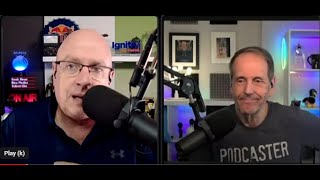
In this episode of the New Media Show, hosts Rob Greenlee and Todd Cochrane discuss a wide range of topics affecting podcasters and the broader media landscape. They begin by critiquing Facebook’s algorithmic moderation, expressing frustration over perceived suppression of content and debating how free speech is weaponized online. The conversation shifts to emerging platforms like Rumble, where they explore the challenges of early adoption, pay‑wall requirements for live streaming, and the idea of a potential uncensored bonus episode. Rob shares that he’s been invited to moderate a session at Podcast Movement, prompting a brief look at upcoming industry events such as IndiePodCon and Dragon Con, including budgeting concerns and travel logistics. Todd announces his imminent move out of the Columbus office, detailing the practical steps of moving furniture, repairing walls, and turning over the lease. Throughout, they touch on the 20‑year anniversary of podcasting, the role of AI tools (Midjourney, Descript, ChatGPT) in production, and advertising models like dynamic ad insertion versus baked‑in ads. The episode wraps up with scheduling notes for the next show and a light‑hearted reflection on the evolving media ecosystem.
Chapters
Okay, we're live.
Almost ready.
Todd and Rob Greenlee. In the afternoon. Hey, afternoon delight.
With Todd and Rob. Oh yeah, oh yeah, here we are for another edition of the New Media Show, back at it on another Wednesday. Rob, how you doing?
I'm doing great, Todd. Great to be back on the show again.
Yeah, I've, uh, I, I've had kind of an interesting few days. I was out in your neck of the woods, uh, Saturday.
My old, old neck of the woods.
Yeah, your old neck of the woods. I actually was in I, I have a hard time saying Wenatchee, Washington.
Wenatchee.
Wenatchee. Yeah, Wenatchee. That's where my daughter's at. Interesting town, I will just say that.
Um, so did you go to Leavenworth, which is the, the German?
I did. We went to Leavenworth one day. And you know what's interesting is that we have a town here in Michigan called Frankenmuth. Frankenmuth. Frankenmuth. Frankenmuth.
Something similar, right?
Very similar. I mean, it was almost like Oh, okay. You know, and it gets better around Christmas time because of all the lights and stuff like that. But anyway, I had a good time, did the tourist thing for one day, but a big baby shower, got to meet my daughter's husband, extended family, and, and practice my Spanish a little bit. Had a good time, drank too much, obviously. But yeah, it was, it was, it was a nice trip down and back. But I'll be honest with you, SeaTac sucks. That airport, too busy now. Two thumbs down. I mean, it was insane how busy it was.
Yeah. Oh, it's, it's definitely a busy airport. They've actually upgraded it quite a bit over the last couple years.
Oh, it's definitely different than 20 years ago because security took forever, even with, even with the CLEAR and everything else.
Yeah, it's a popular destination.
I am not, I'm not going to be flying through SeaTac again, uh, just You're done. It's not— I have to go there, of course, after the baby comes, but it's not my, not my, not my cup of tea. And my son came up from Portland, so I got to see him. It's been a little while since I've seen him. Big hair. I said, man, we need to put some hair trimmers to you. But I think he's growing the hippie look, so it's all good.
Yeah, my dad's sister lives in Wenatchee.
So yeah, so we are out there a lot. We— that's awesome. Well, we are lit and live, and, uh, we did have some stuff come in that I missed on the previous show, some boosts that had come in, and I want to read those boosts. And then one of them, it's from, uh, what came from Adam Curry, said AI is the new blockchain. Value for value is AI-driven monetization. And loving the Lit Show. So 20,000 total stats, sats, from Adam. We appreciate that. And, uh, but we have been getting some commentary about our album art. And, uh, if you didn't see last week's album art, the title of the episode was Unleashing the Potential of Audio and Video Content, and it was a picture of a A guy sitting in front of a MacBook with a set of headphones on, and he's basically cheering. There's no video component to that, but it just goes to show you some of the stuff that can be created. I used Midjourney to create that. Can you zoom in on that a little bit so you can see a little better? Let's see if I can do that. Let's see here.
There it is.
Yeah. So that's what it, what it looked like. So not too bad.
Right.
From an album art standpoint.
I'm surprised that it used the Apple logo.
Yeah, me too.
And on the laptop.
It doesn't, you know, Midjourney has not done well in the past with hands and it's gotten better. But yeah, I was surprised. And of course I put the text in at the bottom. I probably need a better template, but, you know, just it's episode art. It's not album art. So, and we know that Apple is going to start supporting episode art here soon.
Right.
So, you know, so I've— and this is the primary reason I've been playing with it, but it's not— it's not, you know, it takes a little bit to learn how to train the prompting to get what you want. And part of my problem is I've been getting images too dark. There was one that I created and I actually probably can show it for Geek News Central. I actually did album art in YouTube and let's see if I can find the, find the art. I don't know if you'll be able to see it real good, but yeah, probably not. And it was basically I did an article. Well, let me go, let me go bigger and see if I can do this and get it bigger. So this is what it looked like. I basically had, I asked it to create satellites with a background of a planet and then the satellites on the move. And essentially what it was, it was an article about SpaceX and how they've had to move their satellites 25,000 times over the past 6 months to avoid collisions. And really the only time they avoid a collision is when there's a 1 in 100,000 time chance that there would be a collision so that you can tell how many times they've had to move. So I thought it was, it was pretty good. And again, it took me a couple of times to get the image right. I still don't know how to do the aspect ratio. So it was a square image and I basically cropped it and made it a 16 by 9. But it was, it was, it's interesting what you can do with some of these tools. I've been talking with podcasters recently who, and people are basically not using their tools that podcast companies are providing. They're using third-party tools. They're using ChatGPT, they're using Midjourney, they're using other services that help them with episode titling and transcript analysis. I— it's very, very interesting, and it's what I was worried about And so what I've said is if you go as a podcast host and build these tools—
Well, there's not that many hosts that have built any tools.
Well, and some of them have licensed stuff, but I specifically have talked to some people that are hosting with companies that have AI tools.
I think there's only a couple of them.
That's correct. But at the same time, there's a lot of people, there's a lot of podcast tools that are not part of hosting companies. And they're not even using those tools, they're using other tools. And I've been compiling a list of the tools that they're using and stuff that you've never heard of before. And, you know, one thing—
I'm constantly hearing about new AI tools to do various aspects of video and audio and creating shorts and clips and transcriptions. And, you know, I think that the most popular one that I keep hearing about is Descript, right? Because it does audio editing.
Well, that's an editing software package. That's not AI. So Descript is not doing AI stuff. They're just basically doing audio editing, and they've been around for a long time. We've been integrated with them for a while, but it's really the other stuff that they're doing with basically show notes and that type of stuff. And you know, what's curious is the techniques people are using And, you know, I'm just making this list, you know, uh, giving— give them 10 titles, 10 potential titles from the episode, and they give, you know, or the analysis of the episode, give them 10 titles, and then they run those titles through some additional tools to figure out which title has the best SEO ranking and just this whole host of things that, um, for those that are serious, they've really upped their game when it comes to, uh, to putting show notes together.
Yeah, it sounds like we've moved from this, this use case of saving time, um, to optimizing, right? Um, and I don't know that podcasters are really saving time, a lot of time, by using these tools, but they might be, right? Well, but I think that's what the original promise was, is that you can automate some of these processes.
But I think it, it adds another layer of editing and review and probably, probably additional 30 minutes for me, even for this show, probably an additional 30 minutes, maybe 20. I usually can get it done before the video is uploaded because I have to wait for the video to encode and all that other stuff. But you know, a lot of podcasters are not doing what we did and, you know, make the video, actual video podcast. So I've got this extra time of waiting for the, the output to render and then upload to the host.
So yeah, um, takes time to upload this stuff because they're large, large files, right?
But at the same time, you know, I'm just kind of looking at the YouTube numbers, and the last episode for my tech show, the numbers are up quite a bit. They had that unique art, so I don't know if the art was the attraction factor or not, but you know, it's again, you have to look at play length. And when I look at the play length, they only listen for, you know, a couple of minutes versus where my podcast is listened to, to about, you know, about the 95% mark before people start punching out. So the attention span is much, much higher in the audio and video podcast listening realm than it is on YouTube. They just kind of come and they go. Well, I think the platform is built for that, but Well, if they're, if they're not hanging out more than 2 minutes, that is, that is not, you know, that's, that, that you haven't even got through introduction half the time on most shows within 2 minutes.
That's why a lot of, uh, show producers over there recommending, and I've been hearing this increasingly over the last week or so, is that, um, you really shouldn't play much or do any kind of intro or anything like that. You just dive right into the content.
Well, again, then you're, then you're building a logarithm for YouTube and you're not building a logarithm for a relationship with a podcast audience. So it's one or the other.
You can still do it. It's just what, what increasingly what I'm hearing is that you need to jump right into the show right at the beginning. And then if you want to play any kind of intro, that would be like, you know, after a minute or something like that.
Interesting.
Right.
Well, again, it all depends on how, you know, the game you want to play, but You know, again, all this is for me is just total experimentation to see what some of this stuff does and what people are using.
And, um, yeah, because on this show there was a period of time when we didn't play any kind of intro music.
Well, our intro music is still easy. It's like 20 seconds or something. It's not very long, right?
Right. But, but I think we did lots of episodes without any intro or exit music, so it was like just us coming in, kicking off and going, welcome to the show.
But we didn't dig into the content ever. We spent a few minutes kind of catching up, you know, that was, and that's still kind of the case even now.
So yeah, and that may have something to do with, you know, our catching on at YouTube too, is that we're not really sharing the topics that we're going to cover.
Yeah, because we don't have any topics to cover. We kind of just go.
Right. So you get what you get on this program.
Yeah, absolutely. Hey, you know, I've been absorbing and I'm subscribing to a lot more. How should we say it? I've been doing my intel and listening to other shows and listening to other companies. It's, I think, based upon the wording I'm hearing people use, market conditions prevent us from doing such and such until next year. And words like that, it makes me just go, hmm, you know, are you, are you as financially sound as you think you are? And it makes me, makes me wonder here just a little bit how healthy some companies are. In the podcasting space when they're talking about delaying stuff until next year because of market conditions. And that's, to me, that's, uh, that is a, um, it's a risk mitigation strategy that companies that feel uncertain about the short-term future are being cautious of their existence, you know, instead of, uh,, you know, to keep on cranking and doubling down.
And then, you know, so this is, this is the result of, you know, the interest rates getting skyrocketed really fast.
These are companies that should be profitable and shouldn't have to go out and get money, you know.
Um, yeah, but people are pulling back on spending too, so that also, that creates that deficit as well. And then, and then we've also seen in the podcast industry, you can just see it in the, the daily numbers in Pod News about how many active podcasts there are, it's pretty— it's at the lowest level than it's been in quite a few years.
But it's— well, it's all relative, you know, in my opinion. It's even though it's dropped, it's all relative because—
well, it's also— it's not like audiences decline. No, no. So I think what we're seeing is that more people are listening to the existing shows, right?
Right. And we're seeing that big time.
But the number of shows out there is diminishing, which means that that growing audience is being dispersed across a smaller number of shows.
And I continue to hear certain shows having ad loads that are astronomical. I mean, astronomical. I listen to a— and I don't like listening to political shows.
That's programmatic advertising for you right there.
And there, in 45 minutes of programming, there were 14 ads. 14 in 45 minutes. Yeah. There is something seriously— that's not a podcast. That's more than radio.
It's like radio.
More than radio.
Well, it's, yeah, it's the same ideology of radio.
Right, totally. And I had the stopwatch running and they were running on 4 and a half minutes. Every 4 and a half minutes, 2 ads. And I was just like, what is going on? Now, some of them were short, 15 seconds, but most were 30s. And how do you do a show when you're— I, I would lose my mind as a creator to have to have done that or had to be forced that. Yeah. So I don't know. I'm curious about the rest of the audience. Are you guys hearing these heavy, heavy lows? Now, if you're watching on Facebook or if you're watching on YouTube, make sure you say hello. Make sure you check in with us in the chat room and say hi. We appreciate it when you do. I can see you watching and can see you there. So don't, don't be shy and just say hello and let us know that, that you're tuned in. Um, but I don't know, I, I just have a different philosophy. Of course, Blueberry has had a different philosophy for his money spend for a long, long time. You know, I've always kept the healthy cash reserve, and, you know, we don't spend more than we, than we take in. And, you know, we, we've been very, very due diligent on our expenses. So for us, it's It's operation normal. It's full speed ahead.
Right. It's a, it's very much a survive and thrive strategy. Right. So it makes sense, especially these days. Yeah. So I don't know, Todd, did you want to talk about this, uh, this hot topic right now of the 20th anniversary?
Well, okay. Uh, for me, the 20th anniversary happens next year, but of modern podcasting happens next year.
Yeah, well, that's true. I guess what's being pointed out is the, the first time that an episode was added to an RSS feed, I guess.
Okay, well, they didn't, they didn't call it a podcast on that at that point. Yeah. So if you want to technically say it was an episode with an enclosure, great, 20 years.
But though you talked to Dave Weiner and Adam Curry about that, and they— that was always the name that they had for podcasting was podcast. Really?
That's okay.
I actually— Dave Weiner just put that out just this last week.
So who is contesting 2003 was the starting point.
Who's contesting it or advocating?
Well, I know who's advocating for us. James Cridland is, is advocating for it.
Well, no, it's, it's, it's coming from— don't they want me—
James Cridland, right? It's coming from who? Dave, Dave Weiner said it's the one that said 2003 is the start.
Okay, actually, to be more precisely, um, July 9th.
July 9th, 2003 was the date that they're saying Well, if that was the first enclosure, then I guess that's fine. But I think the majority—
Chris, was it Leiden?
He is actually claiming he's got the longest running podcast too. So that, that was news to me too. 20 years that he has the longest running one. But again, I don't know. I— podcasting to me started in basically August, September, October of 2004.
So this is the timeline that's being put out, right? Is it January of 2001, Dave Weiner had the idea of using an RSS feed with enclosures, right?
So that's what that was. But that was kind of prompted by— wasn't that prompted by Adam?
Uh, I think Adam was talking to him about it, right? About the idea of it. Right. Because there was this enclosure tag that had the ability to have PDF. Yep. Audio video files linked from it. Right. So, so back, he's saying, Dave's saying that even as far back as January of 2001, he had tested. This is testing in the enclosure tag with the, by adding a Grateful Dead song. Okay, as a test, right? So that was the first time that they actually did it. Gotcha. When, when it was experimented with, Christopher Lydon, um, was at Harvard University on July 9th.
It makes sense because Dave was at Harvard at the time, I believe, doing some sort of intern or fellowship or something, right?
And Chris, Chris Lydon back then was was doing a show. I don't think that's the name of his current show, but, uh, was Open Source was what it was called back then. Okay. And, and so that was, that was another kind of test that, um, Dave Weiner did. And actually, there's a plaque up, I guess, at a table up at Harvard that has it engraved on. Oh, that's interesting, saying that this was the location that actually recorded the first podcast, the first publishing of a, of a podcast.
But there was nothing to consume it on. There was no podcast.
I don't think it was actually pushed or made available to any platform.
Yeah, because there was no podcatcher until much later.
Yeah, that's— well, that's correct. Yeah, that was way before Apple supported—
well, before Apple started in June of '05 supporting— June, July of '05 supporting podcasts from an enclosure standpoint, an RSS feed standpoint. But the first podcatcher, I think, was Atom, wasn't it?
Well, I do think that there was some ability in the feed readers. Oh, and the feed readers capture an enclosure.
Let me think about that. Hmm.
Maybe back in the early days, back in 2003 was the time frame of feed readers.
Definitely. Well, I don't ever remember seeing audio in a feed reader, but I was a heavy feed reader user because as a blogger, I mean, it was probably just generated as a link in the, the text, probably as part of that, that, um, so it's in your mind, when did modern podcasting really start?
I think it was really in 2014. Or no, no, 2004.
Yeah, me too.
Which is the summer of 2004, back when actually you and I started publishing an episode almost the same week.
Yeah, I think mine was October 4th.
Yeah, that was September, right?
Yeah. So, and the reason I was October 4th is it took me a week to figure out how to get an enclosure into movable type because I had just had a new website built for my radio show, my web talk radio show.
And, um, I had my programmers in Ukraine actually, my website, and, uh, and they, I asked them to add the enclosure tag to the generated RSS feed out of the, I had a proprietary blogging platform built for me.
Yeah. If I remember correctly, there was some hack that we did in Moogle. I don't even remember. What we did. But that was the big issue, was we couldn't figure out how to get the enclosure tag into the RSS feed. And I think someone made a— I don't think they called them a plugin, but there was something that someone made, a module or something. We were able to finally figure it out because I never hand wrote RSS feeds.
I tried to do it for, for a while in my, my blogging platform because it wasn't automated. Yeah. I had to actually go into the code and add that when I first started. But over time, there was a software package that was available that you can get online that you could, you could generate the RSS feed.
I, you know, I think it should be—
publish it up to a, to a website.
I think, you know, there should be some distinction between, you know, okay, so it did happen from a technical standpoint. So, right, it was a podcast. Um, so, but it was experimental at that time, and there was, and there was no podcatcher. So if, you know, we fast forward a year and some months, then we had the ability, right? Even when I started in October was you could have an app. There was 2 or 3 applications that came on the scene really quick that you were able—
the iPodder was the most well-known.
Yeah, that you could— time frame— and you could basically run on your desktop and be able to subscribe to shows, and it would download the media, then it would sync it your, you know, to your media player and you could take it and go. So, so, you know, I hate— I don't know, I, I guess I'm a little bit— yeah, for me, podcasting is basically the real true origin of modern— and it wasn't even modern, prehistoric podcasting started in October of 2004, right? No, it was August, September, something like that. Whenever, you know, I could really kind of count Daily Source Code and some of those shows as the You know, the true— that's the only reason I'm here is because of Daily Source Code, right?
I mean, back in those days, you kind of had to be a little bit of a tech geek.
Oh yeah, you had to be a totally supportive total, total nerd, right?
And, and to some degree, that's kind of what's going on with AI now too, to some degree, is that if you want to build something that incorporates it, you kind of have to be a programmer or you have to understand some level of code.
So, you know, I guess, you know, I, and I heard Adam laughing about it on one show. Hey, 20th year. And, you know, he didn't really contest it. So if Adam's not going to— it's just a number, you know, so I'm not going to get wrapped around the axle. But you think there's conspiracy about it?
I don't know.
I don't think so. I'm not going to make any conspiracy. I, you know, all I'm going to do is I'll celebrate my show's 20th year in, in next year.
So yeah, well, that's, that's when I started doing it too. So, right.
So I, from that standpoint, uh, you know, I'm not gonna, I'm not gonna get wrapped around the axle from a technical standpoint, seeing that I'm a technical kind of guy. No. Um, but you know, it is, it does beg the question, is, is a podcast a podcast if you didn't have a podcast consumption app, you know? Right.
So that's true. But I did see that James used, uh, screenshots from your book.
Yeah, it's kind of— it is, it is interesting that he did. He— thanks for buying the book, James. Or did I sign one and give you one? I, I don't remember.
I don't know. Is there screenshots available online that you can find?
I don't know, but it is kind of funny. He also quoted, uh, Um, oh, another book too. So that was kind of funny to me as well.
Oh yeah, it was actually the book, the Podcasting for Dummies.
Yeah, yeah, the podcasting. I had the Podcast the Do-It-Yourself Guide, right?
Podcasting for Dummies.
And if you find one on the box, if you find one on the bottom of a bin for, uh, you know, for a, uh— I still have probably 20 copies brand new left in a box somewhere. I should auction those at some point. But, you know, if you find one at the bottom of a bargain bin or you have one in your, you know, in a box somewhere and you want it signed, let me know. We'll figure a way to do it, you know, get her done. Um, not that, not that it would matter at all, but yeah, James.
Yeah, I'm going to be co-hosting James on his Pod News Weekly podcast, actually. We're going to be recording it tonight.
Oh, so you're going to be on the show once? You're going to be on the show?
So, uh, actually, I've been on his show before, so— Yeah, but that's cool.
This is another run because Sam is out of town and probably taking his long European vacation.
I've been around podcasting for a while, so he figured he'd bring me on to back him up with the Christopher Lydon story.
So, okay, well, that's, that's fun.
Maybe. Yeah, maybe.
Yeah.
So, but, you know, I mean, his, his, his perspective on it is, you know, podcasting's changed a lot. And I know that Mr. Eric— unrecognizable— Newsom has put out an article too talking about, um, just 5, 10 years ago, some of the things that are going on in podcasting right now would have been unthinkable, right? Yeah. You know, the scale of podcasting— was it 4.1 million podcasts that have been published? And 42% of Americans now listen to a podcast monthly. I'm a little disappointed at that number, to be honest, honest about it.
Um, I haven't run into—
kind of would have grown more than that by now.
I haven't run into anyone that doesn't listen to podcasts. And when I said at the party, and again, half of it was Latinos and half of it was— everyone there knew what a podcast was, listened to podcasts. There wasn't a person that did not.
So how— well, then that points out an interesting, um, conundrum here, is that if that's your experience, and it is mine as well, I mean, I'm not discounting what you've experienced, But if only 42% in the research is showing have listened to a podcast, maybe they're thinking that podcasting is something more than what we're thinking.
No, I asked them specifically. You do? Yeah, because I'm, you know, I got this bug in my ear about topics we've covered in the past, you know, to the point of some Android users. I'm like, how are you listening to podcasts? And they used to show me podcast app on an Android. I thought, oh, interesting. And of course, the very young people, 25 and younger, are all on Spotify.
But the research, like we've talked about, is showing that people are thinking they're watching a podcast on YouTube.
Okay, well, that wasn't my experience at this party. Now granted, 50% of that audience grew up, smelled, breathed podcasting from the beginning, so a little dis— little dissing.
Are they like a Gen X, Gen Z?
Well, you know, my kids are, you know, my, the, it was in the all 20s. It was in the, now my daughter listens on a podcast app, Apple Podcasts app. My son uses Apple Podcasts app, but you know, they should because who, you know, who's, who's, who's their father, right?
That's the fastest growing demo, podcasting right now.
But the, the friends of my daughter were all listening to podcasts on Spotify.
Uh, that makes sense. So it does make sense. And I did see that the numbers on consumption for podcasting have spiked at Spotify because of that auto, um, autoplay capability.
Yeah, autoplay, right? It's just, yeah, so you finished one episode, it'll start playing the next one, kind of like what, uh, which is, which is ridiculous because then it jacks the numbers because Well, that's what they want. Yeah, well, they want, they want, and it's going to mess up the advertising. Your autoplay is not supposed to happen.
Well, if you're playing a playlist, which is kind of like what it is, right?
Again, that, I think that needs to be addressed because then that second podcast is, if you didn't, what are you going to do? It autoplay some, some podcast you've never heard of. Because that's what it's doing. It's randomly picking stuff. Then that's a false— what am I going to do? I'm going to stop. It's going to start to play. What is this crap? And I'm going to stop and not continue.
That's why it's got to be smart about playing new episodes out of your subscription or your follow list, right?
If they do. I don't think so.
I mean, if you look at what's happening on YouTube, increasingly is I'll watch one episode and if I don't change or pick a different video, it'll default to whatever it decides that it wants to pull up on the screen.
I'm a hardcore. When it gets to the end, that last 3, 4, 5 seconds, I'm like hitting the back button. Right, right, right. But if you don't, it'll just pick something.
Pick something. And oftentimes what I see it pick is content that's pretty old. Which, which I think is a little bit of a fail. Um, it would be better if they picked something that was current from your current subscription list. Right. So I'm not quite sure why it's doing that. That may be intentional behavior because maybe it's the algorithm is based on, um, how many plays that particular video has had. And the longer that it's been on the platform, the more plays it has. I mean, I've got one video on my profile that's got 200,000 views. But it's been there for 15 years, right? But is that going to show up in the autoplay mechanism because it's got 200,000 views?
Well, I've got a webpage on my website that gets 1,300 to 2,000 views a day because it solves a spreadsheet question that's often asked on XLS or not on XLS, but Microsoft Excel. So it's, it's ranked the number one search results for, you know, 10 years or so, right? So that, you know, that gets in, you know, I've got that page loaded up with, uh, there's a company podcast, you know. So, you know, it's probably responsible for, uh, you know, at least a few new listeners. So one thing we did, uh, got to toot our own horn here a little bit, we released a, uh, an app, a PWA for our stats platform. Yeah, I saw that, and, uh, congratulations on that. Yeah, a lot of, you know, a lot of people, you know, it's been something that's been asked for for years. I want to my stats on my phone. So now they— we didn't, you know, and that's another thing too, is getting a PWA. We're still going through the process of getting the PWA approved by Apple. Um, but basically you just— it's easy install, and I've got it right on my desktop, and it'll work on a desktop, it'll work on Microsoft Windows in its platform as its own PWA, and, and Android and iOS. So You click it and boom, you're right into the stats platform.
So, um, that's, that's for all those stats addicts out there.
Yeah, for the stats addicts for sure.
And, uh, well, Todd, so how many years has it been that we've, we've said that we were going to hit $2 billion in ad revenue?
It's been a long many years.
It's been like 5 years. That's been forecasted to happen.
What's the new forecast?
I don't— I haven't seen the new forecast, but the number that's being thrown out that I'm seeing is $1.8 billion.
Oh, okay.
Well, so that's where we're at now. Oh, so, but I think that $2 billion was that number that's been stated for the, like, the last—
uh, $100 million of that went to that, uh, political show that had 14 ad spots in it or something. It's just, just, you know, they talk about a just diminishing returns. I, I just don't get it. I really, really don't. But I do find this to be, uh, interesting. There was an article, uh, that said some advertisers are asking for baked-in advertising rather than dynamic audio insertion. You know, this is the stupidest thing ever. It's so dumb. You can do a baked-in add that sounds like it's— just pull it out, insert that normal ad, you know. And plus, 90% of podcasters deliver 90% of their lifetime downloads the first 96 hours. So for 90—
but the advertiser thinks that they're getting perpetual advertising forever.
Well, you know, like I said, for 90% of shows, it doesn't matter. I know, but bake it in, bake it in. Don't use no DAI. So it's just so funny. Yeah, obviously. Oh yeah, it's baked in. And then at the end of 90 days, poof, out it goes. Or 38 days. Baked out. Baked out.
You know, pull that baby out of there. I want it.
But if they're asking for lifetime representation in an audio file that has long tail, they're going to pay big for that.
And some of the agencies are willing to pay extra for that, right?
You know, but if you're just going to pay me normal CPM and I have a long tail show, sorry, I'm not losing out on that revenue. I would never sign that.
Yeah, I saw that Pocket Cast basically announced that they're going to have a Wear OS app. I guess that's an Android app, I suppose. That's good. So, so, you know, there is a, um, podcast listening app that's going to be available on the, on, on the Google Pixel Watch, I guess. Um, so that's good. I didn't know if Google had any kind of podcast listening app, um, that was native to Android.
I don't know. I don't have a Google Oh, you have an Apple Watch that I forget to wear half the time.
Right. So I still wonder when Apple is going to launch a solution on Android.
I'm not holding my breath.
And also, when is Apple going to update iTunes?
I doubt that they will. Why would they?
Well, because they've been rather, you know, aggressive. I know they were a little aggressive with me about using the term iTunes, um, many years ago, right? Um, we're Apple Podcasts now. That's right. And, and, but all of a sudden, you know, you go and you look at Windows and there's hundreds of millions of people using Windows still. I mean, it's not like it's a dead platform. Um, and you know, why is iTunes still there? Right. Why hasn't that been upgraded to Apple Podcasts, a separate app for Apple Podcasts and a separate app for, for Apple Music? And, you know, get with the times.
I do want to thank Fernand. Fernand says, hey, gentlemen, MovableType CMS. Yep. I stayed on it for many years. Facebook pushing out your live video stream. Yes, we're pushing actually to Facebook. And he says, I have Todd's how-to book in PDF.
So PDF, yeah. So did you officially put that out as a PDF?
Yeah, they did. They put it out as a—
oh, you did?
Okay. Through Wiley did it. Yeah, you don't get paid as much for the digital versions.
So is that like, uh, like a Kindle experience?
Is that what that is? It was early in the early days. I think it was before Kindle was available, so I don't know what the first year of a Kindle was. Maybe, maybe it was available on the Kindle. I don't know. I've got the digital version on my Kindle, so I guess it does, does read.
I think the Kindle does display PDF, so if it was put out as a PDF file. But, um, yeah, I also saw that, uh, ReFonic put out some news saying that podcast advertising is going great, Todd. It says It's increasing as a percentage of total ad audio ad revenue as a percentage of audio ad revenue. That's a little bit of maybe a little bit of a change of direction and what that messaging was. Um, it's increasing its percentage of total audio ad revenue. So it's not saying it's increasing the total.
If everything was, was absolutely hunky-dory, then there wouldn't be layoffs going on, right? You know, so, you know, everyone says everything's great.
Hmm. Yeah. So this Refonic thing is a little bit of a twist on perception here. You know, total as a percentage of total audio ad revenue. Yeah, I believe that podcasting is growing as a percentage against other forms of audio. Being monetized.
Sure.
What does it mean that the overall number is growing that fast?
Yeah, one thing I found to be interesting is, uh, anytime you offer something free, you just invite the absolute scourge of the earth to come in and set up stuff. And, you know, at Blueberry, for a while, we had the ability for you to get a free 30-day trial without a credit card, and it was horrible. I mean, uh, 600, 700, 800 shows a month that were just nothing but, um, just spam, you know, spam shows.
And I'm sure that you're happy to hear that Podpage is gonna, gonna be eliminating their free plans.
Well, they're just, they're gonna push people on to paid. But again, you know, the folks that are using Podpage don't know how they're being handicapped. So it is what it is, right? And, you know, I always think, you know, if, you know, every show that's over there means that any— everyone that's not, they have a tactical advantage on them from an SEO standpoint. Um, it's okay, it's all good. But if they were getting abused by spam artists and basically putting junk into their system, I'm not surprised in the least. And them going to a paid, you know, basically we went back to credit card required because it just become too much of an administrative load to go in and just, you know, delete, delete, delete, delete, delete, delete, lock accounts out because they were, they were just spam, right?
Yeah. They were tire kickers.
No, they weren't even tire kickers. They were just pure spammers. They were just pure spammers. Yeah. And they would run script. They'd run a script to set an account up. It'd go all the way through the system, set up a WordPress site. And put 3 posts on the WordPress site and be done. Oh, and it always linked back to some— something that was either inappropriate or, you know, it was— it was nothing was good. So it was just one of those situations like, oh, here's, you know, the great— we're having great numbers. And you look at, you know, you look at a percentage of them, you're like, this is absolute crap. So I'd rather—
go ahead. Well, yeah, I was just going to ask, um, how do you think Podcast Movement's going to do this year in Denver? What's your thoughts on that?
I would be surprised if numbers are the same. I would too. I'm not hearing— I thought of it— no one talk about it. Maybe it's too early.
Well, I've seen, I've seen a fair other, a fair number of other podcast events be pretty soft over the last few months. So I'm not, yeah, I think they're, I'm not, it's kind of interesting. I know, you know, there's no big commitments that I have to do anything at the event this year. No, I, I have attempted to get this show, um, there like we have over the last many years, right, as a, as a live show. But I think they've changed direction over there to a point where it's— I don't know that we fit over there anymore. That's the honest truth. So it's not that I won't do a show over there if it— if the opportunity was made available to us. I know James Gridlin isn't even doing a show. Really? So when I think it was, um, I think at Evolutions, both us and James did shows at Evolution, right? Now when I say did shows, did live on stage shows of our shows, right? The, the Pod News Weekly show, and then The New Media Show each has a stage presence.
This is the time of year where I'm starting to assess events and decide where we're going to put money next year. And, uh, the only show that I've committed to at this point is Podcast.
Well, Podcast, there's gonna be a lot of stuff going on at Podcast in January. So the Hall of Fame is going to be there, um, She Podcast.
I don't think that's been officially announced, but Well, I just did.
Just did, yes. And it's being— it's being worked on, so it's good.
So it is guaranteed. We know that the Podcast Hall of Fame is going to be there, but we, we shouldn't have—
probably, we probably shouldn't have dropped that.
But yeah, you probably shouldn't have dropped that.
But, um, but I think it's good that it's, that it, it's, it's coming back because it It's not. It didn't the last time.
So the— so I guess we'll see. Yeah. See what happens here with these events. And, you know, we'll make a determination. You know, we're going in like it's going to be a normal crowd and we just hired somebody new. So we're going to— so we're going to have 14 members at the event and, you know, do our normal thing. But one thing is that they are being smart about, and it's one thing that I did opt into, is the— they're having a beer pavilion basically one day around the booths. Basically, you can have a beer cart next to your booth for first couple hundred pours or something like that. So I did write that check, you know, because, you know, nothing like free beer to draw people in. So, um, and I hope the other companies are doing it too because that will, you know, cause a groundswell of people to come into the exhibit area. So, but, you know, and it's coming actually, you know, I haven't even looked at the calendar when Podcast Movement is like coming up.
That's the funny part. August— was it August 21st or something?
Yeah, I need to get— I need to get, uh, airline tickets booked. I haven't even booked airline tickets yet.
So yeah, I haven't booked anything either. So, and this is kind of a unique situation because this is—
this—
if I don't go to Podcast Movement this time, um, I think there's still a chance that I will, but it'll be the first one I've missed since the very first one.
So, well, we'll see. I can get in their newsletters. I'm not paying even attention to who the speakers are because it's, you know, it just ends up being—
I don't think there's any big name people speaking, is there? Oh, I don't know. Big headliner names. Hmm, I don't know, we should go to their website and see. I mean, I could invite Dan to join us.
Yeah, anytime, he's welcome on the show for sure. Him or Jared would be great. Might be nice to get Jared's, uh, take on things. We haven't had Jared on, right?
That's true, that's true. So let's see, I'm on their website right now. Let's see what they, um, they say is speaking. Any, any big name podcasters? See here, they're not displaying any on their website.
Um, let's see, you would think they would have all the keynoters. Their website's weird.
You have to Tom Webster, Donald Kelly. Those are the ones that are highlighted today anyway.
The, you know, the, the keynoters are usually the ones that they count on to bring in extra people. You know, people go because they want to hear a certain keynoter speak. So, yeah, you would think that they would have them up in the right up in the, you know, right in front. Now I did submit to speak at Podfest, and that's the first submission I've made to speak at any place. I have, um, didn't speak anywhere in 2023. Well, except for the stuff we did at, you know, at NAB, but, um, that was—
so what does this say about, um, the, the health of the podcast conference industry?
Well, I think all conference industry is in a challenge. Now, here's the thing that has never happened in the United States for podcast events. You go to a— like when you go to ATD, I use that conference as an example. When you go there, that is, that is world class. They feed you. They feed you at lunch. And it's just, it's just a whole different level of a conference for about the same price as you pay to going to Podcast Movement. And so the sponsors aren't taking care of the food, but they prioritize taking to keep everyone in the venue. They have great night events where you can actually network. The night, the night events where you go there, it's, it's in a— you have good music, but it's not overbearing. You can network, you can talk, you can do business. It's, it's conducive to doing business. Podcast movement evening events have become a party event, not a business event, right?
It's hard to do any kind of networking at a podcast movement after-hours event.
And even traditional where we've went and done stuff at the bars and stuff, it's been harder and harder because everyone dispersed to go to the party and, and, you know, jam it up and have their ear balls— their ears blasted. And I guess that's, you know, they have— they do that because of the, you know, the age group that's attending the event. So It's, it's hard to do business at Podcast Movement, um, outside of show hours.
So yeah, so I'm on their, the website right now, and the only featured speakers that they have— and these are usually their keynote speakers, um, that they have showing so far. I know they, they roll them out over time, so there's probably more to come, but, um, Their featured speaker right now is Tom Webster, Gabriel Soto, who's from, from the Edison Research, um, stuff. So really those first two are kind of somewhat related to Edison Research. And then, uh, Angela Yee, who is the host of, um, Way Up with Angela Yee podcast.
Never heard of it. What is that name? What's that? Never heard of her show.
I have to look her up. Yeah. And then Donald Kelly, who's the founder and CEO and, and the sales evangelist.
So those are the— CEO of what company? The Sales Evangelist. Again, another person I've never heard of.
Mm-hmm. Yep, those are their, their current keynote speakers.
So two givens and two— I'm sure some people know who they are.
Yeah, I think out of that list, you know, most people know Tom Webster, of course. Um, and then if you scroll through the list of other speakers that are listed to go to the website, there's, you know a fair amount of the normal mix of people that, right, that typically go to a podcast movement. But, um, but yeah, it's interesting. I don't see any big name, um, folks that probably would have, I guess, expected to be paid to be on stage. Maybe that's what's, you know, like, like in the past they, they had like Mark Maron, or, you know, some huge podcaster. Yep. Up on stage doing a, doing a presentation. I don't see any of that this year.
Well, I guess we'll see. And we'll come back with the numbers and, and, and see where the space is at. I know they've been doing a lot of events, because I see them announce that they're doing a meetup, so such and such place and such and such place. So Um, so I think they've done well in that regard.
Are you sponsoring it this year?
Of what? No, we're not a sponsor. We're just doing a booth.
Yeah. It shows AudioBoom is the platinum sponsor. iHeartRadio is the gold sponsor. Lipson is a gold sponsor. Podbean, silver. The Roost is a silver. Simplecast is a silver and Triton.
Yeah, you know, we used to be in that silver group, but the price got too high and Libsyn went out and spent a big bunch of money then to be— what did they say they are?
They're gold.
Gold.
That's— there's only two, two gold sponsors.
I heard probably $30,000 or more. Yeah, probably. Because I think this— I think the silvers were $14 or $15 before.
So yeah, it's gone up a lot. So it'll be interesting to see. They don't— let me see if they list the exhibitors yet. Okay, there are some exhibitors, um, listed here.
Any surprises? I would expect that to be pretty normal.
Cumulus was listed. I thought that was interesting. Hmm. As an exhibitor. Didn't they say that they were pulling out? I don't know. After Dallas?
I don't know. Again, that's— we just kind of show up, right? Okay, sponsors and exhibitors.
So StreamYard is an exhibitor, um, and I'm working with StreamYard now, so that may be a reason that I go. And the Speaker Lab— I'm also a member of the Speaker Lab too— they're going to be there.
So let's look here. Um, Audiboom, Asha, Back Adventures, Blueberry, BSW, Buzzsprout, B&H— that, they're new— Captivate, Cumulus, Deity Microphones, Descript, Dystopia, FinCon. I think they do a trade. I think FinCon has a booth at— I mean, Podcast Movement has a booth at FinCon, and FinCon has a booth Focusrite, Glassbox, Headliner, HeilSound, iHeart, Libsyn, Linkfire, Mackie, Ossa, Podbean, Podcast Radio, Podopolo, Podroll, Red Circle, Resound, Riverside, Show Platform, SymbolCase, Futures, Speaker Lab. I don't know what Speaker Lab even is.
They're a, like a, like a professional speakers training training network, right?
StreamGuys, StreamYard, Supporting Cast, XM Media, Legalpreneur, TPA, Triton, Veritonic, Visla, Wyland, Wildcast. That's interesting. I know who holds the trademark to Wildcast. Yellowtec and ZenCaster. So pretty good. 3, 7, 11, 14.
It was a pretty good list of it, close to 50 exhibitors. Yeah, that's a good turnout.
Yeah, and of course, Wondery, Amazon, and Art19 are all one, and then ABC, ESPN, and National Geographic are another group. But they actually kind of surprised about B&H, never seen them to a podcast, uh, event before.
So no, I've seen them. Um, I thought they'd been at—
they go to NAB a lot.
Oh right, that's, that's probably where I saw it.
But not too many AI groups in here. At least they're hid with their name.
Oh, as far as AI companies, right? Yeah, yeah. I don't see any like, um, CapShow or those platforms. But it is interesting the folks that are in the event sponsors list but are not in the top level exhibitor list.
Maybe they're just automatically assumed. Audioboom will have a big booth. iHeart will too. Libsyn will. Yeah, so these are— they're all going to be there.
And CNN Collection is going to be there.
That's interesting.
That's interesting.
Never seen them there before. I'll open up some of these links to some of the companies.
Culture and Code.
Yeah. Uh, Resound, the AI podcasting tool for creators, and they have some sort of an editor, right? I saw, um, something that was interesting. Uh, let's see if I can find the information. Because we're kind of talking about it. Um, have you heard of— let's see here. Okay, Streamlabs. Are you familiar with Streamlabs? Streamlabs. So Streamlabs has a new podcast editor, and it was something they bought. Uh, they bought it from, um Uh, who did they buy it from? I can't— it's a repurposed product. Let's see if I can find it because I was doing some research on it to look at it. Um, it was Type Studio before. Streamlabs bought Type Studio and they can rebrand it to Streamlabs Podcast Editor. So just, I just found that the other day and I don't really remember Type Studio either. So, but what, what set me up was, is I looked at the article and the UI looked just like Momento and I thought, whoa, did who license who? And I sent an email over to the Momento folks. I said, did you guys license, uh, Streamlabs? And, and they said no, no, he didn't. I, I, and I just like, wow, it's very ironic that the UI— I mean, the UI looks— somebody stole something from somebody, um, because it, it, it was remarkably similar. Icons, everything, the interface, and it's all AI stuff. So maybe people are working underneath the same type of framework or something. They got the same framework off some website, but it was— because I swear to God, I was like, oh my goodness, that's someone licensed somebody. And, and I asked Momento if they licensed you or vice versa. They said, no, first we've seen of it. And they were kind of shocked to see the, see the UI. So at least that's what came across in the email. Hmm. Oh, so I don't know what type of editor that's, that's going to be.
Yeah, that'd be interesting to see how that rolls out.
Yeah. So they have a bunch of streaming products, uh, Streamlabs does, and it kind of confused me because I was like, very close to, very close name to the company you're working with. You know, so I was like, is that a subsidiary of, you know, and it's not. Oh, StreamYard. Yeah. You know, you see Streamlabs, StreamYard, you know, it's like, hmm, check them out. Yeah. So they're worthy of a look. But yeah, so I guess, I guess it's probably going to be a good show at the event.
So let's try. Well, it's going to be interesting to see, you know, what actually happens there, right? Yeah. So, you know, we shall, we shall see. Yeah, here's the— here, I'll share up on the screen this, this website. You can see it. Live streaming software for Everyone, yep, download the—
but if you go to the about page or something like that, you'll find the editor. I had to kind of— it's, it's a— if you do a forward slash podcast-editor, I think you'll get to the page that it's on. So about, is that what you're saying? Uh, just go, I'll see if I can find it here. I can bring it up.
Yeah, I had a screenshot up on the screen.
Yeah, I had, I know, but I was looking for the, uh, um, podcast editor. I wanted to show that off. Let's see, I think it's, is it under the product list? Um, products. No, it's not in the product list. I think you have to go—
where is it? There's featured products over here, desktop.
Yeah, I went all the way to the bottom and found it. Hang on. It's called—
okay, so let me— okay, that's exactly, exactly what I had on the screen.
Uh, no, this is different. Um, oh, okay, okay. So it's this. This is what their editor looks like.
I'll stop sharing then.
So podcasting, video editing, transcripts, publishing. This is the— this is what it looks like, at least inside. I think it's all web-based, so. Right. Yeah, Streamlabs Podcast Editor. Text-based editing.
Yep. So it's for audio only, or is it for audio and video?
And video, I believe so. Yeah.
And it's a little bit like what Descript is trying to do then.
Well, Descript is doing, you know, they're doing a great job with their product. So, but it does say video editing on there. It doesn't say audio editing. So maybe it expects it to be in video format. Right. But if they got publish buttons that go to YouTube, Spotify, a podcast link, who, where does that go? TikTok, Instagram, and I don't know what the other publish link is.
Yeah, I did find a, a, um, I learned a little bit about a new app called vidyo.com. AI, and it basically takes long-form content and it will generate, uh, short clips that can, can be used with transcripts, um, in social media.
So similar to Headliner?
I suppose it's probably a competitor to that. This is the, the site here. You can start for free, but it has some paid paid plans, but it, it creates, you know, those kind of like two, two talking head kind of, um, Reels or TikTok, um, videos that actually displays the text underneath it. So you can have like a conversational clip, like a minute clip or something like that, and it'll auto-generate that for you. And then you just download the, the episode and publish it up to whatever short-form content platform that you want to deliver it to, whether it's YouTube or—
yeah, these services are pretty expensive. $115 for 150 minutes, $30 for 300 minutes, and 500 video minutes is $50 a month. You can buy it annually and it saves some money, but yeah, but at this time, with everything moving so fast, I'm not buying a year subscription to anything. Right. You know, it just does not make sense to do that. Right. Just largely because of the, you know, this is like the fourth or fifth. It's just amazing how many. And it's, you know, the question is, how are these going to fall out? And I saw a platform this morning that had been given 1 point. But it was the number they told me, 1.1 $1 billion in investment. And I'd never heard of them before. And I was like, you've got to be kidding me. And it's just like, so there's some crazy money being invested in these ecosystems like this. Stuff's expensive to run. How do you recoup that type of an investment? You know, that's a, that's a big number. They got to be hoping for a major close, you know, Microsoft level. Google level. Who can, you know, first of all, very few companies can afford that number, you know, that type of a number from a, you know, because if they, if they've got it 1.1, then they're, they're evaluated like 8 or 9, and that's just insane money. That's, that's unheard of.
Yeah. Well, Todd, as you think about this topic, I mean of growing a podcast now. I was talking to a podcaster earlier today, and we were trying to hash out, um, where's the state of the art on that right now, and how to, how to scale an audience to a show, whether it be YouTube or an audio podcast. You know, what's the approach in a fairly saturated market, um, of media right now? And I think One of the things that's going to be interesting over the next couple of years is with AI, it could create in these new companies that are enabling automatic generation of clips and short-form content. We could see just these platforms just get flooded. And I know that we haven't talked about the kind of latest social media platform yet, which maybe we should, which is Threads. Um, the derivative of Instagram.
I don't know if you've pulled into that platform, but I don't plan on giving them— I captured my name and that was it. And actually, I didn't even have to do that. It's tied to your Instagram names. I didn't even have to capture a name. It just carried over.
Yeah, I think it was kind of how Facebook did that, um, with Instagram was a little bit of a fake indication of what the popularity of that platform is. Um, because it was so easy to just migrate all of your followers over from Instagram. I didn't even look at that piece, you know, so, and, and that just automatically scaled, um, your account over there.
I just, I just refuse to give anybody any more information.
Why?
You know, they already, they are, Facebook has everything, more than everything. They have Facebook, they have Instagram. Now they have Threads. You know, come on. How much more data are you— people? Yeah. And you agreed to new terms of service on Threads that are very, very aggressive on you. They basically have permission to collect everything. So it was their way around of data collection by putting in a new system that allowed you to agree to new terms of service that allows them to steal everything. You signed off on an incredible, incredible amount of— people are talking about it, but no, no one's reporting it. No one's reporting this incredible, um, take on privacy on that platform. They all take their fair share amount of information, but this was— this is a whole new level. And, um, So, you know, they think Twitter is failing, so they're gonna, you know, they're gonna go after that crowd. And, you know, the masses have got over there. I'm not going to participate.
I just— I think that the rumors and talk about the failure of Twitter are really unfounded.
Completely unfounded.
I don't think there's any real evidence of that. I think there's a lot of wishful thinking of— Yeah. Very, very people that are very divisive, right, in their political views that would like to see Twitter go away because of who the owner is, right? So it's, it's, but what, you know, it scares me a lot of talk about podcasting and Twitter that's bubbling around.
Yeah, well, just let it bubble. You know, here's, here's the thing that I don't agree with Threads. They're talking about integrating with Fediverse and Mastodon. And I will block the Thread server if they integrate with— because this is the only place currently.
That's a threat to them. I would say that the Fediverse is a threat to Facebook.
Oh boy, I tell you that. Facebook is kissing the— of the biggest Mastodon instances. They're saying, hey, integrate with us. And, you know, and they're, you know, They're showing Greenola and I am sure because they have—
they would love to get access.
Oh, there's a whole thread on private, you know, whole. So what we have now is the ability finally to have— and there's a word for it and I'm pulling a brain farted. But basically I own GeekNews.chat. That, that is my place on the Fediverse. I own Blueberry.chat on Those are two Mastodon instances that I run.
I— those are running independent, independent of integration with anything else.
Right now I can, I can follow anyone else on any other Mastodon server as long as they don't block my server. I'm able to see Evo Terra on his system. I'm able, and I'm able to see these threads of conversations of people that I follow. Purposely. Um, and if I decide I don't like what an instance is doing, I can block that Mastodon instance to basically keep them out of my thread at all. And, um, but it is an ecosystem where if I'm over on the Podcast Index, because I have, you know, I'm unusual, I've got 3 different Mastodon accounts, but I hang out on the community at podcastindex.social the most because that's where all the people over there I'm not following on geeknews.chat. So it's, it's a— oh my God, someone's got to help me here. There's a word for it. People are listening to the show right now are screaming at the top of their lungs. When you're on Twitter, that's an ecosystem that's controlled by Twitter, right? Yeah.
And it's— they get all the metrics out of it, everything, and all the data.
That's right, right, right. So for me, I'm basically sitting out here with my own Twitter being geeknews.chat and blueberry.chat, and that is my ecosystem, um, and it's standalone. And no one can tell me what to do with my, with my instance. They can't tell me how to run it. They can't, they can't take content. Now they can block, but they can't tell me take content down. I have to do my own moderation, of course, and so forth. But it's refreshing. I'm having very, very detailed conversations and that I don't get on Twitter, but it's different than Twitter. In a whole different level. Um, on Twitter, it's just this constant stream of noise, and the people that I do follow, maybe I see their stuff once in a while. And this, I'm guaranteed to see the conversations of the people that I follow, and no one's throwing some logarithm in there and downplaying content. So if Eva— Evo makes a post, because I follow him, I see his post. It's unlike Facebook where if I'm friends with you on Facebook and you make a comment on Facebook, I have maybe a 5% chance of seeing your post. Right. So in this instance, I'm allowed— I can see the people that I want to follow and integrate with. And when I'm sick of them, I can unfollow them and I don't see them in my thread no more.
Well, it's not kind of gatekept., are gated, right? Because that's what Facebook does. A lot of people don't realize it, right? It gates your friends from seeing your posts, and it's trying to build an incentive for you to boost or pay for reaching more of your own contacts.
So, you know, just to give an example— whoops, let me, let me flip this up, see if I can get the right— so here is I see Dave Weiner, I see Dave Jones, I see a couple of people that I'm following, and I can look at the local thread. These are threads that are made locally only by people on blueberry.chat. Then I can look at the federated conversation right there at the top. There's Evo. He said, good news appears this, this far to be a simple summer cold. And he's got his COVID results, right? And I've got other people that I have, I'm following Young Fogerty. You know, there's a number of people that I'm following that basically Andy Lehman, and I can see because this is the federated view, I get to see who I have followed and it's guaranteed I'm going to see stuff. I can still send direct messages. I can explore if I want to go search a topic, I can explore, I can get notifications and I can see the general thread of intermixed stuff too. This for me is a perfect way to ensure that conversations I want to have with the people that I want to have is not blasted by 10 million people that just signed up for Threads and have their crap intermixed into the comment thread. I will, I will, I will block. Dave Weiner thinks it's a great thing. I can't believe it. Dave Weiner thinks it's a great thing that Threads is up and he can't wait for them to integrate with the Fediverse. I just shocked. I'm like, what? So matter of fact, he put a post on here 3 hours ago. So if Facebook really loved open web, they'd hook Facebook itself up to it, support RSS feeds in and out, let users have rich text and links, basically support text casting proposals. And Facebook's never going to do that. So, you know, and if you search for threads on here and do it, and I look at the overall conversation. Now let me go to the federated view and search for threads. Again, I'm not— yeah, here's the threads I can see. You know, what people are talking about, you know, about what's going on with, with threads from a hashtag standpoint. So again, I wasn't showing it, but to me it's a— it's— oh God, I'm trying to think of the word. Maybe someone will boost and tell me the word I'm looking for. But anyway, long story short, I don't have to worry about junk. Now, Twitter, I know what I'm getting when I get on Twitter. I don't know, what did you— you been on Threads and played around with it?
Yeah, I've been on a little bit. I've, you know, it's, it's captured some of the same followers that I have on Instagram over there. So I got— my thing is, I, I don't have a big following on Instagram, so I think I, I think I've migrated over about 300 or 400 followers from Instagram, but that's, that's about it. But it, it's enough to generate some sort of activity on my, on, on my account. I think it's, it's okay. I don't see anything all that revolutionary about it. It feels very rudimentary and basic and not really entirely robust. Um, not even near what the capabilities of Twitter is. I mean, I barely even think it's a competitor to Twitter, actually.
Well, that's what it's designed to be as a competitor Twitter.
I know. Well, and, and it does kind of point out to me, as I think about it more, I know, um, Elon Musk's plans for Twitter is to turn it into the X app.
Well, his, his goal is to make sure that, uh, we can pay for stuff with it. You know, basically becomes the, you know, but it's the ability to pay for stuff.
Yeah. And it, and it will become kind of like a platform that can encapsulate a lot of different capabilities, right? Um, yet some of them we, we don't really know what that might be. But, um, just the matter that it, it is a little bit of interesting that Facebook felt the need to start working on a Twitter competitor here, right? Um, maybe they feel a little bit threatened by what the plans are that Elon has, or, or they saw an opportunity. Well, yeah. And, and, you know, if Elon has this very elaborate plan with the X app, that could be a big threat to even Facebook. Right. So there's a lot of people gunning for taking down the dominance of Facebook. Right. Right. Those 2 billion+ users that Facebook has are, you know, are, are attractive to competitors. Right. But it is— they would love to be the next platform, the next social platform.
I just, I'm just a little bit tired of giving, you know, it— obviously I might be a little bit jaded here and a little bit hypochondriac, but it is a situation where why, why do I need more of my personal data being sucked up by this big corporation that is just doing nothing but marketing the crap to me.
Right. And I mean, really, how is the only thing that I've heard people say about Threads is that the, the cost of attention over there is low, right? So as you think about boosting and paying for distribution on these other platforms, currently it feels like this Threads is kind of like more of an open, open door, but we don't really know what's going on behind the scenes. You know, Facebook's got a lot of algorithms that can play games with visibility to content. You know, it's not a stretch to think that they're not going to gatekeep that over there on that app too. So I'm just not sure it's entirely clear that there's a lower cost of exposure over there. I just don't see a lot of current value to the platform that would be worthy of me taking more time out of my day to spend it over there versus spending it in the existing ecosystems that are much bigger in scale.
And to be honest with you, in my opinion, the engagement on Twitter still is at an all-time high because there's been so much noise removed.
Yeah, you know, it's definitely better. You know, there's a lot of bots gone.
Yeah, right. It's not perfect, just like anything else. But I'm a big boy. Nothing is going to be perfect. You know, I'm a big boy. I don't complain. You know, I've got the ability to make my own judgment on stuff. I don't have to be told when I think something is fake. I, you know, everyone wants their hand held. I just— that's the way I don't know. I just— I grew up where you weren't coddled. You fall down, get up. You know, I don't need to be coddled.
So yeah, I just got an ask in email to be a moderator on a session at Podcast Movement. So I guess that answers my question if I'm going or not.
Maybe, maybe someone was listening today, Rob Greenlee. I don't know. Maybe. Yeah. Myena says, I think they feel threatened. That's what she says. She's watching the live stream. So she says, I think they feel threatened.
Well, probably they do. Oh, you mean Facebook does? Yeah. Yeah. I think Facebook has a lot they could give up.
Well, you know, Facebook could fix their situation real quick by showing me my friends that I follow. Just, just let me see the people that I'm friends with. Let me see their post. Don't hide it. Don't suppress it. And if I miss some stuff, cool, but show me. Don't show me stuff that I'm not following.
And how are we going to get through this whole weaponization of speech?
I don't know how you do.
You know, I know that there are platforms out there that are trying, like Rumble.
That are trying to be free speech platforms. I'm having trouble. I got into my Rumble account and I'm, you know, it, they, it, it, you can tell it's, it's still a little bit early days and that, oh, it's, that app is certainly still rough. It's got, it's a little rough around the edges. And I can't find the live streaming stuff. Set up a new live stream. So a live stream is available on all paid plans. Oh, so I have to have 5 followers and I have to pay. Hmm.
Do you pay for Rumble? Um, not currently.
I'm not paying for it. All right, so follow me on Rumble. It's Geek News like normal. We gotta have 5 followers over there, and I wonder what it costs.
Well, Todd, um, we should do a bonus episode just on Rumble.
Oh no, no, no, no, no, no, no, we're not doing that. Uh, that, that probably would not be advisable. You know, you don't— Rob, okay, so you currently are on your own. You don't have to answer to, um, to a board of directors. I still have to worry about having a job. Okay, so right, if you want to, if you want to do your own no-holds-barred episode on Rumble, be my guest.
New media show uncensored.
I can see it without Todd. I can, I, I could visualize it. Yeah, yeah, yeah, that, that would, that would go over like a fart in church. No, nope, nope, nope. We're— I am not doing an uncensored full, full blast, uh, you know, commentary.
I thought that you'd be excited about that, Todd. Uh, Yeah, I don't see us doing that either, but it's just funny to think about because that's unfortunately or fortunately, depending on your perspective on it, is the world we live in, right? Of how the world is parting itself at the sea of free speech. Yeah.
All right, well, we have, we have made it to, uh, to the 90-minute mark.
Yeah, just barely scraping into the, the finish line, right?
So, um, if you guys enjoyed this— by the way, I will not be here next week, Rob. You won't? No, we are— I'm leaving, uh, very, very early, either maybe Monday night or Tuesday morning. To go to Columbus. And Tuesday we have the final teardown. Wednesday I have movers coming to move the rest of our furniture out. Then I have to spackle walls and cover up all the— because some reason the holes, someone put up 82 dry erase boards. So I've got, you know, that equivalent number of holes to fill in. And, um, and have fun with that. And then Thursday, uh, you know, vacuum it down and turn the keys over to, uh, to Freeman. And, uh, sounds like fun. Be done with our— and recover my, you know, monthly rental income— a rental expense— and close out the chapter of having an office in Columbus.
Hey Todd, I want to ask you, are you, um, Do you have any interest or desire to attend IndiePodCon in Philadelphia in September?
I'd seen that. I haven't heard from the organizer. So, Joe, Joe, I haven't heard from Joe.
When is it? I believe it's September 9th. I actually, I'm all booked to do a presentation.
And it's in Philly.
It's, it's actually in New Jersey, but it's just outside of Philly.
Right. Yeah. You know, if he's looking for someone to come in, I would be happy to come in. I'm sure it's a, it's an easy jump over there.
Yeah. Are you, you planning on going to Dragon Con again?
I don't think we're going to go to Dragon Con. Not going to go, right? Yeah. I have heard nothing from the organizer of Dragon Con, and that event has turned into more of a live streaming, you know, they're, they're live streaming heavy over there. And yeah, they, it's, it's a great digital track. Don't get me wrong. They cover podcasting as well, but I haven't heard from, uh, Frank yet. Um, so either he got someone else to sponsor it, or— because that's coming up in August or September, I think.
But it's just a—
it was in early October. Yeah, maybe. But it's such an expensive event. It's just the hotel, you know, the airfare down is not a big deal because it's Atlanta, but the expense, you know, that's usually—
it's crazy. Actually, the, the other times that I've gone, I, I've usually stayed out out of downtown.
Yeah, and just Ubered in. It's so cheaper. Right. You save a couple hundred a night on hotel rooms. Oh yeah, easy. Right. Because the hotel rooms are $400 or $500 a night for that event. I just don't like— I like to come back to the room at, you know, in the early evening and shower and, you know, then be able to go back out and not stink because it's so hot. And that way you just kind of have to— and it's so hot in Atlanta that time of year, it's Yeah, it can be, right? In that many people and that they can't— they— air conditioning just can't keep up and it's 80 degrees in the breakout rooms.
So yeah, I know. When was the last time that we went to that together?
Was it like in 2019? Yeah, I went last year. Yeah, you went last year. I went the last 2 years. Yeah, because they— yeah, they— so they had it in '22 and '21. 21 was heavy COVID restrictions.
Or was it 2020 that we both went together?
It had been 19 because there— I don't think there was a— there was no event in 20.
Yeah, I think it was after Podcast Movement in Orlando, right?
So great, you know, it's a great event to go to and get to meet a lot of great creators. But, um, yeah, again, you know, gotta watch where we're spending our budget.
You know, maybe we know what the economy is going to look like in the fall.
Yeah. And, you know, and, you know, it's, it's a relatively inexpensive event to sponsor. So if he comes and says he needs some money, I'll more than likely help out with some sponsor money. We'll just send some stuff down and he put it on a table. Yeah. Um, being down there before, yeah, being down there, it was nice to be able to talk to people and, you know, but, and also get some different perspectives because you hear a lot cool ideas while you're down there. It's, you know, from a business standpoint, it's nice to be able to just listen to that stuff and then, you know, take some notes.
Yeah. But anyway, I know we need to go.
Yep. Right. All right, everybody, uh, no show next week. Uh, we'll be back the following week though, and, um, hope you didn't have any booked, Rob, but, uh, yep, that's just the way the ball—
I don't have anybody booked for for next week.
All right, so we'll go from there. Okay. All right, thanks everybody. Thank you. We'll see you next time here on the New Media Show.
Take care. Bye-bye. Yeah, bye.
More from Rob

Future-proofing with Delphi AI/Human clones: your podcast as a personal LLM | New Media Show






How sports reveal what AI spectacle gets wrong #Technology #Sports #Commentary



