Discuss Video and Audio Podcasting Convergence and Audience Growth | New Media Show
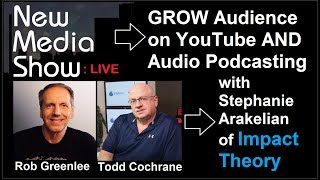
In this episode of the New Media Show, host Rob Greenlee, co‑host Todd Cochrane, and Impact Theory audience‑development lead Stephanie Arakelian discuss the evolving landscape of video‑and‑audio podcasting. They explore brand‑safety concerns and the need for content moderation across platforms, the risk of de‑platforming and the importance of maintaining backup copies of content. The conversation delves into the dual‑distribution strategy that treats YouTube and podcast feeds as separate but complementary channels, using data to decide which episodes belong where. Stephanie shares how her team leverages OpenAI’s Code Interpreter to audit massive datasets (e.g., 8 million Podcast Awards votes) for fraud and to extract performance insights, illustrating how creators can get graduate‑level analytics without a data‑science background. The panel examines audience segmentation, crossover metrics, and the impact of format (argument vs agreement) on listener numbers. They also touch on emerging topics such as AI, crypto, and Web 3, and how creators must balance free speech with brand protection. The episode wraps with logistical details about their upcoming appearance at Podcast Movement, live‑streaming plans using StreamYard and a high‑cost Numano audio‑clean‑up device, and contact information for listeners who want to learn more about podcast or video growth.
Chapters
Took YouTube quite a while to spool up. All right, we're just about ready to go here. I do the podcasting 2.0 stuff. Okay, now we're lit and live on all the apps.
Todd and Rob in the afternoon. Hey, afternoon delight with Todd and Rob.
Oh yeah, oh yeah, here we are, new media show back at you, one week away from Podcast Movement. Rob, how are you?
I'm doing terrific, Todd. It's great to be, uh, back doing the show. There's lots of, lots of things happening in the medium, and so it's good to always catch up at least once a week here.
Yeah, it is. And today we have a guest. So I don't know if you want to do— you might as well do the honors. I'm the— give me the, give me the 411 on our guest today.
Yeah, well, we're lucky to have Stephanie Ackerlian, is I think is the correct pronunciation, but she's a kind of a podcast marketing audience development expert. And she actually has been putting her skills to work for a very large podcast that's, um, on YouTube, uh, called The Impact Theory. And she's also associated with the Great Pods folks as well. And but I thought it would be great to have Stephanie on to talk about kind of where we're at right now with, um, audience marketing, audience growth, and the convergence, um, based on the success that she's seen with The Impact Theory, um, series that is such a big success on YouTube, but yet also a big success as a audio podcast. So Stephanie, welcome to the show.
That's very, very rare. So first time I've ever heard of a show that's positive on both sides. So Stephanie, welcome to the show.
Yeah, and she's even doing it from the Impact Theory Studios, it looks like.
So yeah, I am. I'm in the office today. So I got to take advantage of our wonderful setup. And thank you both for having me. I'm really excited to be here and be talking with you guys.
Yeah, that's great. Todd, did you want to start off or do you want me?
Well, I think I want— do we want to cover what's going on in the world or bring Stephanie in?
Well, we could, we could, we could talk about kind of some big news with the acquisition of Descript of the Squadcast folks. And What does that mean, right, Todd? I mean, what does that merger mean to you about what's happening in the podcasting space?
Well, it's curious because they had been quiet of recent. And which, which one is the Squadcast folks had been quiet? I'd had a couple emails out to them on some stuff and it was just like crickets, you know, I thought, oh, something's going on. So I kind of had this like suspicion maybe then they said, I saw the announcement at, uh, I don't know, saw some pre-announcement they were going to do something live on YouTube yesterday at 11, and I thought, aha, they've gotten bought. And to be honest with you, it's a great strategic move for, for Descript. I think it's a good fit. Congratulations to the Squadcast folks for— I don't know what kind of exit they got. Um, you know, we were kind of waiting on them for more than a year to bring a certain product online that they had not. And so maybe, you know, economically it just made sense to get connected with Descript. But I think what's interesting from my standpoint is I've had a relationship with both SquadCast, Descript, and Riverside. And we've had this integration with Descript so people that use Descript can send their content straight over to our platform. Just with a push of a button. And we had tried to have gotten that. We did our code on our side with Riverside, but Riverside never did their piece because they, after they got money around NAB time, they kind of had a big change in priorities. So I'm wondering now, you know, and I was kind of talking with my team about it a little bit. It just makes sense. This is going to be a big, big impactor for a lot of those services because now you're going to be able for one price to have the ability to do a meeting, or not a meeting, but a recording. Take that recording, go right into Descript's tools, and they've implemented all these AI editing features, and then straight into a whole host of podcast hosts. And even, I think they even publish out to YouTube too. It's just now it, you know, it makes really, really good sense. And, uh, you know, I sent a little email over to the Riverside folks and I said, hey, remember that integration? Um, you maybe, maybe now you want to consider doing that, um, because they're going to be behind the 8-ball, you know. It's all about flow. It's all about production flow now. And I think that, uh, you know, it makes— I think congratulations to that team. I think it's I think Descript did a good buy there.
Yeah, I think it is a, it's an interesting merger from a couple different perspectives. I mean, if you start looking at the direction that Descript has been heading down, getting more considered to be an AI platform and trying to get content into the platform has always been the thing that they've been working on too. Because I do know that even today, even before this merger, you could actually record video into Descript.
Right, right.
So it was a capability that they had, doing this merger just kind of adds to that.
A lot of people didn't know that, that you could do video into Scribd. They didn't have, you know, in my friend, a couple of my friends, they do video? I mean, yeah, they've done video for a while. So, but you know, they had implemented the AI editing tools that a lot of people are clamoring for. And while it's not perfect, it definitely puts them right there in the game. Uh, I just, you know, I think it's, I think it's a good move. And, um, so we'll see. You know, there's, there's a whole bunch of other platforms out there trying to go alone. Riverside's trying to go alone. There's the, oh, ZenCast, they're going alone.
And, uh, StreamYard, there's—
right, well, StreamYard is a different platform. That's not, it's not the same as ZenCast, and they don't have these streaming capabilities, so Um, you know, who doesn't have this? Zencaster doesn't have—
oh, right, right.
Yeah, yeah. So, you know, StreamYard is its own thing too with, you know, so again, um, and again, you come out of StreamYard, you don't have any production tools, you just have a product that you have to still edit. So I think they've done a, you know, for a content creator standpoint, I think that it's a pretty brilliant move for people to do interview shows or have a co-host or It doesn't work in all instances, but we'll see.
But it definitely streamlines the process of content creation. It's amazing.
Yeah. So I think—
so are you using any of these tools, Stephanie, for, for your guys's workflow with Impact Theory or other projects?
We do. We— so our departments are split up a little bit. So our YouTube videos go to our production department and then we have our podcast department and we generally have different softwares depending on our workflow, but One of the ones that we do use between the both of us is Descript, and we use it on the video side and the audio side. So integrating that or having Squadcast a part of that could open some things up for us because it is definitely part of our workflow right now. So seeing the possibilities and how you can streamline things, everything right now, you know, we use AI software for generating some of our show notes, and it just takes a lot of time away from those tedious tasks so we can focus on the content.
Yeah. Are you using it like a Riverside or a Squadcast or a StreamYard to actually record any of your video programs, or is that done through separate software?
Not at the moment. All of our interviews are done in person right now on set. So we haven't really explored too many options into the remote recording, but as we continue to grow, it's definitely something we're exploring. So as these tools continue to develop, definitely piques my interest into diving into what's going going to be the best use for us for both production and podcasts.
Yeah, so let's, let's kind of dive in. I know we haven't talked at great depth about this, this merger and what it means, but I, I'm just curious, you know, to really kind of dive in with you, Stephanie, and really understand, you know, what have been the keys to the, the large growth in audience and success of, uh, Impact Theory with Tom. And just kind of pull that apart and just see how you guys have been able to leverage YouTube as well as audio podcasting to grow such a large audience for that show.
I'm curious though, which came first, YouTube or the podcast?
They started about the same time, but YouTube came first. So Tom and Lisa each have their own podcasts. Tom has Impact Theory, Lisa has Women of Impact, and they both started out on YouTube. They— it's when Tom and Lisa sold Quest Nutrition, which is where they came from, and then started Impact Theory. They were doing the YouTube videos at Quest called Inside Quest. And when they sold Quest and started Impact, they moved over and started Impact Theory and Women of Impact as it's a different direction, different type of conversations. So that started first and then they started the podcast 6 months to a year later. I think it was like 6 months later for Tom and a year later for Lisa. And that really gave them a benefit because they were still in the early ages of YouTube because it was 2016, which doesn't seem that early for YouTube, but for YouTube podcasts, they were starting it out. And so what's been really beneficial to us is actually separating our strategies. So really diving into the audience analytics and we break it up. Our social audience demographics are one thing, our podcast demographics are another, and then our YouTube demographics are different. And the content performs differently the way that we, even if it's the same content, we pitch them differently or set them up differently on YouTube versus podcasts, catering to those audiences and then tweaking. Oh, go ahead.
Oh no, go ahead.
And then we focused on that.
Right. Okay. So you're using different metadata in each of the platforms. I would imagine with the thumbnails on, on YouTube, that's a different presentation that you're doing versus the podcast too.
But, but YouTube is YouTube channel. There has been no YouTube podcast until now. So I— it drives me crazy when people say they have a YouTube podcast because they don't have a podcast. They have a YouTube channel and they have a podcast. So I know it's ambiguous to listeners, but me as an old school guy, it just drives me crazy. And I really honestly, to be honest with you, I hate that Apple has— I mean, YouTube has hijacked that term. But that's, that's a whole nother— that's a whole nother topic.
Yeah. So how have you guys kind of thought about your strategy on the video side and the audio side when it comes to YouTube podcasting? I mean, are you guys— is it really just a matter of taking all your YouTube videos and just labeling them as a podcast in YouTube, or do you see a difference there?
It's something that we have just started to explore because we're not seeing, you know, the podcast page on YouTube isn't as supportive for creators as we want it to be. And at the risk of damaging our current algorithm on our channels, You know, if we do add it into the podcast playlist, will that mess with our current trajectory?
Uh, we don't know. Is that the problem?
Exactly. Yeah, we don't know. So we haven't quite teetered into that yet, but still exploring it, excited to see what YouTube develops. But right now, not quite venturing into that.
Yeah, I see even on your guys's YouTube channel, you guys don't call it a podcast. It's a show.
Um, exactly.
Yeah. So there's really not this differentiator. You guys don't necessarily call it a podcast on, on YouTube, and I'm even looking on your guys's website and it does. Yeah, I don't see a way to subscribe to your show. So that's a challenge too when you have— how are you guys managing that and getting people to, to subscribe on one platform or the other? Are you finding some people like to watch, some people want to listen? That's what we've kind of found on this show. Where's the dividing line? What's made people decide to go one way or the other?
It's really interesting because the, the YouTubers that have been with Tom since the beginning have been with him. They're very loyal. They watch every video that comes out. And we do set them up differently. As the— as you said, the YouTube is more of an interview, you know, TV show. And we don't consider that the podcast, even though that's the content. And then we take that and then produce it into the podcast. So we'll add more for the audio listener and keep them in consideration when we're just pulling the audio off of it. You know, and it's things that you're paying attention to on the video, you know, we'll cut things out of the audio of like, click the link on the screen, or this is going to pop up, and make sure that we cut that out so that it doesn't turn the audio listener off, or have the audio cues for the ads because you can see the visual cues, but we can't see them when we're listening. So it's little things like that that differentiate it.
Yeah. So there's two separate shows. Makes sense. Essentially, is the content pretty close? Just those cues are removed, or— I'm just kind of curious on how the—
yeah, it's 99.9% similar. It's just those little things that we do quality control for to make sure that it's— that when you're listening to it on, on a podcast or from an RSS feed, that you don't feel like an afterthought, that they just pulled the audio, that there was actually care put into it.
One thing we've heard for a long, long time is, well, one thing I've always told this audience at least is, or even in my other show, and I've told podcasters, if you're going to do video, don't forget that your audience that's listening can't see what you're talking about. And so you have to be careful in, if you're going to describe something, make sure you describe it visually so the audio audience can hear it as well as the visual audience seeing it.
Exactly. And so making sure when you're creating the content that you're taking care of both audiences is a fine line to walk. But I think if you can do it and can do it well, then it sets you one step ahead. But I think that is something that a lot of people don't keep in mind when they're just adding the video element to it and then pulling the audio is that the audio listener is just as important as the video listener. Or watcher, you know, viewer.
You know, Rob, maybe therein lies the key, because we've often wondered, because not— it's very rare to see a podcaster also be successful on YouTube and a YouTuber be successful on podcasts. Obviously you guys are doing it, it exists, but we've always wondered what that formula was to make it work, you know. And, um, it's, it's curious that you guys are almost making the audio— is audio content typically longer or shorter than the video content?
Shorter. So the videos that go out on YouTube will be the full conversation. It'll be 2 or 3 hours, and we'll split that up on the audio content into multiple parts to make it easier for the listener. We've also found that drop-off— we've increased our drop-off rates and our completion rate by doing that. You know, anything over 2 hours was having a very low completion rate, so we snipped it into an hour and a half maximum, and now we're in the 70s and 80s.
Percent of completion on the audio side.
On the audio side.
So as you think about the distribution— oh, go, go ahead and finish what you were saying, Stephanie. I'm sorry.
The other thing that we focus on is the timeliness of the content. So one of the things that comes up, because since the algorithm on YouTube is run by Google, it really is a search engine. So topical, timely news events We want to push those out really quickly. But in podcasts, for example, like the crash of Silicon Valley Bank, we know we got a call Friday afternoon that it crashed and Tom wanted to put a piece out on YouTube about it right away. And it was 5 o'clock in the afternoon. And I said, put it out on YouTube because that's where people go. They'll be searching for timely news. They want the information right now. But podcasts, hold it off, hold it off until Monday and it will perform better. And it did. And it was a test. Was hoping that it would perform better because your audience isn't going to podcasts for that breaking news. Then you're going to get it the next day or, you know, the day after when there's a little bit more research and you have time to tell the story. So it's looking at your content that way as well.
I, I think YouTube is a little bit more, um, because of how the algorithm works, it's, it's much, much more timely, right, than the podcast.
Absolutely.
So one thing I've noticed too is you guys on, um, most really, really successful YouTubers are putting out 2 shows a week. So I see you guys are looking about every 7 days or so on your content on YouTube. That's at least what it looks like from your channel. Um, have you been thinking of going to more often to feed the YouTube algorithm, or is just the one? Because it is, it's, it's an animal. If you don't post, you're, you're kind of screwed over there, aren't you?
Exactly. And actually, it's very interesting that you mentioned that because this week we changed our release cadence. We were doing 2 episodes a week, up to 3 on YouTube and up to 4 on audio. But we just— because we were— if Tom was recording 2 3-hour interviews, we'd break that up into 2 2-part episodes.
Okay, it's the same conversation, it's just shorter episodes being put out more frequently, right? Okay.
Yeah.
And I kicked off—
no, no, I still hear— yeah, you're still here. And I'm just looking at the channel from the videos point, and it looked like it was a pacing about every 7 days. So you were then actually putting out content more often just to feed the beast. And then, you know, I think for an average podcaster, that's, that's hard. If you're going to push out that much content and you want to succeed on YouTube, you have to be You have to be in there a couple times a week at a minimum.
Exactly. It's right now, it's like any other social platform. The more you post, the more the algorithm likes you. And since YouTube has the Shorts, that's part of it as well, and clips. And, and really, the benefit of working here at Impact Theory is diving into this YouTube side because they are so serious about it. You guys, we dive into our analytics, and the, the suggestions are so powerful on YouTube. And that's something that we don't have in podcasts. You know, you get similar shows. Like if you listen to this, people also like this, but we don't have that same kind of suggestion mechanism where if you listen to this topic, here's other videos or episodes similar.
Yeah.
Keep you on a roll for hours. There's no podcast, uh, you know, black hole. Like there's like, oh, you can tell people I went on a YouTube black hole for hours.
Yeah, well, I think I've heard Spotify talk about that as a possibility with what they're doing.
But, but I think that— I think the consumption is different. When you're sitting down to watch YouTube, you have to sit down and watch. When you listen to podcasts, you, you listen when you can because you can. You don't— you're not really tied. And YouTube, I stopped YouTube's midstream and, and not watch them until late, the rest of them later as well. But So I think the consumption is maybe the same, but I don't know, it's just, it is interesting that I have my podcast listening time and I have my— those are two separate, two separate states in my day, I guess, for a better word.
Absolutely. I think that the relationships with the shows and the hosts are different. When you watch a show on YouTube, you're— there's still this disconnect of watching the host interview someone else because their focus isn't on you and you can see it. But when you're listening to the podcast, it's a much intimate relationship because you're usually doing something else. So they're with you while you're doing your daily tasks. And you feel like they're talking more to you because you can't see if they're looking at you, looking at guests, wherever. And so you develop a closer relationship. And so you have to foster them differently, talking to versus talking at.
Yeah, I've said that quite a bit here recently, talking to versus talking at. Yeah, I think that's key because That's one thing I have to remind myself often, especially when I do my solo show, is I have a little stick of note that's over here on my computer that says, you know, you're talking to an audience of one, but really it's not. You're talking to an audience of many. And I don't know if you can— it doesn't feel that same, doesn't feel the same on YouTube when you're— so how do you guys then, how do you change the— how do you make that that delta then in the audio content, that's got to be tricky. Because if you're trying to make people think you're talking to them instead of at them, hmm, I'm curious on your process on that.
It is tricky. And I think Tom and Lisa do a really great job at balancing that because they're also used to speaking in front of crowds. But also comfortable with having these intimate conversations and pulling people in and helping them. And, you know, we have our courses that they teach. We have Impact Theory University where Tom is working, you know, one-on-one with students sometimes. So, it's engaging with the different communities. And I think the way that you engage with them is also different because on YouTube, you know, you can put the comments up and maybe people will answer or maybe they won't, but it's very generic. But to reach out to a podcaster, is different because the only place we really have to connect with them is, you know, Apple reviews or maybe some of the platform, you know, Spotify, you can now do polls and questions, but otherwise it's, you know, tweeting or emailing or DMing and that's more intimate as well.
Yeah. Yeah.
I was curious also about the distribution of consumption, right, between the two platforms. So as you think about, you know, you guys launched primarily on YouTube to begin with and you guys had a certain trajectory of audience development that happened there. And then when you launched the podcast subsequently at some point later. How did that impact the growth trajectory of the show? And what is your current kind of, would you say, your distribution of consumption? Don't share hard numbers, but just share like percentages.
Well, the YouTube numbers are public, so she shares percentages. We can back the numbers out.
Well, as a percentage of the podcast, right? So, we don't know what the podcast numbers are, so we can't really factor a percentage on this. If, if so, let's say you're getting, you know, 100,000 views of the video side. What would you say would be the percentage consumption on the audio side as a comparison?
It's really hard. It depends because YouTube is, is hit or miss with the videos. One of the videos could pop off and get 3 million views and then one could not do that well and get like 50,000 views.
And is it usually like 20% on the audio, or is it 50%, you think, or—
yeah, it's, it's about 50-60% more or less.
Lower numbers on the podcast side?
Lower numbers on the podcast side.
Okay.
But we're definitely seeing growth, you know, really putting focus on the podcast this year because it was really, um, not a back burner, but the focus was on YouTube. And so they, you know, brought me in, they brought in a is our head of ad sales, to really build out the podcast side and nurture it and grow it. And so we are seeing those numbers grow and get closer. Our followers are definitely not in the same ballpark. I mean, on YouTube, Tom has 311 million last time I checked. And on podcast, it's high, but it's not anywhere near that. So you're going to have the differentiation in that. And it is lower on the podcast side. But still, um, not as far as you would think.
Have you— know what we've been dealing with here recently is, um, at least at my company, we had two podcasters that got deplatformed off YouTube, and they are totally dismayed. They spent over, over a year, uh, their conservative Christian content, and they got deplatformed. I don't know why. Their entire channel's taken down. Have you guys had any videos removed, uh, or have you run into any of this issue? With the, with content being suppressed or anything like that?
Not that I'm aware of, but it is something that is top of mind when we are releasing content. You know, there's some conversations that are happening, especially on Tom's channel, that can be, um, they're very thought-provoking and there can be two very divisive sides on it. And so brand safety is always top of mind when we're releasing that content. Especially because we have two separate audiences and one that will veer on one side of the conversation and one that will veer on the other. So we— not that I'm aware of. We might have. And so I don't want to—
sure, sure.
For the production side, but not in the last 9 months that I've been here.
Have you guys considered putting out the video version of your show as a true podcast, make it available in an RSS feed to make it subscribable? Have you guys thought of that at all?
We actually have the video on the video. Yeah, on the video. I said yes, uh, it was a big conversation yesterday of, you know, we have thousands of episodes of Tommy's Got Over 1,100 episodes. So this year we actually archived anything before 2020 and, uh, we're releasing that on the subscription side. So now that we have that con— but we also have that content as videos and that has, you know was released early 2016, 2017 that we could also archive on YouTube and put on an RSS feed. So, we're exploring the best way to use the content, you know, get paid for what you're already doing.
Right.
But, and then the new videos as well. It all depends on like, we're really leaning into the YouTube analytics and algorithm and system and how does the suggestions work and how do you get to be the next video that suggested and, and what is your click-through on that versus when you, you know, do a social media campaign?
Yeah, it's a whole different language than growth in podcasting. It's two complete different beasts.
Yeah, exactly. And then even moving into monetization, you know, that's a whole other thing about if podcasts move to video, the monetization side of it, because YouTube doesn't have DAI yet. So if you are a podcaster and you have ads set up, whether it's programmatic or DAI or brand deals, moving that into a system that doesn't support that. Where is the line between the effort of putting it out there? How much do you put into the video versus you're going to lose money on it, but you could build a bigger audience there. So there's still a lot to figure out, I think.
Yeah, you would think then from a CPM standpoint on podcasting, it's obviously probably 3 or 4 times, maybe 5 times as high as what you get off YouTube. So You know, from a balance standpoint, you don't have to have as much volume on podcasting to make a heck of a lot more money than you do on YouTube. Now, based on, you know, you get up to a million views on YouTube, that's going to be a very profitable episode. But if you have an episode on YouTube that only delivers 34,000 views, then there's quite a disparity in the amount of income versus maybe what you can make in podcasts. So How have you guys been weighing that from the audio content?
Yeah, it's something that we've been trying to figure out. A lot of deals right now, or brand deals, want to come in and they want podcasts and YouTube advertising. And how do you split that up? And how do you monetize that? Because it has to be embedded in YouTube or at the end of, you know, 30 days, you cut it out and it's gone forever. So that again, we've decided to split the effort. So Brands can do a combined campaign, but the advertising is priced much differently and set up differently from audio to video and figuring it out. And that's the hard thing too with YouTube is if a video decides to go, like it decides to go viral, it doesn't have a choice in it. If a video goes viral and you put, you embedded someone's ad in there at a, you know, podcast CPM, let's say a $25 CPM, and it gets 3 million views, but it's embedded in there. And you said, oh, I average 50,000. It's hard to balance that. Then you have Google AdSense and they're putting ads in, and you're right, the CPM changes drastically depending on, on your views. So it's, it's going to be interesting on how things roll out and how much will see podcasters move over. Because if it is a lower CPM on YouTube right now and you're making the effort to make videos, first you have to meet the YouTube threshold in order to be eligible to earn money.
And what, only 6% do or something like that at this point? Yeah.
And you have to keep it consistent year over year, you get kicked out of the monetization program. So I, I think that there's a lot of roadblocks right now for podcasters who may want to go into YouTube. I think that it could be really fruitful, but it has to be done in the right way.
Well, you have to adopt a complete YouTube strategy. You can't be— you have to be a podcaster and a YouTuber. And just like you guys are, you've got two divisions there for a reason. And you've got people, you know, most podcasters are a creator of one. You know, so it's, again, I think, and I'm not trying to poo-poo video. I've been doing video. How long have you been doing video on this show, Rob? 12 years or something like that?
Yeah, something like that.
Yeah.
And, you know, but, you know, we've never broke out with the show on video. You know, it's, it gets, you know, 100. If we get 100 views on, on YouTube, we're lucky as compared to the podcast downloads are in the, you know, I think we're or probably close to 16,000 or 17,000, which for a niche show like this that talks to podcasters is pretty good, right? You know, but it's again, it's a niche show that reaches a specific audience. It's not like we're talking about, you know, what you're— what Tom does, but which reaches a much broader audience. I think— did you see the commentary today, Rob, from Tom Webster on his Sounds Profitable newsletter? Did you read what Tom had to say today?
I haven't read it yet.
It really gets to this point that you can't have a show for everyone. You have to have a show for someone specific, a specific group of people, if you want to grow a bigger audience. Um, and I think it depends on how specific it is.
There may not be a lot of people in there.
Well, that's true. And he, you know, he made a comment about some collectible toy or something. That group would be pretty small. You know, that was the example. So if you haven't read today's Sounds Profitable newsletter, I would recommend going to the website and reading what Tom has to say. I basically made it required reading for my entire team today because it really kind of almost hits home to this, to this topic of— and maybe it isn't exactly aligned, but again, you can't have a show that's for everyone. And that's why this show is a show for podcasters, right? And people in the industry, it's It's not for everyone, and we know what our upper audience size is.
It's all about the niche, right?
Yeah.
So, so, Stephanie, I wanted to ask you about another aspect of this distribution conversation that we're having. We're spending a lot of time talking about YouTube and podcast distribution, but there are other players out there that are increasingly becoming options for video creators to distribute their program. And one of them is a platform called Rumble. And they don't take people down. So it's an interesting shift that I see some YouTubers doing this. Well, they will do half of their show on YouTube and the other half of their show on, on Rumble, and you just go to Rumble and watch the whole show. But, but they will stop doing certain topic areas in their program because they know that if they talk about that on YouTube, they're going to get taken down. So they basically kill the YouTube stream and just going on Rumble. And then on top of that, you're seeing what's happened to Spotify with their acceptance of video as well. So how are you guys seeing these emerging kind of video consumption platforms? Is your strategy— are you guys just not, you know, quite there yet?
That's a really good question, and we haven't explored it enough to make a decision. It's something we definitely want to explore, uh, because we also have the platforms like the university. We do have these other platforms for videos for Tom to speak out on if he wants to do a specific topic. He used to do solo episodes and Tom Talks, and so that may be something we do on a separate platform, or maybe, you know, with the university, because those topics are different than the podcast. But we haven't quite really delved into the, the research there. But that's very interesting that Rumble is an open platform where you can talk about anything. It's an interesting query for the industry, you know, if YouTube is taking down, you know, certain creators, but podcasts, that's where they go, is open to everyone, right? Exactly. They're going to Rumble. And, and that's the thing about podcasting, and you were talking about it before, Todd, about you know, the independent creators. And, and podcasting gives a voice to everyone. You don't have to be a technical expert to create a podcast, but to create the video side of it, you, you do. You have to learn a lot more software and skills. And so podcasting is a lot more open, especially than YouTube, I think. And so having Rumble, it's interesting to see how it's all going to go. I haven't quite figured it out yet.
Rob Greenlee, does Rumble have a monetization model over there?
I believe so. Yes. Yeah.
Yeah. It's just, it's tough because, you know, we're streaming on Twitter today. We're on Facebook. We're on YouTube. You know, so we're on the, you know, again, we don't get a lot of live views, but we're, you know, we're live on multiple platforms. We're both on Rob and my YouTube channel. So there's duplicate content being put up. I don't know how YouTube reacts to that. Um, it is, it is curious, um, how the space goes. I, you know, I'm just, I, I like YouTube. I like a lot of content on YouTube, but I just get worried that, and I know Rob, you're exploring it pretty heavy right now. I just get worried that a lot of podcasters are going to have this false expectation thinking that they're going to be able to become a, a success. I think any platform you're on, it just takes a lot of work no matter what. You gotta grind.
Absolutely.
You know, it's, it's, it's not easy in any way.
But what I tell a lot of, uh, independent creators right now as well, like, it's not— starting on any platform is not easy. And so pick a platform, focus on that one, grow there, be strong, and then think about moving out. But build your home first.
We've been doing— I've been doing A/B testing here recently, and the reason I've been able to do it is because of Claude 2 and ChatGPT and stuff like that and writing separate headlines, separate show notes for the podcast and the YouTube version and creating using Discord and other, not Discord, Midjourney and other platforms like that to create some album art that I would never have been able to create myself. And I think it's helping a lot on the podcast side, but on the YouTube side, I see very— I mean, almost no bump. So like last show, I put up album art that was just basically a picture of this. And then a previous— and I tried 4 or 5 episodes in a row and using specific album art that was for the topic and/or YouTube art for the topic. And I just— so far, my A/B testing is pretty inconclusive. I was hoping to see a little bump on YouTube. Maybe just haven't done it long enough. Then we've— I've done extensive YouTube notes now, and it just doesn't seem to be helping in search and top-of-mind topics too, because the other show is a news show. So again, I'm doing stuff on the day the news comes out. So I'm trying to put a title in there that, like you guys are doing, trying to drive traffic to that. And maybe I'm just not— maybe I'm just not in the logarithm, you know, not doing everything YouTube needs to see to get the eyeballs to— because that's what it is, it's eyeballs— get the eyeballs to the content. So it's— it exactly feels frustrating. Yeah, go ahead.
It is very frustrating. They don't give you the answers. You have to figure it out. We have an advisor who specifically helps us decipher the YouTube analytics and demographics and how to position the next episodes and what to do with your titles and your show notes and how to tweak them. And we're constantly A/B testing because there is no answer. You know, and Google and YouTube keep changing it. Every time you figure it out, they've changed it again.
So as an example, I did get a little bump, like double the views on— and again, I didn't look at how long they listened because they may have only stayed for 3 seconds and left. But the one of the titles I wrote was Apple M3 chip lineup revealed. Well, you know, that kind of, you know, that was the topic of the day. It was on the news. It was in the news in the tech side. And it did okay. Um, but then other topics have just been flat, you know, they basically have not gotten a bump at all. So, um, and I did use album art where I showed a MacBook, a Mac Pro on fire. That was the image. So maybe that drove enough people to, to, because they're thinking about discontinuing the Mac Pro. So maybe that was enough to get enough, a few people to say, oh, what's this? And, you know, again, they may have turned it on and seen my ugly mug and left in 15 seconds, but Who knows?
Well, that's the key to that. The thumbnail stuff is that it's got to drive a value message to potential, potential viewer, right? But yet at the same time, it's probably counterproductive if you drive a kind of incorrect expectation.
But it wasn't in that video. It wasn't an incorrect— it wasn't an incorrect, uh, because there's more to it. There's more to the show.
Well, it might not be clear enough, right, to make that connection, right?
Yeah, maybe. And you come over and it says Geek News Central, but you think it would be a news show. But anyway, and I think too is I'm not doing 23 different topics. I'm doing 23 topics in one show. So that's another, you know, it's another challenge of breaking out. But anyway, go ahead. I'm sorry.
Exactly. Oh no, I have a question for the two of you. Speaking of episode art, with this change coming to Apple Podcasts and iOS 17, where they're going to be showing the episode art even more and highlighting it. Do you think that that will have a big effect on listeners?
Absolutely. I think— I know shows that have changed their album art every episode for 10 years. They have massive audiences, but because they didn't do it, they couldn't get the album art. Some apps support— have supported episode art forever.
Apple didn't support their own tech.
Yeah. And I've done album art. I've done album art for more than 10 years for all my episodes. So all my episodes— but the problem is my episode album art was always smaller and So it has to be 1400 by 1400, has to be the normal size, minimum, minimum. And so now I'm creating album art that's the right size. And by the time they launch this, we'll probably have 40, 50 episodes in the can with the right album art size. It'll be picked up. But I know shows like No Agenda that have changed their album art every episode. I'm talking about the album art for the show. And it's, it's something people see that maybe new to the show, they'll catch their eye like, what is that? And then the next episode that they release, there's new album out, and I go, what is— I would expect some shows will continue to change their album art along with their episode art. So there's a strategy to it.
But should they— should, um, the No Agenda show stop, um, updating their series art? They've got to only do that on the episode level.
I, I think they have a formula that they're not going to change. I bet you they do it for— I bet you they change it for both.
Okay, so it'll mirror—
maybe not the same. They get enough, they get enough, um, they have their audience that actually creates their art. So they go through 10 to 15 pieces every episode to vote which— because they do live, people are creating art while they're live, submit it to a system. So they're unique in that they build a system for this, and they will pick at the end of the show the, the album art that they're going to use for that episode. Then I have 10 or 15 pieces to pick from. So most podcasters don't have that, but they build a base of— and they give credit to them in the show. So I wouldn't be surprised if they go into two, maybe episode art and album art. So you get a double whammy. Who knows? We'll have to see what they do when they roll this out. I haven't asked Adam when he's— how he's going to handle it, but I've been doing episode art every episode for years. So not this show, but for GNC.
Yeah. Clearly the YouTube art thumbnail is, it's really turned into its own art form, what I've seen on YouTube. And I'm sure, you know, Stephanie, you guys have really kind of honed in on what that genre is, right, of COVID art that's very dramatic or very kind of visual. And what's kind of your philosophy on that and how important is that to to what you guys are doing.
Oh, the thumbnail is vitally important and goes through the same review process as any part of the episode because of how important it is and how it catches the, the viewer, you know, when it comes up as a suggested video and how to catch people and get their attention in that 2.5 seconds. So exactly. So you can see like we, our cover will change over time and as we figure out like, oh, this is the new direction of it. So you can see like the lighter blue was a little bit different. It looks a little bit lighter. The dark, like in energy, the darker blue is a little bit more serious and heightens the tension in it. And so we'll keep tweaking it and figuring out, you know, we'll do different versions of the thumbnail and we'll A/B test and we make, you know, what is working, what clip is working, what picture of them, what title is the title too clickbaity? Because you don't want to just be clickbaity, but on YouTube you have to find that balance. So it's a very big part of our episode production.
Do you have your guests pose for art?
No, these are all stills from the—
they grab a still off it and then they, they Photoshop it.
Exactly. So we're going to be testing out with the episode art on Apple because we hadn't done it before. But if Apple's going to support it, we said, you know, we're already doing the thumbnails for the YouTube version, what's going to work on podcast? Is it going to be similar to YouTube? Does that catch people's eye? So we're going to be testing that out as well.
I was showing— you can't see it real clear probably, but this is the art that we've been using. You know, then this is the last show, AI tool tools for content generation, and I have some dude sitting in front of a computer. Then here's the, here's the art that we use for the, for the show, for the YouTube video. And then we've got AI discriminates against Black podcasters. And I've got a picture of it looks like people that are protesting or even, you know, maybe minor rioting. So this is the kind of stuff that we're, that I've been, that I've been playing around with. Of course, Rob did two shows while I was gone and didn't create anything. But, you know, state of podcast trade shows, I've got, and again, it's AI-generated art because I'm not an artist and I don't really have any, any skills per se. So we've been, you know, we're experimenting too. And What was funny was the— because I, you know, run a podcast hosting company, you do have a little bit of relationship with Apple. And one of the Apple folks reached out to me, says, hey, love your album art, but it needs to be 1400 by 1400, you know, because I'd been putting it 600 by 600 because I was trying to save— I didn't want to put those big images because when Google indexes the page and all that stuff, it just adds for more, you know. So, but they said 1400 by 1400. So, okay, I got the message there. We'll make sure it's in the feed that way. I don't put it on the website that big.
But yeah, I think the common theme that you see in, in YouTube thumbnails, Todd, though, is, is the big bold text. Yeah, it's like a billboard message, right?
And I, and be honest with you, when I'm searching YouTube, I don't look at that at all. I look at the titles. So I don't get sucked in by the—
yeah, but it is the first thing you probably see, right?
Yeah, but you know, maybe the shows I watch, maybe they just don't do that. I, and I watch a lot of sailing shows and that kind of stuff, And it does annoy me though. Like, there's one channel that I watch in specific. They always have some dramatic clickbait and it's like, okay, you're going to piss me off. Well, no, he's like, he's like, you know, he's, you know, he's going to say, oh, we have big news for you or something. It's trouble here or we're leaving someplace and it's some sort of dramatic. And it usually ends up being nothing. It usually ends up being nothing. And to be honest with you, I almost don't want to play it because it's almost like, okay, what drama now? And ends up being no drama. So I think there's a fine, fine line.
Yeah, but it's also what works too, right?
I mean, yeah, okay, but if you're doing it a lot, which some shows do, I think it hurts you. I think it— I think this hype up hurts you over time because I want to know what the content's about. I don't want to be hyped. I want to— just tell me what the episode's about.
And well, I think it depends on their goals, you know. If their goal is for this one episode, they want the clicks to come through but they don't care about retention, then have the super clickbaity title. But if you're looking at retention, then maybe you change your title.
Oh yeah, maybe it'd be nice if you could have a different title for subscribers and for non-subscribers. That's something YouTube should do. That would be a great See, then you can use the clickbait titles for those that are not subscribed and those that are get, you know, a normal title.
So, so just, just to kind of back up and use this episode as an example. So, so if we think about the topics we've talked about on the show, what would a clickbait thumbnail look like for this episode? Would it be like, learn the secrets of video success or something? I don't know.
Yeah. Learn the secrets of Having Accessible Podcast and a Podcast and YouTube Channel or something to that effect.
That's way too long for a cover art image.
I don't think that's salacious. Well, not cover art.
Well, that's what I'm talking about is a thumbnail.
Is audio dead? Is YouTube taking over?
Right.
Oh, see, that's clickbait. Anyone that knows me are going to be like, oh, that's clickbait.
But that's how you have to differentiate, you know, when you're working on your podcast. And we'll do different titles for YouTube and podcast as well for that reason. Because on podcasts, like, if you're already subscribed to the show, you know the host, you know they're— the type of questions that they like to ask or the stories, how they like to tell them. And so you're looking for who are you talking to and what are we talking about today, right? Because you're there to enj— you're for the— you're there for the ride, you're there to listen. But on YouTube, you're not always going for that specific host or the interviewer. And so it's like, oh, is audio dead? Right now, what are these experts saying?
So it's, you know, it's the last show I did, my last tech show, my title of the episode was Stranded Astronaut Set to Return. That was just the— and that was the lead story. But on YouTube, it was that other topic I talked about earlier about the Apple M3 chip lineup reveal. And then basically it was the end of the Mac Pro? So there was a little bit of clickbaity in there. So in the title, not necessarily in the art. Well, the art was a burning Mac. So, you know, maybe that was enough to get people to look at it. But so yeah, that 8 minutes.
It was a rally cry.
Yeah. You know, they're going to kill the Mac Pro. What are they talking about? You know, and that was my second story of the show. So, but you had to listen through 8 minutes to get to it. So that's another thing that YouTube doesn't like, right?
And they want their ads really early and they want them often.
And they, and they want you to, you know, that 6 or 7 minutes and get in and get out. For most YouTube channels, they're very, very short content.
Yeah, exactly.
But I, so I'm curious how you guys are using— and the audience is gonna hate this because I spent 30 minutes on the last episode talking about the processes we're using for to create stuff with AI. Are you guys using ChatGPT, using Claude? What are you guys using for your summarization tool?
A combination of ChatGPT, a program called Jasper, and MagicCast.
Try Claude 2. Give it a try.
Claude 2?
Yeah.
Okay.
Yeah, give it a run. 'Cause if we're testing everything and so far for show summaries, we found Claude 2 to be superior largely because we can link the entire transcript. And—
Oh, that's great.
Yeah, as an example, and again, sorry, Robin.
When you say link the entire transcript, what is that?
Basically, you can attach the entire transcript and you can query it to analyze the last episode. So for example, what I did on the last, on this episode.
Creating chapters or?
Well, no, I basically said, examine this content, write me what you think the headline title of the episode should be, and then summarize the show by topic. So on the last episode, it summarized by A, tools for content creation, podcast advertising and ACAST, daily versus weekly podcast publishing cadences, podcast movement, podcast apps, and value for value, and a conclusion. So it covered one, two— it covered what we talked about, and it wrote it itself. Uh, I had to do some editing, of course, but if you look at the last show's show notes, those were written by Claude from our, from our, uh, from our transcript. So I think, uh, it did a pretty good job summarizing the show. In a way that I would never do or have time to do in the past. So, and it came up with the, with the title of the show, which I asked, I asked it to write 10 titles and then I pick a title from the 10 titles it suggests and I give it a word limit too. So again, I don't know how you guys are. I've, you know, I've been playing with this now for about 3 or 4, maybe 6 months. And it's all changing though. These models from day to day change on what's better or worse.
I've also noticed that the YouTube folks will actually suggest 3 or 4 titles for episodes in the tool as well. Yeah.
I've never seen the suggested tab. What feature is that?
It's in the studio.
I've never seen it suggest a title. No, that must be, that must be limited to some people. I've never seen that.
No, I've been seeing it on, on On my videos since I got accepted into the monetization, it must be the monetization.
If you're monetized, you must get access to that. Is that— I've never seen that.
What are the titles?
They seem to be pretty good. I think I picked one of them at one point for one of my videos. I don't have a huge amount of video. I got like maybe 42 videos or something like that. That, that's it. But, but I've just been playing around with the artwork, playing around with the titles to see if it You know, it helps the viewership.
Where does that, where does that show up, Rob? Does it show up in the title area or?
Yeah. Yeah. If you click on it, um, that area, it, it oftentimes will pop up a couple of suggested titles.
Well, I think that's, you must be in a beta because I've not seen that, but that's cool that it's doing that.
Yeah. Yeah. Have you guys seen that at all, Stephanie?
I'll ask the production department and see what they're getting as well. Because they might be, but we do, we pull a bunch of different options. We'll run it through, you know, AI a couple different times, different ways. The hardest thing we're having with AI is Tom and Lisa have very specific voices, the way that they speak, especially Lisa. She's from the UK. She has a specific, you know, verbiage that she generally uses. The way that she delivers things, it's uniquely her. And so getting things into her voice is the harder part, right? So we're looking for AIs that can really capture their different voices and then transcribe things or generate summaries or intros in their voices. I think that would be the next level that I'd like to see.
I think from that aspect, we found Whisper so far has been the best in being able to differentiate voices. They're still not perfect by any means. It'll say speaker 1, speaker 2. Like when I play the intro to this show, the AIs will think that those 2 people are the first 2 people that show up in this show are the intro. And that'll be speaker 1, speaker 2, then Rob and I are speaker 3, speaker 4. And sometimes there's a 5th. But it doesn't know who it is. But Claude has been able to— I tell him, okay, who, who the two co-hosts are. I tell him who's in the show. And then it does a pretty good job of sorting it out because Rob will say Todd and I'll say Rob. And that seems to trigger it enough to know that we're switching. I don't know. It's kind of— it's getting better. But again, yeah.
It's still, it's hard. You know, there's no perfect software right now. We've really enjoyed Castmagic, like I said, because it'll do the same thing. You know, we get the full transcript, we get 10 options for titles, we get quotes pulled out, and that saved us a lot of time. We still will take that, you have to edit it, we'll have to put it into Tom and Lisa's tone. So there's still work, but I think that we're headed in the right direction. But the amount of time that it's saving creators now is incredibly beneficial.
Well, it's adding time to me because I'm doing stuff I didn't do before, but it's a better product in the end.
Yeah, I think that's the takeaway, right?
Because I didn't have time, I didn't have a team. Go ahead.
That's true.
Yeah, extra work, but it's easy work. Go ahead.
So do you think all these AI tools Stephanie, is actually making, making things more efficient, or is it just making the output better performing, do you think?
I think a little bit of both.
A little bit of both.
I think that when it's adopted in the right way, when you find, you know, you get past the learning curve and when it becomes part of your workflow, It is incredibly beneficial in helping creators, you know, get time back on the things that they, that will not move the needle, you know, spending hours creating your show notes. Yes, you need good show notes. They need to be detailed and have your topics, but they take so long to write until you get into that cadence because you're listening and you're taking notes and you're timestamping. So having something to speed that up when you can focus that time on audio quality or, you know, a couple of extra minutes editing or tweaking. I think that that's beneficial. And I don't— I think you're always going to need that human capacity in it to tweak it. But I love the time that it's giving us back.
The— and I've been thinking about this a lot on the format. Let's just talk about podcast show notes. I've made my bread and butter for the past, really almost 19 years, in driving traffic to an episode. So that we can gain listeners that way. But search is gonna change in here in the near future in a big way. And if you don't have a lot of metadata on that webpage, if you have one paragraph, that's not gonna cut it no more. That's not gonna, your title and a paragraph and some links, that's not gonna do it. You're never gonna be found. You're gonna be eradicated. So the key is we know that most listeners, and same thing with YouTubers, they, they'll read, they'll see the picture and they'll see the title and they'll play and they'll never read the metadata below unless you said, hey, there's a link down there. Maybe they'll go find the link and click it. Maybe. So we have to get out of this mindset that, and this has really been my mindset from the beginning, is that we're really our content, this content is for the audience. The website and the YouTube metadata is for Google. And that is what we have to focus on, is making the metadata of our show notes deep enough that you become the— from the learning model, language model, the authority on this topic, and you are sourced and cited. And the only way you're going to do that is have this rich metadata. Now, Google might already be indexing what's in YouTube videos and podcasts and using that data to make determinations already, but I haven't seen evidence of it. In other words, all of a sudden I haven't seen a post that I did on— as an example, I covered my main topic of my episode on the, um, the International Space Station. That is ranking well, but one of the subtopics in the episode is not. So it tells me that Google's not looking at those subtopics yet, or what's in the content to drive people to that episode page. So I think for now, we have to continue to feed the beast with, with deeper show notes and more context. Otherwise, it's, it's going to be game over from a discovery standpoint. Maybe not as much on YouTube, because it's a different beast from a logarithm standpoint. But from Google search, I think things are going to change dramatically.
Absolutely. And writing those show notes that help you become more discoverable, like you said, is just a tedious, tedious for every episode. Yeah.
And if you can help, if you can use— and the thing is, the playing field is going to be even because if we talk about it on this show, 16,000 or 17,000 podcasters are going to start using ChatGPT or Claude and using the transcripts to write summaries. We're going to be in the winner winner chicken dinner. We're all going to win. It's those that don't, and I think that are going to be hurt. And people need to be paying attention. And I also say don't get locked into a single tool. This thing's moving so fast. Keep looking around, you know, don't get locked. Yeah, don't get locked into a single tool.
Yeah. So I've been looking at what Bing is doing with AI, and it may be a leading indicator of where this is going because I'm a little bit concerned about as people start using these language models to do more searches, right, for all sorts of topics that maybe they would do in a Google search, right? That they're going to— it's a little bit like what's happened with these smart speakers, right? That there's going to be one authority that gets spit out of these things, right? Versus, you know, a whole page, right, of, of optional resources.
This is what I'm referring to, right?
So, so that is— that puts us in a different position that, that on any given topic, there's only going to be one clear winner. Winner, right?
Well, Google is—
how is that winner going to be selected?
Google's not going to destroy their display business because it's a foundation of their company revenue. So there's going to be some—
agree with that—
there's going to be some trade there. So I think what, to be honest with you, what will potentially happen is going to be in a hybrid. If you just look at what they're testing already, you can already see it.
Well, with Bing— Bing—
well, even with actually even Google Labs creating—
yeah, creating their output based on your query, and then inside of that output they have links to websites, right? So it's like, uh, sources.
Yeah. So again, you're going to have to be wide enough and narrow enough to be able to be, to be come up in those search terms that you want. Um, so again, I think it's feeding in. Here's where Google's got an advantage. We're talking about ChatGPT and Claude and all that stuff. Google owns YouTube.
They have all the data.
Google owns, owns search. You know, and they've got all these points that, you know, they've got the podcasts are now in YouTube, they've got all these voices. So when they start training the models, not just on text, but on voice, the more you're out there, the better you're going to be. And as long as you are speaking authority and not as an idiot, and the machine thinks you're not an idiot, I think you're going to be okay. Because it's going to make a determination if you're an authority or not.
And it's also going to dig deep into content that's been basically unavailable to Google, and that's audio and video. That's right. I mean, audio mainly.
Yeah.
Has been kind of a black box.
They're going to do video analysis too. So don't—
Oh yeah.
Yeah.
Well, I mean, if you think about YouTube, it's been that way for a while, but they're going to analyze the content at a much deeper level and actually make that part of the results at a level that we've probably never seen before.
Google has to be scared that this is going to change their— make them lose money. So they're, they're going to figure out a way to make sure they don't lose money.
Well, Bing in some ways got ahead of them a little bit on this.
Well, don't count— the reason Bing got ahead of them is because of ChatGPT. Yes, because of OpenAI. OpenAI, you know, basically, yeah, OpenAI unzipped their pants and said, here's what we've got., and it's a very rude saying, but, and then everyone said, oh my God, don't, you know, Google said, why are you showing this so early? Because of, you know, this, there, there's a whole political thing that's happened because of what OpenAI did, and it's forced the genie out of the bottle a little early. So don't, don't count Google out. Matter of fact, Google is going to smash them all, in my opinion.
I haven't been that impressed with Google's AI.
But remember, remember, what you see publicly is not what they really have working.
Oh, I know.
Yeah. Yeah.
So they've got, they've got versions that they are scared to release.
And now licensing is happening. You know, New York Times just made a policy, said you can't scrape our website, no way, no how. But interestingly enough, they've got some deal going on with Google. So now it's going to be about the content and Do you want your content to be indexed or not? Is your— you want your content to go in the model or not? For me, I think, yeah, I want to go in the model. It's not going to hurt me to go in the model.
Well, we hope it isn't, right?
Well, long history, I think you, you're probably okay. But we'll see. We'll see what happens. It's going to change.
I think it— yeah, it's a mountain that I think you want to be in the model until you hit this certain point when you no longer want to be in it.
More. And then it's too late.
Yeah, exactly.
Well, yeah. And for me, being in the model is purely for— in the Google model and the Bing model is to be found by search and be, and be cited. You know, how do you podcast? How do you create, create YouTube video? How do you— the questions people ask, you know, that's where people are going to be, are going to win or lose in this whole marketplace. Or a content like Tom's content, You know, it's going to be, you know, if we look at understanding power, corruption, politics, AI, religion, tribalism, and free speech. Now that's a big topic. You know, with Sam Harris, part one. That's a mouthful. And you see that, you go, hmm, that sounds interesting. And you analyze all that voice, then. So.
And so, Stephanie, I've got a, a question for you too around— you had mentioned this term, um, earlier in our interview of, um, I think brand safety. Um, that kind of triggered in my mind, are you guys, um, working with or have, have any of your content being evaluated by brand safety platforms?
Not yet. It's something We're just, uh, we're just diving into it now as we're, you know, with any type of content you want to constantly evolve. And Tom is evolving his content into this, what he's calling phase 3 of the world is changing so rapidly. So how do you stay on top of it with yourself and self-improvement as a whole in all of that? But that includes AI and crypto and everything in web 3 that, you know, how do you stay on top of all of this? While taking care of yourself and improve your business and your life and your relationships. And so that can be scary content because it's a lot of unknown. And so now we're, we're looking into brand safety and going to be, you know, working with some companies to make sure that as we're exploring things and things change, you just want to make sure that everything's protected and the brands that we work with feel protected and that the content isn't going to make anyone feel icky, you know, of course. And we always want our content to make people feel good. But I think that we're in this very weird era of being careful what you say while balancing free speech, um, and moving into this unknown new time place. So it's, I think, something that creators should think about.
But you are kind of being analyzed already. You're in the big machine of YouTube, so they're looking at every word already. So, you know, from that aspect, you are doing moderation. You're being, you're being scrutinized already.
Um, so, but YouTube responds well to content on both, on all sides, you know. It doesn't have to be— even though they may have, you know, deplatformed your friends, uh, for what they were saying, they do— if someone's getting a lot of views for what they're saying they like the controversy because it's bringing more eyes and more money to them. So I think YouTube plays it both ways. I don't think— I think brand safety is an interesting issue with them.
Yeah, I didn't have an opportunity to listen to the content. They have a podcast. I might go back and listen to see what they've actually said, uh, to try to figure out what it is. But even on one of the Facebook channels on StreamYard, someone was talking about being deplatformed. I saw a Facebook post on that the other day. So and they were looking for alternative. And it wasn't StreamYard's fault, obviously. They're just using StreamYard, but they were looking for integrations. Like you said, Rob, over at Rumble, they want to say, where else can we go with the content now that we're, we're not on YouTube? And it's— I think it's a double-edged sword. I, you know, it just goes back to my, my philosophy that if you're going to build a brand and you're going to have content, you know, Tom's got a— obviously got a website. I'm on it right now looking at it. You know, all that content needs to ensure that it's, you know, you've got copies of it in case someone does something stupid and you can fall back to impacttheory.com. Everyone knows to go where to receive the content. And I'm not saying they're ever going to get deplatformed, but I'm just, you know, this is the thing I think content creators have to plan for plan for that, that rainy day when someone pulls the plug on you. And, you know, some people are gonna laugh when I tell them that, but it's just again and again and again and again, I see stuff happen to creators that, you know, we can't trust these folks, to be honest with you.
Exactly. They're only looking out for themselves and their revenue. So you have to protect yourself.
Yeah.
Oh, and by the way, right on the main site, follow on Apple Podcasts, Spotify, Amazon Music. So I missed that. I The links are right there. So my apologies. Yeah, because I initially came, I initially came to the website and I didn't, didn't scroll down. So, you know, here everybody, here's what the website looks like. And right there, follow on Apple Podcast, Spotify, and so forth.
So you just got redeemed with all those.
Yeah, yeah, I'm sorry. False statements at the beginning of the show.
Well, I think it's clear that, you know, Tom and the Impact Theory brand has its strongest reputation in the video side, I think.
Well, they started there, so—
Well, I know, but they built— I mean, like, yeah, numbers over there too. So, so their reach is very strong.
3.1 million subscribers on YouTube is no, no, you know, no small number, right? Exactly.
And in order to grow and continue to grow on either platform, YouTube or podcast, it's continuing being ready to evolve and being adapting or being able to adapt to changes. And that's what we're constantly doing. And so with YouTube, we're constantly adapting. With podcasts, we're constantly adapting. And that's the only way we're going to be able to ride this out. So AI, all of that, it's all part of it.
3.71, not 3.1, 3.71 million. You know, but I think there's— yeah, just a few. I think though, it's, it's nice to see these deltas because, you know, Rob, how many years have we talked about, you know, how, how's the crossover worked? And we really had never had anybody in the show that said, I've had success in both places. And it— there is some thought— this should give people some food to thought on strategy. Because you almost have to have two strategy lines.
Yeah, you really do. It's, it's just taking the same content, but no matter what it is, the product, the service, like you said in the beginning, you can't have a show that's for everyone. One marketing plan isn't for everyone. So you may have the same product, but how you pitch it to this audience is going to be different than how you pitch it to that audience.
Yeah. And how do you know what that difference is, is the, I think the big challenge.
Exactly. So we pull data constantly. What were the last, you know, the best 10 episodes on YouTube for the last 3 months and what were the best 10 episodes on podcasts for the last 3 months and see where there's crossover, if any, and what categories they are. You know, Tom and Lisa have 5 different buckets of content that they do their interviews as part of. So relationships and business and health. And so which categories of episodes perform better? Do we want to lean into that and maybe we just release some content on YouTube, or maybe we just release it on podcasts because we know that it'll perform there and it won't do well on the other platform. So it really is two strategies that converge into one overarching strategy.
One thing that some people say, oh, I don't have a team, how can I do this? You know, and how can I analyze my, my data? I've I don't know if I told this on the last show or not, Rob, but we took the 8 million votes, 8+ million votes from the Podcast Awards, from the listener votes. And I had to narrow the data down pretty tight because I could only— I had to have it, uh, the spreadsheet at 250 megs and smaller. And so I put in like IP data, date they voted, and just a whole bunch, a whole bunch, as much data as we could. And we fed that to Code Interpreter. Now, I normally pay a firm a pretty big chunk of money every year to go through and look for fraud. And this year, me and my partner, Wynn Technologies, we were able to go into ChatGPT's Code Interpreter, upload that spreadsheet, and ask the questions that we would normally ask to look for fraud. And we were literally within an hour We were blown away by the data that we got back. It was about a 10-page report. We see where there was coordinated voting. We saw when people— and when we could see an X number of shows, an X number of people voted for the same shows again and again, and password compromise. All these things we really looked at, and we came out feeling pretty good about the processes we had in place to protect the voting on the awards. I think a podcaster could take their podcast stats from their provider, and they could download— and most podcast hosts will allow you to export your, um, to export your data. You have your show title, description, download numbers, release date, all that stuff in a spreadsheet. Put the spread of who listened to what and how, dump that into Code Interpreter and start asking questions. You might have your own data analysis to be able to do stuff that you would never be— I'm not a data analyst at all, but if you can get graduate-level data analysis from your stats, you might see, okay, on these 5 episodes, they, they trended quicker, or these 4 topics were horrible, or this, these types of guests, you know, there's all kinds of data you could extract using Code Interpreter that I couldn't have done it. And I was blown away. I sent the company that we normally do the auditing, I sent them the report, and within 15 minutes of me sending them that report and not sending them a check this year, they responded to me as, how did you do that? And I'm talking about 8 million votes that we basically looked at the data Now think about it. If you only got 100 episodes and you add enough metadata that maybe not in your stats, but you put the extra metadata in, I think you could come out with some whopping conclusions. And if you've got a YouTube channel, maybe do the same thing. I don't know. Does YouTube let you download your, your metrics? Yeah. So maybe, maybe even side-by-side comparisons and just ask it, what do you see here that I should pay attention to? And this stupid thing will give you, you know, results that you may never have thought of. So I know people are sick of me talking about, but this is practical stuff that I'm doing to save money and also to do analysis.
So, um, that's a really great idea.
Yeah, the code interpreter is— it's— it— and from everyone I've talked to or heard on different podcasts talking about, they say it's, it's a graduate level. In other words, I should say undergraduate level data analysis. It has this, you know, has that level of someone that's came out of college with a degree in data analytics. It'll pull information and it's only going to get better. So someday I'll be able to share the report that we put together on the fraud report. I was just— I'm gonna be honest with you, I was flabbergasted. I posted a couple things on Facebook about it, on my Facebook page. I didn't post too much, but We could see trending on categories, what categories are people watching. I mean, it's just a whole— and some of that stuff is just pure adding stuff up, that that's all Code Interpreter did. But I didn't have to go to the bottom of the spreadsheet and put the sum equals formula in there. It did it for me, you know. So some of the stuff wasn't like brain science, but some of it was.
But having that data, I mean, any extra data that we can extrapolate because we get so little, yeah, is incredibly beneficial.
And if maybe you don't learn anything, but maybe you will learn something, you know, and maybe we should do that for this show. Maybe I'll try and experiment and pull the, pull this, pull the stats for this show. We'll run it through it and see what it says. You know, maybe it'll look, have the titles and the descriptions and, you know, all that other stuff. And maybe they'll tell us, hey, you guys need to You know, these shows are trending higher than others, but maybe it will—
I'm sure there is probably shows that do better than others.
I disappear for a week.
Exactly.
If I disappear for a week, it's because I'm diving into Code Interpreter and just running all these data points.
Well, you know, in all honesty, it didn't take long. It took longer because it was 8 million records and it sat there and go, give me a few minutes. You know, I went and got a cup of coffee and came back 5 minutes later and the thing was still spinning, you know, because it was working. If you only have, you know, if you don't have that big of a dataset, it's going to go up and it's going to spit it out. But we waited for the results to every query like 5 to 6 minutes because it was so much data to chew through, running their GPU cost up, you know. So I was pretty happy with that one, but it literally saved me a couple thousand dollars. It was a big deal. Yeah. Wow.
I would love to see that when you can share it.
The report blew me away. I just, I mean, it really, really did. And again, I did that with, again, ChatGPT and Code Interpreter. You only get that if you're paying the $20.
So. Sounds like it's worth the $20.
It's worth the $20. I'm surprised it's not $50. I would probably pay for it if it was $100. So that's, I shouldn't say that because OpenAI is burning through money and they're going to need more money soon. They, they're going to have to— I can only imagine they're going to raise the price.
Yeah, was it all this talk about them going bankrupt by the end of the year?
Well, you know, you're running warehouses full of GPUs. It's not— it's, it's that, you know, that data bill. It's a monster, you know. But yeah, but still, we got a 50-50 chance to survive this.
Is that just trying to build sympathy out there?
I, you know, you listen to some— there's some pretty scary interviews out there. This Claude 2, the Claude 2 founder was on an interview.
Some—
about the first 30 minutes of it, it's going to go over your head because he's talking about terms I never understood. But if you listen to the full 2-hour interview of him and everything he's had to say, you might not sleep for 2 or 3 nights. It's, it's, it's, uh, it's interesting. So yeah, I try not to get myself too deep in the weeds, but I am.
We should listen to that before Podcast Movement so we're all just up.
That's right. Well, speaking of that, uh, Stephanie, you're going to be at Podcast Movement, right? You're doing a, doing a panel session and things like that.
Are you doing a session on the crossover of I'm doing a session on podcast marketing and how to continually evolve your marketing plans with some other powerhouse podcast marketers. We have Ariel Nissenblatt, Julie Booth from SXM, uh, we have Joni Deutsch from the Podglomerate, and Christina Fowle from here at Impact Theory is our moderator. And so just talking about how we all have different perspectives and are coming at podcast marketing from different angles. And how have we all been able to evolve and create this job that was not a thing 5 years ago and continue to grow it.
I know the name of your next podcast. It's How to Grow a Popular YouTube and a YouTube channel and podcast at the same time. That's the podcast. That's the podcast. You instantly have 100,000 people listen to the show.
Instantly. Todd, I've already booked her for that topic on a different show.
Well, you know, for it— there could be a whole show series there.
I know.
Yeah, yeah, absolutely. I think, and then with how things evolve with YouTube, and that's— I love it. I love having this opportunity to see both sides of it, the YouTube and the podcast side, and relay the information. Because like you said, there's not many people who who have been successful at both. So if we can— if I can share what we're learning to all the other creators and help them grow, great.
That's the goal. Yeah, I think you're within a handful of 200 or 300 shows that have had that crossover success. I don't think it's much bigger than that. There's a huge—
it's hard to know, Todd.
It's hard to know. We've done the analysis. I run the analysis about the 3 or 4 weeks ago. And again, if you look at the top 200 in Apple Podcasts and you look at the YouTubes that have correspond— there's not that many. It's, it's, it— you have to go pretty deep, uh, to find, you know, it depends on what your, what your expectation around the word success is. So success would be, you know, more than 100, more than 1,000 views per views per episode on YouTube. Just use that criteria. You know, look at the top 200 and then go look at the corresponding YouTube channel. And if they've got more than 1,000 views on YouTube, then put them in the success category. Again, it's not a, it's not a big pool. And you go, I just go do your homework. Everyone else go do your homework. Prove me wrong. You know, I think that's the key here is go, go find—
it's not impossible.
No, it's not. It's not.
But it's just, it just, it takes some strategy planning, just like what Stephanie's told us.
Exactly.
You have definitely a different approach.
You have to have two strategies. Yeah. And I, and I, it does, it makes sense.
So your audience has to decide whether they're an audio listener or if they're a video listener, right? So you're putting that decision in the hands of your of your, of your audience to decide where they want to consume.
So 70% consume this audio, 30% consume it as a video podcast, but they don't go to YouTube and listen.
Because you've always told me that this show is about 80% audio, 20%.
And GNC is 70/30. This show is about 80/20. Yeah. Interesting.
But I've been— and what do you see much crossover? Like, I don't know how we'd be able to track it, but for us, you know, people who watch on YouTube are never going to be the ones who open a podcast app. So we're not afraid of losing them to video because that's where they are. That's where they live. And same with audio. If you consume it audio only, you're not going to YouTube. Like, I am not a YouTube person. I listen to podcasts. And, but my husband is a YouTube person and he consumes it all.
Video content. I think people in this show that come to watch this on YouTube use podcast apps. So because we have no— our YouTube numbers are horrible. Uh, industry?
I don't know.
Your listeners? You guys, you guys probably have— like, you think you have much crossover on your show? That answers the question. You know, there are people, but I would be really curious to see what would happen if you guys actually put the video content out like we do as— and again, it's a podcast— as a video, as a true video podcast. I'd love to see where those numbers would start to— if they would change at all. But again, there's limited number of apps that actually support video, so they're limited to Apple Podcasts and a few others that actually will play the video if there's an MP4 associated with it. Some of those just play it as audio and don't show the video.
So when we say it's an 80/20 rule for us, we're talking about an RSS-based video distribution as well as an RSS-based audio distribution as a comparison.
As a comparison. Then the YouTube is 0.0001 or something.
It's out in the left field, right?
Yeah. People tune in to see Rob and I argue and, you know, and our shenanigans. That's what we get for YouTube on live usually. Or when we're yelling at each other or something, or arguing about YouTube.
That'd be interesting to do it, do a data analysis on the episodes where we argue or the episodes where we agree with each other and to find out who, who tunes in more for what, what scenario.
And what's— and what we've seen across the board is anytime we have a guest, the number's always lower. That's even the more weird part. Yeah. Yeah, anything from 15 to 20% lower.
Yeah, they really just want to hear you guys.
I think so.
And I don't know, do they want to hear us argue or do they want to hear us agree?
You know, and I'll do some clickbaiting on this particular episode and we have fun with it because it's probably of interest to a lot of people. But I think that, um, I don't know, we've had some fantastic guests and I'm like I want to hear them. Why doesn't the audience want to hear them? You know, that's the weird part.
You should do a compilation episode of your biggest disagreements, you know, and then cover art of you two and like boxing masks.
That's right, with boxing gloves.
I think I did one. I think I tried to put something like that together with Discord and it was like, cannot depict violence, and wasn't letting me create an image.
Too much conflict.
Yeah, you're going to be deplatformed.
Exactly. Or kicked off my Midjourney, uh, account or whatever it may be, right? Some of the stuff I've seen Midjourney create though makes me think I'm not really asking it stuff. There's anime creators out there, they're creating some typical Japanese anime stuff that I would think would borderline be, you know, almost pornographic. And I'm just like, you're worried about me having a picture of two people with boxing gloves? Come on now. You know, it's very odd. All right. We're at the end here. Let's— yeah, we are. Let's get— let's get— let's get some contact info.
How can they reach out to you? You can find me online at Steph Arakelian, S-T-E-P-H-A-R-A-K-E-L-I-A-N. A-R-A-K-E-L-I-A-N, um, or send me an email, stephanie@impacttheory.com, if you have podcast questions, YouTube questions. I'm here to help. I want to share what we're learning so we can help the industry continue to grow and discover new things.
All right, Rob. Perfect. Uh, I can be found on Twitter @RobGreenlee, uh, robgreenlee.com, and I do a couple of shows, uh, one's called Trust Factor, Behind the Wheel, actually all on all on YouTube, so you can go over there and check it out. And, um, and I'm gonna be at Podcast Movement. Uh, we're gonna be doing this show live on, I believe, on the 20— was it the 22nd?
I think 20— when is it? Wednesday?
Or— I don't know, we're horrible trying to remember off the top of my head right now. I've got two sessions. I think it's— I think it's on the 22nd we're doing— no, no, on the 23rd.
Okay.
Yeah, it's on Wednesday at 4:15 in the exhibition area. So if you want to come in and watch the show live, we're going to be on stage with James Cridland, and I'm going to bring on another couple of guests too. But that's going to be recorded with a 360-degree video camera. So if you ask questions, I will be able to get you on the video as well.
And Rob is in charge of the AV. I'm not. And before—
I was hoping for your help a little bit. Of course, I was trying to stream it live on, on StreamYard.
Okay, so that's fine. So let me know what you need. Okay, as well, make sure you stop by booth 500. And on Wednesday at that time, we're got 200 pours of beer for you. And a special offer on the house from Blueberry. I think there's a couple other companies doing pours as well. So you should be able to have a few beers during that hour or so of happy hour. So make sure you do that. Bring a beer to the, to the live New Media Show. I might even have one sitting down by my feet, but I won't be drinking it during the show. So, but I'm Todd at Blueberry.com, Blueberry without the E's, and of course @GeekNews on Twitter. Again, we'll try to be live and have everything fired up and going. So we've been semi-successful with that. We'll see how the audio is. It's always a challenge at those events if they've got the right type of—
I have a tool that I'm going to use for our session that will hopefully eliminate all that background sound.
Actually, it's a tool from Numano. Very expensive.
Oh my gosh.
$2,400.
You got a beta on that, didn't you?
A beta? No.
Or did you pay for it?
No, no, it's a demo unit.
Oh, a demo unit.
Okay. So it got flown to me from Norway is where it's from.
So, oh, that'd be fun.
I'll use it for our session. So hopefully we can get the audio out of that and it'll be clean from all of the exhibition Sounds, and then I'll also be in the StreamYard as well as the Namano booths. I'll be bouncing back and forth between those two booths.
All right, yeah, stop by the Blueberry booth and say hello and, uh, find out what we've been up to. And lots to talk about, but I think that— everyone stay safe, be good. We'll see if those of you can be at Podcast Movement. Otherwise, we'll be back here in a couple weeks for another edition of the in-house new media show. And thank you so much for, for coming on the show today.
Appreciate it.
Yeah, thank you, Stephanie, for having me. Yeah, thank you guys. So my— it was an honor to be here with you guys.
And everyone check out Impact Theory, and very simple to go over to the website, and then you can choose— I can't talk— you can choose your poison whether you want to listen to audio or video.
Impacttheory.com. Choose your nutrition.
Oh, okay. Or, or check, choose your content type, audio or video, right? All right. All right, everybody.
Thanks.
We'll see you next time here on the NewMe Show. Take care. Bye-bye.
More from Rob

Future-proofing with Delphi AI/Human clones: your podcast as a personal LLM | New Media Show






How sports reveal what AI spectacle gets wrong #Technology #Sports #Commentary



