Discussing Video Podcasting with Signal Hill Research | New Media Show Live - 6-28-2023
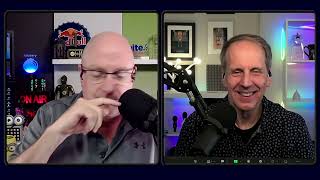
In this live episode of the New Media Show, hosts Rob Greenlee and Todd Cochrane open with banter about the Podcast Awards, AI‑generated episode art, and the Podcast 2.0 ecosystem before bringing on Paul Rismandel, Chief Insights Officer at Signal Hill Insights. The conversation centers on the evolving definition of a video podcast, the shifting role of platforms (Apple Podcasts, YouTube, Spotify), and recent Signal Hill research on YouTube podcast consumption. The research shows that 29% of weekly podcast consumers cite YouTube as their primary platform, with a split between listening only (42%) and watching while listening (58%). Younger listeners (18‑34) dominate video podcast consumption, and women are slightly over‑represented. Discovery on YouTube is strong, with 34% of new podcast listeners finding shows there, outpacing Apple (18%) and Spotify (15%). The hosts debate the relevance of AI tools for production, the hype around AI‑driven features, and the importance of open RSS feeds for longevity and protection against de‑platforming. They also discuss practical challenges of maintaining a converged audio‑video show, the modest scale of video podcast audiences on YouTube versus traditional podcast directories, and the emerging role of TikTok and Shorts for promotion. Throughout, they stress a cautious, data‑driven approach to adopting video, emphasizing content quality over platform hype.
Chapters
Hey, it's starting. We're good.
Just about a few seconds here. We ready? Just about a few seconds. Welcome to the New Media Show.
We're back doing the New Media Show again.
People are actually going to listen to this junk.
We do it live.
We're live right now.
We'll just do it live.
We're going live. We're going live.
We just can't get enough. The New Media Show.
Let's go.
Just do it live.
We're going live. We're going live.
The New Media Show. We do it live.
Just do it live.
We'll do it live. We'll do it live. The New Media Show. I'm like Adam Curry and you're more like John C. DeVore.
I think I am Adam Curry and you're the old curmudgeon.
We do it live on The New Media Show again.
The New Media Show.
Technology.
You make it sound so special. Rob, it felt like it was just Wednesday yesterday. We're back.
Holidays just kind of fly by, don't they? But the work weeks kind of drag on a little bit, don't they?
Yeah, you know, it's kind of funny because we cut everybody loose at the company Friday at 2 o'clock, and then they were off until this morning. We gave everybody Monday off, and I tell you what happened. It was just like, for me, it was like I got back to the office this morning and like, wow, you know, I wonder how bad the email is going to be. And, uh, You know, 400 emails later, it was, uh, it was, it was— and plus the Podcast Awards nominations opened. Uh, oh, that's right, Saturday morning. So I was kind of watching all that, and believe it or not, it's usually I'm inundated with folks saying, hey, can you change the spelling of my show? And, and it was just a few people were like, uh, can I check my listings? I'm like, yeah, log in to register. Oh gosh, goodness sakes, vote for your own show. So um, a little light in a couple of categories this year. So—
oh really?
Yeah, it's, it's, it's an interesting mock-up of, of shows, but I'm not—
what's the— what categories were a little light?
I'm not going to say because, you know, people can go look, you know. There, there is an opportunity there, I think, for—
oh, is that what you're—
okay, I think there's an opportunity there for a few shows.
The odds are good.
Yeah, the odds are better, right? Right. So So, uh, yeah, so it is what it is. I think it's just the economy, you know. I think people are watching their pennies and nickels and dimes, but it, you know, it is what it is. We're okay. Um, we'll have enough to pay for trophies. That's the main thing. That bill last year was $16,000. So, yeah, that's a lot. And we, of course, I should disclose too, because we buy 30 And then we let other people order, uh, trophies as well. So, um, I think grand total we had 60 or 70 trophies that went out last year. People bought trophies as well. So anyway, here we are, and it's another week. And, uh, yeah, I've got— I got a zero inbox at the moment, but I, I don't know how long that's gonna last.
But I don't think it ever lasts very long, does it, Todd?
No, it, it doesn't. Hey, one thing I do want to say is we got, um And I'll get this loaded here while we're talking. We are live and lit today for those of you that are participating in the Podcast 2.0 ecosphere and using one of those newfangled podcasting apps at one of those modern podcasting at podcastapps.com. We have been getting some comments on our episode album art. Did you look at the last episode's album art?
Yeah, I did. Yeah.
And of course, the title of the episode was Stitcher Podcast, apt to close rip.
And so I had a bunch of zippers on it.
Well, what it was was I said, create a Grim Reaper mask with zippers on it. Stitcher zippers. And it did a pretty good job of coming up with, you know, an interesting, you know, this interesting look. And let's see if I can find it here. Okay. Why aren't— oh, I know what's going on here. I haven't pressed that button. That's smart. If you do that, let me see if I can get this to show up. I can't see it real good, but yeah. That Grim Reaper, you know, with the zippers. And there was 2 or 3 variations. I worked a little bit on that, but, you know, I didn't want to spend too much time on it. But people have been commenting in, in my tech show as well. Um, the, the Walmart over there has been just a little bit better. Uh, my last episode there was made an AI algorithm, so I tried to show some dude at a computer and a whole bunch of you know, a whole bunch of formulas in the background and stuff. So I know you can't see that real good because it's kind of small, but, uh, yeah, I've been having, having fun with it. So Midjourney, love it.
Yeah, all sorts of great creativity coming into the medium, and that's, that's a good lead-in to— I guess ACASP did a listener survey. Did you see this? 400 weekly US podcast listeners did a survey on what's the potential future of AI and podcasting from a listener perspective. And I thought it was interesting that they did it from a listener perspective.
But how does the listener even know? That's the thing. It's kind of—
Well, it is. Yeah, that's true.
To me, I'm like, okay, the listener is not going to know that AI is used on any of this. How are they going to know?
Well, if it's done in the right way, it shouldn't be obvious, right?
Right. So I'm like, it's a really kind of— to me, it's kind of a dumb— I'll be honest with you. I think it's a dumb survey. I think it's utterly ridiculous.
What it tells me, really, I guess it depends on how you look at the survey and what the results came back showing, but it does kind of show a certain kind of— I don't know if it's naivete or if it's just kind of like openness to the creativity that is coming with AI. And because it says here 82% of the listeners agreed that it could be used to improve the sound by removing background noise, normalizing the audio. So I think what this really is showing is that listeners are looking at AI as a potential way to improve podcasts.
There's already incredible tools to remove background noise. There's already incredible tools to get great production value. And to me, it's just like, we already are generating transcripts. Don't need an AI. Oh my God, use the AI word for every stupid word in the book.
Well, it's every company that's doing something creative with technology now is saying that they're an AI company, whether or not they really are or not.
78% want closed captions. We've had closed captions at Blueberry for more than a year now. Already, and we didn't need AI to give us closed captions.
No, I don't think you need it, but I think there's a perception out there that, that the— it's going to be better.
Oh my God, people, people need to get a grip. Well, no, it's not going to be better.
It could be. No, I think it could be over, over a period of time that the AI is going to get smarter than our, our more traditional tools. Well, yeah, that's the bigger thing.
And the thing is, Acast is not using a transcript tag, which could already enable closed captions.
So it's, to me, it's just like, yeah, but that's a different conversation than this. So, but it's not, this is more about listener acceptance.
Okay.
The use of this.
Okay. Well, listeners should not even know.
Well, that's not the question. The question is whether or not listeners trust podcasters to use AI.
They're not even going to know.
Again, I'm just going to assume that they, that more and more shows will be using it. And this kind of gives a flavor to all of us. I mean, even the podcast host to say, okay, I mean, are, are we really compromising our relationship with listeners by using AI?
We don't, we don't, we don't, we don't compromise our listeners in doing noise reduction that's been around since God was a child in regards to audio editing, right? We haven't, we haven't compromised our listeners with, with the ability to master audio, which has been done since the beginning of audio creation. They've been, they've been creating beautiful albums back like when Let's go. Let's go back up. Beatles. Let's go in the '50s, '40s. All these albums that sound got better over time. We've been mastering audio without AI. And what's really happening there? It's a program that has been trained to do things to be able to master audio. If you want to call that an AI, it's just code. So everything you want to call everything AI. Oh, great.
But well, that's the new buzzword.
Okay, well, I can say we're doing AI and everything then. It's so stupid.
Well, I think that's kind of— that's a good point, Todd. I think that's, that's partially what's happening here, is that every company that's trying to get an edge in the market realizes that if they use the AI acronym, that they can get a leg up in the market.
Then I can say AI mass media mastering biophonic, and people are going to have nary a clue.
It's a little bit of a— it's a, it's a little bit of smoke and mirrors, Todd.
Yes. So why are— so, so in, you know, this is a headline article on PodNews today. Come on.
I don't know if it was today. Yeah. Well, was it today or a couple days ago?
I think today. Podcast listeners love AI. They haven't— come on. It's, it's, we are focusing on the wrong thing. We are focusing on the wrong thing. We should be focusing on great audio content. Great storytelling, great creative content, great engaging content with listeners. We, as, as podcasters, we— this— we should be ignoring all this, and we should be focusing on creating great content.
Well, that's certainly true. Um, I don't even know that Acast is even supporting any AI technologies in their platform.
It's just—
are they?
It's just a— it's just a dumb survey. I'm sorry, ACAS, it's a dumb survey.
Well, I don't— I think it's an interesting survey. I wouldn't say it's dumb. I think it's— it just kind of shows us the level of acceptance that's happening with AI in the general population. And, and I think maybe it's unfounded trust.
Well, again, ACAS, start using some of the, some of the tags Right. And you'll solve your closed caption issue. Thank you very much.
You know, so you also saw that Buzzsprout posted that the platform stats for June showed Apple Podcasts up by 2% month on month.
Well, part of it is, is because more people are upgrading to the more most recent version of the app or whatever it may be. I'm sure that's part of it.
So yeah, yeah, no, I'm sure that's, that's certainly true. So I should probably just mention Paul Rismandel from Signal Insights is going to be joining us at the bottom of the hour, um, to talk about their survey that they did on another controversial area, and that's, um, on video podcasts. So, um, we're going to get a, get a little bit of a glimpse into that, uh, that survey and that, that results that came out. I think it was just, just a few days ago, um, on this. Get some clarity because there were some interesting insights in that research. So I don't know if you had a chance to look at it, Todd, but once Paul pops on the line, we can kind of—
yeah, we can talk about it, run through that. But again, and here's another thing I take issue with And I can think this is really dependent upon what your show is, how your show's structured. Where this Edison is saying core audience for podcasts are 25 to 34, with 55 to 64 the worst. Well, I kind of laugh about that a little bit. Yeah. So again, I think it depends on the type of content. Every show's different. Every show attracts a different audience. So on average, you're saying 55 to 64 does the worst? They're the ones that have probably the most time on their hands of anybody. But again, who knows? Again, sometimes I see these numbers and I just look at them a little cockeyed.
But you do have to look at these things with a little bit of a jaded perspective because it depends on how they gathered the data.
They're pretty good at collecting data.
Yeah, I mean, who's actually answering these questions? I mean, a lot of it is just kind of, you know, conjecture on the part of the person that they're asking, right? To say, well, how many podcasts am I subscribed to? Or how many do I listen to every week? That probably varies dramatically from week to week.
Yeah. So Craig in the Facebook chat says some companies are claiming AI, but they're pulling from bad or outdated data. And then Ferdinand says, hey, Rob and Todd, Peterson. I last— last name's not Peterson, Ferdinand. Um, so thanks for checking in. Our YouTube audience is not here today. We must have not been controversial enough for them on the last episode. People are still talking about our, our 1670s or whatever, 577 episode, uh, right? It's still making the rounds.
Well, that could, could happen a little bit today too, somewhat, with this, with this video podcast research that's coming out that's kind of breaking the mold of the perception of the media.
Okay, so here's, here's what I'm just gonna— I'm not gonna say too much more about video because I've done video for years.
I know. Yeah, well, um, this, this show is a classic example of it.
It If you want to build a video podcast, then you are going to have to think about the— oh, if you— let's say you want to build a video podcast on YouTube, then you're going to have to change your content completely. You have to change your content to feed the Google algorithm. There's lots of articles hundreds of thousands of them on how to build a successful YouTube channel. And the type of format that podcasts are typically is not going to feed the algorithm over there. You're going to have to chase the YouTube beast. You're going to have to do 2, 3 episodes a week at a minimum. You have to shorten those episodes up no longer than maybe probably 10 to 20 minutes max. And if you want to chase the YouTube, a YouTube channel strategy, then you're going to have to change the way you do podcasts.
Yeah, you have to come up with a kind of a hybrid model that actually does what's good for there and what's good for the audio side.
It's two separate beasts. And then what happens to a lot of content creators that start creating video, and I've been guilty of it too, is I'll do one of these. Hey, look at this. And I'll start talking about something on a web page. And the audience is listening. They're like, what are you talking about? They, they, people forget that people are listening and they can't, they don't describe stuff in detail. And then what happens is you just, you disenfranchise the audio listening if you continue to do an audio portion to your show. You disenfranchise those folks. Video takes more, video takes more time. It's more expensive. You need more gear. You know, audio is not going anywhere.
I'm just, it's, I don't think, I don't think anybody's saying the audio is going anywhere. I think it's still gonna, gonna, gonna be strong. I saw that there was a quote by Justin Jackson from Transistor, which is another hosting platform. Yeah. Yeah. He pointed out the video podcast, which has been supported in Apple Podcasts, uh, since 2005. And I've had a couple of people mention this to me too, that, um, Apple's kind of buried the video podcast area. It's not easy to find anymore, which leads me to believe that I don't know that there's a long future for Apple's support of video in the podcast app.
Well, it still works, has worked from the beginning. No, I know, but it's, it's not, it's not Apple's job to surface my content. It's not my, it's not Apple's job.
Yeah, but they used to, Todd. They used to have a completely separate tab at the top of—
Never saw that.
Todd, yeah, they did.
Well, my show never made it into that list.
Many years ago, they had a separate tab. Zune had it too.
It's been gone for many, many, many years then. But again, it's not, it's not Apple's job to surface my content.
It's, it's not my point, Todd. My point is that it's, it, Apple has been slowly burying video content.
But you can find this show very easily on Apple Podcasts because—
yeah, but Todd, if, if Apple doesn't, if Apple moves away from, from traditional video podcasting, then there really is no video podcasting, but it's—
but they're not gonna— they're not gonna stop supporting it in RSS feeds. They're not burying it. It's— again, it's my job as a podcaster to educate my audience.
Yeah, but Todd, that's not my point. I mean, I'm— that, that's a given. My point is, is that the platforms out there that have— are supporting RSS are not prioritizing video. Is my point.
Great. Fantastic. They shouldn't be.
Why is that great?
They shouldn't be.
Why?
They're podcast apps. They should be focusing on audio. Absolutely.
So PodcastNow is only audio?
No, I'm not saying that. No, I'm not saying that. I'm saying is the focus should be audio because people are not gonna consume video podcast very much on a phone, on a mobile device. They're not going to do it.
People watch YouTube on their phones all the time, Todd.
Well, I don't, so I guess I'm the old curmudgeon.
I mean, if you look at this research that came back from Signal, you're going to see a completely different picture than what you're painting here.
Well, I don't care. People can still subscribe to this show. Today directly from our website and be able to get the video podcast on Apple Podcasts. It's not Apple's job to drive audience to my show. People, people want to have their, their boots licked. You know, it's— we have to get out of this, this mindset that these platforms are going to grow our shows. That is not going to happen. We are— YouTube's not going to grow your show. Spotify is not going to grow your show. They're not. You have to grow your show. You have to drive your audience to your content.
I— there's no question on that. But there is another side of this, which is what are the, the consumption platforms doing around that kind of content? Are they, they featuring it? Are they promoting it? Or Is there a quick link at the top of the navigation?
Nope.
And if that's gone, then the priority of that particular area of podcasting is being pushed aside.
YouTube podcasts are second nature too. Currently they have a podcast link, but only thing that's in there are YouTube channels. You're not going to find this show. You're not going to find this show in the podcast link that's featuring the video of this show. Ain't happening. Not happening.
Okay, well then we're conceding that market to the big proprietary platforms, which is already starting to happen.
It's not our job.
I'm not saying that. That's a completely different conversation.
But it's not their job. As long as my content—
completely different.
No, it's not. No, it's not. As long as my content, my content can be found.
But that also applies to audio too, Todd.
So it's fine.
It's not like it's unique to video.
So then why are we even complaining about it?
Because it's happening. It's not like they've taken down audio as their— so what preference? So that means that, Todd, when we argue for traditional video podcasting, yeah, if you're— you can only call a video podcast if it's distributed via RSS. Now, if that is dying—
it's not dying. Well, why would it?
It appears Well, that's my whole point of talking about Apple.
It's not dying. They support it. You can find your content.
Yeah. It's been dying since, since YouTube launched.
No, no, no, no, no. Rob, you, you have got YouTube. You, you have caught the bug, man.
No, I have not.
Nothing has changed. Nothing has changed.
Back when I worked at Microsoft, I put video podcasts into Windows Media Center.
Okay.
Okay. Those were off of an RSS feed.
Sure.
Those— it had its own Zune video podcast in Windows Media Center. Right. So that was a big area of podcasting. And then guess what happened? YouTube launched in 2007, 2008 timeframe, and all those content providers went over to YouTube because guess what? They couldn't afford to pay for the video podcast.
Well, here's the thing then. We need to ask Apple then, please make a search function in the app so that we can find these video podcasts. To me, I'm not—
they did add an area in the—
to me, I'm not worried. I don't— that must have been more than 10 years ago. That's been gone forever. There hasn't been a video section of Apple Podcasts since.
But that's, that's not a good trend line, Todd.
It's, it's been done and gone forever. So why are we even talking about it?
Because we keep talking about what we can't call a podcast, a video podcast, a video podcast unless it's delivered by RSS. That's why.
Okay, so guess what? It's—
so we're killing off the name video podcast, that's what you're advocating for?
No, we're not. Oh my God, no, we're not. Not at all.
And, and in the vacuum, we've seen Spotify and YouTube—
Spotify only—
grab that name and, and take it for themselves. Well, that's what's actually happened here.
Again, whatever, we're going to see it confirmed in this study that we're going to talk about later on the show, because most people don't know what they're looking at, whether it's a podcast or not. And this is why, again, we can argue to her blue in the face.
But we have to see where we're far off from each other. It's just you're here.
Here's something. Listen to this. I'm here just streaming Fountain right now. So the video is being streamed on— they can watch the podcast on the Fountain app right now on video.
That's great.
That's right. They can watch, watch this live podcast on Fountain Pod.
Oh, it's a live podcast. Okay. Is there such a thing as a live podcast, Todd?
Well, I guess I shouldn't use it. We are streaming live. We're streaming a show live right now. I understand people are not happy with the way Apple is presenting video. But personally, I don't care. I don't care because—
But we should care, Todd.
No, it's not. It's my job.
It's not a matter of job. It's, it's— Apple is the biggest podcast consumption platform in the world right now. And will continue to be regardless of what is being told about YouTube or Spotify or any of those guys. Right. So what Apple does matters.
Apple probably looks at the statistics and sees how many people are listening to audio versus video, and they know where their bread is buttered with the app. Well, they're not.
It's also a self-fulfilling prophecy too. You, you take it out of the featured areas and you don't create a—
but it's been gone.
Of course you're going to see it gone for more than a decade. We should have been talking about this 10 years ago, but it's not really gone. It's not really gone. It's just harder to find.
I have—
because Apple changed their interface, right?
Well, again, years ago. So it's mute point.
Well, however long it happened, the argument towards trying to maintain video podcasting under its traditional definition is under threat, and you can clearly see it from the research. So yeah, um, Todd, Todd, we might want to pull up— yeah, the, uh, the research too.
Hang on, Paul's here, and I don't know why he's not coming up in the camera.
Hey there.
Hey, Paul. There he is.
I see what I'm doing. Huh.
Thank you for joining us, Paul.
Oh, glad to be here. Thank you so much for inviting me. It's been a while.
Yeah. Well, we've had a heated discussion over many episodes on this show about the impact of video podcasting. So what I hope to do in this conversation today is to draw a little bit more insight, which is a good play off of your company that you're working for now. But, but we're lucky to have Paul Rismandel on with us. He's the Chief Insights Officer and partner at Signal Hill Insights. So, and Paul was with SiriusXM doing, doing similar type of work, trying to draw some conclusions about what's happening around consumption of of podcasting or media in general. So, Paul, it's great to have you, have you here. And I think we do have your, your deck that you have, um, I put out.
I don't have it, Rob. You're going to have to send me the link, but we'll talk about it.
Oh, I did already. Yeah.
Oh, you did? When did you send it? An email or how did you send it?
Yeah. Yeah. I sent it earlier today.
All right. I'll look for it. Paul, how you been?
I've been well.
How are you guys doing? Good. We've been having quite the discussion about video podcasting here for a while. Yeah, we had a hot one.
There's a lot to discuss.
Yeah, we had a hot one a couple of episodes ago. Everyone's still been talking about it. So, Rob, which email did you send it to?
Uh, probably your Geek News.
All right, I'll look for it.
So, but But I think, Paul, the, the big discussion between Todd and I is, is what is a video podcast? Uh, what is its current situation with it? Um, as you look at a traditional definition of a video podcast, that, that would be a, a video file distributed via RSS. Um, but what we have seen is we've seen, um, Apple kind of pull back from featuring links to it in their app. And then obviously since YouTube started, there's been a a slow siphoning of the video side of podcasting over to YouTube for many years now. So, and it's just been more recently that YouTube has kind of acknowledged that in their interface, right, by enabling a user or a creator to label a playlist as a podcast. So, and I think we're seeing in the research that the perception on the listener side, which is the other part of this argument too is that Todd and I, or Todd more specifically, doesn't really care what a listener calls what this is. He cares about what the industry calls it and what the content creator calls it. And it's just a channel or a video show on YouTube, but that flies in the face of what we're seeing more generally across. And I saw your research and it does show some trend lines that would would kind of complicate that conversation a little bit. So I don't know if you wanted to kind of chime in on that.
So, I mean, I think the research you're referring to is the Download on Podcasts, which is a semiannual survey that Signal Hill conducts in concert with Cumulus Westwood One. We work with Pierre Bouvard and his team there, and it's sort of taking the temperature of, you know, podcast listening and podcast listeners and consumers' attitudes about podcasting and their behaviors. What's nice about it, doing it semi-annually, is that, you know, we can sort of track the movement of, of different consumption patterns and things like that twice a year. And this year for the spring download, which came out recently, you know, we really wanted to dig into YouTube consumption. In particular. And, you know, I tend to come down on the side of, you know, a podcast is what the listener tells us a podcast is. But I will say that that was not an area we were able to get into on this particular survey. So what we, you know, this is research to be done. And it's, it's one of these things, every time you do research, good research just begs more questions. It leaves you wanting more. And so we got a really good snapshot of what YouTube consumption looks like, right? And we're seeing that now it is, you know, jumping into being the number one platform that you— that podcast consumers— and I'm using that word consumer intentionally because in many cases they're telling us they are listening, you know, and in fact they're muting. They're not watching the video. They are, you know, it's either in a tab that's not— that's not front and center, or they're behind a lock screen or something like this. But they are also watching, right?
What they're— what's the kind of— what's the breakdown of that?
What?
Yeah, right.
Yeah. So what that consumers on YouTube tell us that 42% of the time, they're listening to the audio without watching. Right. And so that can mean lock screen, it can mean on another tab, it can mean I'm not even looking at the screen or I'm looking at a different screen, right? While it's running along there in the background, you know, if you're using YouTube, the principal video platform, you have to be a premium subscriber in order to have it running while you have a lock screen. So, you know, I suspect, you know, probably consumption in the car complicates things like this consumption, some other circumstances. But that's to me, that's a very interesting finding. That, you know, a bare majority, 58%, are watching while they're listening, they say, or 58% of the time, I'm sorry, is what they're watching while they're listening. And I think what we really need to dig into, and I hope and expect that we will, is now understanding like just what, what exactly are people consuming on YouTube?
Yeah.
What are they calling a podcast?
Exactly.
I think is, is the next frontier for us to, to, to hit, you know, and because For instance, Conan O'Brien Needs a Friend from Team Coco puts up clips from the full podcast. The full podcast can run an hour and a half, and they'll put in highlights that are 10, 15 minutes, snackable, consumable little bits similar to, you know, how, how he would do for his late night show. Are listeners considering that? Are consumers considering that a podcast, right? Do they consider themselves to be consuming Conan O'Brien Needs a Friend on YouTube Or do they differentiate that they're, that they're seeing something, that they're seeing something different? I don't know. I mean, and honestly, I don't, I don't have a, have a prediction, right? In that, because I think much of that consumption is coming from young people, you know, people in the, in the 18 to 34 age group. Here's a real shocker. I'm not in that age group. Although I do know some people in that age group, and I've heard some of them say that they listen to podcasts on YouTube.
Leans like 60% towards women too.
Mm-hmm.
Yeah. So, you know, I mean, you know, overall, in terms of that YouTube consumption, you know, the biggest bump is in 18 to 34, but for, you know, weekly podcast consumers, 40% use YouTube most, but actually 58% use Spotify most. So, you know, it's still kind of split there. You know, the other interesting finding I thought is the finding on podcast discovery. So this is across the board podcast listeners of all age and experience, like how long they've been listening to podcasts. 34% said that if they've listened to a new podcast in the last 6 months, they found it on YouTube. And that leads Apple Podcasts, 18% say that, and Spotify, 15% say that. And I think for anyone who's used YouTube at all, that's not— that doesn't sound illogical at all. YouTube is well known for its recommendation engine.
Right.
And in fact, if you have autoplay turned on, you might listen or watch something and immediately pull up another, another video, right? Another, another piece of content for you to consume. And that might be something which is in your subscriptions, but it might not be right, you know. And so the opportunity to be exposed to new content on YouTube seems to be pretty common. Right.
My prediction is that is a very small 200-300 shows maximum that's getting all this traffic. Because I go— we went through, we did an in-depth look at like the top 200 lists in each category in Apple Podcasts and went looking for the corresponding YouTube channel. And, you know, maybe 20 or 25 had successful YouTube channels with any appreciable views on their content. So it's going to be, to me, the proof is in the pudding when you get down in the weeds and say, okay, what exactly are you listening to or watching on YouTube? What is the name of the show? And then find out, is this actually a show or on YouTube, or is it actually truly a podcast? Because I think my assumption is, and I'm just guessing, my guess is, is that consumers think they're listening or watching a podcast when it's just a show on YouTube.
I think that that's probably likely that that some segment is there. I also have seen and expect that there are YouTube programs that call themselves podcasts that are not available via RSS that exclusively use YouTube. And, you know, one easy way to explain that, right, is it's free.
Yeah.
And it's in many ways trivial to get started for a lot of young folks, especially who've been raised on YouTube, for whom it is, you know, a native platform for their own consumption and creation. What that scale is like, I don't know. Right. And that's, I think, some research that is, that needs to be done is to figure out, you know, is it principally, say, Huberman Lab, right, which is very big on YouTube, growing on RSS, growing as audio only. Is it, is it principally like you're predicting there, Todd? Is it like a top 200 shows? And that doesn't, you know, that doesn't sound like an unreasonable prediction to me. I, again, I don't have any real data in front of me to, to say that that's correct or incorrect, you know, and how much of it is, you know, shows that are essentially talk shows on YouTube, maybe even recorded, you know, you know, are, look like a talk show, look like a podcast where everyone has microphones in front of them, you know, and the visual components are often sort of ancillary aside from the fact that you get to watch somebody you know, speaking just like this and so on. Yeah, yeah, exactly. Just like this, right? You know, and, you know, because it— because an interesting thing we also asked, right? We asked, you know, do— is there content on YouTube that you consume, that you consume on other platforms, right? And 54% of listeners, of podcast consumers, said that that's true, that there are programming on YouTube that they're consuming on other platforms. And we actually said, do you listen to the same podcast in other places? So we really want to make sure we are saying listen, like not say, you know, someone saying, well, I also watch this person's TikTok, right? Or I also watch their Instagram stories or something like this, that to really isolate it to that listening experience. Right. And, and so it seems as though indeed we're talking at least a good portion of this, of this YouTube podcast consumption are shows that are available you know, ostensibly by RSS available in the conventional way that we in the industry think about a podcast as being audio primary, if not audio only. You know, it seems like at least that's a good portion of that consumption, while 46% said they're not consuming somewhere else.
Right.
You know, and again, we don't know— is that they don't— you know, what's harder for us to know is why they don't. Right. It's a lot to dig into in in one survey and definitely gives us things that we need to follow up on. But, you know, also as well, they told us that if your YouTube program, if your podcast on YouTube were to leave YouTube, would you go to that other platform?
Right.
And 77% said yes, that they would use that platform to listen to that podcast. So do you what a conclusion we draw is that the affinity for YouTube is not necessarily strong, right? And it seems like overall platform affinity, and I think there's a lot of the things that have happened in podcasting in the last 5 years that, that further provide evidence for this takeaway. It's that platform affinity is less important than content, which, right, on the one hand, it sounds like common sense, of course, right? But it. I think there have been bets made towards, uh, trying to, uh, to make platform affinity stronger, and they maybe haven't worked out, uh, so well. Um, you know, and that other factors are probably important.
I like how you say that, platform affinity. It's true, trying to drive people to one location. So Beauty Bubble in, uh, on the YouTube Live said So the word podcast is vital in the title for discovery. This is valid number that helps creators. So it's, it's interesting. I've never called my— I've always called my channel Geek News Central slash New Media Show. So maybe the title of the channel should be the Geek News Central Podcast, the New Media Show Podcast on YouTube, so that, you know, it's kind of funny because I didn't use the word podcast on YouTube because it was a YouTube channel. So maybe that was the incorrect thinking.
Well, this show is a podcast, considered a podcast on YouTube because we selected that, that association.
But it doesn't— you never find it. Good luck finding it as a podcast on YouTube. It's, you know, well, you find it in the—
what, in the YouTube Music?
Yeah, well, I don't know who uses that, you know.
So I think 100 million people do. So, okay, well, I wouldn't dismiss it too much.
Again, when they, when they break half half of 1%, then we'll talk about it, right? Of course, we can't get stats from it now. Go ahead, Paul.
Yeah, now, I mean, if you look at, like, again, I'll use the Huberman Lab because I think it's a very good example of, of a YouTube podcast that is, you know, of course, not only available on YouTube, um, you know, name of the channel is Andrew Huberman, it's the Huberman Lab. He uses the word podcast in the description, but it's not necessarily, um, the title. Not in the title. And I haven't dug in to see if he's turned on the podcast feature now available to, to YouTubers. I would be surprised if he hasn't. But yeah, I think that there's, you know, words are funny, as we all know. And, you know, I mean, for years, right, Leo Laporte was trying to encourage us to move away from the podcast name, Leo Laporte of the, of the TWiT This Week in Tech network to the netcast. Right. Because of the association with the iPod, an association now that I suspect is mostly lost to the new generation of listeners who've never owned an iPod, or even if they had, didn't associate it as something to consume podcasts on. Right. The name sticks, but has lost, you know, its, its roots, really lost its namesake.
Yeah. No, that makes sense. And then And then just to add another layer onto this too, which I didn't see come up too much specifically, maybe you can expand on it, but, uh, Spotify did announce a few days ago that it now has 100,000 video podcasts on its platform.
Which, which, okay. Really?
Well, that's what, that's what Spotify is saying.
How many, how many is it? So that means 99% of them are like the rest of their stuff. That's originates over there.
Well, people are uploading, just like with YouTube, they're uploading the video episodes to Spotify, just like 100,000.
That's, that's a big number. 100. So if there's 100,000 video podcasts on the platform right now, 100,000 individual shows, I call bullshit. No way.
Sounds like a bit— it sounds more like episodes to me, but it sounds like episodes.
Yeah, that's where I would come to considering there's only 450,000 active podcasts right now.
Yeah, well, they don't say episodes in the, in the release. It says it's, it's, it shows words, words, words.
Well, it's tough. I mean, and I, you know, working in research, you work very hard to be as precise as you can be with these words and you find yourself often tied in knots, you know, again, running a survey, trying to make sure that you are not subtly biasing the results, right? And so wanting to make sure that, you know, being able to ask people about watching a podcast at this point, because you can sort of naturally take those people out of your sample, right? If they're like, well, I don't listen to podcasts, but I watch them on YouTube. Well, you know, if they're watching Huberman Lab, they're watching a podcast, right? And so you want to be careful. And I think often only using the word listen, in, in recent years maybe has subtly, subtly kept us from recognizing or taking stock of a set of consumers who, who, for whom visual is, is primary, preferred, or even secondary.
You know, one thing I think we have to be careful of though is we use— and I see you guys in your research say YouTube is the leading podcast platform. But there's no way are they leading in the actual number of listens. They may be discovering, but there is no way they are leading the actual consumption data.
This is a consumer survey, right?
I understand that, but when we say leading, that makes people make the assumption that all the content is being consumed over there and not on traditional platforms. So I think we have to be careful It— okay, people may be using YouTube for discovery and they're watching some podcasts over there, but there's no way that is where the majority of the content consumption is happening.
Well, it's not a consumption survey.
Well, again, it's when, when podcasters— when you tell a podcaster that YouTube is a leading podcast platform, they get excited and say, I need to go create a YouTube podcast or YouTube channel. Right. And then they say, how come I got 5 listens or views? Right.
So there, there is, so yeah, no, you're right. It's important to be precise and it's always tough to be precise in the language. So the data that we have in the download is the percentage of weekly podcast consumers who use a platform the most for podcast consumption. So across the board, as of this April, 29% of podcast listeners, podcast consumers, tell us they use YouTube most, right? That's less— a little less than a third that they use it most.
And that there's a huge number of people using YouTube.
Okay, but, but the thing then is, how much are they actually— are they watching one show?
Yeah, but that's not the question.
I know. Yeah, yeah, well, no, it's a good question.
It's—
yeah, I think you're begging a question, and I think that's correct to do. Um, and I think that that's, that's hard to know, right? So, um, one reason, of course, you all know it's hard to know is obviously those plays aren't showing up in anyone's stats now, um, in a consistent sort of way, at the very least. Um, and it is a question we can ask, and I think we should ask, you know, uh, to, to drill down. And, you know, it's— that type of survey question isn't perfect. Right. Once you get down to asking people to get in the weeds, to tell us, get in the weeds, etc., you know, it can be— we can do it. But it's something you have to do carefully in asking that sort of question unless you're going to issue them diaries. Right. And it's sort of like an Arbitron or Nielsen rating, you know, in Cleveland in, you know, in 1997. So which, you know, could work. Right. I mean, it does work. And certainly, you know, researchers like Edison have done, have on this sort of methodology. It's expensive on top of the fact that it requires a high degree of attention to detail. But yes, I, you know, your point, I think I agree with that we can't jump from the, the fact that 29% of podcast consumers say YouTube is their most used platform to saying therefore most pod— you know, more podcast consumption, more podcast consumption is having— is happening on YouTube. It's arguable perhaps that more podcast consumption is happening on YouTube than any single audio-only platform.
And if that's the case, if that's the case, then you take Blueberry's 400 million measurable downloads a month, you take whatever Libsyn's doing, whatever Buzzsprout's doing, whatever Podbean's doing, whatever it take all those platforms and whatever that billion number is, whatever that billion numbers of measured listens, downloads, whatever you want to call them, then go find me the shows that have the equivalent to those number of listens and views. You're not going to find them. You might find 10 million here, 5 million here for some shows, but there's— you're not going to get into the billions, at least I don't think so, into the billions of views on YouTube. I, I just—
we know, um, um, Paul, what the— like in one month, how many videos are watched on YouTube?
I mean, I don't know that off the top of my head.
Yeah, globally that number is massive.
Yeah, no, I mean, and that's why I think, you know, we want to and will dig into getting a better understanding of what YouTube podcast consumers, what they consider podcasts and what they are consuming. Yeah. You know, and again, with the survey methodology, you know, that gives us pretty good depending on the size of the sample, how many people we survey that can give us pretty good visibility into that top 100 and 200. So it doesn't give us past that. It's tough, you know, it's not very granular.
It's a long—
it gets very granular. You get the long tail. Yeah, right. You know, and again, because YouTube statistics are different, you know, and not available to at least me in any sort of aggregation, you know, it's difficult for us to figure that out, though. You know, certainly I know, you know, hosts are beginning to ingest those YouTube statistics when you are able to connect it to your, to your podcast, you know, and so I think that'll begin to start filling up the picture. I know that, you know, Podscribe and Magellan are now being able to bring in YouTube statistics into their dashboard. So, you know, I think that this is, this is a developing picture and part of it is a developing picture of honestly what somebody thinks a podcast is, what a consumer, what a listener, what a viewer thinks a podcast is and how it differs from something else. I mean, it's the only way I can put it, right? You know how it, you know, there's such a great variety of content on YouTube and that will provide, you know, some guidance, I think, for the industry, provide guidance for podcasters themselves, because I think, you know, looking at what we know at the moment, right? I think it's worth for a, a podcaster to think about YouTube. But I don't know that, that there's this immediate need to rush in unless there are indicators that your audience or your desired audience is there. And, and, and, and, and, and interested in the sort of content that you make, right? Because I think one of the things I've always recommended to podcasters who wanted to get started in particular, right, especially if their goal is to grow, and maybe their goal is to monetize, right, which is a little different than if I just want to make something for a hobby, which is utterly and completely legitimate, is look at the marketplace. What's there? What's not there? And where are, where are the listeners your audience, where are they? And that may not— sometimes it's not in podcasts, right? That can be great, because it's a wonderful greenfield. But it's also a challenge, because maybe you have to introduce them to podcasts, maybe they're not already there. And that can be a challenge. You know, or you can find out, oh, they are kind of there. And there's a niche to fill within, within this topic area that I can do with my podcast. I think I would do the same thing with regard to YouTube,, right? And to see if it's worth the investment of time, energy, and perhaps money to go there. You know, I'm curious, Todd and Rob, you know, so what, you know, since you are YouTube podcasters, in addition to RSS podcasters, like, what is that? What is that breakdown? And because you've been doing it a long time. Yeah. What is kind of that breakdown in terms of your, in terms of your your audience roughly between just your, the RSS-based audio and, and YouTube?
I think the top YouTube videos get maybe 100, and then the podcast gets 14,000 to 15,000. Okay. Yeah, but we've never tried to build the channel. We've never focused on building a YouTube channel.
Yeah, yeah. I know, Todd, since we shifted over to streaming to my channel, uh, I think we've gotten double the amount of plays that we're just—
we're on 2 channels, so maybe 200. Got it.
Okay, so cool.
Yeah, and like today we're live on LinkedIn for the first time. We'll see how that does. But again, I think in the end, and again I've said this since, you know, since the beginning, I don't care where they listen as long as they listen. If they happen to watch, that's great too. And because I've been doing video, really Rob and I've been doing video for more than 10 years, The— we have a pretty good idea how many people actually subscribe via Apple Podcasts too. So, you know, we've got probably 9-10%. The Geek audience is up to 15% on video between the actual two true podcasts where one's an audio, one's a video. Matter of fact, the video people complain, uh, when we don't do video and I have to dump the audio file into the video channel just so that they they're not left with nothing. They complain, where's the video?
Um, we should probably be clear, when you say video, you're talking about the video podcast with RSS, right?
Right. So I'm talking— so the YouTube piece, again, maybe 100, 100, 200, 100, 200 on YouTube. And then, um, on the Apple Podcast side, 15%, so probably around 1,000, 1,200 watch on Apple Podcasts.
Interesting. Yeah.
And I know that's probably a big number, just generally speaking, because I, I have no— I do not know how many people are in general consuming video podcasts via Apple Podcasts, even though it's certainly possible.
The reason is, is because we've been doing it for 10 years and promoting it. So it's not, you know, because we talk about this topic a lot over the years. So people know that there's two— there's an audio version, a video version of the show. So again, this is many, many, many years of people that have listened to the show. And, you know, now, you know, like today we're streaming into podcasting apps too. So, you know, we've actually got podcasting apps that are getting the, the live video of the feed and switch from a podcasting app to a live video app, which has gotten some pretty good traction. So it's, it is a Uh, yeah, it's just, again, what are we trying to do? We're trying to get the biggest reach, right? We're trying to reach people in whatever way we can.
And I think that that's right. I mean, you said it, it's like, I don't care where they consume, it's that they consume, right? And, you know, that's why, I mean, doing some research into that and trying to understand what the YouTube consumer considers a podcast, right, and what they like about it more, you know, and digging into that more will help, I think, to fill that out a lot. Right. And ultimately, you know, for a podcaster, for a network focused on growth to figure out, you know, what is the opportunity so that they can properly set their, you know, their investment in their agenda. You know, I mean, I worked at Earwolf and Stitcher, and Earwolf was part of the video podcast network. In 2013, right, right, with, with full 3-cam, you know, multi-camera setups in the, in the Airwolf Studios in Los Angeles. Uh, you know, it was a partnership with this video podcast network, and, um, it had mostly gone away even by the time I joined the company in 2014. So we're talking, you know, a decade ago, and there was certainly a, a cadre of hardcore Earwolf listeners who, you know, would occasionally pine and, you know, in the then Earwolf forums about, you know, wish the Video Podcast Network could come back. In part because, you know, this is improv comedy principally. So, you know, even though much of it is theater of the mind, meaning they're playing characters auditorily and not, you know, wearing costumes and things like this, they like to see the comedians interactions, right? And their gestures and things like this. You know, so this has been, you know, this is a question that it's actually been around, I think, a long time, ultimately. And it's, you know, just, you know, being pushed to the fore because we're seeing this increase in podcast consumers telling us they're using YouTube and preferring YouTube. And of course, you know, obviously this year YouTube making more formal incursions into podcasting, right, with the announcement of being able to label a playlist as a podcast. And Spotify's doing it now. Yeah. And Spotify as well. And that's, that's an area that, you know, deserves investigation as well, is to make sure that when we are talking about video podcasts or, you know, writ large, that we don't get You know, we don't forget about other platforms, you know, which I would throw in, I would throw in TikTok into that, not because I'm a big believer that there are podcasts on TikTok. But I think you may or may not be aware of a phenomenon in which, you know, there are TikTok creators who get out a mic, maybe it's not even plugged into the phone and like, talk to the camera in a different way than they do for TikTok and call it a podcast. Right, right. And whether this is just a momentary trend, whether this is fleeting or not, I mean, I don't know. I'll admit to not being a big TikTok consumer, but it's worth trying to understand even if the understanding results in it's not something we need to pay close attention to in the end.
Yeah, I also saw in your research there's a profile of those who actively watch podcasts, videos, and, and how that aligns kind of with podcast audience. Um, and I thought it was interesting, the, the age demo of those that are, um, actively watching, uh, the 18 to 34 is what, 40%? Um, are watching, watching video, um, of what they're seeing as a podcast.
Makes sense.
They grew up with YouTube and then 48% are watching or actually have the video on, but they're just listening to the audio. So that's what 88% are, have a video playing.
I, you know, what's weird is I would never consider putting YouTube on and minimizing it because I do the stuff. I, the stuff I, I watch stuff on YouTube. I don't listen to stuff on YouTube. So I guess that's the difference. Oh, which you can, right?
But why? You absolutely can. Yeah, I only recently started, so—
well, that could be a factor here too, Todd. That's kind of a little twist on the consumption model that we're accustomed to.
His, his— you guys should not be minimizing podcasting YouTube. You should be listening in podcast apps.
Well, so there are— I will, I will say that there are some podcasts in my regular consumption that I discovered on YouTube. YouTube, right? And that I consume them both on YouTube and I— or on audio only on Apple Podcasts, probably principally. And it kind of depends on what I'm doing and or what device is in front of me, right? And if it's— so if it's my computer or my tablet, I'm probably consuming on YouTube. But if I'm going to go out and mow the lawn, obviously I'm just going to pop it up, pull it out my on Apple Podcasts. And so there— and then there are like YouTube channels that I watch and some YouTube content where frankly 70% or more of the content is auditory.
And, you know, it's just talking heads just like this.
Yeah. Or even not even talking heads. It might be, you know, just— it might be, you know, visuals that are pertinent but not you can get so much of it from the auditory in the same way that, you know, I think that, you know, you know, when it's like television consumption, people have left the television on for company, right? So they may be walking around the house, doing housework, doing something else, whatever the television is on. And if you're watching, you know, daytime programming like The View, or you're watching, you know, there's all sorts of programming you can be watching again, where the visuals are less important, so long as you're you know, you're getting the gist of it, right? You know, so probably for a lot of dramas and things, it doesn't work so well. But, you know, for, for even, I think, a lot of, you know, soap operas, for the few that still exist, because they're so script heavy, you know, you can really just listen.
I think we have to, though, continue to educate content creators and podcasters, because here's the thing: if, if they get into this mind, oh, I just put my podcast on YouTube, And that's where they do it, and they have a deplatforming event or demonetization event or whatever it may be. We have to warn and make sure content creators understand why Open RSS is still important and why it is key to longevity of shows. I just had something across my desk this morning that came from a content creator that got deplatformed off of YouTube for saying one phrase, and his YouTube channel was removed. And he has a podcast, and he has a podcast RSS feed, and he's dismayed. And I'm saying, well, you didn't get deplatformed off of podcast, off of Apple Podcasts and everywhere else. I said, your show's still safe, you still move on. I think we have to make sure the content creators understand the, the ongoing, you know, and be honest with you, if, if media companies, the podcast companies, podcast, let's call it the podcast industrial complex, goes all in on YouTube, if they go all in on YouTube and share the praise of YouTube, they're going to find that very soon they're going to their feet chopped out from underneath them. They're going to have no advertising revenue coming in. They're going to be— YouTube's going to lock up this content and they're screwed. They're going to be done. And so I think podcast companies have to make sure that they're educating creators on the value. Now, if someone comes to me and says they've got a podcast on YouTube, the first thing I'm going to ask them is, great, where's your show on Apple Podcasts? Or whatever app I'm using, Fountain or wherever.
Right. And what if they, they primarily just want to be a video creator?
Well, then I'm going to still say, where's your— oh, they just want to be a video creator. Great. You got a channel on YouTube. Okay. Because let's be honest, if it's, if it's, if it's just video, then, and it's on YouTube, well, then if they want to call it a podcast and it's uploaded to Spotify too, and Spotify calls it a podcast. Yeah. Okay. Whatever. Again, again, then I'm going to educate that creator. So, oh, I'm only on YouTube, or I'm only on Spotify. I'm gonna say, okay, let me just— give me a— give me 3 minutes to get on my soapbox and explain to you why you should do this, if nothing more. And I don't care. Hey, this is— this is podcasting. Do whatever you want.
It's—
it's the rules. You do what you want to do with your show. But I think— I think the important part is we just continue to educate.
Yeah, Todd, I think, I think the big thing that we need to educate is how to create a converged show, how to create a show that works good on video and works good on audio.
But the problem is most people are not capable of that. We've seen this for many, many years. Most folks that have a great video show, there's very, very— we're creating a very, but very few situation where we're not helping very few people. Very few. Have been able to cross over. Very few. More than before, but very few people have a successful, uh, either YouTube channel or a podcast. It's either podcast is super successful, YouTube channel's okay, the YouTube channel is great, and the podcast is okay. There's, there's outliers, obviously, but not that many.
Don't we want to have an area for growth ultimately?
I mean, you know, that's the opportunity, right?
But I agree with you completely about not putting all your eggs in one basket. And I don't expect that we're going to see a rush to YouTube, especially, you know, any type of significant exclusivity. I think everyone in the industry, there's enough, enough memory of both the shift to video that Facebook fomented and then reneged on.
Right.
Right.
And And an understanding, I think there is actually an articulate understanding of the value of open RSS within the industry, right? And I think you've heard, say for instance, Conal Byrne at iHeart speak about it publicly time and again and write blog posts about it time and again. I think that there's some pretty broad understanding that that is still very much a winning strategy. And I do agree that those who are able to speak to content creators spreading the gospel of don't put all your eggs in one basket is a good one. You know, I, I participated in a podcast conference, a regional podcast conference that happened here in Portland at the end of April called PodConf. So brought people mostly from the West Coast. We had a few other folks coming from elsewhere. Pretty well attended, pretty well put together. And lots of interesting conversations. And I felt like talking to these folks in the mix of folks who had been podcasting for a long time, mix of, and people just getting into it or looking to get into it as well as, you know, folks who are monetizing, making a living versus folks who are using it for other purposes. I found the newer folks to be far more savvy, far more informed than I maybe even expected. Interesting. And it certainly would have expected you know, 8 years ago or 7 years ago. Now, you know, these are self-selected people. They came to a podcast conference, a small regional one, just a one-day thing, you know. So, you know, they have a will to want to kind of level up, you know, and do things differently and, you know, to kind of advance their game. So, you know, that's, you know, also part of the self-selecting process. But yeah, they had more questions then and interesting questions about YouTube than like a sense that they had to rush right in, right, or rush into video right away. And, you know, so they seem to kind of get the idea that they should be careful about where they, you know, about where they host their podcasts and should be careful about making sure that they have, um, the ability to migrate even. Like, like that seemed— that all seemed to come in, you know, mostly they had more questions about, you know, you know, they saw YouTube probably more as a promotional device. And again, this is just my, my impressions of talking with people. I didn't take any sort of systematic poll or survey. Um, they were more interested in how it might help them promote and grow their shows rather than be, than be the platform. Like, they had to be on YouTube, period.
I get that sense. And I think as TikTok continues to siphon billions of dollars away from YouTube, um, you know, TikTok has got its own game plan. And, you know, I'm under NDA, so I really can't say anything, um, but I think that what we'll see is the promotional aspect of TikTok will become very, very valuable, probably more valuable than YouTube from a, you know, from, from a discovery standpoint. And when it comes to YouTube, obviously the Shorts and that type of stuff are valuable and being able to do clips and stuff like that. So, you know, I haven't had huge success with clips because I've tried, you know, multiple channels. Well, my audience is largely on Twitter still. They haven't left. So I think I get more value out of doing clips on Twitter than I do on YouTube. But I think again, it's where you went, where you said, Paul, earlier, it's got to know where your audience is at and, and promote them. And again, I don't try to be the old curmudgeon on video because we've been doing video for a long time, but I'm just trying to make podcasters understand that this is not the golden goose that laid the golden egg.
This is hard work. Oh yeah.
It's harder work to build a YouTube channel than it is a podcast.
Hard, much harder. Yeah. Yeah. And I mean, it's a— they are different things. But, you know, I think what we see, I mean, at least what I'm seeing is that a lot of creators who are, who are finding an audience on whatever platform they start with, especially say TikTok or YouTube, you know, they get to a point at which they realize, oh, I see, I want to be able to take this audience to a platform that I own or at least own a portion of. Right. They start to recognize sort of the The fact that, you know, even if, you know, like a TikToker may make a podcast, not, you know, not to replace their TikTok, but to see if they can't build an audience somewhere else, you know, and also, you know, there are— every platform has its own demands on a creator, right? You know, whether, you know, video YouTubers in terms of the cadence, the difficulty of putting out the content, keeping up, you know, I think that folks learned that, you know, something which people who've been in media production, you know, prior, especially in sort of the pre-social media era, is, yeah, I mean, there's a reason why not everybody does it. And it's not because people can't. It's that, you know, it is a significant, significant consumer of time and energy and money. And that it can seem like easy money. But as I think the early gold rush in podcasting showed years ago, it's not really easy money.
It's going be work no matter what, right? You know, I think too is I look at Google and, you know, the strategy I've used for years on driving traffic to my website. You know, Google can take it away. You know, they— you're not immune for losing traffic to your website because Google changes some algo and all of a sudden, you know, the traffic you were getting before is cut in half and you have no idea why. So I think this is where if you're building a content strategy, you know, I think it's rich to be every place. You know, it's obviously we do that with this show, we're everywhere we can be. And ultimately, we want to drive people back to, you know, to newmediashow.com, and they can subscribe and follow and get them engaged with, you know, if we're doing merch mailing list, all that stuff, at least we have a base we can push them back to from these other platform. So if Google does take us away, let's say they, they, they shadow ban you or whatever they do, they put you in a penalty box for, um, for content. We see content creators talking about it all the time. I got demonetized because of this video. I, I showed, you know, too much of something or whatever, someplace, or said something or showed something, and Google said this is inappropriate content for advertisers. And they have to dig themselves out of that penalty box I think that the really, the goal here is, is to make sure that you've got this fallback and you got to fall back as you, you know, you're getting, you're everywhere, you're not going to get penalized everywhere at once unless you do something really stupid. So where you might lose your audience on YouTube, maybe you still have good Google search results. So it's, I think it says building this multi-pronged strategy of being everywhere is, is important. Um, but at the same point, like you said, building your brand— and I'll go back to again, onyourown.com is probably the biggest insurance policy you can put in place. And most YouTubers do not have— yeah, maybe they got a website for merch or something, but they never— you know, I— the YouTube channels I listen to, they never ever— they say, yeah, follow and subscribe here, do not leave, you stay on YouTube, don't go to my website. And you maybe we got a link or two in the bottom to our Patreon or whatever. But that, in my opinion, is a horrible strategy long term because if you get underneath the YouTube gods that says, I'm gonna put a thumb on you, you're done. And that scares me more than anything. Just like GoDaddy, you know, GoDaddy is a sponsor here. I gotta, I gotta keep delivering because GoDaddy could say any day, hey, you're not doing enough performance, I'm going to turn the switch off. I better have a backup plan If my sponsor leaves, I better have the ability to be able to keep the lights on, the insurance paid. So I think it's just more than anything else and just cautioning content creators to, you know, have a, have a good game plan around your brand.
Yeah. I mean, it's a business. I mean, ultimately for folks who want to make some or all their living at it. Right. And it's that education to treat it like a business, right? If you want, if you want.
Yeah.
Right. You know, again, lots of people do YouTube or make a podcast or make TikToks for fun. And some people have brushes with virality and it doesn't stick. And some have brushes with virality and it does. And, you know, I think like anything, do your research, decide if this is a job you want, if you want to, to have the commitment that it requires.
It's high stress if you're trying to drive numbers. Numbers, it's high stress to keep building and growing those numbers, whatever platform you're on.
Right, right. Absolutely, absolutely. So, and so if you are able to drive into and to end up with some degree of success for yourself, like owning it— I mean, you know, it's, it's old school strategy. I mean, you know, you know, Johnny Carson, The Tonight Show, he started Johnny Carson Productions, right? David Letterman, Worldwide Pants for his own show, right? Sure. Came up through, through the being host on a network. Right. And getting a show. But once they get a little bit of power and a little bit of prestige, you start your own production company, you own more of it so that you're able to, you're able to pick up and go if you need to and take it and take it to somewhere else.
I do have one topic I want to ask Paul about, and it's not related to your survey, but, you know, the, the number of new episodes being created are down. And, you know, a lot of us are testing that to the, you know, the big money's dried up, the interest rates are where they're at. So the free money's gone and you have to have the success and see something. Oh my God, podcasting is declining. It's actually not. It's the big productions that are declining while we see numbers for independent content creators up significantly. What's your— what's your take on the slowdown of content creation?
Well, I mean, I think these things often are just simply cyclical, right? You know, and, and, you know, I, I don't know that we're fully over the, the enormous bump that being in a global pandemic brought to, to, to podcasts and YouTube and TikTok. And, you know, right. You know, I think there's a lot of that.
Right.
And, you know, only, you know, a relatively small portion still of all podcasts being produced are monetized in any, you know, in any significant sort of way. Right. And so these are all factors that are, that are sure, they all sort of hover around each other. They sort of, you know, have some relationships, but they are not linear relationships and they're not always fully causal relationships. Right. So I tend to see it as cyclical and that Um, yes, right. We've, we've seen some, uh, changes, uh, uh, with regard to the production of new shows with certain, uh, publishers. And we've seen other publishers not dial back at all. Right. Um, because, because frankly, there's so many different models for publishing, for creating new podcasts, creating new shows and creating new networks and different publishers have taken different strategies and how they are able to keep the content machine going. And I suspect some have found in some ways doing it more advantageous than others.
Smaller costs. More efficient, I think.
More efficient. Well, right, exactly. I mean, I think that's a lot of it. And I think the big money deals, I mean, there weren't that many, honestly, right?
They were just big. Just Spotify, just billion dollars, you know.
Right. But not spread very thinly, right? Yeah, not spread, you know.
You know, a small number of shows that were being funded.
So I don't, I don't see, you know, we continuously see an increase in listenership, right. And so, you know, and it, you know, it has been, aside from, you know, that the minor dip we saw in 2021, again, I think coming out of COVID or sorry, it was in 2022. You know, but we all signs show that folks are coming into the medium, that new consumers are coming in. So, um, and there is a lot of content and there can always be more, right? I'm not a big, I'm not a zero-sum game kind of thinker just in general, but I always think that there's always opportunity and room for more interesting and innovative ideas. Right. And I think that often folks have a rose-colored view on the past. Right? There's a sense, oh, wait, well, back in, back in 2012, right? I could chart on the iTunes chart like that with me and my, my, my two funny friends in the basement, right? Oh, look at these guys. Look at these guys. And I think a lot of that is misremembered, that the folks who were charting were actually working very hard on their shows and that they were fighting over a relatively smaller share of listeners and a smaller number of shows. So sure, you know, charting maybe was easier. Well, charting isn't necessarily vital or important. Yeah, I mean, it's vital or important if you have sort of a general interest podcast, right? But I've met so many people making really good livings on very small niches where, you know, if you can align that advertiser with the right listener, right, and it's a hard-to-reach listener, you know, if your podcast is for orthodontic surgeons, right, right, sky's the limit. Yeah, getting, getting into iTunes charts is, is fully, fully unimportant. That's right. But if you're reaching half the dentists in America, I'm gonna bet that you'll have, you know, uh, x-ray, uh, companies and, and all the companies that sell things to dentists beating down your door.
I, I know a show that has never been in any top 200 list ever, and they're doing a half million a year. You know, they don't care. They don't care. You know, they got like 1,300 very high valuable listeners. So who's listening is what matters. Yeah, who's listening. Hey, by the way, always what matters. We did have, uh, these— this came from last week. Scott said, hey, I dropped back to 1x listening to the show, and yes, my anxiety did drop. That was a 1,420 Satoshi boost.
Stressful to listen to us at a much higher speed, I think.
Chris says, Todd, I've been— Chris, I— Chris says, Todd, I've been meaning to let you know that I think the artwork has been good. I noticed it with the Apple Android Beach one. All the ones since then go well. The episode, Christian, that's a 7,000 sat boost. So we want to thank those, uh, boosts that came in on the last show. And then we've had some comments come in on Facebook. Uh, Ferdinand says, is Edison involved with the IAB podcast analytics? No, they, they are not. Um, so Ferdinand says short-form content is transforming YouTube. Well, I think, uh, TikTok is really where the short-form content is thriving, but, um, I think short-form content on Facebook is probably thriving as much as TikTok, to be honest with you. A lot of that stuff is reposted. I see stuff on TikTok I see on Facebook. They just cross-post it to different places. Um, and there were some other comments that were earlier that scrolled off the screen. I apologize if people made a comment. But, um, yeah, we have been lit live today. Make sure you get a new podcast app, modern podcast app at podcastapps.com. Don't go listen to your shows on YouTube.
Hey Paul, um, one of the, the sections of the survey that you guys put out was titled Podcast Newcomers, right? I think to our, our audience, I think it might be helpful to kind of dig into that a little bit and help, um, our listeners understand kind of the makeup of who's, you know, new to podcasts, who's the, the new listeners, and what, what does that look like? I mean, who are they, uh, what's their age demo and stuff like that? So I don't know if you could I mean, I've got the data in front of me too, but yeah, I have to—
it's a long report, so I'm going to scroll through here to find it. Yeah, you're talking about the podcast newcomers, and these are folks who started listening to podcasts in the last 12 months. So that is, you know, so as of April of 2023, and I've been a big partisan that this is a group that the entire industry needs to pay attention to. Constantly, because there is a tendency sometimes to overevaluate and pay too much attention to the hardcore long-term listeners. Not that they don't deserve attention, but they can be the loudest, you know, and whereas, you know, you need to be continuously welcoming people into the medium.
And yeah, I mean, if we want to grow the medium to more consumption, that this is an important category.
Yeah. So, so the podcast newcomers, so it's about 30% of the total weekly podcast consumers. Think about that. Just started listening in the last year. They are 54%, 18 to 34. So they're, you know, overwhelmingly younger, 60% female. So more likely to be female. And they spend on average 4.8 hours a week with podcasts. And that's 30% lower than podcast consumers in general. And that's a trend we see pretty consistently that, you know, the longer that you've been a podcast listener, the more your consumption, your weekly consumption tends to go up. But they are consuming about an average of 4.9 episodes a week. Again, that's a little bit lower than podcast consumers in general. And, you know, the thing that the comparison that sort of shows a difference, I think most clearly is that, as I said, 60% of these podcast newcomers are women. If we go to the podcast pioneers who are folks who have been listening 4 or more years, it's 59% men. So you can see this really, really pretty tremendous shift in the folks who are coming in to into podcasting as, as consumers, you know, and I do think that that is somewhat representative of changes in the podcast and that are available. Ultimately, everyone more or less has a first podcast, right? Has that one, that show that got you into, into the medium, you know, and it's going to be a show that's for you, you know, and if you're a woman, doesn't necessarily mean that it is a podcast made by women or featuring women, but there's a good chance it might be that, right? People like to see themselves and like to see their own interests and hear their own interests represented back to them. And so certainly we can see that here in that, in the shift in this consumption, which is sort of pushing podcasting to be sort of a gender-balanced medium, right? And increasingly, I think what we're seeing just in general is that the audience is looking more like the US, right? The general population, right? In the US at least. Yeah. Yeah. Seeming similar sort of population splits. There's still, you know, there's still some tendencies that podcast listeners tend to be a little more educated. They tend to have more household income than average. But, you know, there is nevertheless this growing kind of, you know, shift towards, you know, you know, simply the audience looking more like the US in aggregate.
You know, it's, it follows along with what we're seeing in creators coming in. We don't ask when someone creates an account if they're male, female. We kind of, you kind of tell sometimes by the show name, but we think that more women are creating content, at least on our platform now, than men. The number of new creators are, are trending maybe 5, 6% higher, 56, 57% higher, or 6 or 7% higher than, you know, almost 50/50. So at least we see more ladies coming in than we do men coming in, which it's interesting, you know, it kind of fits with what you're saying too.
Yeah, you know, it certainly would be interesting to know what that distribution is, um, because I do think that there's a correlation between growth and listenership and growth and content creation too. So they probably do kind of ride together to some degree. So that, that's that growth of 60% on the female side, is that kind of sign that the content side is growing in that area as well.
Well, you know, Paul, you said something earlier about the audience, uh, not— here's the thing, even though we're down on, you know, from an episode creation standpoint on a weekly or 10 or 30 or 60-day basis, the— you're right, the audience has not left, at least not what we're seeing. We've seen no evidence of— I'm really kind of looking forward to when be honest with Edison, does look at that and gets a bit bigger view for what's happening in 2023. As far as, you know, where is the audience? Is the audience growing? Maybe we have to wait to '24 to hear that. But I think the audience, it may not be growing a lot, but it's definitely hasn't left. So, you know, because there's not as much content that's trickling down into people looking for more content.
So yeah, you're going to have churn, right? Yeah. I mean, people are going to stop listening for a while. Yeah, they might stop listening forever, but they may start listening again. People have lifestyle changes, their favorite show goes away. There's all sorts of things that impact people's lives that, that affect that. In addition to, you know, just then the constant influx of new listeners as people, you know, sort of aging into podcasts in a lot of ways, I think. I suggest that often podcasts fit people who begin to have more kind of responsible adult lifestyles where they have commuting and they have this time where they need to be engaged, but they can listen to things, right? They can still be engaged with their mind and use it to entertain themselves or to catch up on news, catch up on all sorts of interesting information. And again, it's sort of using the number of episodes published as a as a metric is, is it's very problematic in part because we're all aware that podcasting has an incredibly long tail.
And so what we're not—
for 10% of the shows.
What do you mean?
90% of shows have no long tail? No, I mean, what I mean is that the long tail in terms of overall audience size. Oh, yeah. How many of those, right? You know, in terms of, you know, how many shows have, you know, we do know this. I just don't have the stats in front of me. You know, how many have 1,000 listeners? How many have 500 listeners? How many have 10? And it's the, you know, is it just the folks who are like, well, I got 10 listeners, I don't know, I'm going to hang it up. Right. You know, we just don't, you know, how much of that is someone who made 2 episodes and lost interest, right?
I mean, I've made 1 episode of a podcast that never had a second episode. I've had, I think I've, my shortest one was like 7 episodes.
So yeah, I had one that failed too. So, you know, and, you know, there's a lot of so many factors. And when you, when you get to a medium like podcasting, which does have a low barrier to entry, it doesn't necessarily require this enormous corporate investment. I think you're going to see these kind of fluctuations and variations. And, you know, unless we're seeing, you know, 30%, 40%, 50% drops, I don't know that, that, that we're, we're necessarily looking at any sort of phenomenon that, that portends either for the doom for podcasting or great fortune in any immediate term.
So did you guys— what I was looking for in this study was, do you show any— do you have a similar chart, a growth chart on how many people actually listening? Did you do a— did you get anything like that in this survey to actually see what the number of people from year to year, actually what growth rate in listening has been?
No, that's not the purpose of this survey. So, so this is, uh, we're surveying only podcast listeners, just the listeners, and they're only podcast listeners who listen weekly. So, you know, and so that it gives us a really great picture of that group. Yeah, but it's not a, it's not a census survey, right? And you're thinking, you know, certainly, you know, Edison's— yeah, does that Infinite Dial is exactly that sort of survey and why everyone waits with bated breath every March, right, to get, to get those numbers to see where the, uh, where, what we're looking at.
For those of you that haven't looked at this, this thing is 91 pages, so there's not a small amount of data here. There's a lot to chew on. So, um, how long does it take you guys to put this together?
This must take weeks. So, yes, of course it does. What's great is the team over at Cumulus and Westwood One is fantastic. So a big shout out to Lauren and Liz and Pierre over there. You know, Jeff, my partner at Signal Hill, has been working with them on this report for a few years now. I first came into the picture and joining Signal Hill in January. You know, they already have, you know, a lot of the core questions already written. So part of what I did is brought in some thoughts about how we should look at YouTube. So, you know, basically, yeah, it takes us, you know, start to finish a couple of months to pull off, you know, sort of just making sure we've written a survey that makes sense and works. You want to put a lot of eyes on it. You know, the actual fielding, going out and getting the responses, that's— that takes a week to 2 weeks. And then— and then it's really pouring through the data. And I really have to say, in the way we work together, a lot of that was, was the Cumulus Westwood One team really, really, you know, helping to put their eyes on it. We worked together on some of this, and I really kind of focused specifically on the YouTube data myself.
So just for disclosure, Paul, how long you and I have known each other?
More than 10 years. Gosh, it seems about right. I don't think we met in person till maybe my first podcast movement, which was like 6 or 7 years ago. Yeah. Yeah, exactly. I believe you've emailed him maybe. I mean, I was on the New Media Show quite some time ago.
Long time ago. Remember?
Yeah, yeah. A long, long time. But it's been a long time. Yeah. Rob, I've known you for, yeah, I guess about 10 years as well. I think I first met you about 2014 in L.A.
Yeah, we're still the grumpy old guys still here. And in fact, we gentlemen, we are over and we've kept you longer than we said we're going to keep you, Paul. So. Um, but yeah, this is, this is deep. I'll have a link to the, to the, uh, the survey data, the report, in the show notes today. And, uh, a lot to chew on here for sure.
I thought that the questions that you guys asked about podcast advertising was, was fascinating also, which also plays into the perception that podcast host reads are much more effective. And I think one of the big reasons is, is kind of what your research points out, is that, um, those ads are most effective when the ads are fun.
I thought that was interesting. Yeah, I mean, I love— I mean, that, that's the— so much of the work I've done in the last, uh, 7 years or so is on advertising, and that's a whole nother— that's a whole nother rabbit hole we can go down. Yeah, I have a lot of— I have a lot of opinions, and I have a lot of, uh, thoughts, uh, hypotheses that still need testing, is I'll say, but I think we're at an inflection point for the industry to do some work in really untangling and analyzing and understanding why podcast ads work well and questioning some of the orthodoxy because it's mostly people's opinions. So there's some research in there, but I've been really kind of untangling that, especially in the move to to network buying and a move into programmatic and things like that. And I'll just put a pin in that because that's, that's another 2 hours. Yeah, I don't want to do that to your audience.
Right. Yeah. And sometimes people get tired of us talking about the advertising piece. Um, it is what it is. And considering 50% of the people, or 60% of shows, don't even care about the advertising piece, I think that's, you know, something that's also lost on the industry too, is a percentage of shows could care less.
Um, yeah, I mean, it all depends on, on your, your— what is your raison d'être, right? You know, what— why do you podcast? What are your objectives, right? And, um, advertising is certainly one way, uh, to monetize and to make money, but it's not the only one.
That's true, right? All right, Paul, what's a good way for people to, to reach out to you if they want to chit-chat with you or, or get you on the horn, or What's your best contact way?
My best contact way is paul@signalhillinsights.com. That's my email, but I'm on LinkedIn. There's not another Paul Riesvendell currently in LinkedIn or elsewhere. So I'm very, very easy to find as long as you, you spell my name right.
And Rob? Yeah, I can be found on Twitter @RobGreenlee, and you can also send me an email to rob.greenlee@gmail.com.
Com.
It's a great way. And I'm on, on YouTube. I do another video show on, on YouTube. It's called Trust Factor, and it's part of the 100 TV network that's on, that's on YouTube. And that's also an audio podcast as well.
So, and of course, I'm Todd at blueberry.com, blueberry without the E's, and then @geeknews on Twitter, @geeknews, @geeknews.chat on Mastodon. And, uh, but yes, I think— see, I'm looking at the schedule. Yes, we will be here next week for another show. I'm not— I don't have anything conflicting. So, um, if you tune in for Battle Royale today, obviously it did not happen. But everyone that commented on Facebook and YouTube, thank you very much for doing so. We appreciate it. And, uh, we'll be back here next Wednesday at 3 o'clock Eastern. So we're going to take this live streaming show and are going to turn into a podcast. So go over to newtomeadshow.com and follow or subscribe. All right, everybody, thanks for being here, and we'll see you next week. Okay, thank you.
More from Rob

Future-proofing with Delphi AI/Human clones: your podcast as a personal LLM | New Media Show






How sports reveal what AI spectacle gets wrong #Technology #Sports #Commentary



