Free and Open Podcasting: A Conversation with Rob Greenlee Part 2
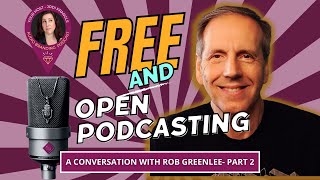
Rob Greenlee, who worked at Spreaker, iHeart, Libsyn, and Podbean, now runs Spoken Life Media to help podcasters pick platforms. He warns that hosting platforms lock you into their ad systems and content rules, while RSS feeds keep you independent. Podcasting is growing fastest in Asia, the Middle East, and Europe, not the U.S.
Chapters
Welcome to Audio Branding, the hidden gem of marketing. Sound plays a more important role in human behavior and our decision-making than you may realize. In this podcast, I'll help you understand the art and science of sound so you can better influence others in business and your life. I'm your host, Jodi Krangle. Let's delve a little deeper. So what about Anchor then? Where does Anchor fit into this? Because they end up having the dynamic ads from Spotify, don't they? Is that—
yeah. So, you know, increasingly I think Spotify is moving towards a similar model to what YouTube is kind of setting themselves up for. Increasingly we do most of the hosting platforms. I would say all of them have pass-through contracts with Spotify.
Okay.
So, so, but not all of the podcasts in Spotify, and this is probably a lesser known truth, are under the kind of contractual agreement to be passed through. So if you submit your podcast directly to Spotify, they will likely cache your episodes and deliver them on their own streaming platform. So they won't be a pass-through. So unless you host like through Libsyn or Podbean or Blueberry or any of the hosting platforms, which all of them have pass-through contracts, your plays and your dynamic inserted advertising that you're running will, will play like normal in Spotify. But if you don't If you're not hosting with those kind of platforms, there's a good chance that, um, you're not going to get your numbers off of your external hosting platform. You're going to have to get it from Spotify.
So interesting.
Yeah.
Yeah.
So, I mean, it's, it's, it's not a huge issue. And I do get a sense that the, um, the up and coming generation of podcasters are more open to, uh, having this type of relationship with like a YouTube just because of how popular YouTube is?
Well, for the younger generations, yeah, they're on YouTube all the time. I mean, I know I upload my podcast there even if it's only a static image because lots of people there, it's a completely different audience.
Right.
Yeah.
Yeah. So I think it's just inevitable. And I guess, you know, old curmudgeons like me like to hold on to, you know, the, um, the openness of RSS and keeping it, I don't think that the one keeping it dominant.
Yeah. Like, I don't know that if you still have RSS feeds and YouTube is still doing what they're doing, that, that there's a big problem necessarily. I mean, as long as RSS doesn't go away, then, then no one is stuck on that one platform. You are if you wanna be in the YouTube ecosystem.
But I think you have to realize that that's the gamble that you're taking.
Yeah.
Is that because you're giving them all your content, first of all, and they could decide just like what we've seen happen to some degree with Spotify. They could make RSS optional, which takes you down this path of exclusive proprietary platform. Platforms. So, and increasingly, if these platforms get more and more listeners and more and more content, then the openness of RSS becomes less important.
Yeah, I guess I can see what you're saying.
Yeah, there's a danger. So it's almost like, be careful what you wish for, because it may turn into something that maybe you don't like as much.
Yeah, good point. So what are you doing now? And does that have anything to do with any any of what we just— like, does it have to do with the future of podcasting or like where—
Well, I think so to some degree. I mean, I've— the problem with working on one platform exclusively over extended amount of years, I mean, one platform is kind of metaphoric to focusing on one at a time, right? Versus being able to look at the whole industry and try and offer assistance or help shape the broader industry from a much more of a neutral perspective. You know, like I've worked for Spreaker and I worked for that then turned into BoxNest and then got bought by iHeart and now, and then worked with Lipson and then left there to go to work for Podbean for a short period of time. And that gave me a perspective that You know, I need to back up and become more educated with the whole ecosystem of podcasting because working on one particular platform has kind of siloed my access to learning about other platforms because nobody wanted to share it with me because I was a competitor.
Proprietary information at the other host.
Right. So now, just in a week, I've made this announcement that I'm going to become a consultant. I'm starting my own company called Spoken Life Media. But that doesn't preclude me from working with on a consulting contract or whatever with some other types of companies too that may not be in the hosting side. Um, but, but to, to really become kind of an expert in the medium really more again, because—
so what are you hoping to help people with?
Making better decisions about what platforms to work with, right? Based on what your needs are. Right. So I think Cause I'm constantly talking to various podcasters about what their needs are and what they want to do and how their show's going to function and what characteristics. And they say, well, what's the best platform for me to be on? And I go, well, since I work for Lipson or Podbean, obviously that one. Yeah. So, and that's not always the right choice. So, or I have this other situation that also happens where, you know, there's people, podcasters out there that will actually change hosts because I change companies. So, you know, that's flattering. Well, it is, but it's also, it's like I oftentimes tell them, I go, are you happy there? You don't have to move just because I moved. So, and that's, I mean, it's great that they're willing to follow me, but that's not exactly what I want to create in them. In the market for them either, because maybe moving for them is not the right choice. So, you know, that's the problem that I— it's not a huge problem, but it's, it's, it's something that, um, has me thinking about my knowledge in the podcasting space and how I can be a better help to the medium.
Um, sure.
And, and how, how can I benefit from that as well? Right. So, I mean, obviously creating my own company and creating consulting agreements and things like that, people will be more likely to share information with me, right?
Well, you're what they're doing, like an objective, you know, third party, basically, I guess, is the idea, right?
And obviously, I'm going to respect that position, and things that I learn about the medium will be shared fairly. And I'm working on a few pathways for that as well that then can be socialize more publicly about platforms and kind of how they, what the feature comparisons are and what the pricing is and how they, they work and their philosophy behind them and those kind of things. And I know a lot of, there's a lot of YouTube videos out there that do a lot of this Buzzsprout versus Lipson, you know, which is the best one to go with, right?
Yeah. So we can't get away from YouTube, right?
And And there's not a big difference between that and what I'm proposing here, but I just want to be better informed about the medium itself. Um, I mean, I've been talking to a lot of people, but I always know that they're like couching what they share with me because, you know, they don't want Lipson to know that they're working. I know even my co-host Todd Cochran with the New Media Show, he's like, I can't tell you that.
Yeah.
So it's like, I don't want to be left out of the conversation. So that's the and just because there's a perception of competitive interest and sure. And yeah. So that's kind of at the core of it. And then I just want to get back being a content creator again. So more, and, and if I can do that through consulting agreements with various platforms or those kinds of things where I can create content on their platform or I can help them or do something creative or, are fun and then get more connected into the AI developments in the space and help with that too. And hopefully, you know, we don't do that in a way that's harmful and will be helpful to podcasters.
So along those lines, what are you excited about for the future of podcasting?
I'm starting to wonder, I'm a little bit wondering what the peak of this is. I mean, we're growing at a steady rate and I don't know that—
So we haven't hit that peak yet.
Right, well, what is that peak? I know that we've—
Good question.
We're reaching, I think it was, I think in the last Edison research, it was showing that we're reaching close to 80% of the US population. They're listening to podcasts, which is, you know, that's kind of, that's up there, you know, I mean, I think smartphone adoption only hit like 91% or something like that. So it does kind of make you wonder once you've reached that plateau that it's not going to, there's nobody left, right? So once you've kind of reached a certain level, so I guess the metric that I'm thinking more about that's important is how much content people are listening to., on a weekly basis and on a monthly basis. Um, and if there's, how can we facilitate that and how can we create more community interaction with podcasters and then also maybe figure out a way to move away from advertising?
Yeah. Yeah. I can see how that would be. Yeah. Needing a sponsor, I guess, puts you like you were talking about with hosting. It makes you beholden to a particular company.
Yeah. And I think if you think back to the early days of podcasting, which is an interesting story too, is that some of the early advertising that was done in podcasting, this was like back in 2005, 2006 timeframe. The show would take on a sponsor and the sponsor would send them like a Casper bed or something like that, right? To sleep on for 2 weeks before they did their campaign, which was a common practice back then.
It's still a common practice in videos.
Right. Yeah. And then the host would sleep on it for a couple of days or whatever, and the truth would come out in the podcast, right? They would say what they really felt about the bed, right? Because the real truth, the real truth. And that may not be what the advertiser wants to hear, but the podcast would come out and say whether or not they like the bed or not. And do we hear that today in advertising?
Not much.
I don't think so.
Not much.
Yeah.
We're kind of programmed to say what, that we like the product, you know?
Yeah. Yeah. If we take money, right. That makes us beholden to the advertiser to represent them in a positive way. And I think a lot of the, um, the ethics around that are a little shaky, right?
Yeah, it's tough.
When it comes right down to it.
So I remember doing stuff for my songwriting website, and I would accept sponsors who would put banners up and that kind of thing, and it was all very specifically related to songwriters, so I was very picky about that. But I also was very picky about what advertising I would do, and I had to like— yeah, I had to like what I was advertising, because if you're putting something out there, and it's even more so when you're doing a podcast and you're the host if you're putting something out there that you're saying, oh, this is a really great product, and then many people buy it and they think it's crap, then that's your name. You've lost credibility. Yeah, exactly. That's your name on the line, you know? So yeah, there's that kind of social contract, I think, that we need to be very conscious of. So yeah, it's hard. So it doesn't happen much now, you're saying? Like people used to actually speak their mind and be okay about doing that, and now they're not?
Yeah. Yeah. And I think it's just a shift in the fabric of the medium and how we embrace commercialization in the medium. It's starting to look a lot more like radio, you know?
So, yeah. You were saying something about how spoken audio is about trust building. We were talking about this a little before and what did you mean by that? Is this tying into that?
Like, is it? Well, I think if you look at the world more broadly right now. I think this isn't specific just to podcasting, but I think it's an opportunity in podcasting because podcasting is a unique medium that has, I think, over the last 2 years have really demonstrated the fact that it's not a medium that has content moderation at an extreme level like we're seeing on the social platforms. Even YouTube and those kind of platforms tend to be really kind of highly moderated and algorithmically filtered. And if you say something wrong in the show, you're going to get taken down or—
And often it's a bot that's making the decision, right? So it's an AI making that decision for you, not any human being.
So yeah. And that's another concern area that I have because podcasting up to this point has not really been highly moderated. So I still think that it's probably the last medium that is kind of, I would say, truly a free speech medium. Sure, there are certain types of content that will get you in trouble in podcasting. There's no question. And there's nothing that can keep the trolls from getting you if you happen to post it on social media. So there is a possibility that could happen to you, but there is, there is some movement in the industry right now about brand suitability algorithms that are being created that are going to push that envelope a little bit and make content more discoverable on the moderation side. So I, I do worry that there is development happening on that side where we could see some content moderation become a factor. I'm just not sure who's going to enforce it at this point, unless—
Good point.
It increasingly gets enforced by platforms like Spotify and YouTube. So as we see more integration with those platforms, you can totally see how that might happen.
I can totally see how that might happen. Yeah.
So it's another example of be careful what you wish for.
Yes, yes, exactly. Yeah. Well, there is probably hours and hours of content we could talk about when it comes to this.
There are lots of things. Going on in the world today.
Yes. Yeah.
Yeah.
Um, one of them, uh, you had mentioned that you put an article up on your own website and I was going to ask you how people could get in touch with you. So that's definitely something I want you to mention if you could, uh, where the future of podcasting is going. And I think you had mentioned that you put an article up on your website.
Well, it's kind of ironic. I haven't written anything new on that, which I need to. Um, but I do have the future. Well, it's, it's rather ironic, but like the article that I have on my blog right now at robgreenlee.com, which I wrote a couple of years ago, um, is still valid today. So it's, um, because, and that's why I need to do another one because what tends to happen with the articles that I write is, is that they are like a little bit precursors for what's coming. Prophetic. So probably if I write one in the next couple months, it'll still be valid 2 years from now. So, but, but it's, it's an interesting take to go back and, and, and actually the podcast that I have is called, it's called the Spoken Life, um, show.
When did that start?
Now I created episodes back in 2013 for that podcast.
Okay.
Okay. And some of the— I'm bringing it back to life now. I kind of walked away from doing a lot of my own podcasting short of the New Media Show for many years because of working on all these platforms.
And so that's the reason for the new name?
Yeah, well, that's the foundation. It's a consulting business as well as a content play as well. But some of the audio that I have in there goes back to 2013, but it it actually talks about the YouTubization of podcasting back in 2013. So you can kind of map a little bit of the discussion that was going on back then to what's going on today. Very prophetic. I think what you'll find is that there's not a lot of difference. Interesting. So a lot of the issues that were around back then are still with us today. Even in the face of what YouTube has announced, nothing has really dramatically changed yet. So they're still talking, not a lot of action quite yet. So that's kind of my takeaway from that. But, um, but yeah, and then I also talked about the globalization of podcasting back in 2013 too, and how language is going to drive that. Um, so I, you know, I talked a lot about those topics way back in 2013 too, but they're still applicable today. Um, because a lot of the developments that have happened, uh, around the globalization really kind of follow what was created in that, because I was talking with I was talking to people that were living in Europe and going through it. Right. So it was, it's still relevant today, but we've seen an explosion in Asia and the Middle East. It's really remarkable actually what's been happening in Asia, the Middle East, Southeast Asia, around podcasting. Things are, things are really bubbling up pretty fast. In those markets, even in Europe. I mean, Canada's got the highest per capita podcast listening in the world, I believe. I think it's like, yeah, right. That, and especially on the West Coast. Yeah, it's, it's huge, like out in Vancouver. And sure, just the amount of podcasts that are being consumed out there is remarkable. And then also in other parts of the world too. So Yeah, the US isn't the dominant player in podcasting anymore, I would say.
So I think that's a good thing. I mean, I think that all of us could stand to learn something from each other, and globalization is going to help with that. So yeah, I know Podfest Global is about to start online in the next week or so. Probably when this podcast comes out, it'll be long past, but, but it'll be fun. And there's a lot of globalization going on in there. So yeah, it's nice to see. I think that's a good thing.
I think we can all learn from each other. Coming together a little bit more like that is good. And there's entirely new ecosystems that are being developed in each of the countries too that is different than in the US too. It isn't like everybody's just going to the US to get their services.
Yeah, yeah. And it's good to see that too. But yeah, so if you can tell people how they can find out more about your podcast, is there a separate URL for that?
It's just, it's on Apple. It's on all the major listening platforms. It's just Spoken Life with Rob Greenlee. That's what it is. I've been kind of evolving that name a little bit. But, and then RobGreenlee.com is a great place. I'm on Twitter. I'm on all the social platforms too. So I post Instagram and post Facebook and LinkedIn and all the platforms about podcasting. So I try and keep up with, uh, yeah, there's a lot, there's a lot of stuff to keep up with. And I'm trying to get back into being a content creator again. So that's going to put me in those platforms even more.
So, yeah. Well, I love it. And I know that, um, you're on the New Media Show with Todd Cochran as well. When does that go online?
We do that show live every Wednesday at 3 PM Eastern, noon Pacific. And it's live on YouTube, Facebook, Twitter, all of the major live streaming platforms. And then it also has an audio and video podcast. So under the original definition of what a video podcast was, it actually does qualify. That MP4 video file actually has an RSS feed.
Wow.
Okay. And it's in the Apple Podcasts. I mean, we've been doing this for 12 years, so that, that video podcast has been there in Apple Podcasts for a long time. So you can watch the show on demand.
I love it. Yeah. Well, thank you so much. Yeah, Rob, I have learned a ton.
All right. Well, thank you.
Well, that's the end of this episode. Thanks for listening. And if you like what you heard, why not tell a friend about this podcast? It's available in all the usual locations. Until next time.
More from Rob

Future-proofing with Delphi AI/Human clones: your podcast as a personal LLM | New Media Show






How sports reveal what AI spectacle gets wrong #Technology #Sports #Commentary



