Getting the Most Out of Podcast Movement Conference
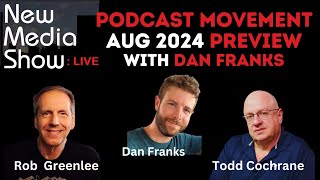
In this episode of the Podcast Movement pre‑conference show, hosts Rob Greenlee and Todd Cochrane sit down with Dan Franks (Podcast Movement) to discuss the upcoming Podcast Movement Conference in Washington, D.C., and to unpack a wide range of industry trends. They cover practical logistics (dates, ticketing, hotel rooms) and share a cautionary tale about a costly on‑site activation that went awry due to mis‑calculated beverage orders. The conversation then shifts to attendee behavior, noting that booth traffic can be stagnant unless exhibitors incentivize stops, and they compare the dynamics of different shows (London, Podfest, Podcast Boom). A major focus is the growing prominence of video podcasting, especially on Spotify. The hosts dissect Spotify’s claim that video drives higher engagement, question the definition of “engagement,” and debate the monetization implications of video versus audio, including dynamic ad insertion and CPM differentials. They also examine the impact of platform policy changes, such as Apple’s iOS 17 download counting adjustments, which have caused significant revenue “haircuts” for companies like Audioboom. The episode delves into the evolving IAB Podcast Metrics Standard (v2.2), discussing certification, IPv6 support, and the controversy over metric anomalies and download inflation. They highlight how inaccurate metrics can suppress CPMs and affect advertiser negotiations. AI tools receive a spotlight: Blueberry’s AI‑generated clip highlights, the new Thrive package (AI‑driven analytics, pre‑roll ads, social post creation), and broader thoughts on how AI can automate analytics and content repurposing. Finally, the hosts review recent data on active podcast declines (24.8% over 28 months, 6% over 18 months) and discuss the health of the ecosystem, platform migrations, and the importance of accurate data for podcasters navigating a shifting monetization landscape. The episode closes with contact information and a reminder of the next show’s schedule.
Chapters
Todd and Rob in the afternoon.
Hey, afternoon delight with Todd and Rob.
Oh yeah, oh yeah, Todd, we're, we're back again with the New Media Show, and we have an exciting guest with us today, uh, Mr. Dan Franks from Podcast Movement. But, uh, Todd, how are you doing today?
I am— I'm alive, and I actually got a few hours of sleep before the show today. So people like a few hours of sleep.
Wow, so you're all bright and shiny today, huh?
Yeah, it's, uh, 8 AM here where I'm at, and, uh, so, so I'm good and ready to rock and roll.
So that's, that's a 12-hour difference. It's 8 PM here, so, right? Yeah, yeah. And then, so how are you?
I'm good. It's good to be back. It's been a little bit. I was commenting to you all the technological advances we're all coming across these days. We were on Skype the last time and we've progressed past that. So I do think the audio intro, I think had debuted on the last time. So that's kind of dating the last time I joined you all.
Yeah, it is. I think we need a new one of those. But anyway, it's the one I have here. Programmed in my RODECaster, so, so we need to update that. But, but it's a fun one, so it's a little, you know, retro for us. But, but Dan, it's an exciting time for you. You're on a countdown. What was it, uh, 30 days or less to Podcast Movement in Washington?
Yeah, yeah, yeah, about a month from now we'll be, uh, we'll be on the backside of it. So yeah, under 30 days to go to Podcast Movement, and Like, like at every, every year at this point out from the event, you know, 3, 3 and a half weeks out, it's the whole team's hair is on fire, mostly in good ways, and just kind of, you know, coming down the homestretch.
Yeah, yeah, there's a lot of activity on your website as well. So I wanted to pull that up on the screen too. And so actually 25 days, 15 hours, and 52 minutes.
But who's counting, right? Exactly, right, right.
No, nobody's counting. It's August 19th through the 22nd in Washington, DC. So it's, uh, I guess Washington, DC is going to be officially the capital of podcasting. So it's one thing that podcasting hasn't had is a capital of podcasting.
Yeah, it's funny, um, you know, everyone kind of confuses the AL, the OL, like what's the right use of capital. Um, I can assure you I've done plenty of research to make sure Yeah, that's the right spelling for all our linguists out there. But yeah, excited to be in DC. The last time we were in the Northeast was 2018 for Philadelphia Podcast Movement. So, you know, whatever that is, 8 years ago or so, 7 or 8 years ago. It's the last time we were up there and been all around the country and excited to be back up in the Northeast. It's got its own kind of, you know, vibe and from an event side, its own registration patterns and its own, you know, type of attendees. A lot more people from New York are gonna come to an event in DC than they are in LA. And so yeah, every one of the reasons we like traveling around is not only is every event different, every venue different, every city different, but the attendee base is a little different based on where you're at in the country. So all fun things that keep us on our toes.
So is there anything different about the event, you know, that's related to being in Washington, D.C.? Is there anything, you know, involved with the government or anything like that involved in the conference at all?
Well, you know, one of the interesting things is it's the same week as the Democratic National Convention. So in terms of any presence from your more traditional, you know, what would you call it, like political or news commentators that might be based in D.C. or that some of the networks might want to send out for that event. Event they'll be in, I guess, in Chicago for the national convention. But in terms of some of your more local, you know, broadcast networks and things like that, NPR is one of the bigger ones that's headquartered in Washington, D.C. So they'll have a big presence. We just announced yesterday that they're coordinating a keynote featuring Ira Glass from This American Life and Rachel Martin, who is kind of a longtime traditional broadcaster for the NPR network., and she's got a new podcast, so they'll be on stage together. So, you know, from a, from a kind of what's happening locally standpoint, NPR having a big presence is kind of the biggest thing. Um, but obviously, you know, lots of, lots of media and lots of, uh, things are headquartered in DC that, uh, maybe otherwise wouldn't be there. I've noticed, uh, not necessarily from the speaker standpoint, but from the attendee standpoint, we've had a lot of governmental organizations buying tickets for their their staff to go. So, you know, a lot of, a lot of them have internal podcasts that they're using to communicate internally with their teams. And a lot of them do have, you know, public podcasts that kind of put out news about their different segments of the government. So definitely a lot of local registrations as far as that goes. It's kind of interesting to see as those registrations come across the platform, seeing different companies that we otherwise wouldn't see.
Yeah, Todd, go ahead if you have something to ask.
Yeah, I just— I dropped off for a minute, so something was— the audio quit, so I missed what Dan had said. You know, I think, um, from our perspective, it's going to be interesting because I think this is the first time in quite a while there's been a truly East Coast show. And we're kind of laughing about it internally that, uh, you know, it's gonna be one of our shortest, uh, you know flight days to get to the event where we can actually get there in a direct flight. So, you know, I think from that standpoint, we're excited. And it's good to see that you're getting those types of registrations from the local areas. Are you seeing more East Coast registrations? Or, you know, how's the— how overall are you seeing more East Coast registrations? Are you seeing a good mix.
Yeah, we're seeing, we're seeing a good mix. And that's one of the things I mentioned was the last time was 2018, we were on the north, in the Northeast, on the East Coast, uh, for, uh, in Philadelphia. And one of the things that happened that year was a whole lot of super late registrations, and most of them being from like your New York Metro. So I was talking earlier about kind of the different, uh, everything, the, the, the city, the location always has different things about it. And one of the things that we learned about the Northeast was a lot of people from New York are okay buying a ticket late and taking the train down or driving down or whatever. That happened in Philadelphia. And we're seeing that a lot too. A lot of people from New York that we're talking to, they're like, oh yeah, I can't wait to come. We're like, we haven't bought your ticket yet. And they're like, yeah, yeah, I'll get to that. You know, I don't have to buy a plane ticket kind of thing. So I'm still going to buy my ticket. So we are seeing a lot of kind of New York people, I would say, that are registering late. Um, but yeah, a lot of DC. That's what I was saying, we see a lot of like.gov, uh, email addresses coming through in the registrations that I know we've not had those people at the event before. So, uh, definitely a lot of local people. And then, uh, you know, of course our usual travel in from what looks to be again, once again, all 50 states coming in. And right, lots of international travel as well, easier to get from the UK and that kind of, uh, it's part of the, the world. To the East Coast than our West Coast events. So we definitely see people kind of taking advantage of that proximity as well.
I haven't been paying a lot of attention to the— I know you mentioned the NPR having a keynote. I haven't been paying real close attention to your keynote list, but who have you got stacked up right now for keynotes?
Yeah, so one of the models we've over the past few events taken for those keynotes is to pair up some sort of data research presentation with more of a creator or conversation type of thing so that every keynote block will have 2 to 3 sessions and that we kind of, you know, scratch the itch of having some data and research involved, new, hopefully new data and research that comes out followed by a little bit more what I would call maybe entertaining or, you know, kind of not so data-rich presentation. So That's happening again this year. So, excuse me, on our, what I'll call our data research side of things, we've got Gabriel Soto from Edison Research. Edison's given keynotes for close to 10 years now. They've got a cool one where they've partnered with Audiochuck Network, which is best known for the Crime Junkies podcast. They've partnered with them to do a deep dive and research into listeners of the true crime genre, which we all know is a big one. And so they're presenting the data that they've learned from listener behavior of true crime podcasts and then kind of extrapolating that how other podcasters outside of that genre can maybe use that information and put it into action. So that's one. We've got Tom Webster, formerly of Edison, now with Sounds Profitable. For the second year in a row, he's giving what he calls the podcast landscape presentation. So he's got a whole lot of data and research to present. That day. And then we've got one with Steve Goldstein, who's from Amplify Media, and he's partnering with Westwood One Cumulus on some research they've done about how audio promos can best be used in podcasts. So, you know, a lot of people hear, oh, do promo swaps, or, you know, buy ads on other podcasts that are similar to yours, or that kind of thing. So they've done some research on how to effectively use audio promos. So Those are our 3, you know, what I'll call research pillars that are taking place on stage. And then we've announced, let's see, we've announced 2 of the 4 other ones that are kind of more what I'll call a little bit more entertaining but also educational. The first one you see on the screen, Eric Silver and Amanda McLaughlin, they're from a company called Multitude Productions. They're really interesting. They've been around for 10 years and they're a fully independent podcast production company that is based out of New York. And they've got a team of basically producers that produce a whole bunch of independent shows. And they've kind of done what a lot of podcasters that attend Podcast Movement want to do, which is make it full— make podcasting their full-time thing. But they've done it, never taken outside money, never, you know, flirted with the acquisition offers that a lot of studios that are kind of their size have taken. So they're going to kind of give that, which I'll go back on that, that same topic. A lot of networks and studios that have been acquired have since been sunset or laid off or wiped out completely. And they basically, his presentation is like, hey, there's a reason why we didn't take this money or this strategy 5 years ago when everyone else was. And we're still here to talk about it. And we've kind of thrived through this time period. So kind of informational, educational, but also motivational message that will really resonate with a lot of our creator attendees. And then the one we talked about with Ira Glass and Rachel Martin, and they're gonna do what essentially is a live version of Rachel Martin's podcast On Stage, which it's like an interview-based game show. So they're gonna do that. So that'll be fun. And then we've got two more final keynote main stage sessions that we're announcing next week. And then of course our usual really strong lineup of breakout sessions, panels happening throughout the day. So every day starts with the keynote and then the rest of the day is those breakout sessions and panels that are split up between different track stages based on their topic.
With the amount of mania going on over AI, I'm sure you were inundated with AI Speaking proposals, you know, even us, you know, we focus quite a bit of time this year in developing AI solutions for Blueberry. What are you seeing on that front? If anyone is in the AI industry, that is, in other words, do you have anyone speaking on AI that is not part of the podcasting community? In other words, an outside voice, or most of the folks that are coming in speaking about AI already in the industry?
Yeah, so first I'll talk about the AI kind of submissions like you hinted at. So going into the event, what we had initially laid out was kind of our 3 core tracks. One of the core tracks was going to be like podcaster creator, like kind of your traditional how to tell good stories and everything that's just, you know, podcaster interview skills. One of them, and that one still exists. Uh, one of them that's industry, so that's like not for the creators themselves, but for the business side of podcasting. That's always been a successful one. That one still exists. Uh, the middle one that kind of sits between those two was originally meant to be focused on, uh, video only because, you know, a year and a half ago when we were putting these kind of structures together, like it was all about video. You got to do video, you got to have a video component, um, which I think that's still kind of a message that people are getting and thinking about. But we got so many submissions that were AI-based submissions and not like for video, not like we didn't get any submissions for video, but a whole lot less interest in like speaking about video podcasts, but so much interest in AI and other things that were like kind of techie, kind of like AI. People sometimes call it AI when it's not really AI, it's just kind of technological advancements and podcasting and audio and video, that we turned that middle track from straight video to what we more call emerging trends. So it's video, but it's also including AI and some other, uh, some other sessions that kind of, uh, fit into emerging tech, emerging trends. So kind of, uh, you know, to answer— before answering your specific question, uh, that was like a reformat that we had to do with that specific track just because there was so much interest and speaking about and teaching about, and we have to deduce that that's also interest in learning about AI. In terms of who is actually speaking on AI, I'd say it's mostly people that are already in the podcast space, either people that are representing audio tech companies that are in AI, like Descript. Descript is obviously one of the bigger AI platforms with AI. And probably one of the first people to really implement what we're now calling AI into their transcriptions and their audio software. So like someone like them would definitely be there. Actually, Andrew Mason, who is a group on, who was one of the founders of Groupon and then went on after he sold Groupon to found Descript, he's actually going to be there on a panel on that track. So that's kind of a cool thing. But yeah, I would say most people that are speaking about AI are people that are active in the audio podcast video AI field. Already, not necessarily anyone else from like, you know, OpenAI or something like that.
Right, right. Now we just, you know, and what's kind of interesting is the— our read on podcasters wanting AI is they're still a little bit leery. They're still cautious. And I think that's actually probably a good theme for for them to be at this point is to be a little cautious. The thing that I'm, you know, obviously concerned about is AI-generated content that is pure AI-generated content, not, you know, not something that helps you with questions for a guest or helps you with the topics or helps you with getting talking points together. You know, I think that all those use cases are very acceptable, but is, I think my concern really is in the long run, you know, this barrage of written AI content that's already come out. Uh, because we're kind of in this legal gray zone right now in that, you know, if you're creating AI pure content, you know, there's copyright issues, um, in that the content can't be copyrighted because it's generated by AI. So I think over time, uh, we'll see what develops, but You know, I have ongoing concerns, obviously, people using AI to, you know, and I think I take a real hardcore stance on this, is replacing words. You know, do you have to disclose that when you start, you know, editing your audio and replacing words or even purely generating with a voice clone? Should you disclose that? And I think that's a discussion point that has not at all been addressed or brought up. So I hope some folks are going to be talking about some of those legal ramifications of using AI in your production as well.
Yeah, one of the cool things that we started last year, uh, where we first debuted last year in Denver at Podcast Movement 2023, was a concept called Braindates. So Braindates is this third-party, uh, company that comes to events and basically curates this. It's a combination of, I consider it more networking, they consider it more content. That's kind of where like teaching and networking come together. So the idea is there's this Braindate marketplace that all attendees have access to. And an attendee can basically offer themselves up as a small group discussion leader on a topic that they are an expert in. And then up to, I think, 7 or 8 attendees can then sign up to participate in that conversation.
Nice.
So, and you can also like request topics. So you can say like, hey, I'm not an expert in AI legal, but I really want to talk to somebody who is. So you can basically put that up there and then someone like a Gordon Firemark or Lindsay Bowen or some of these attorneys that are in our space can sign up to join those conversations or be invited to kind of lead those conversations. And yeah, like I said, it's just a small group. That's intended for, you know, a 30-minute discussion on a very specific topic. And last year was the first year we put it out there and it was an overwhelming success. So we're bringing that third party back to do that again this year. And that's the type of topic that, you know, most people want to just learn about the AI, the tools, how do I make my life easier? How do I produce my show easier? How do I produce more content or whatever? So maybe like legal AI is not going to fill a room of 100 seats, but maybe it can get, you know, 10 or 20 people that want to come together to discuss it in a small group and like really have an interactive discussion. So that's where Brain Dates really comes in handy. So, you know, that's kind of my way to shoehorn in the Brain Dates concept, but it's because those conversations are like happening in that Brain Date area of the event.
Nice. So did you see a growth in the numbers of companies, let's say, that have an exhibition booth or that are participating in there that have a linkage to AI? I mean, has that grown for you or is it the existing companies that are adding AI mainly?
Yeah, both. I mean, our show has fluctuated with the industry over the past several years. So, you know, 2021, 2022, there was all these new companies coming in. And then just like with the industry, with companies going under or getting acquired or just kind of having fire sales, a lot of those companies that were there with us 4 years ago aren't in existence anymore. And new companies have come in. So we've seen like this churn, just like the industry has. We've seen it at the event as well, especially when it comes to exhibitors, because when a new company starts, the first thing they often do is buy a booth and try to kind of get the word out there. But this year we are seeing quite a few, you know, what I would call AI companies, that that's what their focus is. A lot of the companies that do, you know, kind of turning your content into marketing materials. I just think that's because that's a need that we always see podcasters want is how do I How do I spread word about my show and not necessarily spend more time marketing my show than I do recording and editing my show? So that's one of the fields that we see a lot of companies coming out and exhibiting their services, which is that AI kind of marketing software. But obviously like your Descript, and there's several other tools like that, that goes towards more what Todd was talking about, which is that editing of your shows using AI. You know, taking out filler words, that's, I think, okay. If you're the host and you want to change your own words through AI, I think that's okay. But when you have guests on or you're taking audio clips or you're, you know, the worst, having, you know, somebody that's not on your show and using completely fake, you know, quotes from them or something. So yeah, so anyways, the long story short, we've got tools that could potentially kind of facilitate some of those things as well. And then we can have those conversations about if it's right or wrong. But then also, like Todd said at the very beginning, a lot of existing companies that have been in the space for a long time kind of bolting on AI features or completely different AI products to their existing product. That's definitely something that we're seeing a lot of as well. So AI, I think, is the big thing happening this year, not only on stage, but just in what exhibitors are showing off.
You know, it's interesting because it's pretty obvious there were some companies that had a head start on, you know, putting platforms together. And when, you know, specifically when we approached this, I said, listen, let's just build it into the tool so that someone doesn't need a third party, so someone doesn't have to go out and spend another $39.95 a month for their show. And because I hate to say it, I don't want to be, you know, I think when you're a one-trick pony, you know, you even, even the AI offering that we've offered, even then, you know, that, that has you, if it's encompassed as part of a bigger package. So there's, you know, there's more things that people can get access to. Besides just the AI tools. So I'm worried about some of these AI companies. As a matter of fact, we had one that we signed a pretty significant contract with that we were using, and they didn't survive. They, they, we got 9 months out of our 12-month contract before they went, went upside down. So I think that with the space moving as fast as it is, it's probably pretty smart right now for people to do month to month on any type of subscription model that they're picking on any company out there, just because, as you said, companies that were there 4 years ago or 3 years ago or not, after 2 years ago. Yeah, yeah. And the survivability rate to, you know, unless you were real early and got a head start, um, you know, it's really hard to break out some of the stuff, you know. So I think too, um, the message we got from our users was basically, yeah, we want this tool internal so that's part of our regular production flow. Um, anyway, I guess the advantage of the script has is they had such a huge head start on everyone. Uh, you know, they're well known now, but now they finally— they've got some competition from Adobe and a few other offerings out there, so All those companies are playing catch-up mode to them, but I'm sure a company like Adobe is going to do well in catching up. But it's, again, it's— this stuff takes time. So, you know, and of course Descript made a, you know, amazing acquisition of the, of the other platform. You know, that was probably smart, right? Yeah, that was probably the smartest acquisition that I saw in the space in many, many years. So, you know, I think they're— Descript is well positioned and well loved. Matter of fact, one of the podcasts that I listen to that is about AI, they use Descript for editing and they're just, you know, they're giving them accolades left and right on their show and they're not even— they're just a podcaster. So, yeah, Descript has definitely got a head start, but what are some other emerging stuff that you've seen? People submitting submissions for that end up being, ah, that's a cool, cool topic?
Um, you know, there's— I would say, not, not to, not to put down any of the submissions, but I would say the ones that are most unique are, are going to be those ones that are either AI. And like, some of those presentations aren't like, hey, AI is great, like, we— here's how to use AI. Some of them are kind of like counterarguments to AI. Um, yeah, so those are, those are good. Um, But yeah, I would say like there's not necessarily anything like super groundbreaking. Um, we— several years ago there was a big rush of presentations that had to do with like, you know, every brand needs a podcast, so branded podcast, uh, branded podcast, this, that. Um, we've definitely seen a step back in that, uh, and which I, which I think is good because I think not every brand needs a podcast. I think some brands can do really well with them, but I think so. That was like a big push. So I would say like stuff like that, that we've seen big pushes in, in the past that we're not seeing big pushes currently. But I mean, the same things that we always, you know, try to aim for and try to bring to the education, you know, growing your show, that's obviously the number one question every podcaster wants to know. So we have several growing your shows, you know, social media, different social media channels have changed. So There's, you know, more— or kind of 5 years ago would have been how to grow your show on Facebook, and now it's, you know, TikToks and stuff like that. So those sessions all evolve. Monetization, I would say there's, there's still interest both in the attendee standpoint as well as the speaker standpoint, and more, you know, membership models, and then your listeners kind of paying, which I know this show's kind of been an advocate for, for years of probably for its whole existence of like, you know, listener supported versus like just the only way to make money is to go out and sell ads, right? So I think that's a big thing. We also in the past few years had had a lot of like, you know, pushing of dynamic ad insertions, programmatic, like, hey, if you have 5 listeners, you can make money. And I'm— luckily we've seen a lot less of that. I don't know if some of those platforms have realized like they're not making any money off those customers either or what. But from a creator standpoint, it's obvious to me, it's very valuable to be like, hey, no, you, you don't— not everyone, just because you can, you know, click a checkbox and get, uh, you know, a mid-roll inserted randomly into your show and make 5 cents, like, that doesn't mean you need to do it, right? Um, so we've, we've seen kind of some of those presentations and, and proposals scale back on that topic a little bit. So yeah, like I said, it's interesting. It's more what we're not seeing as much of than we are like new things we're seeing at least this year.
You know, one thing that we see on our side on premium is we had this, you know, we, we keep track of feature requests and, um, you know, premium, premium, premium. We're hearing this, we're, you know, marking up on the, you know, on the ticker, you know, all the shows that wanted, uh, a premium podcast. They wanted to be able to do ad-free or they wanted to whatever the model was that they were going to do an extra episode. You know, I, I'm just based upon our experience. Um, a lot of people say they want premium, but when it comes to executing premium, it's a much smaller number. Um, you know, we did not hit our KPI on the number of new customers that, um, launch premium shows. And it's the only product that I've launched probably in the past 2 years that did not hit a KPI goal on what we thought was going to be the number of new customers in that projection. So I'm always now when I'm talking to a podcaster and there's, they say, well, I'm going to do premium. I'm like, okay, so do you understand what that really is involved in having this ground truth discussion? So it's going to be curious to see then what people are saying at the event, when it comes to doing premium or even Apple subscriptions, which, you know, we were one of the early ones that integrated with Apple and, Apple, you know, they, we have a meeting with them on a periodic basis to look at the numbers. And, I, I think they expected, honestly, I think they expected more as well. Um, little behind baseball discussion there that, you know, I haven't talked about before, but I, I think that A lot of people say they want premium, but when it comes time to execute, they don't. So going back to the value-for-value model, you know, I think we see a much bigger uptick in that, you know, multitudes more of people. You know, I think last time I checked, we probably about $30,000 in earnings out of the Podcasting 2.0 Satoshi streaming stuff. So, you know, that's, that's a, that's a much bigger number than what people made in premium podcasting. So, um, I, I think there's some having these discussions about alternative— not alternative, we shouldn't even say that word anymore—
about value.
Just one of the options, right? One of the directions you can go, not an alternative direction.
Yeah, one of the options.
Yeah, for sure. Yeah. And it's the whole premium side has been kind of bifurcated into separate solutions, right? So you've got Spotify and you've got Apple, and then you can have your own kind of system that runs on your own website. So you're basically kind of splintering your audience across all these different platforms on the same concept. So we haven't really been able to integrate that much. I know Spotify started out trying to support third-party kind of paid premium podcasts, but I don't know that they're doing it anymore. I'm not sure what the update on that is.
But if you look at the shows at a wide spectrum and let's break them into averages. How many shows that have, you know, uh, under 100 listeners? How many shows have 1,000? How many shows have made it to 5 and 10? You know, those percentages get smaller as you move up. So the number of shows that have enough viability to do premium is actually in the end, uh, relatively small, maybe 15 to 20%. That probably have enough numbers of listeners to make a go of it that would make it worthwhile. And, you know, again, it's a big commitment. You say, okay, I'm going to give you an ad-free version of my show and you subscribe to it. What if you only get 10 people to subscribe? Then you do that extra work.
Well, and like you said, like, you have to have an ad-supported show to then have a non-ad-supported version of your show. So like, that's also in, uh, a big piece of it when you're talking about small shows looking at the premium model.
Yeah.
Yeah.
So I wanted to talk about something that we kind of touched on early in the conversation was around video. I know that's a highly contentious topic in the podcasting space right now about, you know, the YouTube entry. And then here today in PodNews, we saw some, some mention by Spotify's CEO about their embrace of video and video, what they term video podcasts. On their platform. So we're seeing this kind of YouTube, and then there's this option of RSS-based video podcasting, and then what we're seeing on Spotify. Dan, what's your observation just on the kind of feeling on the ground about how the industry is doing on this? Because we see research coming out pushing us towards video, and on the same time, there's a lot of kind of ground thought that maybe it's not always a good, good use of time on the part of podcasters.
Yeah, I mean, there's a number of directions to go with that. One of the on-the-ground observations I see when we do our meetups around the country— I've done some local meetups here in Dallas as well as we go on different meetup tours— we get a lot of people that come to those. We run ads on Facebook and the local groups and stuff like that, and people come to this podcast meetup, and they show up, we're like, oh, you know, what's your show? What's your podcast? And they're— it's like a YouTube show. There's no RSS feed, there's no Spotify, there's no Apple Podcasts. It is a straight YouTube show, um, that they are with themselves and with their friends. They are calling it a podcast. So I just— to me, like, from the creator side, there's this whole segment of the industry where they don't speak our language, they don't know what it is we're talking about. And then when We get up there and talk about, well, anything, RSS feeds, anything that we just consider part of our vernacular, it's foreign language to them. So I think the same way that we're looking at, hey, should we have video? What's that video conversation for audio-first podcasters? There's the same, there's the whole flip side of it. It's like video-only people that, how do we kind of usher them? And if they come to a Podcast Movement event, like what's the entry point for them, so then they figure out like, hey, there's a whole lot more to this than my YouTube show, essentially.
Um, so that's it. Yeah, I'm curious because this has been my hypothesis for a while. How do they leave that event? Are they kind of like, oh, holy shit? Or are they, you know, where, where do they leave and having been exposed to the non-YouTube side, I guess the best word.
So two, yeah, two very different, uh, reactions. One is like, almost like doing an audio version of this would be like going backwards. Like there's a certain subset which like, wait, why would I do that? Like I've, I've already progressed past that, why would I then go back to that? Um, and that's usually honestly like a younger demographic that they consume all of their content on YouTube, on TikTok, whatever. So like because they're, they're not, uh, you know, gotten the desk job where they listen to a show or they They're not commuting where you have to listen to something. They haven't quite experienced the value of audio from a consumer side. From the creator side, it's going the wrong direction. But then we have our whole other people that are open to it and they're like, oh wow, I don't really have to do anything else. I'm already making this video that the audio is essentially the product anyways. So now I just have to figure out how to get that in front of a lot more people that could potentially consume my content.
So we, we see just the, both of those, uh, reactions, I would say equally. Yeah. And this was our approach to doing Viddepod. Um, and I'll say we have met our KPIs on that product. I guess I'll just leave it at that. Um, I, I think what it is, is they, if they're going to the trouble of doing a YouTube channel Um, making it very, very easy, in which Podbean has done it as well. They've introduced a version of a viddepod, um, making it very, very simple for them to say, okay, here's, let me just do a couple of settings and then boom, we'll do the rest of the lifting for you. I think is, is pretty appealing for those that say, why should I do this extra work and go backwards? And, um, and I think if someone stops by the booth, we'll have a pretty good sales pitch for them. So do you think you're going to have a good contingency of YouTube creators at the show, or have you been able to define that group?
Yeah, it's a little harder to define just because they consider themselves podcasters. So any, like, written survey they're gonna— unless we're specifically like audio, video, which that's probably the next step we need to do— but in, you know, those entry form questions, like, they're considering themselves an active podcaster. Um, but yeah, just based on anecdotally, like, seeing those people show up to our other events, uh, they— I, I think that will be a pretty big contingent. And then I guess kind of the other part of the question is like, you know, how we're seeing things with like people that are audio first, those people that are traditional podcasters and thinking about adding video, you know, seeing data like you mentioned, I think Rob, you mentioned in Pod News today with Spotify saying they're kind of seeing that video, not necessarily like top of how people are consuming the podcast,, but like top of discovery for podcasts. So they, the way I interpreted it was a lot of people are using the video feature, discovering new shows, and then like kind of converting almost to audio listeners of those shows. But the video portion is like the entry point. I see a lot of that. And even like anecdotally myself, if I'm going around YouTube looking at videos on a topic and then, you know, you can, you can usually tell like, hey, this is probably just a video version of an audio podcast. I'll very often like discover new shows that way and then they'll end up in my podcast player and I never watch the videos again. But that's kind of the biggest thing I see right now is, you know, not just, hey, do I need to make video because that's going to grow my audience or more people are going to watch, you know, the video than audio eventually. I just kind of see as podcasters are always looking for new ways to get discovered and to grow their audience. If nothing else, it being a discovery mechanism could be.
You know, the selling point. I think the argument—
go ahead, Rob. Yeah, it just seems like that, you know, just from my own experience over the last year of doing, doing a YouTube show as well as having it be a podcast, is that I think a lot of content creators, because of what YouTube has done and then also increasingly what we're seeing Spotify do by, you know, raising the attention and the profile of the video that they're doing, is that they're kind of trying to compete with, with YouTube. And so I think a lot of younger creators are seeing that and they're starting to kind of conflate video with podcasting more. And also, you know, those platforms are using the term podcast. So I think that that's, that's, I think that there is one side of the industry that thinks that those platforms are confusing podcasters and giving them not necessarily the correct impression about what podcasting is. But then there's the reality of it, and that's the reality that those people are seeing what they're seeing and they think that that's normal, right? And to accept the fact— and there's also creators that think of themselves primarily as video creators, like you were just talking about, Dan— is that I do think that there's a division here of creators that think of themselves primarily as video creators, and then there's other ones that think of themselves as primarily audio creators. And both of those kind of divisions start to think about the other side, right? And, and, but when they do, oftentimes it's secondary, right? So if you think of yourself primarily as a video creator, adding audio is like thought of as like maybe some, you know, it's additional work, right? Or it's not as high of a priority. So whenever they promote their show, they're primarily promoting the video side. So it's an interesting kind of contrast of what's happening in that area right now and how they're converging on each other, but at the same time there's a lot of friction between them.
Is there any thoughts on that? Well, I'll go ahead, Dan, then I've got to follow up.
No, I was just gonna say, I think it, it also probably has to do with the level of success you're seeing on your primary platform. Um, if you're like, if you're seeing great success on video, then like the idea of maybe starting over on audio or trying to grow into that is less important. Is less important. Or if you try it and don't see immediate success, you're like, wait, I've got, you know, all these subscribers on YouTube and like audio is not picking up, like forget about it. So I think like if you maybe aren't having success on your primary platform, then it's more appealing to kind of branch off and see like, you know, because you, you haven't got a primary platform at that point if you've not got a big, you know, a decent size audience on either one. So I think probably that level of success, uh, kind of where your starting point is when you think about the other, you know, the other side of it plays a lot of the role.
I think the thing I worry about, and we've talked about it here a dozen times already on the show, is this, you know, they're basically— the narrative is that if you don't have a video podcast right now, you're screwed. And that's kind of the narrative. And, um, you know, that's the impression. You have to have a video podcast. Um, and a lot of those studies and stuff, you know, who's paying for them? You know, where's the PR originating? Um, because as we go through and, and, and again, as we look down the stack, yeah, there is a small segment of shows on YouTube that are very, very successful. I mean, they're, they're knocking it out of the ballpark that are calling themselves podcasts with tens of thousands of views, um, and then you get down below 200, 300, and then it's minimal, you know, very, very minimal. And I don't know if it's additive and/or if it's worth the creator's time to have invested this stuff. I think tools like StreamYard make it easier to do video. And so that's part of the questions we're asking podcasters now is, if you are considering video, do you want to do live or you do want to do pre-recorded? I think live makes it— I think some people are hesitant to go live. Well, at the same time, it's definitely easier. Then again, you've got those that are just as hardcore editors in video as they are in audio. And if you do something on YouTube live and then go back and edit, then you really kind of lose out because there is no replace mechanism. In YouTube, you can't replace the media. You basically have to publish a new, uh, a new episode and your count goes back to zero. While your counts you got while you're listening live count, it can give this perception that you're not having a lot of success and spending a lot of time. So this is the thing I worry about is someone that isn't 100% up to speed on what's happening and the challenges of building a big show, audio or video. Um, well, I have this, this idea, well, I'm going to find success in video and I need to do that. And, uh, the next thing they know, they're discouraged and quit earlier just because, you know, nothing's working for them.
Um, instead of— right, or you tried to do too much and— yeah, tried to do too much and then didn't make it, you know, put enough time into what the focus should be on.
Yeah. So, you know, so for our standpoint, this is, we're just trying to, you know, we're, we, hell, we've been doing video on this show for 12 years. So, you know, we're not ones to say you shouldn't do video, but, you know, I think we're going to really look at hard and making it easier for podcasters to do a true video podcast. But at the same time, Apple needs to help us and apps need to help us. So that Spotify isn't the only one talking about this narrative of having video in platform. If Apple continues to make video a third-class citizen in the Apple Podcast app, there's not going to be incentive for podcasters to do RSS-based video podcasts.
Yeah, they depreciated it quite a few years ago, and it's not easy to find a video podcast in the Apple ecosystem right now.
Even if you find a video podcast, until you click on the— you can start it, it looks like it's audio until you click on the player. Yeah, twice, right? You have to click twice, and most people are not going to click twice. So, you know, they've made an absolute third-party citizen, whereas YouTube and Spotify, I'm sure what they're doing, to be quite frank with you, I'm sure Spotify surfacing video first in search results.
Oh, yeah.
So they're a video platform, right? Yeah, they've made it, they made it a first-class citizen. So of course, if you're sourcing the video version of a show, right, and making the audio the, the bastard child on the platform, yeah, of course they're going to say they're having great success with video.
So it's like a choose your own adventure, right? Like, they basically can dictate what their stats are going to show.
Yeah, exactly. You know, so, um, and you know, and then, you know, we've heard for years that, you know, Spotify was going to be the savior and pay us money. Well, ha ha ha, you know, the joke is done. Yeah, the partners and stuff, they're earning revenue, but you know, for the 90% of podcasters on Spotify, they're, they're being treated worse than musicians. There's no money coming back. Snoop Dogg, when he gets a billion views, he gets $20,000 or something like that. But yeah, you know, Lil Lil, I think that's what his check was. I have to go back and look.
But, um, go ahead. So since we have Dan here, I wanted to go back to Podcast Movement a little bit and kind of fill in all of the other details here. So I wanted to talk about, um, where are the events being held? So Dan, why don't you tell, tell us all about it?
It's in Washington, DC. Yeah, so technically, technically it's in Maryland. Maryland, okay. The only, the only people, the only people that really push back on that are the people that live in DC, that they're like, ah, it's not real DC. Um, but most people that work and commute to DC don't live in DC, so a lot of people from Maryland are like, oh, that's great, it's before I get to DC. Um, but what I say is you sit in the, uh, in the meeting rooms or in the hotel lobby and you can look out the window and see the monuments. So to me, that's like, that's DC proper, if nothing else. Quick access to downtown. Highly recommend anyone who's coming in, go for the night tour of the monuments. That's the best thing I've done in DC. I've done it several times. You go down and you can just walk. You start at the, like by the Washington Monument and the Lincoln Memorial, and you can basically walk all the way down to the Capitol Building and the White House, all of that. It's all lit up, it's all open to the public. They have security there, so it's super safe. But the night, self-guided night tour of all the monuments, really cool, something you should do when you're in DC. And the venue is right on, it's on National Harbor. So that picture, if you're on the video version, you can see the water. Really cool, just kind of setting for the event. You look out the expo windows and you'll be looking at the water and kind of looking across the river or the bay or whatever it is. So that, that's really cool. Uh, it's— National Harbor is, uh, really cool. I, I call it— it's almost like a Disneyland city that was built, uh, just on a, on an empty plot of land that happens to be an island. Um, so this— anyone who's been to our past events at Gaylords know that Gaylords, uh, what they like to do with their hotels was basically put you on an island and make it really difficult for you to get off property. So they're, they're usually never close to the city that they're a suburb of. There's— you— they usually have lots of acreage all around, so you can't walk to a restaurant. Luckily, this hotel was not a Gaylord to start. Gaylord took it over. So for that reason, it's very walkable. It's the most walkable Gaylord property we've ever been at. And this little like Disneyland of restaurants and shops and kind of little neighborhood just steps outside the hotel. So really good for people who maybe have have had problems getting lunch or dinner or breakfast and don't want to stay in the hotel to do that, can walk right out. But yeah, just kind of a cool town. We've actually, every year when we try to decide, we book the— we have to book the cities 3 or 4 years in advance just to secure the venues of the size we need. And DC has been a city that we've site visited properties in several times, always kind of wanted to find a fit there, and we were able to do that.
So just super excited to be headed there. Yeah, I stayed at that, that same hotel and did a, did a Nielsen conference a few years back. So, so it's a gorgeous, gorgeous hotel. And the other thing that's common about the Gaylords is that oftentimes they have large atriums. That are part of it. And this one also, from the photograph, has a large kind of glass ceiling and it does open experience, right?
It does. Anyone who was with us last year, uh, fun thing that happened. So, uh, the Gaylord Rockies in Denver, which is their newest Gaylord property, um, they're, they're opening one in San Diego in a few years that we'll be at. Um, but as of now, the most, the newest active one is, uh, Gaylord Rockies in the Denver area. And when we picked out the venue, we site visited, signed the contract, this big beautiful atrium. And then about a month before the event, uh, they called us and they're like, hey, we're putting the atrium under construction, so we're going to build a bunch of walls. Uh, so the restaurants will be open, but all the fun cool looking waterfalls and, uh, rivers and everything in the center of the atrium is actually not going to be, uh, anything during your event. So that was a big time, we'll call it a letdown to put it nicely, that, you know, they decided they wanted to redo it 2 years into the hotel being like, we figured, hey, it's a new hotel, they're not going to do construction. They did. This one is, the atrium will be open. It is open. And yeah, like you said, really cool, great views of the water, super cool view of the monuments and stuff at night. Um, it's def— and, uh, during COVID they actually redid all of the outlets. So the breakfast restaurant, the coffee place, they have a cool sports bar, um, that has a bunch of kind of, uh, bar games and stuff like that. So really, really good kind of communal areas this year.
So are you going to be doing all of your kind of after-hours events in the hotel, or are you going to be doing some off-sites?
So iHeart will have an off-site party this year, um, to be announced where that is, but, uh, I believe every other event that is kind of going through us on the nights are going to be in various spaces around the hotel. So it'll be, uh, good for everyone who's staying there.
They won't have to drive or Uber or anything else. I see that there's a bowling alley in the hotel.
Yeah, it's called, uh, like Duckpin Bowling or something like that. So it's kind of like, uh, kind of like a shortened bowling game. But yeah, that, uh, that, uh, bar in there has a bunch of bar games fun for people.
You know, I think for people that have never been to DC, um, you know, having lived in Southern Maryland before, if you're planning to stay extra days, you know, definitely stay the full weekend because there, you know, you can't see DC in even 3 days. Um, you know, you might get 1 or 2 museums knocked out on Friday and Saturday, but, uh, it's, it is, uh, it's, it's a monster city to be able to get through, and there's just so much so many venues, historical venues to go to, is, is crazy. And good advice on that night walk, uh, on the monuments.
I think that's a— well, yeah, you start looking at the different places, like how many Smithsonian museums are there? You're like, I'm gonna go to the Smithsonian, and then you're like, oh, which one? Like, there's, there's more, a lot more than one. So yeah, there's, uh, in all the, you know, the people of the, uh, what's the Nicolas Cage movie, The Night at the Museum. So like a lot of people want to go see the Night at the Museum Museum. Museums. Um, yeah, it's, it's a cool town, and obviously, you know, the history and all that. Um, but yeah, like you said, um, weekend before or weekend after, we're kind of right in the middle of both of those.
Yeah, or both, you can, you know, if you can afford to do both. Uh, you know, so just politics aside, the rest of the city acts normal, you know. Yeah, right. And great food venues too, a lot of seafood there on the, in the harbor and so forth.
So yeah, lots of great options. So is there still more rooms available in the, uh, the event kind of space for the hotel?
Yep, we do have some more rooms available. So we've essentially got the entire hotel, um, for our group. Uh, every year we kind of ask for more rooms, more rooms, more rooms. Um, uh, Denver, we sold out really early because it was, it's one of their smaller hotels. This one's one of their bigger hotels. So we've got rooms. They're going to cut off our discounted rooms August 5th, which I think is like 2 weeks before the event. So that's about a week and a half if anyone hadn't booked their rooms yet. We do anticipate our rooms to sell out. It's just kind of a race of if it'll happen before that cutoff on August 5th or not. But yeah, it's, you know, nice rooms. The— we'll say the good thing that happened during COVID a lot of hotels took advantage of that to redo a lot of rooms and a lot of common spaces and stuff. So what we're seeing right now is a lot of hotels are kind of, are new feeling, even though they're not new hotels, because they took advantage of the downtime to do that. This is one of those hotels that does have that new feeling to it, to the rooms and the common spaces.
So the question I always ask you, Dan, and I know you get jittery and don't want to answer completely, but what's your projected attendance this year?
It'll probably be right around where we were at last year, right around 3,000. That's kind of what we're, what we're looking at. Um, I would— like I, I mentioned earlier, we talked about the location. Um, people in Denver, uh, because it was not a lot of people lived there, everyone was traveling in, so travel plans were made much sooner than if we're in a place where there's a lot of local people. Um, we see the same thing in Los Angeles, uh, very late registrations for our Los Angeles events because local people just They'd rather, they'd rather pay more for a ticket but know that they're going to actually use the ticket than register, you know, a month or two months in advance and be like, ah, I'm not actually sure I'm going to be able to make it.
Uh, they'd rather just wait until the last minute and know they can make it. Um, so, uh, a hotel either.
So yeah, correct. So they don't need a hotel, they don't need to book travel. It's really just, can I be in this place on this day or these days? Um, so that's the same thing. We, anytime we're in a bigger city, that's what we see. So that's what we're seeing this year as well. Um, but you know, when, when we plan for the events, we've kind of planned for this, you know, a similar size to last year. Especially like last year was just so weird because, um, you know, we were kind of in the middle of the, the dip of the industry, which I think I'm— we're seeing kind of pull up from that now. Um, but last year we had a whole lot of exhibitors who bought booths and then either ran out of funding or completely went under before the event. So a lot of people like pulling out at the last minute or saying like, keep the booth, uh, we don't want the money back, but we're not going to be there because our whole team got laid off, or because, um, you know, we saw, uh, equipment manufacturers who bought booths and then said, hey, we cut our podcast product line, so we don't have anything to bring or show. Um, luckily, kind of just anecdotally, we have not seen any of that this year. We're seeing last-minute booth bookings and that kind of thing. Um, so it just kind of the, the, to me, the, the tone and the tenor and the excitement is more positive heading into this year than we had heading into and coming out of last year, really.
Well, let's hope the podcaster enthusiasm is at the same level.
Yeah, that's for sure. Yeah, it's always fascinating to look at your sponsors and your presenting sponsors because it's a little bit of a clue of maybe any kind of changes that are going on in the industry. So I just wanted to pull it up on the screen. It looks like I Heart's back, which has been a regular sponsor of the event.
And then, yeah, I'll tell you something interesting. Just looking at this, just looking at this one, um, Rooster Teeth was a big, uh, presenting sponsor with us for several years, and they got acquired by CNN. So now we see CNN has kind of taken over Rooster Teeth's, uh, sponsorship, even though Rooster Teeth is still an entity. Um, I guess when they, you know, got acquired, they— that was something that kind of came over was that sponsorship, and they've decided to CNN Audio as the sponsor. And CNN has been a sponsor in the past doing other things. They are this year as well. They're sponsoring morning yoga and our relaxation lounge. But this is kind of an additional, kind of a separate unit that took over that Rooster Teeth. So that's something interesting. We always see, you know, kind of newer, some newer companies coming in that people don't recognize. So to me, those are fun to get involved and see if they come back the next year. Or if they, you know, kind of spend all their money trying to make a big splash. You know, the other thing we're seeing this year is just a lot of— every sponsor wants boots on the ground. In the past, we've had sponsors who really are just like, hey, I'll take a banner over here, or I'll, you know, play my video on this big screen over there. This year, a lot of what we're seeing is just people that want to host, you know, want to have a booth to host meetings. We've introduced a concept called Industry Connect, which is kind of more of a networking area within the expo where networks or brands can buy a, buy a, what we call a nook, which is like a little meeting area within the expo floor, a little branded booth almost that's on the expo floor. We've seen a lot of interest in those of people just wanting like dedicated meeting spaces, private meeting rooms. People are booking those more than they ever have before. So we're seeing a lot more interest in, we'll say, not just like waving the flag of a brand or a network, but the networks actually like want to be doing stuff while they're there, which to me is cool because if I'm an attendee and I see, oh, you know, sponsor A is going to be there, like I anticipate being able to go there and meet them and talk to them and learn from them or, you know, do business with them or whatever. And if I show up and it's like, oh, they're a sponsor, but it's because they have a, you know, sign on the wall. From the event production standpoint, that's great because that's good money for us. Like, we'll sell sponsorships. But if I'm looking at it from the attendee standpoint, like, if someone's sponsoring, I actually want to be able to interact with them. And we're seeing the sponsors share that sentiment more so than we've ever seen before.
So I think that's cool. Yeah, I'm surprised to see one sponsor up here that I'm a member of, and it's the Speaker Lab. So I think it's an interesting one that really kind of took me back. I wasn't thinking that I was gonna see them as a presenting sponsor.
I thought that's interesting. So what's the thinking with them? I think there's, and we've seen this before, it kind of comes and goes. They've been with us for several years now, but it's the idea of like, you know, tangential to podcasters, right? Like you've got, we're gathering, you know, thousands of these creators, these influencers or people who wanna be influencers or who are using their voice and like either making money or trying to make money. And what other products or services might be of interest to those people outside of just podcast-specific ones. So we've seen, you know, for several years we've seen, you know, self-publishing type platforms where, oh, these podcasters might want to write a book, so we've got a product or service to help them write their own book or become an author. So we've seen this kind of thing before. And, you know, the fact that a lot of them come back year after year, I think it makes sense. And, you know, the same way we talk about these creators who are, you know, well, I've got an audio podcast, maybe I need to do video to I can grow, or like it's that same type of mentality that it kind of appeals to is like, what am I doing here? What can I do more? And we've certainly seen podcasters who launch podcasts off the back of books as a traditional offer. So, or a traditional author might launch a podcast. So I could see like that or a speaking career or whatever kind of go that direction as well.
Kajabi is another one.
Community building platform. Community and like, I think they're, they're hosting shows now, right? I think, Todd, you would probably have better than me, but yeah, um, them. And, you know, we, we've always kind of seen networks, uh, have presence, uh, there. You know, they're there to meet podcasters, um, kind of be a hub. They'll bring a lot of their hosts in and have their annual meetings with their hosts, or, or, um, you know, brands are there, ad buyers are there, so have those meetings. But to me, like, I see a lot of, a lot of sponsors and exhibitors who are with us for the first time, and I think that's cool because if I'm an attendee who's been, you know, comes every year, comes most years to the event, you know, getting to see, you know, see the traditional products or services that I work with or I've worked with in the past and being able to reconnect with them, but also discovering new, you know, tools or offerings is way, as a cool thing to do as well.
So is this the first time that you've had Blackmagic at the event?
It is. Speaking of kind of video and AI and all of that, they're actually sponsoring the, that Emerging Trends track that was the video and now is video and AI track. We've talked with them several years, actually. You know, we, we've all kind of had our experience at NAB and been at NAB. Kind of, I forget the name of the new, the new side of the convention center, but when you walk on that long bridge that has the window that overlooks the street. Blackmagic always buys the whole side of the Marriott Hotel to like fully brand. So every time for like the past 3 or 4 years and I walk by there, I'm like, gotta get Blackmagic, gotta have Blackmagic. Yeah, so, and now with, you know, this whole video thing that we spent a lot of the time talking about, uh, they, you know, they were like, hey, we— yeah, we're— you're right, we do need to be there.
So that's exciting. And I see NASA's there too. Is that the first time or they've been there?
It's the first time they've got a booth. Um, so I don't know if that's kind of proximity to DC. Um, I think the team is actually, uh, Florida-based if I remember correctly. I would imagine they probably would, or— but they've, they've spoken several times. Um, last time we were in Orlando, they actually did a private tour for some of our attendees where they took them down to, I guess, Cape Canaveral and, um, kind of showed them the facilities. Uh, but yeah, this is the first time they have a booth, so that'll be interesting. Always cool to see brands like that, uh, or not brands, but like entities like that get involved and, um, you know, kind of invest in the space. Daily Wire's back. Yep, they were in, uh, they were in DC with us as well. That's great. I don't know, I'm sorry, in Denver with us as well.
Yeah, I know, I saw them there too. Yeah, yeah. We've kept Dan past the hour, Rob, so— Yes, we have. Well, I'm excited to come to DC and, uh, should be a fun event. I'm, you know, from an exhibitor perspective, we always, uh, you know, we, you know, hate to say it, but we always judge the success of a show based on floor traffic. So I noticed you guys aren't doing the beer, uh, beer hour this year.
That was a successful thing in Denver. Uh, so, okay, yes, it was. Um, It was successful for those who participated. And then, um, like, we, we didn't get the, the buy-in that we wanted. Um, like, we just saw, like, hey, it was going to be this really cool thing.
Yeah.
Um, so yeah, it could be, it could be something we come out and come back with in the past. It would— that was actually something that the Denver hotel specifically, it was like, we'll call it a menu item that they offered, like, that thing that they did. Um, So we just kind of leaned into that, but it could make a comeback.
Did it work for you all? Yeah, it was fantastic. You know, of course, we had our secret weapon. We had our secret mugs that we brought. And yeah, I still, I still see those pictures whenever I'm looking through our sponsor pictures. So it, you know, for us, it worked out really, really well. Yeah. If nothing else, it's just, again, building the brand, getting people. It wasn't— you weren't doing business. People are just in line getting a drink, you know, but they were there at the booth and you could have a few words with people, you know, that wanted to. But it wasn't really about having time to pitch, but it was just nice to see people, you know, basically overlook your stuff and grab something if they wanted something. So just an extra opportunity to touch an exhibitor—
not exhibitor, but an attendee. Yeah, yeah, I know, that's good feedback. So yeah, fun. I know I'm, I'm late on myself as well, but fun— not fun for us. But story about that is when we ordered the drinks for that, um, we were intending to order the number of pours, and every bottle had 3 pours. And then the hotel ordered for us the number of bottles, so they ordered 3 times as much of, um, the beer that we thought we were. Um, and, uh, they're— the way their liquor licenses work, they're not able to like send that beer out with anyone. Like, it's to be board there or like basically take them back to the kitchen. So, um, from our standpoint, that was a very unsuccessful, uh, expensive activation. Um, yeah, like I said, about 3— it was already going to be like a, like a loss leader, right? Like, hey, it was going to be a good thing, um, keep people in there, give traffic to the exhibitors that participated. Um, so anyways, that, that— not saying that led us not to do it, but that was a learning experience for us to make sure all the T's are crossed and I's are dotted because make sure anyone— yeah, those bottles, anyone who buys, like, who's done hotel events, like a bottle of beer, you're like, ah, you know, $3, $4, $5 for a great one maybe, um, at the hotel those are like $15 or $20 bottles.
Yeah, so numbers add up quick. Yeah, yeah.
Well, Dan, thanks. Yep, thanks for joining. Look forward to— look forward to seeing you all there, um, And yeah, look forward to anyone who wants to learn more. It's 2024.podcastmovement.com. Tickets available, hotel rooms available. Yeah, we're just really looking forward to having, you know, every year we try to have the best one yet and this year will be no different.
That's what we're aiming for. Awesome. Have a great evening.
Thank you for coming on.
All right. Thanks, guys.
All right. Thanks, Stan. All right. Things change but still stay almost the same. You know, it's a kind of a rinse, wash, repeat.
Yeah. Well, that's the, that's the conference game, right? I mean, you have to have certain things that you kind of repeat and you just make slight modifications to things and it makes it simpler.
It is interesting that the numbers are about the same.
Yeah, it's fascinating. It's been that way for I don't know how many years now.
So, you know, has the attendees topped out? Where, you know, my experience at the London show, well, the experience at the London show was a little different. I would say there was more people that at Podfest and at Podcast Boom that would stop to talk to you just on the whim. You know, we learned in London that, you know, when we go next year, we're going to incentivize people stopping at the booth. Um, if you don't incentivize them to stop at the booth, they, you know, they're, when they're walking, they're not even looking at the booths. They're just focused on where they're going. And so, you know, we're going to, when we go back to London, we'll incentivize people, um, you give them a reason to stop more than just, uh, you know, talk to us about the service offering.
So yeah. Yeah, I think it's, it's interesting. I wonder if it's tapped out because the event is really more catered to the, the industry or the business side of podcasting and not so much creators.
Um, well, I think we'll see. And now with Podfest making the shift and having some, uh, outside, I guess, money— I don't know, have you found any more things anything more about what's going on with Podcast?
Yeah, I can probably share something on the screen here. Actually, some of the details came from Pod News, so thank you, James, for, for that. But this is the kind of text of it here, if I can bring it up on the screen here. Um, it's probably hard to read at that text level, so let me zoom in a little bit more on it. So you can kind of read here, it says here, Podfest has announced a substantial strategic investment from two partners. Nick Pavlidis, uh, joins as CEO of Podfest, and Dr. Glenn Vo will work on sponsorships and strategic relationships. Chris Kramitzos will remain with the team focused on marketing and community building.
Which I think is Chris's strength, definitely. So I don't know either of these two people. Are they in the podcasting industry, or are they—
well, here, let's click on— nope, nothing. Okay, this is his LinkedIn page here. Again, says, uh, CEO at Authority Ghostwriting and Ghostwriting School, the director of Smile and Grow Foundation. And managing partner and CEO of Podfest Multimedia Expo. So that's a recent addition to his background. Okay, so that's interesting. And then Dr. Glenn Vo, let's look at his profile. I guess he's professionally a dentist and is a, is a board member and an Uh, he's an industry connector and a book publisher.
So interesting that these two have invested.
Yeah, it's very, very curious. Yeah, yeah, it's interesting, definitely. Yeah, so, uh, you know, I wish, um, Chris the most luck in this, and I know that I'm working with him a little bit on the, on the Podcast Hall of Fame that's going to come up here soon. So yeah, so that's, that's coming.
So get out of this. And pretty quiet on the Podcast Hall of Fame front.
Um, yeah, it has. I'm, I'm trying to get things ramped up again around it. Um, so I think there should be some more information coming out about it here soon.
Okay, so that's the— because it's probably about time to start doing selection process.
Exactly. And that's exactly the stage that I'm at of trying to get that going again. So did we want to talk about Spotify a little bit here? Daniel Elk on podcasts in Spotify. There's some quotes in here that he made.
Well, again, I think, you know, when you control the narrative, control the platform, You can say whatever the hell you want. And I'm sure, like I said, I'm sure they've made video engagement very high in their platform. So if you surface video before you surface audio, of course you're going to see greater engagement on video than you will in audio. So, you know, I take a tongue-in-cheek, you know, just like their earnings report, you know, they didn't have a full earnings report, aka their adjusted EBITDA, which I always thought is comical. You know, did they leave some expenses out or what did they do? But I don't know. This is the narrative again. Again, how many video podcasts are actually seeing success? Um, you know, and that's, you know, something we're going to continue to ask podcasters, or is it a select segment of videos? You know, with Rogan doing video, I'm sure people are watching Rogan on there.
Oh, you know, heavy.
I know I do. So yeah, that's what I consume. I don't listen to his video. I, you know, I, I just— matter of fact, I don't even— I'm not subscribed to Rogan. I, I listen to snippets.
So there was something— it's also— yeah, that's also on YouTube as well, is his— yeah, his full shows are over there now too.
So, and then there was some more to this statement that he made later, uh, that James—
well, I don't think we actually mentioned what his statement was. It shows on the screen, but it says where we have video podcasts, engagement is even higher than what we have seen when it's audio only. So he's making the statement is that the engagement and the content is even higher with the video than it is with the audio.
Okay. So engagement means more views or more listener interactions.
You know, I'm not really sure in specificness what that means.
Right. Yeah. So if you're uploading video to other platforms, you take most of your costs already. So it makes sense for us to— So the problem is, is then you again, extra work instead of just taking podcast.
Right, I agree.
Yeah, no, it is extra work. I don't know how many, how many podcasters are going to be wanting to upload to their host, then upload to YouTube, and then upload to Spotify.
Um, yeah, it takes time because there's no centralized pathway like the audio has. No, that can funnel that content into multiple platforms.
There is disadvantage, right? Yeah, there is a time. And even on Apple— you— and not on Apple, on YouTube, you know, you can get your audio over there, but you can't get your video. But his interest is, for instance, longer form content tends to do really well on Spotify and video. Well, who has longer form content and video on Spotify? Rogan, you know, with 3-hour programs. So, you know, who else is doing long format?
Well, if you're uploading the same content that you're uploading to YouTube, it's— chances are it's probably going to be a form. Yeah, video content. So I would imagine that's most of what Spotify has is probably longer form. Of course, it depends on what you consider to be long form.
10 minutes, or is it, you know, an hour? Very interesting. He says Spotify is a lean-back, lean-back history as a platform. Do we want to lean back? Podcasting is a lean-in not a lean back.
Well, that's, that's where this concept of playlists comes from, right? And it's the same thing that's been going on on YouTube too, is that there is automation that's built into the platform. If you don't select another video right away, it'll start playing whatever it wants to start playing. Whatever it wants.
Yeah.
Which tends to be more like television to some degree.
Yeah. I don't let YouTube do that, but I'm sure a lot of people do.
Yeah, so, so I think that, um, Spotify clearly is either seeing, you know, good engagement with video and, or they're trying to create it here a little bit more by putting out PR that is spinning it to look like it's doing well on the platform, right? Because they, I'm sure they want to grow engagement, right, which is typically code for time spent listening or viewing in this case.
Well, again, it's whatever definition they want, and they don't define it. They don't say that we're seeing, uh, 5 times more listener hours than we— you know, they just say engagement. They really don't define it. So again, it's a very vague—
but it could be like 1% more as far as we know, right?
Very vague. So again, I'm, you know, I'm the doubting Thomas here.
So I'm, you know, they're also saying, say they'll see higher engagement, thereby higher monetization. If I didn't click on that right.
Yeah, right here. In other words, they'll throw more ads at it.
Yeah. So that means that, that, that tells me that, that it's, it's time spent viewing. Now that's a metric that's very important to YouTube too.
But if you think about higher monetization with video versus audio, then that tells you that they're really not paying podcasters very much money for their audio monetization, which typically has been 4 to 5 times or even 6 times as high as what a YouTube CPM would be. You know, if you're thinking about getting a $25 or $30 CPM on audio and they say that they're getting higher monetization on video and video has always been a much, much lower, that just tells you they're not paying very much on these audio listens.
Well, I mean, a lot of the monetization I would imagine that's going through Spotify. Is coming from, um, you know, programmatic and—
yeah, so it's dynamic ad insertion technology that's, that's being put into the content outside of Spotify. Having not watched any video on Spotify, and I don't have a subscription over there, so I would—
if it's hosted on Spotify, then yeah, that's where the monetization would come from is through Spotify, right? Well, it has to be mostly, mostly I guess you could embed—
there's no video—
it's not into the video.
Oh, you could. Yeah, right. Yeah. So you could take the same ads that you're doing, host reads that you're putting into YouTube. I'm sure it is.
It's that you're putting into Spotify. So yeah, but then again, people don't like that because then it's baked in and you can't replace the video, right? And the same thing with YouTube. Yeah. And, you know, as, as where YouTube is now, uh, and I don't care about what, what, whatever your stance is on guns, but, uh, on YouTube right now, they just implemented a do not monetize. So people that have been on YouTube for years doing sportsman shows, um, anything that has a gun in it, a gun in it, Uh, no longer eligible for monetization. So, you know, now these folks have built their empire on a basket of eggs, and now they're just, you know, they're laying in a puddle of yolk because YouTube has said, okay, we're not paying you no more. Um, and where do they go? Um, they go to Rumble. Okay, they go to Rumble, but are they going to make as much money on Rumble as they were making on YouTube? Yeah, I think this is just a wake-up call here that again, you, you have to be careful on where you're building your empire, where you put your listeners at. Based on these models, there's no way I would put— I would be promoting as a podcaster having my listeners listen on Spotify unless I was on a pass-through and I could monetize myself. But if you submitted your show on Spotify manually, You can't change your ads, they're cached. So the average podcaster doesn't know this. Um, so people like us just have to continue to at least try to educate folks.
Yes, I noticed on Pod News a day or so ago that it was put out that, uh, I guess Spotify's megaphone Or, or wait a minute.
No. Yeah.
Megaphone's going to return to IAB. Yeah. Yeah. And then also it looks like Captivate is the first podcast host to achieve IAB v2.2 certification.
Yeah, we just started ours last week. Okay. So in a matter of fact, it's just we've been waiting. The auditors have been busy, obviously, with other companies. So I'm sure there's a number of folks in line, but I think we've been waiting about 2 months to get started on the— well, we applied as soon as 2.2 came out, whatever that date was.
So is the 2.2 certification of the IAB Podcast Metrics Standard, is that the first one to support IPv6?
No, IPv6 has been in there. It has. So it all depends on if you're supporting IPv6. We're still doing only IPv4. And the IPv6 gets, I don't know, Amazon does some sort of a conversion and it shows up as an IPv4. I also noticed that maybe just it's all served IPv4, but we don't have IPv6 turned on.
I also saw that there was some— there was a listing in here for Blueberry.
Yeah, it's, uh, AI-generated clip highlights. Yeah, yeah, it's basically a poor man's version of Headliner. Got it. So is this— AT&T has announced a data breach impacting nearly all of its wireless. Yeah, that's, that's an example of it. Yeah, and it's basically, it's either, you know, vertical or horizontal, and it has a wave form, and we've got a bunch of templates people can pick from, and they can pick their colors. That was actually one of the test clips. That wasn't— I wasn't even too worried about the color matchup. So James asked for a sample, and I just threw one up there.
So I'm not too visually inclined, so I'm sure I could have picked better colors. Well, it's the functionality that you were trying to demonstrate.
Yeah, yeah, creative talent, right? Yeah. And I guess the main thing too is, you know, now we've got an audio clip generator. We've got a video clip generator. We've got the social post creator. We have the newsletter. We've got the production tools. So we basically have everything. And, uh, from, from end to end, next month in August, we're going to give every one of our hosting customers a free month access to what we call our Thrive package, which includes the AI. So it's available for all of our customers for, uh, $10 a month, but includes a whole bunch of other stuff. The Thrive package is a series of features like pre-roll advertising and a whole bunch of stuff like that. So, but in August, everyone's going to get a free month of Thrive to be able to play with. We gave everyone some free trials, but we were going to give the whole stack a free month of unlimited usage.
Awesome. All right. Well, yeah.
Keep piling on those AI features, right? Yeah. You know, some of this stuff is not easy too. You know, I've got a list of stuff and, you know, starting to do AI on our analytics stuff. You know, it's the key really boils down to is, you know, what is the question you're trying to answer? You can come up with all kinds of ideas, but is it useful to the podcaster to be able to say, okay, here is an analysis of your show that I can reproduce every single day of the week to give you similar results based upon the performance of an episode? You know, what can I tell you from that? So, you know, we're, we're looking now and where AI is going to help in the statistics side and stuff, basic information, actual information. We can give. And we got some ideas there. And it's kind of one thing that AI is good at is actually using database data. It's really, really, really good at using database data. And the math comes out pretty close 99% of the time. So, yeah, we'll see. We'll see where it leads.
But that's probably where we're headed next. So I also wanted to talk quickly about, um, what we also saw in Pod News. This, this, this came out today, I, I believe, and I guess the CEO of, um, was it, uh, Audioboom, Stuart Last, said that the changes in Apple's iOS 17 update cost them $9 $9 million or £9 million. I'm not sure which one that is. And then ACAS put the iOS 17 update costs at £7.2 million.
Well, you know, here's the thing. Those weren't real listeners to begin with. So why is the story that you've capitalized on is we have more accurate data now and We've raised CPMs accordingly because the content was more valuable. You know, there's two ways to look at this. Is the glass half full or is it, you know?
Yeah, I guess if you look at it from that perspective, Todd, it doesn't— it's almost like that money wasn't really earned, right? No, it wasn't earned. Right.
Which isn't—
which is one of the things that we were trying to avoid by the, the, um, the standardization with the IAB metrics, right?
Was— well, again, it's accuracy, it's underqualification of the media, right? So, you know, again, we didn't see— Blueberry did not see this big hit like others did because we have a fundamentally different way of doing stats. Yeah, we saw a few percentage points because of just the way some of the changes Apple made were, were definite. We weren't seeing this impact of all these repeated retry of downloads that was happening every day, every day, every day, every day, every day. And I think if you look at the IAB, um, the new IAB spec, there's a section there talking about, um, anomalies and having to have an anomaly. You know, what does that mean? What's an anomaly? Well, you can kind of let your imagination run. Is that a— the anomaly could have been why was Apple coming? Why didn't people account and reduce the number of downloads that they were, that they were billing for when they saw this behavior, which was very evident that the Apple is trying to redownload 40 files every day and failing, you know. And it again goes back again to the, you know, I— people about crucified me when I suggested that the 1-minute minimum audio is not enough to qualify a download, right?
And yeah, this is really a little bit of a condemnation of the IAB metric standard too, right?
Well, again, it's— again, you're getting 26, 27, 30 companies that are trying to agree on stuff. And when you make a— when Todd comes in and says we should change the minimum, uh, qualification from 1 minute to, you know, another number, well, immediately what they do is in their head they're doing the math on how much it's actually cost them in advertising revenue.
And we've seen it right here, what, what it can cost. Right.
And it's significant. I mean, and meanwhile, small numbers. And what they've done is that means their revenue, their, their, their ROI that they were having on performance is, you know, what percentage of revenue was that? You know, was that 10%? So that means that their podcasts were performing 10% better than You know, whatever that percentage drop is, that means the ROI, if they had billed accordingly and not— and then they had removed those downloads, then the performance would have been much higher. So you should have been able to go back to the advertiser and say, hey, since this is, uh, you know, we've been performing well and you've been happy paying at $22, and now we're we're counting less but we have the same performance, give me $24.20, right? There should have been— there should— but that's never happened. And anytime these adjustments have happened, throughout every time there's been a haircut taken, there's been no adjustment to the CPM. The only people that have won are the advertisers because we can't get out of our own damn way.
So, Todd, why do you think that these companies, uh, put this information out? Is because that their profits, like babies, and revenues didn't hit their projections.
Is that maybe, you know, that was their excuse? But in all honesty, it's, it's because they weren't doing good due diligence and weren't keeping an eye on the ball on their metric system.
I have, I have no sympathy. Yeah, so for Audioboom, um, in H1 2024 results, it shows that the, um, the second quarter revenue was up 7% in total and adjusted earnings per share profit was, um, or not per share, but earnings was, uh, $1/3 of a million dollars. So what they're saying here potentially is that that profit could have been, what, $9 million more?
Well, so that's, that's kind of what they're implying there. Boo-hoo, right? You know, you've been, you've been measuring wrong. You haven't taken into account— there was some groups that saw this early on and they took those numbers out of billing. So does this mean there was meetings where this was discussed. This was known that this was— there was an issue.
This was no surprise to nobody. You also notice that, uh, Audioboom didn't put out who they're hosting their shows with.
Well, I don't think they're hosting with Audioboom. I think they do their own hosting. Do they? Yeah.
Okay, so it's their own fault. Yeah, so So how many other companies had huge hits like this on their bottom lines that maybe we didn't hear about? I know, but I can't say.
I heart Spotify. I can't say because some people talked about— I can— I know which companies that brought it up during the IAB meetings and said there's an issue here. They said it to the group. There's 60 people on a call. Yeah.
So this was a known issue.
Yeah, I'm sure it was, right? And the people that caught it removed those numbers, and they haven't been in the news talking about how they lost $9 million.
Yeah, because it's possible some of those other companies could have lost more.
These aren't the biggest companies. They just didn't bill for the inflated downloads.
They knew they were junk. Yeah, because these two companies are not the biggest ones in the industry.
So, you know, they, they took in— they, you know, the, the other— and again, I can't say, but they did the responsible thing.
Yeah, yeah. But it does raise the question about the IAB metric standards too.
It wasn't an IAB issue. It was purely they saw the inflation, they saw what was happening in the log files, and they didn't adjust for it, or they weren't looking at the data, or they stuck their head in the sand saying, hey, you know, we're gonna— this qualifies, we're gonna bill for it. Yeah. Again, if you knew, if you know, if you've been told that there is an issue, that there is an activity going on Then, of course, a percentage of that drop was not because of the activity there. You know, percentage— the, the folks that probably lost the biggest amount of money was still billing against those repeated tries to download episodes day after day after day that they were having failed downloads. That is where the majority, probably, the money was lost. The simple fact of them changing the way the iOS 17, uh, actually downloads, so how many, how many episodes it downloads on back media, that was not the majority of the haircut. The majority of the haircut come from the activity that the app was failing at. So Yes, there's— everyone took 3, 4%, whatever it was, just in the iOS 17 change that happened because of the way it, it basically has set up that does downloads. But again, the majority of this haircut, that this loss of money was more than likely— and I can't speak for them, they'd have to speak for themselves— was this, again, trying to re-download media that was old.
Yeah, I see in an article Brian Moffitt, the Chief Operating Officer for National Public Media, is quoted as saying that the daily shows from National Public Radio saw a decline around 10% in monthly downloads, but for longer shows published on other cadences, they decline was upwards of 30%. Those are pretty big numbers. Well, again, says Odyssey Podcast Network showed a 47% decline.
Cumulus showed 60% decline. I, I just, I think that's all part of a fault of their metrics people not have an eye on the ball. Yeah, interesting. So yeah, and what Apple did, in my opinion, was the right thing, like it or not.
Yeah, not gonna win me any friends, but caught the industry off guard here.
It says did not catch the industry off guard. They knew changes were coming. Okay, well, they, they knew there was an issue with the inflated downloads.
It says here Podtrack data showed and suggested an average of a 15% drop in their numbers. For large shows.
So anyway, it's what it is.
It is what it is.
The haircuts continue. That's right. And yet no increase in CPMs. Yes. Yeah. Could it be that the media buyers already know what the ROI performance is and adjust CPMs vendor for vendor?
I mean, if you're gonna apply reasoning and logic, is it as the numbers get more refined and more focused and more accurate, you would think that the CPMs would go up, right?
Well, or did the, did the media buyers already have a formula they applied against each vendor? They— when you're running 20 campaigns across 20 different companies, you know what your ROI should be. And if the ROI is a 10% or 8% disparity between vendors, then guess what you do? You offer the vendor that's not performing as well, you give them a 10% cut in CPMs. So the vendors are not stupid. They know when— where performance is at on average. I, I know the company out of Houston, I know they had— I, matter of fact, I saw their spreadsheet sheet before that had everyone listed and the discount they applied. Yeah, so anyway, we're long here. So yeah, Rob, because of my audio cut out, I'm definitely going to need you to send me the audio file as soon as possible.
Okay. Um, yeah, it takes time to get it exported, uh, as a local recording. So that's, that's what slows me down. Um, so I wanted to make a quick correction to something that I said in a past episode here. Um, I had mentioned that the, the active number of shows, um, that we, we were seeing on the 30-day, um, kind of breakout, uh, at podcast, the Podcast Index kind of stats area Um, I think I mentioned 50 to 60% decline in the active podcasts, um, that we're showing in there, and that's— that was not correct. Um, the actual number that I did some, some research on over a 28-month period from like this week back 28 months showed an overall decline over the 28-month period back to the middle of 2022 as about 24.8% decline in active podcasts.
Were we able to look at the— were we able to get a number on 60 and 90 days?
No.
Yeah, because I think where I saw the biggest drop was that 60-day or 90-day figure. I can't remember. Whatever that lasts. But, you know, it is good to know that it was only 24%, uh, you know.
James, James came back. James Cridland is the one that sent me this data, but, um, but he shared with me that, um, over the last 18 months, um, that the decline is around 6%.
So the biggest, the biggest percent of decline happened in that first 6 months. Prior to that, right? And so what was the start date that you're talking about?
July of '22, is that what you're looking at? Um, the, the number that I shared, let's see here if I have it in front of me, uh, it was in— it was like March of 2022. Yeah, March of 2022, which would have put it 28 months back. Yeah. So yeah, I think we saw a, a peak of like, uh, this is the 30-day active shows, uh, a peak of around I think 416,000 shows. And I think as of this week it was like, uh, 321,000 shows.
So if, uh, if we— so that was about the time COVID was getting over. Yeah, it was toward the end of the COVID thing. Yeah. So I can't remember when we officially kind of came out of COVID and things opened back up where people could resume life, but I think we're probably—
that's about right, isn't it? Well, I mean, based on, based on what the data— I had to go back and actually look at the numbers through the Internet Archive or the Wayback Machine.
There wasn't access that James had to the index going back prior to that, right? Well, um, still a significant drop, and the majority of that happening the first 6 months since March of '22 makes sense because people were getting back to life and stopped doing their double shows. So the drop between essentially the—
and James's data went back 2 years to July.
James, uh, went back 18 months. So went back 18 months. So the 18-month figure is 6%.
Yeah, correct. Yeah.
But the 28-month was 24%. 24%. So that's a little more palatable, but it's still flat.
It's not—
yeah, it's not It's certainly not, not going up. Yeah.
And you know, there's little— yeah, it goes up and down on the cycles. But, but if you look at the actual newsletter that James even puts out on a daily basis, that active show number, um, most of the time I see it is down like 1% or 1.8% or something like that. Great time to be a podcaster. Yeah, there's more upside opportunity, right?
Is that the right thought? Yeah, absolutely. All right, all right. I'm Todd at blueberry.com, @geeknews on Twitter. You can reach me on Mastodon at geeknews at geeknews.chat.
Yeah, and I'm on X as well, @RobGreenlee, and my email address is rob.greenlee@gmail.com. Reach out if you want to. And I also have a YouTube channel as well that you may be watching this program on. Um, so definitely reach out and, uh, you know, share whatever you want. We're always open to getting tips about things or, or being corrected when we're wrong, right?
We're definitely open to that as well. Yes, but a 24% drop over 28 months is a significant decline in— that is, 30-day shows, right? People saying that that's not doomsday for a business to lose 24% is—
that's significant. Yeah, it certainly wasn't 50%, which, right, I had in my mind was almost catastrophic.
So 24% from, from a— if I lost 24% of my business That's catastrophic. Yeah, well, that means there's, you know, yeah, regardless.
Yeah, and I also tracked that, that Pod News kind of, um, show flow chart that, that James has too. I don't know if we're using shows moving between platforms. Yeah, it's always interesting looking at that to see where the flow is, see who's going where. Where, you know, who's losing customers and who's gaining customers.
And here's the thing, so few people actually move.
It's really a minuscule number. Yeah, it is. It's, it's usually each time that I go look at it, it's like a monthly thing and it's like, you know, Lipson loses like 8 people and, right, Blueberry gains 3 or something like that, or loses 5 or whatever. Yeah, right.
It could go either way, right? You know, we've lost some that went away for a couple of weeks, then come back.
You know, that's— yeah, that can happen.
Yeah, I've seen that.
Grass is not always greener on the other side. Yeah, exactly. Hmm, I thought it was going to be better over there, but they didn't follow up with their emails. I'm moving back, right?
All right, all right. Okay, everyone, thanks so much for being here. We'll see you next week, and I'm back, uh, stateside, so we'll be back at 3 PM Eastern, uh, next week on the 31st, right?
Yeah, yeah, back to normal showtime.
All right, sounds terrific. Thanks everybody. Thanks.
More from Rob

Future-proofing with Delphi AI/Human clones: your podcast as a personal LLM | New Media Show






How sports reveal what AI spectacle gets wrong #Technology #Sports #Commentary



