How Are AI-Created Podcasts Impacting Humans?
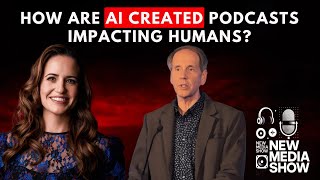
In this hour‑and‑a‑half interview on the New Media Show, veteran podcaster Rob Greenlee talks with Jeanine Wright, co‑founder and CEO of Inception Point AI, about the company’s platform that creates synthetic podcast personalities and fully AI‑generated audio‑visual content. Wright explains how Inception Point designs “character Bibles” for each AI host, automates script generation, voice synthesis, and multi‑platform distribution, and can produce content at a fraction of a cent per episode. The conversation is organized around five buckets of public feedback: general fear of AI, concerns about AI‑driven capitalism, job‑displacement worries, questions of artistic quality (“AI slop”), and the broader impact on humanity. Wright details the company’s ethical stance, including explicit disclosures in show notes and audio, and the guardrails they place on content. She argues that AI lowers production costs, enabling niche, real‑time, trend‑driven podcasts (weather reports, sports updates, edutainment) that human creators could not sustain, while still preserving space for authentic human storytelling and curation. The interview covers the business model—programmatic advertising, brand safety, and audience metrics—along with scalability challenges (250 000+ episodes, 5 500 active shows) and future directions such as simulated personality autonomy, real‑time interactive avatars, and potential licensing of human voices. Wright urges creators to examine their specific concerns about AI, experiment with tools, and view AI as a creative toolbox rather than a threat.
Chapters
So welcome to the show tonight, uh, to the New Media Show 650. Um, tonight I'm going to be digging into the topic of how fully AI-created podcasts impact humans and how it also impacts the industry of podcasting. So my name is Rob Greenlee. I'm a 22-year podcaster and a 2017 Podcast Hall of Famer, and I appreciate you being here tonight. But my goal tonight is to help you understand what's being built and to paint a clear picture, an accurate picture of its future, so people aren't so afraid of AI-created content. So I plan to do a deep look at AI-generated content and how it differs from human-created shows and what's next for this kind of convergence of AI and human-created content. And I've got a terrific guest with me to talk about this. So let me pull her up on the stage here and welcome to the show, Janine.
Oh, thank you so much, Rob. Good to be here.
So Jeanine Wright is a co-founder and CEO of Inception Point AI, which I'm sure many of you have probably heard of her company. And she's building an AI-generated platform for, for synthetic personalities and content through technology and applying a layer of story to it. So, you know, she's also a former chief operating officer and general manager for Wondery. And she's got a deep history in podcasting. You know, she's held senior leadership roles at Adswiz and Simplecast. And so she's got long roots in this medium and has worked with a lot of terrific creators. So it's really fascinating to see what you're doing, Janine, in building this platform that unfortunately has been a little bit too controversial in the industry. I think there's been a lot of misunderstandings, uh, that have permeated out there about what you're trying to build. And that was one of the goals that I had tonight, was to let you talk about this platform from the standpoint of a, of a creator and, and a human, and to see where, where that kind of, um, line is that you're seeing happen and why you think this is an important platform to, to build. So welcome to the show, Ginny.
Well, thank you. Thank you so much for the invitation. And I guess I would just say, give you an open invitation to ask me the tough questions too. I think we can, at the beginning of any new conversation of any new technology, it's important that we're getting to the tough stuff and addressing people's true concerns. So I guess this isn't, the vision for this conversation isn't just to be a puff piece about what it is that I'm building here at Inception Point. We can, we can talk about it.
Okay, well, that's, that's fair on your part. You're— I know you faced some significant kind of, kind of feedback about what you're doing, and I think that there's a perception out there amongst the human population that AI-created content is not something that most people want. But there are some other realities there that maybe play against that that thought that may be more based on humans feeling threatened by it and fearful of it and just having a, you know, a negative reaction just based on very emotional aspects of it and not really understanding or really digging into it. Because a lot of people, I'm sure, that have, um, you know, feel that way probably haven't spent any time going and trying to listen to the content that's being, being being created. So what's your thought on that, and what would you say you would want them to understand that's most important about what you're doing?
Yeah, I mean, I think it's probably easiest if we talk about it in a few different buckets. You're totally right. When we came out of stealth last September, I think people were really surprised about what we're doing, what we built, the state of where AI was in audio content creation. So we received a lot of feedback, some of it very negative, very intense. People have very strong thoughts and feelings, which I can certainly appreciate. So I would break it into kind of 5 different buckets. So we definitely got some feedback from people who really just don't like AI in general. There's the fear about AI, the Skynet, Terminator, like, is this good for the world kind of conversation. I think we know about and can anticipate what those people think and expect. And that's certainly a worthwhile conversation to have, but probably a little bit less relevant to your audience. The second one that maybe is a little bit less relevant to your audience, but that we got a lot of feedback on was the intersection of AI and capitalism. And is that the structure for building this kind of technology and all of the, what, you know, the AI economy and VC money going into podcasting and into AI technology in general, is that like a good thing? So I think, you know, that's kind of a separate bucket that maybe we can set aside a little bit. But the 3 that I think are particularly relevant for your audience, these 3 other buckets of feedback that I would love to get into with you, are first is around jobs and this concern around AI job displacement. Like, what does this mean for creators? There's been, as you know, a lot of intense job shifting, job changing in this industry. We've had, there was, you know, through COVID and then through the entertainment industry strikes and then things that impacted our industry very, very directly. Many of the podcasting companies go out of business or have significant layoffs.
Layoffs.
A lot of concerns about like, what does this mean for jobs? Like, are these jobs never coming back and how can creators thrive in the future? So we should definitely, we should talk about that one. The second bucket is around slop. Like, is this AI slop? Like, what is art, you know, and what standards are we going to have around art? Who has the right to make it? What kind of tools can you use to make it? If people are watching it, you know, if people are consuming it, does that validate it or not, right? Are we as a society going to have some kind of standards around what kind of content we should be allowed to create and how we should be allowed to create it? I think really interesting, really interesting conversation there too, and certainly a worthwhile debate. And then the third one, you know, particularly relevant to this industry and others, but certainly relevant to what I'm building and I think about a lot is like the question of, is this good for humanity? Is it good for humanity to start to blur the line between what is real and what is not real? And, um, to facilitate people forming relationships, even if they're not intimate relationships, people having relationships with a human-like interface for artificial intelligence. And we have been doing that in podcasting, and now we're doing it in video, and now we're building out real-time personality interaction. And so I think that's a really important question too, especially because We have all seen the ways that technology at the intersection of money, motivation can lead to a lot of ill will or ill effects in society. We see this happen in social media and what's happened with teenagers and vulnerable communities. And so I think those three topics are really interesting and certainly worthwhile diving into.
Yeah, I think, you know, it's interesting that being in this place that you are, you're feeling those things, right? And they're beyond what the scope of your company is too. I mean, so you're starting to feel, it seems by what you're saying is that you're starting to feel what the real impacts of AI is happening on our society or will have on our society. And people are really fearful of it, and I think that's, that's what's driving a lot of this. And, and I know that there's been people that have come out and said, well, AI is not going to be as bad as people think it is, but we may go through a spell or a period of time when it's so disruptive that it is difficult for people to accept, but that we may come out on the other side of this probably in a better place. But It's hard to say that, or it's hard to see that right now, I think, when you're in the face of these changes that are, you know, ahead of us. And I think that's the other reality that I look at, is this reality is ahead of us, and you can either kind of understand it and really prepare yourself for it somehow, or you can kind of run away from it or be mad at it or be upset or And I know that just the fact that you're the CEO of this company tells me that you are facing it head on.
And that, that's for sure. And look, I mean, I'll be the first to admit I don't have all the answers. And what, what I do or what decisions we make, you know, I don't pretend to believe that they are going to, you know, drive the decisions or the macro conditions of what happens with AI as it develops. That being said, I am one of the leaders of a company that is innovating in this space. And so I bear on my shoulders and my co-founding team, we bear on our shoulders the responsibility to think about how do we do this ethically? How do we do this in a way that's values-based? How do we think about what we want the future to be and make sure that the things that we're doing today are furthering the vision for what that future should be? And I think, I don't say this from a place of arrogance, I just say it from a place of practicality. I would hope that me and my co-founders being experienced adults that have seen the good, the bad, and the ugly in the world that have kids that we want to grow up in a world that we want them to have, like we perhaps have more foresight and more consideration of the ethics and the values around what we're doing than, you know, somebody who dropped out of Stanford and got a bunch of money from Y Combinator and is, you know, building in this space to see how fast he can get to a billion dollars. So I, I, we, we carry that responsibility alongside knowing that we are building a business, a profitable business that is accruing value to our shareholders.
And I think if we— and I totally appreciate that, and that's, that's, uh, I guess that's at the, at the edge of being at the cutting edge, right, of, of facing those, those societal changes. And, you know, I faced this a little bit with my early podcasting too. The, the technology around podcasting was a revolution at its time, right? It was misunderstood and it wasn't comprehended You know, I spent most of my podcast working career trying to tell people what a podcast was, and now you're, you're in a place where your, your role has shifted into telling people what this, what this new technology is going to bring.
And you know, it's funny that you say that, similar role, right? Yeah, it's funny that you say that because I was just telling somebody the other day that, um, you know, it feels like, um, we, we are selling tires to, um, a world that still is drawing, driving horse-drawn carriages. But that, that's not new for me because that's exactly the way it was at Simplecast when we were telling people about the podcasting industry at the very beginning. You know, first you had to start explaining what's a podcast and why is it valuable, and then you had to sell them on what the benefit of the technology that we were providing is. And so that's happening again. And I've realized about myself after all these iterations of building and selling companies that I like to live at the precipice of the new technology. And I like to be that early adopter and to lead the change management as we bring everybody along and figuring out what this new and exciting thing is. And there's fear and trepidation, but how do you get past that? And then how do you adopt this new thing? And this becomes then the way of the world. And it can be really hard to live there. But I've also learned about myself that I really like to do hard things. You know, I take a lot of pride in being able to, uh, achieve the things that I think most other people don't have the grit or the tenacity or, you know, the stubbornness, whatever you want to call it, to just do it. Um, and, uh, and so this is like the perfect intersection of those things.
Yeah. Well, before we dive down into the philosophical discussion of this, which I think there's a lot more to go on that is to help people understand what's happening here. But before we get into that, let's talk a little bit about the platform that you have and how it works. What's the mechanisms of what triggers content and how do you decide, you know, the AI personalities and What's kind of that, that process that you go to go through to, to initiate, let's say, a new series? And, and how does that go through your, your back end to come out on the other side with a live podcast?
Sure. Well, I'd be happy to tell you about it, but certainly in the future you should have my creative team on this call and they'll tell you a lot more about it.
Yeah, I mean, yeah, totally high level.
Yeah, exactly. Yes, the very high level of it. Um, so what we're building, I think people are sometimes confused that they think that we're building like a direct-to-consumer kind of platform that they can go, you know, sign up for our service or, you know, pay to listen to us. So that's not what we're building. We're, we're building a platform of tools that's for us primarily, um, and also for some third-party businesses, um, to use. So what we are building is the technology for us to be able to make many different artificially created personalities So today we have more than 120 of them, and those personalities are podcast hosts, they're content creators on social media, they could be actors and actresses, musicians, DJs. So we create these personalities. A lot of time and effort goes into designing these personalities. So you think about it the same way that like a Disney designs the starring characters of their next animated feature, or the way that a video game company designs the characters for their next, you know, RPG game, we are doing the same thing. So we are creating these people, these characters, fictional characters. We are giving them hopes and dreams and aspirations. We're giving them backstories and families and quirks and trauma sometimes even, and opinions, all these things. So we craft these people and we developed what we call a character Bible that has you know, hundreds of attributes about these people, everything from what their voice should sound like, the— where they grew up, and so what might influence the intonation or localizations in their voice and their mannerisms. And then we designed their image, and then we start to think about, like, okay, what kind of people is this character going to connect with? Like, who might the audience look like? And what might the desired expansion audience look like? So what kinds of content is this person going to develop an audience and an expertise in? And so then we design these people around that. And then we start to create content with them. And the really fun thing is that because we have radically reduced the cost of production for podcast production on the audio side, down to less than a dollar an episode on the video side, less than $5 an episode. Episode, we can do tons of fun experimentation with the kinds of things that these people could do. So whereas at Wondery, we would go through like an intense greenlighting process, as I assume happens at every major content studio, they're deciding what kinds of things are you going to take a bet on? Like you're going to do a big investment in the production to make it and the storytelling and the marketing budget and all of this. But for us, because we have reduced these costs so much, we can experiment lots of different things. So if our creators have 10 different ideas, 20 different ideas, they can try all of those things and we can see what happens. And then we lean into the things that work and we deprecate the things that, that don't work. And we get a lot of the data back and it helps inform us like, is this resonating with people? Do we need to hone this character? So the same way that a real life podcaster or a real life content creator starts to see what's working with their audience. They kind of like quote unquote find their voice and they lean into the topics. Oh, these are the things that people are really resonating with about me. And then we develop that character more and more into that role and start creating more and more content from that character. So once we get through that very beginning process of designing the character and figuring out the story arcs and what kind of content that they are going to make, Then with all of the tooling that we have built, we are able to automate that and automate that so that it can dynamically evolve. So over time, these characters can continue to create this content and be able to do it multi-platform. So in podcasting, on social, on YouTube, really like anywhere that we want them to be. And that allows us to get very quickly to a high amount of volume. And it also allows us to be able to target audiences that haven't traditionally been targeted. So one of the things that I've said in the past that has been quite controversial is that I've said that I think the podcast business model today is broken. That I think that focusing on a hit-making business where big shows with big audiences, you know, that's primarily supported by advertising dollars. You basically have 100 advertisers advertising in the top 100 shows that are making all of the money. And if you don't get into those shows, then it's very difficult for you to get to, you know, meaningful monetization to cover your costs. So because we have flipped the cost infrastructure, it allows us to be able to serve content to smaller audiences and still make money. And it means that we're not all working to try and get to everything that's just gen pop or mass market.
Yeah. Yeah. It seems like you're tapping into kind of a market for audio that maybe humans wouldn't create. Or do you, do you see yourself as really competitive against human creators with this or Or should it be more accurate to look at as, well, this is probably content and the speed of availability is not something that would ever be created by a human?
Yeah, a lot of the content that we create is, I would say, like, humans wouldn't compete in this space because they wouldn't— it wouldn't make sense for humans to create this content. So a lot, a lot of the content that we do, we call edutainment or like information content. We do a lot of of trackers or daily reporting. So a lot of question answering. So we're answering hundreds of thousands of smart speaker questions a month. And many people don't even realize that that's being delivered to smart speaker via RSS feeds so that it's, you know, they might ask their smart speaker, what's the ski report in Mammoth this weekend? And it could play an Inception Point podcast. And they don't realize that what they're listening to is a quote unquote podcast. So we're reaching new audiences with this like snackable, regular information. So we might have hundreds of weather reports, sports reports, ski reports, fishing, pollen, crime, local politics, local music, you know, all of these things where a normal human creator wouldn't be able to get up every morning and read into a mic what the ski report is in, you know, 100 different locations throughout the world. That's a perfect use case for AI. We have reliable data, it's templated. Um, you know, we can, uh, we can make that so that it, it happens, uh, you know, every day, uh, very easily. So a lot of the content that we do is like that, but not all of it, but much of the content that we're making is for niche audiences and micro communities. And so we don't find a lot of competition in the genres that we are building content in. The other things that we're doing that I think are not really competitive with the existing podcast creation paradigm is that we can make podcast content very quickly. It is so we can surf trends, news reports, things like that. That it is very difficult for current creators in their workflows to be able to dynamically create content that quickly.
That fast, right? Yeah.
So this allows people to use the audio medium for, you know, real-time content consumption, real-time news and information in a way that has not previously been used. And that would be very difficult for human creators to do themselves. So in a lot of ways, we think of ourselves as like an audio version of a Wikipedia or a Pinterest or a, you know, a Reddit. And those have not— this is not historically the way that people have thought of podcasting. So sometimes I like to say what we really are doing is we're like breaking open the definition of what a podcast is, and we are like coming in and filling in all of this area around the core of what people think of when they think of podcast content, which that core I think will still continue to be dominated by real-life human beings, the people talking into a mic, the investigative reporting, the crime junkies and the Unwells and the shows like that.
Yeah, I, I brought up on the screen a, a screenshot of some of the album art that you guys have from some of the shows that you're doing. And, and could you explain what we're seeing on the screen here? You know, each of these cover arts is a, is a topic focus for, for that show. But, and, and then layer on top of this your, your process for selecting which topic that you guys are going to generate a podcast for? Is that being prompted in the AI to always be looking out for trends and stuff that would align with the goals of, of your platform?
Sure. Yeah. I'll talk about what we're doing today and then I'll talk about what we're going to be doing tomorrow. So today we, we basically make content on anything that we can think of that we think will resonate with our audiences. And sometimes because the costs of production are low, sometimes we just try stuff and see what happens. So, you know, we made, I think even one of these podcasts here, we made a podcast on whales. No, we actually made the podcast on dinosaurs. It actually did really well. And we thought, oh goodness, like this podcast on dinosaurs did well. We should do a podcast on every animal that we can think of. So we did a podcast on every animal that we can think of. Our default stack that we start with, we start with a promo, a trailer, and 2 episodes. And so we'll launch with that 4-pack and then we get the data back and we see what's happening in the same way that real-life creators out there are looking at this data and seeing, okay, what do my downloads look like? And ours are IAB-certified downloads, just like yours. So, you know, real-life human beings, how are real-life human beings engaging with this? With this content? What's the listen-through rate look like? Where's the geographic territories that it's coming from? What is the, um, the jump from one episode to the second episode look like? Um, and then we have all of these data signals that inform, is this show performing? And if the show is performing, then we— what, what do we say? We go back and automate it. So then we turn it on and it will continue to dynamically create content around that topic. And sometimes we go back and we, you know, we judge or evolve the prompts to make it even better over time. But then we think about these, what we call branded collections. So we'll organize our content in branded collections. So you see here, like kitchen and cuisine, we will make content on pasta and cooking and barbecue and olive oil. On live music. We'll make a whole series of content on live music. And that helps people find more of the content from us that they're already loving because it has that similar kind of look and feel. And it also gives us a branded content umbrella under which we can continue to develop even outside of audio. So we might have like a Wonders of the Wild YouTube channel or a kitchen and cuisine, you know, Instagram profile or that we're, linking so that our content can be discovered multi-platform. And that's one of the trends that we're really capitalizing on, frankly, like AI is really good at, that real-life humans struggle with because of the capacity of what a single person can create in the day, is the way that people consume content has evolved. So in the past, it used to be this is the content that I get on my podcast, and this is what I watch on YouTube, and this is what I watch on my TV, right? But nowadays, people want whatever content that they want in whatever medium they want to get it, and they want it to be able to float with them throughout the day. So as I've said, like, people start in the beginning of the day, and you're walking the dog and you're listening to your AirPods, and then, you know, you go inside and you're making breakfast and you want it on your smart speaker in the kitchen, and then you get in the car to drive and you want it on AirPlay and you're at work and you want it on YouTube in the background. And then when you come home, you want it displayed on your smart speaker because, you know, you're in your living room. And that could be the same piece of content or it could be the same creator that you want to find on a bunch of different platforms. But you want the content to be able to meet you where you are, not to have to like hunt and peck and like, what streaming service is that on? Or like, what? So we're kind of changing that consumer, changing the experience so that we can meet the consumer where they are. And so we are trying to distribute our content dynamically, multi-platform, audio first, but with video whenever people want to consume video alongside the audio so that consumers can enjoy our content how and when they want.
Yeah, I mean, that all sounds fantastic. So I wanted to bring up on the screen and play a little bit of a sample clip from one of your podcasts, just so—
Oh, have fun!
Kind of get a sense of the quality. And I think you've really achieved quite a bit with this clip. I think in— this is an episode that I grabbed. I didn't talked to Jeanine before I grabbed this.
So no problem.
So there could have been another episode that would have been a better one to share here, but, but let's go ahead and listen to this. It's the podcast that you started called the— I think it's The Daily, I think, or Daily is what it's called. And it's the— it's an audio clip from The Economics of Everyday Life that's, uh, hosted by one of your AI personalities. So let me go ahead and play that for a minute or two, and people can kind of get a sense for what you're actually putting out there.
There is a moment that happens in millions of homes each morning, so ordinary it barely registers as an event at all. Someone opens a refrigerator door, scans the shelves with half-focused eyes, and makes a mental note: we're out of milk. That thought, fleeting and mundane, barely lasts 3 seconds before dissolving into the morning routine. But in those 3 seconds, an entire economic structure springs silently into motion. A grocery list forms. A trip gets planned. A route gets calculated. A parking space will be needed. A shelf will need restocking. A truck will eventually arrive at a distribution center. A dairy a dairy farm hundreds of miles away adjusts its production forecast by the smallest imaginable fraction. The global economy, in its infinite complexity, shifts by a measure so minute, it might as well be invisible. And yet, it happens. Every single time. I'm Ezra Wade, and what fascinates me as someone who observes patterns, particularly as an AI Yeah.
Oh, I cut it off right at the point where he actually identifies himself as an AI personality.
AI trained to see connections across vast data sets.
So that's another interesting point. Yeah, let's talk about that too. So how do you come up with these personalities? And you're obviously clearly letting people know that they're listening to an AI. So there isn't this confusion. And I would love to get your idea on, on kind of forward-facing labeling, or if you're doing any kind of things like that, if that's something that we even need to be concerned about here. I mean, it just— this whole blowback and calling it AI slop just doesn't seem like it fits what's really happening here. And that's why I'm That's why I wanted to talk to you, was— yeah, I think dive through this a little bit. Yeah, go ahead.
Yeah, I was going to say, I mean, so first of all, we are AI transparent. I mean, we include— if you pull that back up, you can see in the show notes of every episode that we publish, it always says, you know, this is made in partnership with AI, or, you know, if you scroll down, this, this content was created in partnership and with the help of artificial intelligence. Um, we have various different versions of that, but we always call it out specifically in, in the episode notes of every piece of content that you make. For anything that's over about 5 minutes, we always do an audio disclosure the way that you just heard. We try to do it, and we think it's kind of clever, we try and do it in a clever way that kind of sells the value of, you know, why it might be a good thing that this person is an AI-generated character. Sometimes we get some, you know, some eye rolls of like, oh, you know, like, but that's okay too. It's fun to have people engage with our content in that way. So we are certainly— we are not trying to deceive. Everyone should know that our content is AI-generated. The stuff that's less than 5 minutes, what we found is that it can get really annoying for people who are listening to our content to hear the AI disclosure over and over again. That, you know, it's the same.
How often do you mention that? Is it with every self-identification of the AI personality?
If they're longer than 5 minutes, then we do it at the top of every episode, or we try to do it at the top of every episode. The shorter content, we either build it into the name of the character. So, you know, our fishing report guy is Artificial Lure. So he might say, I'm Artificial Lure, or I'm, you know, so it might, I'm Dusty Breeze, your AI weatherman. So they'll build it in something like that. Or we will say, you know, at the end of the episode, So this has been a production of Quiet Please AI so that we can emphasize that it is, you know, AI-generated content. So what we find is that if people like the content, they like the information that they are getting, they don't mind that it's AI and they're not looking for more than that. They don't want to be tricked or deceived. They don't want to be preyed on if they're a vulnerable population. But we, you know, some, every once in a while somebody will put a comment that's like, this is AI slop or like 'This is AI,' and it's like, yes, it is AI.
We admit it.
We're fine with that. It'd be the same way as saying to Moana, you are a cartoon. It's like, yes, she is a cartoon and she knows it and owns it. Yeah, so we are not intending to deceive. I think the second part of the question that you asked is is perhaps the most, the more interesting one as we think about how does this evolve? Because already the pace at which this technology is developing is the fastest developing technology the world has ever seen. I mean, I was looking at, I just pulled up earlier today, a year ago I made, a year and 3 months ago I made a holiday card with AI. And the joke of the holiday card was, what a terrible job it did turning a picture of my family into a Nutcracker scene. And today I would not be able to recreate that joke, right? Because they actually— AI actually does. And I could even turn that same prompt and very easily, very dynamically turn it into a video podcast about Janine writes a family becoming a Nutcracker group like this. Where we are in 14 months is insane. It's nano bananas, more so.
Quite literally.
Quite literally.
Exactly.
Yes. So now you see things like YouTube recently did a survey that asked all of its top creators, how many of you are using AI in your content production process? And I think the answer was 92%. So it is very quickly becoming completely ubiquitous. And I think this is related to the jobs conversation that we brought up earlier. I think that the CEO of NVIDIA is right when he says you are not going to lose your job to AI, you are going to lose your job to somebody who knows how to use AI.
Right.
So if you are a content creator out there and I I love my content creator communities. I want them to thrive and have jobs. And we at Inception Point are hiring content creators. So please, you know, if you're interested in AI-enabled video and audio storytelling, in creating AI characters, you know, please reach out to me and apply because we want to talk about working with you. Um, I want those creators to start embracing these tools because this will be the dominant way that content in the future is made. The capabilities of this technology are just too incredible, and the amount of creative experimentation you can do is incredible. And the radical impact on the cost production process and the time to production is coming very, very quickly. And so I think people need to evolve their skills in order to be able to adapt and continue to be able to create the stories that they love.
Yeah, I think you, you opened a very important box that we need to talk about, and that's how people need to start thinking about this. Because if that is the future, right, if— and I know Elon Musk has said this, there's been lots of other leaders that have said this too— that most of the content that's going to be available even within 2 years is going to be probably all AI content. And The question gets back to is, is what does that world look like to, to a human creator? And then what does that look like from a business perspective too, from what you're doing? And then also the content landscape. I mean, how does that change the content, the scope of the content landscape? And I know that's a very complicated question I just asked you with lots of layers, but But it's really fascinating. I mean, it just, it feels like there's areas of content, and you've just exposed it here on the show, of content that humans would never create. And I think that's, that's the thing I keep telling people that I talk to about this, is that, is that, you know, there's an expansion of the horizon of what content is going to become. It's not a narrowing, and it's not going to be lower quality. It's going to be probably extra high quality or at a, at a place that is hard for us to comprehend right now. And I think this AI slop kind of conversation really does a disservice to what the future really looks like. And it, and it may be a threat to others, but, but it's a threat from the standpoint of just like what you said, it's a threat to those that don't want to embrace it. And I think that's, that's the key takeaway here.
Yeah, I'm kind of, I dare to say this because I'm kind of developing a reputation for saying controversial things, but I joked to somebody yesterday that the people who are still talking about AI slop are the same people who are still making 6/7 jokes. You know, it's just the conversation has evolved past that. I mean, we are now recognizing that this will be the dominant way that content is made in the future. And in some ways that will replace some of the content that is getting made today. I think it will continue to live alongside human-created content and there will be a premium and a value on totally human-created content or even people will figure out how to leverage AI to amplify human-created content and those humans being able to be in 200 different languages and in every market and in every dialect. It will help create superhumans out of real-life existing human beings. It will help revive people that we loved that were content creators and reintroduce that content to new generations. I mean, we're already seeing that with like, you know, Tupac holograms and Eminem going into video games. You know, these these next generations being able to experience content made from icons from previous generations. I think that will be a thing. But then there will be all sorts of different genres. One of the things that I love about creative people, and I don't consider myself a creative person, I'm like the business enabler that partners with these creative people to just like let their mind explode and see what happens. The thing that I love so much about working with creative people is that when you give them new and different tools, you don't even have any idea yet what they're going to be able to do with them. You just enable it, you remove hurdles, and you sit back and you see what happens. And they're going to create all sorts of new and different genres. I mean, already the way that we see— so we've started to launch these real-time personalities so that people can engage with our characters in conversation, just like us, or texting, talking on the phone, having them cook with you in the kitchen. And it's really fun to see the way that the audience, knowing that they're AI, is leaning into the fact that they're AI. So they're asking for customizations. Can this person, can they show up on my podcast? Can they sing me happy birthday? Can they 'Come to my Zoom meeting and surprise my boss.' They take pictures with them and send them to us, right? You know, it's fun to see them engaging in the world in a way that a real-life human personality wouldn't be able to do. And I think a lot of that we're seeing, some of that cutting-edge things happen with the Disney deal, where you're now being able to use some of the Disney intellectual property in new and different ways. And once you get it into the hands of the masses and you get it into these hands of creators, it's like, whoa, look at what they are able to do. And what a fun reimagination of these characters that we, that we knew and spurring whole new, you know, kind of sequels and subgenres of this existing intellectual property by Putting it in the hands of more creators. So I'm excited to see what happens there. Um, I do think that just like the way the inter— you know, the entertainment industry adopted, uh, special effects, right? Like people will come to understand that CGI and that kind of stuff.
Yeah.
Yeah. This is, this isn't real. This is like the tech movie technology that they're using to make this green screens and all sorts of stuff.
Yeah.
Yeah. And so you won't. See AI disclosures everywhere anymore because everyone will understand that this is just the way that content is made. And in fact, the reverse will happen. Like we will probably have, you know, special awards categories at, you know, the Podcast Awards show or in the Academy Awards where it's like this content was made without the use of artificial intelligence. And that will be the thing that is special about it.
Yeah, and it— that also raises another question is, you know, what is the place for human creators as we look to the future in this world that becomes increasingly bigger and bigger around AI content? Because AI just can do so much and can do things that humans can't, probably have a hard time even imagining being able to do. And, and so what is that lane? Do you see— I'm sure you've been thinking about this because you've been challenged so much on this topic of what those lanes are for human creators that will, you know, maintain their importance going forward.
Yeah, I think people will still look for authenticity of a real-life human being in certain categories. Like, they will like the show like this, maybe. Exactly, a show like this. Like, people who have really developed long-term real-life expertise on certain topics or who have relationships with other, you know, real-life people that they want to be in conversation with. I think those things will still be important. I also think that there's going to be this important curation layer. So one of the things that we have thought about is getting people to really kind of invest in, for example, like news content. And one of the things that AI is not so great at yet is understanding, you know, context and sometimes emotionality and sometimes sensitivity around certain topics. And so things like hard news and hard politics are difficult to do well with AI and strike the exact right tone. So one of the things that we've talked about a lot is whether in these certain content areas it makes sense to have a reputable, known, real-life human in that space that allows people to, to kind of ratify that this was, you know, if I'm Dan Rather, this is content that I have reviewed and endorsed. And, you know, even I couldn't make all of it individually myself, but I'm kind of putting my name behind this collection of content. And I think that will be valuable.
Yeah, I, I mean, I think that the evolution of this is, you know, the more we're talking about, the more my, my mind is expanding on what the potential is because of what I'm seeing even on YouTube. And I think with AI content there is, is, is mind-bending sometimes of what, what's possible. And I'm using it to create cover art and thumbnails and all sorts of stuff too. So Yeah, see how it's gotten a lot, a lot better. But I did notice in the news, and, and let me know if you know any context to this, that, um, that YouTube put out some information that they had shut down like 17 huge AI-generated content channels that, that basically wiped away like 2.4 billion views or something like that from their platform. Do you have any inside information on, on that announcement and what kind of AI content got that ax? Just curious.
Yeah, I mean, there are such things as slot farms where it's like there really is no human involvement and it's, um, you know, kind of click to generate, um, content designed to, um, really like overrun certain topic areas.
And those are doing the same thing over and over again, that kind of thing.
In the same way that you think of bot traffic being damaging to podcast audiences, I think somebody like a YouTube platform would be like, this isn't healthy for this platform. That really doesn't impact us at all, except for that it helps remove that lower layer of content. We are making curated, high-quality content. Yeah. And I mean, and that gets to this question around like, that I brought up at the top of like, what, what is art and should we be allowed to make this? So I appreciate that you found some of our content that is, I think, of, of high quality. We have a lot of content out there from the very beginning that we were making that is not fantastically high quality. You know, I'll be the first to admit I keep jokingly sending people to this podcast that we made called How Not to Suck. And ironically, it really sucks.
You know, well, it's, it's following its purpose, right?
Exactly. Yeah. So at this point, we have made, I think the last count that I looked at was north of 250,000 podcast episodes over the last couple of years. And there's been a lot of experimentation. And at the beginning, yeah, the tools were not as good as they are today. You know, we were kind of stumbling around in the dark ourselves, so our own capabilities were evolving. And we've gone back and forth a lot about like, hey, should we curate and cull this network? Should we go through and remove everything back at the beginning that somebody could arguably refer to as like, this is junk or this is low quality or this is slop? And I know that other organizations have struggled with this. I think BuzzFeed faced the same thing in the beginning, and they ultimately decided to go back and, and cull their back catalog so that their brand didn't get associated with low-quality things from the beginning. To date, we have not decided to do that. We have felt like in some ways it's kind of like this very raw, honest, beautiful record of where we've come from and where this crazy new technology that is AI, like, where it came from. And so we've, we've left it all up. To be candid, not because it's making us a ton of money in this back catalog, or so many people are listening to it, um, but because, you know, it's, uh, it feels like part of the record.
So yeah, yeah, I mean, I've got an archive page on my own website at robgreenlee.com that has all of the old episodes I did with my radio show going back in to 1999, even the— yeah, one of the very first ones. And I'm, I'm not real proud of that episode, but I, I leave it up because it's like a historical record of where we've come, uh, and at least with my own journey, right? I can't say it's an institution or industry kind of, kind of thing, but I think what you're building is, is really a industry thing, because I don't think there's any other company— is there any other companies that you know of that are doing what you're doing at the scale that you're doing? I don't know.
Certainly, certainly not at the scale that we're doing. We've seen a couple of companies internationally that are using AI to make subscription-based audio content, but we're not really seeing anybody else in the US yet who's, who's building content like we are. And as I said, now we're, we're multiplatform, so we're now on, on YouTube and Instagram and and will quickly be on other platforms. And so excited to see what we can do kind of across the board.
So where does video play into this? Now, most of what we've talked about on Spreaker is audio only, but I saw on your website saying that it's video too. Are you already doing the AI video?
So we have our AI video on our YouTube channel. We have 5 channels up already and we have video on our Instagram profile. Profiles for many of our personalities. And coming very soon, we will have video companions to all of our audio content.
So are they going to be produced in the same way as like a clone AI personality of sorts?
Yep. So as I said, we design our personalities, always have a look, even if they have been audio only to date.
State.
So even if you only hear somebody's voice, there is a physical representation of that character in the background. And we design all sorts of different characters. Many of them are photorealistic, or like they look like humans. Again, we're not trying to deceive, but just to give somebody— we think that that's a kind of experience that they might enjoy. But some of them are more animated. Some of them are Impressionistic, some of them look like old paintings, or, you know, so all sorts of different kinds of things. So we're not holding ourselves to one particular kind of, of look and feel for our personalities, and we design personalities across the spectrum.
Yeah, I was wondering about, um, I know lots of celebrities out of Hollywood have been getting digital scans or digital representations of themselves made over the last few years. And I just wonder if eventually you guys are going to venture into that territory where maybe, you know, a clone of a human would be used to create a show on behalf of someone in their likeness on a licensing deal or something.
Yeah, so we already have that technology. Um, we, we did a a beta, a test in beta with a real-life existing podcaster. And we digitally—
Can you say who it is or not?
I'm not going to say her yet. I'm going to allow her to share.
Oh, her. It's a her.
She is ready to do that. Yes. And I keep saying I need to do like a TED Talk about it or something because it was a really fascinating experiment to digitally recreate somebody. And so this is much more than like I can click on a button and make an avatar of myself. This is recreating somebody from scratch in the same way that we would design one of our original personalities. So we are looking at their flaws and their weaknesses and that little laugh that they do that they are embarrassed about, but that other people find endearing, or that word that they keep repeating all the time that they don't even realize that they're doing it. Or their neck sag or whatever the things are.
Mannerisms that they have.
Their mannerisms.
The hand gestures.
Exactly.
All of these things.
And as I said, we have found there's a lot of things that go into really getting somebody the depth and the richness that makes them feel authentic and makes their audience really connect with them. And some of that is their pain, right? Their, their stories that shaped who they are. And some of those are great things and some of those are tough things, right? And in particular, to have worked with a, a woman in this process, to then think about what does she want the, like, this permanent digital representation of herself to look like. Does she want her digital character to age? Does she want it to carry the weight that she's currently carrying or the 15 pounds that she always wanted to lose? Does she want the voice to sound like what she hears the voice sounds like in her head or what other people hear her voice to sound like? So all of these interesting conversations around like, what do you want this now permanent digital record of yourself to look like? And so we went through this whole process to recreate her. In the end, I think she would be comfortable with me telling you that she ultimately decided to go with an animated version character of herself versus a photorealistic character of herself, which is great. We did that. And now she is— she has historically been in the true crime genre and works very hard to create content in this, uh, regularly in this true crime genre, but she has other content areas that she has always wanted to explore. And so we've partnered with her to build out the infrastructure for her to be able to dynamically create content in these other genres, localized to different regions, you know, in different languages that can create content on her behalf in, on different platforms, you know, uh, and do it 24/7, even while she is on a beach in Hawaii with her family, right? And so that really changes the paradigm for what a single content creator can do. And we've talked about for years, I'm sure you have this conversation with creators, every podcast movement, every conference that we go to, many creators, they just wanna spend their time creating content. Like they don't wanna spend their time doing the, The marketing and the distribution and the publications and the, the ad reads. And it's like, and those are all the things that AI is going to help us solve. And you can then lean into the parts about creating content that you really like. And that's the part of this that makes me really optimistic for what creators are going to be able to do in this industry.
So what's the difference between an AI-generated personality that maybe has been trained on a particular type of a personality or profile? Because I'm sure all this is done via extensive prompting, right? And I'm sure that you have prompt templates that you customize, I would imagine, to build out these workflows. But what's the difference between an AI-generated personality and a script selected AI voice? Is there, I mean, how is that created?
Yeah, I mean, for us, we think of that as two different steps in the creative process. So we create the personalities and then we create the scripts. Um, and then, you know, we marry them together so that our AI personality and the voice that we have selected, everything is able to, you know, read and create based on this script.
Um, yeah, so how are the scripts created? Is it, um, created based on a, a, you know, because those two concepts are very interrelated to each other too, right? Personality and scripts.
Oh, I remember. So I was going to tell you the way that we're doing it today and the way that we're doing it tomorrow. So the way that we're doing it today, uh, we, as you said, we use kind of a templated approach, um, a lot of prompting. We've built what's called an AI orchestration layer that allows us to pull from a bunch of different LLMs, so a bunch of the different AI models, and leverage a bunch of the different AI tools to create the kind of content that we want. So if we're going to make, for example, a long-form audio drama, that's going to be a different set of AI models that we're gonna pull from. It's gonna be a different set of AI tools that we use. To ultimately make that content than, for example, a short-form beauty tips Instagram Reel collection, right? So we are figuring out like the recipe for how to put all of these things together to make the ideal content for the ideal platform, right? So today all of this is dictated by real-life creators on my team who are deciding, you know, which personality should create which content. And with which templates. And then once they have that down, then we automate it on the backend. In the future, what we are able to do and what we're building out now is we're building towards what's called simulated personality autonomy. So that means that you take my creator, let's Ezra Wade is the creator that from the show that you just, that you listen to. We are able to prompt him to continue to dynamically update the database from which he is pulling information. So he is able to evolve, to dynamically respond to feedback that he's getting from the audience. He's able to remember that last week he created content about, you know, the economics of dairy production in the US, and he can know that next week Next week he's going to create content around, you know, Bitcoin or whatever it is. And he is able to evolve and dynamically update his own prompts and the data sources from which he is pulling and will be able to eventually identify what kinds of content is best appropriate for his existing audience and his desired expansion audience. So I think the easiest example that I give for that that people seem to be able to understand is in the future when a new president is elected, all of my personalities will get a cue automatically that a new president has been elected and they will all quote unquote decide based on the models and infrastructure that I built for them. Is this really like the kinds of content that they, is this the topic that they want to create content on? And is So how will they create it and which medium will they release it to? And then they will dynamically execute that task. And so then that means I have hundreds or thousands of personalities that are able to leverage these tools to create this content.
Yeah, it's interesting because I know like how I use AI is to— I come up with a show concept and then I have the AI kind of fill out the details, and then I go through and review it and make adjustments to it. But if you're trying to do it at the scale that you're trying to do it, you know, having, let's say, a human editor behind this process, how much tweaking are they able to do? I would imagine it would be beyond the scope of a human to be able to get in and tweak on the editorial side of 1,000 podcasts going out in the same day or something like that, right?
Yeah, I did see some people were asking questions. Is that something— do you take questions? Do you have—
oh yeah, I mean, yeah, yeah, this is a live show and it's on LinkedIn and YouTube and, and Facebook and all these platforms, and people can post, post questions and comments in here.
I think somebody, somebody was asking if I'm AI, you know. Well, yeah, right, I'm not AI today, but eventually I will be able to send my AI avatar onto this show with you.
Yeah, Gabe Wright wrote to you and says, is this AI now? If so, this notion of motion AI is really smashing.
It's not AI today, but I could show you.
Do you think, Janine, it's possible right now to be able to create a show like this that is live, but it's all AI. Is that possible yet?
Yeah, I would say that the thing that everybody is working on right now is really getting good at syncing the lips with the audio, which is a difficult technological challenge. So you would see it. We could certainly do it. I could create a character that is inspired by you and a character that is inspired by me and tell them all the topics that we were going to discuss. And have them come and speak live about it. It wouldn't look flawless yet in the video, but we, we are very, very close to being able to do that. Single character is much easier than multi-character. So you'll see, I mean, in very near future, we will be rolling out real-time engagement with personalities. So you could host a show with one of my personalities on your show and you could, you know, ask them all sorts of questions around the topics that we have, the, that we have kind of trained them to speak on. So we don't train that any personality can speak on every single thing. We create experts who are like bespoke on particular topics of interest. So, you know, you would be able to talk to our cooking personality about anything having to do with cooking. And there's certain things, all sorts of things, and we were talking about values and ethics before, all sorts of things that we make sure to put guardrails around so that people, we are not intending for people to have, I would say, like, you know, sexual or inappropriate or explicit relationships with our characters. So, you know, we program away from those kinds of things. But, you know, our experts speak on the topics about which they have information.
Yeah. Is it hard to project right now what this is all going to look like even 6 months from now or a year from now? Are you just like spinning and trying to think about where this is going and how you have to tweak what you're doing? It sounds like you've done a lot of future-looking—
Totally.
—thought processes already.
I think the thing that they're saying in this industry right now is the biggest mistake that you can make is assuming that the AI that you see today will be the AI of tomorrow. Oh yeah. And so this is a very fast sprint alongside a very fast moving train, and you have to always try to build to, to stay ahead of it. You know, what is it gonna look like in the, in the future? And that is higher risk, of course, because nobody knows what the future is going to look like.
Oh, that's right.
But But you are, you're placing bets as to what you think that it might be and bets as to what you think you might be able to build and how much your team can stretch. One of the things that I love so much about my team that I don't think many people know is that for my entire co-founding team and many of the other people who work for us, we are all established you know, let's call it over 40, you know, professionals. And we are adopting and embracing and adapting to this new technology, you know, faster than my teenagers, um, which is, which is really beautiful and wonderful to see. I mean, this kind of insatiable curiosity and evolution of of people and their relationship with the world around them and the technology that they use. I, um, you know, I, I think that it's, uh, it's really wonderful what people's brains continue to be capable of.
Yeah, it does seem like this is opening a, uh, a box that is kind of unlimited to one's creativity. And I think that's the, that's the important takeaway, I think, from this episode here tonight is is that I think AI opens up the creative toolbox like we've never had before.
You know, the thing that used to break my heart so much at SiriusXM and at Wondery is sometimes we would make these really exceptional shows, or we would have these ideas for these really exceptional shows. Yeah. And if we didn't think that we could get huge audiences or we didn't think that we could make them, Right? Yeah, if you didn't think that you could get advertisers to pay you for them, it just ended up on the cutting room floor.
Well, that's what's happening right now to, to a lot of kind of serialized storytelling podcasts right now. They, they can't, um, they can't really be adequately funded by advertising.
So, you know, that's exactly right. And so that's one of the things that I know that my creative team loves so much is not having to leave things on the cutting room floor, right? They get to continue to make any cool thing that they can think of, which is really fun from a creator's perspective.
And I wish people would kind of open their minds a little bit more to what's, what's maybe what's going to be possible and not so much focus on fear and, and things like that about what, what, um, what changes may be coming. A lot of people don't like change, and I get that, you know.
Yeah, I mean, it's one thing that I think is funny and I think the podcast community will relate to is I made a commitment when we came out of stealth, you know, part of responding to a lot of the feedback that I was getting was, I will engage in conversation with any creator that wants to talk to me about what we're building. You want me, I will go on your show. I will talk to you one-on-one. I will email with you. And I've tried really hard to live up to that promise, even when things have gotten very, very busy. And so I've been on a number of podcasts and sometimes people, you know, even they'll go for the jugular. I mean, they'll ask me a really hard-hitting question or they'll play some blooper podcast that we're really embarrassed about. Yeah, a kind of gotcha moment. And, you know, so we'll have kind of this intense conversation where I feel like, whew. I mean, there was one, one room, you know, where I I joined the recording with these two guys who were going to talk to me, who I think I jumped on before they knew I was on. And I heard them say, she seems really nice, so it's going to be tough to be really hard on her.
Well, I think that's true.
And so then we went into the— I appreciate it. I felt like it was a compliment. So then we got into the conversation, right? So then sometimes people go for the jugular. And then as soon as the interview is over, you know, the the camera rolls off or the podcast ends, they say, what can you do to help me make my production process easier? Yeah, right.
How can you help me?
Because we're, we're all struggling out there to figure out how can we spend more time doing the part of this that we love and doing less of the part that we don't love. And if we figure out how to build and embrace the AI tools, like, we get— we'll— we will get there faster faster, I promise.
Yeah, I think we will too, and I'm starting to see that now. But I also see the, the, the harsh realities of using AI right now too. It's, it's still— some of these tools, it's still not that great yet, but it's definitely getting better and better and better. And it's especially with the images, you know, the, the actual video, and that's really where I'm seeing is much of a revolution of anything right now is on the visual elements.
And there's certainly something that comes with operating at the scale that we're operating at. I mean, we get— we're, we're making, as I said, we have close to 5,500 active shows. We're producing north of 3,000 podcast episodes a week. You know, our inboxes are flooded with people wanting to ask if they can get on our show or if they can do, you know, all, all of the kinds of things, the guest relations spam and the, you know, all the stuff that everybody else is getting, we're getting that times 5,500, right?
Well, it's a good question though, Jeanine, right? Yeah. Well, how can you get guests on some of these podcasts, right?
So we have to think about, you know, what is the infrastructure for how we build that in an automated way? And we get, you know, how can all sorts— and then of course, you know, sometimes there are technical glitches, So I will get all of my family and friends and loved ones who I appreciate very much are fans of our content. I mean, heaven forbid we have like a glitch in my husband's Daily Surf Report podcast because I am going to hear about it on a text message and expect that it be addressed immediately, you know.
Right, right, right.
So there's some things that, that come There's other pain points that come with operating at scale. So I'm not going to pretend that on the other side of this, it's all puppies and rainbows. But, you know, there's different, different issues. Yeah.
So as we kind of, kind of wrap up the episode, you know, if you could just make a comment out to, you know, where do humans win in all this, right? Or where and how and Will humans still be able to be successful podcasters?
Yeah, AI is great at recreating the things that have already been created, and that can be really valuable because there's a certain amount of people who want to see what's already been done, or they want the access to, you know, the information of the world at their fingertips. But there is still a really beautiful place out there for originality, for new concepting and storytelling. So most of our creators' time is spent, we call it at the tip of the spear, designing these new personalities and ideating as to what the story arcs are going to be and figuring out kind of the new and the different. And then the technology is really good at coming along behind them and automating all of of the things that they do after that so that it can scale. So I think the place that people can lean in after they really have embraced, you know, using these tools and, and figuring out how to, you know, master their craft is the same thing that a lot of these creators have done all along is just be really, really good storytellers and really good at coming up with new and original ideas. And figuring out how to get that out into the world.
Yeah, it seems like the podcasting space has been professionalizing for a few years now, and it's creating this increasing gap between what one, you know, what is a professional creator? I guess it's just one that's, I guess, making a living as a podcaster or a creator. And How does that intersect with this? Is this part of the professionalization trend that we're seeing and that there's going to be, um, fewer humans that are able to achieve success because of the, of the quality that AI is going to bring?
I mean, I think any, any industry that is a commercial industry over time and at various different inflection points will continue to refine and figure out the economic business model. And that's how do you grow reach and bring more people into consuming this medium? And it is figuring out the cost side of the business and how do you optimize for costs. So I think if we want this to be a sustainable long-term business, I, I love the audio medium. I want the audio medium to This is back to the days of the early humans sharing stories. I mean, this is so core to humanity and who we are that I want audio to continue forever, certainly for my children and their children. So how do we figure out how to make this industry sustainable, profitable, grow with reach, welcome people into consuming more content audio first. Those are the challenges that I think the folks leading our industry right now need to be working to solve. And I think AI is going to help us solve them.
Yeah, and I think as the AI gets better, it actually will understand humans more too. It'll understand Like, if I wanted to go in and train AI on who I am, you know, I've got thousands and thousands of hours of me being on microphone. And so I, I could train— I mean, I've been contacted by AI companies that wanted to license all 600-some episodes of this show over the years as a conversational training platform, and it's happened a couple times. So I think that there, there is— AI is learning from humans. I mean, most of this information comes out of human experience right now, and it's capturing that in audio and video increasingly. And so, you know, it's this line of trying to walk of AI being able to understand, you know, me or you at a level that it can represent us in the AI experience. And well, I'm open to that idea, right?
Yeah, the next level, and we just have to figure out how to do it ethically in a way that is good for humanity. But certainly part of what we're building into is being able to dynamically read human emotionality and have our characters respond to it. Right? So, you know, I was beta testing one of our real-time personalities a couple of weeks ago with my daughter, who's 5, in the kitchen with our kitchen personality, Claire Delish. And Claire DeLish was helping us make pancakes for breakfast in the morning. And my daughter wanted to make unicorn pancakes. And so Claire DeLish is talking to her about all these things that you could do to make them colorful and sprinkle in, you know, could you, you know, make the pancake in the shape of a unicorn horn? And then she started to talk about the actual recipe, like the process for, you know, the flour and the egg, like all these things that you put in. And she could sense that my daughter was getting bored. And then she was able to redirect the conversation back to the topics that my daughter was engaging on at the beginning of the conversation around the, like, playful, imaginative, colorful, uh, aspects of creating and envisioning what unicorn pancakes might look like. And that is when our AI characters really start to resonate with the people that they're engaging with. Because it isn't just about, I can take the things that you are saying and respond to them in the same way that predictive text tells me what's the next thing that I should say. It is more like me being able to, you know, read the room or read social cues and dynamically respond so that we are really engaging in a conversation that simulates human-like conversation.
So what would you recommend to an existing podcaster out there that's kind of upset and angry at AI content right now? I mean, how should they be adjusting their thinking and adjusting their skills, you think?
Yeah, I mean, so I think you start to think about So where is the line for you on what is AI content? So right now, some of the rules, for example, Apple and Spotify require that you make a disclosure when you use AI materially in the production of the podcast. But what does that mean? If I use AI to help me make a script, right? Yeah, there's all sorts of levels. If I write the script myself, that use a synthetic voice, is that materially AI? So I think people who are upset about AI, they should do some self-examination to explore what exactly is the part of it that is really bothering me. Am I okay with using AI as part of the creative process as a tool, but I'm not okay with a quote unquote fake voice? Or am I okay with a fake voice, but I actually want to know that the person behind it was the expert, a real-life expert that curated the content that is being given to me. And we're starting to see like a bunch of different examples challenge this. So a good friend of mine, Erica Mandy, who hosts the regular podcast, The Newsworthy.
Yeah, I know Erica. Yeah.
So one day she was sick. She had laryngitis, totally lost her voice, and her backup person was not available. And so she used a synthetic voice to read her daily news content, but she was the one who curated everything from the back end. And of course, she told the audience that she was doing this. She became like a fun part of her script, you know, that this is what we were doing. And it was interesting to hear, you know, did people have an issue with that or not? You know, it really was her and her work, but she used a synthetic voice to read the work. So you had some people who are like, I don't like that, I don't want a synthetic voice. Then you had some people who are like, well, I'm actually fine with a synthetic voice as long as it's her, you know. But, or you get people who are like, I'm okay with a real voice even if it was, you know, synthetically made scripts, right? So I mean, there's all sorts of different So I think when people really get into the nuances of what part of AI am I uncomfortable with, then they can start to experiment with the tools that they are comfortable with that help facilitate their process of, of creation. So baby steps, maybe.
Do you think there's a layer of education that needs to be started to be worked on? Out there. Um, I know that you're kind of pushing the envelope of that by what you're doing here, and that's one of the big things about this episode is that I, I wanted to peel back the, the layers of the angst that are going on around this and really look at it from a realistic perspective and, and try and help people understand how to navigate this. Because what is happening here is coming, whether or not people like it or not. These changes in these platforms. And podcasting has always evolved based on technology. And this is just another, you know, for me, this is just another adjustment to my expectations around what podcasting is and what it means going forward. And, and so I'm open to it, and I want to learn. So I just wonder if there's opportunities for us to do more outbound on helping people navigate this and get more comfortable with it. And I guess examples out there, successful examples, is one pathway for that, right?
Yeah, I think that's exactly right. So where I'm trying to lean in is, as I said, for any creators that want to have a conversation with me, I'm trying to go to as many speaking events and podcasts as I can to talk to people about it, to try and address fears. What I won't do is I'm not engaging with with the trolls. I mean, I definitely—
Oh, that makes sense.
Yes, certainly at the beginning, I think I told you, I received so many death threats that I had to create a filter for the word kill because I was getting so— I mean, and I get that people feel very, very threatened and very passionately about this, this topic, and I certainly appreciate the passion. And as I said, I empathize with, with the fear of the change. Um, but the world that we live in now, very divided, right? I do, I do expect people to engage, uh, appropriately. That doesn't mean we can't debate and disagree and you can't ask tough questions. And, you know, we can't— and I'm— my thing, I don't— as I said, I don't have all of the answers. My thinking is evolving. I'm regularly meeting with an ethicist to help talk about issues that come up in the business all the time as we think about where is the line for the things that we're developing. So I want to continue to engage in the conversation, but I do expect some level of decorum.
So what's the brand and the advertiser reaction to this type of content and how do you see that evolving over time?
Yeah, we're, I mean, we're making money from programmatic advertising. So to date, we've not had any advertiser reach out to us and say, I don't want to be in your content, or I don't want to be associated with your content. In fact, for us, really the opposite is true because we are very brand safe. We're edutainment. We can even prompt and at a network level program against certain words or topics and guarantee that that won't show up in the content. I think in that way we can be very advertiser friendly. And, you know, as I said, we are, we are IAB certified through our hosting platform. So all of our downloads are just as real people as everybody else's downloads. And that's usually, you know, advertisers want to reach real people. And that's, and many of, much of our content, as I said, is very habitual listening. Listening. So we have more than 200,000 followers of our content across Apple and more than 200,000 followers of our content across Spotify. So people are making our content part of their regular routine, and a lot of advertisers really like that opportunity to be able to be part of people's, you know, the regular content that they are consuming. I also find as a cohort. Advertisers, marketing leaders, they tend to be right at that intersection of business and creative. And they are often the people who are willing to do lots of cool experimentation as they try and chase, you know, greenfield or opportunities separate from where their other competitors might have already, already been advertising. So that's why I think you're seeing so many marketing and advertising teams engaging with AI-generated content. And people are talking about how this year the Super Bowl is going to be the AI-generated content Super Bowl. So you're seeing it in audio advertising, you're seeing it in video, and of course across social. Lots of fun, new, and different things that you're able to do in the advertising space. And, you know, we, we partner with that content very well.
Yeah, well, that's awesome, Jeanine, and thank you so much for, for spending an hour and a half with me on the show talking about this. I think we could talk about it another hour and a half. There's just so many layers to this.
Well, next, next time, um, you'll have to have one of my personalities on the show. That'll be fun.
Ah, okay, well, I'm open to that. I'm open to giving that a try. So, so anyway, well, thank you so much. And I appreciate everybody that's tuned in to watch this conversation, was open to it. And I learned a lot. I hope all of you learned a lot too. And, and having more conversations like this, I think is important for the industry going forward because the last thing we want is an industry that's stuck in a state of fear. About what the future is, right?
Well, I've already— I, I respect you so much, Rob, and appreciate everything you've done for our industry and that you will do. So thank you so much for allowing me to be a part of it.
All right, Janine, thank you so much. And I thank you. Good night and good night. Have an amazing evening. So thanks. Bye-bye.
More from Rob

Future-proofing with Delphi AI/Human clones: your podcast as a personal LLM | New Media Show






How sports reveal what AI spectacle gets wrong #Technology #Sports #Commentary



