Independent Podcasting Conference 2023 in Philadelphia - LIVE NOW - IndiePodCon.com
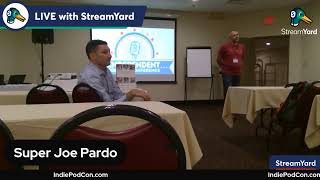
In a live panel at IndiePodCon 2023, the host of the Zestful Aging podcast (also a psychotherapist) shares a deep dive into effective podcast interviewing. He emphasizes the power of emotional connection, describing how thoughtful questions and genuine listening can move guests beyond rehearsed sound‑bites to vulnerable, juicy storytelling. He outlines a step‑by‑step workflow: selecting fascinating guests, intensive pre‑interview research ("friendly stalking" and PDFs with clear expectations), crafting a flexible outline, listening for emotional breadcrumbs, asking follow‑up questions, and editing with restraint. He warns against over‑talking, letting guests dominate the conversation, and interviewing “widget”‑style guests, recommending a dense early filter to screen out product‑centric interviewees. Technical logistics (headphones, mic etiquette, satellite interview challenges) and the importance of clear communication with guests are also covered. The discussion then shifts to broader industry concerns raised by Gavin, founder of the Indian hosting platform HubHopper, who highlights discoverability, platform‑centric distribution, and fragmentation for creators in emerging markets. The panel reflects on how podcasters can address these distribution challenges and the value of community building at conferences.
Chapters
and we're improving their lives by giving them this. And don't underestimate your ability to influence your audience with your thoughtful and thought-provoking interview. This is the stuff that really nurtures people and kind of feeds their souls. So learning some basic interviewing skills is going to allow you to get behind and beyond sound bites and canned responses. And build an emotional connection. And when you practice these skills, your guests are going to open up and speak more honestly to you. You're going to get more juicy stuff. They'll be more vulnerable, and the conversation is going to draw the listener in, and your audience is going to wish that they were part of your conversation, okay? Because that emotional connection is irresistible. Now, I think we all know sometimes guests have been interviewed so many times that they just give back rehearsed answers. Have people had that experience where you're interviewing and you're trying to get something new, something fresh, and they just keep, it's like, it's canned, right? So I interviewed a woman who, back in the day, was on Dr. Oz a lot. My podcast is Zestful Aging, by the way. And I'm pretty good at this. I mean, I've been doing this for a while. I could not get underneath the canned responses, but that's really rare. Most guests have appreciated having more spontaneous and vulnerable conversations. And that is the biggest piece of feedback I get, that it was fun. They really enjoyed it. And they want to sometimes keep in touch. So my husband teases me by asking me if I made my recent guest cry, which is not something I aim to do, but I do try to get underneath the surface. I, you know, that's what I'm here for. So let me tell you about an interview that illustrates this emotional connection in the extreme. I don't know if you heard about these scientists. This was a CNN story. Two women, and they call their project Hearts in the Ice. They're Scandinavian women. They're over 50, both grandmothers. They went to the High Arctic doing research on global warming. Okay? Can you imagine not having Amazon for 9 months? No internet, no running water, no electricity, and they were living together. These are, uh, you know, they're friends in a hut the size of a walk-in closet. Well, they didn't plan it this way. What happened was the way you get up to the High Arctic, as some of you know, is you go Norway, then you have to take a ship. They dumped them off and then COVID happened. The ship didn't run during COVID They were able to get back, um, eventually, but they weren't planning on staying there for 9 months. They were 9 roadless miles from their nearest neighbor, and our interview was by satellite. And the audio quality was terrible. It was like, you know, when Houston is talking to the— yeah, oh yeah, we got you, Houston. That's what it was like. But boy, was it emotionally powerful. So first of all, I was thrilled that they were even going to talk to me on zestful aging. But instead of the questions that they were asked a million times— can you imagine? What did you eat? Where did you go to the bathroom? All of— what about the polar bears? Were you afraid? I went right for the emotional content. And I asked them, how was it to live with another human in a living space the size of a walk-in closet? How did they resolve conflict? And how would they readjust to civilization? How did their dog— they had a husky, of course— add to their experience? And they really seemed to respond respond well to these questions, and they opened up like we were old friends. At the inner— at the end of the interview, I was so overcome by emotion, I literally had to compose myself. Um, it was just mind-blowing. And I've been doing zestful aging for almost 6 years, and this was, I think, the second year. And it was— I, I think we've all had these pinch-me moments, like, I can't believe I get to freaking do this. It was such a moment of like, I was just so gratified and so, so delighted. So then the whole satellite thing was really cool too. So not every interview elicits this kind of reaction, but I just want to give you a taste of the power of a good interview. And even doing the goodbyes were emotional. They asked how I was doing in this political time. Now they were up there, they knew the world was in COVID, and they were just the two of them alone up in the Arctic Circle. So it just— this interview offers my audience a really special experience, I think. And to say it was fun for me was a bit of an understatement. So let's break down what I've learned about creating a memorable interview, and I want to hear from you guys too about what you found. But my first one is, and we talked about this last night, only choose guests who fascinate you. They don't have to be famous, but they have to be interesting because you can't fake passion. Um, that's the secret sauce, I think. And I was so excited to speak with Hilda and Soneva from Hearts in the Eyes, I literally could not sleep the night before. Now That's a bit drastic, I understand, but you get the point. Sometimes I talk with guests off mic for like an hour because we're enjoying our conversation so much. And I don't know if you guys know Carl Landau. He does a really cool podcast called I Used to Be Somebody. He says he stays in contact with most of his guests. And it's not only for like on networking. It's like you really like these people and you want to have them as part of your life, even in the periphery. I mean, I have like 5 or 6 women in the UK. We do sort of similar stuff. And I'm like, if I get to England in the next few, I'm looking them up. I just actually was in the Netherlands and I met with a podcast guest that I interviewed. I have to tell you that has changed. That kind of thing has changed my life. So number 2, if you want an edge, Preparation gives you that. I watch the videos, the websites. I friendly stalk my guests. I read articles about them, and I want to know what's already been asked because I want my interview to be fresh. And I think it's respectful to ask them questions they've never been asked, and I think they feel good about like, hey, this person's actually researched my stuff. They've taken the time, they care enough about me. So you can feel the energy change. I don't know how people feel about this, but when they really kind of engage and they're like, oh yeah, this person's kind of on my side, we're doing this together, it's mutual. I really found that sometimes like I'll mention something from deep in their archives and I can hear that they're like, oh wow, she did her homework. And it changes the energy. So one of the most common pieces of feedback I get is, "Wow, that was really fun!" And I take that as a serious compliment. I, uh, I believe listening to people having fun is really fun too. But the ability to have fun means you're prepared, right? If you wing it, it doesn't make your interview sound more spontaneous. I think it makes it less professional. Remember, this isn't a chit-chat with your friends. I make a rough outline just so I can feel confident, but I often go off script. So I want to tell you a little story about preparing thoroughly and how it really changed the nature of an interview I did. There's a woman, uh, by the name of Jo Mosley. She's a middle-aged woman in the UK, and she was doing her thing with her kids. She was burnt out. She was tired. And she kind of had a crisis, and then she decided she was going to start exercising. Well, fast forward, she paddleboarded across the UK by herself picking up trash because she wanted to draw attention to plastic use. And these— this is like kind of like my perfect type of interview. I love people who have these stories of transformation, do things that are environmental, humanistic, really cool. But I could have asked her the same question she'd been asked a million times before, right? Oh, that's really cool, you paddleboarded across the UK. How did you do it? But I stumbled across a little-known detail I knew my audience would love. She talked about when she was struggling. So she's in the UK, right? She said she had a nervous breakdown in the biscuit aisle. I thought, Oh, let me ask about that. And once I heard about that, I asked her, I said, you know, Joe, tell me about what happened to you in the biscuit aisle, right? And something clicked. The whole tone of the interview was much more intimate. I think she felt understood. And she knew I had taken the time to learn about her. And I'm noticing now in her interviews, guess what she brings up? Her breakdown in the biscuit aisle. It's a great story. It pays to read their books, go on their websites, and know what makes your guests tick. They can feel it. And I will tell you, there have been times I haven't been able to prepare and I try to fake it. It's not as good. So number 3, and this really comes out of my experience as a therapist, I think that it's important for us to be intentional about helping our guests feel comfortable and secure. Do people do that? Do they think about it? Is that something on your radar at all? I want my guests to feel safe and comfortable so they can open up and they feel like our conversation is more than chitchat. So this is how I— some of the ways I do it. I send my guests a PDF with instructions about what I need from them, which includes a short intro, and my correspondence looks professional. And the message to them is, I know what I'm doing, I've done this before, I'm gonna respect your time, this will be mutually beneficial, I'm not gonna embarrass you, I'm gonna make you look good. And that sets a tone. And I think it's really important, even the basics of your communications, to be just professional. And I've seen people who have bigger podcasts than I do, And I'm like, really? This is what you're saying? Because it's not that, you know, what am I doing? Well, where's my link? What do you need from me? So I think, I think it's, it's well worth the time. The other thing I do, maybe this is obvious. I haven't heard other people do it when I'm a guest, but I tell my guests who my demographic is right off the bat. I say, you are talking to women 40 to 65, they're progressive, they're educated, they're in 106 countries. Those are your people. And so they will weave that in. So it's better for my audience and it's better for my guests to know exactly who we're talking to. Number 4, you're gonna roll your eyes on this one. I'm gonna say it anyway. You've got to to listen. And I know it's like, yeah, yeah, I know I gotta listen, but I'm telling you as a psychotherapist that my, my experience is we don't give people our full attention anymore. How many times do you sit for 45 minutes without scrolling something, without a screen, and just sit with somebody and talk to them and listen? It's almost archaic. I mean, as I'm still practicing psychotherapist, and I can almost see people's like hands twitching, like, where's my phone, to sit and actually speak with somebody. Listening deeply is not a skill that most of us are great at, but listening makes your next question obvious. And here are some of the insider tips from therapy school. You want to listen to where the emotion is, okay? You want to listen. Is their voice changing? Is their voice cracking? You want to follow those emotional breadcrumbs. That's where the gold is. That's what people wanna hear, and they want to be a part of that emotional connection. Now, that doesn't mean I disrespectfully, I'm not gonna like Oprah them and be like, oh, you know, tell me more, and oh, they're crying, okay, I'm gonna get into that, and I'm going to sort of exploit that. But I want to know what's meaningful to them. I don't care about information. I don't know if you guys are familiar with this research. I can hardly believe it myself, but they say that so much of communication has nothing to do with words. It's the tone. So I want to know, I want to get into that sort of connective mutual tone feeling, not just give me more data. I've got enough data. So this is the time to forget your outline, follow your emotional breadcrumbs, and go where the conversation takes you. So some of my follow-up questions sound like this: In what way? Why now? What surprised you? Can you reflect on that a little bit more? There's always more to be described and explained. And I had a supervisor, clinical supervisor, once told me something, um, that I'll never forget. You've heard it before, but the devil is in the details here. That's what makes it juicy. And I, as a therapist, I kind of think like I kind of know what they're going to say. I'm wrong 90% of the time. When I ask the follow-up question, tell me more, can you elaborate, what do you mean by that, help me understand that, the details are always more interesting than I imagined. So that, if there's any sort of takeaway point here, I would say ask your guests to elaborate, get more details. It makes it so much more juicy. And number 5, I was super guilty of this one. Avoid the temptation of talking too much. This is about your audience, it's not about you, and you got to keep that in mind, although it's not always easy because it's fun to talk. And this is the principle we also use as psychotherapists: if it doesn't benefit your client, keep it to yourself. That's the same thing. I mean, I, if I'm If I want to say something like, "Oh, I did that too!" "Oh, I'm gonna go walk the Camino!" or something like that, it's fun, it strokes my ego, nobody really cares about that. If it's not gonna be good for my guest or my audience, I try to keep it to myself. So that's something, you know, you don't need to fill in every second. A pause also gives your guest a chance to say something. About what's more important to them. And it's a well-known technique. I think most people have heard of it. Number 6: Beware. And I think we all have stories. Not all experts are good talkers. Have people had that experience where you're like, this person is like gonna win a Nobel Prize, and you're like, this is what— this is This is what I got to work with? If you're not sure they're gonna be good conversationalists, you've got to do a brief pre-interview, even if you're really busy. Even if they won the Nobel Prize, nobody cares if they're not good talkers. So I was thrilled to land this interview with a woman, and I'm not gonna name her, but this is her gig. She goes to war-torn countries and in the refugee camps, and she's a documentarian. I'm like, this is my kind of guest. I love people doing really risky things beyond middle age. I was so pumped to talk to her. So, you know, she's an award-winning filmmaker. I thought, like, I, I, I was like, I'm gonna start checking my Facebook because this is so boring. There's nothing going on here. We could have been talking about the weather. So lesson learned. They're not— and I don't know, I don't want to insult any big writers here, but sometimes writers are not so good on the talking. So you gotta, you gotta check that out because then you're sort of stuck. Okay, and number 7, learn when to wrap up. Leave the audience wanting more. So I used to get so excited speaking to guests, I wanted to pump all of the good stuff stuff out, because I was sort of surprised that they wanted to talk to me. And I just thought, wow, my guest, and I was like trying to milk every good, goodness out of them, and the interview would just fizzle out at the end. Not great. And now I've learned, for me anyway, 30 minutes is a sweet spot, and there are an endless supply of guests. So using this technique, these techniques are going to really help you develop a more genuine and emotional connection with your best guess, one that helps you bring your audience in, and they're going to want to share that stuff. They're going to want to join in. You're going to leave your listeners with a feeling that comes with being heard and understood. They become attached to you and your show. You're almost kind of like a friend. And as the host, you're going to have regular pinch-me moments because you can't believe how fun and cool it is talking to people who are really sharing themselves. And, you know, it feels like you're creating art and something really special and something that is unique to you. So thanks for listening, and I'm curious to hear any feedback or anything, any questions. Yeah, Ross.
So I mean, I think it's brilliant that you talk to people about things that they don't get asked on every interview. Have you ever had a situation, and if so, how do you handle it, where you take that approach and the guest is there to sell their widget or whatever, and they're just going to keep coming back to like, quick answer on your question, and you know, my widget is here to solve that, and right back to it. How do you, how do you deal with that? Or isn't that something that's come up?
That's— well, I have a couple things to say about that. I'm kind— my filter in the beginning is pretty, pretty dense. So in other words, if they're rigidy, so to speak, that's not what I'm about. I'm a social worker doing stuff on aging. Um, I have had— you guys may think this is funny— the most beautiful urinal designer. I don't know if guys, uh, But imagine that urinals have now, because everyone's aging, urinals are ugly. They're designed by men. So I did have the designer of a woman who did the most beautiful urinal, but she had won a lot of design awards. That was a little widgety. Normally, if people have a product, I'm probably not going to offer them a spot. More about like poets, documentarians, athletes, you know, scientists. So there's a pretty big filter going in the beginning to weed that out. I did have this woman who wrote a book on aging, and she just was doing this canned thing. And it was lesson learned. I should have— she was kind of big enough to, you know, you know, she was on TV. I thought, oh, okay, she'll work with me. I was stuck. I really tried my best and it wasn't that great of an interview. Um, I didn't— you know what's really funny? I mostly really like my guests. And now on to number 350, not 2 million like yours. This one I didn't like so much because she wasn't— it wasn't fun. She just was there to crank her stuff out. So I tried to really screen that at the beginning. Yeah.
Did you release that?
I did, because I was still in a, a, a Padawan, and I, you know, that was 6 years ago, and she's big— she was big enough, I thought, oh, she'll help me grow. Now I don't know whether I would have. Yeah, I'm older and wiser.
My other question was, you, you're basically editing yourself and not saying, oh, I had a similar experience and just having the conversation. Why edit yourself during the interview and not have the conversation naturally and just take the me too part out of it?
That's a really good question. I think it's a different— you're getting different stuff if I need to, and I do it somewhat. I'm still like, I'm a therapist, so I'm inclined not to share too much. That's my upbringing. But I guess I really, I try to do the me too enough to help them feel like, okay, I'm talking to a human. But boy, I really try not to like make it about me because I think that there's only room for one of us. And so it's an art and I'm still, still trying to get better at it. And some of the interviews I listened to, my editor, who's my husband, who teases me about making people cry. Um, he says, you talked a lot in that. And I was like, oh, you know, I try not to.
I just— half the time when I edit my stuff, you take that out. I'm half— all the edits are me because I'm just having a conversation and trying to make them feel comfortable. Yeah, sometimes I might share an intimate— intimate isn't the right word— vulnerable story.
Yes.
And then they'll match your vulnerability and they'll take mine out and it just, you know, now we're in Oprah territory.
Yeah, yeah. I think you do what works for you. That's it.
It's one of the things where this is why every podcast is a snowflake because of your background. I was like, oh, that makes total sense for you.
Yeah. And people freak out about it. They'll be like, oh, you know, even people who are like, right, they're like, oh, you're not gonna therapize me, are you? Yeah, all right. Yeah, hi.
Um, you had said something about making sure to listen to your guests. How much do you deviate from your initial plan of an interview when the guest says something that you want to take in that direction?
100%. I see it as I'm following little breadcrumbs, and if they're taking it somewhere that's interesting— unless it's boring, and I don't care about it, and it's not about successful aging. Because sometimes, I mean, I had that distraction problem too, but if it's interesting, oh yeah, yeah, I just follow them because that's what they want to talk about. That's where the gold is. Yeah, yeah.
I think, uh, as you mentioned in the beginning about having your outline, yeah, and the way I use it, the outline is for me to fill in time on the interview. Like, you know, if you get the guest that— well, tell us about this. Oh yeah, it was really fun. Uh, okay, next question. I'm gonna keep going. Yeah, you know what, they start talking about it and I'll be on the thing, draw a line through that question. They answer that one, that one. And it's just an outline for me to follow just to keep the conversation going. That's all it is. But I'm going to let them lead the conversation unless they don't want to lead it.
And then you've got backup.
Yeah.
The other thing I do, and I, and maybe I'll add this for next time, um, I have this— maybe it's not as original as I think, but I ask my guests, where would you like to start? What's your favorite thing to talk about? What's your favorite question? And then they're like, oh, and they like being asked. It's respectful, right? And then it gets us off on the right foot because then they feel like I'm really trying to make them look good. I'm not trying to be like, hey, um, You know, I'm the interviewer. So, um, I— you mentioned, um, how you give a PDF beforehand to your guests, which I think that's a whole good idea. Um, if you're ever— if you have ever been a guest on another podcast, have you ever given that person, um, information about yourself? They ask, and sometimes— I don't know if you've had this, but I— and I hate— sorry to offend, but sometimes they'll— they want me to be a guest and then they send me out a fill this form out thing, which I kind of hate. Oh, sorry, Joe.
Please do my homework for me.
Yeah, yeah, it feels like I don't want to spend time doing this. Uh, the answer is yes, but I, as I said, you know, I've been on some, you know, not Joe Rogan, but some like in my little bubble, uh, you know, the bigger podcasts in aging well, and it's not is all organized. They'll be like, oh yeah, I'll send you a Zoom and I will do this. It's all by email, it's fine. But I've got my, you know, my logo. It doesn't— it's a doc, you know, and I think it looks really better. And it says, this is the way it's going to go, I'm going to share it this way. Then after it's up, I'm good. Then I send them another PDF. Here are all the places you can find it, here's where you're going to share it. Thank you so much. I'll try to put in a little personal thing like Oh, that's really cool about so-and-so. I hope it worked out or something. Yeah.
So everybody's favorite question: your guest shows up, they're in a hardwood floor room surrounded by glass, and they want to use the microphone in their laptop.
I put that in the PDF. You have to have headphones, and I've had people not, not be happy.
Okay, so they have headphones on, but they want to use this microphone right here on my laptop.
You know, I, I don't know if I'm technically savvy enough. I let my editor worry about that. That's why you have an editor.
Here you go.
Yeah, yeah, yeah. So, uh, please grab a book, and I'd love to hear your, um— I'm also streaming on, uh, Public Radio in Syracuse, and those cozies are from WCNY. My, my buddy Ron Lombard is Station Manager, and thanks so much. It's really great to be here.
All right, uh, no, it's showing as connected on there. It just isn't— it ain't doing the thing. Um, I will— oh, you want— yeah, that's connected. All right.
I don't know.
Um, yeah, well, what was it yesterday? I like banged on one of the mics and then it just worked, even though it was showing— it wasn't that— it was one of them. Yeah, wasn't it? Yeah, maybe it was Channel 4. I don't know. Give it up for Super Nicole. Yeah, there's a lot of great information in there. You know, I think to me, one of the most resonating things about podcasting is it's, you know, it's not all about dollars and cents. It's also really about relationships and people and the connections that you get to make and having those friendships. I mean, I haven't become the best of friends with every person I've ever had on any of my shows, but quite a few of them I've become pretty good friends with, and then some much closer than others. So, you know, I think that, you know, if that's your form of gold, then you're gonna be very rich looking at podcasting and those interviews. At this time, I wanted to toss out the frisbee for somebody to interview themselves for 30 seconds, introduce themselves for 30 seconds., and they're all the way here from India. So, uh, come on, stand up, stand up, stand up!
Uh, is it Gotham? Yes, it's like Batman. Here you go.
Oh, thank you.
Come right to you.
An actual Frisbee.
Uh, so it's quite daunting. First of all, thank you for crossing the street and meeting me. And this seems like a wonderful, wonderful group. I am actually here from India. I came from New Delhi. I went to San Francisco for an Amazon summit and then essentially came to New York just for this. I'm coming down from New York right now. So I'm probably the worst speaker here because I'm not a podcaster. I run a hosting platform. And it's a hosting platform named HubHopper. And we are basically a large platform in Asia. So essentially, the reason why I wanted to actually come is to just hear from you guys and learn about your guys' stories. Because you guys, as an industry, are 5 years ahead of us back in India and in the Southeast Asian region. Generally, I think one of the primary pain points that we've at least seen with creators not from the States is discoverability of their podcast. I don't know whether this is a huge problem here.
Okay.
So essentially, and there's a primary reason for that, most of the platforms that you look at they're all America-focused still, or Canada-focused. So even if you launch your podcast on any platform, your podcast will go live across Stitcher, TuneIn, CastBox, player.fm, all of these different platforms. And then you get no uptake in— if you're a creator from emerging markets, you'll get no uptake in these markets because there are no people from your region that sit inside these platforms. So not only is discoverability still a problem, but it's further enhanced as a problem because even the platform that they're being distributed to, nobody's consuming it. So I like coming for these sorts of things because I like to sort of get into the minds of amazing folks such as yourself and try to learn how you guys address discoverability as a problem, because I fundamentally believe that that's a major problem that a hosting platform should take on along with the creators. And it shouldn't just be the creator's problem. So I'm not going to take up more of anybody's time. I'd love to learn through the course of this how you guys look at discoverability or distribution. And if there's any support that generally one gets, or do you guys feel like you're on a kayak alone in waters. I was speaking with a couple of folks yesterday, there was a— You guys know company named Frequency? Yeah. So Frequency and then this really interesting company called Bunny Studio, which essentially does voiceovers and stuff. And I asked them how they look at discoverability. And I'm shocked to find out that in America as well, that's a major problem statement for creators. It's among the top 3, one being monetization, one being discoverability, And the third one being fragmentation, if I'm not mistaken, that they have to go from platform A to platform B to platform C. So yeah, through the course of this, I'll just keep my mouth shut after this and try to learn how you guys address discoverability, and it would be really valuable to me. So thank you so much. You're very kind to pass this on to me, man.
Well, thank you for being here. Please give it up for Gavin.
Yeah, I don't think I do it as well.
Oh, it's all right, it's all right. I didn't do it that well either, just looked like it. Oh, there it is.
Oh my God.
Um, so we— so apparently there's like a couple of speakers that apparently are not going to make it. Um, so I, I wanted to kind of get a consensus of, uh, I've learned that either— and we can do one, it's not one or, it's both or whatever, any combination of things. Um, uh, I was thinking, you know, with this I wanted to do more breaks in this event so people have more time to like circulate and talk and get to, you know, rekindle relationships and things. People haven't seen each other in quite a few years. Um, but I also was thinking that, um, You know, if, if you guys would be interested, I would, uh, be honored to run a, uh, like a YouTube master course. Yeah, if they— if that would be helpful to anybody.
Yeah.
Okay, so we can do that, uh, a little bit later, but, uh, right now we're gonna take our first break. So, uh, mingle, get some donuts please, uh, and, and get some coffee and get to know each other. Bathroom. Oh, and I do have, um, I have two sets of shirts over there for $10 a piece. They're previous year shirts. Next year we will be bringing— I will do shirts for next year's, uh, event, I promise. Um, Joe has the softest shirts in the market. I know, and I love when I see you pop up on my Facebook feed and you're wearing it. It's awesome. But yeah, they're $10. Uh, I, I know. Yeah, thank you. Uh, so yeah, we'll get back in like 15 minutes or so. Oh, is that a video camera? No, it's actually audio. It's actually all audio, and I've been streaming this live on StreamYard. So what's the video? Oh, from this? Yeah, from the camera back here. It's been capturing and streaming a lot. On what platform? On StreamYard. Oh yeah. Oh, is that your company? It's not my company, but I, I work with them. Oh, okay. So this is a microphone? Yes, this is an audio recording platform. This is the— I need to end the stream here because you're on the stream right now. It's okay. No, no, it's fine. Wait, I'm on the screen even though— No, no, stream. Yeah, because
More from Rob

Future-proofing with Delphi AI/Human clones: your podcast as a personal LLM | New Media Show






How sports reveal what AI spectacle gets wrong #Technology #Sports #Commentary



