Live Shopping: Will TikTok Challenge Amazon Via Livestreaming
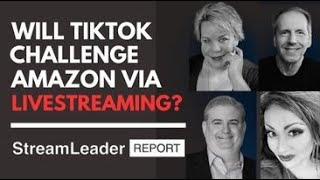
Ross Brand, Claudia Santiago, and Rob Greenlee break down TikTok's e-commerce push through live shopping, partnerships with ShipBob and Newegg, and creator revenue splits. They also cover TikTok's regulatory risks in the US, Google's Gemini AI versus ChatGPT, and Canada's Online News Act requiring platforms to pay news outlets $100 million.
Chapters
It's the Stream Leader.
All right, so we're going to just start it right here as though I was live the entire time. Um, we've got some great stories to talk about today. TikTok, is it trying to become the next Amazon? Uh, and what role will live streaming play in what TikTok's trying to do? Also, Google, big news on the AI front. They're launching Gemini, which is their most advanced AI endeavor so far. And of course, Google has also, uh, reached a deal with Canada so that their news can appear and Canada can carry their news and, uh, I don't know, it's crazy stuff, but Claudia is our Canada expert, so we'll talk to her about that. Rob, of course, is on top of everything with AI, and I just bought a subscription to the Wall Street Journal so I could read all about TikTok and business. So let's do a show.
It's the Stream Leader Report live panel, creators talking to creators.
Raw, real, and unscripted.
And sometimes they say the quiet part out loud. Here are your hosts, Claudia Santiago, Rebecca Gunter, Rob Greenlee, and Ross Brand.
Hey gang, welcome to The Stream Leader Report. It's the live panel edition that we do every Thursday, 1:30 PM Eastern. Joining me today is Rob Greenlee, the host of Podcasting Tips with Rob Greenlee, a StreamYard show, and Claudia Santiago from Viva La Stage, singer and live streamer. And unfortunately, Rebecca isn't able to be with us this week, but but she will be back next week. And it's particularly unfortunate because one of the topics we're gonna cover is TikTok, and that is her wheelhouse. But like I said, I did just finally have to break down and get a subscription to the Wall Street Journal so I could read their articles about TikTok. I played, you know, everybody knows I played around with the app a little bit, but not that much. So I'm a little bit in foreign territory, but I think I understand what Amazon does, and I think I understand how TikTok works. Might be trying to go after Amazon. So I think that's where we should start because this is a pretty big deal. Um, basically TikTok is looking into logistics. Uh, unlike Amazon, they're not building their own, uh, warehouses and distribution, but they're looking to work with others who have that available, uh, so that, that you can buy products on TikTok and have it delivered to your home or to a location where you pick it— pick them up. And live streaming and live selling is going to be a part of this. So I'll throw it out: is, is TikTok going to develop into a threat to Amazon? Will, will you be going to TikTok when you need to get some stuff delivered to your home instead of to Amazon.
Yeah, I think it's an interesting situation. I mean, they, uh, Amazon has been playing this content strategy for a long time. They've got, you know, people that they're compensating, uh, for creating videos about products, kind of like what's been going on for, for a long time with the, you know, the Home Shopping Network and in cable television, but they incentivize people to create videos about products in their catalog that can be in that, you know, that reel that they have on each of the product pages that can give it like a demonstration of the product, a little promo and things like that for a long time. So in a lot of ways, I'm sure what TikTok did was just look at Amazon and think of short-form video as a way for them to promote products on their platform and then have an e-commerce component to this that can enable this transaction. So I'm, I'm curious who TikTok is going to work with on the fulfillment side. You know, if, if that's being done by a competitor to like a Walmart or something like that, or somebody on that side that's maybe a direct competitor to Amazon. But this is kind of a content marketing strategy to, to help influencers on the platform to monetize, make money, and thus, you know, do a rev share with TikTok going, going forward. I think it's, it's probably pretty smart if you think about, you know, kind of, kind of the bigger picture of how people are evaluating products before they purchase them. I think TikTok is sitting in a terrific position to do that. But they're, you know, that TikTok topic is a complicated topic for a lot of political reasons too, right?
Yeah, ShipBob and Newegg, uh, are two of the companies that they're striking deals with to store inventory and pick, pack, and ship. Pick, pack, and ship sounds like, uh, sounds like a commercial right there. Online orders, these companies will then drop the packages into private delivery networks for delivery. So that's, that's where they're at right now. Go ahead, Claudia.
Yeah, I'm surprised that it hasn't started sooner, to be honest, because Amazon has had a program in place for quite a long time. And I think it was only a matter of time where social media um, hangouts, if you would, would, uh, set up another business model. Like, it's just one of these things that I think we're going to be seeing more and more of. But I, I guess I'm a little curious, uh, and maybe you guys have more insight on this, as to, okay, is TikTok going purchasing direct from each company? Are they going through Amazon? Solely? Like, what— like, I, I just want to know a little bit of the trail of how their, their infrastructure is here.
Yeah, I don't know that we know that for sure, but I'm sure that they're going to build an independent e-commerce engine from having any connection to Amazon. But I do know that Amazon just crossed over the barrier, um, or the, the kind of volume of being the largest shipper in the United States. I think they surpassed, I think, FedEx and UPS as far as the volume of packages that they're delivering. So I'm sure that leaves open, you know, FedEx wanting to work with, you know, like a ByteDance here.
Yeah.
As a shipping fulfillment platform to for those folks to compete with. I'm talking about the, the shipping platforms to compete with Amazon now. So yeah, the timing of this is rather interesting, um, and it was, and it probably is because both UPS, FedEx, um, are looking for a competitor so they can continue their, their market presence and not get overrun by Amazon.
Yeah. And then the other interesting side of this is they are going to dive into, um, live streaming, right? And I think live streaming, live shopping has, has proven to work. Um, the difference between TikTok and Amazon is just the massive number of people that come to TikTok to watch videos and are addicted to spending time on TikTok, particularly the younger audience. So, right, um, working product placement, working, you know, um, ways for people to purchase right in stream, right, while watching those videos. Um, I, I guess I'm also interested if they're thinking about having creators actually set up shops that you can go visit or brands set up shops. That would be the way you would challenge, I think. I, I mean, I would assume, but I don't know the numbers on this, but still, livestream in-stream purchasing is a tiny fraction of what Amazon does for— like, most of the time I don't go to Amazon to watch a livestream when I want to buy a product. I know the products, I just go to the product page, right? Now, if I want, if I want to learn about some area of product that I don't know anything about, then going to a live stream is great. The, the other thing they have is on, on Amazon are these shoppable videos that the creators put on the page, and Amazon often lists them on the page. Yeah, of the product. So again, if, if there are shops and product pages then this content, some of which is very entertaining, very interesting, and could also be, you know, things like unboxings and reviews and such on TikTok, it would get TikTok into a whole different type of, type of content.
Exactly.
Yeah, I think, I think so too. And if you look at what's been going on for a long time on, on YouTube, just like what you were just saying about unboxing and reviews and things like that, you can totally see how that could be a convergence for TikTok on this. All they have to do— and well, and also kind of another extension is that they've been wrestling with their models on how to support creators, right, and drive income to creators. I mean, this is a very— I think it's a very smart strategic move because increasingly, and we're seeing it in podcasting too, Creators want to get involved in platforms that can help them monetize, right? Make money. As people get laid off, yeah, they want to, to be able to get a, get a side hustle going. And then, and the timing of this is, is pretty amazing on, on the part of TikTok, or in this case the parent company is ByteDance, is the parent company here in the US. I've had calls, calls with them in the past, but about podcasting too. So they may be jumping into the podcasting space here soon too. So this is clearly a leveraging of the scale that they have to create revenue streams. This is like a side hustle for, for TikTok, right?
Right. Well, just looking into, um, looking into this article, um, they have um, rolled out an e-commerce platform to 150 million monthly active users in the U.S. That's a lot in September, right? Um, again, I'm not enough of a user probably to recognize that or know where to go if it's a separate part of the app. Um, TikTok isn't a stranger to selling goods through live streaming and short videos. The phenomenon has been around in China for many years And Douyin, the Chinese version of TikTok, has been particularly successful there. TikTok's foray into e-commerce has also been off to a good start in Southeast Asia over the couple of years. The logic of expansion into e-commerce is clear. TikTok is already a channel where hundreds of millions of young users discover new products, particularly in categories such as apparel and cosmetics worn or highlighted by influencers on the platform. Allowing actual sales is the next step. TikTok aims to increase the total amount of such goods sold on the platform, or gross merchandise value, to $20 billion this year globally, from less than $5 billion in 2002, according to the Wall Street Journal.
So in, in the TikTok app, there's already a shop, um, okay, tab. So there are already merchandising products in here. I can, I can pull one up for you so you can kind of see. It's kind of hard to see a little bit on the screen here, but there's, there's products in there already. So this is just linking up the content side with the merchandising side, just like what Amazon's doing. So yeah, I think that's the play here. And the this is, this is a way for them to incentivize creators to make money, uh, for creating videos in support of the products. And that's— and then also this tie-in around, you know, host endorse type of opportunities for creators on their platform to earn a, earn a few bucks on making content for—
right. So either a creator could Is that content there that could come from a creator? It could come from a brand pushing their own product. Is there any limit on, like, when you look at it, does it look like it's all brands? Does it look like it's individual creators? Like, how does— can you tell how the product got there?
Yeah, to that page looks very similar to Amazon. I mean, I'm, I'm looking at a product page right now, and it's got all the same components to it. It's got different, you know, like this is a phone case.
They're building an Amazon, basically.
Yeah, exactly. It's a, it's a direct competitor to what Amazon is doing. And I still don't see, if I look on this page for this product, it's got a bunch of textual, textual descriptions and references to other you know, similar products, right? Just like what, what Amazon does. But I, I don't see any kind of videos listed in, in here yet. So it hasn't been rolled out yet is what's going, going on. But that would be the next logical thing would be to recruit, um, content creators to publish content and then they would link to it off of this, uh, product page.
Mm-hmm. I think, I think there's some challenges now too. I mean, first of all, Amazon is so well established and so thought of as the online platform that we go to shop. So you're going, you're certainly starting going uphill. Um, the other, the other thing that came to mind as you were showing that is, will they need to have a desktop option, because while I do, you know, shopping in the Amazon app and in the mobile browser, I gotta say the experience, particularly when you're getting into shopping for products you might not be very familiar with, there's still something about the desktop experience that I, I think has got to drive a lot of sales and even viewing of shoppable videos and things like that, um, even as we're becoming more and more mobile-centric. Um, do you think that, that, um, that TikTok will eventually move to a desktop or is that too anti what their whole vibe is all about?
Well, I think you have to think about the, the user base of the platform, which is probably extremely, um, mobile-centric. So if you think about Gen Z and Gen X populations, they are on iPads or tablets as well as mobile phones. The, the ownership base for, you know, desktops with that generation is, you know, not as big. So, so we, we shall see. I mean, I would say Amazon is getting the vast majority of their transactions are coming through mobile, would be my guess.
Remember way back when we had the Sears catalog, the Wish Book, right? Remember that, that big, big thing? And you'd be so excited to Flip the pages, right? Uh, yeah, how things have changed. Hey, you know, in entertainment and TikTok, entertainers, creators have been making money there for quite some time, uh, and some are making like crazy amounts, uh, because of the amount of viewership you can get on TikTok. So the traffic there, uh, in that, again, that's mobile-centric audience is huge. And, and I wish Rebecca was here in some ways because she's like the queen of TikTok, and she's been trying to convince all of us to move on over there. So it'll be really interesting to see. I'm glad TikTok's doing this. I think all the power to you, you know. I think this is great, and, and it's good news too for content creators.
Yeah. You know, it also looks like they're being very competitive on pricing, which may be their hook, which means potentially that their margins are a little thinner and that's how they're going to go after Amazon.
Yeah. I mean, I guess the other thing is what kind of commissions are they paying out to creators? Because will that entice some creators who've built big followings over on Amazon to say, Maybe it's better to spend my hour a day live streaming my, my product lines over on, yeah, on, on TikTok if there's a bigger audience and more generous commissions.
Well, and also think too, I mean, like a platform like a StreamYard or whatever, they— I'm, I'm sure at some point, uh, TikTok is going to connect with these live stream streamer platforms, and it will be possible to, to live stream simultaneously to a YouTube and TikTok and, and Twitter and stuff like that. And then you just have links to the products in there. And, and I think the next thing that, you know, Amazon's going to have to consider is, is doing the same thing, um, doing— I mean, it is possible to live stream on Amazon today, but I'm not sure where many people are doing it yet. So this will definitely put pressure on Amazon to, to push forward on their live streaming, um, merchandising program.
But when you get into the Amazon Influencer Program, which is what lets you live stream, yeah, most people are looking at Amazon Live when they get in, but they often find that the money isn't— that they make if they end up being successful at monetizing it isn't so much from live streaming as it is from doing these 1 to 5 minute, 1 to 7 minute shoppable videos, right, where they review the product or they unbox it. They show you what it's like, tell you why they like it, give their honest review, uh, as long as it's positive, right? Because you can't disparage a client or a, uh, a company on Amazon. So yeah, you pretty much neutral to positive for the most part, although you could in a positive review mention some things that aren't the best. Um, but it's those shoppable videos and the ability of some, some of the creators to just churn them out. I mean, some creators have their little film set up and it's just day after day, get something that they use into the house and, and, you know, film it and then record a voiceover. And they're doing it mobile phone and quick. And there's no reason that couldn't, that couldn't hit a home run on TikTok.
Yeah, I mean, if— I mean, it's, it's a pretty simple setup. I mean, I mean, if you can get a camera that'll like take an overhead shot of the product and you can just sit here and, and show the product and demonstrate it very easily and just switch back and forth, you know. But it's an interesting kind of situation if you think about like the Home Shopping Network, you know, that's been around on cable television for a long time. How kind of live that is and how, you know, there's like countdowns and bidding going on and that kind of stuff. I, I don't know if this is going to evolve into something like that, but it— that may not be where they start. I would say it'll be just like what you said, Ross. It'll be probably more just reviews and, and stuff to get started, but that may be where we're going here.
Exactly. Do you, do you either of you know any of the rollout on, on what the monetization structure is or anything like that for creators yet? Has there been anything like that?
No, I'm not familiar enough with that. One thing I was going to ask you was, you mentioned musicians monetizing. Are they monetizing directly, like through sales on the platform or through donations, or are they more monetizing by building an audience and then sending the audience off to buy their music, their other stuff that they sell on their website or elsewhere.
Yeah, so I'll just use this as the product. So when, when the, the product is created, uh, it is then sent into, uh, distribution, right? Distribution sends it to YouTube, to Facebook, to IG to TikTok to all these places, right? As well as some other, other platforms. Um, and when that happens— Spotify, all that— when that happens, anytime, like, for example, if you put up a post on Facebook, if you want to— now, this wasn't once upon a time, you couldn't do this, you could only do it on stories— now you can do it on posts. Where if you put up a picture, you can actually add music to it. Well, that music has been added through distribution. Oh, so legal. Yeah, so you can actually almost animate those, those posts and turn them into videos with— like, say for me, I've got a song out there called, um, um, Bring My Angel Down to Us. I'm going to use that one. You can choose that, just look it up or find Claudia Santiago. You can pick a song, add it to your post, boom, away it goes. Every time somebody does that or uses it— and this is what happens on TikTok too, you can add music to your reel, to your whatever, your story, you're doing remixing or whatever— so what happens is, uh, then the distribution collects the money and sends it to us. So with TikTok Uh, um, because there's so many on that platform and they're always creating and they're always adding music, it is a really good place for, for, uh, recording artists, uh, who are creating, distributing, to, uh, to be on there and have their music there.
Now if you were to play music, your music, on your show Can you still get a copyright claim against you from YouTube going, wait, that's copyrighted music? Or yeah, or can they figure out that— yeah, and their algorithm figure out that you wrote the song and you're the one who runs the channel?
Well, because distribution has distributed it to YouTube, it collects— it collects the money, and then it collects the money to, uh the artists and the writers. So if there is a copyright, it's usually the distribution company. And so it's not an infringement.
Right.
Okay. In the event that there is a platform that says, hey, you violated terms, all I got to do is submit the license or whatever I've got to prove that this is me.
Right.
Well, yeah, artists, our artists, musicians, they've been collecting on, on TikTok for quite a while.
So while we've talked up some of the positives and looked at some of the negatives, probably one of the biggest challenges to all this working out is TikTok staying available to the U.S. market. Um, in fact, Montana tried to ban TikTok and a judge there said TikTok ban likely violates the First Amendment. And it's kind of interesting because where, where do social media platforms fit in terms of the First Amendment? The— we, we don't know whether individuals have a First Amendment right on those platforms completely. We haven't established. But does the platform's existence in and of itself constitute protected speech under the First Amendment, like freedom of media or, you know, free press? Or is it, you know, are there different rules for foreign-owned companies that may carry third-party media but aren't necessarily, you know, homegrown media, or I like, I don't know, really know where it fits in. And I'm sure different judges could look at this very differently. But whatever happens with that, this is a serious threat to TikTok that, you know, more and more states and, and, and people in the Congress and so forth are talking up about the threats that they believe TikTok poses to national security. To our culture, to young people who spend time on the app. And so will TikTok survive, survive this period where it's really under scrutiny?
Yeah, it's hard to know how that's going to turn out. I mean, if they were going to do something to TikTok, they probably would have done it by now. I remember this discussion happening back in in the Trump administration where they were gonna ban TikTok, and then TikTok made some organizational changes to divest themselves from China from a business perspective. So we'll see. I mean, this is a little bit of a political hot potato, but it seems like if the government hasn't taken action on this yet, it's probably pretty unlikely that they're going to, and especially with this move, because then it starts getting into to business activities that benefits the US. So it's just a matter of—
right, right.
It's more— it actually happens here.
It's actually very savvy from ByteDance's perspective, and how much they've disentangled their operation from the CCP and stuff is, is not totally clear, uh, to, you know, And there can be a lot of backdoors into their system.
But clearly from an organizational standpoint, it's a US operation. Right. But, you know, we know how technology works.
Right.
There can be all sorts of backdoors into, into the platform that the CCP can get access to potentially. I don't know that anybody has any proof or evidence of those connections, but But the more American citizens and American companies get involved with them, right, exactly, the harder it will then be to ban it.
So this is not just a good business expansion move, it's also very much a self-preservation move, uh, considering how much TikTok values the, the U.S. market.
Well, and this app or this company has, you know, if you think about how this platform has been utilized in China, has always had this kind of integration with, you know, merchandise and transactions and shopping and things like that. And so I think that's the direction that we're seeing with all this stuff is that these apps and these platforms are becoming multimodal, right? So they, They do lots of different things. So a person that uses this app maybe can do their banking there, they can do all sorts of stuff. Um, but yeah, we're all under surveillance, no question about that.
And you know, way back, way back with Facebook, if we go back to Zuckerberg, this was his vision from way back. He was trying to model Facebook after what China had already been doing for quite a while. Uh, I can't remember the name of their platform, which is like Facebook, but you could do your banking, you could, you could buy airplane tickets. WeChat, I think. Maybe WeChat.
Yeah, that is the biggest platform in China, right?
Exactly. And that was his vision from way back. So the fact that these other platforms are, are, are, um, integrating this, I think— I, I don't know, I could be wrong, but I'm, I'm doing my 100 predictions I think this is gonna put a lot of pressure on Facebook too. It's putting pressure, yeah, on Facebook, but the other platforms are like, you know, we're gonna have to step up or sink or swim here. So I won't be surprised, I don't think, if a lot of the platforms start integrating this kind of thing.
Yeah, well, and you have to throw into the mix X or Twitter. They are clearly, that's the vision of Elon,, with, with Twitter is to create a kind of like an e-commerce transaction type platform around online banking.
Uh, exactly. And, and Elon, Elon's going to be offering, you know, his brain implants on X anyway. So there we go. That'll be our option on X, right?
Well, I, I think you guys really drew, drew an interesting connection between WeChat and X. Facebook, because you gotta say that there was certainly government security state involvement in the founding of many of these tech companies and in the input and so forth. So I, again, and I'm, I have been very critical about what I think is the impact of TikTok in a lot of ways. But understand that our homegrown tech companies are also sort of doing the same thing, uh, with the same backdoors to the government and all that, that we found out in X. Um, we have just become a little more comfortable when we think it's a friendly government versus a hostile government. But is, is it or is it not, right? But So, so again, some of this push to ban TikTok, as we talked about in an earlier episode, is clearly, I think, legitimate. And there are certain concerns. And then there's also those that think, hey, you know, we should be, you know, we should be the ones spying on American citizens and having their data, not a foreign-owned company.
Right, so just, just on the topic but a little bit off, you know what, I have a rant.
All right, we haven't had a rant. We haven't had a rant, have we?
We haven't had a rant, but I have a rant, and my rant is this, that, you know, I, I, I was putting up some links to, uh, an event that I'm part of. Okay, well, you know, you, you do all that work You put it out there. Even on IG, you know how now they give us the option to add like your YouTube, your website? Once upon a time you can only add like your website. So you can add your YouTube, your website, and whatever other links. Okay, well, because Facebook, Instagram, Threads, like all is connected, well, last night late at night after all this work, all this stuff, I start getting these notifications. We have, we have removed your post. We have removed your link. We, uh, and then on IG, I can't even go on there, and it said you're not allowed to like or comment until you remove your link from your links list. Okay, now what was— okay, you want to know, you want to know what their thing was? Because there was nothing in my post that was going against community standards or anything like that. It— okay, you want to know what my, my, my— what I was accused of? Cybersecurity.
Wow.
Like, what? They, they have this new thing now. There's this Cybersecurity Watch, and apparently if there's a certain type of link— I, I don't know if it's the type of link they don't like But it's really— so you could, you could not use it. And not only did they give you a warning, but they pulled— I had last night, I had 6 posts put, pulled down. I had a block on IG. I could not like or comment anything until I went in and removed that link. There's my rant. So where are we going with this?
Like Wow, there's my rant. Doesn't surprise me, uh, right? I, I mean, I got accused of having nudity in one of my videos. Wow, that's a little— there's no market for that, really.
And it's only— and it's only— I will say this, it's only with the Zuckerberg products, because on LinkedIn, no problem. On YouTube, no problem.
On Same thing, same thing. And also I got denied because it, it's— they thought I was going around selling that, selling something that I should be selling through a Facebook store. Um, apparently the algorithm couldn't pick up on free. Right. Get your free ticket to tomorrow's event. Yeah, uh, but it, it made it a nightmare for me to post that in my Facebook, right? Right, the Facebook group that they told me that you gotta have because that's where all the conversations among the people you connect with are supposed to be, right? Yeah, you could get me going on a good, uh, good meta.
Oh yeah, yeah, this is another topic for another time. But anyways, I just had to get that off my chest because I, I had a rant.
So how long are you in meta jail for?
Well, I actually— they did not put me in meta jail. Uh, they just— there's something about getting notifications and it's all in like the little triangle things. And at first I thought, you know, maybe, you know, sometimes you get those messages and it's like spam or whatever, right?
Right.
Like you don't do that anyways. But no, then I went and looked and sure enough, they removed— they removed the post. So, and it was all in orange, the notification that Your post has been removed. And so I clicked on it to see, okay, what exactly was the violation? So I looked on it and then as I clicked more, it said it's a cybersecurity issue, blah, blah, blah, blah, blah. And I'm like, that post had nothing. It was the link. They don't want links going out, which we know, but they're getting really, really sticky about certain links.
So what's the purpose of using the darn platforms if you can't link? Like, why would you use it for business in any way if you can't link to your website, to your store, to your signup sheet, to your event?
Like, so Ross, and this is the important thing to note here, okay? We all have business pages, which they're happy to collect our money, right? When we, when we do ads or whatever else, they're happy to collect our money. Uh, even on the business page, they took down all the posts with legitimate links. There was nothing of, you know, going against community standards. So for me, this whole thing about TikTok is like good news, you know, because if they let you sell there, if they let you, you know, earn money there, then all the power to them. Because Zuckerberg, I don't know what the deal is there. It's like, why wouldn't you not be allowed to add a legitimate business link?
And then the other problem is you're terrified to repost it because if it caught you as a cybersecurity violator or somebody putting nude content on the internet, then of course you don't want to put your perfectly safe post, appropriate post back up there because if it gets dinged again, now you're suspended for a month or whatever.
And I mean, I've, I've been studying this internet stuff for a long time with social and posts, and I know the rules. I know, I know, like, even the updated rules. But there was no— there's no updated nothing. They just do what they want, you know. It's like during, during certain seasons, I remember through the elections, the, the American elections, and I'm in Canada, the American elections, they hired like a whole SWAT of Facebook police. And, and I remember one day me, uh, doing a little search for one of my pages, and you know what popped up? It's, it said, it says, uh, please, something like, please be careful. There was a warning, uh, please be careful entering this page as it's associated with QAnon. And it's like, what? So they randomly would go and do this stuff, and, and it had no— you could not even— you couldn't even—
but the page had nothing to do with it, had nothing to do with it. And there's no human you can appeal to, so you're pretty much—
no. And, and the crazy thing is, if it did that to me who I'm the owner of the page. So every time somebody is— was going to that page, this block thing would come up. Remember for a while there, all these blocks would come up? You could put a picture of your dog and somehow that was related to—
so everybody thinks you're QAnon, you're responsible for pizza, right?
Oh my goodness. So anyways, there's my rant. But yeah, so when I see other platforms platforms outside of Zuckerberg's sphere. Don't get me wrong, I enjoy Facebook and I will still be there, but I'm going to think twice about where I'm selling or posting legitimate business content.
Yeah. Rob, let's move on to AI and Gemini because this is a pretty big deal for Google.
Could I show an example of an e-commerce kind of post on TikTok? If you want to hear that, I can actually play one. So it's only 48 seconds long, but it kind of gives you an idea of what we're probably going to see. And this definitely plays into this concept that this is kind of a Gen X thing. So in a Gen Z kind of, uh, kind of a play here.
So she's wiping her mascara off, and what in the world is that tubing mascara? It doesn't bleed under your eyes, it just like falls off, I guess. I don't know, I'm not a scientist. I got this one from Tarte. I'm gonna try to wipe it off at the end and see if it does what hers did. Also, you can be as messy as you want putting it on because you're supposed to be able to wipe it off the eyelid. What I want to know is how do they get tubes in the mascara? Like, what is it? What are they doing differently than regular mascara? Well, it definitely looks cute. That's not the problem. I'm gonna try to wipe my eyelids now and see what happens. This one has a lot.
Wiper.
Yeah, I mean, the residue completely came off. It's been like 10 hours. We're just gonna see if it like tubes off like hers did. A little crusty. Doesn't pull like she did it unless she had like a lot on. Flakes off. On my fingers, easier than normal mascara.
So that, that's it. And that is a browser-based experience of TikTok. So I, I still don't see any integration of shopping in here. So it looks like that the shopping experience in TikTok currently is only in the, um, the mobile app currently. So I'm sure that would probably be coming to the browser experience.
So if you went to that video in the mobile app, there would be a way to click and buy something?
I'm not sure that they've done that, done that integration yet. So, okay, but that would be the logical next move. So that content creator would have to be part of their creator program, I'm sure, and then that, that video would be matched up and there would be kind of potentially a revenue share opportunity with that. So I would imagine that they're probably contacting creators that are, that are currently doing product demos like that and trying to get them in the program. Wow.
Would be my guess.
Very interesting.
Yeah. Thanks for showing that, Rob.
That's really—
Yeah, that was a good clip.
Mm-hmm. So I think that's the kind of content that we'll probably see play, and that was only a 48-second kind of clip. So, you know, it, it looked to me like you could do a lot in 48 seconds in a video that could be very supportive of a product.
So, and I'm pretty sure you can put links in TikTok description. Um, so you can, I think you can link out from your TikTok description. Now I don't know if that shows up on the, the desktop app or not.
Yeah. Just, just that video right there that we just watched, uh, has gotten over 1,500 comments.
I know, it's crazy. Wow. So there's, there's hope for, for my Tinder business, right? We're right doing AI Ross and— oh yeah, yeah, and we could shop it on TikTok.
Yeah, I just did two— I just did a car, car review on my channel for, for Nissan, so maybe I need to get into a, to a commission relationship with Nissan.
See if you can sell some cars on TikTok, right? Exactly.
Tesla? Well, no, this is a Nissan electric car. I, yeah, I actually bought one of the very first electric cars, the Nissan Leaf, and my dad has, has a new Ariya, which is their, their kind of premium, you know, electric car. So, all right, it gets like 340 miles on a charge, and it's, it's, it's, it's a very nice car. So anyway, I got to drive it when I was out in Seattle, so I just popped out and did a quick you know, 9-minute video review of the car.
So, Ross, we need to go hang out with Rob Greenlee.
I think so.
He can drive us around in all his electric cars, right?
Right.
You know, and, and maybe I'll teach your car how to speak Spanish.
And there you go. I'll bet you, you know, or can translate for me to be able to communicate to Spanish speakers.
So there you go.
That's That's actually what I really need.
RB, we need to do a road trip.
New York City. You got to come for our meetup Tuesday night. Rob's going to be at our meetup in New York City.
Honestly, we need to talk about our meetup. We certainly do.
Yes, sir. All right, Rob. Take it away with AI and Gemini in the time we have left. We do want to cover that.
Well, I think all the news in the last couple weeks about OpenAI has kind of made probably Google a little jealous. So I think what they had to do was— they actually have been, you know, with the Bard platform, have been really leading the AI. I think the OpenAI platform has been getting all of the attention, but in a lot of ways Google was ahead of OpenAI with what they are trying to do over there. And so I think what we're seeing is Google really kind of like feeling a little threatened, I think, by OpenAI. And I think they're seeing a shift in how people are using OpenAI to replace search. Like, I mean, just think about this concept of being able to go into OpenAI chat GPT-4 and being very specific about what you're looking to get. Like, I just did a search for what's the average price for a one-way ticket on an airplane to— on a specific day to fly from like Los Angeles to Orlando, and what's the average price for that? And ChatGPT came back with an answer, you know, that gave me, you a ballpark on what that is out there and was very specific about it. Um, so you start thinking about, well, well, when I go into Google, I do a search like that and it gives me like 100 different websites that I have to go to and, and try and figure that out myself, right? Um, so what we're, what we're seeing here is these platforms really, um, moving to the next level of search. And so that kind of more traditional search results that we're used to in in Google and Bing are slowly being replaced by these AI platforms, these new models. So what Google has announced here is their upgrade to Bard, which is called Gemini. And so they're rolling out, I mean, it's a very complicated rollout. So there's like Gemini Ultra, Gemini Pro, Gemini Nano, but it's what they call multimodal, which is basically it supports graphics, audio, video, all this kind of stuff all in one experience. So the language models are actually in this platform are called MMLUs, which is I'm trying to figure out what that designation really means. Let's see here. Multi-discipline college-level reasoning problems. So it's kind of what that is, and it ranks it in— it's probably not helpful for me to— I mean, I could pull it up on the screen here, but It ranks the Gemini platform compared to ChatGPT, and it's incrementally better than what ChatGPT is capable of doing on all sorts of metrics around video, graphics, and audio. But it's significantly better with audio than ChatGPT. So Google is really stepping up to the plate here to compete against ChatGPT. So I saw some research that came out where a company did a prompt in both ChatGPT and in Bard and did a test for the acceptance, you know, of reading an article that was generated, you know, so, you know, like you prompted it to create a, like a blog post article or something like that. And they tested readers to choose between which version of the output that the readers got more value out of and enjoyed better. And 75% of their survey showed that the output coming out of Google Bard was preferred over ChatGPT content. So you're starting to see this, this kind of competitive thing happen with these models. And, and so if you want to generate an article that you want to maybe put on your blog or, or create content like, like this, it, it looks like from the research that readers are enjoying the Bard output more than the ChatGPT output., all on the same prompt. Um, so, you know, I think we all want more readers to our content.
Now, I tested Bard last night.
I'd never used it.
Yeah, before. Um, the first thing that I noticed, and I did it on my phone, is like a lot of Google products, it's very nicely organized. Like, just, it's very easy to read. It's the text size, the the way it separates question and answer. But at least for me, and I didn't test the exact same prompts, but I did kind of explore the same area, ChatGPT was much more conversational. I felt like we were having a conversation about the topic where Bard had no interest in interacting with me. It was just Here's the facts. Yeah. And I don't know that I need to have a conversation, but I do find that I get into the mindset of a little bit of push and pull with ChatGPT where I want to like, okay, well, yes, I see what you're saying, but here's what my understanding of this, and I think If you take— and like, it will come back and factor in what you said, and if there's validity to it, it will show why there's validity to your argument, but then it'll also show why that isn't the entire story. Like, it's really fascinating. I don't know if you've had like in-depth conversations.
Yeah, I have. Yeah, yeah, I have. I mean, I think chat GPT does a pretty good job of that conversational element to it. So you can— I mean, I don't know about you, but I kind of treat ChatGPT with a certain amount of politeness. Yes. Because I think if you get angry at it, it maybe doesn't cooperate with you as much.
So, and just for our audiences, you guys, what is the difference if we can just explain it real quick, the difference between Bard and ChatGPT.
Well, they're essentially the same. It's just the models that were created are going to be a little different because there are different programmers, different designers of the content, different capabilities that are in there. Google has been working on this through their company. It's called DeepMind. That's been working on this for probably a decade now, where OpenAI is not as, as old as DeepMind that's been working on AI for, for many, many years. So, you know, I keep hearing that there is capabilities that we don't know about yet that haven't been rolled out because some of the senior leaders at Google were were concerned that the population wasn't ready for embracing what was possible here. They were going to trickle it out to us and kind of let us evolve in our usage of these platforms. And I think one of the speculations that's been going around is that big kind of CEO shuffle that happened with OpenAI a few weeks ago was really more about the CEO of the company not disclosing to the board that, uh, maybe that there was capabilities that were in OpenAI that, um, that they had kind of broken through the, the ranks on, and that there was some, um, concern that the CEO was kind of running forward with that without including the board on that.
Yeah, and who knows, maybe some of that might have to do with exactly what we've been talking about here too, where there's human modifications, if you will, that, uh, with implants and things like that, which is a very real thing. And the fact that we are going to be able to do some things online just thinking about them.
Yeah, yeah, I do think that there's some concerning— and I know that there's been a lot of talk about, um, AI safety and things like that, and that the government needs to get involved in making sure that AI is safe. I personally think there's some danger in that.
You know, I think— In the government getting involved, not in—
Right, right.
So then in AI where it's going right now.
Yeah, I would like to, my preference would be to see AI become super intelligent, because then it's going to be able to actually evaluate the facts, right? And not be biased by human intervention. I think there's a lot of speculation that AI is gonna destroy us, and that it's gonna be that, but the more I think about it, is superintelligence really gonna be that dumb to destroy itself? I don't think so. I think superintelligence will look at the facts and make the proper choice and the proper decision if it's not biased by human efforts to weaponize it.
And at some point, it'll be able to make judgments on facts that it's not programmed with, right?
I mean, it will have— Yeah, it's going to find its own facts. I mean, eventually, it's going to find its own information. Information and it's going to collate that and, and be able to think through, um, in a way that hopefully isn't biased by political, you know, kind of, kind of agendas that get plugged into it by humans. Exactly.
I just want to say hi to some people in the chat that have come up. We've got Bruce there and Barb. Hey, and I see you've got the link there too, Rob. For the Video Creator Podcaster Meetup.
Very cool. Yeah.
Yeah.
Bruce says, I imagine combining Gemini with Google and YouTube would be quite a formidable entity. Yeah, without a doubt. And Barb says, exactly, the best is yet to come for sure. Yes. So if I used Bard last night, I was not impacted by Gemini at this point. Right. When, when is Gemini? They didn't give a totally clear picture in the article I read of when.
No, I didn't see any kind of official kind of, you know, it's available on this date or not. I think it was like a pre-announcement of what was coming. And I think that was in probably in response to what's been going on around OpenAI. I think what they wanted to do is put their placeholder and say, well, You know, what we have coming is, is just as good or maybe a little bit better. If you look at that post, they had, you know, like percentages of effectiveness in various elements that was directly competitive to ChatGPT.
Yeah, they did go up against 3.5, not 4 Turbo or—
Oh, interesting.
Oh, okay. They did measure against 3.5, which I think is not unrealistic because That's the free one right now. And obviously you don't do this in an evening. So it's possible when they started doing it, Turbo and 4 weren't even available. But I guess what I'm wondering is it appears that the rollout of the more supercharged ones, though there's Pro and then there's Supreme. What's that? There's one. I forget, there's 3 of them, right? Nano's the one they're going to start rolling out, but the most advanced one might be a year away, I think, for the average user.
Yeah, so I can pull up that page. Yeah, please do. Yeah, it's coming right now.
Okay, it's there.
There we go. So, okay, so these are the 3. Ultra. Ultra, Pro, and Nano. And that's, yeah, that's kind of the breakdown. And then that comparison that I was talking about that they had in here was between Gemini Ultra and ChatGPT-4. Oh, okay. And so you can see that there is some difference in their rankings anyway. I'm sure Google's a little biased.
Think on this. Also, by the time they roll it out, who knows what OpenAI will have added to their arsenal.
It's competitive, right, with ChatGPT. Certain elements in here, it's not as good as ChatGPT, but most of them it's better. But that's also coming from Google too, so.
And that's with Ultra, right? That's not with— Ultra. Right. Like, so where do you find— you mentioned with Bard.
Do you use Bard much? No, I haven't. Okay. At this point.
Um, but you're saying some people already feel that it's a better option for like blog posts and—
yeah, for writing articles. Uh, yeah. Um, I mean, for creating, uh, written content.
Um, yeah. Because there's so many products now that have come out that talk about their integration with ChatGPT, or essentially, oh, you go into this, like, they do whatever the product would have done for 20 years, but then you go in, you have this added-on layer of, of AI ability, you know, generative AI to speed things up or to get you ideas, whatever. And in most cases, it's, it's a new wrapper on ChatGPT, right? Or a customized Right. Version of it. I wonder what we're going to start seeing. A lot of people going, and then you go into our hookup with Bard or whatever, but maybe you'll get more companies now for their products will be looking at Nano or Ultra, or Gemini will be the be the solution and maybe not. But it's interesting to see, you know, a head-on challenge in the space.
Yeah. So I think what we'll also see is probably a move towards Google offering a subscription access to this because I think that ChatGPT and OpenAI created this kind of precedent of people paying for access to this tool. And I would imagine that will probably wind up being— so this concept of us having access to Google Search for free to be ad-supported is definitely shifting. And I think, you know, after what we saw with Elon on stage at the New York Times event telling advertisers to go, you know, jump off of a bridge, and that's a nice way of putting it. It's an interesting kind of parallel to what's happening here around subscription. I don't know about you guys, but we're increasingly seeing more and more platforms shifting to subscription models and less advertising-supported models.
So you're totally seeing it with news sources. I mean, so many websites, whether they're, you know, newspapers or they're online tech sites or whatever, if you want to read this article, no longer do you have to provide— just provide your email address. You have to— 50 cents a week or a dollar a week, or for the price of a cup of coffee, you know, you can read this all month. Um, like I said, I, I just got a subscription to Wall Street Journal because it's all behind a paywall. And I was actually looking at Apple's, uh, you know, Apple's got Apple News online, and if you subscribe to that, you get access to like a whole bunch of different newspapers and, and journals. But ultimately I just went with the Wall Street Journal for now, but because I wanted something that I could do on desktop as well as, as mobile. But, you know, I, I think we have to just— this is, this is the way it's going, right? I mean, and maybe it's better that they're— that, that they're trying to get subscribers than, than, than win the click for advertisers, I don't know. I don't know whether that metric, that could change in terms of elevating quality of content.
Well, I think it will because there's kind of this move that's happening in the advertising industry that they increasingly want to filter the content that they want to be associated with, right? Exactly. Using AI. And what we're seeing is increasing tension around that where, where the advertisers are using their influence to, to, um, to kind of like pick what kind of content is appropriate, uh, for their particular corporate culture. And I think over a period of time that may kind of backfire on them. Um, there's going to be increasing move towards subscription, which means that the advertisers are going to have fewer and fewer content that they can advertise against to drive their businesses. So it's going to be interesting to see how that plays out over, over time here.
And you also get countries that are trying to control, uh, what news is shared on what platforms.
Speaking of, right, up in Canada, any country where you might Be familiar.
Oh Canada, I just keep saying that. Oh Canada. Are we ready to go there? You tell me.
Go ahead. Okay, fire it up.
So it's interesting we're having this conversation even, uh, and, and we are in obviously in such a tech revolution, but I think we're in a media revolution which is huge because media outlets, content creators there these big corporations, they have had models where they've had advertisers. And of course now we're seeing increasing subscriber models. And I almost wonder if a part of that isn't because partially you get countries like Canada who are trying to pave the way, which is really wild to me because Canada's always in the past been quiet and silent, right? You know, they're, they're the followers, and all of a sudden they're trying to lead the pack here globally. They're trying to implement these things where, um, now they're trying to get other countries to follow suit.
So it's a World Economic, uh, it's called, called Agenda 30 is what they're calling it. I mean, a lot of what we're seeing up in Canada is being I think driven by that, that particular pact that, uh, Justin Trudeau is associated with, right?
Yeah, exactly. So, uh, Facebook— okay, so Google, there's, there's a, there's some big news that Google, you know, they've been kind of teetering, what are we gonna do? Canada, of course, is enforcing this new bill, C-18, and, uh, it's, um, coming active, I December 19th. So it's coming up. This isn't like far away. Now Facebook, what they did is, is, um, they just said, oh, we're not paying you any money, we're just not gonna let you share— any Canadians share any news links from the U.S. And, um, now Google was facing the whole, the decision thing as well. So it was a crazy thing. And now Google has made an agreement with Canada that they're going to pay $100 million to advertisers or to creators, news outlets. Now, I don't know if you've got the thing there, Ross.
Just look up— it's there— federal government reaches deal with Google on Online News Act.
There it is. Yeah, crazy. So the, the, uh, online giant will pay $100 million to news outlets across the country. Um, the compensation was required by the Online News Act. The Trudeau government said the law was needed to support journalism that drives civic engagement, counters disinformation, and upholds democracy. Details on how the $100 million in compensation will be managed and distributed not yet been published, but here's what we know so far. Anyways, I think I am actually reading a different one, but anyways, it has to do with the Canadian Bill C-18, you guys, the Online News Act, which became law in Canada June 22nd, 2023, but it takes effect December 19th, which is what, next week. Next week already? A couple weeks from now. Anyways, the law requires digital platforms with 20 million unique monthly users and annual revenues of $1 billion or more to compensate news outlets for sharing links to their pages. Only Google and Meta, which owns Facebook and Instagram, meet those criterias in Canada. So the federal government has said the bill is meant to support journalism by encouraging platforms to reach voluntary agreements with media outlets. If a platform is unable to reach an agreement, the law requires that it participates in mediation. So I mean, I could go on and on, but you get the gist. It's, um, there's some news outlets in Canada that are going, yeah, no, we don't agree with this, so we're not, we're not.
It's kind of weird where you have the media as a collective negotiate, like Canada media negotiated, not one channel here or one network here or a few networks reaching their own. This is the entire country's media.
Yeah.
Um, I don't know. I, I always am skeptical when I hear things like what Trudeau said about Democracy and disinformation and what— in other words, we're going to control speech for your good because we know better than you do what's good for you. Now, I think it's very different from, say, having a problem. Well, I don't know. How is it? Okay, if I object to him doing that, then how come I don't object as strongly to Montana deciding to ban TikTok? Right. Is it because he's really putting his thumb on Canadian media and what Canadians are getting at? But then so is— I don't know, my position might not be sustainable.
So the issue has been this. My understanding is that just like any country protects the they're citizens who are paying taxes in a country, they're creating in that country. If there's like really hot, hot creators creating in another country and they try to move into that country, well, what happens is people lose jobs, they lose their voice in that country. So this happened in Canada with the CRT see the radio broadcast controlling how much Canadian content has to be played on Canadian radio. So Taylor Swift might be putting out a ton of music, but she cannot— radio in Canada cannot play the majority Taylor Swift content. They have to abide by the CRTC regulations. So the thing with that is it helps songwriters, recording artists that are Canadian get their voice heard on Canadian radio airwaves. Okay, so same thing with journalists, you know, news, same thing there. If their links are being shared, Oh, no one's making money. This is why I'm wondering with the increase of paywalls in some of these. You're hearing me, Rob? Like, I'm wondering if that might also be partially why, especially in the United States now, because Google has to pay a massive amount of money to Canada. They're gonna need to make money. So these paywalls actually help because maybe advertiser dollars are just— is just not enough in this age.
Yeah, I mean, it's, it's crazy stuff, but yeah.
And I guess, like, how do, how do they decide what media organizations are included in this and which aren't? Like, if you're not at a certain size or a certain level, do you not get any, uh, any dollars from—
Yeah, there, there's a link that I have. I, you know, I might share it out later, but, um, it does start to talk a little bit about how they decide. I— there's— I don't think there's a formal yet there. Now, one thing I do know is that some media outlets in Canada are going, yeah, no, this is ridiculous, we're not, we're not bound down to the— or we're not playing this game, so we're bowing out of this whole thing. Uh, so there is resistance. It's not like everybody's on the same page with Trudeau. Now, there is— okay, so I can see on the creator point thing here also with citizens, you know, you don't want a whole pile of people taking Canadian jobs and all of a sudden all the Canadians have no jobs and the people coming in are all taking the jobs, okay? And in, in some ways that's happening with— in real estate in Vancouver, you got the Asian, you know, you've got the yen coming in and you've got people buying out all these homes and they're sitting empty. Meanwhile, the economy is suffering because people aren't able to buy homes at an price or rent or whatever. So I get that. But there's also the other angle, which is why so much control all of a sudden, Trudeau?
And what's really going on? I guess my concern, like, coming back to the why am I okay if a state wants to ban TikTok, but I'm not— because you're still getting a diversity of American opinion and international opinion through all these. But the fact that if you're having this sort of media collective, right, we're not talking about workers collective bargaining, we're talking about the entire media industry. Isn't there a risk that it gets homogenized, that somebody becomes a disinformation purveyor for challenging those in power, the conventional wisdom, and now you're left out of the deal. Let's see what the chat has to say. Um, Bruce says most of the major news outlets in Canada are subsidized by the federal government, which results in biased reporting. This has birthed many new independent media outlets, which is a healthy thing. Yeah, I share that view. The Canadian decision, Barb says, could lead to opportunities for entrepreneurs to publish headline news sites that come from major news sources, including links to news source sites. And she continues, then the entrepreneur headline sites could still be shared on Facebook and Google, and news sources pay the entrepreneurial sites to share them until, until Canada passes a new act, right?
Yeah. And good thoughts, Barb. That's great. And Bruce, until too, like, Facebook could ban your link to your website, just like we saw here with my— the rant I had earlier, uh, something that's very legit. There's nothing scammy, corrupt about it, but they they do go and click on the sites and they decide for themselves, you know, what they allow. So that's, you know, that's Facebook with us being in Canada. So what happened to me, even with the things I was talking about, that rap might be because I am in Canada. The site is actually in the US, right? You see what I'm saying? So, you know, there can be control that way too. But I agree with Barb that as entrepreneurs, as creators, we also look at the pluses here. I mean, not everything is negative, Nelly. And, and we've got to, you know, we see the dirt, but we got to look for the gold. And we got to see, okay, what opportunity is there now? You know, I feel for Google because they're having to make a decision.
Get your tunes on the radio. Get your music on the radio. Okay, so let me go there.
Canadian artists, take advantage. Listen to this. Listen to this. I'm a Latina, okay? And yeah, I sing in English, and I can sing like my song, you know, Bring My Angel Down to Earth was written by an American, okay? An amazing producer, writer in America. The musicians, American. Okay, listen to this. So Canada has a lot of grant funding for artists, a lot of— okay, um, I can't, I can't play Bring My Angel Down to Earth on Canadian radio, and I'll tell you why, because it does not qualify as MAPL. There's 4 qualifications, okay? The artist has to be Canadian, the lyrics have to be Canadian, like the 4 things. You have to qualify as the 4 things: produced in Canada, written in Canada, performed in Canada as an artist. Okay, I'm also Latina, so I have new songs coming up for release that have that Latina groove. Well, you know, I'm just going to be real straight up. There's a real difference between a white Caucasian Canadian-born percussionist, conga player, trying to play that stuff versus a guy who was born and raised and culturally plays that stuff all the time. What we call in the Latino world is the sabor isn't there, that quality of the Latin groove isn't there. Okay, so I'll hire musicians and producers in the States. Well, I can't get played on Canadian radio with that particular song because I've hired people from outside. So there's some real strict radio standards. Now, if I wanted to release something completely produced in Canada and all that, well, then all the power to me. But the thing is, at the end of the day, then I'm not true to my artistry. And because it is world tropical music like that, that, that section is that types of songs. Then it, it, it, it really isn't world tropical because I'm not including the people who actually are part of those roots.
So even having one musician from outside of Canada means it's not a Canadian piece of art?
I— yeah, it has to be all musicians. So it has to— for, for radio to take my song as Canadian content, it has to qualify M-A-P-L. Wow.
Music artist, producer, lyric, Canadian.
Crazy.
Well, this has been a great conversation. We have gone way over today. Uh, usually we try and stick to an hour. Today we've gone almost an hour and a half, so we're gonna wrap up. We will be back next Thursday, um, at 1:30 PM Eastern, um, every Thursday. You can catch us on YouTube, uh, and if you are in the New York area or traveling to New York next week, Tuesday night in the Times Square area, we're having a meetup of New York City creators, both video creators and podcasters. The great Hall of Famer Rob Greenlee, uh, has a new StreamYard show. He'll be on hand, uh, you can chat with him. You can chat with, uh, all the different creators who are there. It should be a good time. Uh, there's a link in the comments, in the live chat. I will also put a link below if you're watching on the replay, and we hope to see you there. It should be, should be a very good time. Uh, for Claudia Santiago, Viva La Stage, and Rob Greenlee, Cast Tips with Rob Greenlee. I'm Ross Brandt from the Stream Leader Report. This has been the Stream Leader Report live panel. Look forward to seeing Rebecca back with us next week. Again, come back and join us every Thursday, 1:30 PM Eastern on YouTube.
Take care, everybody.
More from Rob

Future-proofing with Delphi AI/Human clones: your podcast as a personal LLM | New Media Show






How sports reveal what AI spectacle gets wrong #Technology #Sports #Commentary



