Making a Pro Level Live or Recorded Show - New Media Show
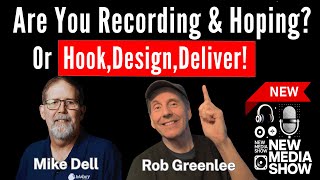
Rob Greenlee and Mike Dell explain why podcasts plateau and how to fix it. Most shows fail because they're just conversations with no hook or structure. Record once, repurpose across video, audio, and social, then use analytics to refine what works.
Chapters
Well, on the New Media Show tonight, I've got a terrific guest. I've got, uh, as my co-host, uh, Mr. Mike Dell, who's a VP @blueberry_podcasting. And Mike has his own podcast too. One's called Mike Dell's World. If you want to go check it out, it's at mikedell.com. And, and he has a, a hyper-local show called Cup of Traverse City. So you're playing around with local content, Mike. That's, that's great. And then also is the co-host of the podcast Insider, with the Blueberry team.
So, well, you and I had a, you, you and I had something in common. Uh, you know, Todd was my co-host on Podcast Insider, right? As he was the co-host here. Yeah. So, uh, you know, we, we've had to revamp that one a little bit and, uh, now we got Mackenzie and Dave also co-hosting. So I'd say, yeah.
So we kind of have taken full circle on this to some degree, you know, Todd, Todd leaving us kind of left, left a big hole, uh, in the podcasting space and, and with me and then also with you and the Blueberry team and things like that. So he's, he is sorely missed and we will keep him in our thoughts and our memories as we go forward. And he's going to be honored at the Hall of Fame that's coming up too here at Podfest, so I'm excited for that. But today, Mike, I wanted to kind of do a little bit of a different episode here and to kind of dive into a topic that I keep hearing more and more people talk about. And it's going to be rather meta because this is a topic that's talking about the format of a, of a podcast now, or an online show. It could be a video show, it could be a, a live show like this, like what we're doing, right? Right, exactly. And, and so I'd like to, uh, talk about why so many podcasts and live shows kind of stall out at some point, right, where they kind of grow and then maybe they, they don't continue to grow. And I think all of us, you know, I'm sure that the Blueberry team is thinking about this too, is that, well, what are the things that have changed really in the expectations of the audience? And it's not that the hosts are bad, but maybe it's— maybe we need to get a little bit more structure in our shows and to get to the point, right? And I think starting out, you know, it's this concept where we, we record and have a lot of hope, right, that it's going to work out. I know Todd and I did that with this show for most of its life, right, where we just pulled up the mics and started talking. And there's something good about that.
Oh, yeah, that's a viable format.
Well, it is, but in some ways it creates a kind of a big variable experience for the listener. And instead, more and more people are talking about this concept of offering a hook and be more design. And, you know, from that concept of design means, you know, you've got an idea, you've got a message, and you've got to deliver it, right? I mean, is that something that resonates with you, Mike?
Oh yeah. You know, there's, but, but, you know, it can go either way. What'll happen with podcasters is they, they, you know, just start and then they adjust as they go. And, and then there's some others that, you know, plan everything out and I'm going to launch on this date and I'm going to do this and I'm going to do that. And that's fine too, but then they might overthink it. So be, you know, a little careful with that. Uh, because, you know, we call it paralysis by analysis and, you know, worry about every little single detail. It's going to drive you nuts. But again, you know, it's always good to have a plan. Yeah. You know, that's the other thing. A lot of podcasts start without a goal.
Yeah. Right. Or Or what's that message that you're trying to drive to, to the audience? So, so what, what we're going to do in the episode today is really kind of break that down and what, what it means to treat your show like maybe a, a real pro-level show, right? I mean, one that has thought out. I know I did this for many years with my nationally syndicated radio show that I did, and it's interesting how I kind of left that behind when podcasting started, and I started to do more of the riffing and the, the what could be considered to be just kind of like conversational stuff that isn't very structured. And, and it's so important now. And I think this is unfortunately, and a lot of people will, will kind of maybe push back on this, but, but this change has really always been there with radio, and it's always been there in media because I did it many, many years ago with my with my radio show, but I think it's coming back into vogue now, really based on prerecorded videos in a platform like a YouTube where people feel like that you've got to engage with that audience in the first, you know, 10 seconds and you hook them fast to keep them watching because there's, people are so distracted now.
Well, look at TikTok and Shorts and Reels. All that, you know, people, you know, if it's not done in 2 minutes, they're on to the next thing.
Right.
And you know, you've gotta hook 'em a little bit, but also don't link bait either. You know, that, that can be an issue.
Well, yeah. And I think that is a good point, Mike, that there is a lot of that going on. Yeah. Especially in YouTube these days.
Oh, for sure.
Where people are, you know, it, it, it's almost like the common experience now is to kind of, um, go through a wall like on TikTok or on YouTube or whatever. And it's almost like doom scrolling, right? So you're basically trying to find the, uh, more extreme disaster or controversy.
I'll get on YouTube Shorts sometimes and I, okay, where did that hour go? You know, it's supposed to be a 2-minute video or a minute video or whatever it is now. And, and you know, it's a time waster, but people are tuned to that kind of thing sometimes.
Yeah, well, I think more and more it's got to be extreme to stand out, you know. So, but that's more of what the topic is. What we're trying to talk about today is, well, how do you structure a show that gives consistent value to the audience, right? I mean, structure that live program, whether it's live like this or it's recorded, you know. I mean, this is either way, right? Yeah, it's both. And And really increasingly, that's what people are talking about now is that it needs to be probably both. And we'll talk a little bit about that further in the episode here because what you're creating is a whole stack of content that you're gonna be able to repurpose potentially. Yeah.
And you know, and sorry to keep going on the short thing, but you could take your podcast video and also create shorts. You know, points and all that. I mean, you could have the whole stack. Why not do everything if you can? And, you know, I mean, you know, it can be an issue too, though, with some creators.
Yeah. But you do have to really kind of take the most, most valuable points or the most valuable parts of it, ideally. Right. I think that there are a lot of people that just churn out everything. Right. But I'm not sure that all of it— I mean, I've seen it on my own channels on YouTube when I've done that. And there's big, huge variability between how many people view a particular short. Um, some of them are really popular and other ones aren't. Um, so it's just, it's like anything else, we're in the content business and we have to play to that.
So, so, but creating rhythms everywhere, you know, right? Well, and that's podcasting to a certain extent.
Yeah. And that's another great point too, Mike, is that is that we are playing to algorithms more than we ever did before. This concept of having a gut human contribution to your content is still important to some degree, but in a lot of ways, the big successful shows are playing to the algorithm increasingly, and that is not necessarily a good thing, but it's—
Well, it all depends on the goal too. If your goal is to set the world on fire, then yeah, you wanna play all the games, you know? But for some shows, that's not the goal, right? You know, the goal is to either, you know, entertain or, you know, teach or, you know, that kind of thing. You know, some people just like talking in the mic and hearing themselves talk later, you know.
Yeah, yeah. I think that the reputation of podcasting has had a history of, um, you know, a couple guys in the basement with a, you know, a couple of, couple of microphones just kind of riffing and drinking and having a good time and not really structured too much.
And those don't take— they don't take it seriously. They're, you know, not like a radio show used to be or anything. But, you know, I've noticed a lot, even radio has gone closer to what podcasting is, was, you know, as far as, you know, a lot of the shows now are very not planned. Uh, you know, the talk shows I'm talking about and, you know, or they, they do a lot of winging it, whether that's planned or not. But, uh, you know, so it can go both ways, uh, you know, but you know, if you're going to take this at all seriously and, you know, first figure out your goal and then, you know, plan it out.
Yeah. And that's not to say that you can go, go beyond your outline. You know, it's like, I'm not following the outline that I created for this show because I'm trying to be a meta example to to some degree, but even this show is not perfect in this, right? So, so some of the things that we're going to talk about tonight as we get further into the show are going to be ideals, right? Um, you may or may not be able to get to those, um, but this concept of recording and hoping that it's going to work out is, is something that I think we're kind of leaving that era.
Yeah, you know, it used to be that way. I mean, literally you put up a podcast and You pretty much got an audience because you showed up on a directory somewhere and people are looking for it. But that's, you know, with, you know, what is it? Probably 500,000 active shows, but there's, you know, 5 million feeds out there now. And, you know, how do you, how do you make yourself stand out in that?
Yeah. Yeah, exactly. Yeah. So I also wanted to mention that at the end of the episode, we're going to do a little bit of a Q&A. So if you want to post a question, uh, into your, your social channel that you're watching this on, um, I'll go through all of the questions towards the end of the show, and we will address your comments or your contributions, right? Because we definitely want to hear from you and your thoughts and your experiences on this path too, because I think it is a little bit of a shift in people's perceptions of podcasting, but if I look at the really upper echelons of the podcast medium, that's what I'm seeing happen all the time now. So that's the norm. What we're talking about tonight is really more the norm than the exception now, right? So, so take that for what it is. Um, you know, you know, it's still fun to come in and create a show, just click live and have a conversation and you're certainly welcome to do that. I'm not saying that you're going to be shamed for just creating a chat show or something like that. I think it's just—
just, just take it for what it's worth. It's, you know, there's no such thing as a— as the wrong way to do it. That's the beauty of podcasting. There's no particular rules. There's some standards and there's some best practices and all that stuff, but, you know, as far as, you know, you do you, uh, but You know, if you wanna take it a little more professionally and, and, you know, possibly grow it to a point where, uh, you know, where it's something bigger.
Yeah.
You gotta plan it out. Uh, you know, it's just that it's just not gonna work, you know, two, two brains, one microphone type show.
There was a time, I guess for, for a while, and this show was an example of it. Um, for many years. And I think a lot of people appreciated just the casual conversation and the— but, you know, that's, you know, the past with this show was really a reflection of Todd's approach, which was to just create a conversation, not do a bunch of pre-planning, even though he did a fair amount of pre-planning with his Geek News Central show. So there's a little bit of a contradiction there. I think it was more about his time.
And it just depends on what the show's for, you know, again, exactly, and how it fits into your life, right?
And is it a big time drag, uh, drag for you? And I think that's the other big tension in the medium right, right now, is that when you intentionally design something for an experience, um, and you do it in a kind of a more professional way, I suppose, um, that does take a little extra time. And if you don't have the time to do that, then, but you still want a podcast, then that's where you get into this more casual approach. Yeah.
So, you know, I'm kind of the king of pod fade. I've started and stopped more podcasts than anybody I know. And that's always been the problem. You know, it's like, oh crap, I don't have time to do it today. And then 2 months goes by and you're like, oh, well, I guess I'm done with that. Uh, you know, you don't want to do that either. So be, be definitely intentional about how much this is going to take. You know, a long time ago it used to be for an hour show, it'd take you 4 hours of prep and publishing. And you know, that's come down a lot with all the tools we have now.
Yeah. Yeah. I think it's, it's definitely speeded up the post-production side, but I think there, there, there's a lot of dangers in using too much AI.
Yeah. AI is what I've found. What it's good at. That, you know? Right, right.
Yeah, which, which may not be much actually beyond just writing a description.
So for album art sometimes. Yeah, exactly.
Episodic art anyway. Yeah, yeah, because I find everything that comes out of the, the AI stuff, I, I hand edit everything pretty much, um, after it comes out because it's never quite right, right? It's never— it doesn't always come out in my voice. It doesn't always use the characterizations that I like to use.
I mean, you have to edit it. You know, you can't just, you know, copy paste out of ChatGPT and expect it to sound right or whatever. So, you know, you kind of do have to rewrite it, but you can also train it to write more like you. Yeah, it takes time and effort. And, you know, again, time sometimes is a problem.
Yeah, but, but, but it is a little bit— I keep hearing this phrase out there, says, you know, about podcasting and live video are not dead per se as a, as a medium, though there's probably some people out there that think that, um, the live stuff is too hard, it's too hard to build an audience and all that stuff. But I think the increasing perception is that low-effort, unstructured, unmanaged shows are increasingly struggling. So, because people have elevated their expectations, um, as we have become the mainstream media now. I mean, podcasting is now really leading in the media side now. I mean, all these major media companies are, are chasing to catch up to what, um, podcasting and online media is.
Yeah, we're, we're always talking with, uh, you know, media companies, uh, radio, cable channels, TV channel trying to figure it out. You know, they want to, they want to know how to do this podcasting thing. And, you know, it's really kind of what they're doing now on air, uh, with a little bit of finesse to, you know, create a show. I mean, yeah, you don't want, you know, something that sounds like, uh, you know, uh, you know, 10 minutes of content and 10 minutes of commercials and all that. So you got to kind of, yeah, you know, it can't be exactly like broadcasting, but it can be pretty close.
Yeah, yeah, yeah, it certainly can be. And I think that, um, that's, that's what's going on right, right now, is that there's a lot more pressure on podcasters now to elevate their, their game because, uh, you know, increasingly more professional productions are starting to capture the audience, right? And, and because, you know, let's call it what it is, for most of, um our civilization's life as far as in the modern era, the mainstream legacy media really dominated the consumption. So there is a lot of humans out there that expect higher quality content for them to engage with.
You know, I kind of live on the tech side sometimes, and, you know, that could be as simple as getting a decent microphone and a decent interface and just making sure you're, you know, a decent camera if you're doing video. Uh, you know, don't, don't get, you know, bottom of the shelf stuff, you know, because people will not tolerate bad audio. They might even tolerate bad video, but, uh, bad audio is, is definitely a turnoff for people. And, you know, some of these bigger shows though, they also have an unfair advantage. They have a staff that does a lot of stuff, you know, whereas the indie podcasters generally, they are the staff. Yeah, I mean, that kind of throws— yeah, I mean, not that you couldn't do a great job by yourself, uh, you know, of all this stuff, but, uh, you know, it's a whole lot easier when you, you throw a lot of that stuff to other people.
Yeah, then you become kind of a manager of people, right?
Yeah, of course.
I know for the many years that I've been involved in podcasting, it's always been kind of like a solo thing, right? Or, yeah, you know, the, the host, uh, basically does everything. And to some degree, that's the world that I still live in.
Yeah. Well, podcasting first started, you know, there wasn't any big companies in it. There were, you know, maybe NPR, I think came in pretty early, but for the most part it was, you know, as I like to say, the guy sitting next to the water heater in the basement, you know, it was independent. And some of those were really good. I mean, yeah. You know, so it doesn't matter if it's just you or you have a whole staff, you should still be able to do quality. And there's a bit of a learning curve on some of this stuff. So put the time in for that, you know, in your planning. Also plan, hey, I need to learn how to edit. I need to learn how to get good audio. I need to figure out my lighting and all that. And I haven't really done that very well here because I don't do a lot of video, but, uh, You know, not bad.
Yeah. Well, let's, let's talk about some of the characteristics of what would be considered to be a kind of like a pro-level show, one that— I mean, if you have the intent of starting a show and you want to make money from it and you want it to grow, these are some characteristics that you probably need to think about, right? You know, so when you start the show, and to some degree we did this at the beginning of the show too, we kind of teased the idea of what the show was about. And then what I plan on doing is keeping kind of a consistent format here and, and trying to identify what problem that we're trying to solve. And I think that the problem tonight that we're trying to solve is, is helping people understand that, that there needs to be probably a meeting of the minds between the expectations that you have for your show and the amount of effort that go into it, right? Yeah. So, so it's really, um Getting clear on what your goals are is really key to it too. And if your goals are that you want to monetize and you want to consistently grow, well, then you have to start thinking about, um, you know, formatting your show in a way that caters to the increasing expectations of audience now, uh, and understanding who your audience is and, and, and know who you're speaking to and what their needs are.
You know, on the outline here, you got reason for existing. Well, that's your goal. You know, again, you know, if your goal is to, to talk on the microphone, well, that's one thing. But, you know, if you really want to grow a show, you got to put some pre-planning into it, know what it's going to take time-wise. Now, it'll get faster as you get better at it.
So it'll get easier. It'll get easier. I mean, it— I mean, I did this for about 7 years with my nationally syndicated radio show where I had a consistent format that I stuck to every single week. So all I had to do was kind of like fill in those slots with content, right? And so the audience knew every week what they were going to get. And in some ways, that's really the bigger picture of this, is that whatever you do, you probably— it's helpful to be consistent about it. And so when a person follows your show or wants to engage with you, that They, they know what they're going to get when they listen.
Right. And they also build you into their schedule.
Right.
Of course. And, you know, with podcasting delivered via RSS, then, you know, they don't have to listen to it when you're doing it, but you know, if you're doing a live, you know, you say, hey, every, every Wednesday night at 6:00 PM Eastern time, I'm going to do a show. And, you know, people will build that into their schedule.
Yeah, yeah, that's right. And, and it becomes like appointment viewing of sorts, you know. I mean, I think the mainstream media did this for many years with, uh, with their like Thursday night comedies and things like that, where people— it was like, tune in Thursdays, you know, for a good laugh kind of, kind of thing. So Tivo ruined that, but right, because you could always have it on replay too. But, but what, you know, one of the key things though is that at the beginning of everything that you do, and this especially applies to YouTube increasingly, is to hook and tease at the very beginning as much as you can. But also, you know, think about this from this mental perspective of respecting your audience's attention, right? So how are you going to drive value to them in the first 30 to 60 seconds? You know, are you gonna make or break their need? And that's kind of what you're doing is that you're trying to trying to make a fit with what they may be looking for, right? And if not, then they're going to opt out probably either way. But if you meander too much at the beginning, then you're probably going to miss that opportunity.
Yeah, I see a lot of shows, you know, I'm talking YouTube or podcasts or whatever, they'll pick, you know, 30 or 60 seconds of content in the middle of the show to do the the kind of the cold open and the hook, you know. So if you have a really good, you know, point that somebody made on the show or you made or whatever, you can, you can clip that, put that at the beginning, and that sort of hooks them as well. You know, that's just one method of doing it. I, you know, I'm kind of a practical guy, so I always do.
Yeah, I mean, there's all sorts of these little tricks too, you know. Like one is, you know, state a clear promise for the episode. Like, by the end of this episode, you're going to learn how to create a more engaging and connected show to your audience.
And there you can say, by the end of this episode, you're going to be tired of hearing us talk.
You know, that's certainly true too, right? Yeah. So, and if you're watching us, you know, I've, I've worked a little bit to try and make this show a little bit more visually stimulating. I mean, you saw that in intro video that I have, which isn't— which is fun. Um, I'm, I'm kind of thinking to my head, is it— well, maybe I need to play it after we start, start the show versus playing at the very beginning of the show. So I don't, you know, do this whole open thing, you know. Yeah, exactly, exactly. And I did that with my radio show for many years too, where I would just say you know, welcome to the show. Up, up next in this episode, we're going to talk about this, this, this, and this, and then fade out to play the intro music and that kind of stuff. And so there's two ways of slicing this. You can do it up front, you can do your, your audio intro with some voiceover at the beginning. That may or may not work, you know. So what you have to do is you have to get in the analytics and you have to look at, well, Yeah. What was the drop-off rate at the beginning of the show, right?
Yeah. Right. Yeah. You know, that, you know, the, the, one of the shows I do, we have pretty much an ending segment that is, you know, 2 or 3 minutes of exactly the same thing every week. When that starts to play, you can see it drop right off. Yeah. Right. Because they know we're quitting, you know, new listeners will listen through it, but you know, old listeners like, yeah, we've heard this before, next. You know, there's nothing wrong with that. Who cares if they drop off, you know, something like that. But again, you know, you want them to go to the end. Yeah.
If possible. And I think it's a matter of kind of playing around with it too, because there's a bunch of different ways you can go about this. And, and, but trying to get disciplined at the very beginning of the show is the key. It's that hook, right? Yeah. And just—
You set the tone for the whole episode that way, you know.
Right. I have a hard time doing that. I mean, I, I did it for a long time prior to doing the, the New Media Show, uh, and I did it for my Speaker Live show for many years where I would tease up front. Um, but I think doing the, the New Media Show over the years with Todd, I kind of got out of that practice.
So there's a place for that, you know. Sometimes it's fun, you know. It just depends on the goal of the show again, right? I keep going back to goals, but so many podcasters, they don't really make a goal. And, you know, if you don't plan that out, you're kind of lost on the rest of it. But yeah, I like the idea of, you know, get in there and, you know, make them, make them want to stay for what you got coming up.
Yeah. Yeah. And it's, and it's okay to be a little entertaining. I know some shows have a big personality and they have, you know, hosts that are very, um, very good at, you know, hooking people with kind of, kind of unique gestures and commenting. And that's where the, the talent comes into play here. And each one of us has our own kind of abilities, right, to do certain things.
And, and a lot of podcasters call themselves talent, but that would be in air quotes.
Talent is in the, the eyes of the viewer, right?
Yeah, yeah, yeah. So, you know, it, you know, you don't have to be perfect at it. That's the whole other thing. You know, a lot of podcast audiences, they're, they're okay if it isn't perfectly polished, but yeah, you want to, you know, stick to a format that works for your audience and, and don't be afraid to change it up too. You know, if you know, you're doing it, you know, doing a show in segments and one segment, everybody drops off for, and you're like, well, that's not a good one. So you dump that segment and put something else in there. You know, be flexible. Yeah.
And in this next point, sharpen your key points and angles, not just your topics. So this really gets into trying to drive, you know, a change message of sorts. Like an example, the mistake killing 80% of your marketing is just an example of it, right? I mean, What is that thing that you're gonna get from the show that's gonna help you not kill 80% of your marketing?
I remember one show, sorry, I'm off on a tangent here, but I remember one show, the, the guy'd flip on the microphone and he'd say, well, I don't really know what I'm gonna talk about today, but welcome to the show. You know, like what?
Yeah, right. I'm just here. I showed up. Hopefully you showed up and you don't have very high expectations of me.
Or, you know, we talk business.
Okay.
Right. Business.
Yeah. Yeah. Or let's talk marketing. There you go.
Yeah. Yeah. So, you know, you, we, you know, we do that with our Podcast Insider show. We always have a tease at the beginning where, you know, we say, this is what this episode's going to be about. We'll tell you about this or whatever, you know, and you know, that's something that definitely You know, if someone, oh, I already know that, and they leave, well, oh well, sorry, but at least they know what they're going to get, right?
And I mean, even if you do these things, there's no guarantee that it's going to work, right? So, so you have to— this is where it gets back to, you know, trying to understand who your audience is and trying to understand why they are watching your show. What are they trying to get from the show? And also, especially with live shows like this one, I was, I was trying to work hard to make the metadata for this show, um, very applicable to what I was going to talk about the show and tell a story, right? So that, that's the other thing too. So especially on YouTube, that thumbnail tells the beginning of the story, and then your description or your title kind of completes that picture, right, of what they're going to get if they watch. So that, that's what I tried to do with this episode, and I'm going to try and do it with every episode going forward. That's not to say I'm not going to have episodes where it'll just be two guys getting together talking about podcasting and where we are today, because, you know, I think I still want to do some episodes that talk about kind of breaking news in the industry, right? Or I'll bring on someone that's with a company that's doing something cool in the medium or something new So I'm going to shake it up a little bit, but this concept of trying to drill into some value points is where I'm trying to go with this and to tackle that specific question or that specific problem that people are having. And I know, I'm sure that's what you're doing with the, with the Insider Show that you do with Blueberry too, is you're trying to, you know, you're trying to help people along with what they're doing.
Yeah, you know, we focus a lot on what we do versus what's going on in the wider podcasting world. Right. You know, so it's, you know, it's an inside, inside show.
Yeah. Right. Yeah.
For the—
so you would expect that. Right. Yeah. So if you were tuning into the Inside Blueberry podcast, you're, you're probably gonna get an inside view into blueberry, right? Yeah. With a sprinkling of industry information.
Yeah. And we definitely, like, you know, we, we did an episode earlier today and, and it was about niche and Hyperlocal podcasting, you know, that is more of kind of an industry thing right now.
Yeah, it is a hot thing right now. A lot of people talking about that. Yeah. And that plays into the radio industry too. I think the radio industry is all excited about that.
Yeah. Well, you know, look at what Adam Curry's doing with his, uh, with his new app is that's exactly what he's doing is it's hyperlocal, uh, podcaster, right? And, you know, you're not going to get, you know, I'm, you know, I'm in a town of 15,000 people and I'm doing a show about Traverse City, this little town. And I don't expect to set the world on fire on that, but, you know, I'm getting more interaction from that show just 2 weeks in than I ever got on any of the other shows I've ever done.
Yeah. So how are you marketing that, that, that show, Mike?
I mean, word of mouth.
It's just word of mouth. Well, I guess that's always been how podcasting has grown is by word of mouth, right?
You know, it, you know, sorry to get into this, but you know, it's a, it's 5 minutes every morning. Uh, you know, it's a little, hey, what's going on today? What the weather's doing, blah, blah, blah, whatever. And then I do an interview on the weekend. So I, I actually, you know, pack up my backpack and go somewhere and do an interview with somebody. And I had an interview this last weekend that resonated a lot with the aviation community, and I got a ton of new listeners from the aviation community because of it. The guest really promoted it locally here in the aviation community, and that, you know, that's, that's how it's going to grow. You know, I don't expect, I don't expect to make a ton of money on it or anything, but it's just something I wanted to do.
I'm sure that the radio industry doesn't want to hear that. They're not going to make a lot of money on it, right?
Well, you know, I don't expect to make a lot of money on it, but, you know, they do for the morning shows. You know, I, I'm on radio still periodically. I do, uh, I, I do the, the local rock station's morning show. I'll do, uh, you know, news for them when their news guy is on vacation, you know. So it's not something I do very often. And you know, that, that show's killing it, you know, as far as local radio. Yeah. That's a whole different genre than this. Anyway, sorry, we got off onto a tangent again.
Yeah. Um, the other key, key, key point is that, you know, what you're doing is you're, you're designing for a couple of different audiences here. You're, you're designing for live viewers like we are here today, as well as people that are going to see this on replay. Whether it be in video form or audio form. And, um, and, you know, and I'm, I'm planning in interactive moments, right? So this Q&A at the end of the show is part of that. And with some of the other live shows that I've done, I've, I've tried to sprinkle it in amongst the show, and sometimes that works, sometimes it, it doesn't.
It could derail you, you know. I listen to shows that do the, uh the value-for-value boostagrams and the host gets very distracted, or they have a chat room going on while they're recording. And yeah, it can really distract, but you know, sometimes it's useful as well. You know, it's—
yeah, I really wrestled with this concept of just doing a Q&A show, but that doesn't play well in the the replay realm. Yeah, and also it only does well with the, with the, with the live interaction. So having this blend between a structured show that has an outline and a format in combination with the live interactive part is really the, the best way to package that, um, is what I've seen. And that's what I'm trying to do with this show. So, so anyway, um, and then, uh, cluster the chat, you know. So let's say you have polls too, and I would love to get involved in polls. And a lot of the things we're going to talk about here in this list are things that I would like to do with this show, but I haven't gotten around to it. This is, this is only my second episode of trying to get this thing rebooted under a different format.
Um, it's work in progress. Oh, it is.
That's fine. Yeah, and very few, if any, shows start out at the apex of what's possible at the very beginning.
Right. Yeah, you know, you got a little bit of an unfair advantage that way. And, you know, we were able to resurrect the feeds and a site that's similar to what you had before, and that's been a good thing. So, you know, people that were used to tuning into this I, I'm sure a certain subset still do.
Yeah, well, I hope so. I hope that the changes that I made to it don't, don't take away from what the idea behind this show was, was to help people have an inside glimpse into what the— what's going on with the medium. And, and, and I think this topic is a reflection of what's going on with the medium today and how things are are changing. Um, you know, I don't know what you think about all that, but yeah, things are always changing, aren't they?
Oh yeah, you know, it's, it's a completely different vibe than it was 10 years ago, and especially 20 years ago, you know. Uh, but you know, and then live really simply wasn't possible back at the beginning, and now it is. And yeah, Yeah. And as you got written here in the, in the kind of the outline, you know, nothing bugs me more than I'm listening to an audio podcast and I don't even know they're doing video. You know, I'm just listening to the audio and they say, hey, look at this. And, you know, like, no, I can't look at it. It's audio, you know? So be careful with that kind of thing. Yeah. If you're going to repurpose it as audio or repurpose it even, you know, even as video, uh, you know, after the fact, you know, people tend to listen to videos. Like I do that sometimes I'll start something on YouTube and I'm working on my computer on my laptop and not really watching the video. So then I got to stop, rewind. Okay. What are they showing me?
Yeah. That's the, that's the core of the tension between audio podcasting and, and YouTube today. Is this— there's a lot of pressure on creators on the YouTube platform to make a lot of visual presentations of sorts on their screen, transitions and overlays and all sorts of stuff that adds a visual component to the content, but that doesn't play in the audio.
Right. But if you think about it, you know, how compelling is it watching the two of us talking to microphones? You know, So the video component of this, yeah, I mean, that's about it. You know, you get more distribution that way, but they don't need to watch every millisecond of this to catch everything.
Right.
You know, whereas, you know, something that's, you know, more visually interesting, uh, it's different that way. And then that may not play well on audio. So, you know, you got to think of your format, you know, if you are primarily video, yeah, and, you know, play to it. If you're primarily audio with a video component, then think about that as well.
Yeah, and if you want to have more of a, you know, an audience participation in your show, you kind of have to use catchphrases or whatever that will tell them, you know, it's like, go ahead and post your comment and I will get to it at the end of the show. So, you know, we will have this kind of spotlight segment that, that we'll talk about your comments in here. And, and just have a, a goal with your show that you're going to have that component to it that's always going to be there. So if the audience comes in here, and we've had a, you know, a handful of comments that have come through already, and I feel this compulsion to bring them up on there on the screen because I don't want to disappoint those people that spent the time.
I'm glad I'm not seeing them. I would be distracted.
So, oh, you're not seeing—
well, I think they're on the screen. Yeah.
I'm not looking. Yeah.
Because I know myself and, you know, but you know, the, the interaction part is sometimes, you know, really motivating to a podcaster too, you know.
Somebody's actually watching.
Yeah, somebody's actually here.
Wow. Yeah. Or, or listening. I mean, a lot of podcasters don't know they're, they're talking to their microphones. They don't know if anybody's on the other end.
Let's, you know, that, that's why, you know, I get, I get an email about a show I did and I'm just like, I'm jazzed. I'm like, wow, somebody actually listened to it and then they, they thought well enough of me to actually email. Cool.
Yeah. Right. Yeah. I always appreciate that because I've gotten emails from, from listeners to shows that I've done in the past that were, you know, like 5, 6 paragraph long emails from people.
And it's like, you know, that's where ChatGPT comes in.
Here, summarize this, right? You take all the comments and you, you process them. But yeah, I mean, it's hard sometimes to, to be able to cover them on the show. I mean, I've had to take a certain comment that I've gotten into the show and cover it like in a mailbag segment, and I would typically just take a part of it and say, well, this is the most interesting part of what the person commented on. So at least I acknowledge the fact that I read the comment, I comprehended it, it was great, and I even commented on it. And I think that's, that's important to do, but You know, when you're doing this with a live video and considering the, the replay side and the audio podcast, you know, you really have to think about the fact that you're doing 3 different versions of the show. I mean, really, at the end of the day, and that's not easy to do, you know. I, I mean, I've been hammering this, this, um, nail for many years now, and I still don't feel like I have a good perfect kind of fit for it, right? Nobody's perfect.
And you don't have to be. That's the thing. You know, again, you know, people get better at this stuff. You know, Todd always used to say that, you know, he got a lot better as an audio podcaster when he did live, you know, because, you know, he did live video. And that's because you got to be a little bit more on the ball and not say anything stupid. Or try not to. Sometimes the stupid things are fun, but they just come.
Keep them to a minimum, you know. Yeah, exactly. So I guess at the end of the day, what we're really talking about here is just being really clear with your hooks and the value equation that you're trying to bring. And, you know, work hard to figure out ways that you can level up your production, you know, without losing the authenticity of the show and your ability to present it in a coherent way. You know, your audio needs to be clean, ideally. I mean, last week's episode with Rob Walsh, my microphone was not even connected. So I was— my audio was coming from my camera and that didn't sound very good. I was able to fix it in post-production.
You know, there's certain little tech glitches and, you know, that's sometimes half the fun of it.
You know, it's still really frustrating.
Yeah, his age will drive you up the wall. But, you know, looking back at it, you know, that memorial episode we did, uh, you know, a couple episodes ago here, uh, you know, you had a lot of examples of the— of Todd, you know, having tech glitches. And that was kind of the cool thing about the show, you know. And shows I've done with him, same thing, you know. Not him, sometimes it was me, you know. And Yeah, of course, if you're live, that's one thing, but if you're, you know, not live, then you can, you know, let the four-letter words fly, and, and, you know, it's rather comical later on.
But yeah, so, so really the takeaway, I mean, to some degree, and also thinking about the video side too, so if you're doing video like we are here too, keep it as simple as possible to some degree. Now granted, a platform like a like a StreamYard can make things rather complex. This platform that I'm using to do the show, the StreamYard platform, has a lot of bells and whistles. It's capable of having all sorts of overlays, having all sorts of— I can pull up a screen share, like I can show Mike's website here on the screen, and it has, you know, I can bring in you know, like the website address for the New Media Show up on the screen, and it'll have a countdown clock that will, after 10 seconds, it'll take it down for me. I don't have to do that now. So, and then Mike—
When I worked in TV, we had that sort of thing where, you know, you could put the bug of the station or the network in the corner there, and it would time out. And, you know, I think we called it the name dropper.
Yeah, so it's, it's great to have this kind of capabilities in a, in a platform, but, but it can be a little distracting from doing good content. And that's, that, that's what I remember about my nationally syndicated radio show that I did, was that I had my outline and my script of sorts right in front of me, and I'd have to worry about the camera. I, I didn't have to be worried about that, have to be looking up at the camera, looking at the audience while I'm trying to do a show that's structured. I was, my eyes were pretty much glued to the paper as that I was doing the show and I was able to really follow it.
That's the good thing about audio. You don't have to worry about a camera, but again, you know, if you're gonna do all the stuff, you gotta do the video and the live and, and all that. And you know, that there's nothing wrong with that. Uh, again, you know, some people bristle at the idea of doing video. Don't do video.
I mean, right. You know, it's like, yeah, I keep hearing, and I heard Tom Webster say this on his content briefing that he gave today, uh, about, uh, you know, some research that came out. And it was like he has this thought that one of the reasons why women aren't doing a lot of video podcasts as far as hosts is, is because it's harder for them, right? That they have to put on makeup and they have to do all this kind of stuff and and that, that gets in the way of them getting involved in the video side. Um, so I just thought it was interesting. I heard a lot of talk like that in the early years.
It's a little bit of a creep factor out there too for some women. Yeah, yeah, that's, that's, you know, I know, I know somebody that does audio and she will not even have her picture anywhere online if she can help.
Yeah, well That's, that's fair to be concerned about that, I think. So, you know, and I think that, you know, it's ideal to have a less cluttered background. You know, I know I'm, I'm probably not a great example of that either. If you look behind me either, you know, I've got a lot of stuff on my shelves. I should probably clean it off and just have like one thing there or something like that.
Um, sometimes it gives people, you know, a reason to, to, uh ask about it. I think I've told you about this show offline, but Lato's Law, it's a YouTube channel. Yep. And he has all kinds of crap behind him. And what he does is he hides a $100 bill somewhere on the set and he challenges his viewers to find that $100 bill. Right. You know, so people analyze his background all the time because they're looking where, where did he hide the $100 bill?
Yeah, exactly. Exactly.
If you can find it, you get it, right? Yeah, something like that, you know. But, you know, he goes months before somebody finds it, right?
Yeah, I have people comment— right up here on my shelf is a little stuffed pluff, uh, plushie, uh, this has TiVo on it. It's, it's something that I got back.
I was a heavy TiVo user in the earlier years, so I don't think I have that stuffed gator on the shelf back here somewhere, but I got it at a show.
So another thing to use, and we're an example of it here, is using lower thirds, right? So we had— and that's basically like titles on, on the video. So on the screen, if you're listening to this, it says Rob Greenlee, host of thenewmediashow.com. So if you're watching this, you can see the domain name for the show. On Mike's, it's Mike Dell Blueberry Podcasting. It's like a subtitle.
So when I accidentally put a, put a comma in there or whatever That's okay.
That's all right. And, and so there's all sorts of things that you can do too. You can also— so when you come into the Q&A segment, you can pull up on the screen, now we're in the Q&A segment, right? So this is, this is when, when we're going to cover your questions or, or, you know, use it for a variety of different use cases.
Um, so, so, and it makes the video more compelling rather than just two guys talking into a microphone with—
yeah, backgrounds. And obviously you have to tell your, your audience, so the audio people here, that this is the Q&A segment now. So we're transitioning. That's what I had to do with my radio show for many years is, you know, play, you know, read a little thing. This is the mailbag section, and the first letter is Yeah, or email.
It goes back to your, you know, you're making 3 versions here. We're doing live, we're doing recorded video and audio. And, you know, I don't know how much you edit after the fact with the, with the recorded side, but you know, that's an option as well. You know, you could record live and do a little bit of cleanup and post-production for the audio and video that you put out as a podcast or on YouTube or whatever. Although this will live on YouTube as a live, right?
You know, correct, correct, correct. And on LinkedIn and on X.
So, so it's multicasting.
Wow. Oh, definitely. I wouldn't do anything else, Mike. So, so I do. So after the show's episode, I do do a deeper edit on the audio than I do on the video. So just in a general sense, the, the audio gets a much deeper, and you'll typically see that in the the minutes for the audio versus the video version. So this show is a video, a true, a real video podcast, right? It's available on Apple Podcasts on the video side. And you'll find that that video is usually a little longer than the audio side because I do do a deeper edit on the audio.
Right. And, you know, the audio, people that listen to audio, you know, got their earbuds in or they're driving, they pay more attention to the audio than, say, you're watching this on YouTube. You may not pay as much attention to it. So, you know, it is better to clean up the audio a bit more than, than you would the video.
Though a lot of the industry has been pushing in— Spotify is an example of this— where they'll, if you upload a video to Spotify, they will basically overwrite your audio via RSS and they will play the audio from your video as the audio for your show. And that's kind of missing the point, right?
I'm not a fan of that process, but again, you know, audio should be good too on the video. So, you know, it's just, it's not going to be as finessed.
It's not going to be as tightly edited. And more, there's also more and more post-production tools that will process just the audio versus processing a video.
Right. Some are better than others. But yeah, you know, I, I've, I heard a show, I don't even remember what show it was, but they obviously ran it through some sort of AI de-ummer or whatever.
And the script, probably.
Yeah, I don't remember, he didn't say, but I'm like, wow, that really sounds like they just cut the hell out of it. You know, human, humans say, um, and humans, you know, they snort sometimes. You know, there's, there's things that happen, and sometimes you don't have to get get rid of that. Don't, don't over-edit.
Well, and AI is not going to edit or do a version of you that has you hiccupping, probably, right? Yeah. Or coughing or clearing your throat.
I have a cough, you know, I hit the cough button and cough. Right, exactly.
I have those little mute button here on my, uh, my mixer. But, um, but also, you know, as far as Moving forward with this, you know, packaging of your podcast is also important. So, you know, your episode needs a strong outcome-driven title, right? Yeah. Not just clickbait, but—
Yeah, not clickbait.
Right. Especially even though, you know, some little element of clickbait might work.
Well, you know, I use an example. I I watch a car YouTuber, very popular guy, probably has 5 million subscribers. And every other video is, oh my God, you're not going to believe this, or, oh, we're so, we're heartbroken, blah, blah, blah. And you know, he doesn't talk anything about whatever the title said. So whatever the title says, talk about that. Yeah.
I mean, if you want to disappoint your audience, you put something in your thumbnail or in your image that has nothing to do with the show, and then they click on it because they want to learn about that, they're going to get disappointed and exit stage left, you know. So yeah, yeah, they're not going to stick around. So, and then thumbnails is another one, right? In your cover art, in your episode art, um, those are ones that are being increasingly featured and important to get people to listen. So, so you have to, right? Sure. So you have to put in some effort in there, and especially if you're doing YouTube. The thumbnail is, is very important, you know, and think about that hook, right? It— that hook needs to be in that thumbnail somehow and tell a story. So the thumbnail— this is a rectangular image— will start the story, and then your description will finish it.
You know, in the time— you know, on YouTube, I don't know if titles of the episode are as important as that.
I think that they are important because they show right right there with the thumbnail.
But like I said, if it's in the image, that's generally where people look for information about what that video is about.
That's the first place they look. I agree.
Yeah. You know, and then, you know, the title might also convey some stuff and it's good for the search engine, you know, YouTube's the second largest search engine out there. So play to it.
Yeah. And, and there's another aspect of this too. That's interesting too, is that, You know, a, a live show can come across as kind of like very interactive and spontaneous and all this kind of stuff like that. But yet if you want to have strong replays, you kind of have that. That's another reason why creating a kind of a deliberate episode or one that has, has a focus and has an intention behind it can, can help you grow audience.
And I think, can't you go back? I, I don't know this because I'm not a YouTuber so much, but can you go back and change the thumbnail after a live? Oh yes, of course. So then you, you know, you, you set up the game on the thumbnail and the title of the episode. Cause you know, you record these things and, you know, even if you have a good plan, it might not go to plan. So you might have to revise a little bit of what you're doing.
Right. And, and you can go in and change the description. You can change the title. You can actually even edit the video. So, I mean, if you want to cut out, let's say you put out an episode that has a segment at the very beginning of the show where you and your co-host kind of meander on topics and don't get to the focus, right? You can go in and cut that out if you want. That never happens. That never happens, right? And then the next thing is, you know, think about what you're doing with your show is building a community. Now granted, this is kind of like a hot topic to some degree that is a little difficult to translate into reality. You know, thinking about your show from a community standpoint is, is really kind of like a next level thing, right? You know what, and how do you know if you have even the potential to create a deep community relationship with your show? Because it may not be in context for what you're doing. So if you want to do a show that wants to have community, I think you really have to think about, well, what's, what's the value equation for your audience? And are they wanting or willing? Is it the type of community that would want to interface and interconnect with other people in the audience? Because a big part of community is not a community between you, the host, and the audience. It's oftentimes the most compelling part is the audience connection.
Interact with each other. Right. And you know what, what here, I got to say my pet peeve.
Okay.
Go for it. Email lists. Email lists are awesome. Yeah. But if I come to your website the first time and immediately you pop up a thing that blocks what I wanted to come to your website for and say, sign up for our newsletter. Right. Probably going to leave, you know, unless it's really something compelling. But it's just, you know, they don't know you yet. And, you know, why would I give you my email address when I really don't know if I want to deal with this? You know, so be, be careful with that kind of thing. You know, ask for it, you know, do an ask. Don't, don't do a force it in your face.
You know, though, though a lot of the, the tools are really, you know, at least like WordPress and some of these platforms, um, basically enable that as their default function, right? Where it pops up on the screen every single time you go to a page. Right. And it just like hammers you.
You know, we, we deal with enough ads in this world everywhere and, you know, ads not necessarily bad, but, you know, sign up for my email list, give me your personal information without you know it, you know, like this show, newmediashow.com. If you go there, I'm guessing, you know, I haven't been there in a couple of days. I'm guessing you don't have a pop-up before anybody gets anywhere. No, I don't. Right. You know, like I said, it's good to ask, you know, put it in the sidebar, put it on a page, you know, hey, you know, sign up for our email, go to newmediashow.com/whatever, you know. And not bad.
Yeah. I mean, that's what I want to add to it is the ability to sign up like that. And then, but that puts a little bit of burden on, on me to come up with some sort of an email communication strategy as well. So is there value in that?
And doing a newsletter is no easier than doing a podcast, you know?
Right, right. Exactly. Exactly. And, and, you know, another thing with having that community connection that's, that's really valuable, and I, I learned this firsthand for many years, is that those questions and those comments are great sources of ideas for episodes, uh, for topics you might want to cover if the audience is asking you about something. There's probably something in there that is of value to more people.
I had that happen recently, you know, one of my listeners on my main show said, hey, you never talk about this subject. I thought, well, that's a good idea. So a couple episodes later, I talked about that subject, and, you know, that was, that was good.
Yeah. And I think also the, the whole aspect of having a Q&A where you can acknowledge and identify your audience members in a way that creates a feeling of belonging, right? That they're connected to the show because we've acknowledged them, we've said their name on the show. That's why talk radio has worked so well over the years, is that people, those devout viewers or listeners, feel like they have a connection to the host and the host knows who they are, and, and they're more likely to come back. You know, I, I saw that a lot with my, with my old radio show, that I get the same people every week coming back and commenting. And that's, that's what you want, I think.
Yeah, for sure. And, you know, it's just, I don't know, you know, like, I, I call out episode— or I call out members that, you know, people that email me, I'll call them out on the show. And, you know, there's nothing better than hearing your own name on a show, you know, that you listen to. Yeah. You know, that whole Value for Value Boostagram thing, that was kind of the funny thing about it. You know, you're more apt to do that because the host generally will acknowledge you. And, you know, that shows that, you know, to other audience members, that shows that you're communicative to your audience. And, you know, and I'm not saying that's the best way of doing that. You know, we get comments on Facebook for these lives and, and, you know, and probably on X and I don't know anything about LinkedIn, but I didn't even know you could go live on LinkedIn.
So cool. Yeah, I've been going live on LinkedIn for a few years now. So it's been, I mean, it gets a certain amount of, you know, and then And then Facebook, all these platforms get a certain amount of, uh, views, right? So they're, they're worth it to do. It's really easy to send them there, you know, X, YouTube, LinkedIn, and Facebook. Um, and then you go in and you share those episodes across, you know, other, other tools because the, the New Media Show has a Facebook group. Um, and so I, it, I stream into my channel or my, my account, and then I share it over to that group.
Sure. It's, you know, it's, you know, another way of doing it, you know. And if you're in a community on Facebook and it's okay with the owner or the, you know, admin of that community, say, you know, do you mind if I share the show here, you know, where it's appropriate? Yep, exactly. And, and another, another pro tip here, right? Don't share your podcast episode in the podcasting groups on Facebook. Nobody cares.
Right. Right. Yeah, exactly. Podcasters listening to podcasters is a tough market. Exactly.
You know, hence this show. It is. Well, there's a lot of shows, you know, this is super niche and super duper niche. Yeah. Right. You know, there's nothing wrong with that. And, you know, we've, you know, New Media Show's always had quite the following, so that's great, you know, and other shows in the, in the genre. Uh, but again, you know, you're not gonna set the world on fire. This is a niche, you know, it's right. There's nothing wrong with that. That's, that's the thing. It's, you know, do you, do you, and, uh, you know, and this is the, you know, something that, you know, you and I are both very passionate about. You and Todd were very passionate about, and A lot of other people that you have had on and will have on are very passionate about this whole community. And again, we don't have to agree on everything, you know, and that's part of the charm of it is, you know, we can do this the way we want to do this. And, you know, and the audience will or will not come depending on, you know, what they're interested in.
Yeah, exactly. And increasingly it's becoming an interest media. It's what I am interested in learning, right, is what's driving a lot of audience these days.
Yeah. And you know, that's the thing with podcasting as well. You don't even have to be the expert on the subject you're podcasting about, but by the time you've done, you know, 100 episodes and get an audience interaction, you're going to be the expert. Because your audience will teach you, right?
That's true. So I think the big takeaway from this whole show, really, for me to some degree, is, is, you know, you got to design a hook, you got to be consistent in your format, and that you're really creating a record once if you're doing live and you want to put it out as an on-demand show as well as an audio and video show. So You know, you've got the option to, you know, to have it out there in full replay mode on all the social platforms. And then if you want to put it out as a video show into a video podcast, you can do that on a platform, you know, like Blueberry. That's what's— that's what this show is doing.
So you go into Apple Podcasts, you can watch this episode and a whole bunch of other apps, uh, you know, that there are actual video, you know, it's not as popular as audio as far as in the apps, but correct. There's a growing number of new apps coming out that do feature video. And some of them have it in such a way that you can watch the video and then switch to audio and switch back and they kind of stay in sync. So that's kind of cool. Spotify actually does that. That's one of the cool things they do.
But yeah. And then just this past week, Mike, I got, uh, I went in and reset the alternative enclosure tag for each of the RSS feeds that are in Apple. So they, the audio feed has also the video link in it too, in addition to the audio link and the, the, the audio link has the video link in it too.
So, you know, in some apps surface that, uh, you know, not everybody, but yeah, right.
That's, I mean, all of the big platforms don't embrace it, but But you have to start somewhere. Yeah. Yeah.
Well, hopefully that's what's happening. Apple's been adding new things, you know, they, they added the chapters here recently, or they're adding it with the next version. And, you know, that's something that would have never happened, you know, prior to this, you know, Podcast 2.0 stuff. And it's really great to see them slowly implementing these things. Now they're implementing it their own way, which is cool. You know, that's. Their prerogative and other app developers do as well.
So Mike, let's try and wrap this up and go into our Q&A segment here. We can address a few questions that have come in. I mean, some of them were comments that were pretty early in the show. I'm not sure what the name is on this one. Is it Hi, Hello? Um, yeah, uh, this person is a, a new person. If you could share your, your name in here, I'd be happy to, yeah, to share that.
And then some of those screen names are a little hard to pronounce.
Yeah, yeah, well, I'm not quite sure what's right and what's wrong with it as far as saying it.
Right, right, exactly.
And then Dave Canyon wrote— I've known Dave for a long time. He, he does a podcast for a long time. And he says, good evening, gentlemen. Hello from the road in New York, listening in my truck driving home.
So he's not a watcher even though this is video. Yeah, well, let's hope not. You don't want to be watching the road.
But yeah, Dave's a great guy. He's been doing a podcast from his truck for many years. You know, it's like the old days with Trucker Tom. I don't know if you remember that, right?
Oh yeah, he's still doing it. He's on Blueberry as well.
So yep, and, and so Dave has been, been doing a podcast for many years. Uh, he's an entertaining, um, human, so I, I'll just put it to you that way. So he's a great guy. So Dave, thank you for the comment and drive safe. And then, uh, Paul Colligan, uh, trying to watch, uh, a lot of buffering some other place to go, uh, or, or just catch the replay. So, uh, not quite sure about the buffering thing, Paul. Sorry about that. Uh, Paul's getting inducted into the Podcast Hall of Fame, so nice, nice.
We'll see you down there, Paul.
Yeah, so Paul, thanks. I hope that the stream cleared up for you. And then, uh, oh, and he has a follow-up comment. He says a couple of refreshes and it looks like it's working.
It could be his internet connection too. Fair enough. That goes, that goes sideways without us knowing.
Yeah. Why? Yeah. And the last comment from him is, uh, good to see you too. Well, it's great to hear from you, Paul, and we'll be seeing you very soon.
We'll be down there.
I just booked my flights yesterday, so, uh, oh yeah, I have to do that myself.
So we'll be there. Well, weather permitting up here.
Well, yeah, well, that, that's the case for me too. And then Dave Canyon writes again, he says, I do my podcast and YouTube channel, um, and then I'm not at all concerned about the algorithms.
I'd love engagement.
How did he pronounce that? Algo-rhythms. I'd love the engagement, but I'm not about selling my soul or any portion of it for popularity or monetization. So like I told you about Dave, he's a principled young man.
Very good. Very good. Yeah. That's kind of, you know, how I am too. You know, I'm very, I do what I do. You like it, you like it. If you don't, you don't.
That's right. Exactly. Dave has another follow-up comment. He says, uh, you need to format your show for success. So, so you need to somewhat format, uh, your life as well.
So, so I guess maybe what he's getting at is, you know, you, you've got to make the time to do your show right, and that, you know, can involve changing some life things, you know, like I get up a half an hour earlier than I did before I started that daily morning show because I've got to do a little prep. And then, you know, I do the show before I start working. And, you know, so I've, I've changed a little bit too, you know.
Yeah, yeah, right, right. And then Paul Colligan posts another comment here. I think it was in the context of us talking about teasing what's, what's coming up. I think that his comment here. It's what they do on Saturday Night Live. Yeah.
Um, but what do they know?
Exactly.
Yeah, I, you know, I used to love their fake commercials that they would have at the beginning because, yeah, I like that kind of humor.
Right, right. It's getting the audience hooked, right? And then Robert Tomlin, um, left a comment. Happy holidays, guys. Great to catch you live today. So, well, Barbara, Barbara, Thank you for, for tuning in. So, and then, um, and the other post that we had in here is, how are you? Well, we're doing great. Thank you so much. So, well, Mike, uh, thank you so much for, for joining me tonight. It was a great chat about podcasts.
I'll be happy to do it whenever, so, uh, just let me know.
Fair enough, fair enough. Yeah, I'm going to be back every, uh, every Wednesday at 6 PM, unless it's getting close to Christmas, then I may not. So we'll see.
No more 3 PM, huh?
No, I, I was thinking that, that, that was gonna get in the way of, um, too much other stuff that I'm doing.
So, so she calling old?
That's what I was going to say. Barbara Tomlin, I still think old guys rule. So I, I appreciate that. I'm not that old though.
I'm going to turn 60 next month.
So that's right.
I'm ahead of you. I'm getting there.
You are the—
and by the way, I'm your first co-host in a long time with hair.
That's a good point.
Not much, but I got some.
I know I'm, I'm in the same boat with that. So So we own it, Barbara, that we're older guys from the medium that are being slowly replaced by the younger generation.
I am super encouraged though. When I go to a conference now, you know, like, okay, I tell this story. I'm sorry, I'm taking again. I go in, I'm a ham radio operator. I'm also in aviation. I go into an aviation group. You know, like the EAA group that I go to coffee with sometimes, whatever, go to a meeting. I'm close to the youngest guy in the room. Same thing with ham radio club meetings. I am by far the youngest person in the room most of the time. Podcasting, I'm the oldest guy in the room. So, you know, that's very encouraging that the younger generations are picking this up and running with it.
Yeah, I agree 100%. If you want to follow me a little bit more off my own website, robgreenlee.com, I post articles in there, and then I have a bunch of links to a lot of the other shows that I do and my long bio. So you can check that out there, and I can also be reached via email too. So if you wanted to send a message to me, a question, a comment, whenever that you, you would like. I'm on X @RobGreenlee, and then my email address is rob.greenlee@gmail.com. We'd love to hear from you. And I also have a YouTube channel too, which is where this show is being aired right now live. So it's a great place to go check it out. And hopefully tomorrow there's going to be an announcement about the, the, um, the 11 or 12 people that are going to be inducted into the Podcast Hall of Fame. So I'm going to make that announcement, through Pod News. Hopefully if I can get that, that announcement out to James.
I already know two of them now, so you know, you're letting it leak out a little.
Well, yeah, and the Podfest folks have been pushing out leaks on it too, so, so yeah, yeah, I'm, I'm waiting for one guy to say yes or no.
So, so hopefully that'll come through here soon, so So anyway, so of course you can find me at Blueberry or, uh, Mike Dell.com.
Yeah, so I'm on X, MG Dell, Facebook, whatever, you know, all that good stuff. So when is your, um, your Insider podcast? So are you doing that live too?
No, we're not doing them live anymore. We did for a while, uh, we're just doing them, uh, recorded and, uh They come out every Monday. Uh, it's podcastinsider.com, which actually redirects to a page on Blueberry. And there's a lot of other information in there. Like we do blog posts and whatnot in there, uh, mostly Blueberry related, but, uh, awesome. Want to make this a big pitch, you know, right? It is what it is.
Well, thank you, um, for all the comments today. It looks like maybe we got a few more ones in here. Here. It says here Daphne wrote— here, let me see if I— let's see here. Barbara writes— this is Barbara Tomlin again. I need a defined time to put on my calendar. I'm older than both of you. So, and then Daphne looks like Shepherd, right? I want to host a podcast someday.
Well, Daphne, jump in. Yeah, talk to either one of us. We'll get you going. Yeah. And you also have another email address, rob@newmediashow.com. That's not working. That's true. I have one, mike@newmediashow.com, which is forward.
Well, Daphne writes, uh, thank you, gentlemen. And I appreciate you watching, Daphne.
Thank you so much. It's a little out of my comfort zone doing live, but hey, I'll get used to it.
Yeah, it just takes, takes time to get, get used to it. And it looks like Dave Canyon, uh, writes here, great show, guys. Happy holidays and be safe and well. And Barbara Tomlin writes again here, oh my, uh, do you still log into X daily? Um, I'm about to give up my premium account. Notifications and invisibility have been so disappointing.
So yeah, there's not much interaction I've noticed too on X. Uh, there's, you know, unless you say something political and then, oh boy, you get hammered. But Uh, you know, if you're just, you know, putting up cat pictures and links to your podcast, I, you know, that's your mileage may vary. Just depends, you know, where your, where your audience is. Yeah.
I, I've been on Twitter or X since 2007. So it was, I guess it's just a habit, right?
So to stay on there, I always post stuff over there and, you know, sometimes it's interesting to kind of, you know, doom scroll on it when you've got other things going on.
And Barbara Tomlin writes, I sure miss Todd.
Yeah, we do too. Yeah, especially at Blueberry. You know, he had his hands in pretty much everything, so we're having to learn stuff we didn't have to do before. And that's not a bad thing, but you know, it's terrible that he's not here. That's the problem. It would have been nicer if he said he was going to retire and go sit on the beach in Hawaii, but Didn't work out that way.
No, I didn't. Yeah, so, so, well, Mike, thank you for, for your time tonight, and thank you out there for watching us or listening to us here in this episode. I'll be back next Wednesday at 6 PM Eastern, 3 PM Pacific, for another live episode of The New Media Show. I don't have my guests to announce quite yet, so I was going to ask. It's going to be— it's going to be— hopefully it'll be an interesting one. So, so, as though I hope every guest is. We try, of course, right? Exactly. All right, well, thank everybody for being here tonight. I appreciate it, and, um, have a great rest of your evening, uh, or if you see this tomorrow in the RSS feed, um follow us there on whatever platform that you're watching us on.
Yeah, um, should be in all of them by now, right? That's the idea. And as a bonus, I think we're on Spotify now, which, uh, wasn't the case before.
I hope so. I should go check that out. Yeah, yeah.
So, all right, I'll make it happen.
All right, sounds great. All right, good night.
More from Rob

Future-proofing with Delphi AI/Human clones: your podcast as a personal LLM | New Media Show






How sports reveal what AI spectacle gets wrong #Technology #Sports #Commentary



