New Audio + Video Consumption of Podcasts | Tom Webster
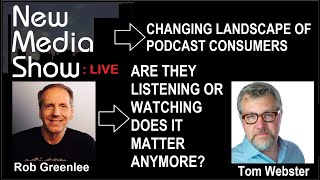
In this episode of the New Media Show, host Rob Greenlee interviews Tom Webster, partner at SoundsProfitable.com, to explore the evolving landscape of podcasting. They begin with an overview of Sounds Profitable’s mission to grow the podcast ecosystem through advocacy, networking, and research, noting its 150+ industry partners and the goal of surpassing broadcast radio revenue. The conversation shifts to the convergence of audio and video, emphasizing that video podcasts are consumed by the same audience and that platforms like YouTube are a primary discovery channel, even if not the top consumption medium. They discuss Podcasting 2.0 features such as transcripts and tags, arguing that tech should serve audience needs rather than dominate content creation. Monetization challenges are examined, including the need for better ad‑tech to reach the long tail, the potential of AI‑driven commerce integration, and the tension between brand safety and brand alignment. The hosts also debate the future of the Podcast Hall of Fame, its voting structure, diversity, and transparency. Throughout, they highlight the role of AI in translation, voice cloning, and visual commerce, and they promote upcoming Sounds Profitable events (SXSW podcast day, Podcast Movement) and resources. The episode ends with logistical notes about the show’s hosting schedule and contact information.
Chapters
Todd and Rob in the afternoon.
Hey, afternoon delight with Todd and Rob. Oh yeah. Hey, you're welcome. Uh, welcome to the New Media Show. Thank you so much for spending time with us this afternoon. Todd is out of town and I'm actually going to be live hosting this show for probably the next 4 weeks, so while Todd is off on his adventures. But I appreciate you being here. Thank you so much. I'm fresh back from Podfest and I have a terrific guest with me. I have Mr. Tom Webster, who's the partner at SoundsProfitable.com, and I'm honored to have him with me. Tom, thank you for joining me on the show.
Yeah, thanks for asking me. I don't know if you want me to play the part of Todd today or not. I mean, I think I could probably pull it off. I could be Todd-like.
Well, you know, it might be a good foil to the conversation since Todd and I have jested over this topic of consumption of audio and video podcasting and how they can kind of live in the same sphere and the same understanding. But I do think it's a transition that we're going through around perception between audio and video and how they're they're companions to each other. But before we dive full into that, Tom, I wanted to share with everyone a little bit of information about Sounds Profitable. So if they haven't heard about your, uh, your project now— so has it been, what, a couple years now you've been working on Sounds Profitable? And, and how's that going here? I'm going to pull, pull the website up on the stage so those, that are watching the show can see what Sounds Profitable, what the website looks like. And, and so, Tom, tell us a little bit about Sounds Profitable too before we get into it and, and how people can participate with you. And I know you're doing a lot of podcasts and you're doing newsletters and you're doing a bunch of stuff, but I'm— I think our audience would be interested to learn more about you if they haven't heard about you.
Sure. Yeah, I'm about to hit, uh, 2 years now, uh, as a partner at Sounds Profitable, and you know, Brian and I really have the mission of growing the podcasting space, however we can, right? I mean, there's, you know, you and I have had this conversation before that there's really no devoted trade organization that serves the podcasting industry. And there are some organizations that touch on it, but, you know, we're trying to fill that gap, as it were, by providing insights, providing advocacy, networking opportunities. We currently have over 150 partners that represent really the leading companies in the podcasting space, from publishers to ad tech to agencies to brands. And we talk to them monthly, and we talk to them about what their obstacles are, what their challenges are, and we do our best to help them solve those problems, all with the intent of growing the space. I mean, one of the things that I would like to do before I retire, uh, I would love to see the podcast industry be bigger than the broadcast radio industry. And I, I don't, I don't think that's far away, to be honest. And that's something that I'm, I'm really working towards to help creators get paid. Um, and I know I've spent a lot of time over the years talking to independent creators and talking to, uh, to sort of big podcasting and, and straddle that line. Uh, but ultimately I've been working this whole time to try and create an economy.
Yeah, I think that's important. And it's an interesting topic too that maybe we didn't think about coming into this is whether or not podcasting will ever hit the same monetary level that broadcast radio has. And if it will, or if that's its destiny, how long do you think it's going to take us to to get there? Because we're currently, what, at $2 billion of revenue and broadcast radio is still at probably like $13 to $14 billion. So we got a ways to go, don't we?
Yeah. I mean, you know, you have to sort of look at it this way. The broadcast radio revenues are declining, right? And so I would like to see audio do well. I would like to see audio revenues do well so that audio, you know, continues to thrive, continues to be a leading medium for engagement, which we all believe in. So rather than have, you know, the revenues that may have previously been spent with radio get spent on CTV and search and things like that, I would like it to go to audio creators. So, you know, ultimately that means helping to build the on-demand audio space as an economy, you know, with everything from measurement to operations. And that's— those are all the things that Brian and I are doing kind of largely behind the scenes.
So what do you think it's going to take for us to be able to get it back to, uh, to that kind of opportunity for the content community here in podcasting to be able to, you know, really in some ways essentially what we're proposing here is kind of putting broadcast radio out of business, um, if it's on that scale, or do you think that they can we can double the size of audio and radio will still have a place? Or do you think that radio is going to reach a minority place as opposed to podcasting in the long run?
I think radio still has a part to play, and I will always think that, especially at the local level. I think some markets may have too many radio stations, and I think that will equalize over time. But I think there's always going to be a place for strong, live, and local, and radio does that really, really well, right? So that it's not so much about replacing it as it is really about, and, and, you know, it's sort of a false choice because some of the biggest companies in podcasting are radio broadcast companies. Yeah, I mean, it's really, ultimately, I don't care how you get your cans of Coke as long as, as long as we're shipping them and they're showing up in machines.
Yeah, so yeah, I, I can see your point there. I know that there's some podcasting companies that are trying to play in the local radio type market space, like CityCast and, and some of those type of projects. But I do think— I do agree with you, Tom, that I do think that the big broadcast or radio folks will just have, you know, two, two arrows that they can they can go after the radio side and the podcasting side, and we'll see that. And that's what we've been seeing. The question gets back to, I guess, and this is what you're trying to solve, is, is, you know, what's the economics of podcasting versus broadcast radio? And, and how do we make that transition? Is it to be podcasting to become more like radio and how it's monetized, or which I think one of the reasons podcasting exists is a reaction to over-commercialization, if I think back to the early days of the medium. So how do you see us kind of navigating that difference in the history and the culture and the transition that podcasting has brought to—
Well, yeah, I mean, it's a lot of inertia, Rob. I think there's still a lot of inertia on the on the buyer side, right? It's, you know, it's easy to buy radio. It's easy to go into an agency and say, buy me the top 5 stations, 25:54, right? You're not gonna get fired doing that. So, you know, we, on the one hand, we need to make podcasting as easy to buy. And that doesn't mean replacing everything that everybody's doing with programmatic advertising. That just means options, right? And but also there's an education component to it too. I think podcasting I think a lot of questions get asked about podcasting, which are not the real issue. I think the real issue continues to be educating people, educating brands, and educating buyers about the power of the space, about the engagement levels, about the ability of this medium to move people to action so that, you know, the reasons why people might come up with for not buying it, measurement, etc. Become less important because, frankly, podcasting's measurement tools are vastly superior to what radio has access to.
Yeah, I've always felt that too, Tom. I agree with you.
Yeah, I mean, radio's measurement tools are terrible compared to— good Lord, could I do a whole show on that? So we have phenomenal metrics. We have phenomenal attribution abilities and, you know, phenomenal targeting abilities that things like broadcast radio and TV just don't have.
Yeah, it's almost like this curse of expectations, you know. It's almost like, well, I faced this early on with the radio show I did too, is a lot of my early radio advertisers started to increasingly see my, my radio show as kind of a digital property, right? And they started seeing my show as more like kind of like buying a sponsored link in Google or something like that. They wanted instant results from it, right? It was like They didn't value the branding, which is somehow we've transitioned to more of a brand awareness of the opportunity of podcasting and being able to move the momentum of brands. But there's not as much kind of direct attribution on brand campaigns, right? And that's a little bit of been a struggle, I think, for podcasting too, because I do think it's a curse of expectations. Of the ad buyers that's different than on radio. And what's your thoughts on that?
Yeah, and it's also an issue of scale. And it's, you know, it's sort of a chicken and egg thing, right? I mean, the industry needs to be big enough to support the, you know, buys that are large enough to have built-in— that we have those abilities. They just need to be built into campaigns, which means large enough campaigns to justify those expenditures, right? I mean, almost any modern mass media platform has historically devoted some single-digit percentage of its entire revenues to measurement. You get that in television with Nielsen. You get that now in radio with Nielsen, formerly Arbitron. It's just a cost of doing business. But the scale of podcasting is not quite able to support that. And measuring podcasting in the exact same way as we measure poorly radio is also a challenge, right? It's almost an intractable problem to get the kind of data back on an individual podcast that a radio station in a market might get back. But there's a lot of other things that podcasting can provide that are, you know, I would say more useful.
So you think that that's going to push us— I kind of wonder if the goals of monetization is going to push us into more proprietary distribution platforms, ones that are more Like YouTube is a good example, and this is probably a good lead-in to our video discussion, but I do think that there's pressure coming to bear, and especially as we come out of this economic crisis, there's such an emphasis now on being more efficient with the operations of podcasts and also really refining the advertising models. And, you know, this tension also that the industry has is that there isn't really any kind of a standard standards body board that is really trying to move podcast advertising forward. I know you guys are doing everything you can do to push that forward. I know that there's been a lot of discussion around some sort of a standards body or some, you know, I don't even know if that's the real solution because there's like so many different factions in this medium that have a different way of going to market and it's getting more complicated all the time and And I just, you know, I personally want to be part of whatever solution that we can come to here. And I've been working with the Podcast Standards Group to some degree, and that is a kind of a loose-fitting thing. And I do wonder that maybe we're coming into a new phase. I mean, Apple announcing support for transcription and embracing Podcasting 2.0. I mean, How do you see kind of even Podcasting 2.0 kind of fitting into this overall strategy, or is it real, do you think?
Oh man, I know it's a lot. Okay, it's a lot. Um, it is a lot, and it was part of like the impetus behind the article that I wrote this week was actually not so much about video as it is about keeping up with the changes in the audience as much as we keep up with, with changes in tech. And you know, the the sort of fear of proprietary platforms and walled gardens and things like that. That's how every medium operates, right? I can't watch Reacher on Netflix. That's right. That's owned by Amazon Prime, right? Right. I mean, that's just the way that media works is there are always going to be exclusives. And here's the mistake I think that podcasters make. And I use this analogy briefly in my, in my piece today. You know, there was a time in this country where you could walk into, uh, you know, a Tower Records or a Sam Goody and you could purchase a CD or a cassette or vinyl, right? They were all, they were all for sale. And even still, if you buy music online, you can buy it either as a CD, generally in vinyl, and you can buy the digital music file. All of those are still being sold.
Right?
And it depends on what your preference is and what, you know, if I'm home and I really want to, you know, focus on music, I'm going to throw on vinyl. If I'm working, I'm going to throw on a stream. And I think the mistake that some of the, I'm going to call them regressive voices in podcasting, make is to assume that your podcast is the music. It's not. Your podcast is vinyl. And vinyl is always going to have a place, but the music is your show. And if your show wants, you know, if people want to watch your show, if people want to listen to your show, if people want your show on vinyl, if you're able to do those things, I don't really care, uh, because all of them are going to increase the chances that your show is going to be consumed and consumable if you're giving people the choice. And the last thing I want to just put out there about this is that we did the research on this. And the mistake is to think that the video audience is different from the audio audience. They're the same people choosing which to do, depending on their environment and circumstances. So I'm not saying you have to put out video there. Don't, don't do video if you don't want to do video. But, but it counts. It all counts in the, in the, you know, the rubric of putting on a show, to me, it all counts.
Yeah, I agree. And Eileen raises a good question too. You know, I think we did see Apple, you know, embrace the transcription tag, but many in the industry are kind of like excited about this and thinking that this is a, you know, a crack of opportunity for the industry to be telling these big companies what kind of namespace tags that they will embrace going forward. I do wonder if this is really kind of an anomaly because of the ubiquity and the interest that transcripts have. Is this going to translate into any other tags being embraced by any of these big platforms too? I don't know. Do you have a perspective on that, Tom?
Again, I think that there's a lot of focusing on the tech. And, you know, let's, let's take transcripts for a moment. And transcripts are important for accessibility. I want to make that very, very clear. Oh, yeah, there should be, there should be transcripts, right? But transcripts are not some, they're not some magic thing, right? I know it's easier for you to focus on getting a transcript for your show than it is making a better show for your audience. Right. And so a lot of people are making that choice. But again, you know, I've already mentioned Reacher. Reacher isn't worried about transcripts, right? MrBeast on YouTube isn't sweating tags, right? They're making great shows that are focused on what they're getting back from their audience. And so not to the exclusion of the innovations that are possible with Podcast 2.0 and some of the additional tags that we could get in RSS, it's a false choice. It's just that we aren't spending enough time actually keeping up with the changes in the audience as much as we are the tech. And that's what concerns me.
Right. And that actually takes us to another inflection point in the program around trying to talk about that a little bit. And, and I think that there is a large misunderstanding. And like you told me at the beginning of this show, you're getting a little tired of fighting this battle of trying to overcome the industry's I guess, desire to be primarily seen as an audio-only medium. And I object to that just because of my history and what I saw in the early days of podcasting. It was an audio and video medium. And it's, in my mind, you know, even this show has been around for 13 years and it's been an audio and video program. And so And I do, you know, a couple shows like this every week. So it's— I don't see where there's a conflict here, but I guess there's a lot of entrenched interests in holding on, right, to what we have. And I think there's a lot of fear about the potential impact that a proprietary platform like a YouTube could have to the open aspects of podcasting. And I think that's really— if you cut it to the chase, that's what they're fearful of.
That's, you know, I get that. But there's nothing exclusive about YouTube, right? You don't have to make an either-or choice. You can, you can produce content for the screen and/or app and/or player that is in front of people. And Rob, you just mentioned this, and you know this full well, because I was there at the beginning right along with you when we had Revision 3, when we had, you know, French Made TV, when Beach Walks with Roxanne, right? Like all of those people, Those are original podcasters, right? Those are some, you know, there's some Hall of Famers for you. Those are original podcasters, and they were video podcasters. And so it's always been a part of our DNA. I think the issue is YouTube as much as anything. And I think there's some hatred of YouTube more than there is concern about video. But I will tell you that just as someone who has— look, this is my career. I care about this. Stuff. Don't ever get that twisted. I've been working in audio my entire career, and what bums me out about this whole debate is that, you know, podcasting originally started as a merry band of pirates that were progressive, that were trying to break out of the conservative mores of broadcast radio, right? And right now, so many of those voices are regressive. And not progressive. And the audience is always moving. The audience is always shifting. Yesterday's hot platform is tomorrow's graveyard and vice versa. And that's what we have to keep up with. So yes, provide transcripts. Yes, provide other tags that help people make money and have transactions and, you know, and make the experience better for listeners. But, you know, keep track of where the people are. And how their behaviors are changing if you want to survive.
Yeah, that's true too. And that's— saying all this about video is not to understate the complexity of actually playing that game. And it's— and being a video creator as well as an audio creator, I think, is a challenge for many people. And I think that I think that's also one of the things going forward. Hopefully the tools and the platforms, and I've been working with some, you know, like a StreamYard or whatever to help make these tools better for podcasters and to help them understand how to use these tools for video and audio and to make those processes easier. And I think AI is gonna have a role here. So we may see this convergence. And I know that's a buzzword now that's happening increasingly, but it just feels like that's the direction in the research. Like you keep saying, Tom, and other people are saying it too, it's not just you, that the audience is moving towards being ambidextrous towards audio and video. They're wanting to consume both when it's appropriate for their lifestyle. And it makes total sense because that's exactly what I do. But I've been actually gravitating more towards the video here lately than I have towards the audio. So it's, it's an interesting change that's happening.
Yeah, and I want to say 2 things real quickly about that, Rob. Number 1, very clear, very clear finding from our Sound You Can See research that what the video podcast consumer perceives as a podcast, as opposed to a video on YouTube, right, is this right here, you and me, side by side on microphones. They know what a podcast is versus a MrBeast stunt. There's no confusion about that. So to denigrate the video podcast consumer as somehow less than is simply not correct, right? They absolutely, they're smarter than we think. But the other thing—
We have to give them credit for—
Absolutely. They know what they're doing.
Them understanding what's happening here, right?
And the second thing is, all right, and I even said this as a subhead in my article, it's fun not to count things. So let's not count these things. Let's not count the video podcasts on YouTube and let's not count the viewers that are watching them. Guess what happens to the podcast numbers overall? They're not growing. They're shrinking because there is a cap on audio only. I think we can be audio first. I think we can continue and we have to be an audio first medium. But, uh, but the cap— there is a cap on audio only. And if you take away all of that audience that we have gained through platforms like YouTube, then this space didn't grow over the past couple of years. You got to grapple with that.
Yeah, I think you have to throw into the mix too, uh, Spotify's effort, and then also all of these, um, social platforms that are increasingly, you know, like we're streaming to many of them right now, you know, X and And, um, Facebook and LinkedIn and all these platforms, they, they all have a role in this. And, and this content, uh, what we're doing right now is a podcast regardless of where it's seen, where it's heard, all that stuff. It is a podcast. I mean, this show started as a podcast, it's always been a podcast. So, you know, the argument that somehow it's not just doesn't make logical sense to me anymore.
No. And if— and look, by the way, Rob, if it's 3 PM Eastern on a Wednesday and I'm in front of my computer, I've got you guys on live on video. You know I do. Yeah. But if it's like the weekend and I was busy on Wednesday, then I'm listening on an app. I'm listening, right? Awesome. The screen that's in front of me, it's where I am. It's what I'm able to do. And if— and if you are not where I am, I forget about you. I don't make you a habit. So you're only giving yourself a better chance of success.
Yeah, I agree. Especially as we kind of— I know, do you also map this to a generational change too? Is this really a younger movement primarily over like the older generations doing this? Or I mean, is that what you're saying, or are both ends of the age spectrum doing this?
Both ends of the age spectrum are doing it. And, and in fact, the perception that, you know, people talking into microphones in studios is a podcast is equally, if not more strongly held on the older end. And, you know, two things, because again, we are talking about YouTube mostly here. You know, well, number one, I've made this point before many times in the past, YouTube is the best content search engine we have. But the other thing is you don't need an account to use YouTube. You don't need to sign up for anything. If I give you— if I say check out my show, right, and someone says, how do I find it? I don't know if they have a Spotify account. I don't know if they have a podcast app or if they know how to use it. But if I say, oh, just search Sounds Profitable on YouTube, everybody can do that, right? And I sound like I'm advocating for YouTube. I'm not. I'm just talking about not making bad binary choices, false choices that we don't need to make. And it's so easy, especially for older Americans, to find content on YouTube. They're used to it. That why not, why not be where they already are?
Yeah, I mean, and it's proved in the research too that YouTube is what, probably the, the second or the most popular place that people are finding content these days.
It's a— I want to speak to this really quick, because it's a stat that often gets distorted, right? If you ask people, "Where do you listen to podcasts?" As in, "Where do you ever do it?" Most— the No. 1 or No. 2 answer is going to be YouTube, right? Most— the most popular podcasts available are also on YouTube. That doesn't mean that YouTube is the No. 1 consumption platform, right? I mean, more podcast content might flow through Apple Podcasts or might flow through Spotify. But in terms of the percentage of people, more people will say, I have ever done this on YouTube than on any other platform.
Yeah. And it, it does. I am also getting a little bit fatigued on this conversation to some degree too, but it's just being in the podcast industry, there's a lot of I don't know, there's just a lot of desire to hold on to what's always been. And, and I guess my comment is that, you know, we're kind of going back to what it's always been, not, not moving away from what it's always been. So, but I don't see a huge amount of growth in RSS-based distribution of video, though I'm, you know, we're doing that with this program. And that gets about, you know, 20 to 30% of the consumption of this program. So it's not an insignificant part of this. But, you know, I think these proprietary platforms is really the direction this is going. But I also don't see RSS getting less important either. At the same time, even though I think many feel like, you know, it's under threat somehow, but I think Apple just proved to us that RSS isn't going anywhere.
They did. And, and, you know, I think here's a, a, a double-edged sword, I think. Um, and that's when people say, well, I know my audience, my audience isn't doing that. I hear that, I hear that a lot, right? Um, and there's two things about that. Number one, that's probably true, right? Uh, if you've been listening to the New Media Show for 15 years, you probably listen to it first on Apple Podcasts. And that's, that's your ride-or-die. That's the audience that this program has shaped, right? But, but to sort of throw that into a reason why you don't progress, that's to hold your audience, to fix them in amber, and to, and to have a fixed mindset and not a growth mindset. And there's, again, I don't think your, your current audience is going to be mad if you're available on video. No, I just think it doesn't make any sense to me.
No, it doesn't. It doesn't. But I do think, to be practical about it, I think you do need to think a little differently about your show and how it's produced, and you need to evolve your skills to be able to, you know, look presentable on a video experience. And that's where this next level that we're seeing increasingly happen education around how to do video well, as well as get your audio out of that too. So I think that's the phase that we're at right now is that there's people that are moving that direction and the technology piece, I'm really optimistic that I think in the next couple years, AI is gonna really help with a lot of this stuff. And then, you know, then you see what's happening with short-form content, the vertical videos, and how the technology is making that easier and easier to do as well, that we may see, and then this announcement that YouTube made that they're gonna transcribe all of the English content into all the other languages in the world, you're gonna really open up your audience just in a way, but also all that international content's gonna be available in the US then, 'cause it's all gonna be translated into English too. More competition, but yet more opportunity. Do you have a perspective on that and how that could impact the overall numbers and how people perceive, you know, podcasts that are done on YouTube?
Yeah, I mean, it's not going to substitute for doing a native production in a native language. And, uh, you know, I actually have a little bit of a worry about that, that if that's people's on-ramp to podcasting, it may not be a very good one because I can't imagine those translated shows right now are going to be all that compelling, right? You know, I have, I continue to investigate AI and have been very active in, deeply into it. And it's not there yet to produce an entertainment. I'm not saying that it won't be. It can produce a translation. But, you know, I don't know, I guess I could read my memos online too. But that's not a very good podcast.
So Yeah, I've heard that they are planning on making adjustments to your lips to align with the local language. So it's going to get fairly granular and they're actually going to use your own voice. So they are going to take some liberty with cloning your voice and have that voice be used in all these different languages.
So how about making my voice come out of George Clooney?
Well, that's, that's, that's what I'm going for. You know, that's actually possible now, right?
Right.
Yeah. So, yeah. So anyway, that's, that's kind of the conversation. So I think, I mean, is this development that we're seeing part of that thought that you have that we're going to be able to reach parity with radio on the revenue side because of the video revenue? Do you think that there's going to be growth opportunity that comes from the video side here that really boosts and creates more opportunity on the monetization side.
I think the biggest untapped revenue source is in the long tail of podcasting. I mean, a lot of the top shows—
Long tail, right? Yeah, yeah. Buying across more shows, right?
That's what you're saying? Yeah. And the ad tech needs to catch up there a little bit. And, you know, and the sort of usability of that technology for a buyer needs to catch up a little bit, right? I mean, look, you know, this industry has been supported by wonderful brands, many of whom insist on doing live host reads and, you know, direct response and things like that, right? In this industry, you know, where would we be without BetterHelp? Where would we be without Athletic Greens and even, you know, an Audible and some of the longtime advertisers that we've had? But that's one, that's one choice, right? We also need to find ways for for advertisers to comfortably, reliably, and easily say, you know what, I wanna be on podcasts that talk about cars. And I wanna make sure that my ad doesn't run next to a Nazi. And that, you know, the technology for that is there, but not quite at scale. And that's, you know, that's the long tail part of it. We figure that out, And gosh, I mean, that unlocks a ginormous market to help. And again, if you don't wanna run ads, don't run ads. I don't care. I'm about giving people the option to build an economy and build a career out of this.
Yeah, I think it's the development that I think TikTok is doing by creating a product marketplace as a companion to their content catalog. And I guess Amazon's been doing this for a long time too. I just wonder if that is part of this, where the advertisers will be more linked up with a platform, a consumption platform, as we look to the future. And creators will— there'll be— that'll be like a mirroring of dynamic advertising somehow. And I just wonder if AI is going to have a role in, in doing that as well as we look to the future. Have you thought about that possibility?
Absolutely. And there does have to be a visual component to that. Right? I mean, even, you know, even things like smart speakers, the most usable ones are the ones that have screens because you want to be able to verify a purchase. You want to— yeah, that's the t-shirt I wanted, right? I don't order a lot on my Amazon Alexa device here, but like in terms of shopping, unless it's just, you know, to refill or resubscribe to something I've already bought. But if you have the ability, if the independent podcaster has the ability to pull in an offer from a, you know, a Shopify store, pull in the art from it and talk about it while they're doing it in a way that doesn't require them to do any work other than talk about it, then that's going to increase conversion. That's going to increase the sales and that's going to help everybody. That's going to help the, that's going to help the podcaster most of all. And that's the stuff that I think AI can help unlock, not content stuff as much as enabling commerce.
Yeah, I mean, that seems like the missing piece because we're all kind of struggling to do these brand deals and to do these host reads and stuff like that, which are very labor intensive, very costly to the industry. And if technology is going to be able to— and this kind of maybe dovetails to what we're seeing happen with the translation stuff, generating, taking original content and then generating derivative content from that. That is, I guess, at the end of the day, is it going to be trustworthy? Is it going to have enough quality to it and come across as genuine to the content creator? AI has proven to be a little bit kind of in its image generation and its audio generation to be not as trust building, right, in its presentation and how it's, you know, how it sounds. But, but I do wonder if that's going to improve.
Oh, it's absolutely going to improve. And again, if you're just talking about sort of automatically assembling approved assets that already exist, correct, that's, that's really possible now. You know, you don't have to, uh, you don't have to fear, you know, uh, putting together images of 12-fingered people using a product. Right.
Which has been a problem with AI for a while now.
Yeah. Like that, that, that's not necessarily the problem. But again, finding ways to just enable commerce and, you know, rather than have to worry about complicated attribution, if you can just, you know what, I'm going to, I'm just going to go ahead and order this through the podcast that like, that would be cool to do. That requires trust, as you say, that requires platforms that people have tested and are aware of and, and, you know, names that they, uh, that they trust with their credit cards and things like that. Uh, and yeah, it probably requires a visual component, which is again why I hate to see podcasters close themselves off from, from video because of what it could do for them just in terms of what they could do for their sponsors. I mean, ultimately you have to want— if you are taking sponsors and you are running ads, you have to want to do a good job for them. You have to want to be able to put as much effort into those reads and into that advocacy as you do your own content in your own show. Not to do so, number one, hurts your own pocketbook, but also it kind of hurts the medium. So, because we have, I think, the best engagement and the best conversion.
Yeah, so I don't necessarily think that these endorsement, the endorsement model is gonna go away. I'm hoping that the technology will evolve to make the endorsement models more efficient for everyone involved. And then, and that will trigger the availability of buying much wider campaigns across more shows. I know, you know, Todd Cochran's been saying for a long time, you know, 'cause in the early days of podcasting, You know, we were selling and Todd specifically was selling across like 200, 300 shows on one campaign. Now, granted, programmatic can do that today, but I'm talking about mostly host endorsed. And I think the CPM models on that are much higher. I just wonder where that's going to go. Are we going to be able to scale? And this is really a buyer problem, isn't it, Tom?
Well, it's, it's, it's not— the problem doesn't lie in any one camp. It's across the board. And, you know, yeah, yeah. And one thing I would say is that, you know, I think if people knew, uh, that their favorite podcaster was just mailing it in, that the show was voiced by an AI, right, right, I, I think they would reject that show. But if, if they, uh, even if they knew that AI was being used to help with ads, with sponsorship, right? And that it was an, you know, an AI model of that host, you know, reading an ad in a way that refreshed the creative every show. Because, man, I hear the same ad all the time, months and months and months. That's the problem. It's a creative problem. And if that's what doesn't scale, so, you know, I don't want to hear that my favorite podcaster is mailing it in with AI. But if the ads are, you know, if the ads are, you know, hard to tell, right, if it sounds like, if it sounds like my favorite creator and it's continuing, I would rather hear a competent AI give me a different read of an ad for a product than hear the same freaking ad every single week, because that doesn't help anybody, right?
Yeah, I agree. If it can, um, and this might still put a burden on the podcaster to still voice a read and then the AI takes it from there, right? And maybe creates different derivatives of that read or just uses the audio as a model for creating other versions of the read. I don't know. I mean, I think that the technology needs to get better. I'm not sure we're there yet. I'm sure it will get better and it probably will get to a point where we really can't tell. That's kind of what I'm thinking is probably going to happen on the visual side and the audio side, but it may take a couple of years.
You know, I'll give a really good example of how this isn't a one-sided, how this is a gray issue and not a black and white issue. And, you know, I've worked in the audio industry for a very long time, as you know, both I've worked in radio and in audiobooks as well. And I've heard technologies that are not widely marketed that enable the AI reading of things like audiobooks, right? There's actually incredible lifelike technology. It really sounds like a real person. And if you are trying to make it as an audiobook narrator, that's bad news for you, right? Because that's, your bent is going to be that that's taking your job. But actually it's not taking the job of really good narrators. What it's doing is enabling the narration of books that normally it would not be financially feasible to do audio versions of. If you look at it that way, it's not black and white, it's gray. Um, and I— and all of this stuff is gray.
Well, I think it unlocks the, uh, opportunity, um, in a, in a way. And that's really, I think, what this AI stuff is going to do, is it's going to unlock areas of this medium, um, that will create new opportunities, uh, because it wasn't economically viable to do otherwise prior. So, you know, I think that's part of it too. And buying across larger numbers of shows is a metrics issue too. I mean, it's, do the buyers trust the metrics? You know, I know brand safety and brand suitability is, you know, it's here to stay. It's not going anywhere. I don't always like it. I don't like it from a content moderation perspective, but I also, and practical around my view of it too, that brands are increasingly and have been, you know, sensitive to content that they, they feel comfortable to be associated with. But I also know that there's research that comes out and says that it really doesn't matter when it comes to ROI that much. So how do you see that playing out over time, the whole brand safety piece?
Well, we've tried to, you know, we've put out some research on this. We're going to continue to revisit that, uh, as, as we go forward, because I think people immediately leap to the edge case, right? They say, well, I don't, you know, my podcast, you know, my message, I don't want people selling my mattress to Nazis. Well, I will tell you this, the mattress people will sell their mattresses to Nazis, right?
It's all about ROI to them, right?
That's exactly right.. But you know, this stuff happens in every medium. It happens on YouTube that someone finds out about it and they pull the spot, right? Like, I don't see why podcasting necessarily should be any different to that. But people just immediately jump to the edge case of that without actually looking at how wonderful our targeting capabilities are, which again are superior to things like radio and TV, so that the upside is far greater than the downside. So more education there.
Yeah, I think the opportunity there is more around context, right? So the context of the content can either be looked at from a filtering perspective, from the standpoint of content filtering or moderation, but it can also be looked at as a targeting vehicle for brands that want to associate with certain topics that align with interest by their customer base. So I think this, I think it's maybe not the right term to use, brand safety. I think the term that we should use is brand alignment. Um, that's kind of my, my, I'm starting to feel a little bit more strongly about that because brand safety and brand suitability implies some sort of content moderation or that is putting the podcaster in a position. And I saw this segment that Conan O'Brien did here recently talking about, you know, content safety and moderation topics. And his whole kind of podcast crew were concerned that, you know, Conan was going to have to change his content in order to align with the values of the advertiser. And he was very uncomfortable doing that. Because it cuts into his ability to be a comedian and make fun of things. You know, that's, that's a fine line to walk.
I think it is. And this may be something and is something where AI is helping, and AI is going to continue to help in. And I think the best example of this, Rob, is, you know, a lot of, I think, rudimentary brand suitability efforts involve lists of keywords, right? And, you know, like, I don't want to be mentioned where they talk about guns. I don't want to be mentioned where they talk about war. Well, the net impact of that is potentially defunding the news. And we're seeing that with journalism just failing all over the place in terms of financial support, right? Well, we don't want to defund the news. And I think if somebody's watching a news show or listening to a news podcast, they're not going to take it, you know, against the brand because they heard a story about guns. So that's something where AI can help. And I have got to— I've got to hang on. I've got to give something to my dog or this is all going to explode.
Going to bite you.
It's going to bite me. So I'll be back in 2 seconds, really.
So talk amongst yourselves. Yeah. Yeah. Okay. Yeah, I was going to change the subject just briefly and make a mention that this past week we saw the the Podcast Hall of Fame, um, be, uh, that happened down at Podfest down in Orlando. And so we had, you know, 8 inductees into the Podcast Hall of Fame. We were lucky enough to have Dr. Drew be our master of ceremonies. And so that video is going to be coming out here very soon that you'll be able to watch the full ceremony. It should be out any day now. There's clips that have been put out online, and I was going to play, play maybe a couple for you here so you could kind of get a flavor for Dr. Drew up on stage. So let me do that here, and let me play this for you.
Congratulations to not just the inductees, but everyone that has been around this event. It's just so extraordinarily positive. I just am just really so thoroughly impressed with the podcast community. And as someone that kind of moves around in different areas of media, I got to say, this is by far my favorite. So thank you for being what you are. And isn't it great having the freedom to go directly to your audience? I talked about it this this morning. To me, that was such an astonishing reality. So let's get to it. Again, this is the 2024 Podcast Hall of Fame induction ceremony, and tonight marks the 6th induction ceremony. And of course, people like my longtime friend Adam Carolla will be inducted, Jesse Thorn of NPR, The Bullseye, and Aaron Mankiewicz, Lore podcast TV series, also each have contributed quite a bit and influenced in the podcast world. And the reason I was brought in was I was told that Adam was getting an award and wouldn't I want to present it to him. Adam's not here, you'll notice. Sort of getting used to that with Adam. I don't know, Susan, you ever get used to that? So we're never doing anything with him again. Well, here we are. But I'm glad we are here nevertheless. And I want to thank the sponsors of the event, Lipson, Hall of Fame Induction Committee, Podfest Expo, and Women's Meditation Network. And of course, it's a privilege. We'll have the privilege tonight of hearing from the Hall of Fame inductees.
All right. I didn't want to play too much of that. Let me get out of this and we can talk about it a little bit more here, Tom. So what do you think, Tom? I mean, about the Podcast Hall of Fame, just your gut, gut reaction. Do you think it's an important thing for us to, to continue? I know that the Hall of Fame has been around since 2015. I've been working on it and, and it's an all-volunteer effort to try and keep that alive. It used to be part of Podcast Movement, but this past year we moved it to Podfest. And hoping to keep this, keep this alive. And do you have a perspective on the Hall of Fame, Tom?
I, I do.
I figured you might.
I will say this: I was very pleased to see Laurie Sims make it.
Yeah, no, I was excited about that.
Yeah, yeah. I was very excited to see Laurie Sims make it, who is not a name that a lot of podcasters know. But, but But I think, you know, the people that have been working behind the scenes to make the industry, you know, viable for people are every bit as important as the people that have been out, you know, selling podcasting courses and things like that, right? Or having a big podcast. I mean, all of those things have contributed to making this industry what it is. I think my, I guess, concern with the Hall of Fame as it is is that it feels a little black-boxy to me and not particularly diverse. And that's, those are some of my concerns with it. And I know that, you know, anytime you have a, I've done awards in the past, I've done judging in the past, and anytime you do that, you open yourself up to criticism. I'm very sensitive to that. It's a, it's a very difficult thing, right? I'm on the show committee for the Ambies. And, you know, you get the, you have the same sorts of issues and stuff like that.
Yeah, I was in the, I was the first chairperson of the Podcast Academy in the AMBIE. So I'm totally aware of what you're, what you're saying, right?
Yeah. And I think the, you know, I'm very sensitive to structural bias. And right now, you know, what the, you know, the voting of the Hall of Fame and who's actually making the nominations and actually making the votes appears to me to be previous winners, I believe.
Yeah, no, that's, that's exactly what it is right now.
Yeah. Right. Which makes it, makes it kind of difficult to change a little bit when, when that's sort of the perspective of it, right. And so I hope that the Hall of Fame continues to try to bring in voices that aren't just previous winners, that bring in some other perspectives. Because otherwise, you're going to get I think, a very one-sided view of what's been important to the industry. I do think that it's important to honor, uh, early pioneers. I was, you know, I was sad that the years that it was skipped, uh, I would, you know, I would love to see, you know, I would love to see a, uh, black tie gala and, you know, just a wonderful, uh, night to, to honor everybody. And, and, you know, there are all kinds of things I would love to see it grow into. I do think it's valuable and important to honor the people that came before. I think it's also important, though, to open that up beyond just past winners. Because it's, you know, you know a handful of people in your life, right? If you, if you start to like list all of the people that you know that you could reach out to, or even that, that the podcast that you've listened to, that's your universe. And, and if that's your universe, those are going to be the easiest names to come up with. And then you start to struggle with other names just because it's not your experience. And that injects a kind of institutional bias into the organization that I think will not help the Hall of Fame going forward. So that would be my encouragement, as I know you're very much involved with it, to be open and active about recruiting other perspectives.
Well, it's, it's, it's not— well, I guess I, I definitely agree with the premise of what you're saying. Uh, I think we have to also look at, um, I think that the, the, the induction committee, which is the past winners, have deep knowledge of the medium and, and also have a, have a strong historical view of the medium as well. And our— if you look at the criteria for inclusion in it, it's very clear and it has nothing to do with maybe some of the issues that you're referring to. It's more about impact, their performance, what they have brought to the medium, being people that have helped the medium develop and grow. And that's, you know, there's two kind of sections. There are kind of creators, and then there are people that we're considering that are kind of behind the scenes. And I think Laurie Sims is a very good example. So if you go back and you look at all the past inductees and look at that list, there is a lot of diversity there, actually. So it's, it can always be more. I suppose. But if you focus on what the criteria of being included is, it's very much focused on impact, performance, and just being a supporter of the community itself. And to some degree, it's around success. But I wouldn't say that that's the primary. And case in point is, Doug Kay, and I think we both know who Doug Kay is and his early impact on the growth of this medium. He doesn't currently have, you know, and he never really had a big show, so it's not about popularity or anything like that. It's really about the technical impact, the performance, and who, who got helped in this medium as part of what they did. You know, I think if you look at the actual winners, it's, it's representative of significant impact. And that's what we're hoping to do. I can play a little video. Actually, I explained this at the beginning of the Hall of Fame, and I can play that right now. The big picture of what this event, the Hall of Fame, represents to the podcasting community. And I think one of the things that the community has expressed to me over the years is, is just how we as an industry value the contributions of people that have started this medium and really built it and really inspired so many others to create podcasts and to build successful shows. And that's really what the Hall of Fame is about, is to recognizing those individuals that have contributed significantly. We've, we've inducted about, I believe, 41 inductees so far. Yeah, at the end of this event, yes. Okay. And so that is, you know, we've got a long way to go. There's a lot more inductees. So I don't know if you want to talk about, Rob, the, the process that we go through to select inductees, the process, the big picture of this event. So let's hop out of this.
And well, yeah, I mean, the thing that I would say, Rob, and it's not, um, it's not to say that your selections previously have been not good selections, because they have been good selections. I think largely they've been good selections. I, you know, I may quibble with one or two, but, um, it's, you know, no, everybody's going to quibble with a few, right? Everyone's going to quibble with a few, but I, but I, but I'm more thinking about the acceptance of this as an institution. And if we are going to be accepting of this as an institution and the voting is always done by past members, then it, it kind of becomes like your Supreme Court justices, right? Well, who— it's Rob Welch voting for life, it's Rob Greenlee voting for life, it's Todd Cochran voting for life. And that doesn't feel like something that other people can touch and feel like I had an involvement with, I had a say in. And that's what— that's a perception thing.
So, so how do you see us solving that or changing that?
Uh, having an open board.
Um, open board, but there has to be some criteria for, for being on the board, right?
Of course. Yeah, of course.
But, but what would that essentially criteria be, do you think?
I think people could vote on it just like they do with, uh, the board of governors for the Podcast Academy., right? And, and it may very well end up being that that board consists entirely of, uh, previous winners, right? It's just not determined by fiat. And that's the fee— that's the perception from as an outsider, that it's determined by fiat, uh, the judges are elected for life, um, and that it's not something I can really participate in. And that's hard, I think, for people to embrace and engage with when they don't feel like, uh, that there's anything open to them at all, even if it's, you know, an at-large voter, an at-large board member, or something like that. And again, that's not to challenge the previous winners and nominees at all, or even the job that you're doing. I'm more talking about challenges to institutional and structural bias when you have a closed committee of previous winners elected essentially for life in the way that it is right now doesn't feel approachable, doesn't feel malleable, doesn't feel embraceable by people who maybe started in podcasting 8 years ago. Not that those people would necessarily be involved or that those people would be elected to, to anything, but, uh, but to know that they could be, I think, makes the institution, uh, a little bit more acceptable. Take it for what it's worth.
Yeah, I think if you look at the the criteria for inclusion in the Podcast Hall of Fame, it's actually on the website. And it kind of runs through key principles. And it's, you know, the duration of involvement in the medium is not a, there isn't a hard and fast number to that. So it's, but in a, In a practical sense, Tom, if you're talking about, you know, inducting people in that have been in the medium for a year or something like that, or, or, or some kind of timetable like that, that may not be something that, you know, aligns to the priorities of, of who's had significant impact on the medium. I guess it's possible that someone can have a massive impact on the podcasting medium in a year. I suppose that's possible. I think it's kind of a rare thing, but also On the voting side, um, how big do you think that the voting committee needs to be, and who, who do you think needs to comprise that committee?
I don't think it needs to be particularly big, but it needs to change. Change? Yeah, I mean, again, what I'm talking about is the, is the perception that it's a handful of people elected for life making this determination every year, right?
Um, do you think that those people should not be included in the decision-making process, um, past a certain point in time?
Uh, if they're elected to be so, that's fine. Not by fiat. What I'm saying is that it's a, it's a self-perpetuating body that's created, right? You've all, uh, sort of self-elected by fiat for life. Um, and this sounds a lot more negative than I mean it to be, but I'm really just talking about how it's perceived by the outside world, that there's no, um, uh, there's no turnover. Right? And that, I think, you know, the getting new blood, getting new voices, different voices, still experienced voices, not necessarily Hall of Famers, but people that I think the, maybe the industry recognizes and votes for, again, would improve the perception that it's not just, you know, an old boys' club. And that's my fear for it. I'm not suggesting that that's where it is right now, because there's so many deserving people and a backlog from the years. Yeah, where there's massive— yeah, you're not— you're not going to run out of good choices for a while. So no, that's not what I'm concerned about. Um, but, but again, I think I'm concerned about a perception that it's, uh, a closed select group of people elected for life always making the choices. And that's not how the, you know, Academy of Motion Picture, uh, works.
That's not how Yeah, but it's not an awards program, really. It's, it's a lifetime achievement award of sorts. And those are oftentimes not picked on a public basis either.
Well, I'll give you a good example here, and I'm not going to put you on the spot, but, you know, it's okay.
I just want to know what you think as far as, you know, if you know an idea. I'm not asking you to solve the dilemma, but I'm, I'm trying to get, get a sense so I can lead this committee going forward.
That's a great way to—
that's a great way to put it, right? Right. To say, you know, maybe we, we need to expand it beyond the 41 people because only probably only two-thirds of the 41 actually participated in the voting last time. So it, it was a pretty small group of people that made those decisions, but those people are very knowledgeable about the medium too. But yeah, but, um, but it may um, makes sense to add, like, maybe expand that committee to people that are not Podcast Hall of Famers, um, you know, like adding like maybe 10 more people or 20 more people that are outside of the Hall of Fame, uh, you know, induction group, um, to get a broader, you know, voting perception on that. Right. Might be an interesting idea.
That's all I'm suggesting. That's all I'm suggesting. Because look at it this way. I'll give you an example, and I'm not going to put you on the spot about this person, right? But let's say that Sarah Koenig, right, from, right, from Serial, right? Is that, you know, is she a Hall of Famer or not a Hall of Famer? And maybe like right now, the present committee that prises the Podcast Hall of Fame of past winners may not believe she is, may not believe the body of work is there, may have been important to the industry, but the body of work isn't there. If, if Sarah never does anything else in podcasting and the committee never changes, does that opinion ever change?
Yeah, Tom, I think that example probably wasn't the best one because she was invited and she declined. So Um, that's, that's another factor in this too, is each individual nominee has a choice. Yeah. Uh, of whether or not— and there's been 3 people that have turned down induction into the Podcast Hall of Fame. So just, just because someone isn't there, that doesn't mean that they weren't asked. So it's, it, you know, that sometimes, you know, I don't think I've disclosed that ever in the past.
No, it's news to me.
So, right, breaking news. So, so it's Yeah, I mean, it's just one of those things that, um, that, that happens, you know. I've been in the middle of, um, of all those, and some people just don't want that kind of recognition. There's, there's been a couple of them over the last couple years that have, have declined, and that's okay. They have every right to decline. Um, so, you know, if they don't have— if they don't align with the values of being in the Hall of Fame, which is kind of what's happened. Um, and it's okay. I mean, there's plenty of others, like, like you say, that are deserving to be in, in this group as well. But I do tend to— I, I think I can see your point is good, that, you know, expanding that committee a little bit. I guess my question gets back is, what's the criteria for who's included in that committee? I guess would be I guess, what we have to wrestle with? Tough question. Yeah.
It is a tough question. It's a tough question. But you know what? It's, I'm all about doing the hard work, right? Making the hard choices, doing the hard work so that we are more bulletproof and more resilient as an industry. And I do think that there is a place for turnover. People are always going to—
in the voting committee, right? People are always going to have a place to criticize, uh, and they will. So, and I, I definitely learned that in, in many aspects of it. But, but yeah, I'll take your, your, your comments and your contributions and take it back to the group and, and see if we can come up with a better strategy going forward. I do want the Hall of Fame to become more accepted, and it including the broader industry, it, it does appear to be fairly heavyweight towards Lipson right now. And but that, that is a, a little bit of a challenge that existed even for the Podcast Academy too, is that it, it takes resources to put these events on, right? And so this is also what happened to the Ambies too. I mean, larger companies came in and sponsored those events, made them happen. They're very expensive to put on, very, very challenging to put on, and it takes a lot of money to put those things on. And oftentimes the larger companies are the ones that you have to work with that have the resources to be able to support something like this. And so we've been operating the Hall of Fame on a, on kind of like a, to some degree, a shoestring, you know, budget. And Lipson was willing to step up and pay for the cost to actually pull it off. So, you know, that's the other reality of doing these type of events is, and that also puts us in a situation where we face criticism because maybe, you know, we're aligning ourselves with big companies, you know, and not.
Yeah. I mean, I don't, I think Lipson has done a tremendous job supporting the industry and I, you know, And, you know, are there a bunch of Libsyn people in the Hall of Fame? Yeah, they, you know, were, I think, Hall of Famers in some cases before they even joined Libsyn. Right? I mean, and not all of them are at Libsyn. And you're one of them, right? You're one of them, right? But I mean, I have no quarrel with, again, with people that have been elected to the Hall of Fame. I really don't. There's so many, there's a backlog of really deserving people and the contributions of of you and Rob Walsh and Dave Jackson. I mean, Dave Jackson's helped so many. Yeah, and Elsie. And, you know, I have zero issue. And, you know, and again, I think Laurie Sims is very, very deserving, and people need to know about her contribution to this industry. So that, from that perspective, the Hall of Fame is crucial.
OK, awesome.
All right, Tom.
There you go. Well, I think your dogs are probably calling on you.
They are. They are stridently demanding my attention, so I'm gonna go walk 'em.
Yeah, all right, that sounds great. Well, thank you, Tom. I appreciate all your time today and sharing your thoughts on, I think, two pretty significant issues or topics in the medium today. And I always, I respect your thoughts and we'll see what we can do on, at least on the Hall of Fame side. But the, the other topics, it's like, those are, those are topics for the industry to, to wrestle. And I know that you're trying to do that with the Sounds Profitable, um, kind of platform that you're working on right now. So how can someone, uh, engage with Sounds Profitable, uh, learn from you, um, all those kinds of things? I know you do podcasts and newsletters, so how would a person sign up for that?
Uh, just go to soundsprofitable.com. We'd love for people to sign up for the newsletter. It's the sort of entry point into everything we do. You know, I write a weekly article. We also have a daily podcast called The Download, which is really focused on the top 3 to 5 stories on the business side of podcasting. So not so much, you know, announcements from companies and things like that, but, you know, things that affect kind of the broader advertising space that touch on everything. So, but it'll be right in front of you. We would love for you to subscribe at Sounds Profitable. And, and that's really it. You know, all of our resources are available not only for free but also without any kind of other registration. So you're welcome to download our research. We don't ask for email addresses. We'd love to have it, at least to get our newsletter, which I, I hope you'll find useful.
Yeah, so we're in— yeah, you guys are aligning with various events out there too, and putting on kind of training conferences and stuff. What's the next one coming up for you? And, and are you guys looking for people to get involved in Sounds Profitable from the industry? And, and what's the process for doing that?
Sure. Well, as I mentioned, I think at the beginning, we have over 150 partner companies who are supporting our efforts. The next major thing that we're doing is a full official day at South by Southwest. It's the first podcasting day that they have ever done. It's, it is an official South by event. It's, even though we're helping to bring it on, it's, it's part of the normal kind of South by scheduling. If you have a badge, you can get in. And it's a full day of, of panels and sessions, a new research study that I'll be promoting. And there'll be, we're putting out some press on that, I think, early next week that is going to reveal reveal all of the people that are gonna be speaking. There are gonna be celebrities both from the industry side and also on the talent side. And it's gonna be, I think, a fantastic day and not done something like that at South by. And that's again, part of our mission to grow the industry, to make it more visible outside of the bubble that we're all in. So we're hoping to reach other agencies and buyers and brands at South by. And then of course we'll be back at Podcast Movement Evolutions. I believe I'm giving a keynote and we'll have our partner lounge there available as well.
And you'll see me in the halls. Well, Tom, congratulations on building, you know, such an impactful organization that has the support of so many, you know, big partners in the podcasting space. I mean, I think it's amazing what you've been able to do in a very short period of time.
So. Thank you. Yeah, that's my partner Brian, who is just a force of nature. He's, he's really phenomenal. So, but thank you. And, you know, always a fan of the show, Rob.
Thanks for having me on. Yeah, well, thank you for, for joining me, Tom. It was great to have you back on with me again. I know you've been on this show many times over the years. So, all right. Well, thank you, everybody, for watching the show today. And I'll be back with another episode of the New Media Show next week, as Tom— or not Tom, but Todd— is going to be gone for pretty much the whole month of February. So guess who's in charge of the New Media Show for the whole month of February? So it's me. So, so anyway, go sign up for, uh, go check out newmediashow.com, and, and would love to have you as part, part of the show. And if you want to reach out to me, I'm available right here on this email address, rob.greenlee@gmail.com. I also on, on X @RobGreenlee as well. And this show is on X as well at, uh, pod— was it Podcast, um, NMS? So @PodcastMNS. I remember that right. So thank you so much. And Tom, thank you, and thank you for being here with me today. So see you next week.
Thanks. Bye-bye.
More from Rob

Future-proofing with Delphi AI/Human clones: your podcast as a personal LLM | New Media Show






How sports reveal what AI spectacle gets wrong #Technology #Sports #Commentary



