Opportunities for Smaller Streaming Media Companies | StreamLeaders Report Live Group Show
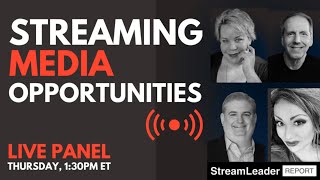
In this unscripted live panel, hosts Ross Brand, Rebecca Gunter, and Rob Greenlee discuss recent industry news and strategies for smaller streaming creators. They begin with Descript’s acquisition of Squadcast, noting a trend toward merging creation‑and‑post‑production tools and the pressure this puts on competitors like StreamYard, which recently added appearance‑touch‑up and recording‑pause features and supports simulcasting to multiple platforms. The conversation shifts to niche streaming services, spotlighting Dropout’s subscription‑first model, low‑cost pricing, and focus on micro‑shows, and they compare it to other niche networks such as HeadGum. They explore alternative monetization avenues—Uscreen, Vimeo, Switcher, Patreon, and emerging value‑for‑value/crypto models—highlighting the move away from ad‑based revenue toward paywalls and community‑driven subscriptions. A creative marketing idea is proposed: using temporary (or permanent) tattoos as a viral promotion for podcasts, with participants sharing photos on social media. The panel then tackles YouTube’s new policy to remove cancer‑treatment misinformation, debating the balance between protecting public health and preserving open scientific discourse, and extending the concern to broader issues of “ground truth” in health, nutrition, and personality assessments. Throughout, the hosts reflect on trust in platforms, the evolving nature of knowledge, and the need for creators to build resilient, independent communities.
Chapters
It's the Stream Leader Report live panel. Creators talking to creators, raw, real, and unscripted. And sometimes they say the quiet part out loud.
Here are your hosts: Claudia Santiago, Rebecca Gunter, Rob Greenlee, and Ross Brand. All right, welcome to the Stream Leader Report, the live panel. It's just 3 of us today. Claudia can't make it, but, uh, we look forward to having Claudia Santiago back with us next week. Meanwhile, it's Ross Brandt, that's me, from the Stream Leader Report, Rebecca Gunther from Business in the Raw, and Rob Greenlee from the Trust Factor. And before, we get into our regular topics that we're going to discuss today. Uh, there's a lot of news, um, in the industry, and one that I think caught all of our eyes was Descript has acquired Squadcast. Descript, of course, is an advanced editing solution and transcription where you can actually do text-based editing. Squadcast is a high-quality place for recording remote interviews. And now, as I understand it, if you have a Descript account, you have, uh, included in that free access to, uh, your high-quality remote recording through Squadcast. So any thoughts, uh, Rebecca or Rob, on, uh, the acquisition of Squadcast by Descript?
I know at least one person who was lamenting renewing his Riverside app about 12 hours before the announcement came down at full price. At least one person.
That's—
well, yeah, I can't wait to hear your feedback.
Yeah, I think it's indicative of where we are with a couple of things in the industry. I think the convergence of video and audio recording in platforms, um, like a like a Squadcast or Riverside or StreamYard. It just seems like that there's a movement that direction as more people think about video in combination with their audio. So as you think about trying to build communities, whether it be through live streaming or just recording, I think, you know, these tools are really emerging as something that podcasters are really looking at more. Now it's not always a perfect fit for every podcaster. I know I'm a subscriber to the Descript platform. I use it all the time with the videos that I'm, I'm doing, and it creates transcripts and it does a lot of the post opportunities for, for shows. But this is a little bit of a kind of what I've been thinking for the last few months about the integrations of the creation side with the post-production side. Increasingly with the— even with these AI tools. And to some degree, that's kind of what we're seeing here is this integration between the creation side and the post-production side from a tools standpoint. We haven't really seen that happen a lot up until now. A lot of these tools have been kind of separate from each other, but, but we are seeing this integration happen. And I believe this is just the beginning of more of that.
Yeah, Descript has other integrations as well. For this podcast, we use, um, uh, Spreaker, but for some of my other podcasts, I use Captivate. And there's actually an option built right in where you can take your file and send it to Descript right within Captivate. So they're, they're integrated that way. And I'm sure a lot of the different companies that we're talking about and other companies like them have different integrations with each other. As well. But here's a case where they're becoming one, one family, and one subscription gets you access to, uh, all the features, which is cool. The other thing I'll mention is, if we're looking really especially good today, StreamYard has added, uh, the feature where you can touch up your appearance. It's just a one-click in a box. It's sort of like what Zoom has, um, I don't know, I— you can decide if it makes any difference. Also, uh, you can pause recording. Now I don't know if you can do that, uh, when you're live and that recording, but if you're in record— let me see. Yeah, if you're recording in record only, if you're in record only mode, you can definitely pause your, your recording. Here I think it's just end your broadcast if you're actually live streaming as we are now.
Yeah, and a lot of podcasters have been doing that with their pre-recording of their audio podcasts for a long time. They'll do it up to a point and the lawnmower outside the window will go by and they hit the pause button.
Right, right.
So until it finishes going by and then they resume. So this is a tool that You know, it's just another indication of the integrations that we're seeing with these platforms into kind of the workflows of what's been more traditionally a podcast production process and making it easier and simpler and adding that capability that's been in kind of audio recording software for years. And I think that's what we're seeing happen here to some degree.
So we're doing a kind of a simulcast today because StreamYard has a feature that lets you, uh, send it to your guests, or in our case co-hosts' platforms. So, um, we're going to different YouTube channels and different channels. Um, we're also going to a Twitter channel and a, uh, a LinkedIn channel. So, um, I don't know that I get everyone's, um comments here. So if you guys are able to check the comments on your channel if there's any questions you want to bring in, uh, but we're, we're thrilled to have you join us whether you're joining us on YouTube, on LinkedIn, or on Twitter. And if all goes well, maybe we'll add some other destinations as well as we move along. So now as we get into the, uh, the heart of the show, we're going to start out with Rebecca And we're going to talk a little bit about how there's new opportunities for some smaller creators in the streaming space.
Rebecca, I can't believe I get the lead story. I've been trying so hard every week. I won the personality face-off. Before I get into it though, can I ask a question, an opinion of you, um, about this Descript scenario? Sure. What does that mean for StreamYard, if anything?
I think it's going to put a little more pressure on StreamYard to do similar type of integrations, I think is what the results are going to be. Because I think as you think about kind of the post-production capabilities of that integration, it definitely is, you know, it kind of gives a little bit of an advantage to some degree. And I think that the competitive platforms are going to react to that and try and build in more integration. So you can, you know, you can see with the StreamYard, they're adding, you know, increasingly they're adding these functionalities that content creators need in there, you know, to create kind of a one-tool solution. And that's kind of what's going on here. Now, granted, the StreamYard or the SquadCast and Descript tools are still distinct tools. It's not like they're built into one tool quite yet. That could be the ultimate destination of this. But I think it's just a sign of what we're going to see increasingly happen with these platforms. The creation and the post-production side are going to get integrated more.
Well, you know, I'm a big fan of what Squadcast does. I think they're very high quality. I think they're great, great guys and women who run that team as well. And, um, so I'm impressed with them. It's a tool I definitely recommend to people. Uh, but StreamYard has live streaming, and that's, you know, that's something that's not easy to, to replicate. Um, you've got this whole live streaming studio. You can really produce a show. If you're like me, I do almost everything live or live-to-tape style, so I'm producing kind of editing, so to speak, cutting the show, however you want to say it, as I'm going along. So for me, StreamYard remains an indispensable tool because it's what's allowing us to do what we're doing right now, which is go to all these different platforms and have this con— these conversations with the chat and, um, and so forth. So I, I, I don't think that it's— I, I mean, I think StreamYard's come— like Rob says, StreamYard's come a long way in terms having local recording and really upleveling the quality for people who really want multiple tracks and the highest quality audio and video. You know, so I think there's some overlap, but I think each tool also has its own sort of user base of why they would want it.
Yeah. I agree with that.
Good hot takes, you guys. Yeah, thank you. Good question. Thanks. Awesome. So, uh, if I may go back to my winning spot here.
Here we go.
I love this topic of conversation because it's like, um, so many of us often— I don't, I don't know about, about you guys, but at least I sometimes feel like I'm just really kind of the, the smallest ant in, in the tsunami of the algorithm that would constantly have to worry about, you know, feeding the appropriate content that gets the right eyeballs, that has the right show notes, that does the right thing. And, you know, you're really spending a lot of time, I think, articulating what's my brand strategy here to like stand up like a meerkat in a mass of mediocre, or get noticed. And I have a hero story today about a platform that some folks might be familiar with that is a small streaming platform called Dropout, and their story is really interesting. What I love about this streaming platform is that they, they first of all started with CollegeHumor way back in the Wayback Machine. So we've got a really wonderful sense of personality. A quote I have is, like Netflix, like Netflix, but worse. I think that's delightful and speaks to their strategy of working within a much smaller niche and in a more intimate and casual environment and kind of letting go of the idea of kind of competing on these really large streaming platforms. CollegeHumor got up to 15 million subscribers, but they still never gained the revenue significance of chasing the, the algorithm. So despite the content being really good, they never saw much of a return on that. So in 2018, it changed their strategy. They had a few small, really good shows, one of them being Adam Ruins Everything, which is one of my favorite shows ever. If folks out there are a friend of or a fan of smashing illusions and ripping back the curtain on the status quo, Autumn— Adam Conover is a really interesting thought leader. Anyway, so instead of, um, again, kind of trying to build these smaller shows up that had traction but not a lot, they reverse engineered the strategy to create something super niche that people find incredibly appropriate approachable. Some of the shows that are on there now are called Make Some Noise, Carpool Hell, and Dungeons and Drag Queens. And the appeal to these little micro shows kind of gains this much stronger audience. And a really fun thing is that apparently actors will kind of cross over and go between shows and And if you know that that's a person from this network, you can identify them, but they still stand alone as being engaging. You don't have to know that in order to enjoy it. So to me, this is a celebration story of a smaller platform who tried to, you know, chase the white whale and decided instead to just kind of give up that ghost, reverse engineer, and put their kayak in a much smaller pool. For a different kind of streaming platform. So I don't know if you're familiar with Dropout at all. I've got the website kind of up here for folks to look at. It's very blinding, lots of action happening on it. So anyway, this is kind of a hero story to me today. The underdog gets good. And I don't know if you folks are familiar with any of the shows on Dropout or have any opinions about it, but I know building a platform has been near and dear to our hearts. We're familiar with the struggle.
Yeah, I mean, I think what's interesting, I mean, just, I'm not that familiar with it, but from taking a quick look and listening to what you had to say and just looking at that image, I'm noticing some things that they did that are different than things that we, that, you know, maybe I've done or other people or we've done. And I noticed they start right off by charging. They're not looking to get out, you know, they're going right at that model. Now they may charge less than some of the big folks.
It's $6 a month.
Right, right. So they're starting right off by asking for money, which is good. The other thing is you mentioned the niche aspect and they're deeply— you are— you don't have to try and please the whole world. You need to just sort of find a tribe that is really into what you're doing. If you can find enough people to monetize— now, do you know if they supplement with any advertising, or they're strictly that?
I don't know. But it's very interesting that you brought up the niche thing and framed it the way that you framed it, because a word that's come up a lot around this particular streaming is a lowest— to stop appealing to the lowest common denominator. So that, like, appeal of it— I don't know if they're getting money otherwise. I mean, I think— isn't, isn't Will Ferrell like a producer on CollegeHumor? So maybe they're giving— maybe there's something. I'm not sure. How are they making it work? I don't know, but I think it's maybe after this feature they're going to blow up.
The other thing I'll just say real quick that you mentioned was the idea of people going on, talent going on different shows, and that's something we did with, um, you know, with our network that we tried for, uh, towards the end with this show. But probably something, if we look back, maybe we should have been doing that more all, all along., to foster collaboration and to really make the talent, the hosts, known to the different audiences of, of each of the, the shows.
Yeah, pretty cool crossover shows. Oh, we did a few cool crossovers.
Yeah, we definitely did.
We definitely did. Sorry, Rob, I didn't mean to talk about—
Oh, it's okay. I mean, back in the earlier days of the podcasting medium Certainly the CollegeHumor folks gathered quite a bit of popularity with their kind of office humor and kind of the pranks that they did. Actually, I worked with a couple of guys that came out of CollegeHumor. You know everybody. And helped them kind of launch their podcast network called the HeadGum Network. And those guys were very much into niche content and they continue to be. They've got a very successful network that has done very similar to this, really kind of niching down, getting very, very community-focused. And one of the things that I think many content creators are learning now is that if you do things based on advertising, there is some risk that you can't be as edgy for, for a lot of kind of brand safety issues and topics like that. If you go behind a paywall, you're less likely to be under content moderation for, for kind of topics and things or subjects that you want to cover in the show that may maybe niche to a point where, you know, having it be almost like a club almost has some appeal. You know, this whole kind of mass audience appeal kind of concept that is really behind the advertising model does put content creators in a, in a box somewhat of their, of their ability to be creative with the content that they they produce. So this is a way to kind of niche up, get down, get connected to the community, not be as dependent on advertising. And I think that is a huge trend in the industry right now. I think that there's some blowback on over-advertising in the podcasting space and in other places as well, that we're seeing this value-for-value kind of momentum that's happening with the podcasting space. And so I think we're seeing the market kind of pull back from the advertising model as much. And I think it's a little bit of a worrying sign for, you know, so much in the podcasting industry right now that are investing in advertising-related functions when maybe the trends that we're seeing are kind of moving away from that and more to subscription because it enables a deeper and more niche connection with audiences.
I love that. I'm for it, especially if you can be more leading edge. Bring it on, right? Bring it on. If anybody wants to start a crossover show, I'm in.
And there's a lot of platforms as well, like, uh, Uscreen and Vimeo and, and others. Um, that are set up just to help you build your own streaming service. So, um, you don't have to really know how to do sort of all the technical side of things. You create the videos, and then there are platforms where you can share those videos behind the paywall, and they've got a lot of the marketing tools built in to help you do that. Um, so that's a totally different way of going about it than, say, you know, trying to grow on YouTube or, you know, hitting the major free platforms and then hoping to monetize with advertising, or later on down the road, some of the built-in subscriptions or off-site communities and things like that.
What about— because there's certainly a lot of There's certainly a lot of alternatives for building community around a subscription model out there. There's new companies that are starting up that are catering to that increasingly. So you can see some momentum there.
Like Substack for audio?
Yeah, I mean, yeah, I was trying to find one. I was looking at one yesterday and I'm trying to find it in my email. That was kind of doing the same model, right, where they, they basically give you all the tools to create a video experience that has subscription, has merch, has community tools. It has those kind of ways of aggregating large audiences into a live or on-demand program. And, and, and we're seeing more tools come out that enable that.
Do you think Patreon still has a role in the—
oh yeah, the things are moving definitely. You know, it's, it's kind of got this hybrid model where it's like a, you know, has the ability to do a freemium too, which is, which is a little bit, um, has really captured people's imagination where they can do shows that are kind of on a donation model too, right? Not so much, um, a required subscription for access, but, you know, being audience-supported programs. And that's kind of what's happening with this value-for-value movement that we're seeing in the podcasting industry as part of the Podcasting 2.0 initiative, where you can exchange fractional Bitcoin, or it's called a Satoshi, with your audience, and your audience can pay you, and the listening platforms gets gets a little bit of a chunk of it too. So everybody wins in this type of a situation where on the advertising side, it's a little, you know, the listener doesn't really benefit from that unless they get a discount on that product purchase. So, you know, this, I think we're moving into a phase where the rewards are gonna go both directions.
Yeah. That's interesting you brought that up. Rob, because I did not— neglected to share that Dropout is working to be the first streaming platform that pays residuals to writers, actors, and crew.
Yeah. So, oh yeah, so here it is. I finally found it. It's, it's a platform called Switcher. Um, S-W-I-T-C-H-E-R. And it gives you a suite of tools that enables the same process, right, to create a program and monetize it.
And so this is— Do you think that has to be exclusive?
Yeah, I mean, it's definitely, you know, you get the tools that you need to embed this into your website. So it is definitely controlling access through your website. So, if you want to build community around your program, you can do it outside of doing it through one of these big public platforms. Now, one of the downsides is, I think, about these kind of platforms is that you are siloed into a kind of a proprietary platform, and that has some advantages and has some disadvantages. And the disadvantages is that, you know, there's billions of people that are in YouTube, but there's not billions of people that are in this platform or even coming to your website. So you, you have to really have a good marketing strategy to build community, to drive people to your website. And a lot of people don't really think like that these days. They don't think about building community around a website these days. So it's, it kind of requires us, and we may see this happen increasingly, And I think they need to probably have a mobile app somehow that will work with this too. But, but that may be a big kind of trend that we're seeing is that content creators are going to want to control their ability to monetize and connect with their communities and their audiences more as opposed to being under the control of a YouTube or somebody like that.
I think whether you use a proprietary platform, you use something like a Patreon, that's a hybrid kind of platform, or you use YouTube and, and you try and build it up organically, you still have to use the social— like, you still have to put clips on YouTube, you still have to distribute as well, you have to reach people in other, other ways. And I mean, a lot of the people who do like Patreon, Rebecca mentioned that, a lot of them will put some of their show free on Patreon, uh, or free to the world, and then they'll hold something back for subscribers only. Perhaps there's a bonus Q&A afterwards. Perhaps only the video version goes on Patreon. Now, for me, I've never really subscribed— well, maybe in a couple cases— but generally I've supported somebody on Patreon because I've wanted to support them I've known where to find most of their content on the first run or live or, you know, the podcast. Like, I've not needed the extra so much. Um, but this is a case with, uh, Dropout and, and, and others that Rebecca was talking about. This is a case where you have to pay to get to see the majority of the content. And so the question is, what do you extract out of that Or how do you go about making yourself known publicly on free platforms in order to drive traffic to wherever you're, you know, taking payment and providing the content?
Yeah, it's a little bit more, more of a freemium model, right? Where there's some content that you give away for free as an attraction, right? To share what that value is that you're bringing. And, and then the other part of it is the actual subscription part that gathers the community. And then, but you really have to work hard to foster the growth of a particular community inside of a platform like that and offer them a lot of value and consistency and communication and access and rewards. And there's all sorts of things that go into maintaining a strong and vibrant community around any program. And that's, that's really the magic of that. And that sounds like exactly what Dropout is attempting to do around niche content.
Well, before we get to a big new YouTube initiative, um, Rob has got, uh, a— what do you call it? Maybe the ultimate one-time short-term marketing solution. Rob, tell us what you've got in mind.
Yeah, so in PodNews, you know, a couple days ago there was a link to a press release that was put out by a Canadian podcaster who was using the tease to his or her audience that if listeners get a tattoo a permanent tattoo of the show logo on their body, that, uh, that the show will pay them for that. So it's almost like the model of they're paying for a billboard of sorts would be the analogy that I would pull from this. And it's— I was thinking that you could do something like this. I don't know that I would go down the path to making it a permanent tattoo, but there are places you can go to get a a temporary tattoo, temporary, right, made, uh, for your podcast or something like that. And you could share that with your community, and your community could put this temporary tattoo on their body and take a picture of it and send it to you. And you can create like a little contest around that. And, and, but this particular Canadian comedy podcast created a challenge. It's about a 3-year-old show. It's called the Canadian Politics Is Boring podcast got this one guy to— just one guy, so it isn't really a strong successful marketing campaign here— to get a permanent tattoo on his arm of the show logo. So, so he actually made a video of him talking about it and he showed it. So he got some attention from doing this. I guess this politics podcast out of Canada has about 300 episodes. So it's been around a lot, you know, a while now, and they just thought that this would be a fun thing to, to do. And it sounds like— yeah, I used to work for Microsoft, and they did a— actually had a user of the Zune back in the early days. I don't know if you, anybody listening to this, remembers the Zune, but there was a famous person that was the Zune guy And, and the Zune guy got a, um, a tattoo of the Zune logo put on his shoulder, and he got all sorts of national attention for this and all sorts of things. And so there's a history of this kind of thing, of using tattoos as a kind of a marketing kind of tactic, right? Um, I don't think they ever thought that they would get, you know, like 100 people wanting to put a tattoo on their arm, you in support of their podcast. But, and I'm sure they didn't have a big budget for this either, but, but it certainly got some press for them. It got some coverage. This guy was excited to do it because he loves the show and things like that. So it's just another technique, and I was just thinking of a way to scale this that could be done with a temporary tattoo.
So that's, that's the story. I'm getting Trust Factor temporary tattoo. I'm in.
Right, I'm in. Sorry about that, Rebecca.
Producer error. I'm so glad it wasn't me though. I was like, you are so unprofessional, you better learn what you're doing. I couldn't figure out how I like— yeah, I booted myself. I was like, Ross is gonna kill me, dude, and just left.
Yes, the moral of the story, and Beauty Bubble has it, um, in the comments: one guy, one tattoo, For some reason, that is just pure genius.
Because we're talking about it now. Remember the billboard about the meatloaf-only restaurant? Talking to everybody that you're talking about, it's something to, something to share.
Well, they got a big photo in Pod News and a headline. And, you know, for those listening on the podcast and the video version, we're sharing the the image. So if you want to check out YouTube or one of the other destinations, we, we do have the, the image. This is absurd under a pretty intricate design, actually. It's, it's an attention getter. Um, how much attention can one person get? Well, I guess it depends where they go, who they see, and, you know, the power of the word of the mouth, word of mouth, or whatever.
I don't know.
Sorry. Well, that's fine. It, it costs money to get a tattoo, so it actually makes sense that the show would help support that.
Yeah, I would just say, think about all the people who are doing that for free with the Nike swoosh, or— right, I mean, a lot of people get big brands, not a lot, but you know, you see it. Yeah, they're doing that for free. That's exactly— I'm gonna get the Stream Leader Report tattooed right, right here, I think.
Right, that is brilliant. That is—
that's what we're looking for. That's the kind of commitment we're looking for here.
That's it. That's when you know somebody's buying in, right?
You have to ask the question, is it a copycat thing now, right? So it's not going to get the same attention going forward, right?
Not, not like that. I mean, it would have to actually work in terms of showing it off somehow in a video or in something else.
Yeah, I think that's why a temporary tattoo would be, I think, the best approach for this because then you could get a bunch of photographs on social media with people doing this, fans of the show, and then over a week or so it'll wash off, right?
But I think Rebecca was thinking the permanent tattoo with Streamliner.
For Streamliner Report, absolutely. It does remind me of the trend, right? Exactly. It does remind me of the trend people are doing of putting QR codes on gravestones. Wow. Okay.
Yeah.
And then you like brings up, you know, bio of whomever it was. So I'll have to get a QR code, a Stream Leader report on one side, Trust Factor on the other.
Yeah, you go. What about Business in the Raw? You got to have something for, uh—
oh, that's a tattoo. That's Oh, that's— yes, you'll have to ask about that one.
All right, and there it is. All right, so, um, YouTube has a new policy, um, it could be controversial, um, I'm just gonna bring this up, uh, YouTube will remove cancer treatment misinformation. So here we go again. With a platform deciding, a platform, generally the people with no medical expertise who program an algorithm to decide what is cancer treatment misinformation. Now, the reason I'm troubled by this, of course, is because 5 years from now, there'll be some new ways to treat cancer that aren't available right now? And how do they become a consensus available treatment other than people first presenting them, discussing them, starting to share potential data from early trials and things? Again, I don't— I have a serious problem with this because I think While there is a danger that some people will get bad ideas, I think the patient, the customer, the citizen of a free country has a right to know what's out there. They don't have a platform to decide what, you know, the consensus medical pharma industry might say. This isn't an acceptable treatment, but hey, I maybe I want to try it or somebody else wants to try it as a last resort or because they've heard anecdotally, which is again how things can sometimes gain momentum to where they eventually become something that goes through trials and becomes accepted. So I think this stifles discussion. It, it's not how science works. It should be open and questioning. And, you know, I think it's a danger we live with that there might be misinformation, but I think it's one well worth living in if you're going to have scientific advances and you're going to give people the option of hearing all sides of the discussion. Because, again, the conventional solution may be the right solution for many people, but it may not be the best solution for everybody. And I think people are entitled to learn about it, and people who are on the cutting edge or who are dissenters from the mainstream opinion should have a right to talk about it.
Yeah, I tend— I mean, who's— who and what is the, the approved, um, kind of discussion on this topic is the question You know, that's what's on my mind.
Is it? Yeah, I mean, if the makers of chemotherapy drugs are a major sponsor on YouTube, do alternative medicines no longer have a voice?
Yeah, I mean, it's— and, and also it even goes, goes beyond that. I mean, uh, even, even people talking about healthy nutrition as a way to fight It is. I don't know if that's off limits. Um, I've been hearing that, you know, eating less sugar is a way to fight cancer, but that's because I guess cancer cells love glucose, right?
Oh my God, sugar, sugar, I think really is, uh, worse than the, worse than the crack epidemic. Sugar is— causes so many problems. It's in everything.
It's in everything. So does that mean that if you talk about healthy nutrition that they're going to shut it down as misinformation? Is that what— I mean, what's the spectrum here, I guess, is the bigger question. Or is it only discussions about approved medications can, can be discussed, right?
Or can we— who's making those decisions, right?
Right, right. Yeah, well, we, we already went through that with the global situation that we've dealt with since a couple years ago. Another topic we can't talk about. Yes, where, um, that which was— why can't we talk about wisdom? Uh, because we might not have channels anymore. Now, I don't know, they've changed a little bit on what you're allowed to talk about, um, but I think Unless you're going to go all in and, you know, you want to do a show on Rumble, you might not want to touch that with a 10-foot pole. I, I, I don't know. But the point is, what we were told was true at one point, and what all the social media companies said, we have got to put our own note underneath saying XYZ is safe and effective, uh, then you know when it isn't. But I'll shut up because I'm, I'm gonna start stepping on landmines. But I'm going through something where I've had a lot of exposure to how this all works, and I've learned a tremendous amount about where people weren't given information that could have greatly increase their chances of either avoiding illness or staving off serious illness or death.
Well, I think it's safe to say, Ross, that there's been plenty of examples coming from the past, and obviously hindsight is always 20/20, but where the misinformation of the past is the truth of today. So if you were to extrapolate that out to the future, is it some of that misinformation that they deem as misinformation? There's examples that there's a, there's is a chance that that considered misinformation will be true information 6 months from now. So was it really misinformation or was it just early correct information?
So, right. And then there's the profit motive as well, which, you know, government being largely captured by an industry, that industry makes its money from, as Rebecca said, chemotherapy drugs. Uh, nobody's getting rich off of don't put so much sugar in your food, right? Less, eat less sugar, right?
But yeah, but Chris Rock says the money's in the medicine, right?
If they say that you can't say that eating less sugar may help you with your health, right?
Nobody's saying it's the only answer. Nobody's saying you shouldn't do chemotherapy. What we're saying is for some people, that might be a better first step. Or that might be something they want to do in addition, or it may work instead, or maybe they want to do it after. But the idea is, if that becomes an accepted solution and too many people find that it's working without the suffering of going through chemo, then what happens with—
right? And what if there's actual, uh, people that are giving testimony legitimate people that are giving testimony on YouTube and other places about their own personal experience with fighting these, these diseases, um, and it's working for them, um, that should be some sort of evidence that, um, that approach may have some validity.
So, right, I just— I also don't think there's any such thing as ground truth. It's all human understanding and story and the lens of culture and experimentation and proving things. And to Rob's point, that changes every, you know, I don't know, it seems like every 5 nanoseconds right now. But there's really no such thing as ground truth. So what litmus test do you have? Who's in charge of the judgment? And where does this extend to?
Like, Today it's cancer, tomorrow it's election results, the day after that it's social ill. So limiting discussion on this is not how science works. Science works on research, trial and error, giving, giving an open forum for sharing different ideas, and then we see what works. And so what we're seeing today is really a a holdback on discussion and contribution, uh, and that's what happened during the pandemic is that we saw thousands of doctors trying different treatments and wanting to share those successes or those failures publicly, and they were being squashed because there was only one treatment that was approved by, by the leaders and there were examples of thousands of doctors that were trying other alternative treatments and were finding success, but they were being silenced.
Well, the FDA just actually admitted in court that their messaging to doctors and patients not to use certain drugs was a suggestion, even though the headline of their,, press, press release or printout said stop, don't, stop and don't. Their lawyers were arguing that it was a suggestion because by law, if a drug is approved for safe use, they can't tell a doctor that they can't repurpose that drug if the doctor believes it can treat a condition that isn't on the label. Well, they can probably do it. Right, they, they've been doing that and they're claiming it's a suggestion. But anyway, that's a huge thing that's gone almost unspoken and unnoticed. But in court, they, they had to say things that were different than what they were largely saying. And a lot of doctors, including some that I've talked to, have said, oh no, we can't prescribe XYZ because the FDA says it doesn't work for this or it's not approved for this. Well, in fact, the FDA can only approve or not approve a drug. It can't tell you, a doctor, what conditions that drug can be used to treat if the doctor believes that the medicine has certain properties that would work in a case. And that's essentially how things worked and where the pressure came and the script that everybody was working by until the FDA was taken to court and they had to admit, oh, no, no, no, we were just making sort of general suggestions. We weren't telling people what they could or couldn't take or prescribe.
Yeah, like, Ross, to your point, you know, how many people quit smoking? Using Wellbutrin, which is not for smoking cessation, but for depressive mood disorders. So if you don't, if you don't have that freedom in there, how, how can we, how can we ever evolve?
Right, exactly. And remember, eggs were good, then eggs became bad, and now eggs are good again. But at one point, it would have been misinformation to say that eggs are good for you.
Um, and the whole—
and if you could— nobody, right? And if nobody could have that conversation, then how did eggs ever be able to get from bad to good again?
Well, the whole cholesterol issue with heart disease is— of course, was basically, um, was it kind of jerry-rigged research data that was shared? Um, and it wasn't entirely accurate. Um, so yeah, so that's a whole nother discussion, is the whole statins are big business. Statins, well, statins are big business, that came later, but, but nonetheless, you know, I wouldn't take a statin, so I'll just put you that way.
I, I think it's maybe Myers-Briggs, the personality assessment that like holds a gold standard across corporate, you know, landscape and, and people put a lot of credibility in was invented by like two housewives in a basement and all made up, you know. And what's happening is the standards, right, right.
I mean, a lot of people just don't really—
right, are reading— is like, that's a gold standard, Myers-Briggs personality, you know, you're giving it to your buyer and everyone thinks it has, you know, this incredible amount of credibility which can easily be debunked. So even institutions or ideas that we hold as being like irrefutable, you know, can punch holes in everything. There is no such thing as ground truth.
You see people like in their Instagram bio and stuff put their— I'm an E, J, I, T, whatever. I don't know what they are, but you know, hiring for it, right?
Promoting for it. I mean, there's a lot of stock in it. And I'm not saying, oh, that's, you know, charlatans, or I'm not giving an opinion on whether or not Myers-Briggs is legit or not, except for, you know, here's two ideas put forth by secular people and now everybody accepted it as the golden truth.
So it feels like, uh, we're doing a Trust Factor episode here.
Yeah. Oh my God, my tattoo is working already.
That's it. I, I was gonna say, final question, round robin. Would you put on a temporary tattoo to advertise your show, your podcast, your live stream, your website, your business?
Rob? Sure. I don't know that anybody will see it because all my clothes would probably cover it up. So I think you have to dress, you know, with like open, open, you know, shoulder clothes and stuff in order to if you want it on your shoulder or where you want it.
I mean, unless it's on your forehead, so, which I'm not going to do that. Now I'm picturing Robin in an off-the-shoulder number, right?
Cocktail length. Gotta, you know, undo my shirt, you know, and not—
yeah, right on the neck. Rebecca? I'm in. I'm in. Of course I would wear a temporary tattoo, definitely my own brand for sure. In fact, why am I not wearing a temporary tattoo of my own brand right now? And also people I care about or things I'm into. I mean, I like merch. I have some podcasts, I have a podcast hoodie, I have a couple enamel pins, you know, identity. Well, I'm in.
Permanent though? Absolutely not. Yeah, no permanent. Um, prefer a t-shirt or a shirt or a hat, but you know, for the good of the cause, I might have to, for if it's temporary.
Washes off easily, right? Or it comes off at some point, right?
Yeah. Well, this has been fun, uh, for Rebecca Gunter, Business in the Raw, for Rob Greenlee of Trust Factor. I'm Ross Brand. This has been the Stream Leader Report Live panel. Thanks to everybody for joining us. We'll be back next week. Hopefully Claudia Santiago will be with us as well. Come back and see us, 1:30 PM Eastern on Thursdays. And until then, have a great week.
Thank you. Bye, everybody.
More from Rob

Future-proofing with Delphi AI/Human clones: your podcast as a personal LLM | New Media Show






How sports reveal what AI spectacle gets wrong #Technology #Sports #Commentary



