Podcast Websites That Turn Listeners Into Subscribers
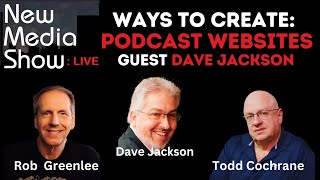
In this extended panel discussion, Todd Cochrane, Rob Greenlee, and guest Dave Jackson explore a wide range of topics affecting podcasters. They begin by emphasizing the importance of custom domains and SEO‑friendly website design, warning against relying on embedded podcast players that provide no SEO value. The conversation shifts to the rise of AI in search and content creation, with participants expressing cautious optimism but noting current AI tools often produce superficial results and struggle with nuanced podcast editing tasks like chapter generation. They critique the podcast advertising market, highlighting discrepancies between reported CPMs and actual rates, the impact of programmatic buying, and the challenges small shows face in attracting ad revenue. The group then discusses alternative revenue models, including the value‑for‑value approach and emerging crypto‑based payment systems such as True Fans, Stripe‑enabled Satoshi purchases, and the logistical hurdles of integrating fiat and crypto. Industry dynamics are examined, covering recent acquisitions, funding scarcity, and the volatility of podcast‑related companies. Practical concerns like customer support channels, affiliate programs, and future event planning are also addressed. Throughout, the participants share personal anecdotes, practical tips, and a forward‑looking perspective on how podcasters can adapt to evolving technology and monetization landscapes.
Chapters
No stream yet. There it goes, finally. All right, I'm live.
Todd and Rob in the afternoon. Hey, afternoon delight with Todd and Rob Greenlee.
Oh yeah, Todd, we're actually back in the afternoon now, so I guess that, uh, yeah, makes more sense now.
And, uh, I'm, uh, I'm sitting in, uh, very sunny southern Michigan and not jet lagging too hard. Uh, been home under 48 hours, so it's okay.
Gotten, gotten set up good. Looks good.
Well, you know, it's Don't mind the mess behind me. Of course, you don't want to see the boxes and computer monitors and, uh, just, you know, here's the funny thing. When you tear down a studio that's about 1,400 square feet in, uh, literally 24 hours and you pack the boxes, we should have hired some kid to come in and just write on the boxes what they are. Because I have a box of cables, uh, LAN cables, everything you can imagine. Do you think I can find that box?
Of course not.
Of course not. And, uh, I have no idea where it's at, so I'm going to the storage unit after the show today to see if I can find that box.
Oh, well, yeah, to be able to— yeah, yeah.
And, uh, and you know what's even more funny is I rented the storage unit right next to it so that because the other one's so full, I need a place to sort. So I'm going to be sorting in the other unit.
All right.
Yeah. So anyway, I have a plan. So maybe next week or the week after, maybe there'll be something to show.
So are you planning on building your kind of new production place there in the same place you're at?
It's going to be right over there.
Oh, it's going to be in a different location than you are.
No, it's going to be in this room, but right over there.
Yeah, yeah. But in a different—
Yeah.
This visual screen area, right?
Yeah. This loft is a loft. It's 2,000 square feet of open, open floor plan. So.
Got it. Got it.
Yeah.
Well, well, we're lucky to have Mr. Dave Jackson with us. Dave, thanks for taking some time out today. I know you're in the middle of transition and It's exciting to hear your new role as the head of podcasting at Podpage. So I thought it was a good time to have you come on. And since you're kind of free of the Lipson world, but, you know, some things are going to stay the same with you, I guess.
Yeah, a lot of things. I'll still be going to events. I still have the School of Podcasting. The biggest difference— and because when I said I was leaving, people like, oh, what's wrong with Lipson? I'm like, there's nothing wrong with Lipson. They're the same great people over there. But I just, I kept moving. I kept taking new positions that just got me further and further away from really what I like to do. Sure. Which is work one-on-one with people, or work with— I was working more with companies than like podcasters. And on one hand, yeah, that, that company is a podcast, but— and I was working with, um, they have, uh, the apps that we have for people. So I was working with Apple and Google a lot, and that is not always a picnic. And, uh, and if I could rewind it The one thing I go, I could have done that, that would have been nicer, is I should have gone to Libsyn and said, I'm really not happy with what I'm doing. Can we find something else for me to do? But instead, and I never— I have a brain tattoo. I went, I got on a meeting with Rob, who I've known for, like you guys, I've known him for 19 years. And I said, yeah, I'm leaving. And I just watched my words just clock him in the face like nobody's business.
And he was— yeah, because you know what he has to do.
Well, he has to replace me, but it's, yeah, he's got to find somebody else.
Oh, it's going to be hard to replace you, Dave. Just realize that. Right.
Todd has an or in there. Or no.
Or, or, uh, yeah.
Okay.
So, yeah.
So where are we going with that?
Jeremy?
Yeah, I can hear you.
We just can't— you just kept going, or, and we're like, yes.
Yeah, I, I hit a button and, uh, I went deaf on my side for a second, so that's why I had to pause. Never make a change on the, uh, StreamYard midstream. I found that out the hard way last time. I guess the question really is, did you actually— are you much calmer now away from the, the chaos of Lipson? Is it, is it because there's only—
you only have two people.
It's just you and another guy, which has got to be be a beautiful thing, right?
Yeah, I mean, it wasn't chaos. They've got some things, uh, cooking, you know.
I can't—
I promised I wouldn't reveal what, uh, what's coming from Lipson, but they've got some things that are, you know, they're—
they've—
and there was one I was like, oh, that's pretty cool. Now that's, that's the Lipson I know and love. There was, uh, a new, new way of looking at things that's on the way. So, oh, that's, that's going to be fun. But, uh, yeah, so it was— I, I just kept telling them, I was like, it's not really It's not the company, it's, it's what I'm doing and I want to do that. That looks like much more fun. And the other thing is that kind of like when I joined Libsyn, there were probably 15 people there and now there's like 40 or 50. And so we're like, today I went and I saw the same question come through in support and I was like, do we have a help, like, you know, some sort of tutorial on this? And I'm like, oh no, we don't. Hold on. And there it is. I didn't have to send this to a person who then approved it, who went to the thing. And then it's like, it's nice to kind of be back in like— and really when I joined Libsyn, it was like a really super serious startup. I mean, we didn't even have an HR person at that point. And so it's kind of fun to be back in that, like, hey, if you want to do it, do it. Here's the tools, go ahead. So that's a little more fun. So again, it's nothing wrong with Libsyn. They're fine. And if you want advertising, they've got Libsyn ads and all the other fun things they got going over there. Just for me, I said it's like chocolate ice cream. Love chocolate ice cream, it shows, you know. But I really— cookies and cream, I will stop every time.
And you got the keys to the car now. And here's the best part: on the School of Podcasting, you still can now start promoting Blueberry as a podcast host and collect your affiliate money.
Well, that's it. And one of the first calls I got was from Brendan from Podpage. It's like, hey, now you don't work for Lipson, like, we can actually work together. And Blueberry is the one I had courses in, uh, at the School of Podcasting. I've always had Libsyn, Blueberry, Buzzsprout, and Captivate. And when you guys changed your dashboard, I'm like, oh, my tutorials are out of date. And then you kept adding so much stuff. So now that you've kind of calmed down a little bit, although every time I turn around there's like, no, there's another this thing.
And that's right, you never get it built.
So yeah, I gotta, I gotta go back and redo my Blueberry stuff because, uh, the good thing, everything's modular now, so it's just an additional thing.
It's not like a whole gutting the, you know, so it's just, you know, little bits and pieces are being added here and there.
Well, I've learned that in the early days of the School of Podcasting, I'd do like a 20-minute video and just go over every part of like PowerPress at the time. And then I learned, I'm like, let's have one video per tab. And that way when they make that one change to that tab, I can update it and that whole nine yards. And, and of course now, of course you still have PowerPress, but you've, you've really updated your your dashboard so that if you're not using PowerPress, you know, you can do all the fun stuff just as well.
So just let me know, Dave.
I'll—
I'll matter of fact, I go into your account and I'll give you the whole enchilada so that way when you go in, you can— yeah, you can see everything. Yeah.
So it's been a— it's been a fun transition. And this has been like the tour of this. Like, I literally just got off a call that Podfest was putting on and, you know, so we had the big announcement there. And then on the day before that, what is today, Thursday, Wednesday? So Monday We had a town hall with Podpage. Every time we turn around in the middle of the day, I'm just hopping on a webinar. So I'm having a blast. So been a lot of fun.
Oh, good. You know, I, you know, I understand the ability to have— I call it mobility, you know, because in the early days I would just do something now and it wasn't necessarily right. It probably needed a copywriter and, you know, a whole bunch of other stuff now. But with great tools like Grammarly and everything else is out there. I think even, you know, someone that isn't a— and I'm not a proficient writer by any means— those tools just makes it easier to be solo and not have to run through 3 layers of bureaucracy to get something done. And there's something to be said to that. He moved fast. Yeah.
And for me, I always write something, save it as a draft, give it 24 hours, and then come back and You know, there are things you can do. I learned in the past you can actually read your article backwards and you'll catch spelling typos that way because you're losing the context. So there's that. And like Todd said, with Grammarly and all the other ones, you know, I usually catch everything, but I still— I'll save it as a draft, come back the next day with fresh eyes, and it's amazing. Sometimes you're like, what was I thinking in this sentence? It doesn't even make any sense. So that's always fun.
Yeah.
Dave, I think there is an aspect of what you built and what you've been doing in the podcasting space that is really, really, I think in the bigger picture, kind of unique because you've been able to build the School of Podcasting, which has put you in a position of being kind of, you know, a fair broker across all players in the industry, but yet you've been working for one company at the same time, which oftentimes puts any of us in a situation where we're primarily expected to toe the company line, right, and only talk about, yes, what's great about the company I'm working for. And the problem nowadays is, is that people, you know, people question that, um, from the standpoint, are you a fair broker about trying to really help people make the right choices? And that, that's been something I've tried to do with my own career, and it, it does put you in a difficult position with your employer at times, and I'm just curious, what's your experience with that? I know that, yeah, you know, Brendan kind of mentioned that as well, is that you've been able to, you know, talk honestly about Blueberry, talk honestly about Lipson, talk honestly about all these other platforms. At the same time, you've been able to maintain an employment relationship.
I've always just done— because that's the one thing he said. He said, you know, I've been a huge Podpage fan for years. And he goes, and now when I say, oh, you should try Podpage, people are going, oh, it's because you work there. And I'm like, well, look at the— look at the past, you know, 80 episodes or whatever. But what I used to do with when I worked for Libsyn, I'd be like, okay, here's Libsyn's price and here are the features you get. Here's Blueberry and here's the, you know, the thing. So if you're on WordPress back in the day, I'd say if you're on WordPress, this makes it like super easy. Go check out Blueberry and then here's Buzzsprout and then here's Captivate. Here's what they all do. And depending on what the person wanted, especially if they wanted dynamic stuff, I'm like, okay, well, Blueberry, has a pre-roll, you know, Buzzsprout has a pre and post, and then they put in the mid-rolls wherever they put them. And then Captivate lets you do all that and you get to pick and go, and Captivate's a completely different business model, etc. And I would just say, here's what it is, any questions on that? Then if they had questions, I'd answer. And if they picked Libsyn, great, I'll probably answer your ticket. And if not, okay, go ahead. You know, that's, you know, it's because in the end It's— I always say every podcaster starts with two things: one, no audience, and two, integrity. And the goal is to grow your audience without losing your integrity. So if I said, oh yeah, go ahead and sign up at Libsyn and somebody had four shows, well, there's, you know, depending on what— if they wanted all the stats and that, there's 20, 20, 20, and 20. And then they find out that, wait, I could be on Transistor or Captivate and only pay $20, they're going to be mad at me, right? Like, why didn't you tell me about that? And I'm like, well, it's an op, you know, I just, you know. So I was like, it's one of those things where I've worked for a number of companies. I mean, I've, I worked 10 years at the first company I had where I was doing a lot of, of training. And then I worked at a New Horizons Computer Center where I was doing more training. But in both those cases, for whatever reason, the music stopped and we're really sorry, Dave, you're one of our best employees, but we got to let you go. And so that kind of gives you a little PTSD, a little bit. You're kind of like, you always think, oh, they'd never let me go. And my first job, the, I was going to leave and the CEO came into my office. The CEO is like, I thought you were untouchable. Yada, yada. Like, you're, this is stupid. They're going to just blah, blah. And he was really mad at me. And I'm like, okay, I'll stay. And then they let me go like 9 months later, and that's when I was like, okay. So, and it, it wasn't that I was worried about being let off or let go from Libsyn. I've just always— that's why I still have the school of podcasting. I mean, if I get fired tomorrow from Podpage, you know, I'll be eating a little ramen noodle because I work that job part, part-time, so it makes a part, part-time income, but it's always my cushion. So I've always just kind of like, you know, there just comes a time when you're like All right, how can I, uh, be happy? Yeah, like, this is gonna be happy. Well, I remember, I mean, not, you know, my ex-wife is a fine human being, but it took me a while. I moved back, uh, to Akron. I used to live in Cleveland with her, and this one night I sat down and I was like, man, this is just weird. Like, what's going on? I'm like, oh, oh, I remember this. I'm happy. Like, I wasn't dreading coming home. I wasn't kind of waiting for someone to yell at me, you know. And so, uh, and again, I wasn't super unhappy at Libsyn. It wasn't like I was dreading going to work. I just was like, oh, that sounds like the stuff I used to do. Like, I would do webinars for Libsyn, and I was like, oh, I would love to do these every day. This would be great. And I— they did. I asked them, I said, can I do coaching? I pitched them, and they gave me one day a month. Well, at Podpage, I'm doing 5 days a week, you know. There's a couple times every day. So it's just I'm like, that's what I do. That's really, you know, and then today I was on with someone and I went over and looked at their website. And here's a fun tip, because I bet you're doing this one. If I Google your name podcast and it doesn't come up, I bet if I go to your about page, you wrote it in first person and never mentioned your name. I've done that before. And I went over and she was like, our co-host Susan does this and this and this, and I do this. And I go, you need to put I parentheses your name. I said, because if, if people are Googling your name and it's not on your website, it's not going to show up. And she's like, that's a really good tip. And I go, I see it all the time.
So every day of the week.
Yeah. So it's, it's been fun. It's, you know, and I'll still be at all the events. The thing I like about this is Brendan just gave me a budget and he's like, okay, you go to the events you want where— and again, nothing wrong with Lipson. They got a marketing department and they got all sorts of things going on. But I have to kind of go in and say, all right, here's here's where I want to go, here's how much it's going to cost, and then they would say yay or nay. And if they said nay, I'd be like, fine, then the School of Podcasting is paying, I'm still going. So it's going to be kind of that with, uh, with Podpage as well.
So, you know, you know, Dave, I think there's one thing that we have to recognize, and Tom made a comment in the, uh, chat channel and it kind of triggered me a little bit. So it says, I am a big fan of Dave and what he has done for this space. He is genuinely someone I admire for his commitment to podcasters and the growth of space. He is a real star. And I agree with Tom. You know, I mean, we've all been friends in this space for many, many years. And I think in the end, what it boils down to, I think there is a core group of podcast personalities. You know, Rob, you bounce around a bunch of places. You know, I've pretty much been same place from the beginning. But Dave, you know, you're on, you know, you, you moved around a little bit. And, but in the core, the, the core of who we are and the core of what we want for podcasters to achieve is the same. Um, we want them to succeed. We want them to grow their shows. We want them to have good advice. And I think there's a, there's probably a small core of folks that Beyond their businesses are really concerned for the community as a whole. Now, I might be wrong, but, you know, I just, uh, you know, you've been a great person for helping. You know, you'll, you'll stop and talk to anybody, and I think we all will do that. But at the same time, I, I don't know if that's necessarily true for everyone that is coming to the podcasting space later. I, I might be a little harsh and being a little bit unfair, but I just know what I know.
I think there's exceptions, Todd.
There's exceptions to that. Right.
But it's one thing to be, you know, a quote podcast consultant, but you also have to realize you're in podcasting. And if I see things that I'm like, wait a minute, this is going to hurt the industry. And there are different bubbles, like there's the advertising people that are just killing it and they got the CPMs going out through the windows. That's awesome. So when I see an app that comes out that, okay, it's paying the podcaster kind of, you know, it's delivering an ad-free solution to the listener. Okay, that's a win-win. And let's see, the advertiser who's paying to get their message into the ears of your audience gets screwed. And I'm like, I believe that's called fraud. If you take money and say, I'm going to deliver your message to my audience's ears And I was like, yeah. So when I see stuff like that, nothing against the guy. When I heard the, the conversation with him, he just sounds like a young kid that went, I wonder if I could do this, and he did. And I was like, yeah, but that's— and I've seen stuff like that. I've seen the different— anytime— I shouldn't say anytime. There, there may be times when you see these people that are like, hey, we have a service for you, guaranteed. That's always a fun word, to grow your audience. And, and blah blah blah. And then we send people to a website, you know, with our player. And I'm like, red flag right there. Hold on, you know. And, and it just— again, I, I interviewed somebody. He didn't— he was giving me a demo, and at the end I said, hey, can I play this for Lipsync? He's like, oh, please do. And I just felt like going, do you not know they own an advertising company? Because I said, what happens when you turn off the campaign? He goes, oh, it's catastrophic. It's just Niagara Falls. And I was like, okay, that sounds— sure smells like fraud. I don't know, it could be— maybe that's too strong a word. So when I see things like that, you know, I, I stop myself every— like, I had a guy today that spammed one of my students, and it started off with, hey there, and then it was like, you know, love your show, blah blah, you know, the generic thing. And I was like, man, I kind of like that guy and you're doing that to people. And I would— I stopped myself because I just want to start a, I don't know, a website like callthemout.com or something and just like, all right, here's another one and here's what they said and here what they said. But I'm like, well, I do enough of sharing my opinions and where it's not always wanted. But I was like, there are times I would just love to call people on that, like, don't use these people. They just— I had somebody today pitched, uh some sort of home repair expert to the School of Podcasting, and they thought he'd be a great, you know, addition to bring value to my audience. And I was so tempted to go, how the heck is this guy going to deliver? You're like, so those are the people I just want to go out to the mountain and go. I did once, I went to somebody, same thing, they pitched a real estate person to the School of Podcasting, and I went to the actual guest that they were promoting So let's say Todd hires somebody to, uh, you know, go out and get me on podcasts. And I went back to Todd and said, hey, the person you hired just pitched you to me and I am not a good fit. So you might want to think about, you know, getting a raise on them. Yeah. And I was like, you know, snitches get stitches kind of thing. But I was like, hey, if it was my money that I would spend. And so that, those are the kind of things I would love to just blow the whistle on everyone, but I would do nothing but that then because there's so much of just the scraping emails. And like, I don't really do much on LinkedIn because every time I logged into LinkedIn, it's just pop-up windows and I'm an Apple Podcast promoter, blah, blah, blah.
You're constantly getting pitched, right?
Do you have a podcast? And that's where my ego wants to scream, do you know who I am? You know, right?
They don't actually, and they don't do any research.
Yeah. And I was like, okay, so yeah, so it's just That's what I try to do. I mean, because if, if we don't protect the podcasting space, well, then I got nothing to consult in. So I always keep my eye on that. And that's why when you said Tom, was that Tom Webster?
Yeah, Tom Webster.
So I love Tom Webster because he gets me— he keeps me informed on that bubble because I'm not a, you know, 100,000 downloads kind of thing.
He also says, yes, Dave, thank you for saying that. And that comment came in right around the time you were talking about the the app that was removing the ads.
Yeah, so it's, it's just we got to watch out because, you know, some people could care less about advertisers, but there are a lot of people, you know, Jordan Harbinger cares about advertisers and Scott Johnson and a bunch of other people I know. So we got to take care of those people. At the same time, we're still looking for ways for that person who's getting 1,000 downloads to, you know, now that person may have to realize that, you know, maybe making a living on 1,000 downloads might be a little harder than you think it is, you know, but unless you're a neurosurgeon. Exactly. You know, and so I try to— and there's so many bubbles that I don't even know. Like, Todd, where did you go? You went to some— it was in the Middle East.
Yeah, I went to Riyadh.
Yeah. And you just learn, you know, Chris was telling me about the Philippines. There are all these little bubbles that are exploding that I have no clue about. I'm not up on that stuff. But I— then that's where I, you know, lean on James Cridland to keep me informed of what's going on, because you never know. It's like from Guatemala, I know he's all over the place, right? He's in some airport, you're like, what?
You know, as much as he complains about not getting upgrades, he should have enough miles. Yeah, he upgrades based on how much flying he's doing.
Yeah, yeah, I'm sure he does. Yeah, but Dave, I thought it was interesting, your, your relationship with, um, Podpage around podcast coaching and working with elite members. Why don't you tell us about that?
Yeah, that's our top tier. So you have basic and then pro, then elite. And so what we're doing there is we're just having another webinar and that might be because the elite plan is where the SEO tools kick in. So we're going to have some, some more kind of SEO-related stuff and things of that nature for that kind of people. Because again, there are some people are just doing it for fun. You know, and they're talking about Batman in the basement and they're not going to go for that plan. They want for the, the cheaper plan or whatever. And so, but those people that are doing Elite, these are people that like, I want to get some traffic to my website, I want to do that. But we are still offering— right now we're offering coaching to just about anybody, just to, you know, see what the, the interest is and go from there. And it's a, it's a new thing, so we're kind of making it up as we go along. Um, eventually there will be some sort of Podpage podcast because, you know, our audience is podcasters. Go where your audience is. So we still are trying to figure out what that's going to be, because if it's just Podpage updates, that's fine for our customers, but, you know, not so much for the general non-Podpage customer yet. So we're trying to figure out what that is. But that's where, like any business, you're like, okay, what kind of podcast would my customers listen to? Let's make that. And then we'll just be the sponsor of our own show.
So that'd be a one-on-one coaching relationship or— yeah, because I know that you're also going to be doing a monthly webinar too.
Yeah. So we do webinars and then we do one-on-one coaching. And then like I had someone today, you know, domains can be a little tricky if you're, if you're new to anything domains and you're like a CNAME of a what? And so I just sent this person a link. I said, here, let's schedule a quick time on Zoom. And it actually, as much as you think, well, that's going to chew up 15 minutes of your time. I would have spent 15 minutes going back, going, no, click on this and then go to the edit menu, look for domains. And then they send back, I don't see it. Then you take a screenshot and then you send them a Loom video. It's like, hey, let's just jump on Zoom for 10 seconds and let me walk you through this.
Right.
Yeah. And that was just Brendan's idea. He's like, I just want to— he goes, we didn't have bad support. We just want to take it to a next level. And I know Blueberry, you can call and schedule a time with Mike. So it's that kind of stuff where it's like we can't just have somebody, you know, jump into— we did today, but it was just one where it's like, hey, I'm available right now. If you got a second, click this link.
The way I kind of refer to it is sometimes you just need to call a friend.
Yeah. Well, the, the kind of what you are doing with Dave, right?
Yeah.
And well, the, the person I was talking to, she says, man, it's so good to have a Dave. Every company needs a Dave. And I was like, well, thank you for that. I appreciate it. So And the other thing that's to me that just makes it a deeper connection is when you can see who your audience is, you know, you're like, oh, this is, this is, you know, a woman that's probably about my age and technology is not her thing. But I'll tell you what, she was a sharp cookie. And, you know, so don't, don't let the gray hair fool you, people. We're all these boomers are not as dumb as you think they are. And so I was like, oh, that's cool. And then Like I said, she just said a couple of things. I'd spent 4 minutes looking at her website. I said, well, we got a little time before because it was only 15 minutes. I said, let me look at your website for 2 seconds. And I saw that her name wasn't on her About page. And she was like, oh, that's, that's a really good tip. And I go, I think so. And so off she went. So to me, the fact that A, she was like, wow, this is amazing that this company is offering this. B, I got her problem solved in 2 seconds instead of, you know, 2 hours. And, uh, I got a, a little insight into who our customer is. And hey, speaking of Tom Webster, one of the things you gotta be reading is The Audience Is Listening, because the whole key to this is knowing who your audience is. And when you know who your audience is, you can deliver the best con— the best content. And you know, with Podpage, we're always trying to figure out, okay, what can we do better? What, what can we— a new feature, things like that. And it's the same thing with a podcast. The thing that drives me— I'm a little too logical at times. And so when I see somebody in a Facebook group going, how do I grow my audience? And I go, well, did you do any kind of, you know, preview? Did you get any feedback from someone not named mom? And they either A, don't answer because they know the answer is no, I didn't. Or if they do, it's like, well, my brother said it was good. And I was like, okay, but we got to figure out if it resonates. Because if, you know, if it was a restaurant and people would show up on your grand opening and then they never come back, okay, maybe somebody should check the food and see if it's any good, you know? And that it just— I don't— I mean, on one hand, I get it. We're just doing it for fun, man. I just want to talk about, you know, that movie on Netflix. Okay, that's perfectly fine. But it's when that person turns around and goes, how do I get sponsors? I'm like, time out. That's, that's when you got to take this a little more seriously. And it just seems like, you know, I offer that. That's a service I offer at the School of Podcasting. And I'll go up to people, I'm like, hey, like, you got something for me to listen to? Oh, not yet. And I look and they're like, they got 7 episodes out. I'm like, you know, wouldn't you want to know? Like, if I've got broccoli in my teeth, I want somebody to go, you got broccoli in your teeth. And I'm like, oh, good to know. All right, let me get that. As opposed to just keeping it out there and then going Why doesn't anybody want this? But that's just a— that is something that will baffle me forever. I don't know. Do you see that, Todd or Rob Greenlee, where people just don't seem to get feedback or want to?
Well, I think they, they don't get feedback and sometimes they're not asking for feedback, but at the same time, you know, they're, they're, they're in— especially when they're new, they're just trying to get battle rhythm down and figure out what they're doing. And, you know, they don't They don't have 20 years of publishing episodes to know, okay, this comes, you have to do this, this, this, this, and this. They're, you know, they're, you know, they're worried, they're worried about, do I need to take the ums and ahs out of their editing? You know, it's, there's a lot to comprehend. There's a lot. And, uh, so people are not, you know, that they knock the podcast out and they put it up and they, whoo, I got the episode out. Woo-hoo. And they don't really think it's hard because there's so many facets of this space. And, you know, it kind of ties into what Jim says. Jim said in the chat, he said, Todd, you were right. All three of your friends are podcasters. Spirit is far too rare these days. Dave needs to break out the back-in-my-day voice. And Tom says, so good to have a Dave and to have a Mike. These are the real ones.
Yes.
And, and, you know,, and it's, it's well known. We go to events and people come up and, uh, where's Mike? And, uh, I'm like, he's over there, you know, go talk to him. And, uh, so, you know, it's the same thing with you. When people would come up to the Lipson booth, where's Dave or Rob, you know? And they would, you know, yeah, it's—
that's one thing I missed. I didn't even think about it because it was always easy. I could say, hey, if you're coming to, you know, Podcast Movement, I'll be at the Lipson booth. Yeah, and now people are like, how are we gonna find you at these events? And I'm like, well, I guess hit me up on the app or whatever. But that— I loaded the, uh, Podcast Movement app today and I've already got like 40, literally like 44 people. I can't wait. I'm like, oh, this is gonna be not as easy as I thought.
Yeah, have you guys, uh, I think Podpage was at Podfest with a booth. Have you guys got a booth at Podcast Movement?
We do not, but I'll be there spotting this lovely shirt and, uh, walking around. And that's the, the thing that we're kind of at this point figuring out like where is the best place to put your ad money. And well, you know, it's like it's a couple thousand dollars and you're like, okay, I'm going to make that bucks, $20 a month at a time. You got to get some ROI on that. So we're figuring that out. And it may be a case we actually thought about it. I said, well, what if we go halfsies, have, have a Podpage/School of Podcasting booth? You know, that type of thing. So we'll see. We're still at this point, it's noon. We're like, hmm, all right.
You know, it's even us. We, you know, we dropped NAB this year. It's because, you know, after I get that $20,000 bill paid for, you know, booth, airfare, food, hotel rooms, everything else, then where's that ROI? And if the ROI doesn't mean $20,050, or $25,000 or $40,000 and we spend a week there, it's not worth our time to go.
So, and yet I get it, you know, because I, I would never have the stones, shall we say, to hold an event because you've got to book all these hotel rooms. And then if people don't show up, you're out of, you know, it's like, well, you still got to pay for those hotels.
So I'm like, I get hammered all the time by my board where we get an ROI. So there's some events we have to go to. Yeah, there's, you know, for us right now there's 3 flagship events and I essentially have to be at every year. Podfest, probably Podcast Movement Summer, and the Pod Show in London. Those are probably next year are going to be the only 3 shows I'm going to do.
Well, there aren't going to be that many left. Uh, Joe Pardo, I just saw he used to do the Indie PodCon and I saw where he originally this year, he had a date set and now he's, it's, you know, I just, last time I went to, he's like, yeah, we're not doing this this year.
So it's, it's hard to get people to these events. And then, you know, for you guys, you guys have a much easier sell, you know, hey, you know, this year you're not competing with hosting because, you know, hosting is a commodity now. There's 30 people competing for hosting. And right now there's only one or two podpage. Matter of fact, I can't figure out who podpage.io is. And Podpage, podpage.com. I think you're podpage.com.
Yeah, we are podpage.com. The other one is pod— I think it's podcast page something, whatever.
But yeah, but so you guys have a very small competition pool, so you guys are in a great spot.
Yeah, and it's, um, I've known like Brendan. It's kind of weird. It went, uh, we went through this weird podcasters roundtable with me, Ray, and Daniel because I— my first meeting with Brendan, we figured it out, was on April 30th, 2020. And the guy that told him you should talk to Dave was Ray Ortega. And after he talked to me, he talked to Daniel J. Lewis. And I'm like, there you go, the Three Amigos. And I've known him ever since. And he would— I remember I'm like, well, we need an about page, we need a contact page, we need an easy way to get the episodes on there. And he was like, like this? And I was like, Yeah, that's exactly it. He's like, okay, well, what else do you need to do? And I was like, he built Podpage like I advise people to make a podcast. Figure out who your audience is, ask them what do you want it to do, what do you need from the show, and then give it to them. Like with this show, I mean, with you guys, with the huge experience you both have and the insights and, you know, Rob's Rolodex and Todd's experience with Blueberry customers, you guys give us a wide view of what's going on. And I always listen because, well, I listen for two things. My favorite thing to hear on the show is when Todd goes, you know, I probably shouldn't say this, because I'm like, oh, this is going to be awesome. And then the other thing is just the, your insights, because you guys, you know, we've seen what, when we had, you know, back in the day, when I see somebody go, oh, I made this thing and it's, you know, it's going to take little snippets of this and blow, I'm like, oh, like Clamor. And they're like, what's a Clamr? And I'm like, do your research. You just made something that could never make any money. It had integration. I think it integrated with PowerPress at one point and, uh, C-L-A-M-M-R, cause you know, E's are expensive. And, uh, you know, we, I just, so when I see another Clamr come up on board, I'm like, yep.
Okay.
You've seen that before, right?
Yeah.
Um, what's the, there's a new media host and he's got every 2.0 feature. And I forget what it is, but, um, it's one guy in the basement and his business model is unlimited bandwidth, unlimited episodes, unlimited everything. And I went, that's a bad business model, my friend. And he's like, what? And I go, I've seen that happen twice. I go, all it takes is one really popular show and you're done. And he was like, no, bandwidth is cheap. And I'm like, I've heard this before. And then he was on the Podcasting 2.0 show. And Adam Curry's like, that's not a good business model. Like, we've seen that before. So, and then of course, you know, when I say stuff like that, you know, they politely walk away and go, that's just an old curmudgeon. And I'm like, yeah, there we go. The curmudgeon card gets pulled. And I'm like, but I've seen things.
And then when I have a customer that I've, you know, had to unfortunately say, listen, you went commercial, you know, you're using a petabyte of bandwidth. We need you. You have to move to a business plan. And then they say, well, And you, you know, you give them that number and they, they have some sticker shock and you've, you know, you've discounted as low as you can go. And then they go start looking around for a new home and maybe they find a new home for a short period of time. But what I've often found is people that, uh, you know, have, and they're getting, they're doing, if, if a show is on Blueberry and still the rule is if you're not running advertising, you're a non-commercial show and you're using 5 petabytes, well, that's on me. All right, I'm gonna eat it. Um, but if you start running ads in your show, then, uh, okay, you're making money on that audience. So I'm gonna, you know, I'm gonna go. And I have very rarely have to do that, but oftentimes we'll find people will move. And where do they look for? They look for those free hosts, those people that have unlimited bandwidth, um, that have a little bit looser, um, terms of service, and they go over there and kill them. And it's not my fault, it's because I said you need to pay me $1,500 a month.
Um, yeah, people used to say, uh, with Libsyn, oh, they don't let you advertise because there was something in the terms. And it was simply for that situation. If you're killing us, we at least want the ability to go, would you mind playing some ads for us? And people always used to spew that, but it was like, there comes a time when it's like, okay, let's be fair here, they're killing us. Like, either help us make some money or, you know, pay us some money, one or the other. And, uh, you know, at that point, if, if you are— have so many downloads that you're, you know, you should be able to monetize that, right?
I'm pretty sure. So I wanted to take everybody back. Uh, Jody Cragle made a, made a comment in here. It takes time to get a podcast process down. So this is the whole topic we were talking about earlier about, you know, starting a podcast. And it takes time for some people to figure this out. And I know it's kind of a controversial place out there to say, well, you know, some people say that you should produce, you know, like 3 or 4 or 5 or 6 episodes at the beginning when you launch. And then there's other people like myself that says, you know, just start out with one. Because you're not going to have your process figured out for 6 episodes really in advance. I mean, I mean, you may find that you don't use all those episodes, but to kind of dovetail off of what Dave was saying about, you know, knowing your audience, you know, just like Jody's saying here is that sometimes it takes quite a few episodes to find your, your groove, find what you're trying to accomplish with your podcast. And at what point is it the best point to, to really start getting that feedback? Is it at episode 1 or is it episode 3? I mean, I guess it's going to vary, right? It depends on what kind of show you're trying to produce, too. But this is a very complicated question for people to solve out there, and I'm not sure that there's really one answer to this.
Yeah, it's a podcast. So of course the answer starts with it depends. But anytime it's either, A, I'm going to start buying ads for my show. Well, hold on, let's make sure it's going to resonate, or I'm going to start promoting it on other shows. I'm going to do like, okay, that's, that's a great strategy because both are going to get you in front of podcast listeners. But before we go promoting it, yeah, maybe we should take some time to do that because she's right, it does take a while to kind of get comfortable behind the mic. But if we know who it's for And then the other key is why, why am I doing this? And I had someone at the School of Podcasting and she's just a sweetheart and we're going through and I'm looking through her, her why and her why was, well, I want to position myself as a, you know, a subject matter expert. And I'm like, perfect. I go, but, um, I looked at your last like 10 episodes and you're, you're doing interviews. I go, how does that position you as an expert?
Right.
I go, I said, now that doesn't mean you shouldn't do interviews. I said, but you got to do, I call it the Jerry Springer. So if you guys remember Jerry Springer, people would be hitting each other with chairs and beating each other up, and at the end there'd be some soft music and Jerry'd look into the camera and go, what did we learn today? You know, and it'd be like, I learned that getting hit in the face with a chair leaves a bruise, you know. And I'm always like, so after you talk to someone, at the end of that, go, well, you know what I liked about that talk today with Rob Greenlee? You know, that one part where he said this, that reminds me of— and now you tell your story and you just ever so kind of, uh, nonchalantly remind the audience, it's my show. You know, it's like, don't forget, I'm the expert here. Because a lot of times they'll go, hey, don't forget newmediashow.com. Be sure everything's in the show notes. Newmediashow.com. Thanks, you see you, bye. And I'm like, wait a minute, the last website they heard was theirs. The last thing the audience should hear is your website. So there are things like that that I'm like, yeah, you just— and then it's not that that person is, is dumb, or, you know, it's just like they don't— I'm too close to the, the content to see that. I, I, I'm so happy it happened to me about probably 5 months ago. Um, a student of mine, Kim Newlove, does the Pharmacist Voice podcast, and she said, Dave, do you know you have a typo in your podcast? And I go, well, which one? And she goes, well, the School of Podcasting. And I'm like, whoa, is it in like show notes or something? She goes, no, no, it's in The podcast. I go like, she goes, the title of the show. And I go, no. And I go over Plan, Launch, Grow, Monetize. And I'd left out an E and I was like, oh, you've gotta be kidding me. So I just tell people we're all too close to our own content. And when you get somebody else from the outside to go, I don't understand what that means. It's, uh, it's helpful, but it is, I guess that would be your, my answer is when you're ready to promote it before you go wasting your time and money. Let's make sure it works.
I, I have a little different approach, but I do agree in one thing. What is the goal? What is the goal of the show? That's my first question when I get on with any podcaster now, right before they even— I— what is your question? I ask them, what is the goal of your podcast? And, you know, often we get that big long pause, and I just keep my mouth shut, you know, being the good salesman that I am, and wait for them to answer that question. But in these podcast gurus that say you need to do 7 episodes in advance and blah, blah, blah, blah, blah, blah, blah. I think the reason that a lot of shows fail is because they don't have time to breathe. In other words, let's do episode 1. Let's get it out. Let's breathe 3 or 4 days. Let's start planning on episode 2. We've learned some things. We've had some time to look at, um, what the show's doing, what the response is. I've learned maybe to do some new social media posts. And, you know, let's get episode 2, and then let's kind of rinse, wash, repeat, and add some stuff. And by episode 6 or 7, you've learned more over a couple of months of time. You've built more confidence. You're getting a little feedback for the show. And by episode 7, you can start to do the you know, you can start to do the— your adjustments to the content. Um, if you just record so many episodes in the beginning and you put it out there, then you haven't had a chance to grow through the process of putting a show out on a— on an episode-by-episode basis, on a week-by-week, and able to have the ability to do a little bit of an adjustment. So I'm— I'm a very I'm very much against doing this preloading of a whole bunch of episodes, but boy, you listen to a lot of gurus and that's exactly what they tell you to do. And if they have a plan to go along with that launch, in other words, all that stuff that they would have learned over 2 months and conditioned that podcaster to be ready to do those 7 episodes at a, at a huge dump, um, then that's great, but most of them don't.
Yeah, I would say it also depends on what the experience of the podcaster is too. Have they done this before? Have they been through this process before and, and learned, um, that it's probably not best to, to batch up a bunch of episodes? Because that basically means that maybe you made, you know, if you batched up 6 episodes in advance of your launch, that you made 6 episode mistakes in ver— or, or you come across a situation where you regret publishing those. Um, and that's, um, that's a, that's an unfortunate outcome as well.
Tommy has a series of comments. He says, uh, I wouldn't do any bee this year. Well, it's already done and gone, so don't worry, we didn't. Uh, Dave nails the show. Uh, so maybe I shouldn't talk about what I want to talk about. Um, hit me with a chair. And also said, he says, Todd, you're right, but those first episodes should be placed under the bed first. That's interesting too.
Yeah, yeah. I, I had a guy once that came to me, he's like, I'm already done, I got the episode, I just need to launch and promote. I'm like, great. And he had 52 episodes that had been exported as WMA files, for those of you that are on Windows and remember like 19 whatever it was. And I was like, dude, these, like, these are not going to play in anything. I go, you have to convert these to MP3 files or M4A at least. I go, but WMA, I'm like You know, huh? And he's like, really? I'm like— and so we were looking for some tool that you could like drop in a folder and it would somehow reconvert it, but it was just somebody that started. I don't know where he got that advice, but, uh, that was wrong. And to Rob's point, if you do 10 episodes and 3 episodes in somebody goes, man, I hate that lightning round thing you do, that every time that lightning sound effect comes in it makes me wet my pants. And you're like, you're in your head, you're thinking, I have 7 more episodes with a lightning round in it, like, oops. So that's why I might get some feedback upfront. And that doesn't always mean you have to, you know, there are times that you'll get feedback from people that aren't your target audience. I do a Saturday show called Ask the Podcast Coach with Jim Collison, and this guy had done his homework. He's like, back in February on episode, you know, whatever, you did this and you talked about this and like all these majorly detailed points. And he really wanted us to turn it into an interview show. And I was just kind of like, hey, thank you so much for the feedback. It's called Ask the Podcast Coach. It's kind of a call-in show. I'm like, this is not, you know, the Actors Studio or whatever. So there are times when somebody will give you feedback and we have a name for that person, and it's not, you know, it's that person is not my target audience. So you have to be careful with that because if you try to, if you try to please everybody, I see people do that all the time too. Well, I'm going to do a little bit of this and a little bit of that. I'm like, yeah, that's Mm, not the best advice.
You know, that's been a challenge with Blueberry, you know, because, you know, we've been a jack of all trades. We have a PowerPress plugin for WordPress users. Now we have this dashboard and people get in there, go, oh, which way do I go? You know, so we've had to really work hard at that onboarding process to not get people stuck and get decision paralysis on because sometimes it's, you know, those very simple Okay, okay, 2 or 3 real questions, and we kind of lead them down the path and get them in the bucket we think they should be in. Um, but you know, that's where Libsyn, Podbean, and other folks don't have that problem because they're a one-trick pony. They have one product and one dashboard, and they, you know, there's not multiple ways of publishing. So, um, yeah, so that's always been a challenge with us.
Todd, that's a great segue to moving this conversation over to podcast websites, which is what was promoted for this episode is, is kind of that, that decision-making process that a podcaster goes through to decide what, you know, what kind of website that they want to have. There's Podpage, there's WordPress, there's the website that's provided by Libsyn or, or any of the hosting platforms that are very limited or whatever. So, you know, selecting these various options comes with a certain amount of work. Some come with more work than others. Um, but, you know, I know at the really the bottom line to this whole discussion is the only— the real purpose that you have a website is for SEO, right? For getting found in the search engines and, and being a, a destination for your podcast that you can promote easily in your podcast. So, so, Dave, why don't you start out a little bit and talk about, you know, what it is about Podpage, do you think? And just from your experience, you know, working at Lipson, you know, I I worked at Libsyn too, and, and what you get from a host website versus what you get a Podpage. And then Todd, let's, let's also talk about what you get through PowerPress and how that works with WordPress.
Sure.
Yeah.
With any— and it doesn't matter if it's Captivate or, you know, Libsyn or whoever— your basic came with the web host is a great place. It's super simple. It's a great place to listen. And follow the show. That's about it. And sometimes that's all you need. Podpage, we, we bring in your RSS feed, we bring over all your episodes, and you put in your links to— here's Apple and Spotify and all that. So we've got the follow thing, but we also integrate with your email list. So now I want to do a little marketing, I want to catch up with those people, and it just looks better. There are some media hosts that are just like, okay, yeah, it looks better, a lot more customizable than something that comes with the media host. So we've got the email, we integrate with things like Patreon and SuperCast. So if you want to promote that and PayPal and Buy Me a Coffee and all that. So there's a lot of integrations with Podpage so that you can kind of add whatever you want. Now, if you start going, I want to do A/B split testing with some marketing and some other things like, okay, now you've graduated to WordPress. So, but the biggest thing I remember, Zeta Christian is a member of the School of Podcasting. And she said, I hear about this Podpage thing. Can you walk me through it? I'm like, sure. We put her RSS feed, she picked up the template, we picked her colors, a couple other things, and we were done in like 12 minutes. And she goes, I didn't think I could do this. And I go, yeah, yeah, it's— when I say it's easy, it's really that easy. And so, and then from there, you just simply upload your file to your media host, type in your show notes, and there you go. And then like, I'll do this, I will have kind of condensed show notes because who's going to read War and Peace on the phone? So I'll have my opening paragraph and my links and my call to action. And then once that gets sucked into Podpage, I'll go in and add more paragraphs because now in the land of Google and I want to get my SEO going. And then there are other fun features like Podpage has, we call it the episode signature, and it just adds at the end of every episode on your website. You can put a banner in there, whatever you want. And when you update that signature, it updates across the whole website. And then things like there's a /follow link, so that's already built in. There's a /voicemail link, so if you want to leave voicemail. So all these are based on your domain. So if you're like, hey, if you want to leave me a comment, just go to askthepodcastcoach.com/voicemail. And if you want to follow the show, askthepodcastcoach.com/follow. So a lot of those things that, you know, people have to set up with either a pretty link or, you know, whatever you're using, a lot of that is now built in. But there is a time when you want to do some sort of split test or whatever, you know, just super duper customization. And that's where you move over to WordPress. And with that, I will toss it over to Todd. Yeah.
So I have up on the screen, um, a screenshot of the Podpage experience off of a podcast that I have just to give, you know, somebody a a little visual on this.
So, and I think, yeah, Todd, go ahead. I think what we see is, um, if we look at how people, um, find us, is about 90% of the folks that come to us that are there, are they've had WordPress forever. They've already had a website. They've already have established business, uh, something that they've been doing for years. So they've decided to add a podcast to their, uh, business or their church or whatever it may be. They've added PowerPress and they kind of come in that way. So about 90% of the folks that, um, come to us initially have already got an established website. And, um, then 10%, uh, of the folks that, uh, are onboarded to our platform then make the decision whether or not they just want to have a landing page or if they want to have, the WordPress site that we provide. So that kind of splits then. And, but again, um, it's not like the majority of people that come to us again are already WordPress users. It's not someone has come to us and decide, oh, I'm going to put up a WordPress site. Most people don't, you know, people that's coming in brand new, they don't have any presence whatsoever. They often just opt for a landing page because it's simple, it's easy. You just set up your account, you know, really you're You do your onboarding, you're ready to create your episode, you're done, you know, and submit your podcast to Apple Podcasts. You're really that, that easy. And then over time, what will happen is it's the same thing that happens to people that are on, um, platforms like Spotify and other places like that, that are, that are basically limited in their— they decide that they want to graduate. So there's a huge percentage of folks that are coming over to use specifically WordPress that have been kind of stuck on a, a template, let's just say, and they want to have more control. So very, very few people that have no website whatsoever opt for WordPress out of the gate because it's a big step to do that, and people get intimidated real easy. But then again, What we see is this graduation process. So that's where, you know, today we spend a lot of time, have been spending a lot of time on improving the dashboard and the dashboard experience because we know that that's where, you know, a lot of the folks that are getting their first exposure to having any kind of website are going to land, and then we'll work them through the process of graduating into something that they can control and have their own domain on. Have that domain authority. So I can understand where Dave's— and I would also say if I hadn't found Blueberry, um, you know, it would be one of those situations where if you're on a platform that has a limited dashboard website, um, you can become frustrated with that very, very quickly. And let's be frank, um, all of the hosting platforms, including us, could do a lot better job with the, the, the sites we give podcasters straight out of the gate. Um, if we did that, Podpage would not be doing as well as they did, but we don't. So that's a weakness, and that's something that Podpage has been able to, um, to exploit. And, uh, and good on them for doing that.
Yeah, on that topic here, I wanted to show what a, a provided website is from a host. So Libsyn more specifically here on this case, just so those watching this can, can see. Yeah, so this is a, a web page that's provided by, by Libsyn to, to a podcast.
And that's, you know, that's really nothing to get excited about.
No, and again, that's a, that's a great place to you know, um, follow the show. Normally, um, here's the fun thing, you have to go into Libsyn 4 to put in the link for your Apple so that'll show up on that page. Um, but it's a great place to listen and follow. So that's a great example, and you can change the color scheme there, you know, so it looks okay and it's fine if this is, you know, all I want people to do is listen and follow. But if you wanted to put an email list on that. You'd have to either put a link in your, your top description there, uh, that you can customize and things like that. So it's, it's not a bad site, it's just it's easy to outgrow.
Yeah. And to exactly my point, if you went over and looked at a Blueberry page, it would be, you know, not— it would not, uh, be as enthralling as a Podpage site.
So, well, the other thing that Rob, you said, why do we have a website for SEO? But I think I'm with Todd. I'm a little worried about the AI answers coming up in Google and all these other places to where if there's only one answer and it's not you, how do you tell your audience where to find you? Because they're not going to find you via search engine. And so I'm like, you can't, you can't say find me wherever you find podcasts. I've got multiple videos on how that just doesn't work. There are search in certain apps. There was one I typed in the exact name of the show and it didn't show up. And there were all sorts of things. It was like Home Pro something something, Home Fixer Pro or something. Nothing there. You had to type the author's name to, to have it show up. And there were all sorts of things that were neither pro nor home that were showing up in the search results. So to me, you need a website or bare minimum a domain that points at something to get people there because I'm, I'm not super worried about the AI results in, in SEO, but there's a part of me that goes, That has me, hmm, okay, I'm watching that because I've seen some really bad results come from that. And I don't want to have just 3 results. I'm not a control freak, but I'm a guy that will go to page 2 of Google results to see what else is there because, A, the first 70% of Google results are now paid for. And so, to me, you need a website just so people can find you. Again, going back to being an old curmudgeon. I remember mp3.com, and I remember when that site was huge and there were people making a living selling their music on mp3.com to where they just say, hey, go to mp3.com/dave. And then it got sued and sold and sued and sold, and then all of a sudden all those people had the, the audience just knew to go to mp3.com/dave, and they had no way to find these people because this is the early days of the internet where if that person had a website and an email list, you can take down MP3.com and I can still talk to my audience.
So I don't know why that particular page is showing.
Oh yeah, I brought it up. It's a ChatGPT query. I was going to share my—
I was going to share a screen.
Sorry. Oh yeah. Yeah. So I talked into the query top podcasts about podcasting just to see, you know, if a person went in and did a search query, kind of like what you would do in Google. What ChatGPT would show us. So here, I'll click on it.
It says top.
Oh, look at that. Wow. How did you, how did you make that happen?
Now come on, The Podcast Report.
I didn't do anything. I didn't do anything.
But I mean, look, we love Paul Kolgen, but he hasn't had an episode of The Podcast Report out in about 3 years. And then there's podcasting. I'll take that. Colin, that's good. She Podcast, great show, but we don't know if that's coming back. Yeah. Ivo Tara, yep, can't go wrong with it. But again, Ivo hasn't put out an episode. He's doing his book stuff now.
But the problem with this is that there's no links to anything.
There's no links to any of that, yep.
That's the key takeaway here. Now, if you were to do this in Bing, I think you would get links.
Yeah, yeah, I switched to Bing. The, the results— it's weird because I started using Google because I hated using Hotbot and Lycos and Dogpile and all the other— you had these meta search engines that would be a search of search engines. And so Google came along and it was fast and the results were great. And now I'm going to Bing because the fast— the, the search results are better and you know, so what is this?
I had to ask it to, to provide links, and, and it did.
So Rob, bring up the screen that I shared, see if we get the right one. You know, what we did is, because so many podcasters were, you know, they were hot and heavy on sharing like a Linktree page or something like that, right? We basically put something together that was similar to a Linktree page but was more podcast-centric. So this is something we put together that all our podcasters— it's called a quick links page, and it's the landing pages end up being podcast.show/your, your keyword. So again, they're, you know, it's one of those things that, that a podcaster gets to, you know, again, we're just trying to help folks that don't have any web skills of having something that looks a little nicer. Uh, you know, again, it's just kind of a landing page. You can play your podcast there, um, latest episode and so forth. But I think that, um, it's again, it's an education process with podcasters. You can bring it down, Rob. Okay.
But then you got that subscribe button in the upper right-hand corner, so that's good.
So it's mobile ready and everything else. But I think too, in the end, it goes back to, you know, with Podpage, at least you can have your domain mapped over there. And, you know, that's, that's, that's a biggie. And that's, that's, uh, you know, that's 90% of it is again building your brand on your.com and the place you got, places you can point people to., within your show, because it's really hard for people to say, okay, go to blueberry.com forward slash blah blah blah, or go to podcast.show forward slash blah blah blah, when you can say— and if you can score a domain, it's much, much easier just to give them a straight domain, something easier to remember. Um, and again, then you can focus the content on the website to write for Google, because your podcast listeners are not going to come over there unless they want to sign up for get merch or sign up for email list, or, you know, they're going to be very rare to come to the website. But in a pinch, they're going to remember, oh yeah, the New Media Show is at newmediashow.com, Geekness Central is at geeknesscentral.com, the School of Podcasting is theschoolofpodcasting.com. They're going to remember those website domains. They're going to come find Dave or Todd or Rob or whatever it may be.
Yeah, it's, it's one of those things with SEO. The more you do, the more you get. And I've seen people that, and they don't know it, it's not, and they'll take, uh, I know, uh, Blueberry has, I think every media has this where you can have a player with multiple episodes.
Yeah.
And so they'll do it and they'll set it and forget it, and they don't realize that that iframe isn't technically like, it's on their site, but it looks like it's on their site, but really you're getting zero SEO from that. And I'm always like, treat every episode like a blog post, so You know, just, you know, start a post in WordPress if that's what you're using or whatever, copy and paste the code for the player, you know, 10 seconds later you're done. And, uh, that's— people like, wait, what? And I'm like, yeah. And they're like, but this I don't have to do anything. And I'm like, yeah, and you're getting zero for that.
We had been heavily resistant in providing a persistent playlist, um, but finally the demand got so high because people say, I just want to have a page on my website where The latest episode is just there, and then just, I'm, you know, you're just like, okay, you've got your own.com already and you're just going to have one persistent page with a, with a playlist player there. That is not helping you. Um, like you said, and you can lead a sheep to water, but you can't force a horse to water and you can't make them drink. So all you can do is advise, advise, advise, advise, and it doesn't become critical until they call you and say Oh, my show's not growing. Yeah. And I'm like, oh, well, let's, you know, let's have the ugly baby talk.
Yeah. So, guys, do we think that as we see the AI platforms kind of, kind of get greater adoption and usage versus like maybe Google Search, do we see links being a part of that or do we see or do you guys see the web starting to be depreciated over time and that ChatGPT becomes much more kind of, you know, much more multimodal, which would be multimedia. It's already happening. Right. So it starts to generate results that have video and have audio embedded in them.
So what do you guys think? Well, Bing has already switched now so that The AI results are first and the search results are in a sidebar. So that's for select users. They're starting to roll that out. So if you use Bing, you're going to type, you know, you know, what is the best tech podcast? And it's going to give you its AI answer. Then it's going to give you the search results on the, on a sidebar. So it's already happening. It's, it's a doomsday scenario, not just for podcasts. But also businesses. This is really going to be a very tumultuous time. You know, where businesses were built on the web, AI may destroy businesses on the web.
Yeah, the thing that just keeps going through my head every time, and I sound very anti-AI, and I'm not. There's some things that AI does that I'm like, That's amazing. I just don't think creating content is one of them. And I see it all the time where it's like, upload your video and it will create 100 snippets for you. And I'm like, yeah, but it is, is it any good? You know, oh, I just ask it a question and it'll spit out this thing. Okay. But is it any good? And it's not that it's bad. I've yet to see something where I go, wow, didn't know that. It always seems very surface, you know. ChatGPT, how do I lose weight? Oh, the studies have found if you eat less and exercise more, your weight in pounds will fall off. And I'm like, okay, but I knew that. It always seems very high level, nothing super detailed. Or like we just saw, it recommended two podcasts there that aren't podcasting anymore. And I'm like, I kind of wanted, you know, we, you really have to put your trust in it. And so I, I know I've used a lot of AI tools and I did, I'll give you an example last week. I talked about Bon Jovi and Taylor Swift on a podcast because both of them know exactly who their audience is and they write music to make young girls cry, basically. And yet I ran it through a couple of different things. None of them— I said, I want my episode title to be something like 4 Podcast Lessons from Bon Jovi. Just enough that people go, from Bon Jovi? What? Got to click on that. And none of the AI tools even mentioned Bon Jovi. And I'm like, we talked about him for 12 minutes at the beginning of the show. And then when they make my— I'm like, here, make my chapters. And I'm going to— I guess I'm going to have to start saying, I'm changing topics now so that AI knows I'm changing topics.
Dave, come on over and we'll get your account set up.
Come over. That's it. Well, that's what I want to see because I— and really, for the— to be fair, Ask the Podcast Coach is an AI nightmare because by the time that show is over, We go where the audience wants to go. So it's 90 minutes of us talking about everything.
It's this show, kind of. It has a hard time with this show, too.
Yeah. So that's not really fair to bash that. But I have done other like, oh, this should be really easy for AI. And I go, yeah, it did it. But I'm like, is it any good?
Like, so it's like when I create the chapters files for this show, it gives me like 6 or 7. And I, you know, it's, it's it goes back to this adage I've used forever. AI is not a replacement for common sense. You need to look at the output, right? Now, as in regards to my tech show where I'm changing a topic, a different news story, oh, it's beautiful. It comes up with 30 chapters perfectly timed. There might be a few weirdos in there. I just delete those. So again, it's really about the context of a show. So if a show is very well structured, in other words, it spends time on a topic. Switches a topic, switches topic. The AI has no problem breaking out those chapters. But like this show, yeah, good luck. It's going to have a— it's going to be like, well, they talked about this and they came back to this and then he talked about this again. And so it's going to have a hard time on it. Thankfully, we're using the stupidest AI or large language model that we've ever— that we'll ever use at this point. But some tools do better than others. And this is what we found. I worked for 2 months trying to get the model we're using to build a, to do clip creation. They'd say, okay, here's the real highlight. Here's the juicy stuff from a show that we want to be able to create clips from. And that it was just failing left and right. So we switched models and it got better. But then I said, okay, instead of trying to give me 10 clips, just find me 3. And then we'll let the podcaster go find other clips. It could find 3. It couldn't find 10. So, um, that's, that's telling.
It's not perfect. Well, I don't think that's the AI. Well, maybe here's the three. Yeah, here, here are the great— here are the three good things we found out of an hour-long show. I'm like, well, yeah, if the shoe fits.
Yeah, well, and that actually raises a really good point because I do think that these platforms, you know, YouTube included, um, just like what I've had to do with this show to some degree is is pick out one main topic, right, that is highlighted to help promote the show, to drive people's interests. Right. And but what people will find when they come to the show is that we don't talk about that topic until like 50 minutes in.
Right.
Smart, supportive stuff.
Right.
It's just a bunch of other stuff that gets thrown in there because these discovery platforms don't really give us the ability to really promote multiple topic formats.
So that what I've done with my tech show is I, I lead with the story I think is going to be the juiciest for the episode title. And then my header for the show is that juicy episode or juicy topic. And then the other 29 things I talk about is buried. But the difference is, is I try to cover the juicy topic within the first 3 minutes of the show so that people don't have to wait too long. To get to it if they came there for that specific topic. But, um, you know, podcasts are a different animal. We don't create— well, some podcasters do create very short YouTube-ish type of content where it's very show, very focused. That's where, uh, probably YouTube has an advantage, is these very tight focus topics that people— how to, how to, you know, how to change a tire on a car or whatever it may be. That's why they win in that regard, because you got a 3-minute video on how to change a tire safely where you don't do a podcast on how to change a tire safely in 3 minutes.
So, well, that's an animal. But there are podcasts or YouTube shows essentially that will take a focus topic and they'll spend 2 hours on it, right? So it's the ultimate in deep dive. So, you know, I mean, obviously they'll stray into other derivative topics as well, but there are examples of long-form singular focus topic shows that are successful on, on YouTube. And I'm not sure that that is as much the case in podcasting. It's just an interesting contrast that's going on on that, that side. So I wanted to just kind of change the topic a little bit here and talk a little bit about True Fans. I don't know if you guys got the email. Yeah, about True Fans turning on Stripe and being able to pay with credit cards, uh, to, to people.
I don't know if you guys have heard about that or if you have an opinion on that, but you're obviously not listening to the, the Podcasting 2.0 show, Rob. Oh, okay, fair enough. So, um, it's experimental. Well, what, what basically he has done is he's, he's pushing ahead, but they're, um, over the last 2 weeks there's been major headway done in— because what happened is GetAlby doesn't want to, um, the wallet business in America today is strife with the legal implications because of the Fed. Sure. And, and money laundering and all this stuff. So non-custodial wallets and custodial wallets, we don't need to go on that discussion. It just basically has made GetAlby, um, more challenging to use as a, from a podcaster and listener standpoint. So what's going to happen And what Sam has really introduced there is, and what everyone will go to here probably the next month, month and a half, if they— once logistics gets figured out, is a much more simpler transaction method that basically you pay in with fiat funds, with a Stripe account, or maybe even Cash App, or it all depends, uh, but Mostly probably Strike or Stripe. You know, you put $10 in, you send some, some dollars to a podcaster, and it arrives in sats to the podcaster, and the sats easily transfer out of the podcaster into fiat funds. So that's the— I mean, like the 10,000-foot view. It's much more complicated than that, but they're, they're working. You know, Sam just is rushing forward as fast as you can to get stuff implemented and I applaud him on it. But I'm going to wait till the spec gets finalized and they, they make sure they got all the i's dotted and t's crossed to be able to implement it so that we can make it easier for podcasters and listeners to participate in the—
a portion of the value. Let's get this straight on what's happening here. So he's enabled the ability to use Stripe Apple and Google Pay or credit cards to be able to fund the purchase of Satoshis through the True Fans website's relationship with Alby, right?
Is that working?
I, I, when I do it, I go over and because I've used Stripe before, it somehow knows my credit card, which is cool and sometimes scary at the same time. Yeah. But it knows me and it's like, do you want to buy $10 worth of US dollars of Satoshis? And I go, yep. And it goes, okay, bring—
here it is. And at that point, Stripe will actually give you the ability right in their interface to purchase Satoshis.
And at that point I go into True Fans and I can see where however many thousands of Satoshis that bought. And I'm like, cool. And even if I'm not using True Fans, if I, if I have a, you know, getAlby wallet, So if I'm listening in Castamatic, I put the money in via Sam. So I'm assuming Sam takes a cut of that. He should. And then I just start streaming them to everybody else. And so what, what I've kind of heard is more people need to do that because if we have just one person being the wallet company, then there's so much money going through that wallet that it might, you know, raise the eyebrow of the government to like, hey, what's what's going on over there. But if every hosting company or, you know, podcast company or whoever took a share of that, then it's not going to be—
hopefully—
well, it could be flagged. What's ultimately going to happen is we're going to be completely legal. Um, and again, what Sam has done, Sam has done. I'm not going to do wallets. Um, but there is— there might be a master wallet that we would have, but there would be essentially bookmarks in there. Now you'd have to trust Blueberry. There's gonna be bookmarks in there that says, okay, Dave has X number of Satoshis. And, you know, so again, I don't know the full logistics of it. I might be talking out of my ass here on exactly how it's going to work. But again, I'm going to let the Podcasting 2.0 gurus figure it out, write the spec, give us the instructions, show us the demo. The Fountain folks are working on the, the, the, the use case and give us a demo site. And once that's all figured out, then we will proceed. But I'm not going to change horses in the middle of the stream until there is something, um, where there is basically— we've, we've proven the end chain works. And instead of streaming by the minute, probably what it's going to be, it's going to be cached. So in other words, the Fountain is probably going to do a transaction, you know, every 5 or 10 minutes and send 10 minutes worth of streaming sats because this new method that they're going to go to is— what's the word I want to use? It's not lightweight. I can send in the current model, I can send 10 sats a minute and it's not an issue. But there's a little more overhead. I guess that's a better way to say it in sending payments, not in a cost perspective, but just an overhead in the process that's required. But at the same time, it's easier, and there's some terms being used about some 11 series and something— again, it's, yeah, super geeky stuff, uh, but we'll let Adam and Dave and the gang figure out the way ahead, then we're going to move forward.
So if you purchase Satoshis through Stripe, that's going to be held in inside of your Stripe account. So there's going to have to be some way to be able to migrate that into, let's say, a TrueFans or—
well, back up a bit.
Platform.
Yeah. When I, when I give my money through Stripe, through Stripe, I'm buying Satoshis that are stored in my GetAlby wallet. Okay. So it's, that's where the money goes. And what Sam has done is because you can't—
okay, but you already had a GetAlby account, right? If you're a US citizen now, you can't get a—
Right.
But that's where— Yeah. So Sam is now like, hey, I'll make you a wallet if you can't get one over there. And then somehow that wallet ties into GetAlby. So he's kind of like, GetAlby's like, we don't want that. And Sam's kind of like, well, hold on. I'll be between you and everybody else is how I kind of understood that.
And again, Sam's going to do Sam things to make things work. He's got a business to run. Yeah, um, I think ultimately the process will get much easier for everyone once this new method is in place. Um, and it's probably what we should have done in the very beginning, but it was probably didn't exist, uh, at that time. So, you know, like anything else, it's a, it's a moving target. And I don't even want it— I probably sound like it— probably Adam's throwing, uh, stones at his, uh, computer screen right now because I probably described it all wrong.
Probably.
I, I, I will guess, you know, what, what it's doing now or what, what we would like it to be, right?
Well, we want it to be easy.
Yeah.
Well, yeah, I think we all want that, right? And that's why we're talking about it here, is that, you know, it has to be talked in the industry about what's going on here and how, how anybody can, can take advantage of this. I mean, it's been fairly complicated up until now.
Well, the key is we're gonna— we're, we're hopefully unraveling all of that, and give us a month month or two, and I think there'll be a solution in place that will be easy for listeners. And, uh, and they'll be able to operate in fiat funds. They won't have to do this stupid math and then figure out what a Satoshi is. And I think in the end we'll be able to make it all work.
Yeah, it needs to be easy and simple.
And it's not going to involve— if the, the listener is not going to think he's buying. My understanding is they— it's transparent in that it's not like they think they're buying crypto. I, I didn't even— again, maybe I'm talking out of my, my ear here, but, um, listen to episode 185 starting at 35-minute mark, uh, Podcasting 2.0. Um, I haven't got to 186 yet, so I don't know what they've said on 186.
The last one was they were at a crypto event. It was really cool because there are all these musicians on stage and you could see— yeah, you could see these booths going up on screen and things like that. So it sounded like it was— what— it wasn't so much like, here's what we're doing, it was just like in the future. It was like, here's what's happening now, this is cool, and these musicians are making money and they're doing the live concert and all sorts of— and, um, Dovidos from, uh I think it's RSS Blue, um, was doing a bunch of stuff and they were live streaming. It was just, it was just one of those things where it's cool, but if somebody said it's just a bunch of nerds going, can we do this? Let's see if we can do this. And then they did, and you're like, that's pretty amazing. So that's the fun stuff. Then you're like, okay, now how can we do this without it using Band-Aids and paper clips?
And, you know, and how can we get it so that people that don't know how to right-click a mouse can participate?
Right, exactly.
I don't think we'll ever get there. And Rob, you haven't— I mean, uh, Dave, you, uh, good luck on that first call.
Well, you know, I know you used to get those over at Lipscomb, but, uh, my favorite, uh, was when I said, oh, all you need to do is copy this code and paste it into your website and your player will show up. And they emailed me back and said, what do you mean copy and paste? And I was like, challenge accepted. And I was like— and thankfully I'd just gotten a Loom account And I was like, I can show them how to do this.
That's what I said. Screen share is the only answer to that.
Right.
Yeah, it was crazy.
But can they do a screen share is the next question.
Well, that's it. That's the thing you forget. You're like, oh, just hop on the Zoom call and then, you know, you're sitting there seeing the little bottom line waiting for audio to connect and you're like, oh, okay, I see where we're at.
In, in Blueberry, we have this secret channel that the devs use. I mean, not the devs, the support guys use. And I was given a access to it. It's called RANT.
Um, yeah. Oh, let me guess what the beginning of every sentence starts with.
I'm working with a consultant. There is about 1,000 of those in there. Yeah. Yes. So, um, yeah. But I think, you know, it's— thank God for Dave, and thank God for Mike and my Dave, and Sean. And because if, if we didn't have those guys taking care of the customers, they didn't— they wouldn't want to talk to Todd because, you know, we would probably have no customers left because I would probably be saying things to them that would make them quit and, you know, and find an account somewhere else. So, you know, thank God that we have 3 gentlemen that are very, very patient.
I, uh, I spent 45 minutes one night with my, uh, a pastor at my church that retired, and this is why he was retiring. Um, and all I was trying to do was getting him to start an email and attach his document that he was retiring. It took me 45 minutes because he couldn't find the file. Then we found the file. It was just like— and, and after about a half hour, I started to feel the hair on the back of my neck, like, okay, He's, he's getting to me a little bit. Hold on, we can get there, we can do this. It's, uh, it's, it's not all, you know, puppy dogs and rainbows. There are times when you're like, oh, this is— this guy's getting to me. Okay, all right, challenge accepted, I can do this.
So it's fun. So, uh, who, who's picking up in your stead at, uh, over at, uh, at Libsyn? Is that gonna be Rob? Is he picking up, uh, or who has—
yeah. Well, Rob, because there was— it was me and Rob were handling pro accounts. So when I left, it was Rob.
And I know Rob Walsh.
We should— Rob Walsh. Yeah. Yeah. And I know a few people like I say, I don't want to say who applied because if they don't get it, then it looks bad. But I knew a few people like, so you left them again, like, would you take that job? I'm like, here's what it does. Here's what I liked. Here's what I didn't like. And so I know a few people that applied for it.
So I don't know. I'll look forward to picking up a few pro accounts before that new employee.
So, but yeah, yeah, poor Rob. I felt bad because I was like, well, you can just take somebody from, you know, support. And he's like, maybe, maybe not. We'll see. So, but, uh, they, they do have some things coming down the pike. So I'll be interested to see if, uh, I don't think they're going to get it rolled out before Podcast Movement, but they got some new things coming down the road.
So yeah, I just wanted to mention that I was happy to see The Canadian company Pacific Content got picked up by, by a startup called Lower Street, which I thought was interesting that, you know, the company was saved.
You know who works at Lower Street? I did not know this.
Shannon from Podbean. Oh, I didn't realize that either.
Yeah, because she was like, hey, we shared a headline today, and I was like, I didn't know you worked there.
So I didn't either. I didn't know that she— I didn't— I had no idea where she went.
Yeah, that's why. Yeah, I know that she moved to, uh, Spain for a while.
So she lived in Spain for a while. Was, was that company on the, on their last legs, or what was—
Yeah, they, they were going to go out of business. Um, you know, Steve Pratt over there was the founder of it. Um, you know, he just wasn't going to be supported by their parent company anymore, which I can't remember who the parent company was. I don't know, Todd, if Or, um, Dave, if you remember, but I don't.
And I know there were two guys. The other guy, I forget the name of his company, but he's like a podcast growth specialist.
Um, Harry Morton, uh, was the CEO of, uh, Lower Street. I remember him. Yeah. So, so I, you know, it's a good, good company. Uh, his, uh, Lower Street company is basically a podcast kind of development and production company is what it is.
So that, that's the company that acquired them. So if they were a good company, why were they going out of business?
I think their parent company wanted to, um, kind of— oh, someone else holds them down.
That's what happens a lot. Companies get bought up and then they're not given the resources they need to, to grow or survive.
Yeah. Exactly. And I believe that's what happened. You know, I think we're seeing quite a bit of this stuff going on in lots, lots of different industries right now where there's just not, you know, capital is expensive and hard to get. And so if a company needs to get financial resources, they have a hard time doing that to continue operations if they need it.
Yeah, yeah, yeah. Cash is expensive right now. Very, very— or loans or investments. Yeah, that free money is long, long gone.
Yeah, and I also saw that, uh, Magellan AI put out some, some stats around ad spending has increased, um, 22% year on year.
Todd, did you see James Fridland's, uh, response to that on LinkedIn? No, I don't think I saw it. Yeah, it was, it was pretty good.
Well, because it's mixing two different things together here. This says, but the amount of ads in podcasts has decreased 20%. So what that tells me is that maybe there's more spending going into, um, a smaller number of shows.
I know I've seen a couple shows that I know of that their, their one and only monetization strategy is ads. And they either added one or two episodes a week. And I was like, that's kind of shows that the price of ads is coming down when people are like, you know, I got kids to feed, so here's another new episode. Now we do this on whatever day.
And I was like, that's interesting. That's something YouTubers are really famous for. Yeah, I always can see when revenue is down all of a sudden. I see the pace of shows bring leases increased and they're doing more shorts. I can say it's really a trend that is pretty telling is when the pace goes up.
Well, I always thought— I know Blueberry, you know, Libsyn, a bunch of these places, you know, you, you built systems to take in ads. And I'm like, so the inventory got huge. So if I'm a sponsor, I can go to this person and go, I will give you this much money to sponsor your show. And they go, oh, that's not enough. All right, I'll just go to the next one and the next. And eventually somebody's going to say, I'll take that. And I, so I, I think it was, uh, Ross Brand asked for a prediction. I go, the price of podcast advertising is going to go down because somebody's going to say yes, they're going to take that. And I'm like, I, I feel like we should all get together and go, hold the, hold the price, everyone. Oh, that's collusion, be careful. Yeah. So yeah, that is true.
But I will say this, we had our biggest programmatic month ever though today. I got the report in. So programmatic is still doing great. Yeah.
Yeah. I had Glenn Rubenstein on my podcast tip show this past week and he's the CEO of Adopter Media, which is an ad sales platform for brands selling into podcasts. And he was telling me that a lot of the CPMs that we see, um, kind of claimed in the, in the podcast medium of like $23, $24 CPMs is, is actually not what the real CPM is right now. It's actually quite a bit lower. So it could be— I don't know why those numbers are getting put out like that, but he was telling me that on the show that it was more in the $20 range is where he's seeing the averages right, right now for host reads. So, so it's, it's, um, you know, I just think that the, the news that we hear, we kind of have to take a little bit with a grain of salt as compared to what may be really going on.
I, I'm a firm believer here that, uh, you know, this, this is a situation where I don't, I don't think the long-term prognosis is great., for, for the advertising model within podcasting. Yeah. Um, a small number of shows, just like on YouTube, do very, very well, where the, the majority of shows, uh, eat sawdust. Um, so until, you know, we can monetize the 40% of the top 50, per, you know, as long as we, if we can monetize, uh, 40% of shows globally, um, you know, we could add another billion to advertising revenue. But it's been 19, almost 20 years, and the advertisers are never going to come into those smaller shows, um, unless you have a boutique, uh, seller that is willing to, you know, do that extra work.
Yeah, I watched, uh, it was really long. I watched the, the GARM discussion with, um, the guy from Daily Wire, um, I forget his name, but that whole thing. And, and I still, I feel really stupid, but I'm like, couldn't this just be solved by the podcaster saying the following opinions do not necessarily represent those of the sponsor? Only Jimmy Kimmel can say that. Yeah, I'm like, why? Because I realize on one hand people go, well, yeah, well, but people are still going to sue you. And I'm like, well, then what does Garmin do? Like, you know, people—
if—
I don't know, that whole part just makes my brain hurt. But I'm just like, because I hear Tom putting out all these great reports about how well, you know, we podcasters are trusted and it's the number one way of selling over radio and TV. It's like podcasting are knocking out of the park. And yet I'm hearing Yeah, we're not filling our inventory. And I'm like, how can that be? And I'm like, and then while people are worried about brand safety, and I'm like, can't we just put a little disclaimer at the beginning? Like, that seems to solve that, but I must be missing something.
3. Gives brands, you know, another lever against either, either price levels or being able to run a campaign on a particular podcast that maybe doesn't align with the values of the brand. So in some ways, you know, and we've talked about this on this show too, is there's a reduction in CPMs oftentimes that are driven based on these, these GARM ratings of content within podcasts. So it's being used as a lever. And yeah, Gordon and I talked about that on the podcast too.
If we could fill the 250 to 300 million downloads that are not monetized on Blueberry every month, I'm going to tell you, it would be life-changing, not only for the company, it'd be life-changing for podcasters too.
Yeah. And I think it's important that we see the development of a value-for-value type of a model as a, as a possible kind of replacement or, well, or something for advertising in the long run.
I would, you know, value for value. And we had Matt on He was in the chat room here earlier. I think he still is. Matt Medeiros and the Value for Value thing. You know, Matt's video that he did really did a great job. And I apologize. I, I don't think I ever got it in the show notes. I missed the link or something to that effect. But if you go to valueforvalue.info, value, the letter 4, value.info, and really understand what's being said there. It's a complete change of mindset, and podcasters have to understand that the value piece on this is you have to provide value. Yeah, you have to give valuable content. You know, hopefully what we've said today has been valuable, and if you think the value was great today, then great, go over to newmediashow.com and, and we got a PayPal link and send us some money for that value. Um, but again, you have to give value to get value back.
Yeah, that's, that's step one. I have, uh, on my next episode of The School of Podcasting, I'll be playing a, a clip that somebody just sent me over Facebook. Uh, Vincent Pugliese, he, uh, who hasn't had it, he kind of took a break from his podcast, so it's been at least a year. And he said, this guy contacted me and said, hey, do you want to see the Eagles in the Sphere in Vegas? And he's like, man, I love the Eagles. That'd be amazing. He's like, great. He goes, you've given me so much value from your podcast that it's changed my business and things, and I just want to give back. And I'm like, that is value for value. I was like, there you go. So he's going to go see the Eagles in Vegas.
And I was like, that's amazing. So what— and what that guy did was he gave back in time, talent, or treasure. And he, and he used his treasure to give value back in the form of some tickets. So, um, you know, and not everyone can give treasure. So like, if you're a listener of this show or a viewer of this show and you like what you do, again, you can contribute your time, your talent, or your treasure. We always need people to help promote the show. Um, time— if you got time, let us know you got time to help the show. We can put you to work for sure. We'll give you some stuff to do. And if you're too busy in life and you say, I love what you guys do, then the treasure piece is great. Uh, Rob and I have never done advertising on this show, so, you know, we do it for the love of the podcasting space. Um, but boy, I tell you, those little donations that come in once in a while are sure nice.
Um, yeah, newmediaexpo.com. No, not New Media Expo, sorry, newmediashow.com. Wow, there's a phrase I haven't said in a long time. Yeah, I think New Media—
maybe we should start our own expo, Todd.
Uh, no, Rob, if you want to organize it, I'll show up, but I'm doing nothing other than that.
There you go. And we could be like the All In Podcast and have our own, uh, new media show summit, right?
Well, Dave, now that you're, uh, you know, that you're off on your own, we'll have to have you on more. You have to come over and tell us what's new over at Podpage where, you know, we're We don't bite people when they tell us about new stuff.
It's always exciting. Yeah, happy to. Uh, that's the thing, it's like, oh, I can— it's funny because I can network now with people that are other media hosts, and I'm trying to network with other podcast consultants because, you know, there's an affiliate program for Podpage, and they're kind of like, wait a minute, you're kind of in— like, we're competitors now. I'm like, well, no, like, I'm not here to steal your audience or whatever, so Yeah, it's, it's fun too.
As long as you guys don't get in the hosting business, we can stay friends.
No, and, and Brendan has said, I do not want to be immediate. He's had people request that, right? Yeah, he's like, nope, we don't do that. We're not an email— we'll help you collect email addresses, but we're not an email list, you know. We make it easy to integrate and things like that. So, but yeah, thanks for having me, guys.
It's been fun.
Absolutely, I appreciate it.
Yeah, and congrats on your new gig. Thank you. Yeah, so far I'm loving every minute of it.
So that's the key. And my son, my son just recently, he shared with me he got a trip to Alaska and he went up on a photo shoot for an automotive event. And it was one of his first paid gigs. And while he didn't get paid a lot, he got airfare, transportation, hotel, food, blah, blah, blah. And he's young. And I'm like, I'm just like so proud of him. I said, man, you're building your, you know, your resume, you're building And he got himself a— he'd become the lead creator for a new company in Hawaii. And I'm just like, you know, you're lit. He said it was fun. I said, well, that— if going to work can be fun, I said, uh, very few people can say that, that they wake up in the morning and go to work and have fun. And I said, it's not working when it's fun. And I, you know, for me, it's sometimes I feel it's not fun, but I still have fun in the podcasting space. So Dave, as long as you wake up and happy and having fun, and you have less gray hair— of course, I think you're already there.
Yeah, I'm, uh, I have one spot in my mustache that won't turn gray, but other than that, I'm pretty much done in that department.
So yeah, you're keeping your hair, so it's doing okay there, kind of.
It used to be down here. It's, it's, you know, I'm like, if I get my mom or my dad's side of the genes it'll stay. If I get my mom's side of the genes, I'll be, be shaving my head.
So we'll see what happens here. Well, maybe some changes here next week, Rob. I don't know if I'll be ready. I'm gonna do my best effort, but probably 2 weeks from now. If, of course, podcast movement might interrupt some of this, um, but I'm eyeing the space and there's a magic transformation that's going to happen in here. And, um, I, uh, I hit my Amazon and B&H and, uh spent a bunch of money today to, uh, to prepare for the— Chris, I'm not paying rent, so it was, you know, kind of— they'll save you some money. Yeah, relatively inexpensive, you know. So we're gonna hodgepodge this together. I'm gonna do a poor man's studio and, uh, see how it goes.
So we're on for next, next Wednesday too?
Yeah, unless there's some other thing that's coming up. I don't—
I think we're good. Okay. Sounds good. So Dave, uh, what, what's the best way for people to reach out to you or contact you or find your stuff?
Yeah, my stuff is, uh, the best place is schoolofpodcasting.com. If you want to see everything I do, I do have a Linktree site as much as I hate those things, but this is the only time I use it. If you want to see everything I do, go to powerofpodcasting.com.
Okay. Awesome. And Todd? I'm geeknews@gmail.com or todd@blueberry.com, @geeknews on X, and @geeknews at geeknews.chat on Mastodon. And for those of you that are not yet subscribed to the Podcasting 2.0 show, please join the boardroom. I think there's enough conversation going on there that it gets pretty geeky. But if you're trying to figure out what the heck I'm trying to decipher, go back a few episodes and listen to those episodes. I think you'll, you'll get a more insightful explanation of what's changing in and what's going to be moving forward in Podcasting 2.0.
And Todd's company is at this, this domain name, blueberry.com.
Without these, we couldn't afford the E's.
They're very expensive. Right. And I can be found on X at, uh, Rob Greenlee. You can send me an email if you want, rob.greenlee@gmail.com. Happy to hear from you. And, um, and thank you. Thanks everybody for being with us for the last hour and 43 minutes. That's quite a, quite a long show for us. But Dave, thank you so much for being here with us. I appreciate it. Good luck to your, uh, your coaching and stuff like that with Podpage. I think it's awesome. It's an awesome move for you. And, um, Todd, it's great to see you again too, and to see you back in the United States.
So yeah, and, uh, thank you everyone.
All right, thank you. Bye everybody.
More from Rob

Future-proofing with Delphi AI/Human clones: your podcast as a personal LLM | New Media Show






How sports reveal what AI spectacle gets wrong #Technology #Sports #Commentary



