Podcasting Has Replaced BIG Media Influence in Presidential Election - Live 11/6/24
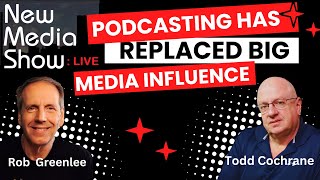
Todd Cochrane and Rob Greenlee argue podcasting has replaced traditional media as the main political influence in elections, driven by listeners seeking unfiltered commentary. They discuss the value-for-value model where audiences tip creators in Bitcoin, technical production headaches like RSS caching, and why podcast thumbnails matter for growth.
Chapters
Todd and Rob in the afternoon. Hey, afternoon delight with Todd and Rob. Oh yeah. Oh yeah, and here we are for— excuse me— another edition of the New Media Show. And Rob, I've got my fingers crossed here because, uh, the RODECaster Duo continues to disconnect from my, uh, MacBook. And yeah, so we, we shall see, um, How many times I have to restart the RODECaster Duo today. So I'm, I'm very pleased that you're recording because the only way to save this catastrophe is if, uh, quote unquote, the, uh, the, uh, the RODECaster is rebooted.
Now, if anybody's had this issue, could it be the, the Mac that you're using is causing it? You think a driver conflict or something?
Well, you know, sad— sadly, it I updated the Mac a few days ago for some sort of update. So I'm sure there is some incompatibility there that has been introduced. So I tried unplugging devices and, you know, it is what it is. But I was 7 minutes into my recording of my tech show on Monday and it just, all of a sudden I saw the flash on the Chrome where it disconnected. So nothing beats a hardwired connection in the least. So, and I'm actually using a—
Oh, just lost you. So anyway, we wanted to talk tonight about, you know, and while Todd gets his audio back going again, about what we saw last night in the presidential election and what it means in the context of what we've been seeing over the last 6 months about how the presidential election has been influenced by the growth and prominence of podcasting and how these presidential candidates have been taking advantage of the opportunity of podcasting and I think that there's many in the mainstream media and even in the independent media that are increasingly talking about how the online media space, and that would be independent creators, podcasters, are rapidly becoming the dominant medium in the world right now around, you know, getting information out, getting more detailed information out. And is not, or less likely, I guess, to, to kind of put out falsehoods and divisive narratives that we have come to expect from the mainstream media, at least here in the United States. I think this is probably happening internationally as well, but it may— this may precipitate a significant reduction increasingly faster in the mainstream cable media, and so we may see this happening at a much more rapid pace as we move forward because of what we've been seeing happen, and especially with the outcome of the election here in the United States. So, Todd, are you back with me?
I think so, and it auto-reconnected. I didn't have to reboot, so—
Oh, you didn't? Okay.
Who knows what's going on, and by the way, Rob, I guess you missed it, but we got put on major blast last week for talking politics during the show. So just, well, yeah, I guess people were not happy with us.
Oh, well, you know, there's some big takeaways from that too that I want to talk about on the show. And it really should not be about politics. That's not what these topics are. Are about.
No, it's, you know, is, as, uh, I saw someone had posted in my company, had posted something we saw on Instagram. And, um, see if I can find a thread because I, I wanna— it was pretty, uh, it was pretty eye-opening and it was a good takeaway. Um, Okay, let me read this. It was from Nick Goodner. He said— let's see if this loads. Oh, don't make me log in. Come on, I just wanna, I just wanna read this thing. See if I can do that again and, and trick it here. Uh, okay, let me just X. Yeah, continue is this. Okay. Because I don't want to have to log in. Okay, well, it's not letting me. I have to enter a stupid code because Instagram is being Instagram. But go ahead, I'll see if I can find this link.
Yeah, I don't want to make this conversation about politics tonight, though it increasingly makes me upset that everything has to be painted in the colors of politics when when we talk about anything these days that maybe people don't agree with. And I think that's one of the big takeaways from what I think is going on in the world, and it also is involved in the independent media space too. You know, there is a payoff for being extreme on both sides, right? People tend to get more attention from the online community when they go extreme one side or the other. And so that's kind of what we're seeing happen, like what happened with us. I think last week we weren't talking about taking a side, we were talking about the context of what was happening around politics with media. And it's continuing this week as well, because guess what? It's top of news, top of mind, around podcasting right now. And I mean, for us to just ignore it is kind of not very bright either.
So here's a comment. This is from Nick Goodner. He said, I'm not a political— I'm not a political analyst, and this is not political account. I don't want to trivialize people's feelings about the election or get into policy matters. However, as a creative marketing communicator, commentator, I want to offer a takeaway from the elections that I noticed. He goes on to say, like Barack Obama's campaign, Harris's campaign used traditional Hollywood celebrities. There was no shortage of celebrities lining up to endorse Harris, from Paul Rudd to Harrison Ford to Beyoncé. Harris had the big names out to support her. This strategy worked really well for Obama. However, something has seemingly changed in the past 16 years since Obama's 2008 campaign. The rise of the new kind of celebrity. People like Rogan, Jake Paul, Theo Von, Dave Ramsey. These people are not famous because of how they perform to others. These people are famous because of the communities they built around them through their social media presence. These people feel real and tangible and like you can actually react, uh, you can actually reach them because they're on social media feeds every single day and in your ear. He calls it earholes, every week with 4-hour podcasts. While Trump didn't have the Hollywood A-listers, he went out of his way to appear on these people's shows to do interviews and get their endorsements. Last night, watching the coverage, I noticed at least 8 times when people at the polls said, I'm here because of Joe Rogan. Many of the pundits even talked about Joe Rogan's impact last night, but I didn't hear people say, I'm here because of Taylor Swift or because of Paul Rudd's in line. Takeaway for all of you budding content creators out there: being famous on Instagram is not like being rich in Monopoly. The influence of showing up online and talking to an audience daily is greater than the influence of performing to an audience occasionally. I'm not saying this is completely why Harris lost and Trump won, but it did have a marginal impact on voters. So I think it goes to the point of a strategy, and maybe it leads to some of the things that we're saying here, is— and I contend, and again, this is not at all political, this is just showing the power of this medium— is we have this genuine ability to reach people and to connect with them, and we built these We built our communities, um, in such a way that— well, why, why do I still have a GoDaddy sponsorship? 19+ years. I have a GoDaddy sponsorship because I tell my audience, go buy GoDaddy products and services. They, they respond and they connect to that. Why, why do I do commentary? And why do we do commentary in this show? And why do we have people listen? Do this show is because people trust you and I and our commentary and our input. Um, we are not political on this show except for what we've been talking about here the last two episodes, but the simple fact that old media, which everyone says they don't trust, at least, at least, yeah, all the research is showing that most people The vast majority of people don't trust the media anymore. Yeah. And so in that regards, well, here we are. And, um, I, and I, I, again, I don't, I don't want to pick sides on this, but I think there was a very smart strategy done by one campaign to be on social. Now, again, how much did it move the needle? We talked about Rogan's numbers.
Really? No, we don't really know, but it's— it, it certainly reached a lot of people based on the numbers that I've seen, right?
Yeah.
So a lot more people were reached through these podcasts than any mainstream media conversation that was put out.
You know, they did 16— I think the number was $16 billion in media spend.
Well, that's buying advertising. If you want the most inauthentic way of communicating to people, it's by political ads, which I think is kind of a waste of money, to be quite frank with you. I think these long-form conversations with the candidates on podcasts gave a much deeper glimpse into who these people are and what their policies are, if they talked about their policies. Than anything that you would get out of mainstream media. I'm sorry, but that's just the facts.
You know, I was, um, because I'm on 12 hours, 13 hours opposite right now, um, I was, I woke up and my television set here has a, I don't know how they do it, but it's free for view. I guess that's the best way to say it. 3,000 channels. And I was able to switch between— if— and I, I don't watch mainstream media because— or old media— because it just gives me stress. And, you know, so, but, you know, what did I do? I tuned in to some mainstream media shows and I was clicking between like Fox, CNN, MSNBC, um, and, you know, and really within about an hour, hour and a half, I just I quit because it was the same shit.
It's just bashing constantly. Right.
So, so I basically then went on Twitter or X and started watching some live streams that were. And so I reverted from watching mainstream media Cause it's just the same, same disco. Why did this happen? Why did that happen? Well, people just voted. That's what happened. You know, and it is what it is. So, um, but I can't help but think that come another election and, you know, this is good or bad. Uh, if you love political content, I just have a funny feeling that those shows are going to thrive. In going forward when it comes to— well, you look at the Congressional Dish, you know, that's a great podcast, uh, you know, that, uh, has been around a long time. And it, it, you know, and I— it— she can be a little partisan at times, but, you know, it's what— who can't, right? And, and there's, there's a few, um, political shows out there that have done very, very well. So I'm sure those shows are going to continue to thrive. And you look at the, what is it, Daily Wire. I think that's what they only do, or mostly do, is political commentary. So, but some people are going to say, oh, I can't trust Daily Wire. So I guess you have to pick your poison on which content that you subscribe to. So, because this art, now let's, nothing taken away from those shows, but are they as much of an entertainment show as mainstream media? So we can't just discount that some podcasts are not more politically entertaining. And they're definitely whatever side they lean on. You know, The Daily Wire is definitely a a conservative podcast.
Yeah, well, I think what we're seeing is a form of tribalism, um, that's happening around media now. So, you know, this is— I think, I believe this is why mainstream media has gone in this direction, is because controversy and taking a side that can build an audience that has a similar belief structure, um, will build audience. You know, taking a kind of a neutral position, kind of like we try and do on this show, pisses off everybody because we're not taking a side necessarily. There can be things that we say that maybe can be extruded, you know, it can be interpreted as maybe biased towards one side or the other. But people are hypersensitive to any kind of, um, kind of indication that you might have a little bit of bias in you. And attack the other side for any kind of sign of bias, right, that is different than what that attacker believes. So, you know, that's the kind of toxic environment that we have right now around media. And I don't blame these big, you know, these online outlets like The Daily Wire, or, or, um, there's others out there that go the spectrum. I'm just drawing a blank on names of these shows. But, but, you know, there's a reason why these shows take a side, is because that's how to grow an audience now. Because the audience is increasingly being trained to take a side. Because if you don't take a side, then you don't have a place, right? Yeah. So where do you go if you're not a Democrat or you're not a, a a Republican.
Well, you know, at the same time, and, you know, I don't want to spend an hour and a half on this today, and although it's hard not to, is I think people have tribed up for a long, long time, you know.
So, yeah, but now it's being weaponized against people is the problem.
Yeah, yeah. You know, and I, and I, I've said it on this show before, um, before there was any mass media, any before the— I even knew the Well, the internet probably existed in its infancy when I was, you know, a young, still a teenager really. And I remember explicitly being amazed about my late grandfather who was a staunch conservative. Oh, he was as Republican as you would even imagine. And, um, in all definitions of the word. And, uh, you know, he just loved to be down in his workshop and have someone that rolled in, and he would always just switch to being Democrat. I mean, I mean, just flip on his head. And then they would have this debate, and I would just sit back and watch these, these, uh, you know, these older men have this, this, uh, uh, deep conversations about things that are going on in the country as they knew it. And let's be kind of honest, it's a little bit rudimentary at that time because And that's healthy, Todd.
That's all healthy.
Yeah. And he would play devil's advocate, but, you know, and that person would leave and then he would have nothing, nothing nice to say, you know, about this other political party. You know, I remember him saying, you know, you know, the damn word and combine that with a political party, you know. So, you know, there was So from that aspect, I think there's always been a bit of spite in people that have, you know, you know, so this, this, this hate for one political party or another has, has been around a very, very long time, you know, and it has, but it's not at the level of vitriol that it's at now.
No. And I, I blame mainstream media for creating that atmosphere.
And he would say it in jest to a certain extent. You know, so, but I think that, you know, James, let's see if I can preempt this a little bit here. I'm not ready to play a James clip, but, you know, James was irritated with us talking American politics, but I think he was.
I didn't see it. So where did you hear that comment?
It was on It was on Podcast Index in the, uh, the commentary on, uh, Mastodon. So, but again, I think if we go back to our crutch of this conversation, it's a good thing for, for podcasting right now.
Yeah, I think it's, it's, it's the number one, I think, story in the medium right now is the impact of this medium is changing the world. Um, you know, I don't think there's any way to see it. Um, it's hard to say what's going to happen to, to the legacy media, but I'm increasingly hearing more and more people say that they're, they're in trouble and they may have to make changes in order to maintain any kind of, kind of, of a relationship with audience.
Well, they got their, uh, their semi-annual influx of political money. So they've got enough money to carry themselves for another year with political ads. So, you know, um, you know, that $16 billion was not spent on podcasts. Um, for sure.
No, I don't think that there was that much political advertising in podcasting.
No, no, ever. And so, you know, from that existence, uh, we don't have to, uh, um, you know, I guess the question then becomes, well, the next— can't— with the next election 2 years from now, uh, here in the United States, um, invoke a whole bunch of advertising in podcasts, which I'm sure is, is bound to happen. But then I think the audience will just be utterly disgusted because they can't run away from it.
So I think it would be— I think it would be a big mistake for the medium to push political advertising into the medium. I think it would it wouldn't be a good thing.
I just wonder how many, uh, how many ads were actually run in podcasts that were political in nature. I, I, I don't know what that number even is.
Well, you have to factor in the impact of the brand safety and brand suitability tools as a, as a gate on that kind of stuff, right? Um, if you're if your brand suitability or brand safety score leaned a certain way, you're not gonna get ads. So it's, you know, especially from one party or the other. So, you know, as we move into higher content moderation, if that continues, I think the opportunity for advertising in general is gonna be less.
Unfortunately. And I do have a juicy bit of rumor stuff here. I want to— we can wait until later because we're going to talk about Spotify a little bit later in the show today. But I've got some— don't let me forget to talk about a conversation that's happening in a— I wish you would say it— a group. They're largely out of, uh, out of the UK. I think you're in the same group, aren't you, Rob, in the WhatsApp? Yeah, yeah.
So, but yeah, so yeah, it was, uh, started by, by the CEO of Hub Hopper and, and myself, actually.
So, oh, so you two are the two that started that group? So, right, yeah, yeah. There's been some conversation in there over the last 24 hours that I'm— I've got a little bit of a hmm moment. I guess I won't tease people any longer, but there was a podcast host, and I won't say who it is, that basically has had to do a fire drill. Apparently Spotify is no longer— was not updating any of their shows. They were using a service to cache their feeds and using built-in compression called Brotli, B-R-O-T-L-I, and GZIP. Now again, I'm— we've never used compression or for feeds. Feeds, we've always made sure the number one, that they would not cache. Basically, when we replace the feed, we want to replace. We don't want it to be cached anywhere. And he basically said it looks like Spotify feed parsing is no longer playing nice with that. He said just sharing in case it fast forwards anyone else. And, um, but it—
what does that mean, Todd, that they're, they're, they're caching the RSS information and then compressing it?
This host was caching feeds via a host—
was caching— the host was caching.
Yeah, the host was caching. And the specific caching that the host was using, Brotli, B-R-O-T-L-I, um, appears that Spotify would not pull those feeds no more. And, um, what I basically responded is that we've never used— and I'm not going to name the service— to cache feeds, not worth the minor cost savings. In other words, you know, we You know, the— if you're serving it raw, a little heavier load.
And, um, you have a hard time comprehending how, how that would save much of anything.
Well, again, I don't know the strategy behind it, but I know that we don't do it. But we have seen, um, recently more and more podcasters come to us that have gotten a response from Spotify saying Hey, your host feeds are effed up. You've got to— they're, they're incompliant. They're wrong. There's something, you know, it's always this pointing his finger back towards the host. And then along with the, oh, by the way, you know, you should just move your show to Spotify. And I'm wondering if this is another obtuse method to get podcasters to think that their hosts are having issues and wedge, put a wedge between us and our customers. I'm just— don't have any proof on this, but to me it just makes you go, hmm, if someone's feeds have been pulling into Spotify normally for a long, long time, then all of a sudden they don't start pulling in anymore because of tech that they've been using and they've made a change on the other side. Was it, was it a just a change that they didn't think was going to affect people, or is there something more there? And I'm not saying it is or isn't., but based upon some of the tickets we've gotten at, at our company from our customers who've seen— they send us the response that Spotify sends, and, uh, they never admit it's their issue. Never, never at all. It's always the host's problem. The host has a problem. The host has a problem. The host has a problem. Um, they are not a good community neighbor at this point, uh, in any regards.
Well, is the host using kind of a non-standard practice here that Spotify doesn't support because it's not a common practice?
It's, well, I, you know, compression using gzip and Brotli have been, that's pretty standard for the web. Uh, most people that are running websites today are using some sort of compression on their website.
I, I was expecting Spotify to support a, a process that they're doing with the RSS feed data that Spotify is not kind of compliant with.
It just sounds like— well, again, uh, I don't want to speak to the pulling of an RSS feed because I don't have the technical background from my team because I asked a question. I know we don't. Because I know how our feeds are served. And we, you know, we serve— we, we want our feeds to be super high performance, but we don't, um, we don't put them on a CDN. Let's just put it that way. We don't put the feeds out on a CDN. So, um, again, I don't know, uh, but something changed and it broke them. And, uh, you know, that's something that you would wake up 2 in the morning and don't— all of a sudden your customers are complaining that the episodes are not updating over there. Generally, this— these services have been pretty, um, this is the first time I've heard of a compression protocol causing feeds not to update. So, because, you know, to be honest with you, a lot of people that are running websites are using gzip and different types of things, so it I would assume, um, this is going to cause an impact for people that are self-hosting that may be running this particular compression. Um, maybe their feeds, if they are not submitting it through their host, maybe, uh, some people start having issues of, of stuff not updating.
So, so we're not seeing this kind of process concern, um, in regards to Apple Podcasts?
It's only— No, no, no, no, not at all.
So it's okay to use this caching protocol on the, on the hosting side with Apple, but just not Spotify.
Is that what's going on here? But the problem is you can't, you can't pick or choose. You either use it or you don't use it, you know. And if you turn on GZIP, right, right.
But, but if Apple is supporting it and, but Spotify isn't, then that would be a two fingers pointed at Spotify is the problem, right? Yeah. And if other podcast consumption apps or platforms like the Podcast Index and others aren't having a problem with it, then there's something that points to Spotify.
And to be fair, and to be fair, I've never heard it. You don't use two compressions together. So if I'm a— if there's an IT guy out there that's screaming, no, Todd, you can't, then please, you know, get in the chat room or send us an email. But Um, Brotli is a lossless data compression algorithm that supposedly— well, by Google, uh, too. So this is a Google protocol, and, um, it could be used in— not in conjunction, but other than gzip. And there's other ones out there. There's other compression stuff out there.
So, so is it a compression algorithm that basically compresses the amount of data that's needed to transfer the the information to between servers. Is that what it is?
Okay, okay. And combine that with caching, um, you know, you get a bit of a performance increase there. So again, I, I don't know, um, it's been out a long, long time, this particular protocol.
Yeah. So was there any clue as to what problem. It just wasn't updating the, the episode.
Yeah, new episode information feeds would no longer pull.
Uh, just wouldn't pull at all.
Yeah, it wouldn't update at all. So apparently he— of course, I'm not seeing too much commentary since, uh, this morning, but— or last night, but he, uh, he updated, I think, to gzip, and I think it's, it's working fine. So But again, it's this ongoing thing that I have seen on my side where everything is now the host's fault. You know, the host is— it's the host's fault. It's the host's fault. It's the host's fault. And yeah, so I just, you know, they're not, in my opinion, playing a great neighbor at this point. And It's pretty obvious why.
Oh, it is?
Okay. They want people to move to their service. You know, they're directly competing, uh, at a much higher level. Um, and you know, uh, is it, is it weaponization? I, I don't know, but, uh, it's always—
it doesn't, doesn't impact you guys, and it— well, you haven't heard it impact any of the really big podcast hosts.
It doesn't impact us, but again, we've seen based upon support tickets we've got that there's always this finger being pointed back at the host as being the issue when there's no issue. Okay, for a myriad of reasons. And you know, um, every once in a while, you know, I think it's pretty rare now, but it used to be people would say, well, my Apple feed hasn't updated. How come it hasn't updated? Well, Apple's now doing really, really good, and then we don't see those tickets come across anymore where people's feeds have not updated at Apple. So that said, and definitely if you're on any of the new podcast apps, it's not an issue either because the second you post a feed post an episode now, uh, we send out what's called a pod ping, and we basically announce to the world that this new episode is available. Please update your— you know, we send them the metadata, you know, update your, your, uh, your directories. So yeah, okay. But anyway, and that was just a back channel conversation that was going on.
Yeah, well We'll update you as we learn more about, you know, the, the complexities of this situation, I guess, and, um, and see if it's more, more widespread. I mean, if, if anybody that's watching this that works for another podcast host, is this something that impacts you as well?
We'd love to hear. Hey, by the way, in the YouTube chat, uh, Marcus Couch says podcasting saved the country yesterday, possibly the world. Okay, and now that's not going to be inflammatory at all, Marcus.
Um, well, um, you know, everybody's entitled to their view on it. Yeah, I think that's the key takeaway. I mean, all of us have, have a right, have a constitutional right to say what we want to say. It's not hurting anybody to say that. Yeah, so, you know, if you feel that way, I think it's okay to say it. I think our Constitution in this country assures that, that right.
Beauty Bubble says, one solution if your Mac only has a— you has— if your Mac only has USB-A inputs, you can use USB-C to USB-A. Now I'm USB-C completely. This is a Gen 2 or Gen 3 MacBook Pro, so maybe I will try the opposite way.
Maybe I will try Um, and the Duo was probably USB-C too, probably, right?
Yeah, it's USB-C. So maybe I'll try a dongle and go from USB-A— no, USB— yeah, maybe I'll put a dongle on and do a USB to USB-A to USB-C. I don't know. It's staying connected now, so knock on wood here.
That's good.
That's good. I have to go out and look and see if there's a firmware update. But other people complain about this RODECaster Duo having this disconnection issue.
Oh really?
I haven't heard. I'm amazed it reconnected. That— I, I didn't reboot anything, so who knows.
So I noticed that Rob Walsh put out a, a his own RSS feed off of Libsyn that basically has all of the podcasts that the presidential candidates, um, did in, in one, one feed. So he built— actually in the notes here. Yeah, yeah, that's interesting. And it's actually sourcing those episodes directly from the show's RSS feed, so the shows are getting credit for the plays. Yeah, um, so it isn't like he hijacked all of those episodes. Rehosting them or anything like that. It's just that he compiled them all into one, one feed that has all of the interviews with Kamala Harris as well as, um, I think RFK and, and, uh, Donald Trump. So there's, you know, that's something that, uh, we could share in the show notes too.
Yeah, I'm not sure people are going to want to go back and, uh, and listen now, but maybe I think there's—
well, if you think about— I mean, if you think bigger picture about it, Todd, um, I think a lot of policy, uh, comments were, were made in these podcasts, and I think that they could be, um, information that people could use in the future to say, well, this candidate said this and he needs to deliver on it, right? I think that's the inherent advantage of them going on. And like Donald Trump did, Donald Trump did a 3-hour interview with Joe Rogan. There's a lot of policy discussion that happened in that podcast.
There was a lot of gibberish too, so.
Well, sure, but that's what podcasts are, right? That's what they should be, right? Is let's get to know the person, right? Not just a 30-second soundbite that maybe potentially was edited for for, you know, some sort of a manipulation of, of what was said. Uh, these are generally unedited. I guess we don't really know if what was recorded— yeah, that goes through some post-production work.
That was a big one. That was a big part of the commentary on, um, on Podcast Index was people taking basically the— my commentary about editing. Um, uh, I think it's Brian Andrews said, Todd, as a tinfoil hat wearing conspiracy theorist, I think there's multiple approaches and purposes to editing. They're often lumped together. Editing to remove mistakes, improve the final product, offer a better experience. Yeah, I'm fine with that. This is what most of us podcasters do too. Editing to remove context from a clip, which allows you to confirm bias and promote a certain idea to mislead people. I think that is why some people hate editing. Um, I, I agree with number 1, editing to remove mistakes, improve final product, and offer a better experience. You want to do that, knock yourself out.
That's fantastic. Hours and hours of work. Or, or increasingly, people are using, uh, tools like Descript and other ones.
And, and Dave said a while back, I started adding a blooper reel to the end of my shows. Not every time, but if I flubbed in a funny way The main reason was to prove that as ramshackle as the show is, I actually do edit the effing thing. Evo says, I don't understand the disdain to editing. I don't have a disdain to editing. Everyone took that the wrong way the last podcast. I have a disdain to removing context. That's what I have a disdain for.
Well, Todd, I think you've been pretty clear over many years that you don't believe in editing at all. Well, I mean, unless it's just like trimming the ends, right?
For me. Right. You know, for me, myself, I and you, because you're forced, because I produce the show, that I don't edit. So, you know, when you edit, you shrink the show. I see what you do. You edit. So it's a personal preference.
It is. It is. And there's pluses and minuses to it. Out there that, you know, you can trim out a lot of filler words that are said and save people time too. There's a wide spectrum of opinion on this topic, right? That I don't think any thought is probably wrong. I do object to over-editing. Yeah, yeah. There's no question. But I think you have to use these editing tools, these AI editing tools with a certain amount of caution to some degree.
Yeah.
At the beginning when I started to use them, I think I over-edited, but over time I've kind of backed off from it and kind of set the settings to be a little lighter on the edits.
So yeah, go ahead. Yeah, Mark Steadman said, I saw my doc about high blood pressure this week. She prescribed removing the media show from my queue. Instant improvement.
So again, and then James, I'm going to say this is a hotly partisan political podcast. It certainly is not. Yeah, there's so many others out there that are much more hot than we are.
James says, I wonder whether Todd is aware that editing podcasts isn't just done to misrepresent guests, it's most often done to make a better podcast. What a load of conspiracy nonsense. What a conspiracy— he says, what a load of conspiracy theory nonsense in the New Media Show this week. We didn't promote conspiracy theory, we just said we want people to provide. If they're going to do these types of interviews, give us the full freaking context. Get— give it— don't, don't take a sound bite like the old media does. That's it.
I mean, people really reacted. I mean, it's a spectrum just like anything else. And, and why we are so divided on so many issues is that We don't accept anything that's toward the middle, that there might be something a little less than an extreme view that may be okay too, right? So this is, this is kind of madness to some degree that we're falling into as a society.
Yeah, is, is that we can't see subtlety, we can only see extremes, you know. And, and I, and I, I re— basically replied to see if I can find my response. Because, you know, I basically said, I said, I think you overanalyze what was said. My basis is that if you edit and change the context of a question or an answer in an interview, that is suspect. And that is what old media does. I could care less if you edit, remove breath equalize, etc.
Again, this was in response— or something like that that doesn't add context.
This was in response to blatant editing and context changing of the old media. So I mean, man, people just went kind of— it was kind of fun to see the commentary, but we don't, we don't take anything out of the context of this show. You get to hear everything from and we don't rearrange, um, good and bad from the perspective of the listener, right?
So, you know, I mean, we put ourselves out there, we take a risk every week when we go on the show to talk about controversial topics, but I don't think this show is controversial on any kind of spectrum that is anything close to what we're seeing that's more mainstream out there in the world right now.
No, not at all. So it's just, yeah, I'm like, okay, wow, yeah, you got your blood pressure up. I understand from the politics thing is everyone's blood pressure is either up or down right now.
Everybody's kind of— I mean, if you were on the, the Democratic side of the fence, you're, you're hurt and you're, you're deflated. You feel like you've been defeated. It's, it's— I mean, I played college basketball for for 4 years, right? Somebody won and somebody lost, right?
And just like the last election, either the opposite side was down. So it comes and goes.
It's not the end of the world. And one other level to this, which basically adds another component to what I just said, is that there's been games when I played competitive basketball that my team beat the other team 80 to 10. And I was embarrassed by that because I could— I, I had compassion for the other side. Yeah. And how that would make them feel. Yeah. But I, I scored like 25 points in that game or something like that, so I contributed 25 out of the 80 points to the win for my, my team, right? You know, but I felt really bad for the team we beat because they, they only made 5 shots the whole game.
But, but Rob, on the other side of things, when I started running cross-country in high school— yes, I only weighed 110 pounds soaking wet and was very— in my early days, I was not a good cross-country runner, and I got humiliated by being 89th or 90th. And you know what that did? That just set a fire in me to get tired of having my ass being kicked. And I worked harder. And then, and then I started setting state records and I wasn't, I wasn't 89th. I was first. So, you know, it was because of the humility of being, you know, okay, Cochran, you contributed zero points to the team this time. You know, thanks for the effort, bud. You know, the coach would humiliate me. So humiliation. Again, it shouldn't go about this— it's not about humiliation, but I was humiliated. So it really was about becoming better.
And yeah, and that's, that's the key takeaway from an election like this. If you've never played competitive sports, yeah, I don't think you get it right. And I think that's, that's something that I'm trying to share here, is the fact that, you know, just because you lose doesn't mean you quit, doesn't mean you get all upset and have a temper tantrum.
Rob, Rob, Rob, be careful because, you know, there's some people that are listening to the show that are, you know, they, they have, they're worried about their, you know, everything. I get it, I get it.
Me too. People feel threatened by a, a choice that others have made that they feel is going to impact them. Right. But, but the analogy is still sound, Right? Those, those players on the other team that I beat 80 to 10 felt humiliated, right? Right, right. Some of them started to cry, some of them got upset, right? But guess what? They, they need to walk away from that and say, well, how can I get better as a player? And it's the same thing that the Democrats need to do right now. They have to reassess what their positions were that wasn't successful. And, and that's just, that's the nature of our system. That's a, that's the nature of United States of America and how we've set this up as a two-party system. There's a winner and there's a loser, right? So meanwhile, no, I mean, all I'm stating is the obvious here. So yeah, yeah. So anyway, we can move on and talk about another topic that's related to Spotify if you want to.
Sure. Them and their IAB situation.
Uh, yeah, around that. Well, no, around their growth of year over year around video advertising.
I'm more excited to talk about the changing language about their analytics.
Oh, well, we can do that too. That's, that's, that's part of it, right?
Yeah. Yeah. Well, you know, it's, uh, you know, so with their 12% growth year on year in video advertising, It all goes back to the advertising story.
Um, it says that the video ads accounted for 20% of all their digital ads. Okay, great.
I mean, it's not a huge chunk of it yet, but the thing is, are our podcasters being rewarded for that? No. Are they getting a piece of that? No, a small percentage, 300, 400 shows are, that's it. I'm getting a piece of that advertising. So the rest of the podcasters are, you know, thank you very much for putting your content up there and, uh, and let's let us monetize around it. So same thing with YouTube. So yeah, 20% of all digital ads. Well, it was still only 20% considering they are an audio primary platform.
But it's one thing they didn't say in this, this, this announcement that was on PodNews. Thank you, James. Um, was what their, what their CPMs were on the video side versus the, the audio side. And I did notice that, uh, Lipson Ads made a choice to not put out their—
I believe it was their monthly or weekly average CPM Yeah, and that basically sounds like, uh, the change of, uh, their CEO has implemented some new policies over there. I wonder what else they're implementing.
Well, I, I, I wonder if it's not a good story. Usually a, a company makes a change like that when the information that's being disclosed is probably not as favorable.
Well, yeah, it was when they started. When you have other entities advertising $70 CPMs and that kind of stuff, then, you know, uh, it's probably not a good story when you're at $22 or $23. But in reality, the $70 CPM is probably only for a select few, select announcements. You know, I can spin anything, uh, 25 ways to Sunday. I remember having that Um, and again, I've talked about this for years, the guy that got $20,000, um, you know, huge amounts of money for reaching, um, neurosurgeons, you know, his, his per episode CPM was incredible. I could, I could cherry pick and say, yeah, uh, you know, I've, I would, uh, I had a 150 deals at $20 CPM. And one deal at $20,000, and I do the math on that, and boy oh boy, that, that if I average that out, I could say my average CPM was, uh, you know, $800 or something like that. So you can spin any number you, any number you want.
Um, well, that's odd. Um, also, I believe in— I, if I was at Lipson, I probably wouldn't have been in favor of doing what they did to begin with. Putting out a number like that, because what you're doing is you're setting a baseline for buyers, right? And, and it's more difficult to pitch higher CPMs to buyers if you're publicly putting out what the, what the average is.
Yeah. Now we got a comment last week, um, let's see if I can turn this off, from Brian, uh, and he sent 1,701 sats. He says maybe It's my tinfoil hat moment, but I think, and this is regarding streaming, maybe it's my tinfoil hat moment, but I think the real driver behind the industry push towards streaming is about unskippable ads. I think the other stuff is potentially true and tangible, but the real reason we could make the case, this partially metrics, but I think it's just semantics. I think it's unskippable ads. And I would agree with, with Brian that it's the chase of the almighty dollar. For the push. And we said that in the last show, that it— we felt that this desire is all about, all about the money. So it goes back to, you know, the 95% of the other podcasts out there could care— could give two craps whether it was delivered via download. Well, I believe— well, the problem with having it only as a stream is then you can't listen on an airplane. So, you know, that— and it defeats the purpose of being off-grid with your podcast.
But, you know, people claim some, some platforms will cache episodes even though they're streaming. They can cache. This is what I've never seen that. Well, that's what YouTube has the ability to do that.
Well, you know, they have the ability to— you have to manually Yeah, yeah, no, that's what I'm talking about.
So if you know that you want to listen to an episode on the airplane and you're not going to have internet access, you can click a button in the YouTube app that will download it to your local device.
I think what they're downloading there is probably a, a, a different type of file, an MP4, M4A. You're not getting a true stream at that point.
No, you're not. I mean, you're getting it so you can play back when you're not online. So, so that's the, that's the difference here. And then this whole comment about not being able to skip ads is because when you're a stream, you're only delivering as much data to the player as the player is able to play.
And so does, does, does Spotify support a skip 30 seconds? I don't think they do. I don't think YouTube does either. Yeah, I don't think so, but yeah, I think you can skip, right? The bigger— on this, go ahead.
Well, on YouTube they do have the ability to— you can, um, skip an ad after it plays for a short period of time, like 5 seconds or that kind of thing. There's usually a button, button at the bottom that says skip.
Yeah, and not all ads now are skippable over there, but But here's the thing that's kind of curious when it's in regards to the IAB stuff. Spotify appears to quietly change its language about its analytics, dropping the claim this definition of streams aligns with the IAB definition of a download. Specifically, Spotify states the streams are not deduplicated by unique listeners. See, that's very important. In other words, you can listen 3 times to episode from the same device and you'd count 3 streams., but it would be one IAB download. So, you know, they're able to step on the pedal here, you get more money out of their ads, just like another podcasting company has been very famous for.
Um, that takes you back to an earlier time, Todd. Yes, doesn't it to you?
Yes, it does. And a listener in Spotify is deduplicated through the life of your podcast. A listener, according to IAB guidelines, works very— oh, really? Interesting. Uh-huh. And listener is deduplicated. Well, they got the listener data, so they can, they can deduplicate.
But the question is, do they?
Well, yeah, the question is, do they? And, uh, you know, we're going through our current, um, recertification right now. We did our first 90 minutes with the team, and we're going to be doing another 90 minutes with them when they dig through our code. And hopefully we'll get requalified before the end of the year. But, you know, we're we're in process right now, at least with the auditors. So I can guarantee you that Blueberry is, you know, adhering to spec.
Yeah, so just to kind of paint a little bit broader picture on this whole thing of deduplicated concepts here with the play 3 times and each one of it gets counted as a full play, In the early days of podcasting, and Todd, correct me if I'm saying this right, each request for an episode from Apple Podcasts made 6 different pings on the server that at one point in time people were counting.
That's not a good stat. Well, you're used to your prior employer.
Well, yeah, I'm not saying that everybody was supporting that, but that was a practice that was—
I don't know if it was touching 6 times, but there was situations going on where— It was at least 3 or 4 times. Maybe the audio file was sampled to make sure to check the file size, and then the initiation of the download would happen.
So, you know, there was— back and forth pinging that was going on in the early days before 2008.
We measured everything, Rob. Didn't matter if it was a bot.
I mean, I think they called that a hit, didn't they call that a hit back then?
Yeah, it was pretty much the hit counter. So that's why I always laugh, you know. I thought I had like, oh, I think I had like 40,000 listeners in 2005, 2006. And then when Angela built our first stat system, you know, I was quite humbled. I'm like, oh, No, I, I, I don't have that. It's, you know, back down around 10,000, you know, remove the— you know, that was the true haircut back in those early days. We were all reporting crazy numbers and monetizing on all that, and then the, you know, the first true measurement system came in place and like, no, you don't have— you don't have that. You've only got about you know, 8, 9, 10,000 versus 40 or 45.
Yeah. I mean, because that even impacted display advertising too. Back in the early days, people would track how many hits hit their website. And what a lot of people didn't realize what they were saying with hits were that was every file request related to your web page. Right. So each image each piece of code that you're pulling off of the server, it could be a JavaScript code or something like that. Every little piece of data that you pull from the server was counted as a hit. Well, that's— you could have one, one web page load that had like, uh, like 40 different hits, right? That's why I—
as though it was a page load. Yeah, that's why IAB put in place, you know, specifications for display advertising, because some of that stuff was happening as well that was not so good. People made a lot of money off that in those early days.
Yeah, they did, because people didn't understand what a hit was. All they was was interpreting it as a— was a web page load, and that's— that wasn't true. So this kind of— this kind of— this conversation kind of reminds me of that to some degree. Um, You know, and the whole Dart tag is another one that kind of reminds me of that. And podcasting is trying to do the Dart tag thing where there's like a 1-megapixel or 1-pixel image that's loaded on a web page. And each time that page loads, it counts as a hit. And they try and connect that hit with a play with the web player to, to, to verify that, that, that play action that, that happened. But that wasn't always accurate either.
But anyway, it's called attribution, Rob.
Yeah, yeah, right, that's the modern term for it, right? But back in the early days, they didn't call it that. So that was a big issue back when I was working for PodcastOne, was the Dart tag. That was the key and the solution to all of our metrics problems, Todd. Did you know that? Todd, did you freeze up on me? I think you did. So hopefully you'll come back and join me here. We can keep diving further into getting into trouble. So there's all sorts of topics that are coming top of mind again as the industry moves increasingly towards commercialization, and that's where a lot of these conversations are stemming from, is the interest of the podcast community to really drill down and focus on commercialization and monetization as a key, key driver to this. It looks like I've lost Todd completely now, so hopefully he'll jump back in here in a second. But In other news here, it appears that the Listen Notes folks have spotted podcasts that are being produced increasingly in the Notebook LM platform. That's the Google platform that enables podcasters to create podcasts that use AI to do the the voice work of a particular podcast and has concluded that there are 1,781 podcasts that are being created in the Google Notebook LM platform. And the conclusion that Brianna from Listen Notes said that of the 200 that she listened to, concluded did not have any authenticity and were just a bunch of noise. So I'm not sure what that really means, but that was one of the key takeaways from that particular conversation. So I know that there's been a lot of discussion about the NotebookLM platform taking advantage of voice cloning, and being able to generate a podcast completely with artificial intelligence using voice cloning capabilities to create all the audio in a conversational experience between two co-hosts. So that's just another example of where we're at moving down the path towards AI having a more significant impact on podcast production and publishing is increasingly we're going to see these type of platforms come into play and people utilizing them. And then we start pushing this envelope around, what's good content? Do we trust anything that comes out of a platform like this? And will it need to be flagged as AI generated? And I think increasingly the, the opinion of that is, is that it needs to be identified. As an AI-created piece of content, and that will immediately minimize its success. There's no question. So the pushback to this move towards AI-generated content is happening already, and I think over the next couple years it's going to increase that particular impact.
Todd, I think we're back.
Yeah, the power went out here. That couldn't be any more catastrophic. I kept the show going so we can keep going. I talked about the listen notes, doing a little bit of a deep dive into the NotebookLM platform around creating about 1,781 AI-generated podcasts, and the assessment is that they're without authenticity and a bunch of noise. So that's a pretty extreme view on it. I don't know if you saw that news or have an opinion on AI-generated conversational content.
Well, to be honest with you, uh, we're going to see more of this.
This is just— I agree with you. Yeah, I was just talking about that, how And then increasingly what we're going to see is pressure to identify this kind of content as AI-generated content for, you know, disclosure reasons and authenticity reasons. And that's going to be like putting a big red flag on it to say, you know, this isn't to be trusted, this isn't what we want, and, and it's going to be undermined over time.
Yeah, Google has a new API a new service where you can use their tools to detect AI-generated content. So I think that there is an opportunity. I don't know what it costs to use on a, you know, a usage basis, but it's definitely, it's available. So I'm sure we're going to see more of these types of services that are going to cater to that. And, you know, I think we're probably going to look at that in a significant way. I have a feeling we're going to, if it's cost effective, I think we're going to look, because, you know, we're big fans of authentic, true voice, you know, content. So, and the Podius Index, you know, they're working towards coming up with some sort of flagging as well. Of course, there's a lot of discussion about it, and some people are for it, some people are against. And, but I think some sort of yes/no is going to be needed in some level of, uh, I guess for a better word, is some level of disclosure.
Yeah, yeah, I, I think it's inevitable that that's, that's going to be the the result of that, because it's the same thing that happened to Google back in the early days of their, their page advertising that they had their, their AdWords stuff that they were doing and they had to flag it as sponsored, a sponsored link, right? It's the same. I think it's the same thing that's going to happen. Um, and that is going to leave the opportunity for podcasters, human podcasters to still carve out a niche. Um, and it's not going to replace us, I don't think.
Well, one thing's for sure, I'm going to have to buy UPS now. It may not keep my internet from being down, but at least, uh, at least the other gear that doesn't have a battery won't, uh, won't implode.
Yeah, I've been, I've been increasingly thinking about getting a battery backup for my house, um, so That might be—
you're thinking about a Generac or something like that?
No, no, a battery backup, not a generator.
Oh, it's good to have a combination of both.
You've already got solar, right? Yeah, yeah, I have solar on the roof. Yeah, it's only going to the grid though, so— and then I'm still tapping my electricity from, from the grid, so I have a kind of a two-way connection with the grid.
Yeah, that's the way they all work.
They feed back. Yeah, I would like to be able to, to charge up a battery with the grid and then, and then obviously keep supplying it with, um, with electricity from my solar panels on the roof. But yeah, why not? And then if power goes out, you just flip over to the battery pack and it powers your house or some limited capacity in your house to keep you alive for some time.
Or if you put enough capacity in, then you charge the batteries during the day and Well, if you have—
yeah, I think it's complicated, especially with the connection that I have where my, my generated electricity is going directly to the grid. I don't have a way to switch it to be able to use it in the house.
Well, I think what it is is it feeds back— you know, here's the thing, your, your, your solar panels are not capable of the load unless it goes through a box, right? And you have to have that, that box in between.
So, you know, I have to be able to switch between, yeah, pushing it out to the grid or have— or using it in my own internal infrastructure.
And if you're getting a good— if you're getting a good price, if you're getting one for one with your, um, your net metering, you definitely, uh don't need to at this point worry about that. But if you add the battery piece, then you'll be able to have the battery and could charge the battery and run your house off the battery.
Yeah. Yeah. And I was looking at options to be able to do the same thing with my, my Tesla car because it's got a huge battery pack in there.
Sure.
And again, I don't know what it's called, but there's a converter that will support the load The amperage load, the model year Tesla Model 3 that I have doesn't support, um, tapping into the vehicle. Oh, that's interesting. Or that the, the only vehicle that Tesla has right now that has that ability is the Cybertruck.
Well, you know, based upon the, uh, what happened in the election, 50% of the country is probably not going to be buying Teslas, so you might get a good deal on a Tesla, new Tesla here soon, Rob.
Well, Todd, I think you may be a little off the mark on that. Um, I don't know if you saw what happened to Tesla stock today, but it went up 15%.
Well, there's a reason for that.
Well, I know there's a reason for that, and it's not that Tesla is not going to sell cars or keep becoming more and more profitable. It's the tariff that is forthcoming. Well, it's, it's keeping those Chinese electric vehicles out of the market. That will keep the market solid for Tesla is what's going to happen.
Well, it also is going to impact people that build stuff outside the United States, not just Chinese.
So, you know, well, they have to build it inside of the United States. So that's, that's a topic that we haven't really talked about, is that, you know, if, if, you know, what changes are we going to see in the landscape, um, with a Donald Trump administration, right? But Rob, this is not a political show, so I know We're not talking about politics. What are the changes that are likely to happen?
That's not politics. Well, again, uh, let's, let's leave that to the talking heads and let's stay on podcasting.
Yeah, yeah, well, yeah, I mean, I mean, always talk about it in the context of podcasting, I, I suppose. And talking about solar panels isn't in that context, you're right. So, but that's all right. I mean, you talk about your, your, your UPS power supply, so I can talk about it.
Yeah, I'm sorry, and we, we let ourselves into that path. Um, the, uh, the one thing that I will say though, um, for sure is, um, the, the— I think it's a great time to be a podcaster. I think this is, uh Again, huge opportunities. We're still, you know, we're still seeing a lull in the number of new podcasters that are creating content. I think it's a great time to create a new show if you're an existing podcaster and you've been thinking about one. Um, because it really, we really are the, the, the influx of new shows still continues to be, uh, very, very low. And I'm going to be curious to see what happens in regards to the AKA podcast economy here over the next few months, to start to see if people start investing in shows or if there's more pullback or where, where it's gonna, you know, what will happen. I think we're gonna see a temporary increase increase in people that creating podcasts specifically because of what happened over the past month. I think that'll give people an interest to say, hey, I can, I can have a voice here. Um, so we'll, we'll see. Um, there could be a bit of a rippling effect here that could cause a, a flux of new, new, new shows.
Todd, what do you think is the, the core reason why we've seen it flatline? On new growth of— is it the economy or is it the expectation of instant monetization?
Do you think? I think it's economy. That's, well, you know, I think there's a lot of factors. One is economy. Number two, there's just a huge number of outlets now to create media. You look at TikTok. TikTok is huge now. I haven't been on TikTok in the last couple of days, but if I want to go find something, some newsworthy— if I'm looking for a specific topic, that's my first place to go now because it's instantaneous. People are putting stuff up quick, easy. They don't have to spin up a livestream. They don't have to create a video. They just Bam, they point their cell phone at them and they, they talk about or take a picture of what is happening, whether it be a national, uh, a disaster or whatever it may be. That's the place to go for instant information. Now we'll see what happens with TikTok. Now, will they still be banned? Are they still going to be forced to be sold? Um, I think those questions are going to arise. Uh, I don't think they can get around the sale. So, you know, that deadline is looming, although it is in court. So we'll see, um, what happens here. But I think part of it is just a lot of different ways to, to create content now. And, uh, when podcast was in its infancy and there wasn't that many—
there was a lot of choices, right?
A lot of choices. You know, podcasting was this revolutionary thing. It still is, in my opinion.
Yeah, I've also heard that X is going to be rolling out a bunch of new video capabilities. Well, I know that they, they launched an OTT app that gives access increasingly to video on smart televisions, but I've, I've heard that they're, they're working on much more advanced kind of areas for video on the platform.
Well, one thing that something was changed over X because I was trying to find this show having been streamed over there. And after you stream, when you're live, it's in your feed, but as soon as you stop the stream, it doesn't— no longer shows up in your—
yeah, it's a link to your post, right? There's no more— it goes to another page. And I think that's a clue to the direction that, um, that X is going to go down is that I believe it's going to be a separate area in the platform for video. Yeah. And they're already setting it up to be that way.
Yeah. Now, our views on Twitter seem to, or X, have seemed to not drop off, but I think it's because of the live nature. When we're live, people find it, they stop. But once you're done, then we don't see accumulation of new views.
So yeah, because it's more buried right now, right? So I think what they have to do is they have to create a new area in the app for videos for each of their creators.
We did have some people, and I'm remiss in my hosting duties here. Uh, Anita said good morning, gentlemen, earlier. Felix said, uh, hi Todd, hi, and then hi Rob. So we did get some comments that come in earlier, so I apologize for not Putting those up and, uh, yeah, so I'm just waiting for them all to drop here. I'm waiting for the power to come back on and for my lights to blink again as they switch over to, uh, to the grid.
So if I disappear again— oh, so you think that you're on backup power, right?
Oh, I know I'm on backup power right now. I can— the— I heard the startup of the generator.
Oh, okay, so So you're on a, on a short leash here, aren't you?
Well, they got a generator runs the whole building, but you know, at what point does the real power come back? And they don't have a very smooth transition here back to regular juice. Um, you go black for a second and then things come back on. Got it. But all right, anyway, anything else of, of thought for the past week. Um, you know, I think people have been— we've even seen our support tickets slow down a little bit. So I think, uh, people—
I think people were pretty distracted by the election. Yeah. Um, that, that was going on.
So hopefully things will get back to normal. Yeah. And, you know, and again, I'm curious to see what happens with business as well, um, and whether or not things start doing an uptick and if we see an increase in, aka, new creators.
Yeah, absolutely. Good to see, you know, with the stock market being way up like it is right now.
Oh, I cashed out some Bitcoin, by the way.
I did that this morning. I saw— yeah, I have some Bitcoin too, and it went— was it— went up to 70? 70? No, it was up to like 76.
Oh, so I, I bounced some Bitcoin at $74K. I doubled my money. Um, I didn't cash all the way out, but I, I took some profits.
Yeah, I still have, have all my holdings in there.
I haven't pulled it out. But so I did have, uh, oh, we did— did I talk about— I talked about this already. Hey, do appreciate everyone that's been streaming the show.
Um, Darren, you mean restreaming it?
You know, streaming with sats and new podcast apps. Oh, got it. Papa PhD, um, and a number of folks have been streaming the show with, with sats. We definitely appreciate it. So make sure you check your GetAlby account, Rob, uh, um, on— because, you know, it's— some folks are streaming at 100 sats a minute, some at 20, uh, 10.
So I definitely appreciate when people, uh, I popped into it, uh, I think it was last week.
I've got a, I've got a few million sats in there, so that's all good. Yeah, you know, a few million sats right now is, uh, I think I'm, I think a million sats is like, uh, $1,200 or $1,300 at this point. Wow. So yeah. Um, I was actually looking at my balance on that side too this morning, and, um, yeah, I've got a significant holding of sats as well. But, uh, hopefully that situation will kind of get improved here soon on the value-for-value piece where they've been working on some new tech.
I've got holdings in two, two different accounts and I was actually trying to transfer out some of the sats from the Alby account in— into my other one that has more— more of the Bitcoin in it, and I found it difficult to transfer between platforms. So, but anyway, looks like I lost you again, Todd. The power went out, so I don't have any control over the— the stream. That's, uh That's on Todd's side, so I guess you're, you're stuck with me until Todd comes back and then is able to close the show out here. I think we're getting towards the end anyway, and Todd is in a difficult position with power outages going on right now. So, so that's, uh, that's what's going on. I've got a new episode of my podcast Hip Show that's coming up. Later this week, actually. Well, tomorrow night. Um, I, I haven't set the live episode, um, quite yet in, in YouTube and my, my other platforms as well, like LinkedIn and things like that. I'm still using the StreamYard platform to do that show and put it out as an audio and video podcast. It's, uh, it's hosted currently on Blueberry. And so I'm enjoying doing that show, talking, talking in detail about giving podcast tips every, every week. Last week I talked about creating compelling cover art, and I've been really playing around a lot with the COVID art stuff with podcasting as well as doing it for YouTube. And it's an interesting blend between the, the two, and I'm trying to blend them into one experience. So what I do on, on YouTube is the same as what I'm doing in my podcast. So, um, it's a different size configuration. The, the podcast is square, obviously, and the, the YouTube side is 16:9, uh, rectangular images. And so you kind of have to play with it. And I found that the Canva platform is really, really good at doing that.
Well, Rob, you're back.
There was the instant blink.
It took you down. Took me out. So yeah, we'll, we'll get, uh, something on order here, and I don't know if it's going to save the internet, but it'll save all the other stuff from disconnecting. But oh, anyway, so you're talking about your— I don't know, I, I heard the tail end of what you were talking about.
So I was talking about my podcast tip show that I'm doing every Thursday night. So, so I was talking about COVID art images in last week's episode. Oh, okay. So trying to walk this line between thumbnails for YouTube and podcast art, you know, and what you need to do with that.
Well, you didn't make any YouTube art today for us, so I actually—
I did. I just didn't have time to send it to you.
Oh, okay.
So I want me to send it to you.
Oh, yes, please. So I created my own with ChatGPT, so Got it. It wasn't too bad, but it's not the art that you produce, so—
That's true, that's true. Yeah, I actually, I make all that in Canva, so, so I have a template that I just update.
Yeah, makes it pretty simple, right? Yeah, once you get the template set up, it makes it easier, right?
Yeah, totally, totally. And there's lots of effects and ways that you can strip out backgrounds from from bringing guest, you know, profile shots into your album art. It makes it really simple to do it, a lot easier than Photoshop. Put it to you that way.
Well, anyway, did you want to wrap it up? Yeah, and before, before I get hammered again here with, uh, um, with another power outage. Hey everyone, thanks for, thanks for being here, and, uh, you know, it's been kind of a weird show.
For me, it's a little mix of politics, a little mix of this, and a little mix of that.
I, I might have— I might have a good recording because you stayed online the whole time, so Restream didn't disconnect. So, right, it kept going. Yeah, you're here that I've got good audio and video.
But yeah, so I have a good, good capture of it too. What happened? I— oh. I think you lost the audio this time, Todd. You're falling apart. It's the disadvantage of doing a show remotely where you haven't, you know, had the time to drill it down, right? Oh, Todd, you're still not— you're still not back.
So it's not that I'm not drilled down, it's the stupid thing keeps disconnecting.
Yeah, and that's going to happen to equipment, you know. I mean, who knows? I've had my, my RODECaster here for a few years now, so, you know, it's probably due to start falling apart on me.
Now this is a new one, so it shouldn't, but I've got this.
Oh, oh, that's right, it's a Duo, right?
Yeah, but I've got this RODECaster Video here. I might have to just use that.
We'll see if it makes any difference, but Yeah, it's got a lot of the same capability.
Yeah. Anyway, as I was saying before, you know, technology rudely bent me over here, um, you know, newmediashow.com/live. Of course, um, we're— our X account is @NMSpodcast, so definitely check that out. I'm Todd at blueberry.com, @geeknews on X, or at me news@geeknews.chat on Mastodon. Rob?
Yeah, I can be found on email as well. Um, robgreenlee@gmail.com is a great way to place, or a great pathway if you want to send us a message or a comment or a question or something like that. And I also have an X account @robgreenlee as well, and LinkedIn, um, under the name Rob Greenlee. And then I have a YouTube account too, @RobGreenlee. So I have lots of, lots of content up there.
And if you've been following our video content today, there's a QR code up in the top right hand of the screen. This will allow you to follow the podcast, um, through your most favorite modern podcast app. Oh yeah, so, uh, definitely take advantage of that if you watch the video. And I'm gonna shut us off here before, um, the power bounces once again. So thanks everyone for being here. We'll see you next week. Uh, power and internet connection and USB connections, uh, provided. So thanks everyone, we'll see you next time.
All right, bye everybody.
More from Rob

Future-proofing with Delphi AI/Human clones: your podcast as a personal LLM | New Media Show






How sports reveal what AI spectacle gets wrong #Technology #Sports #Commentary



