Rob Greenlee on Podcasting Power, Innovation & Industry Secrets | The Big Scoop with Coop
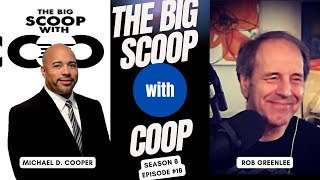
In this episode of The Big Scoop with Coop, host Michael "Coop" interviews veteran podcaster and industry leader Rob Greenlee. Rob recounts his journey from a 1999 Seattle radio show about the web, through early MP3 distribution and the birth of podcasting in 2004‑2005, to building his own server infrastructure for syndication. He describes his roles at Microsoft’s Zune (adding podcast catalogs of 40‑50k shows), as CTO at PodcastOne, at Spreaker (later iHeartRadio), and now at Libsyn/Lipson, where he focuses on partnership development with platforms like Apple, Spotify, Pandora, and Google. Rob explains the purpose of the Podcast Academy, its $100 annual membership, mentorship, webinars, and the Ambie Awards, as well as his involvement in the Podcast Hall of Fame (inducted 2017). He shares perspectives on the future of podcasting versus television, the challenges celebrities face in the medium, and offers practical advice for new podcasters: follow personal passion, understand goals, and leverage free hosting promo code (ROBG). Throughout, Rob emphasizes community building, helping others, and the importance of authentic, personality‑driven content.
Chapters
Welcome to The Bit Scoop with Coop. I'm your host Coop. Season 8 still going strong, people. If you haven't, make sure you go to thebitscoopwithcoop.com to catch episodes from season 1 all the way up to season 8. Big shout outs to everybody that's watching on Facebook right now, facebook.com. /TheBigScoopWithCoop. Also, big shout out to watching on Instagram right now, IGTV, baby. That's right, @TheBigScoopWithCoop. Also catch me on YouTube, go to youtube.com, look for The Big Scoop with Coop. Make sure you click like and subscribe. Now enough about me, people. Today's guest, he has been doing a lot of things in the podcasting world. His name is Mr. Rob Greenlee. Now Rob, he's actually, like I said, doing a lot in the podcasting world. He's actually one of the first podcasters ever. That's history right there. Also, he made it into the 2017 Podcast Hall of Fame, and he actually has a seat, um, in the Podcast Hall of Fame and actually helped do the inductees also. Now we about to talk to him. We'll see how he got started in his career. What he's got going on right now. Also, he's doing big things with Lipson also. So all you podcast heads is out there with Lipson, about to talk to him right now. And let's see what's going on with Rob.
Welcome back to The Bit Scoop with Coop. Of course, I'm your host, Coop. Like, for all you podcast heads out there, you want to learn how to do this, you actually talking to one of the best there is out there that started this thing. You might as well say Ladies and gentlemen, like I told you before, the one and only Mr. Rob Greenlee. Welcome to the show.
It's great to be here. Thank you for inviting me, Michael. It was— it's an honor to be joining you on the show.
Thank you. Thank you. Now, Rob, how's your day going so far?
It's going okay. I just happen to have a train going by, so that's why I was muting you a little bit. But, uh, but it's, it's going fantastic. You know, this is a— this is This is one of those unique days that comes around every 4 years with the politics going on. So I think there was a lot of people that lost a lot of sleep last night. So I've been running on adrenaline today. So, so I've been, been staying busy. It's been a, it's been a good productive day, I have to say. Yeah.
Wow. Rob, make sure you sleep like a baby tonight. I want to make sure you get your sleep, even though it will take about a week to know everything, but still get some sleep, Rob.
Get some sleep. Now, that's, that's actually great advice for millions of people because I'm hearing it all day long from people that did the same thing.
That's so true. Now, Rob, like I told everybody, you've done so much right now in your career. You might as well say that you're almost like a pioneer to a certain extent. You might as well— you can just throw that out there because I want to just put out there on a limb, you are one of the few that's actually started this podcast. As far as it goes for podcasting. Um, but Rob, for people that don't know, what— I mean, how did this all start for you? When did you realize that you wanted to become a podcaster? When did you know?
Well, actually, I didn't start out as a podcaster. I started out as, um, a person that was a host of a radio show. So I just walked into a radio station in the Seattle market and started doing a radio show back in 1999. About the growth and development of the World Wide Web and the internet. So that's how I got started. So it was purely a radio play to get started with, and then I started taking my episodes home on a cassette tape and playing it into a $19 cassette player and making MP3 files to my computer. And then I would link them to a website that I created back in 1999, and people would download my MP3 file off my website. So that's kind of how I got started, and then I started getting involved in streaming media on real streaming as well as Windows Media streaming back in the early days or the earlier days of the internet back in the early 2000s. So that's kind of how I got started in this, and then podcasting just came around in 2004. And for me, I was already creating a radio show, creating MP3 files, so you put those two together and it wasn't a big thing for me at the time. I just added an enclosure tag to my blog feed at the time, which is, you know, basically an RSS feed. And then in 2005, Apple decided to add podcasts to the iTunes software, and I got added to that platform. I had already been distributing my MP3 files on proprietary audio listening platforms up to that point too, so So the concept of it wasn't really all that new to me at that point, but it was a pretty small part of the listening platform that I created that was on the XM Satellite Radio network and then on 15 radio stations and then on a couple of public radio stations as well back in those days too. So I was working lots of different syndication, lots of different distribution models with my show at the time, trying to find audience just like any other content creator does.
Wow, wow. Now Rob, you know, that's big right there because getting syndicated takes a lot of work. It does. A lot of people don't know that. They think if you just record 3, 4 videos and send it off, you're automatically going to be worldwide everywhere. Um, and that's hard to do. Now what type of hurdles did you go through, you know, to get to that point for syndication and where you are today, coming from the radio side to podcast?
Well, I mean, it was really, um, I kind of made a transition. I was making a radio show and I stopped actually doing the radio show in 2006. So I, I started in '99 and I stopped doing it in 2006, uh, and that was like a year, 2 years or so after podcasting kind of officially started. And one of the things is things that that happened is that what I found is that with the content that I was creating, people were starting to make podcasts. So I was doing a show about technology really, and people started creating shows about Windows and about Linux and about internet security, and they were doing all this stuff. And I saw my audience getting splintered because I was doing more of what I would call kind of a variety show, which is I had a bunch of different topics on every week. So over time, I started to think more about podcasting and how niche podcasting is, right? So typically podcasts are fairly narrow in their topic focus. So, and that's kind of how it progressed for me. And then I started getting more involved in helping other people make their radio shows available. And I built my own server infrastructure and started hosting radio shows on the same servers that I had distributed my radio show on. So because I had built the infrastructure, got bandwidth, all that kind of stuff, I mean, physical hardware co-located in data centers that could facilitate a website and distribution of MP3 files and started to build that for other people. And that's how I kind of got into what I'm doing now, 16 years later, is really helping podcasters all around the world get their podcasts up and going, get it distributed. And I also work with a lot of the big listening platforms to help get podcasts into, you know, like Spotify and Pandora and those kind of folks. I've worked a lot with those type of folks to get podcasting into their platforms.
Now, Rob, now hearing that from one podcaster to another, you know, I'm just thinking back, if we would have went back to 2004 and did this, and the route that you have to take to get this into Spotify, iTunes, um, Pandora, it seemed like for the average podcaster That would've been a headache and a half.
Well, I mean, a lot of those platforms weren't doing anything with podcasting or audio, like audio shows, that kind of thing. They were oriented, they were fixated on music and that's all that they were doing. And then I started working for Microsoft on the Zune platform, which was the early competitor to the iPod and iTunes platforms. Microsoft added podcasting to their music service, Zune, and they came out with a bunch of audio players and things like that, video and audio players that was competing directly with the iPod. So I spent about 6 years working on podcasting at Microsoft as well. So back in those days was what was really trying to push the envelope. I mean, the medium was still very young. There wasn't a lot of content creators. I think my Zune catalog had, like 40 or 50,000 shows in it. You know, you look at the catalog today and it's got, you know, look at Apple Podcasts and it's got 1.5 million podcasts. So you can kind of see how things have changed from back in 2007, 2008 to where we are today in 2020.
That's so true. So true. Now, Rob, this will sound like a crazy question asking you right now, because like I said, you're one of the pioneers of this, but did you have any mentors to help you out to get to get started in the podcast?
That's—
I know it's kind of a heavy question there.
Well, I think at the time I was looking up to, um, some of the larger radio show hosts that were doing national syndication, um, and what they were doing to get on as many radio stations, you know, like Alia LaPorte or, um There were Craig Grossman from, I think it was Computer Today. I mean, a lot of these, these, these guys had syndication over maybe 300 or 400 radio stations. I was just on 15. So I was kind of looking to those guys because at the time I was thinking, you know, I'm going to build my radio side. That was my path to, to revenue. And then over time, what started to happen is I started to gravitate more towards the digital side. Because I saw a unique opportunity there to, to differentiate myself because I was doing a show that was studying. Essentially, I was going all in on learning about the internet and how it works and what the future looks like. So it was putting me in a mindset where I was learning from my guests that I was having on my show and doing the research that I was doing and really thinking about the future. Of the, the internet and the web and the direction that was going in. And I'm a marketing guy, I have a marketing degree. So everything that I look at, I look at in the lens of marketing. So when I started creating content, guess what? I started thinking about marketing. So how do I market my content, right? How do I use digital content to market what I was doing at the time, which was kind of— I was doing some consulting work. And when I started on this and search engine marketing. So I was trying to get clients and things like that. So I thought I would start a podcast talking about, you know, internet marketing and trends in the internet to hopefully build more client base for myself. So that was my motivation, was always towards a little bit of a marketing and sales orientation to what I was doing with the show. And it wound up building my career is what it did. I mean, I built a small business around my, my radio show and made money doing that, but But in the end, it was really about my work career and building my expertise and my reputation to get a job at Microsoft or to get a job working for Lipson like I'm doing now. So that is kind of what had happened. And I basically used my marketing background and passion and combined it with digital audio creation. And they worked well together. Wow.
Now, now, Rob, that's, that's a great thing because, I mean, being part of Lipson, that is one of the world's largest podcasting spots to go. You know, you have your show up there and the distribution that you all do up there, um, it's crazy. You all have helped a lot of people in podcasting. You really have. Um, I want to say on behalf of all the other podcasters, thank you. You, you If it wasn't for you, it would just be recorded on our phones or computers or cameras and just sitting somewhere collecting dust.
Well, Lipson started as a company back in 2004. I've only been with Lipson for about a year and a half or so, but I've been with other companies. I used to work for PodcastOne down in Los Angeles too, at podcastone.com. I was their chief technology officer for a year, and then I also used to work for Spreaker, which is another podcast hosting platform that does live streaming as well that was just acquired by iHeartRadio. So, you know, spent 4 years with them working and helping podcasters. So my journey has been, you know, with a variety of different companies working in the podcasting space. It actually started in 2005 because I started working for a startup company in Seattle that was working with podcasts on pre-iPhone phone devices, you know, back in the early days of mobile phone, but really before there was much data that was available to mobile phone devices. I was working with podcasting on those type of devices back in those days too.
Wow. Now speaking, well, you know, the popularity of podcasts is growing yearly, um, annually is growing, um, like you said, from '04, '05 2007, going all the way up to now, I wouldn't say the numbers is probably tripled or quadrupled, uh, within the years of when it started. Now here's the one thing I want to know, Rob. Do you feel that podcasts will get as big as television within the next 10 years? Your personal opinion?
Um, I don't know. I don't think so. I think, I, I think maybe television is probably not entirely the correct comparison, uh, as is I think we're really competing against online video. That's true. I mean, television and radio and the more traditional models that have been around for many years are slowly being replaced by digital solutions here. And I think podcasting is a replacement somewhat for radio as you look to the future. So as you see how people consume television content today. It's on demand, it's what you want when you want it. And to some degree, that's what's happening with music, right? And that's what's happening with radio, right? It's been, I think where the problem with radio has been is they were a little slow to adopt the model of the on-demand side of their content. And they tended to still really cater to the short segment, you know, heavy commercial load type of formats. And that's a big reason why podcasting exists today, is because people got tired of being inundated with advertising. And podcasting started as a result also of Napster back in the early days when music was getting pirated by many millions of people around the world. And that was breaking a lot of the music models because people were getting access to free music using the internet. And so, and those were typically distributed on MP3 files. So podcasting is really a fallout from a revolution that happened back in the early 2000s that basically were starting to break the mold, the same thing that Amazon does to e-commerce or, you know, Uber is doing doing to car sales. I mean, you can kind of see how the disruption is going across everything. And podcasting is just disrupting radio right now.
Well, that's true. That's very true. Ladies and gentlemen, watch worldwide right now. Make sure you take down notes on this because Rob is actually throwing out some jewels right now. This is something you want to take notes about if you want to start a podcast. A lot of people are trying to start one now. Make sure you pay attention because like I said, you're talking and listening to a pioneer right now that started this whole thing. You want to make sure you catch on everything that Rob is saying. Now, Rob, also the reason why I brought up the television side of this, because you probably recognize this yourself, a lot of the daytime talk show hosts, people that's being very popular on television, um, even in radio, they're going towards podcasts. And, um, with the pandemic that's going on, a lot of people have, like you said, have turned the digital stream. Theaters are down. When they go to YouTube to watch, they say, wow, I enjoy this podcast, let me see what else is going on. So I, I see the comparison that you're saying. It is diff— it's wrong comparison saying television because you should say video. Um, but how do you feel about people that's, you know, that's celebrities, everybody was jumping into this podcast game? Do you feel like is a niche for everyone in today's time?
I think when you talk about celebrities, it's a complicated subject because celebrities— and I saw this firsthand working at PodcastOne because I was working with celebrity podcasts— is that just because you're a celebrity doesn't guarantee you success in podcasting. And a lot of the reason for that is that a lot of celebrities are actors or they're performers that are typically performing off of a script or off of a predescribed scripted type of content creation process, right? Where podcasting tends to be more personality-driven, relationship-driven with the audience, and it's more regular, it's more of a friendship relationship that is developed between audience and host, and it's a different dynamic. So just because you're a celebrity doesn't mean that you have the personality or the skill set or the knowledge to connect with people at a level that you need to connect to in order to be successful in podcasting. Though it is having a lot of celebrities jump into the medium does kind of create a lot of noise around celebrities because they tend to have a lot of attention that's showered on them for whatever they do that can make it difficult to rise above that. But I wouldn't look at celebrities as being a huge competitor to an independent podcaster that wants to start a show because I've seen a lot of big celebrities fail in podcasting and I've seen a lot of people that weren't celebrities succeed in podcasting. So, you know, it goes the full spectrum. I think it depends on your skills, your passion, your desire to succeed and your desire to work hard. In something to get good at it. I think you can learn how to do that online, but there is a certain amount of X factor that goes into success in any kind of a medium that all comes, it combines all those things together. I mean, like what makes like a, you know, like a Joe Rogan popular versus, you know, even a less popular comedian out there. It's his passion, his connection with his audience, his ability to communicate, All those things are important skills that you need to have to be a successful podcaster, and not everybody has all those skills, but that doesn't mean that you can't be successful to the level that your skills can take you and can't find success. I know hundreds of podcasters that have transformed their lives by just starting a podcast, and they had no experience in being a celebrity or being a big media personality. So, you know, it's just being able to connect with people is probably the number one skill.
Yeah, that's so true. That's very true. Um, and I tell anybody that also, if you put your heart into what you're doing, it's going to show. It will show. Exactly. It doesn't matter if it's podcasting, acting, singing, whatever. It's going to show compared to you just getting up here and just talking, you know. Yeah, if your passion shows, it will show through the lens. It definitely will. Show through the microphone. That's definitely true. Now, Rob, here's something that you're actually part of, and I want to talk about this, and I want you to tell everybody about this. Tell everyone about the Podcast Academy. What does this consist of?
Well, it's, it's basically an effort on the part of a group that got together with the desire to bring a lot of attention to the content of podcasting. At the end of the day, what's being created here with the Podcast Academy is like the Academy Awards that's been created for film or movies to create something similar for podcasting, right? And it's a way to recognize and reward excellence in podcasting and to drive awareness of the medium, to drive awareness to terrific content in the medium, to hopefully drive more listeners to give podcasting a try, you know, whether it's a big show, big popular show, or any show that's in the podcast catalog, because there's probably a show out there for any interest that exists in a person's life. You know, let's say they're into fly fishing or they're into playing basketball. I'm sure you can find a podcast that can help you succeed at that or learn something or just, you know, have an enjoyment experience. Right. So the purpose of the Academy is to bring the community together. It's a membership organization. Podcasters, people involved in the industry of podcasting can join, and we all work together around mentorship programs as well as, you know, helping others of sorts. There's webinars and educational initiatives that are going on inside of the organization to help people cross-train with each other, learn about best practices and audio creation, hosting, monetization, you know, all of the skills that you need to be a podcaster at, and, and just grow the organization on an international level too, and create as many partnerships with others to foster the growth and development of the industry.
So how can everybody get into the Podcast Academy if they want to actually be part of it or join the Podcast Academy family? How do they do it?
Yeah, you go to thepodcastacademy.com and you can register to be in there right off of the website. It's, it's $100 a year to join, but you need to be a participant in the podcasting medium to join, either a host or someone that's working on a podcast or involved in a podcast or working for a podcast-related company. That has a connection that you can share with the Academy that you're part of the community of podcasting. So, and then once you get in there, you can get involved in subcommittees, you can mentor other people in the Academy as well. You can vote, you can nominate shows to the awards. Our first awards ceremony is happening at the end of March in 2021 in Los Angeles is what we're shooting for. We'll see with the COVID thing what it forces us to do. It's probably going to be just a quasi-in-person event that will probably be just streamed online with very few people actually in attendance. It's probably more likely what will wind up happening. So it'll be more of a virtual event. But that's the current plan right now. So there's currently about 17 board members from most of the really big companies in the podcasting space from Spotify, Apple, and Stitcher and those type of companies are, you know, National Public Radio is involved. Those kind of folks are on the board of directors. You know, I'm on the board. I'm the chairperson of the board. Being there, not necessarily representing Lipson, but because it is an individual organization. So individuals join this. It's not company, company join type of organization.
Wow. Wow. Now, is this award— is this the ESPYs? Is that— am I saying it correctly? Is this what this is?
It's Ambies is what the—
Ambies.
Ambies. Yeah. Yeah. So we've come up with a custom, you know, award trophy, kind of like the Academy has or the Grammys or whatever. So we've got our own trophy that we've come up with. But yeah, it's the Ambie Awards is what it is, is the name of it. I'm sure, you know, a lot of people will be hearing about it as we move into spring.
Yes, ladies and gentlemen worldwide, go check out this award. I've seen a picture of it and this is beautiful. Make sure you go look it up. Not right now, because we're in the middle of the interview.
That's right.
This show, look it up. Go to the Podcast Academy website, sign up.
It's $100.
Do it. You want to help grow your own show? You want to help grow and help others? Do it. You want to join this award? You want to try to win Abby? That's, that's the goal if you're a podcaster. You want this. You definitely want this. So make sure you go do it. Now, speaking of awards, 2017, Rob, what in the world? You entered into the Podcaster Hall of Fame. How did this happen? Well, we heard the journey of where you started and where you got to. How did you get recognized to get into the Hall of Fame?
Well, the, the Podcast Movement Conference, which has been around for many years now, um, they basically started the Academy of Podcasters, which is an organization that is under their umbrella as a conference back in 2015. And they started inducting, I think it was 6 or 7 people into the Podcasters Hall of Fame back in that timeframe. I was selected to be inducted back in 2017. So I believe that there's like over 25 people that have been inducted. Into the Hall of Fame at this point. It's been a little bit on pause since 2018 as the Hall of Fame is looking to get brought back again. So probably this next year it'll be brought back again and it will continue going forward into the future. But yeah, it was all about trying to recognize people that have contributed to the success of podcasting and the growth of it. I mean, all of the inductees have at least 10 years of experience in the medium, and, and the criteria is how much of an impact did those people have on the growth and development of the medium. Yeah.
Wow. Now, for the people that's been doing podcasting for a while, if they are interested in getting into the Hall of Fame or you could be nominated, how do they get recognized? How do you get— how does the board find them to actually get recognized?
Well, you have to start by being a podcaster, first of all. You know, start getting involved in the podcasting medium. I believe as we look to the future, though, I think the Hall of Fame is going to be— I think it's going to remain focused on podcasters themselves, ones that are actually creating content. So it may not be someone that's basically behind the scenes. It's kind of like the Hall of Fame for the NFL or football or something like that, where players typically get nominated to be in this. So it's typically going to be podcasters. So if you want to get in the Hall of Fame, you probably need to get started podcasting soon.
Ladies and gentlemen worldwide, go start your podcast. And I don't want to sound like a mockingbird, but not right now. After this. Planning it.
After the show, you can go start your podcast, right?
Thank you, Rob took it right out of my mouth. Because you want to try to get into the Hall of Fame, because trust me, that's one of my goals myself, is to get into the Hall of Fame. You want to do it.
I'm 8 seasons strong in the show, and you're getting there, you're getting there, sir.
Yes, I'm getting there. So that means you guys can too start your podcast. Do it, do it, do it. Now let's talk about Lipson. I mean, you, like I said, you're, you're huge in this. You play a big part in it. Now what is it like for everyday working for this company? What was like your everyday role and what do you do?
Well, my, my main role really is to, to build partnerships with all levels of companies and individuals that are in involved in the podcasting medium. I mean, a good example of being a chairperson of the Podcast Academy, being a spokesperson at various podcasting conferences and events, being like tomorrow I'm going to be moderating a panel for the We Are Podcasting Conference out of Australia. Just doing all sorts of events. I mean, prior to this COVID thing, the virus thing, I was traveling around the world going to podcasting-related conferences, speaking at panels, having booth for Lipson at all these events, trying to meet as many podcasters as I can to inspire them, get them going with, with podcasting, to help them, you know, create terrific shows, to problem solve the process that you need to go through to come up with a show, create it, distribute it, and then ultimately at some point, once you build a large enough audience, be able to monetize it. To create something like a business of sorts. So it goes the full spectrum. But really, that's my job is to work with partnerships. I mean, partners like whether it be Apple or Google or Pandora or Spotify or those kind of folks to get them better connected to Libsyn so podcasters can publish to their platform and then also just work with other types of partnerships that can drive value to podcasters.
Wow, ladies and gentlemen worldwide, make sure you go start this podcast. Um, go to Lipson, make sure you get this started. That's one thing you don't want to miss out on, especially if you're trying to get your voice heard worldwide, um, through the podcasting community. Like I said, Lipson will get you on to Apple, Spotify, TuneIn Radio, Spreaker—
Spreaker—
Spreaker— I can't even get it out, I'm getting so hyped up. Um, iHeart everywhere. Make sure you go check them out, especially when you start this podcasting movement that a lot of people are actually doing. Now, Rob, like I say, you're, you're doing a lot of things, um, and you're on the move all the time. What is the best way for everyone to keep up with you on social media to see what you're actually up to?
Well, I'm on Twitter a lot, uh, so if you're a Twitter user, um, it'd be great to have you come over and, and, and follow me and And that's @RobGreenlee. That's my name, R-O-B-G-R-E-E-N-L-E-E, 2 E's, actually 4 E's in my last name. So it's @RobGreenlee. And then I also have a website, robgreenlee.com. And then there's always Libsyn, that's libsyn.com. And then you can also send me an email if you want to. You can send it to robg@libsyn.com if you have a question about podcasting or if I can help you at all. And I do have a promo code that I'd be happy to give out too to Libsyn. So if you wanted to create a podcast on Libsyn, you can get up to 2 months free before you have to start paying for your podcast on a hosting plan. And that promo code is just ROBG, R-O-B and the letter G. And that'll, you know, put that into the little promo code box on the website and that'll save you some money.
Wow. Hey, Rob, give them that promo code one more time.
It's just ROBG, R-O-B and the letter G. That's all you have to put in there. And that if you join Lipson at the beginning of the month, you'll get up to 2 months free hosting on Lipson to kind of get you started and get off the ground before you have to start paying anything for your hosting plan.
Wow. Ladies and gentlemen, make sure once again, if you want to start this podcast, do it. 2 months free. Where are you going to find that at? Go to Lipson. Make sure you do that. Rob G, put it in. Make sure you get your 2 months free. Don't be crazy and going to start paying the first month unless you just had that much money to just throw out.
Right, right. I mean, I mean, I mean, it isn't like we won't take your money, but, but yeah, use the, use the, the promo code. And it's actually really great because it gets you— it takes the pressure off a little bit where you're feeling like you got to get your money's worth right out of the gate. Just get in there and build your show, build your distribution, upload like a preview episode. Get it submitted out to Apple and Spotify and all the major listening platforms that are built into the tool. And then, and then start publishing your first episode probably a month after you've created the account and you're still getting it for free. And so you have your distribution. You can start working on building your audience before you start having to pay for it.
Yeah. Nice. Nice. Now, Rob, I know you're a busy guy. I'm not going to hold you up much longer. There's a lot that you're doing. But what advice would you give any male or female that wants to start a podcast and they want to get as successful as you are today?
I would just keep it really simple. I would just think about what your life passions are, what, what gets you jazzed to get up in the morning. And I know you probably hear this from a lot of inspirational speakers, but I do believe that that is the key to longevity in podcasting. And also getting what you want out of podcasting, what you desire out of podcasting is having an understanding of what that is that you want to get out of podcasting. That doesn't mean that when you start down the path and creating a podcast that you're going to get exactly what you thought you were going to get by starting a podcast, because you may be surprised what you get from it. It may be far in excess of what you thought that you might get from podcasting. From a career perspective, from, you know, building your own personal network, even building a show that generates revenue for you and income. You know, you can— the potential is there for you to earn direct money from your podcast. It depends how successful your show is and how much you can, you can build it. But yeah, I would just make it focused on what your passions are, what you get up in the morning and get excited about. That you can talk about every week for years on end. Just like with me with podcasting, I get excited to get up every morning to talk about podcasting all day long. And, you know, find that passion, find that skill that you have that you just love to do and talk about, and you'll be able to pass that on to others. Kind of like, you know, Michael, what you're doing. You have a passion for this. So that comes through, you know, and people appreciate that.
Thank you. Thank you very much, ladies and gentlemen worldwide. Make sure you take down these notes. Um, do what he just said. Rob said you have a passion, go for it, because trust me, podcasting is very fun. It is. And you can turn it into a career. So what a lot of people say is it's not a job if you're having fun, right? That's right.
So I don't go to work every day. I get up and, and have fun all day. So But I, I get paid for having fun. So that sounds like a perfect job to me.
Yes, yes, yes. Think about it, guys. Make sure you think about what you want your show to be, how you want your show to go. Research, listen to different podcasts. Everybody's listening to me. You've been hearing me for 8 seasons. You know what I do. You've been paying attention to Rob. He's actually gotten into the Hall of Fame for doing what he's doing. He's working for Lipsyn doing what he's doing. He's actually helped out with Apple Music. Doing what he's doing. If I name everything that he's done, it's gonna be 3 more shows, so I'm gonna go there. So I'm definitely—
please don't, right?
Yeah. Now, Rob, the last segment of the show is called Take the Floor. Now, Rob, you have up to 2 minutes to say whatever you want to say, no questions asked. Mr. Rob Greenlee, take the floor.
All right, well, thank you for the opportunity to, to give me a microphone. It isn't something, you know, that I haven't taken advantage of before. But I think that the big thing that I'm all about as a person is trying to have passion for helping others. And I think if you can build that into your life and in your career and just be willing to share with others and share your passion with others and help others in the way that you enjoy helping others, creates a win-win. And that's what I try and do with the podcast that I have too. I do shows that are not necessarily all that structured. It's always very authentic and real. And I think that's really important just in life today is being able to get on a microphone, being able to get in front of a webcam, get in front of— I mean, this whole COVID thing has created an environment where we all need to to be skilled at being presenters and being leaders. More and more, this world is looking for inspirational leaders and being able to help others achieve their successes in life. And that's what I'm all about and what I'm doing in life. And that's what I would, you know, I would make a call out to you as well is to make that part of your life.
As well. Wow, wow, Rob, thank you, thank you, thank you, thank you very much for coming on the show. Um, I would love to have you back on in the future.
Yeah, it'd be great to, to come back on and join you again.
Yeah, yes, yes. Ladies and gentlemen, I hope you've been paying attention to this, and I know you have. Um, once again, go check out the Podcast Academy, go check out Rob's website, follow him on Twitter. You want to make sure you keep up with them if you're trying to get into the Hall of Fame. Start that podcast, you know what to to do. Keep working on it. Keep going, keep going, keep going. Your hard work and dedication will pay off. All right, ladies and gentlemen, um, like I said, follow Mr. Rob Greenlee. There's a lot that he's doing. All right, so next guest for the next episode, and you already know this, I never announced my next guest. You gotta stay tuned. All right, everybody, until the next time on The Bit Scoop with Coop.
Bye.
More from Rob

Future-proofing with Delphi AI/Human clones: your podcast as a personal LLM | New Media Show






How sports reveal what AI spectacle gets wrong #Technology #Sports #Commentary



